





In the late 1960s, Hungarian surgeon Dr. Endre Mester tried to reproduce a cancer experiment with a low-power ruby laser and, unexpectedly, noticed shaved mice regrowing hair faster at the treated sites. Not the result he aimed for… yet a door quietly swung open to a new field now called Laser Phototherapy (LPT). That serendipitous observation seeded a half-century of photomedicine—and, eventually, wearable devices designed to deliver precise red light to human scalp follicles.
Fast-forward to today. Theradome’s PRO LH80 and EVO LH40 take that lab curiosity and wrap it into a medical-grade, at-home system that’s FDA-cleared to treat androgenetic alopecia in men and women. The filings spell out the nuts and bolts: visible red ~680 nm Class 3R lasers, 5 mW per diode, fixed 20-minute sessions, and indications limited to specific pattern classes and Fitzpatrick I–IV skin types… the exact language you’d expect in a FDA 510(k) summary, not a marketing brochure. (That distinction matters.)
The Creation of Theradome Hair Growth Device
A former NASA biomedical engineer, Tamim Hamid, read the same Mester saga you just did and thought… why not build a clinically serious device people can actually use at home. His background in lasers and biomed systems at Kennedy Space Center made the leap plausible, not just romantic founder lore. Industry and interview records describe the path from aerospace to scalp biology, which is an odd road unless you love optics. We do.
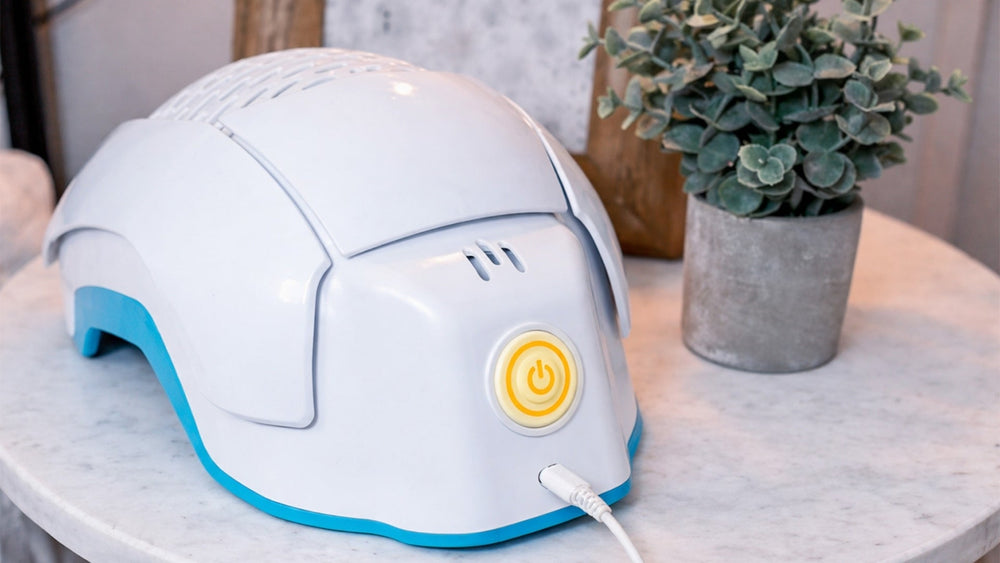
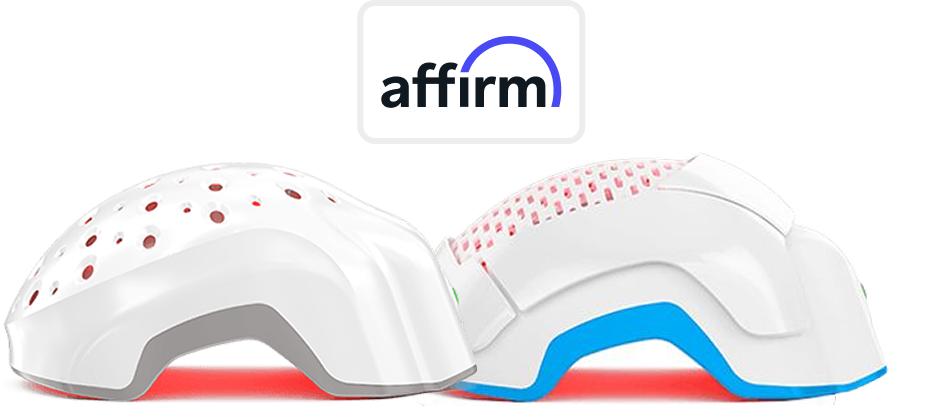
What shipped is a pair of helmets that use only lasers to deliver coherent red light across the scalp. The core aim is simple but not trivial—help slow hereditary thinning and support new growth with repeatable, comfortable dosing. The “repeatable” piece is what transforms lab effects into real-life results. (Daily life is noisy. Devices must cut through that.)
Theradome PRO LH80 and Theradome EVO LH40: What’s the Difference?
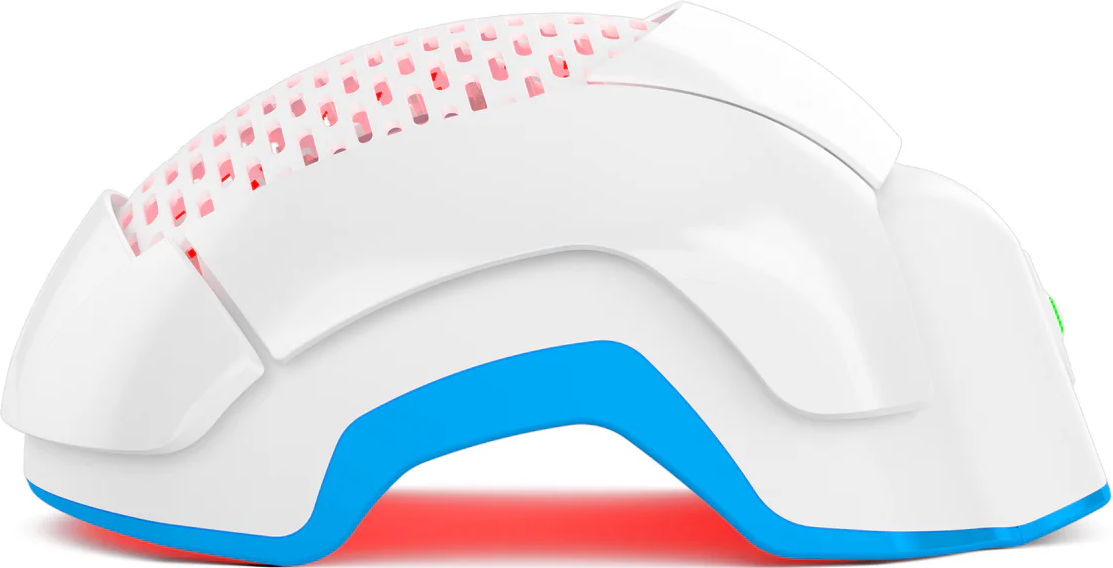
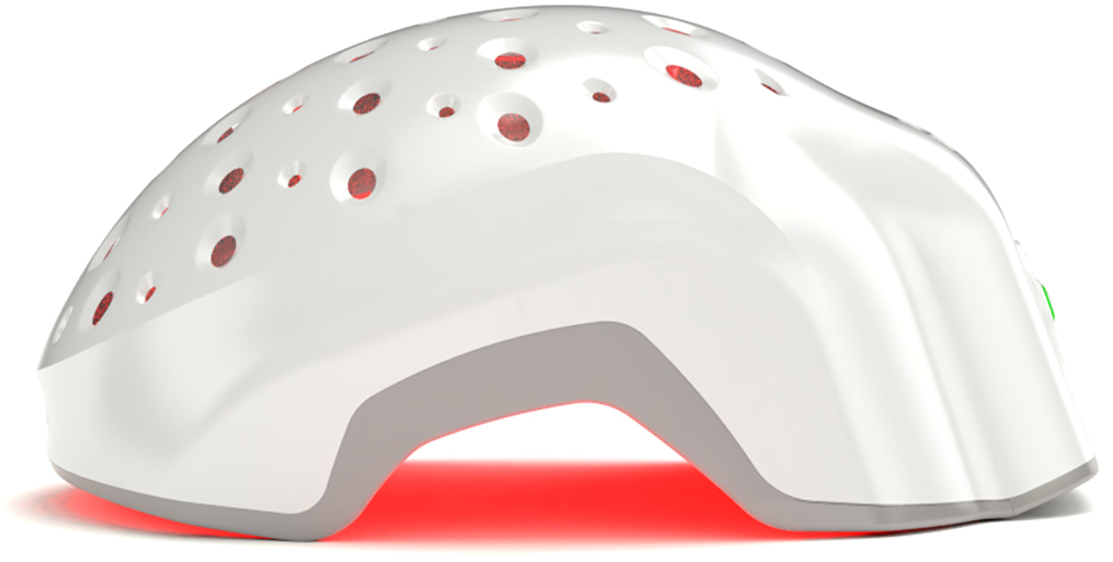
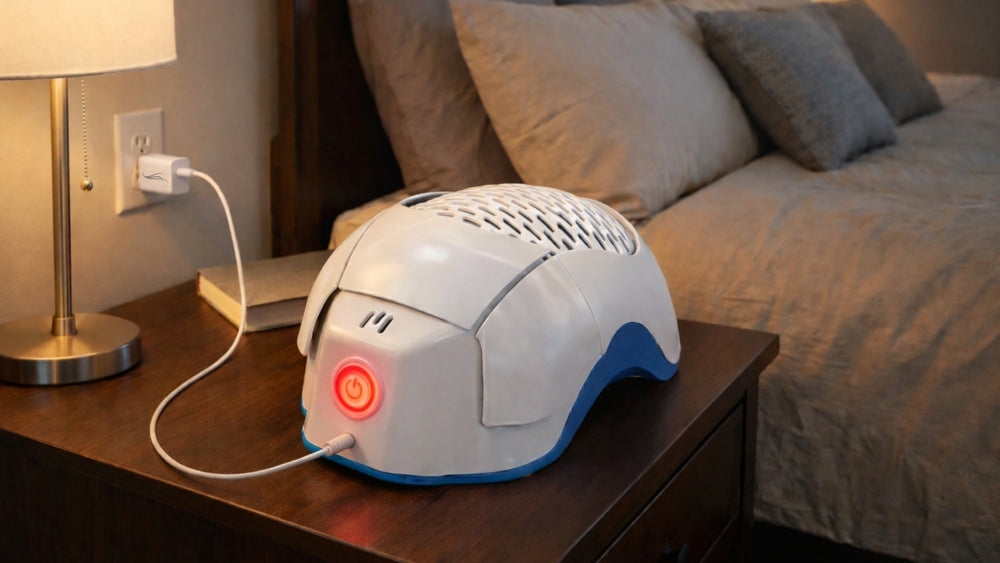
Short answer: Same science, different dose logistics. Both are FDA-cleared wearable Laser Phototherapy (LPT) helmets that use red, visible ~680 nm class 3R lasers for 20-minute sessions. They share one-button operation, an audible timer, and full-scalp coverage. The divergence is mainly about how much energy per session and how often you treat.
What They Share
- Coherent laser diodes only, not LEDs, at a nominal 680 nm.
- Class 3R emitters capped at 5 mW per diode.
- Fixed 20-minute treatments with automatic shutoff and audible cues.
- Over-the-counter indications for adults with androgenetic alopecia within defined pattern scales and Fitzpatrick I–IV skin types.
- Nominal scalp coverage around 420 cm² for uniform reach. (Yes, that matters in practice.)
Key Differences
Laser count and per-session dose
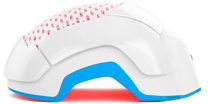
- PRO LH80 uses 80 laser diodes and delivers roughly double the fluence per treatment versus EVO.
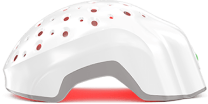
- EVO LH40 uses 40 diodes and delivers about half the fluence per session. Think smaller bites. Same photons. Different portions.
Treatment frequency
- PRO LH80: 2 sessions per week.
- EVO LH40: 4 sessions per week.
This is deliberate. EVO’s higher cadence balances its lower per-session dose so your weekly exposure stays in the therapeutic window while preserving the simple 20-minute block.
Energy and delivery details
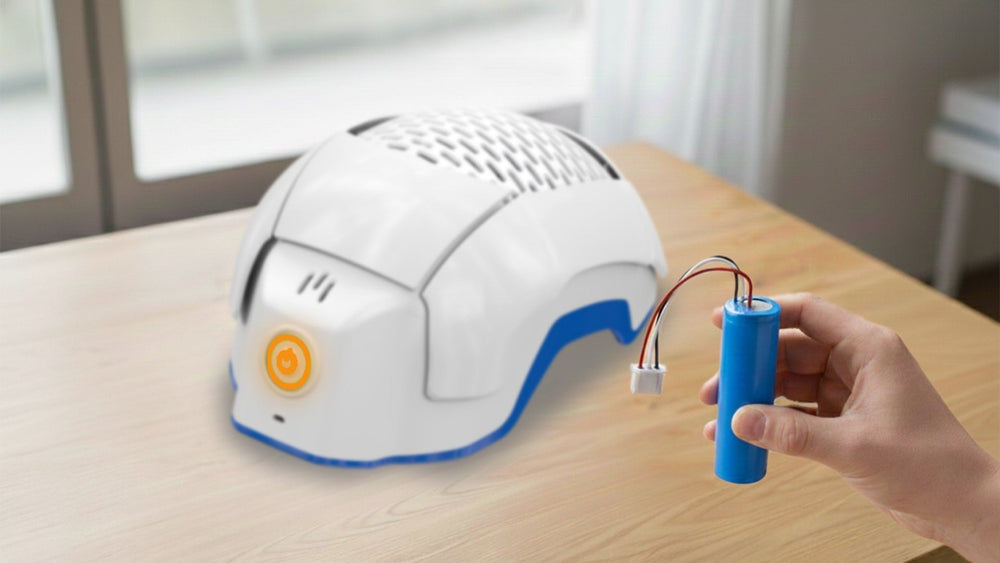
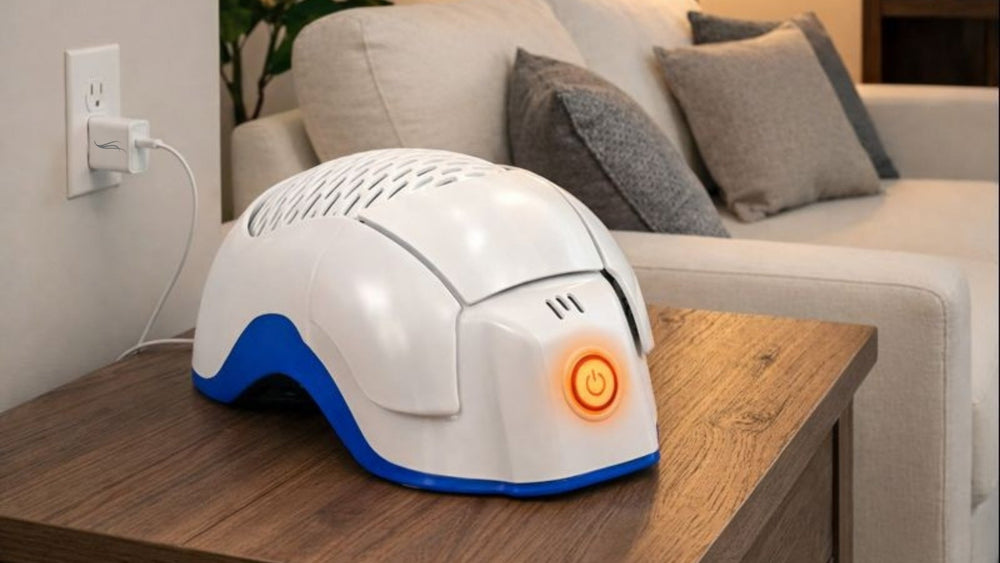
The FDA comparison table lists representative values like fluence per session and power flux, along with radiant energy per treatment, confirming LH80’s higher per-session dose and LH40’s matched weekly plan. It also documents practical build items like one-button operation, audible timer, and battery operation that make consistency more realistic on busy weeks. (Real life intrudes. These help.)
Which One Should You Pick?
Ask yourself what you’ll actually do every week. If you prefer fewer appointments with yourself, PRO’s higher per-session dose and twice-weekly schedule feel light to manage. If you like smaller, more frequent touchpoints, EVO’s four-times-weekly rhythm may better fit your routine. Either way, the indications and core tech are the same, and both models sit inside the FDA-cleared envelope for men with Norwood IIa–V and women with Ludwig-Savin I-1 to II-2, Fitzpatrick I–IV. Consistency over months is the real lever. Not hype. Habit.
The Scientific Principles of Theradome
Four pillars, briefly: light absorption, mitochondrial activation, beam quality, and wavelength fit. Everything else is scaffolding.
Laser Light Absorption
Hair loss has many triggers, yet the common backbone in androgenetic alopecia is an androgen-driven miniaturization of follicles—like shorter growth phases, thinner shafts, and a remodeled perifollicular environment where nutrients and signaling don’t flow quite like they used to. The hormone at center stage is dihydrotestosterone (DHT). That isn’t controversial in dermatology texts; what still invites debate is the detailed path from androgen signaling to matrix cell behavior. Either way, the pattern is consistent.
So what does Laser Phototherapy add?
A photonic pathway. In photochemistry there is a blunt rule called the First Law of Photochemistry… only absorbed light can cause a photochemical effect. If target chromophores in or around follicular cells don’t absorb the photons, no dice. Theradome’s use of narrow-band red light ensures that what reaches the follicular compartment has a good chance of being absorbed by the right photoacceptors, which makes downstream biology even possible. Otherwise it’s just a fancy flashlight.
Now, about that “nutrient supply gets cut off” idea you sometimes hear in casual speech. Follicles aren’t dead; they miniaturize and sit in a different microenvironment where vascular and cytokine cues shift. LPT doesn’t “force feed” follicles. It energizes them. More precisely, it delivers photons that kick off mitochondrial and signaling effects that can nudge follicles toward thicker, longer-cycling behavior.
So, light must be absorbed first or nothing else matters. Period.
Mitochondria Stimulation and Cellular Energy
Cells are powered by mitochondria. LPT’s most cited mechanism says red photons interact with cytochrome c oxidase in the respiratory chain, displacing inhibitory nitric oxide, improving electron transport, raising membrane potential, and increasing ATP. That burst of bioenergetic availability plus second-messenger ripples (ROS, NO, calcium channels) can alter gene expression and growth-factor signaling in ways relevant to hair cycling.
Why harp on mitochondria?
Because follicles are busy mini-organs. They need energy at the matrix and in their stem-cell niches to push thicker shafts into a longer anagen. When you target the cellular engine room, you don’t have to push from the outside with brute force. You let the system do what it’s wired to do… provided you keep feeding it the right photons over time. The literature calls this photobiomodulation.
Coherence of Light: Lasers vs. LEDs
Lasers emit coherent, collimated light. Most LEDs emit incoherent, broader-band light. Those are physics facts. The practical question is messier—does coherence still matter once light enters tissue, where scattering scrambles the wavefront quickly. Many say coherence is often lost in tissue, so wavelength, fluence, and irradiance dominate. Others note that, all else equal, a collimated laser beam can achieve deeper forward scatter and a cleaner dose profile than a non-collimated LED array. Both statements can be true depending on geometry and dose planning.
Theradome took the “laser-only” route by design. The FDA summaries specify Class 3R coherent light diodes at ~678 nm, with per-diode power 5 mW and carefully modeled scalp coverage. Class 3R visible lasers max at 5 mW by safety standard, and university programs classify them as low-hazard when used as intended with common-sense eye precautions. That mix (coherent sources plus within-class power) helps the helmet deliver a consistent, scalp-wide medical dose without heat.
You will see successful PBM trials with lasers and with LEDs. Theradome chose lasers to control beam geometry and deliver dose uniformly across hair-bearing scalp. That choice is defensible (and testable) in clinical endpoints.
Also Read: Which is the best for hair growth: Laser vs LED?
Importance of Wavelength
Different wavelengths interact with tissue differently. For scalp targets, the red–near-infrared optical window threads the needle between absorption and scatter so photons can reach follicular structures. In hair studies, red light in the 650–680 nm band and near-IR around 780–830 nm have both shown biologic activity across species and devices, though direct head-to-head rankings are scarce. This is why device makers pick a lane and optimize everything around it.
Per the FDA files, Theradome’s nominal wavelength is 678 nm with a small tolerance (+7 nm). That lives in the red window favored for follicular photobiomodulation and aligns with early historical observations from Mester’s ruby laser era, updated for modern diode tech. The point is not “magic color,” it is matching the absorption spectra of the relevant photoacceptors while maintaining scalp penetration. Right photons. Right target. Repeat.
Proper Energy Dosage and Treatment Time
Dose makes the medicine. In PBM, fluence and irradiance must sit in a sweet spot or nothing happens… or you overshoot the stimulatory window. Theradome locks the session time at 20 minutes and adjusts cadence by model to balance weekly exposure: LH80 PRO twice per week; LH40 EVO four times per week. The FDA comparison table shows why—LH80 delivers roughly double the fluence per session compared with LH40, so the EVO compensates by doubling frequency. Same 20 minutes. Same coverage. Comparable weekly dose planning. Easy to remember, which matters for adherence.
Safety note for the detail-minded. These are Class 3R visible lasers, capped at 5 mW per diode. University environmental health programs classify 3R as low risk when used as intended, with risk centered on direct intrabeam eye exposure. Helmets enclose the emitters and include timers that shut off precisely at 20 minutes. No heat. No burning. Just photons. (Yes, the word “radiation” here simply means electromagnetic energy (light) moving through space.)
Conclusion
Everything funnels back to one deceptively simple requirement. Coherent red light must reach absorbing targets at the base of miniaturizing follicles in the correct dose and on a repeatable schedule. This is what the PRO and EVO were built to do, with controlled wavelength, uniform scalp coverage, and a cadence most people can stick to. That last bit (showing up for your follicles) counts more than any spec sheet.
Dr. Mester’s “failed” experiment nudged a field forward because someone noticed hair where none was expected. We now have the physics, the biology, the FDA clearances, and randomized data to carry that observation into daily life. If you are comparing options, keep the essentials in view: LPT mechanism, 678 nm laser source, 20-minute sessions, and a cadence matched to the model you choose.