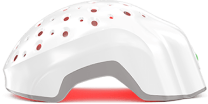

HAIR LOSS
THE SCIENCE
READ THIS BEFORE YOU BLAME YOURSELF

If You're Losing Your Hair, Read This Before You Blame Yourself For It

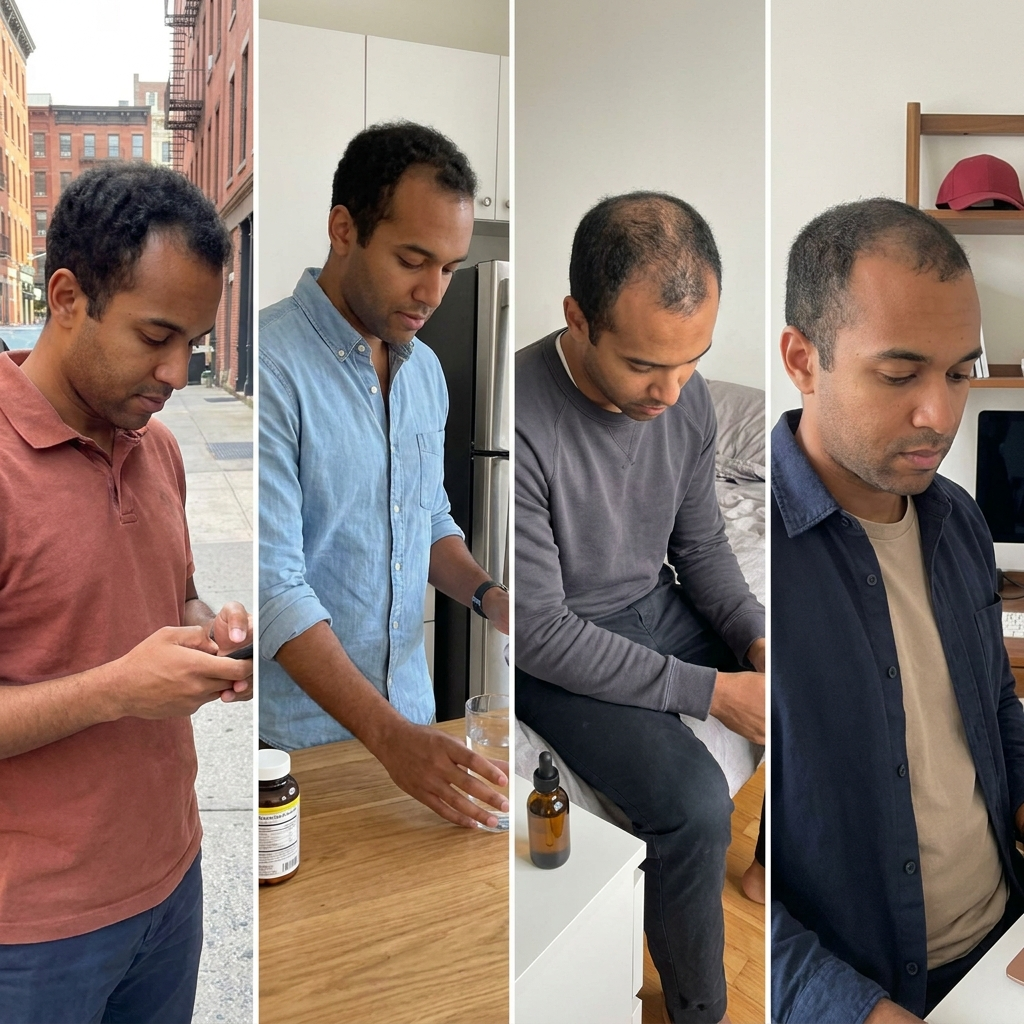
Most men carry a quiet guilt about going bald. They are convinced they did something wrong, waited too long, or wasted their money. The science says they have it backwards. Here is what is actually happening on top of your head, and why almost none of it was ever in your control.
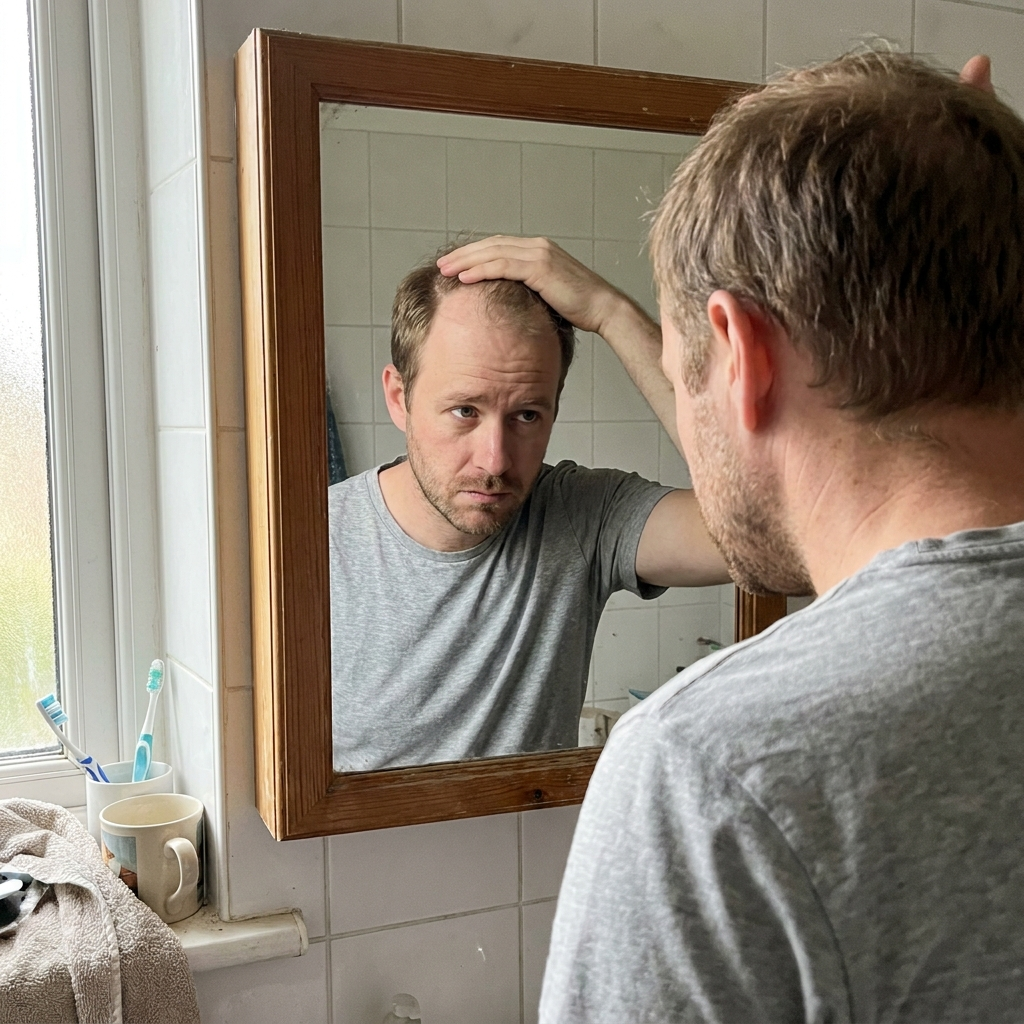
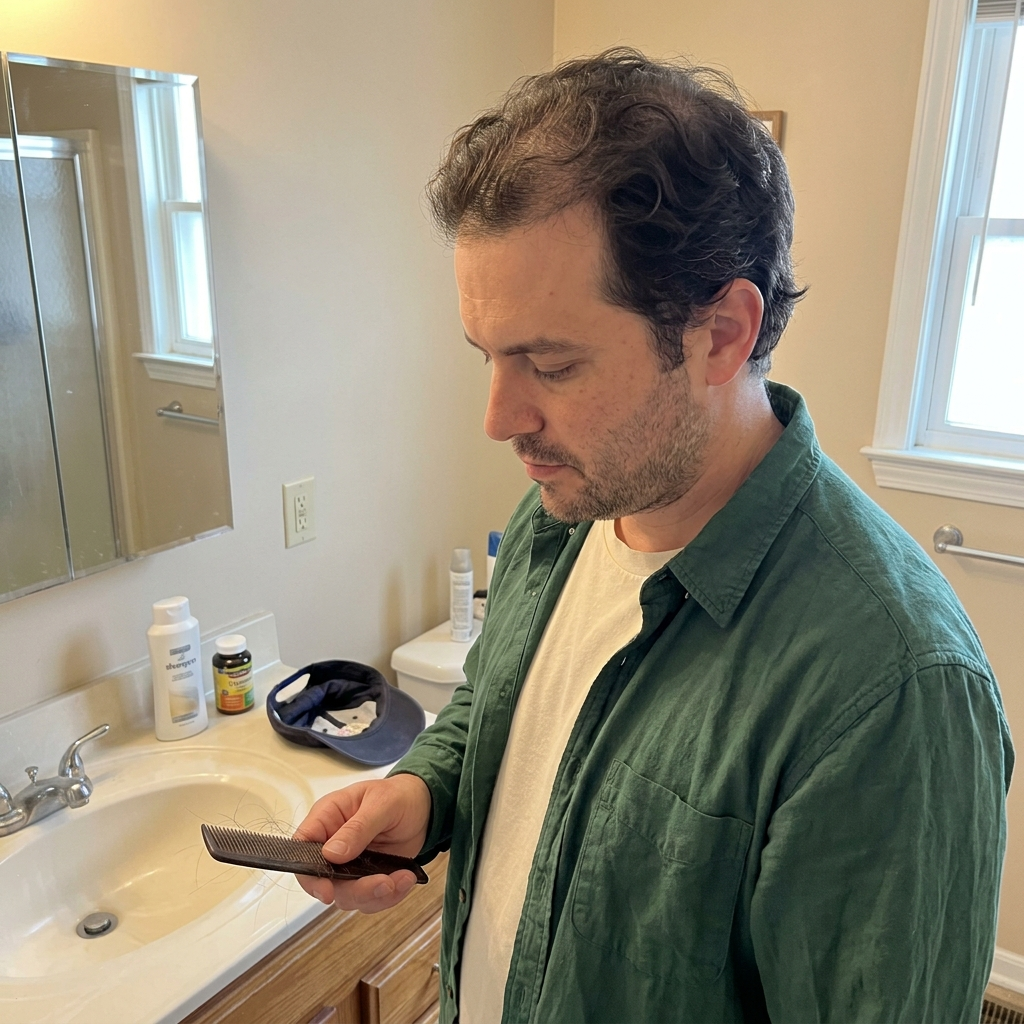
Man looking at himself honestly in the mirror
"The guilt is the part nobody talks about. It is also the part that is least deserved."

There is a specific feeling that comes with losing your hair, and almost no one says it out loud.

It is not sadness exactly. It is closer to shame.

A quiet sense that somehow, somewhere, you let this happen.

That you should have caught it sooner. That you should have done something different. That the money you spent on shampoos and serums and vitamins was money you wasted because you were not smart enough, or disciplined enough, or fast enough.

Most men never admit they feel this. They just feel it.

And it is one of the most unfair feelings a person can carry.

Because here is the truth, and it is worth reading twice.

The hair you are losing was almost certainly never your fault.

Not the genetics. Not the timing. Not even the years you spent trying things that did not work.

Once you understand why, two things happen. The guilt lifts. And for the first time, you can actually make a clear decision about what to do next, instead of a panicked or embarrassed one.

So let us walk through it properly.
Why Hair Loss Feels Different Than Every Other Ageing Problem

A few grey hairs you can live with. A few extra pounds you can work off.

But hair loss is different.

It does not feel like ageing. It feels like something is being taken from you, slowly, every single morning, in a mirror you cannot avoid.

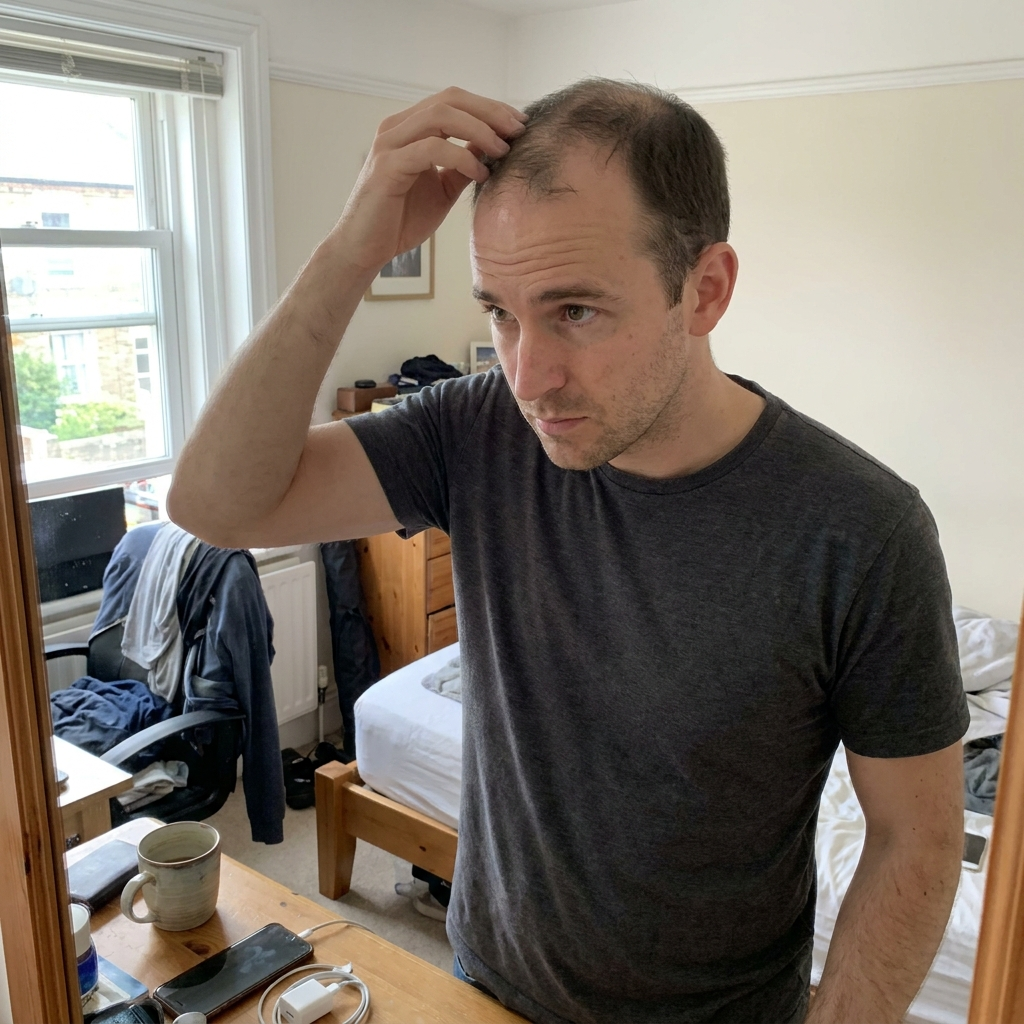
Man adjusting his thinning hair while getting ready

Most men describe the same progression.

First you tell yourself it is the lighting.

Then you start choosing photos more carefully.

Then you start adjusting how you stand, how you part it, which way the wind blows.

Then one day you stop noticing the hair you still have, and you only see the hair you have lost.

And here is what makes it worse than almost any other ageing problem.

Hair loss is one of the few things in life where waiting actively works against you.

A follicle that is struggling today is far easier to support than a follicle that has been dormant for five years. The longer you spend deciding, comparing, and quietly hoping it sorts itself out, the more the underlying biology moves on without you.

That is the cruel part. The clock is real, and it does not pause while you feel bad about it.

Which is exactly why getting the guilt out of the way matters so much. Shame makes men freeze. And freezing is the one thing the biology punishes.

The Myths That Make Men Blame Themselves

Ask the average man why he thinks he is losing his hair, and you will hear some version of these:

"I wore hats too much."
"It is the stress."
"My shampoo must have been bad for it."
"I should have eaten better."
"I read about a vitamin I should have been taking."

Here is what is striking about that list.

Almost none of it is true.
Hair loss myths

Wearing hats does not cause pattern hair loss. Washing your hair does not cause it. A normal diet does not cause it. Everyday stress is not the engine behind it. These are the stories men tell themselves because they need a reason, and a reason that feels like their own fault is somehow easier to hold than no reason at all.

But the real cause is far less personal, and far less flattering to the industry that has spent years selling you fixes for the wrong problem.

What Is Actually Happening On Top Of Your Head

Pattern hair loss, the kind that affects the majority of men, is driven by two things you did not choose.

1 Your genetics.
2 And a hormone called DHT.

Here is the short version, in plain language.

Your body naturally produces a hormone called DHT. In men who are genetically sensitive to it, DHT binds to the hair follicles on the top of the scalp and slowly, quietly, begins to choke them.

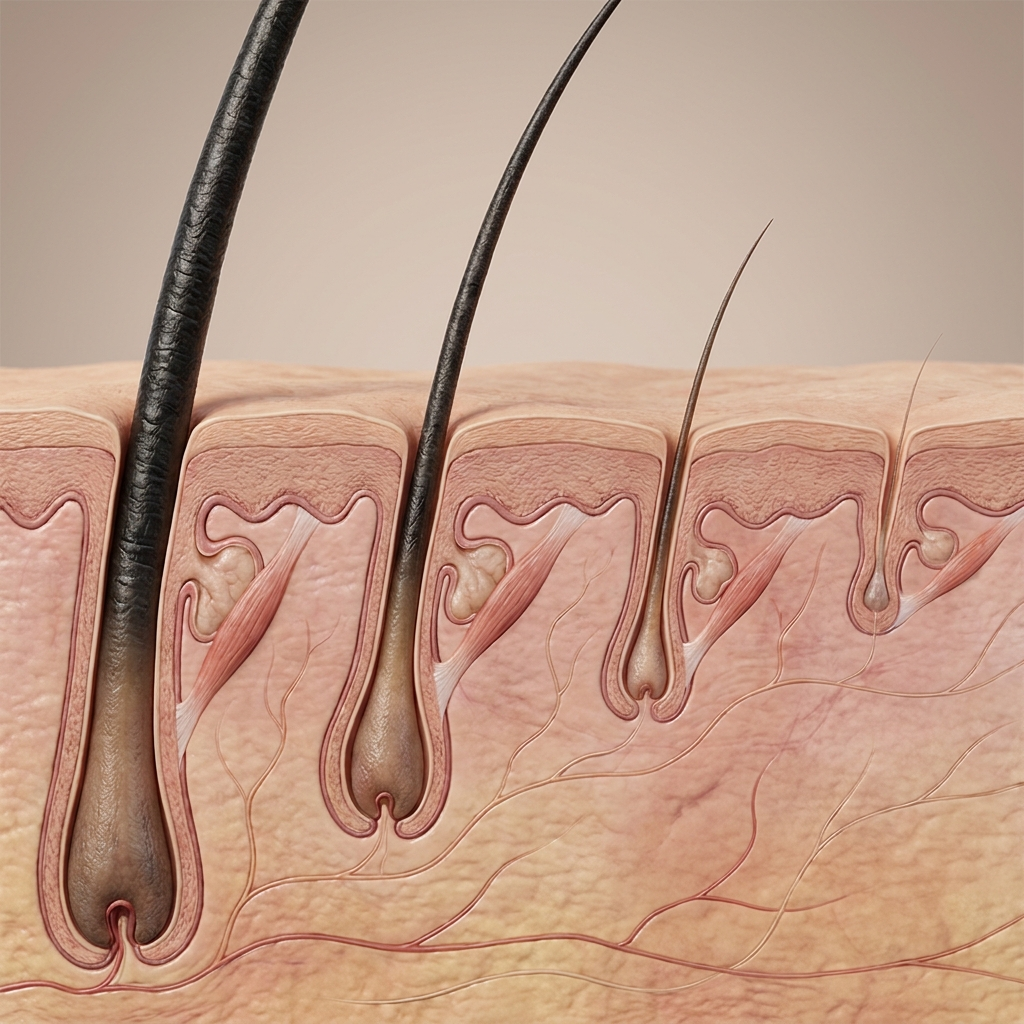
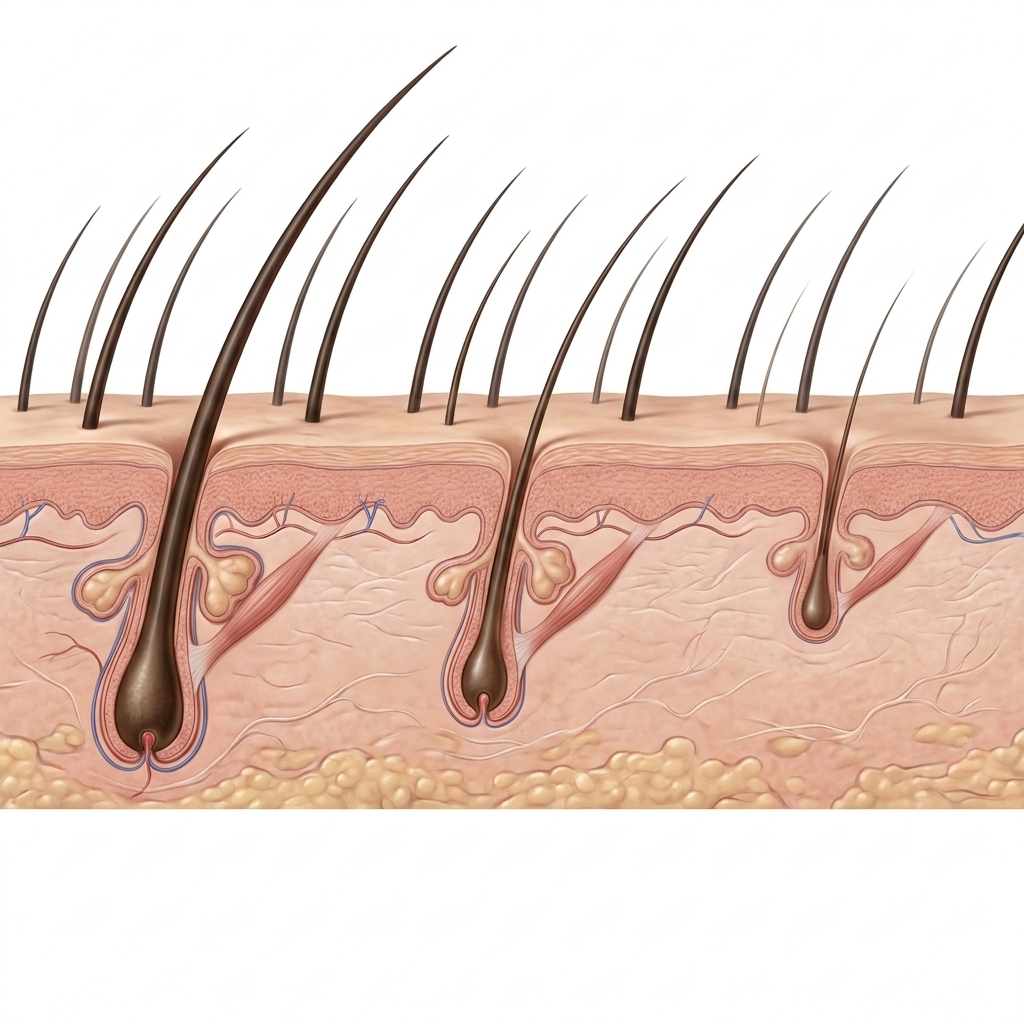
Hair follicle miniaturization

The follicle does not fall out overnight. It shrinks.

Each growth cycle, it produces a slightly thinner, slightly weaker, slightly shorter hair than the time before. Thick, healthy strands gradually become fine, wispy ones. Eventually the cycle gets so weak that the follicle stops producing a visible hair at all.

This process has a name. Miniaturization.

And notice what is not on the list of causes.

Your hat is not on the list. Your shampoo is not on the list. Your stress levels are not on the list. Your effort is not on the list.

You inherited a genetic sensitivity to a hormone your own body produces. That is the mechanism. You did not cause it, and you could not have prevented it by being more careful.

That is the first half of why this was never your fault.

The second half involves other people, and it is the part that should make you a little angry.

The Hidden Problem Beneath The Hair: Why The Follicle Is Everything

Almost every hair loss product on the market is built to do one thing.

Make your existing hair look better.

Thicker shampoo. Fuller fibers. Shinier strands. Denser appearance.

None of that is wrong. But none of it touches the actual problem.

Because hair loss does not start with your hair.

It starts beneath it. It starts at the follicle.

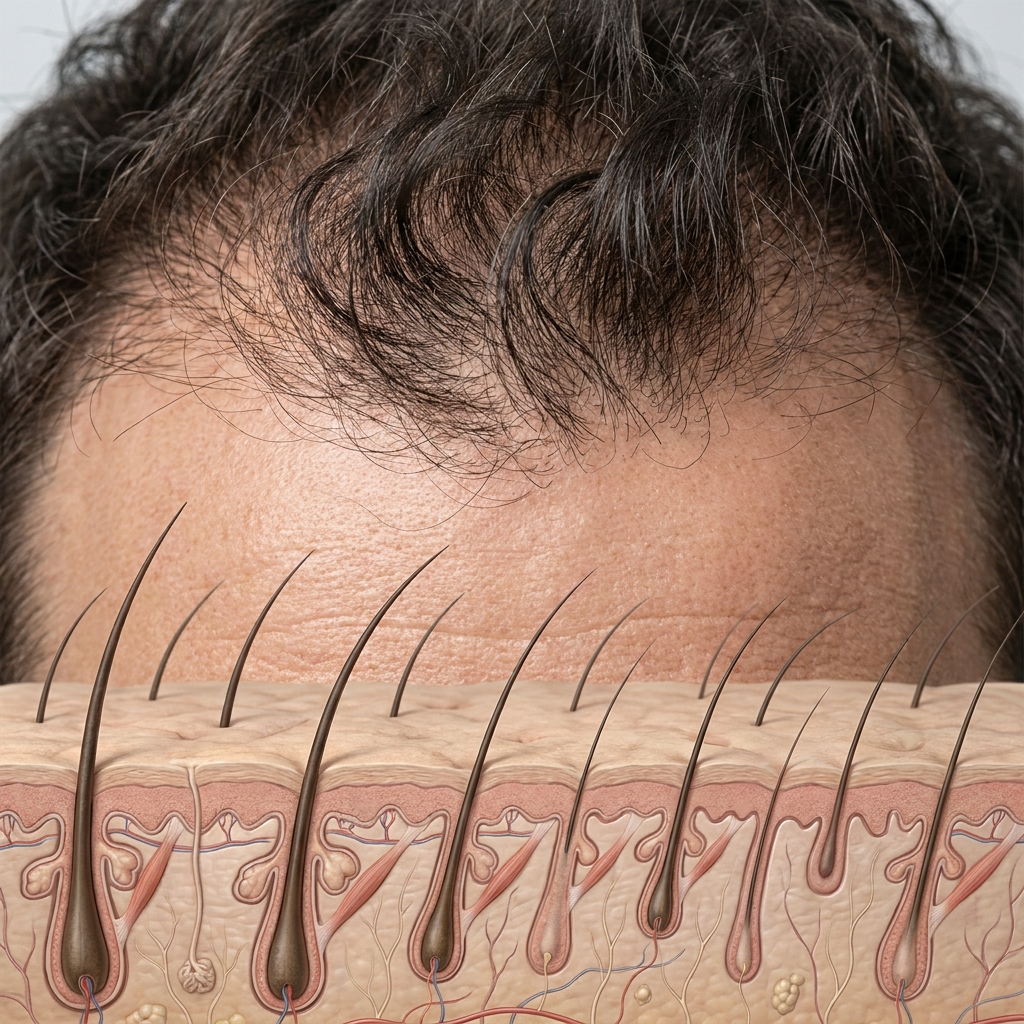
Hair follicles beneath the scalp

The hair you see thinning on the surface is really a signal. It is telling you what is happening underneath, where the follicle is miniaturizing cycle by cycle.

So the strand is the smoke. The follicle is the fire.

And this single distinction is the entire reason most products disappoint. They are pouring effort onto the smoke while the fire keeps burning.

Once you understand that, you can finally evaluate hair loss solutions the right way. You stop asking, "Will this make my hair look fuller today?" and you start asking the only question that matters.

"Does this actually reach the follicle, where the problem begins?"

That question alone disqualifies most of the products men try first. Let us go through them, one by one, because you deserve to know exactly why each one let you down.

Why The Things You Already Tried Could Never Have Worked

This is the part nobody selling you those products will ever explain. So here it is, plainly.

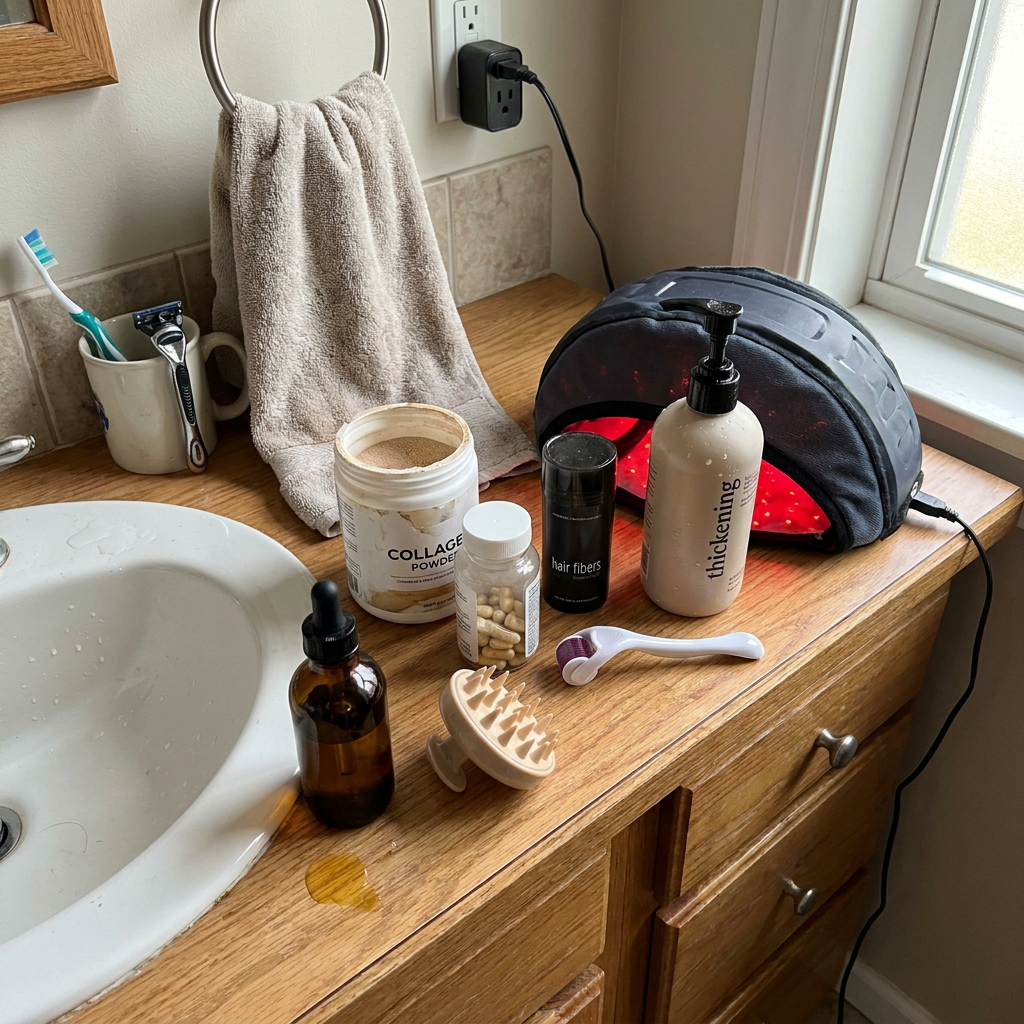
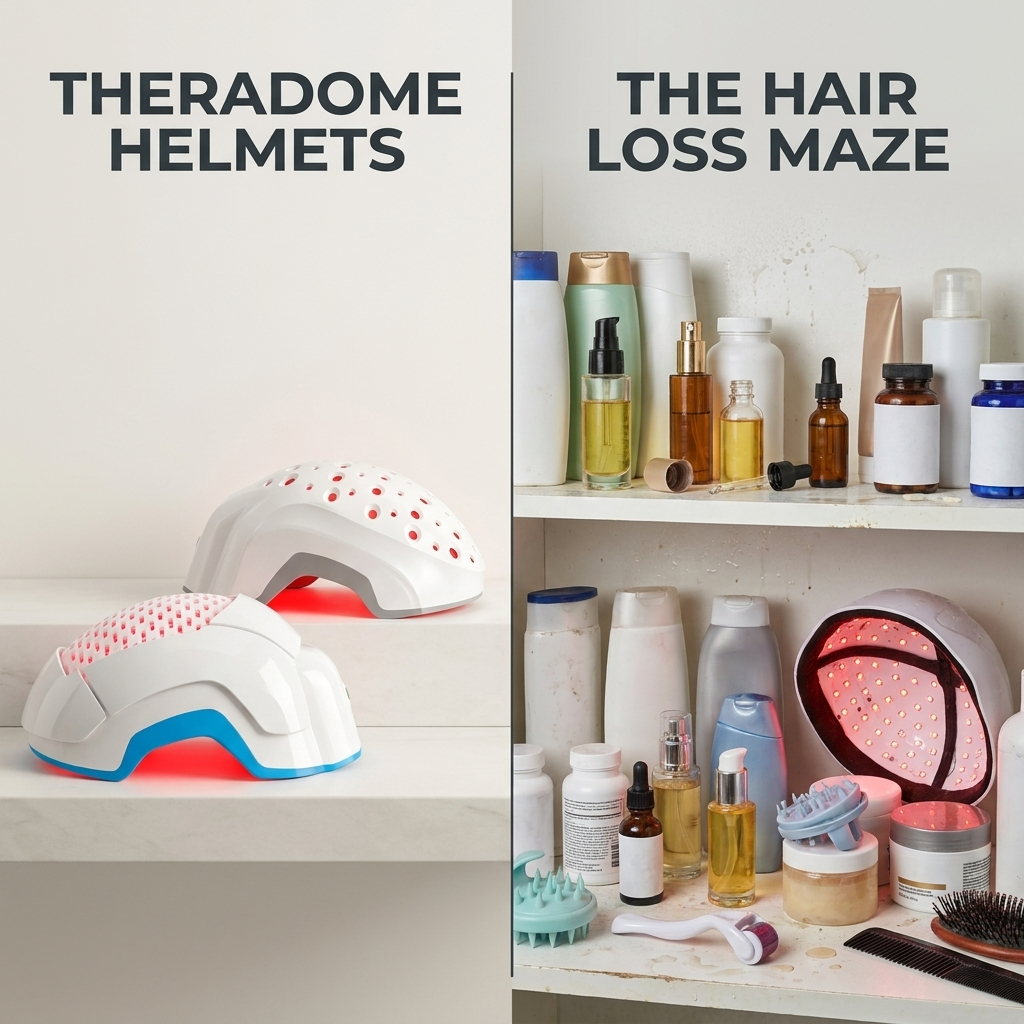
Commonly tried hair loss products
Thickening and "anti-hair loss" shampoos.

A shampoo is on your scalp for, at most, a couple of minutes before it goes down the drain. It cleans the strand and can coat it to look temporarily fuller. It cannot reverse follicle miniaturization because it never reaches the follicle long enough, or deep enough, to do anything to it. It is working on the smoke.

Biotin and hair vitamins.

Vitamins support general hair health if you are genuinely deficient. Most men are not. And even when they help the body build a healthy strand, they do nothing to stop DHT from choking a genetically sensitive follicle. You cannot supplement your way out of a hormonal and genetic process.

Collagen.

Collagen is a structural protein. It is good for plenty of things. Reactivating a miniaturizing follicle is not one of them. The marketing borrows the language of "hair, skin, and nails" and lets you fill in the rest.

Hair fibers.

Be honest about what these are. They are makeup for your scalp. Tiny colored fibers that cling to existing hair to hide the gaps. They can look great in a photo. They do absolutely nothing to the follicle, and they wash out in the next shower.

Growth serums and rosemary oil.

These sit on the surface of the scalp. A few have mild supporting evidence for circulation or scalp health, but none of them deliver the kind of targeted energy a choked follicle actually needs. At best they are a supporting act. They were never going to be the main event.

Scalp massagers and derma rollers.

Stimulating blood flow and creating micro-channels sounds productive, and there is a sliver of logic to it. But on their own they do not address the DHT-driven mechanism at all. You are improving the soil while ignoring the thing actually killing the plant.

Cheap red light caps.

This is the one that stings most, because it feels like you finally bought "the real thing." We will come back to exactly why most of these underdeliver, because the reason is the single most important point on this entire page.

See the pattern?

Every one of those products is aimed at the strand, the surface, or your general health.

The problem was always one layer down, at the follicle.

So you were not failing. You were aiming, in good faith, at a target the entire industry quietly pointed you toward. That is not a you problem. That is a them problem.

The Years Most Men Lose (And Why The System Is Built To Take Them)

There is a path almost every man walks, and it is worth seeing laid out, because it is not an accident.

It starts cheap. A shampoo, because it is on the shelf and it is easy.

It does not work, so the logic becomes "maybe I need it from the inside." Now it is vitamins and gummies.

Still thinning, so now it is a serum, an oil, or a gadget someone recommended.

Still thinning, so finally a device. But which one? So you grab the cheapest cap with the biggest number printed on the box and hope.

Every single step feels reasonable on its own. Every step is cheap enough to justify. Every step buys a few months of hope before quietly disappointing you.

But stacked together, they cost something enormous.

Two years
Three years
Five sometimes
Hair thinning progressing over time

Years where the follicle was still alive and still responsive. Years you cannot buy back at any price.

And here is the part that should make you angry rather than ashamed.

That path is profitable for the people who sell it. A man who cycles through fifteen cheap, surface-level products over five years spends more and buys more often than a man who understands the mechanism on day one. The confusion is not a bug. For a lot of companies, it is the business model.

So if you have lost years to this, you did not waste them out of stupidity.

You navigated a maze that was built to keep you walking in circles.

The Biggest Lie In Hair Loss: How Men Are Taught To Compare Devices Wrong

Eventually most men arrive at the same place. A device. Some form of light therapy for the scalp.

And this is where the confusion gets engineered on purpose.

Because almost every man shopping for a hair growth device is handed the wrong way to compare them, and the industry is very happy to leave it that way.

Most men are taught to believe:

More lights is better.
A bigger number is better.
Cheaper is basically the same thing.
Red light is red light.

Every one of those beliefs is wrong. And every one of them costs men results.

The Cheap Cap Trap

Most men assume all hair growth devices work roughly the same way. After all, they glow red, they sit on your head, they all use the phrase "red light therapy."

So naturally, many choose the cheapest option.

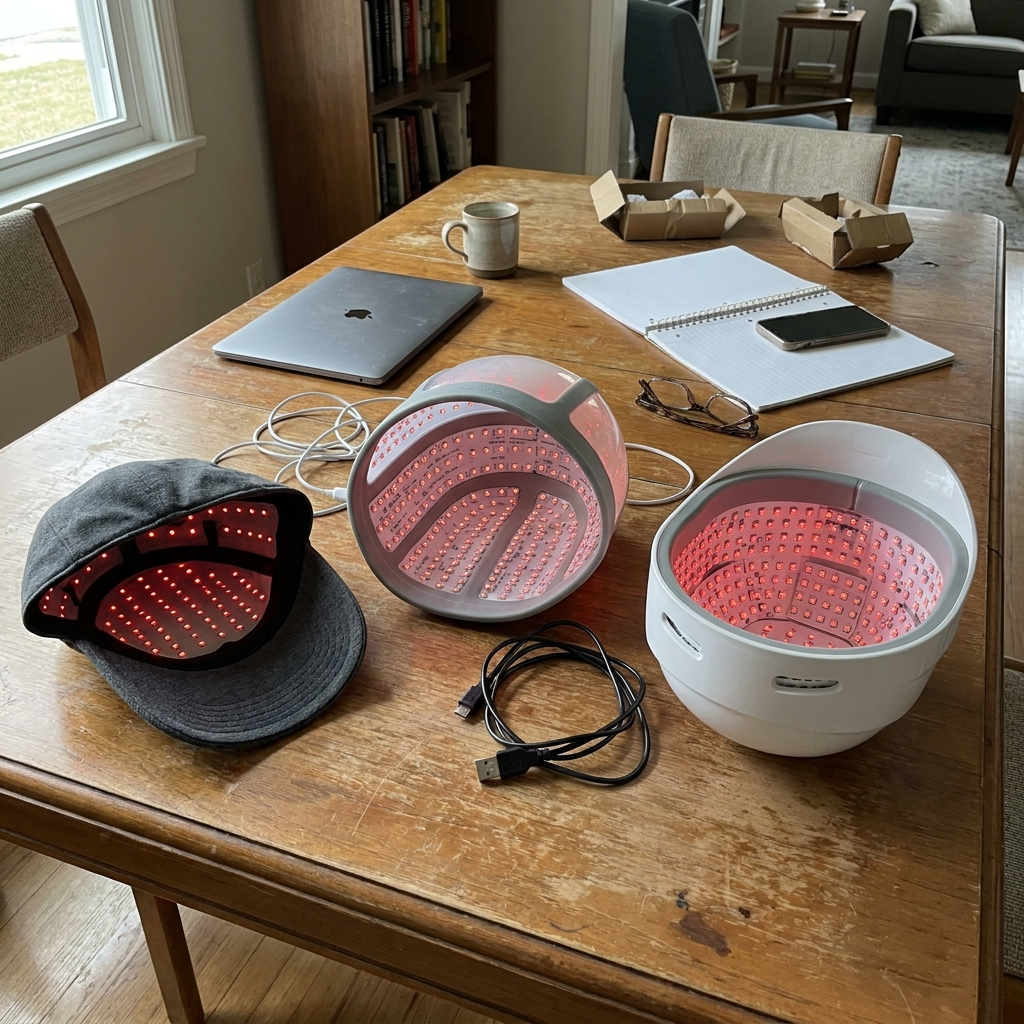
Generic red light hair devices
But that is like comparing a toy laser pointer to a surgical laser. Both produce light. Only one was engineered for a serious purpose.

Most budget caps are built around LEDs, because LEDs are dramatically cheaper to manufacture. That is why the boxes shout numbers like "120 LEDs," "300 LEDs," "500 LEDs."

The numbers sound impressive.

But a larger number of weak light sources does not create a stronger treatment.

Because hair follicles do not count lights.

They respond to energy.

Why More Lights Is Not The Answer

Here is the part the cheap caps do not want you thinking about.

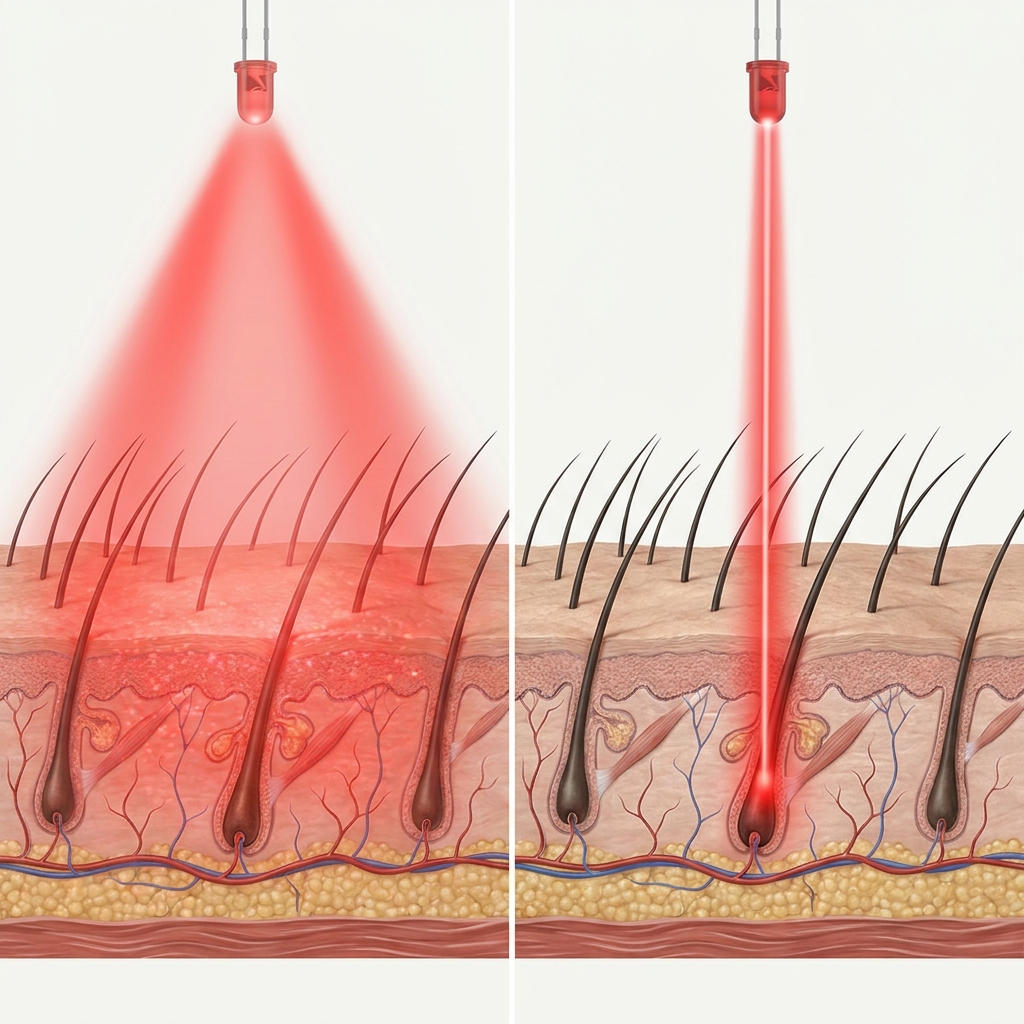
There is a real, physical difference between the light a laser produces and the light an LED produces.

Laser light is coherent. It travels in a tight, organized, focused beam. It holds its intensity and can penetrate the scalp to actually reach the follicle, which is the entire point of the treatment.

LED light is non-coherent. It scatters in every direction, loses intensity fast, and struggles to reach any meaningful depth. A great deal of it never gets where it needs to go.

LED and laser light comparison

So imagine comparing 80 professional speakers against 500 tiny phone speakers. The number tells you almost nothing. What matters is what each one can actually deliver.

The goal was never to build a brighter helmet.

The goal is to deliver usable energy to the follicle.

That is why piling on more LEDs does not solve the underlying limitation. You can add more scattered light all day. You have not necessarily increased the energy reaching the follicle by a single meaningful unit.

More lights does not equal more results.

The type of light matters. The delivery matters. The energy that actually reaches the follicle is the only thing that matters.

And once you understand that, you cannot un-understand it. You will never look at a "500 LED" box the same way again.

So What Actually Works At The Follicle?

Strip away the marketing, and the question becomes simple and specific.

What does it actually take to support a miniaturizing follicle?

The research points to a few things in combination.

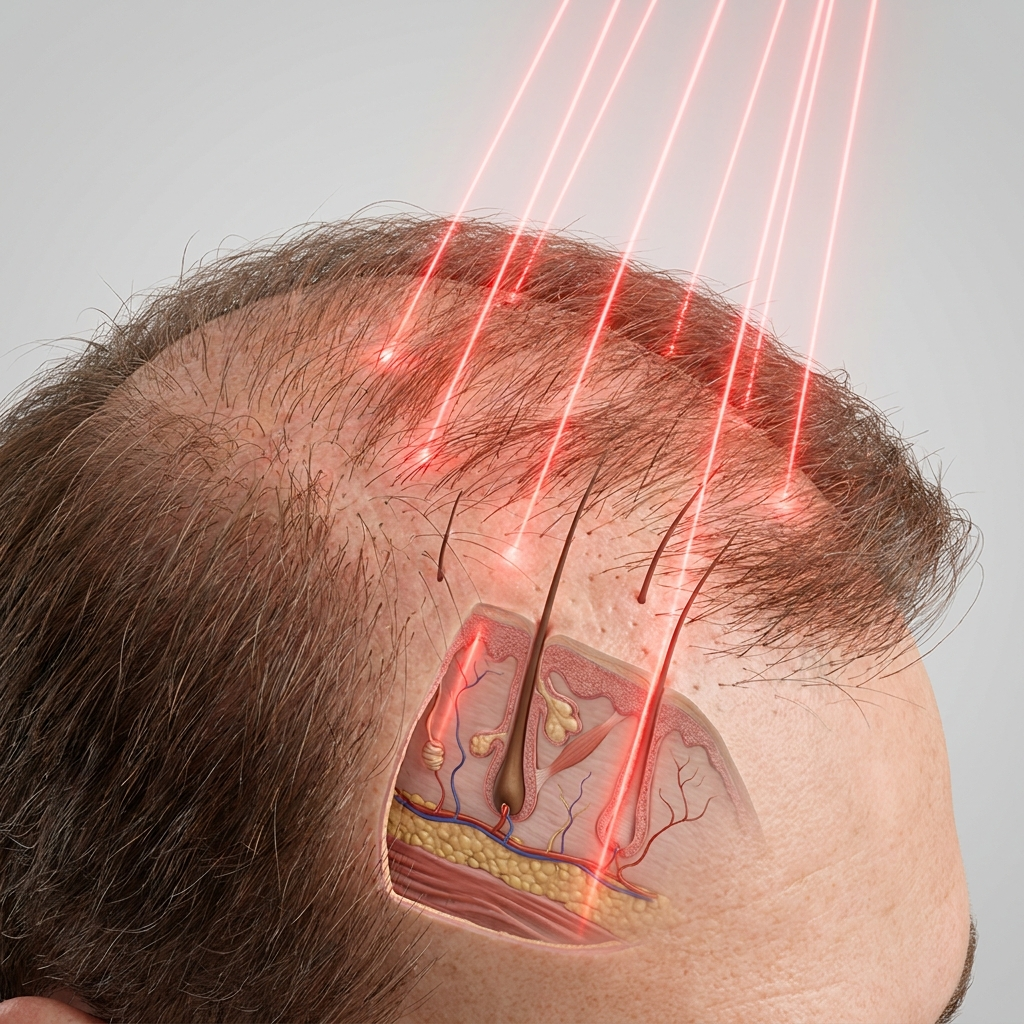
Laser energy reaching hair follicles

Coherent laser light, not scattered LED light, so the energy stays focused enough to penetrate.

A specific wavelength, in the region of 680 nanometers, which is the range associated with reaching the depth where the follicle sits rather than scattering at the surface.

A meaningful dose of energy delivered consistently, something in the order of 6 Joules per square centimeter across a treatment session, which is what laser research associates with stopping loss and supporting regrowth.

And enough coverage and consistency that you can actually keep doing it for the months the follicle cycle requires.

Notice that none of that is about how the device looks, how many lights it has, or how bright it glows.

It is about coherent light, the right wavelength, real delivered energy, and a routine you will actually keep.

Which raises an obvious question. If that is what the science points to, did anyone actually build a device around it, instead of around a price point and a big number on a box?

As it turns out, yes. And the story of who built it, and why, is the part most men never hear.

The Engineer Who Asked A Completely Different Question

Most hair growth devices exist because someone saw money in a fast-growing market. They started with a price, then built a product to hit it.

One company started somewhere else entirely. It started with the engineering problem.

That company is Theradome, and its founder is Dr. Sayyid Tamim Hamid.

He was not a marketing entrepreneur. He is a biomedical engineer, with degrees across electrical engineering, computer engineering, and biomedical engineering, and decades of work in laser and photonics technology.

Before any of this, he began his career at NASA's Kennedy Space Center, where he designed and built laser and photonics systems for the Space Shuttle program and its astronauts.

That is not a detail bolted on for marketing. It is the origin of the entire product. Working at that level demands precision in beam quality, wavelength stability, and thermal behavior far beyond anything consumer electronics ever require.

Then his own hair started thinning.

And he did not look at the problem like a consumer reaching for a shampoo. He looked at it like an engineer who already understood, at a deep level, how laser light interacts with living tissue. He did not ask, "How many lights can we fit in a helmet?" He asked, "How much coherent laser energy does it take, at the right wavelength, to actually stimulate a follicle across the whole scalp?"

The answer to that question became the device.

Why It Uses Exactly 80 Lasers (And Why That Is The Entire Point)

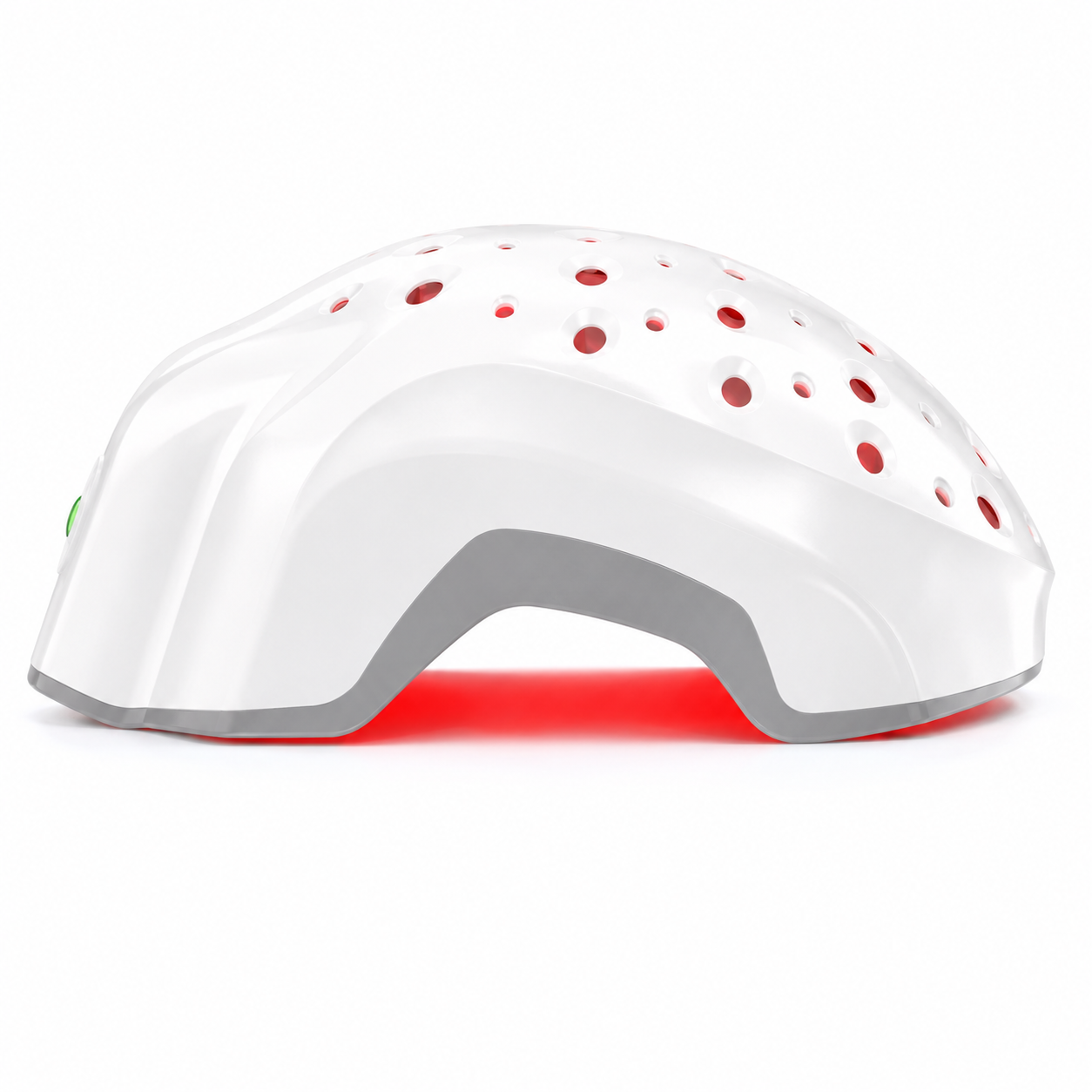
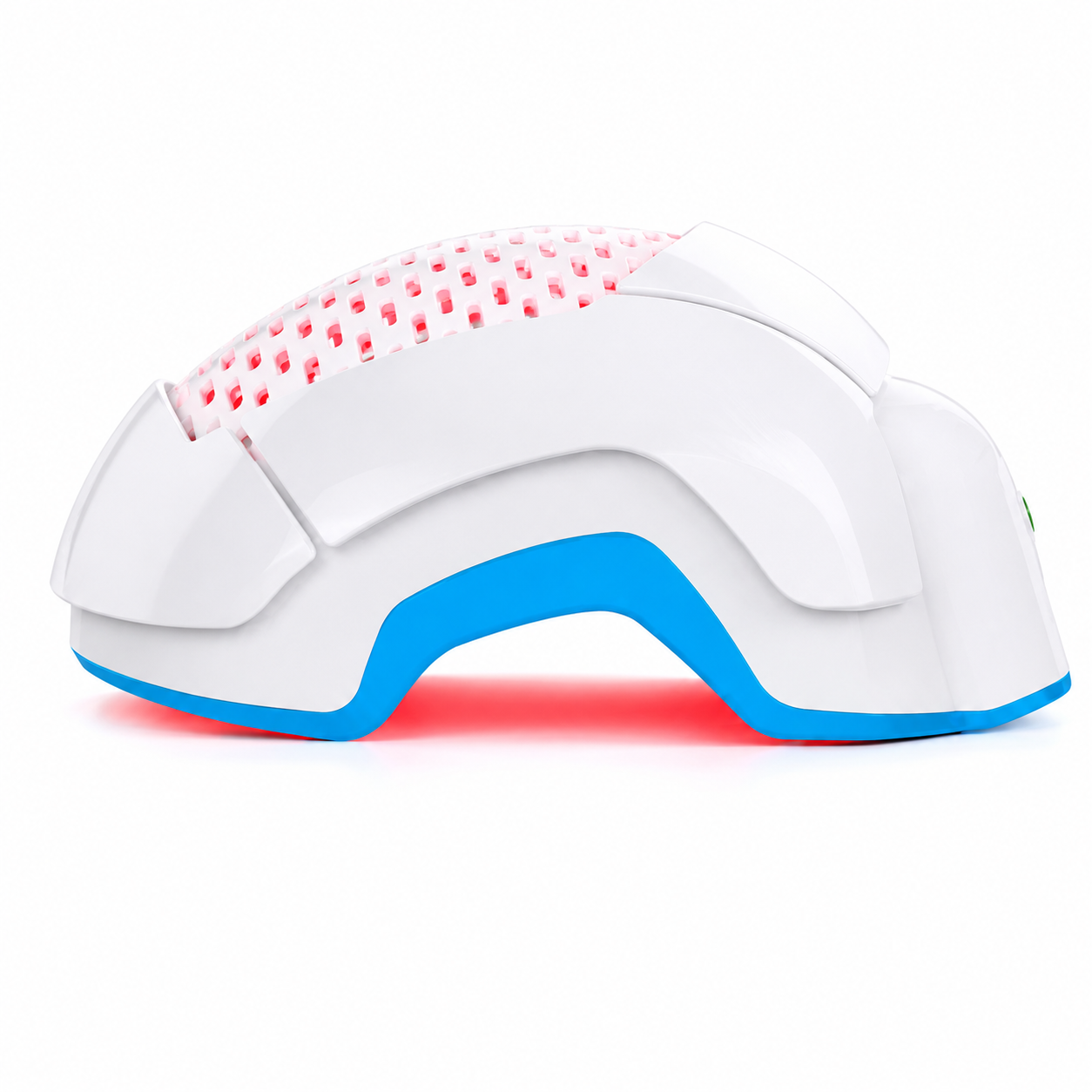
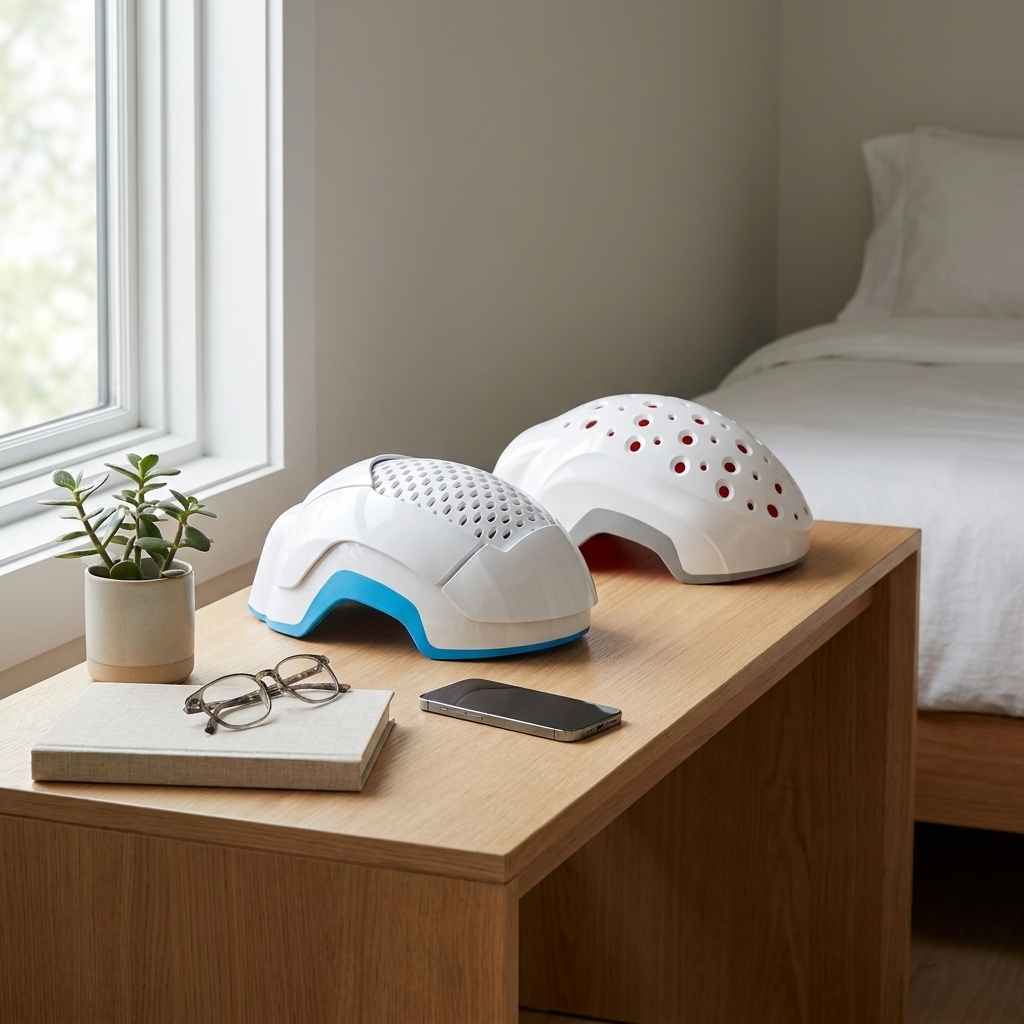
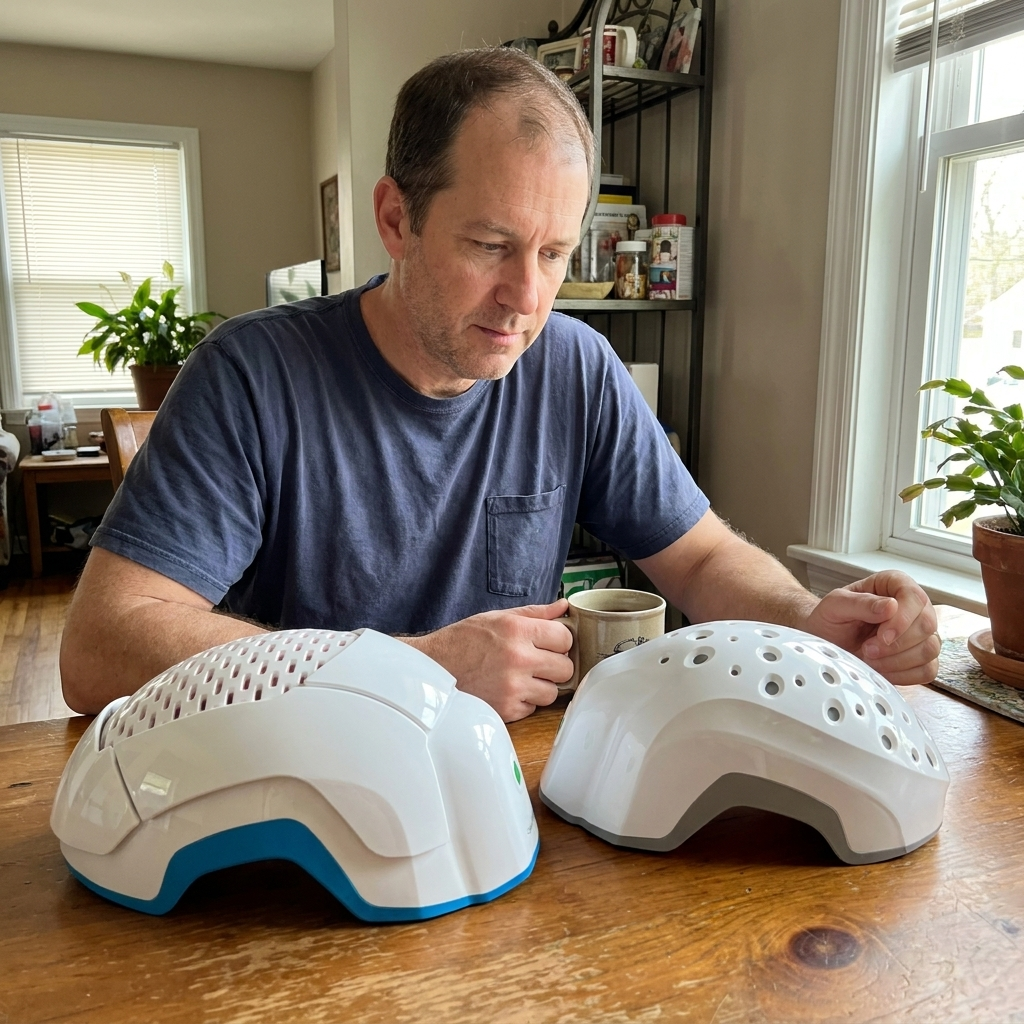
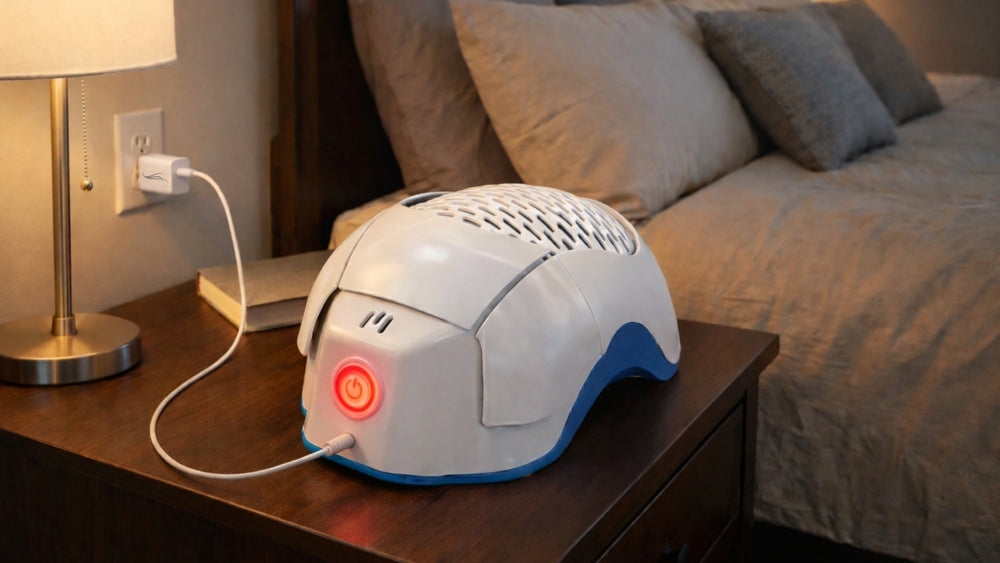
The answer to his question became the Theradome PRO LH80.

80 medical-grade lasers. Not 20. Not 40. Not 500 LEDs.

80 coherent lasers, each tuned to deliver light at roughly 680 nanometers across the scalp. And Theradome's 680nm lasers are 250 percent more absorptive and effective than the 655nm lasers most other devices rely on. The lasers are kept cool by design, because heat at the scalp is the enemy of both comfort and hair.

Every laser has a job. Every laser contributes to total coverage. Every laser contributes to total delivered energy.

That is why the number matters. Not because it sounds impressive, but because it is the mechanism. Remove half the lasers, and it is a different device. Swap them for LEDs, and it is a different device entirely.

And the energy delivery is not close. Through what Theradome calls IntelliDose, the device is engineered to be 30 to 60 times more powerful at the follicle than other devices. Even ones quoting hundreds of diodes.

Read that again. Not 30 to 60 percent. 30 to 60 times.

For men with early-stage hair loss or who want a lighter routine, there is also the EVO LH40 with 40 lasers. Same laser science, same wavelength, the difference is dose per session and how often you treat. Not a downgrade to weaker technology.

The Clinical Trial That Changed Everything

It is easy for any brand to claim results. It is far harder to prove them in a way that survives scrutiny.

In 2016, Theradome ran a landmark clinical trial on laser phototherapy for male pattern hair loss. Not a before-and-after gallery. A study built to the highest standard researchers recognise.

Randomized.
Double-blind.
Sham-device-controlled.
Multicenter.

If those words mean nothing to you yet, the next section explains exactly why they matter more than any testimonial ever could.

What Happened When Researchers Compared It To A Sham Device

This may be the most important part of the entire story.

Because researchers did not just compare users before and after treatment. They compared the real device against a fake one.

Participants wore devices that looked the same, followed the same schedule, and held the same expectations. But only one group received the actual laser technology. The other group wore a sham device containing red LED’s that looked and felt identical but did nothing. Neither the participants nor the people assessing them knew who had which.

The entire purpose of that sham device was to strip out the placebo effect and answer one question.

Was the technology itself responsible for the result?

This is why randomized, double-blind, sham-controlled trials are considered the gold standard. They do not ask people whether they think something is working. They test whether it actually works, blind, with no room for wishful thinking.

And it held up.

93 percent success rate in hair regrowth, with zero side effects.

Not a survey. Not a marketing number. A gold-standard study designed specifically to rule out the placebo effect, and the laser technology still delivered.

Most devices in this category have never been put through a study like this at all. They cannot show you a number like that, because they never earned it.

The Problem With Micro-Infusion Hair Systems

Now, micro-infusion is the trend of the moment, and the marketing is slick. Tiny needles. Micro-channels. Deeper ingredient delivery. Scalp stimulation.

Here is what the marketing leaves out.

Micro-infusion still depends on a long chain of variables, and every link has to hold:

The quality of the serum.
The quality of the ingredients.
Correct application.
Proper hygiene.
Repeatedly puncturing your own scalp.
Consistent compliance, week after week.

Miss any one of those and results suffer. And every one of them adds friction to a routine you are supposed to keep up for months.

Laser phototherapy asks a different question. Not "how do we push more ingredients into the scalp?" but "how do we deliver energy directly to the follicle with no needles, no topicals, no residue, and no scalp trauma?"

That is why so many men eventually move toward it. No serum. No mess. No puncturing. No downtime. Just a repeatable routine you are actually likely to stick to.

And compliance is not a minor detail. The treatment you will genuinely do twice a week for six months beats the complicated one you quietly abandon by week three.

The Company That Created The Category

There is a difference between a company that entered a market and a company that created one.

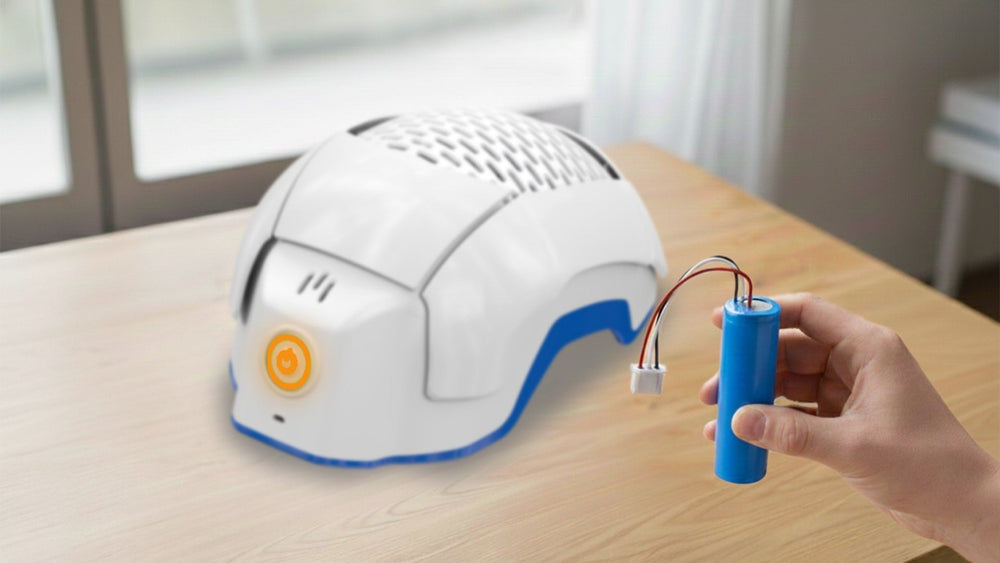
Theradome became the first FDA-cleared wearable laser phototherapy helmet for hair growth and to date is still the most technologically advanced hair growth device on the market today.

That distinction matters, and it is worth being precise about what it means.

Before Theradome, serious laser phototherapy for hair largely lived in clinics and in-office machines, or in formats that were not a true hands-free, wearable helmet. Theradome brought clinical-strength laser phototherapy into a self-contained, wearable, at-home device, and cleared the regulatory bar to do it.

Others followed the path Theradome opened. That order matters, because being first to clear that bar is not a slogan. FDA clearance requires evidence. It requires documentation. It requires demonstrating safety and intended use to a regulator, not just to a marketing team.

For a skeptical man, that is the entire point.

You should not buy a device because the website looks good.

You should not buy it because an influencer recommended it.

You should buy it because the mechanism, the science, and the evidence stack actually make sense when you line them up.

And when you line them up here, the picture becomes hard to ignore:

First FDA-cleared wearable laser phototherapy helmet
Laser-only technology, no LEDs
680nm wavelength, 250 percent more absorptive than 655nm devices
80 medical-grade lasers
93 percent success rate in a randomized, double-blind, sham-controlled trial
Zero side effects
Engineered specifically for follicle stimulation

Viewed together, it stops looking like a gadget and starts looking like a serious, considered hair growth system.

Why This Should Be The First Serious Thing You Try, Not The Last

Remember the path from earlier. The shampoo, the vitamins, the serums, the cheap cap, the years quietly lost.

Here is the reframe.

Almost everything men try first works on the strand. Laser phototherapy of this kind works on the follicle, with a mechanism backed by a gold-standard clinical trial and a regulatory clearance to match.

So the logical move is not to save this for last, after years of trial and error.

The logical move is to treat it as the first serious decision, before the follicle goes quiet.

Not because everything else is worthless. Some of it has a supporting role. But the thing most likely to actually move the needle should not be the thing you finally reach after burning your most salvageable years.

You can keep the shampoo. You can keep the vitamins. A device like this can sit alongside other approaches, including minoxidil, as a stand-alone routine or as part of a wider plan.

The shift is simple. Stop leading with the surface. Start with the follicle.

What Progress Actually Looks Like

Here is the encouraging part. You do not have to wait forever to know it is working.

Many men start noticing changes within weeks. Less shedding first. Hair that feels stronger and looks healthier. Then, with consistent use, visible density changes can appear in as little as three months.

Results vary from person to person, depending on where you are in your hair loss journey and how long a follicle has been dormant. Which is exactly why acting earlier matters. An active follicle responds faster than one that has been choked for years.

The men who get the strongest results share one trait above all.

Consistency.

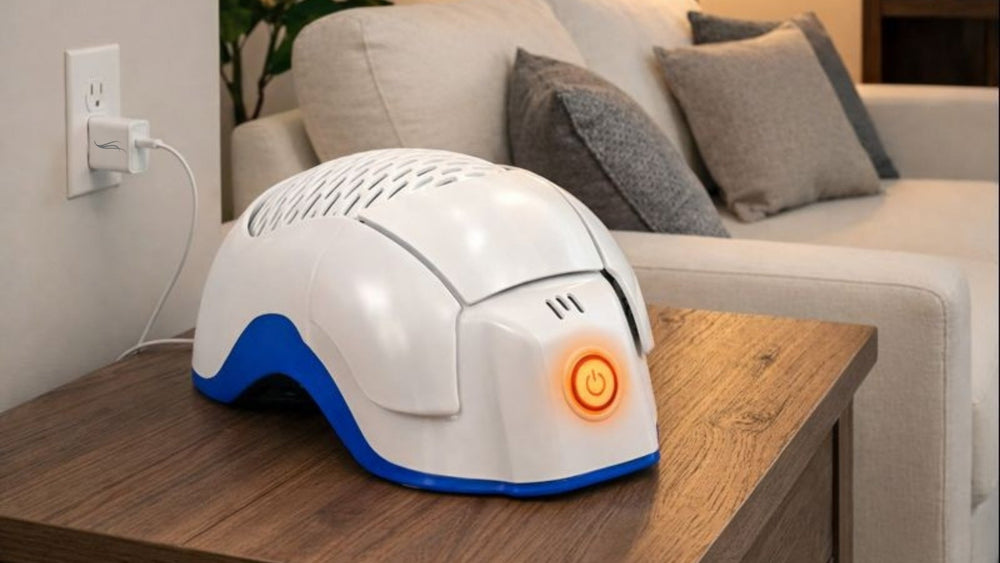
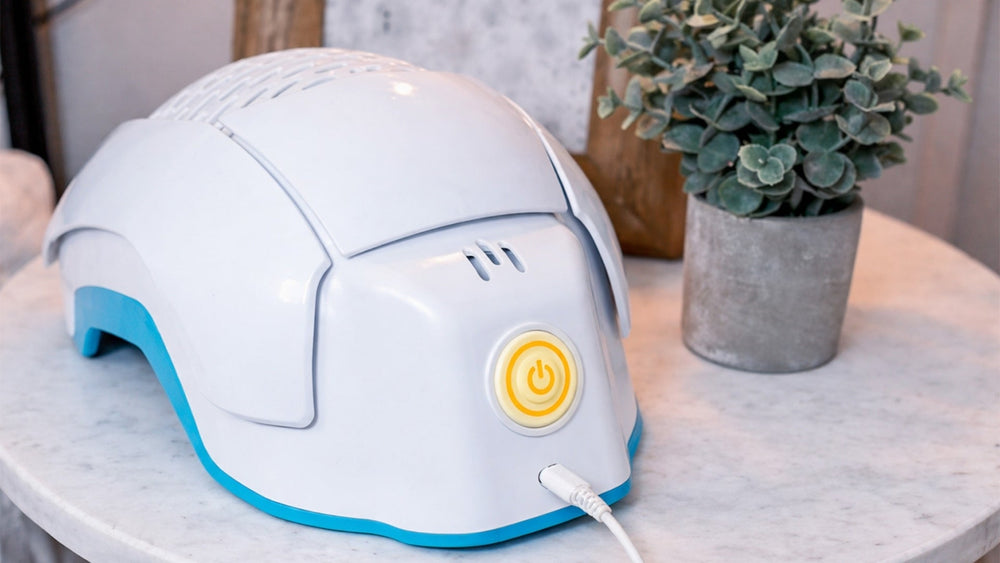
And the entire ask is small. Twenty minutes, twice a week, hands-free and cordless, while you work or relax or move around the house.

Most men have already spent more time than that researching shampoos that were never going to work.

What This Is Really About

Strip everything away, and almost no man is chasing hair for its own sake.

He wants the version of himself that existed before he started managing this in the mirror every morning. The one who did not angle for the light in photos. The one who did not think about wind, or hats, or the harsh lighting in a lift. The one who looked in the mirror and simply did not think about it at all.

That is what is actually on the table. Not strands. Not follicles. Not nanometres.

Confidence. The freedom of not thinking about it.

And the first step toward getting that back is the one almost no one offers you.

Permission to stop blaming yourself.

You did not cause this. You did not fail at fixing it. You were handed a genetic sensitivity you never chose and then pointed at the wrong solutions by an industry that profits from the confusion.

That is the truth. And the moment you accept it, the decision in front of you gets a lot clearer.

If You Remember One Thing From This Entire Article

Stop comparing hair devices by price, by how many lights they have, or by how bright they glow.

Compare them by mechanism. Ask the questions that actually matter:

Is it laser, or LED?
What wavelength does it use?
How much energy actually reaches the follicle?
Is it FDA-cleared?
Was it engineered specifically for hair growth?
Can I realistically keep using it for the next six months?

Get those answers right and the decision gets simple.

Get them wrong, and you risk joining the long line of men who spent years on the surface while the real problem moved on underneath.

Frequently Asked Questions

For the large majority of men, pattern hair loss is driven by genetics and the hormone DHT acting on sensitive follicles. It is not caused by hats, washing your hair, normal stress, or a normal diet. You inherited a sensitivity you did not choose. The science genuinely does not put this on you.

Because they work on the strand, the surface, or your general health, not on the follicle where pattern hair loss actually happens beneath the scalp. A shampoo rinses away in minutes. A vitamin cannot stop DHT from choking a sensitive follicle. Fibers are cosmetic. Serums and oils sit on the surface. None of them deliver targeted energy to the follicle, which is what a miniaturizing follicle actually needs.

Yes. It is FDA-cleared for treating androgenetic alopecia in men and women within defined pattern scales, for Fitzpatrick skin types I to IV. It was the first FDA-cleared wearable laser phototherapy helmet of its kind.

LED light is non-coherent. It scatters, loses intensity quickly, and struggles to reach the follicle at a meaningful depth. Laser light is coherent, stays focused, and can penetrate to deliver usable energy where the follicle actually sits. A high LED count looks good on a box, but light count is not the same as delivered energy.

No, and it is the most common misunderstanding in the category. The number of light sources tells you very little. What matters is the type of light and how much usable energy reaches the follicle. Through its IntelliDose delivery, Theradome is engineered to be 30 to 60 times more powerful at the follicle than other devices, even ones quoting hundreds of diodes.

Micro-infusion relies on needles, serums, ingredient quality, hygiene, and repeated puncturing of the scalp, with results depending on getting all of it right. Laser phototherapy delivers energy directly to the follicle with no needles, no topicals, no residue, and no downtime. For most men that means far less friction and a routine they actually keep.

It is non-invasive, painless, and FDA-cleared as safe and effective with zero side effects. The lasers are kept cool, the helmet encloses the emitters, and the session ends automatically after 20 minutes. No needles, no incisions, no downtime.

Many men notice early changes within weeks, such as reduced shedding and stronger-feeling hair, with visible density changes appearing in as little as three months of consistent use. Theradome's clinical trial showed a 93 percent success rate. Results vary from person to person, and acting earlier gives the follicle a better starting point.

Sessions are 20 minutes, twice a week or more depending on the model, with automatic shutoff. It is hands-free and cordless.

Yes. It can be used on its own or alongside other approaches, including minoxidil and other hair loss treatments.

It is backed by a money-back guarantee, so you have a window to decide if it is right for you. The assessment unlocks the current guarantee terms along with your personalised recommendation.

Ready To Stop Guessing And Understand Your Hair?

If you are noticing any of these:

Crown thinning
Reduced density
Increased shedding
A widening part
A receding hairline
More visible scalp than before

Then the next step is not another shampoo. It is understanding what is actually happening at the follicle level, so your next decision is an informed one instead of a hopeful one.

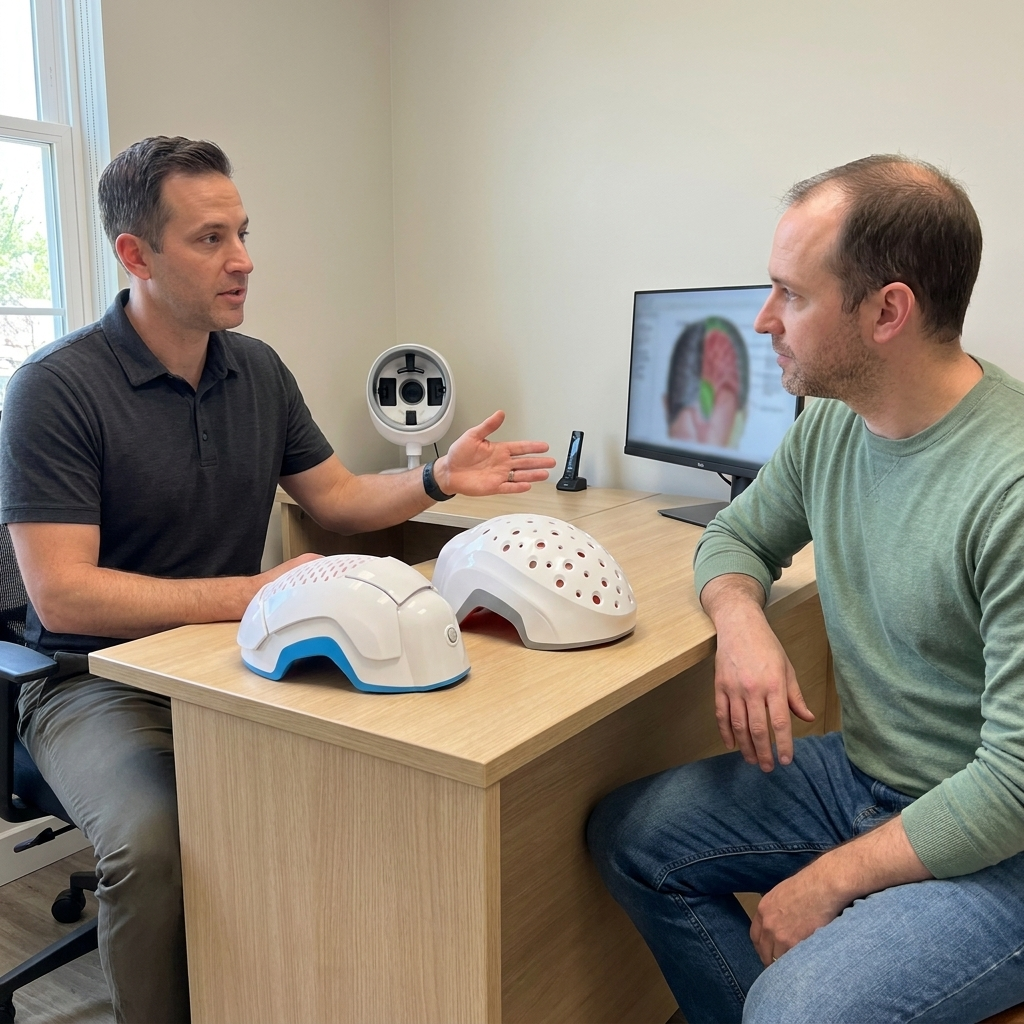
Take the free Hair Assessment to find out which model suits your stage of hair loss and your goals.

You have spent long enough blaming yourself. This is the part where you stop guessing.

The 6 Questions Every Man Should Ask Before Buying A Hair Growth Device

This is where most hair-loss pages lose the reader. They show a device, mention red light, and skip the two things that actually decide whether a skeptical buyer keeps reading: how the mechanism works and why it is better than the things he already tried.

What is the mechanism? Coherent laser phototherapy aimed at the follicle, not another surface-level strand cosmetic.
How does it work, step by step? Focused laser light reaches the scalp, delivers a controlled dose, supports miniaturising follicles, and has to be repeated consistently through the hair cycle.
Why is it better than what I tried? Shampoos, fibres, vitamins, oils, and many LED caps either work on appearance or scatter energy before it reaches the follicle.
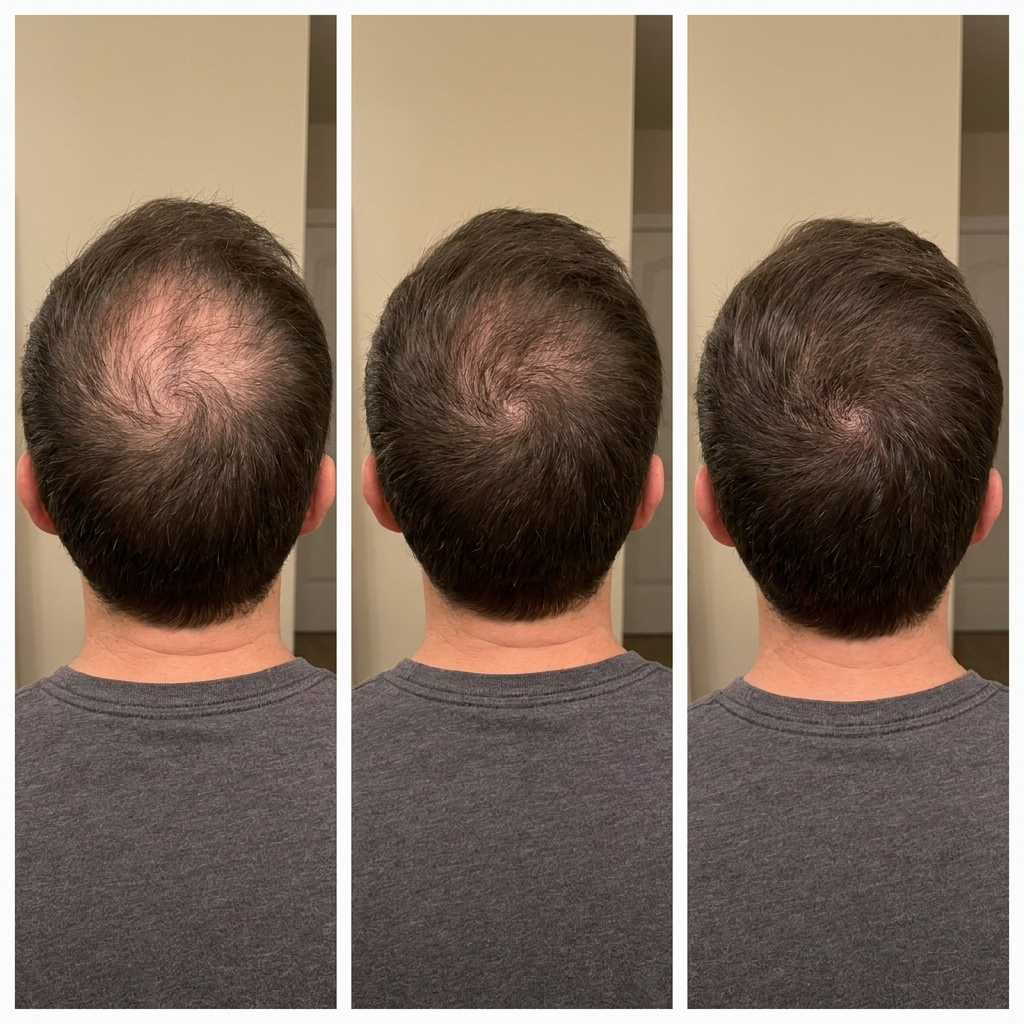
Who has seen results? The page shows the clinical proof stack: trial details, FDA-cleared context, before-and-after imagery, and the supplied clinical-results graphic.
What do I have to do? Put the helmet on, press start, complete a 20-minute hands-free session, repeat consistently, and use the assessment to match the device to your stage.
Why act now? Hair follicles are easier to support while they are still active. The free assessment, current offer, and guarantee reduce the risk of making the next decision.
Thickening shampoo Improves how strands look temporarily Rinses away and does not treat miniaturising follicles.
Vitamins or gummies Supports general nutrition if deficient Does not stop DHT-driven follicle miniaturisation.
Cheap LED cap Creates visible red light across the scalp LED light scatters and diode count does not equal delivered follicle energy.
Micro-infusion Uses needles and topical ingredients Depends on serum quality, hygiene, application, and ongoing friction.
Theradome laser phototherapy Uses coherent laser light, controlled dose, and a wearable routine Requires consistency over months, because hair cycles do not change overnight.