GREAT VALUE

ALL-IN-ONE

GREAT VALUE
ALL-IN-ONE

Item added to your cart
This is for the woman finding hair in the shower, seeing scalp in photos, losing density after pregnancy, noticing temple or crown thinning, watching menopause change her hair, or wondering whether stress, breakage, and diffuse shedding are quietly stealing her confidence.
Explore Theradome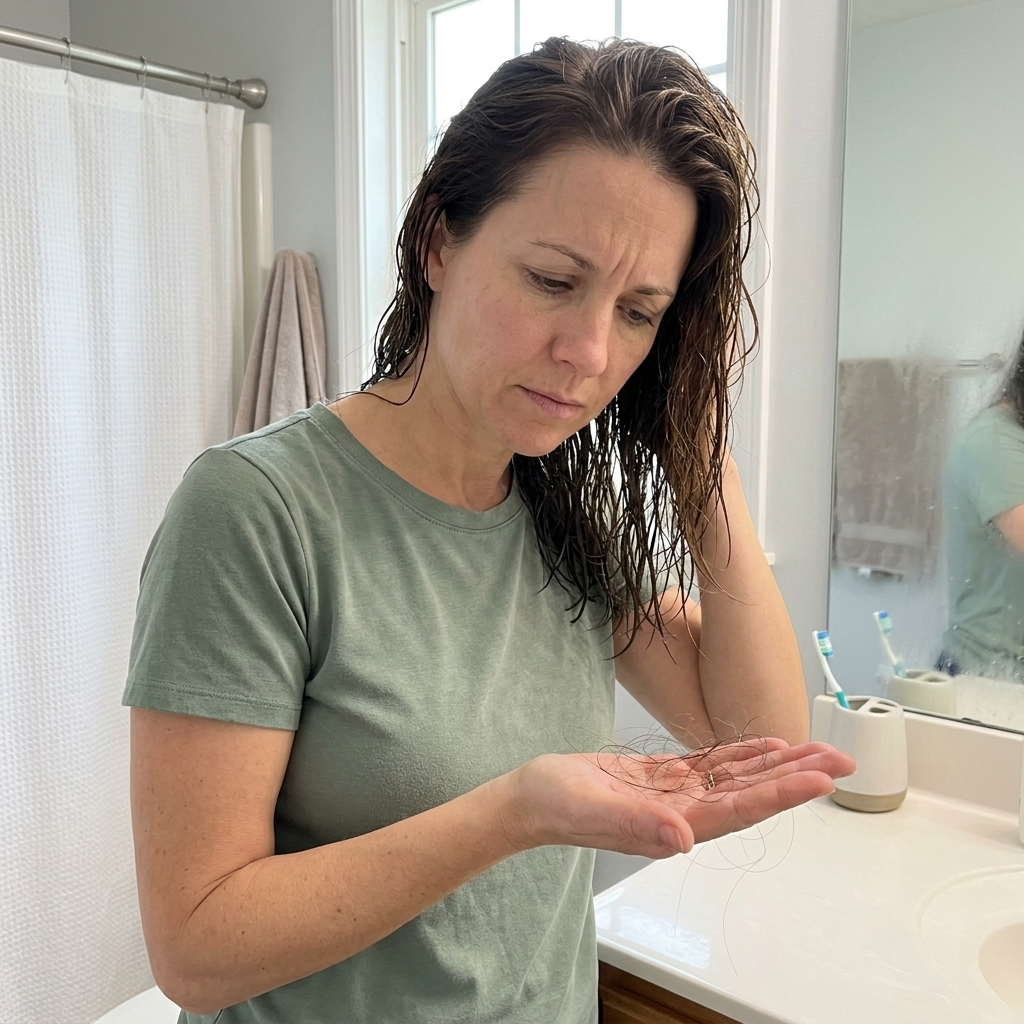
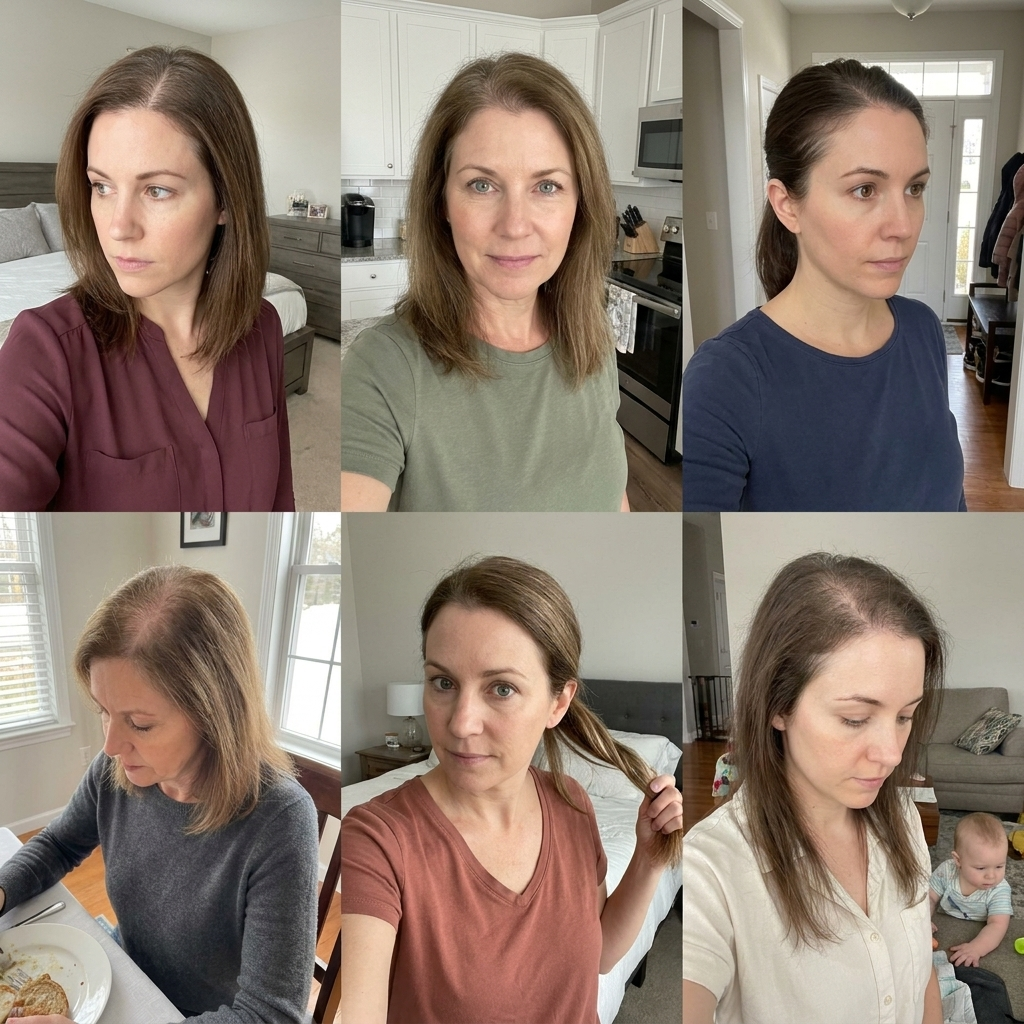
For one woman, it starts with hair wrapped around her fingers in the shower. For another, it is a widening part line under bathroom lighting. For another, it is postpartum shedding that never seems to fully rebound.
For another, menopause changes the texture, density, and scalp coverage almost overnight. For another, it looks like breakage until she realizes the volume is disappearing everywhere.
Female hair loss does not always announce itself as a bald spot. It can show up as diffuse thinning, temple recession, crown visibility, a smaller ponytail, a see-through hairline, extra shedding on the pillow, brittle strands that snap, or the quiet panic of avoiding photos because the light hits your scalp the wrong way.
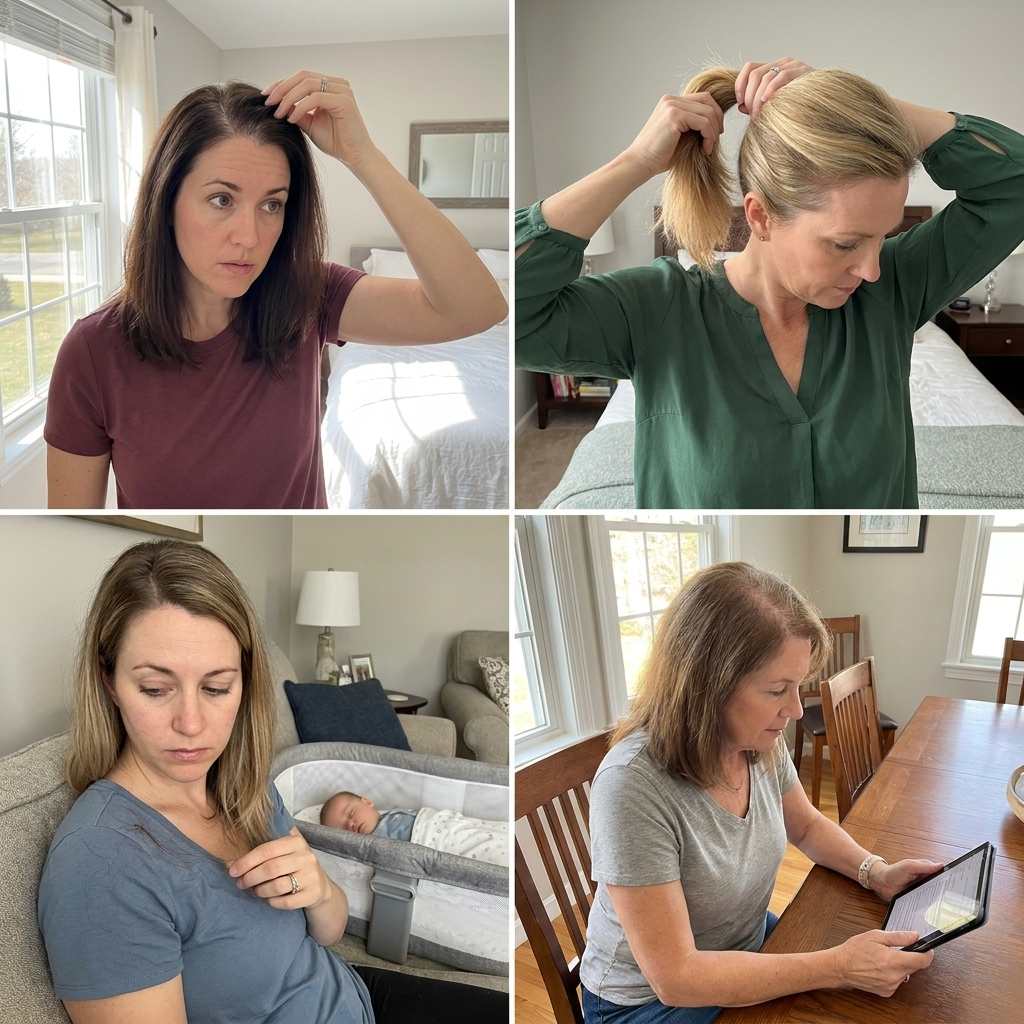
Shedding, postpartum loss, menopause-related thinning, stress-related shedding, diffuse volume loss, temple thinning, crown thinning, and breakage confusion can have different triggers.
Some women need medical testing. Some need nutritional support. Some need hormone-aware guidance. Some need to stop tension styling.
Once a woman is past the panic of the symptom, the better question becomes: what is happening at the follicle environment, and what can actually support healthier hair growth over time?
The strand you see in your brush is only the visible ending. The follicle beneath the scalp is where the growth cycle is controlled.
The first wave usually feels reasonable: volumizing shampoo, collagen, biotin, rosemary oil, scalp scrubs, silk pillowcases, growth serums, hair fibers, extensions, toppers, prenatal-style vitamins, and expensive salon treatments.
Some can make hair look better temporarily. Some can help when there is a true deficiency. Some can reduce cosmetic damage. But many do not meaningfully address the follicle-level process behind progressive thinning.
The goal is not to shame women for trying what was available. The goal is to stop the cycle of random purchases and explain the mechanism clearly enough that she can make a smarter next move.
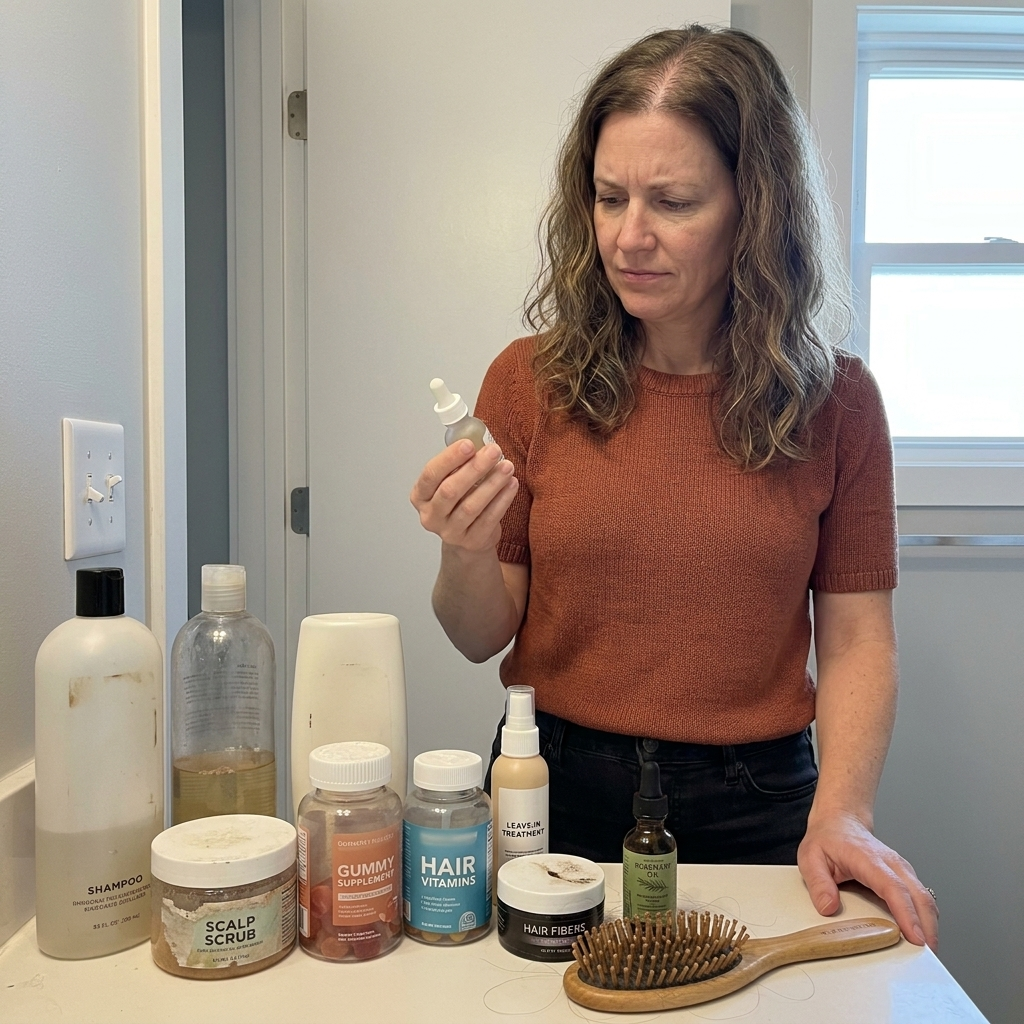
It was not that she did not try hard enough. Most solutions were aimed at the wrong target.
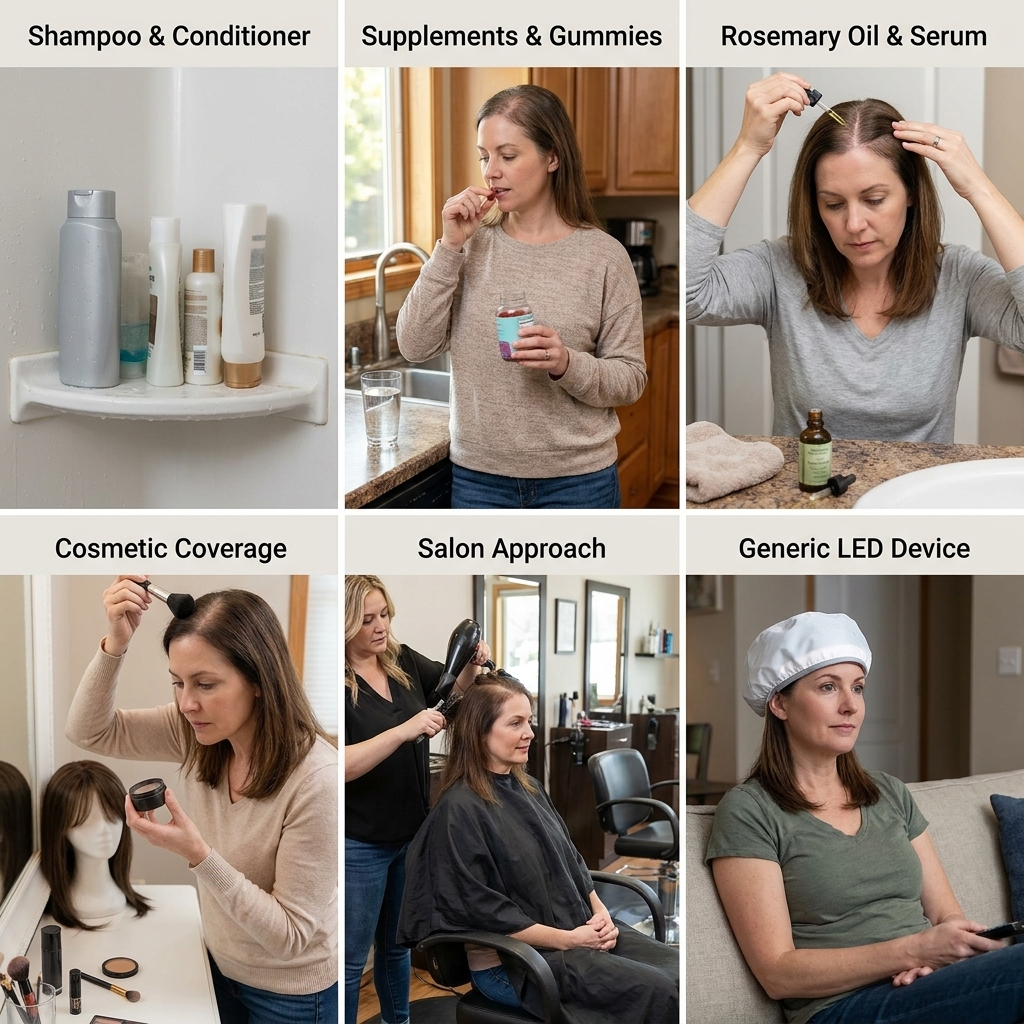
They can make strands feel fuller temporarily, but they live on the surface.
They mainly help when a real nutrient gap is part of the problem.
They can feel proactive, but dosing and delivery can be inconsistent.
They can camouflage visible scalp quickly, but camouflage does not address the growth environment.
Masks and bond builders may help damaged strands but can miss true thinning.
The real question is not how many lights are visible, but wavelength, dose, beam quality, penetration, and consistency.
Sometimes time helps. Sometimes it does not. Waiting without a plan can let months pass.
They can feel premium but may be costly, episodic, and difficult to maintain consistently.
Different symptoms. Same need for a smarter plan.
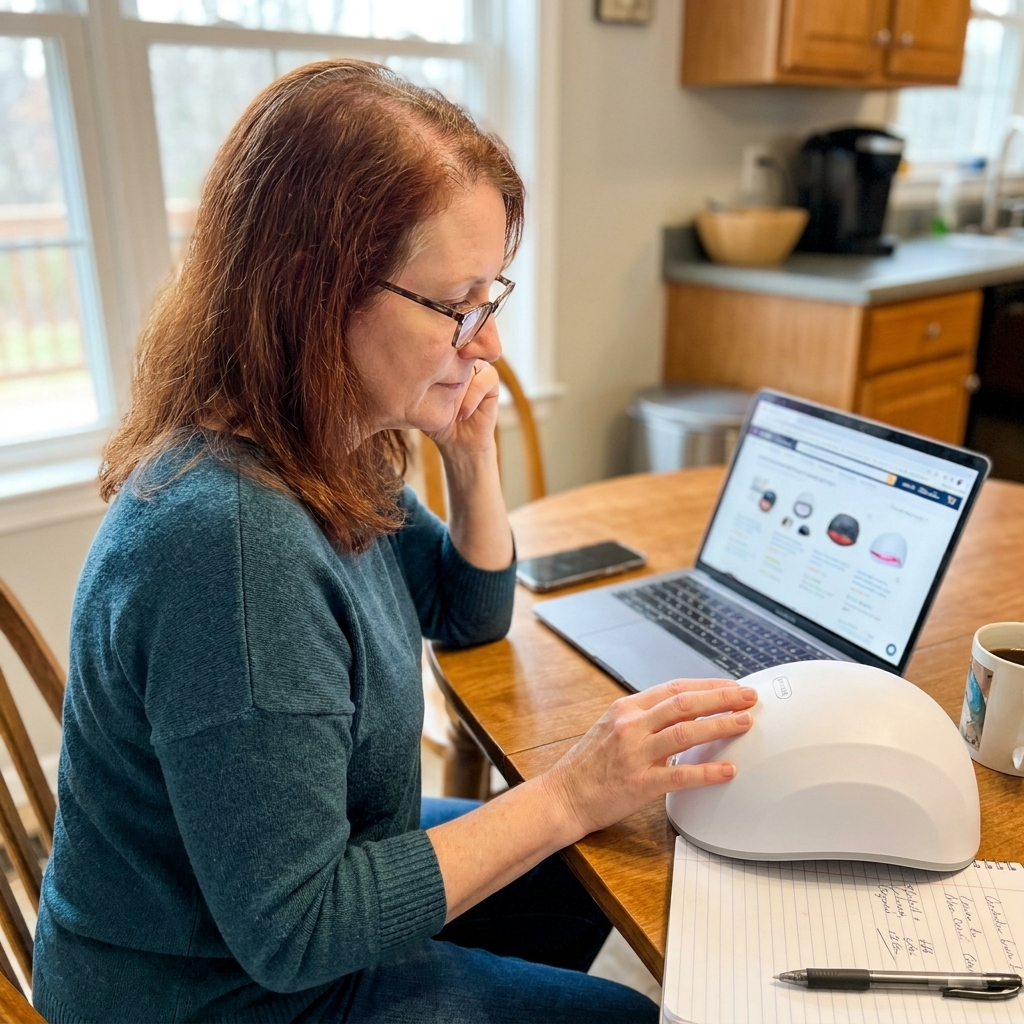
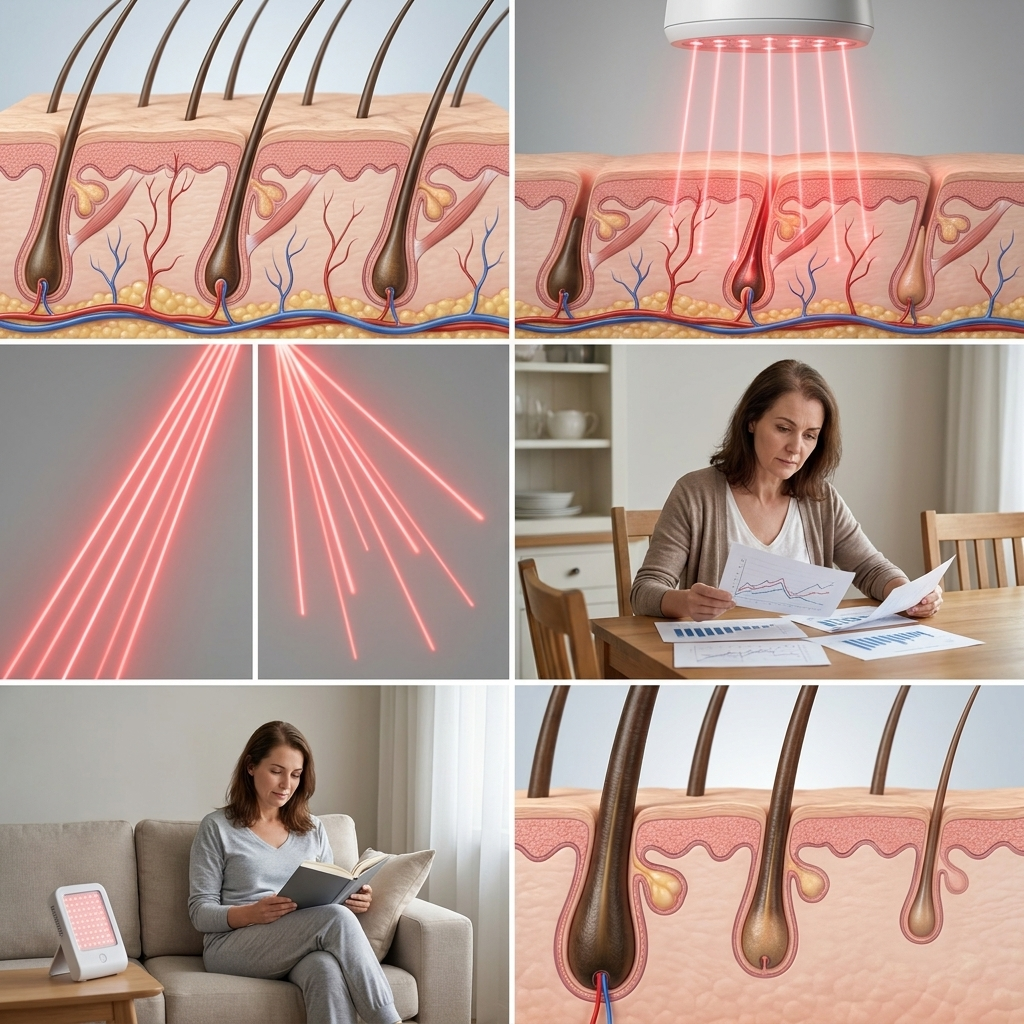
Coherent laser phototherapy aimed at supporting the follicle environment beneath areas of thinning, shedding, reduced density, or visible scalp.
Focused laser light reaches the scalp, delivers a controlled dose, supports cellular activity around active follicles, and is repeated consistently through the hair-growth cycle.
It is not a rinse-off shampoo, cosmetic fiber, deficiency-only supplement, temporary volumizer, or scattered LED light show.
Women should be able to compare mechanism, timeline, and measured outcomes rather than rely on vague promises.
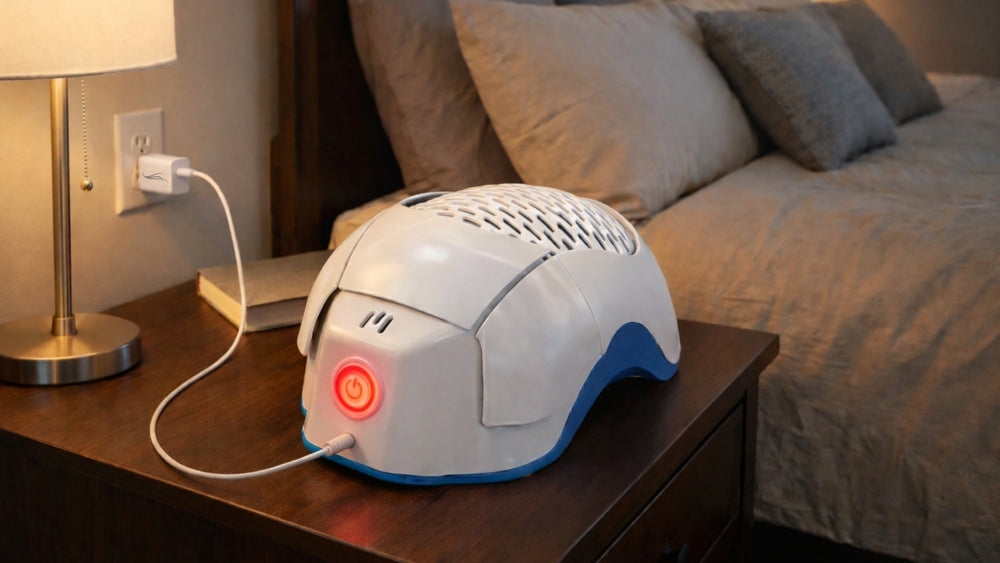
Put the helmet on, press start, complete a hands-free 20-minute session, and repeat consistently.
Active follicles are easier to support than areas ignored for years. The goal is to stop guessing before more time and density are lost.
The important difference is what each option mainly does and where its limitations begin.
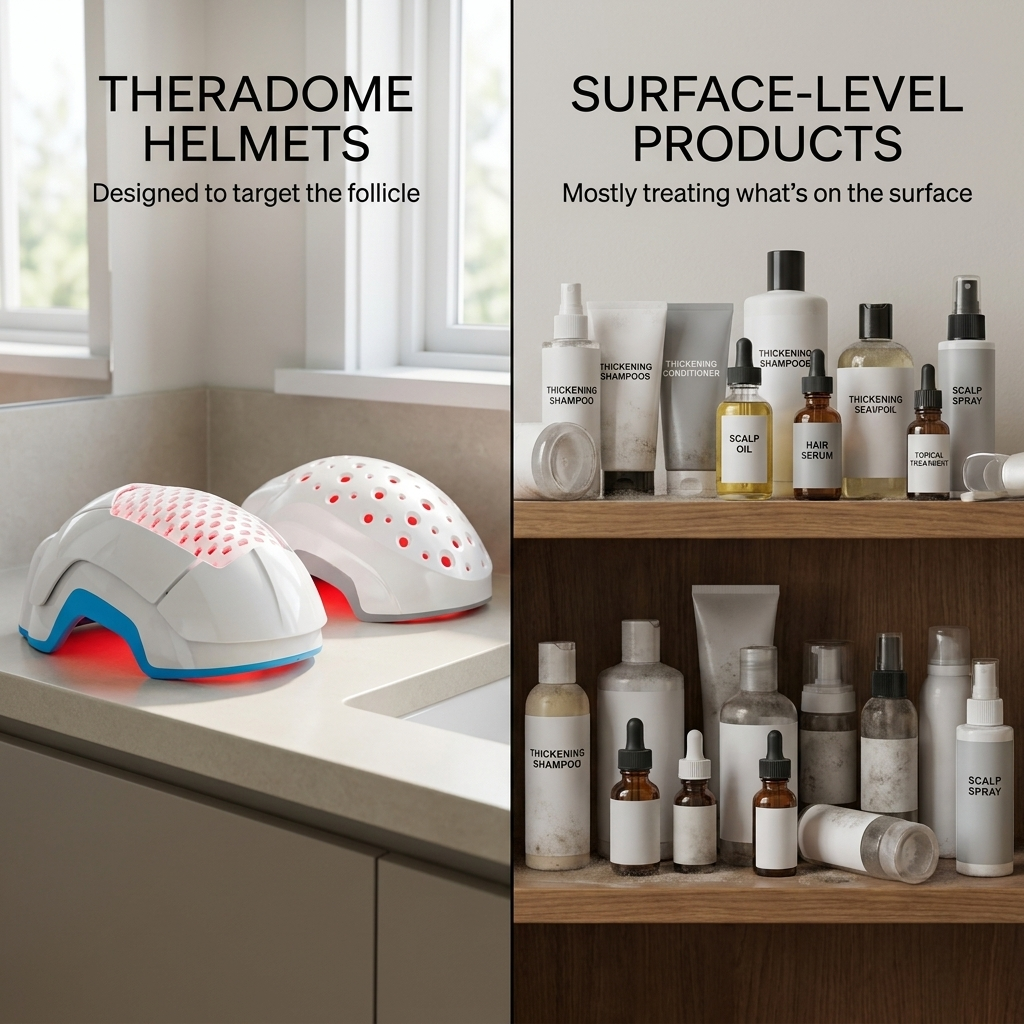
| Option | What it mainly does | Where it falls short |
|---|---|---|
| Volumizing shampoo | Temporarily makes existing strands feel thicker. | Rinses away and does not meaningfully support follicles beneath the scalp. |
| Biotin / collagen / gummies | May help if a real nutrient gap is part of the problem. | Often disappoints when thinning has other underlying drivers. |
| Rosemary oils / serums | Can support a scalp-care routine. | Messy, inconsistent, and not designed around controlled follicle-level light delivery. |
| Fibers / toppers / extensions | Camouflages scalp visibility or reduced density quickly. | Does not address the underlying growth environment. |
| Cheap LED cap | Creates visible red light across the scalp. | Visible bulb count can distract from dose, wavelength, beam quality, and penetration. |
| Salon add-ons | Can feel premium and high-touch. | Often requires appointments, repeated cost, and an ongoing clinic routine. |
| Theradome laser phototherapy | Uses coherent laser light, controlled dose, and a hands-free wearable routine. | Requires consistency over months because female hair cycles do not change overnight. |
Theradome is not positioned as another beauty product for making strands look thicker until the next wash.
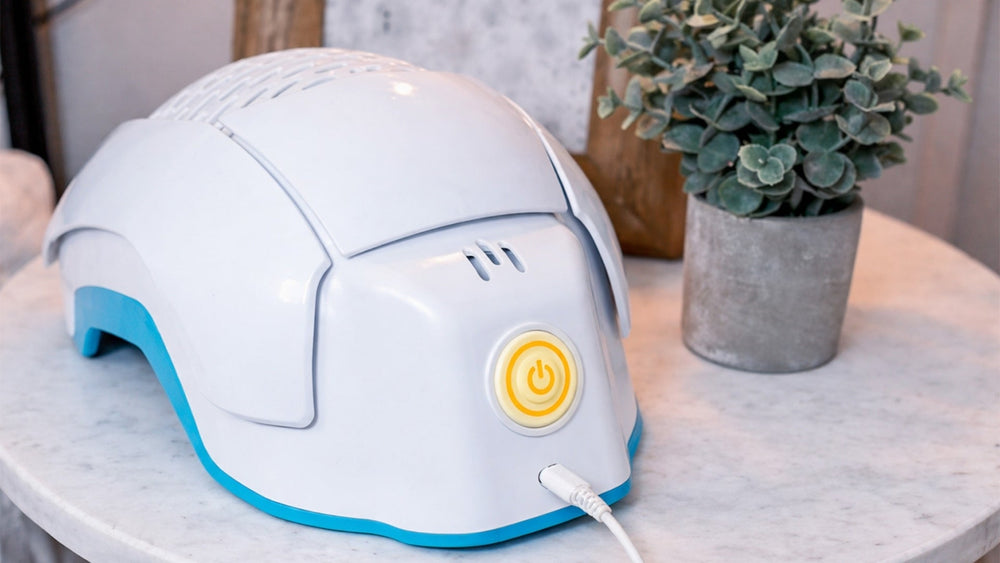
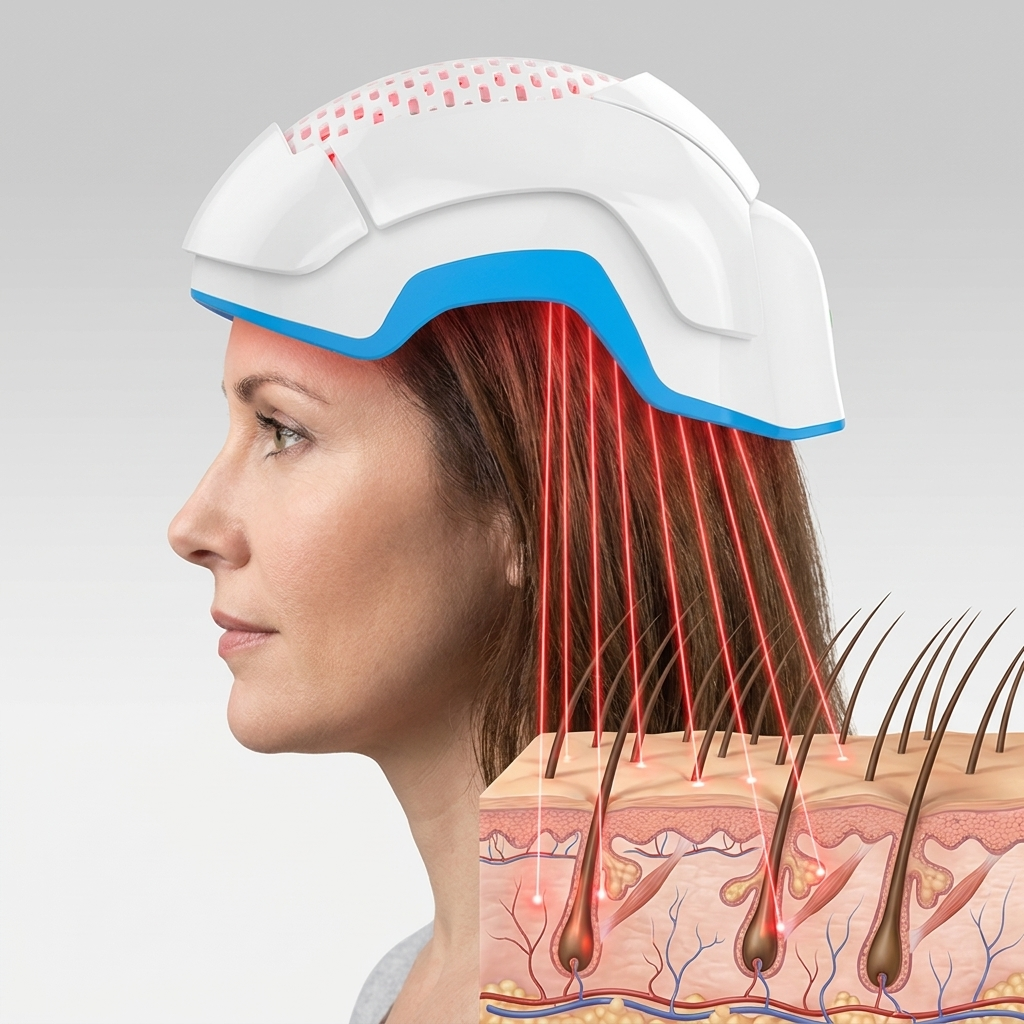
It is a hands-free laser phototherapy helmet built around follicle-level delivery: coherent laser light, controlled dose, treatment consistency, and a wearable routine a woman can actually repeat at home.
Many red-light products sell the number of lights. Theradome focuses on the quality of delivery. Its PRO LH80 system uses 80 medical-grade lasers, not LEDs.
Compare Theradome Helmets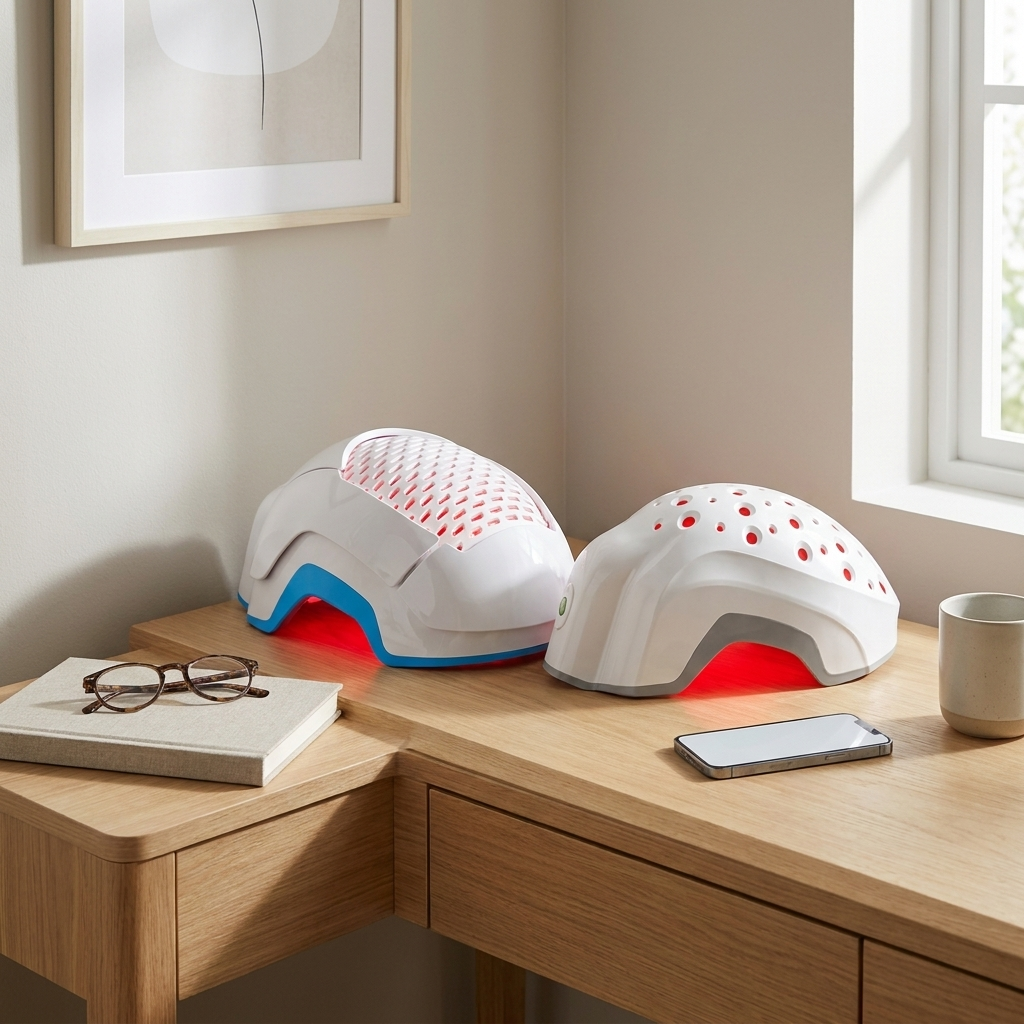
Theradome's product education focuses on several variables that matter in laser phototherapy: wavelength, heat management, scalp penetration, dosage, and beam width.
In plain English, the device has to deliver the right type of light, at the right strength, for long enough, without scattering before it reaches the target area.
Women do not need another vague promise. They need proof that is concrete enough to compare.
The supplied clinical-results material uses a 26-week, double-blind, placebo-controlled trial frame, including a Theradome laser group versus a placebo LED device group.
This is the kind of proof module a new-mechanism page needs: not simply “red light works,” but a way to understand what changed, how long it was measured, and why the device category matters.
See Theradome Options
The routine is intentionally simple.
Position the helmet as directed.
Begin the hands-free treatment session.
Complete the 20-minute session and repeat according to the device routine.
There is no foam to dry, no oil to wash out, no clinic appointment to schedule, and no hairstyle that has to be ruined before the day starts.
The best hair-growth device is not only the one with the right mechanism. It is the one she can use privately, consistently, and without turning her routine into another source of stress.
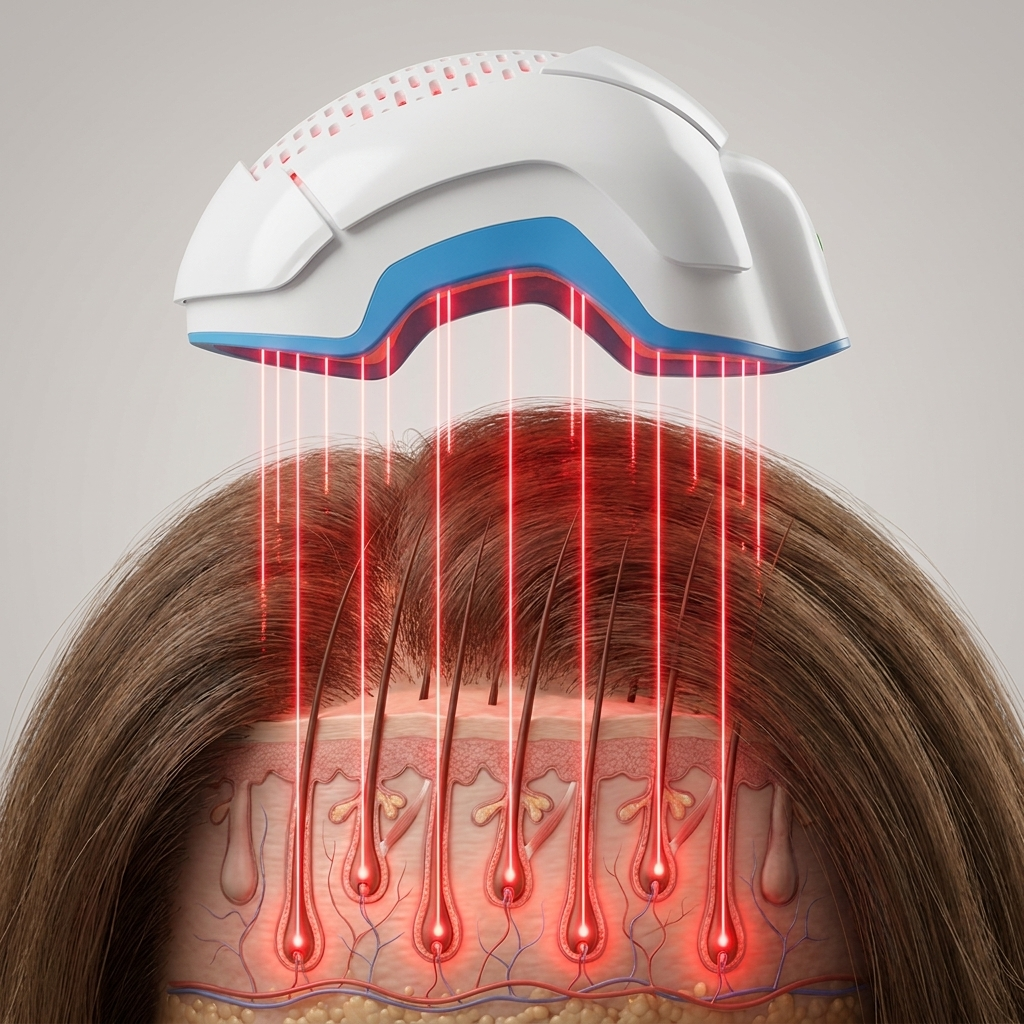
Female hair growth follows a cycle, and meaningful changes do not happen overnight. The important point is to understand what is happening before months of random purchases and waiting become years.
The goal is not panic. It is clarity. When follicles are still active, a woman has a better reason to think seriously about consistent follicle support rather than simply hiding what she sees.
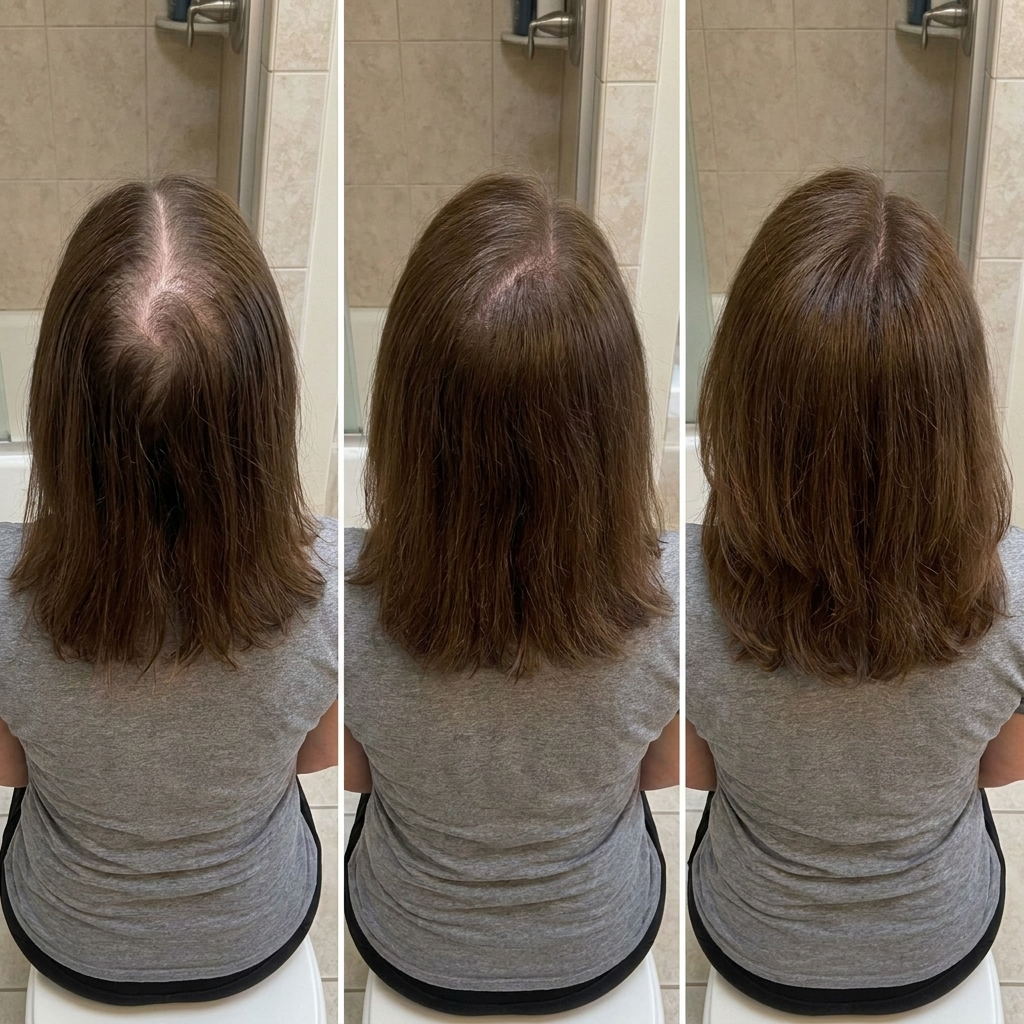
Women dealing with hair loss are often already tired of checking the drain, hiding the temples, arranging hair over the crown, and wondering what is causing the change.
That is why a hands-free at-home routine matters. The goal is not to create another complicated ritual. It is to make consistency realistic.

The important questions women ask before deciding what comes next.
The goal is not another cycle of guessing, hiding, buying, and waiting. It is understanding what is happening, knowing when medical guidance matters, and choosing an approach built around a mechanism that makes sense for your situation.
Explore Theradome's laser hair-growth helmets and compare the options designed for a consistent at-home routine.
Explore Theradome HelmetsIndividual results vary. Follow product instructions and consult a qualified healthcare professional for sudden, severe, patchy, painful, or medically concerning hair loss.
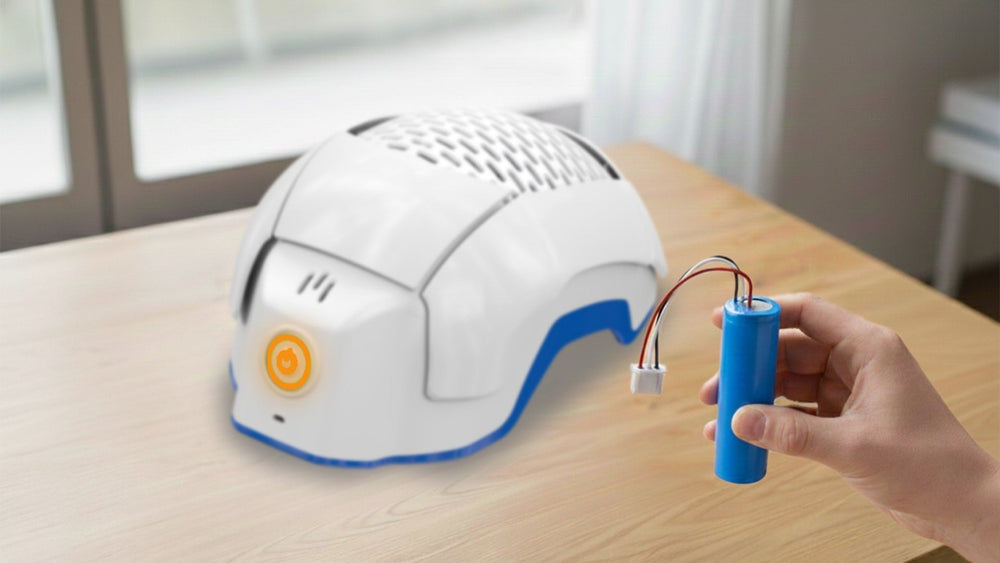
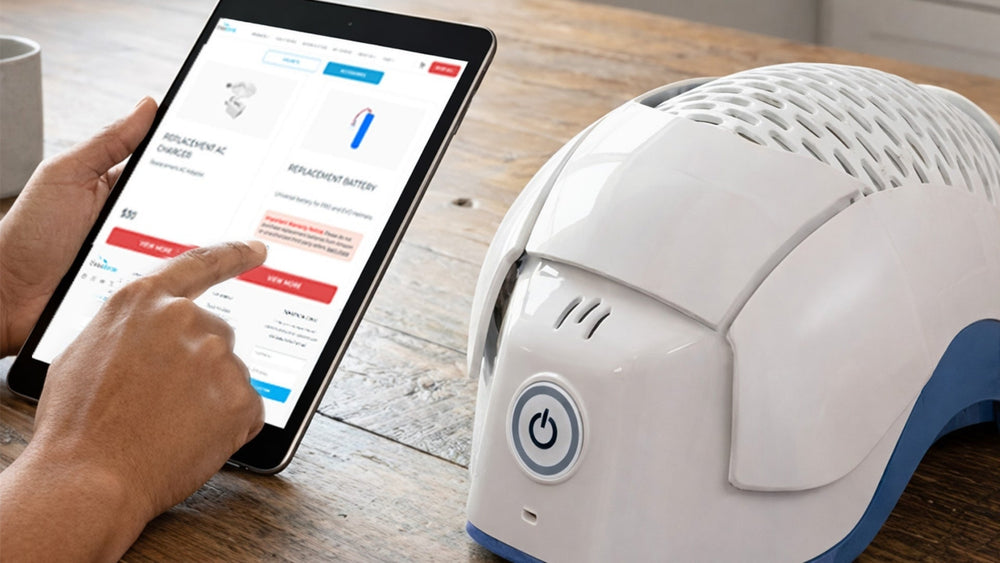
How To Replace Battery
What to do when you get a ‘Battery Low’ on your Theradome
Adjusting Helmet Sound on your Theradome
Getting out of System Pause on your Theradome
Best Way to Clean your Theradome
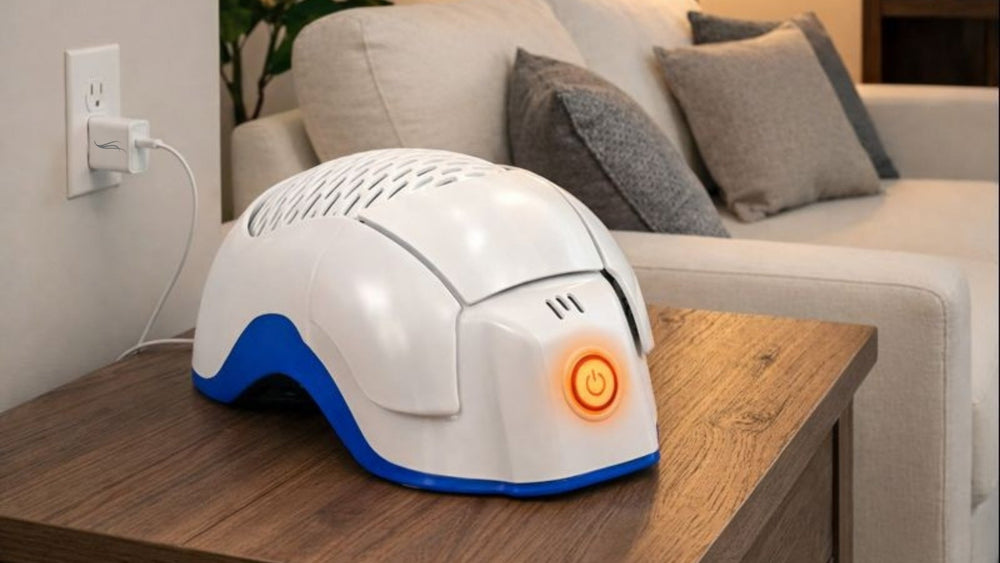
What To Do When Your Theradome Does Not Turn On or Charge
How To Register Your Theradome Manufacturer’s Warranty
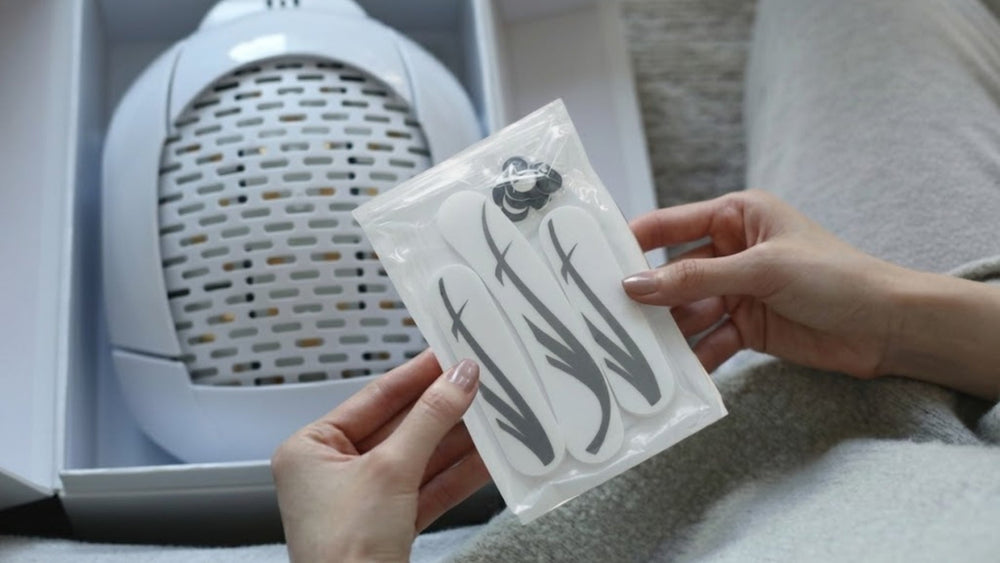
How to Install Foam Pads on Your Theradome
What to do when you receive a Laser Error message on your Theradome
What to do when you receive a “System Error” message on your Theradome
What to do if the master switch is flashing red on your Theradome
What to do when you are getting a temperature error on your Theradome

Both FSA (Flexible Spending Account) and HSA (Health Savings Accounts) can be used to buy FDA-cleared medical devices, like a Theradome. If you have been diagnosed with Androgenetic Alopecia you should be able to use both a FSA/HSA accounts to purchase the Theradome. To check eligibility, review your employer’s benefits package or contact your HR department for FSA. For HSA, check your health plan details to ensure it qualifies as an HDHP and verify other eligibility criteria.
Make your Theradome purchase more manageable with our convenient Affirm financing methods.
How it works
Select Affirm at checkout to see your personalized payment options.

The Complete Hair Recovery System:


The Complete Hair Recovery System: