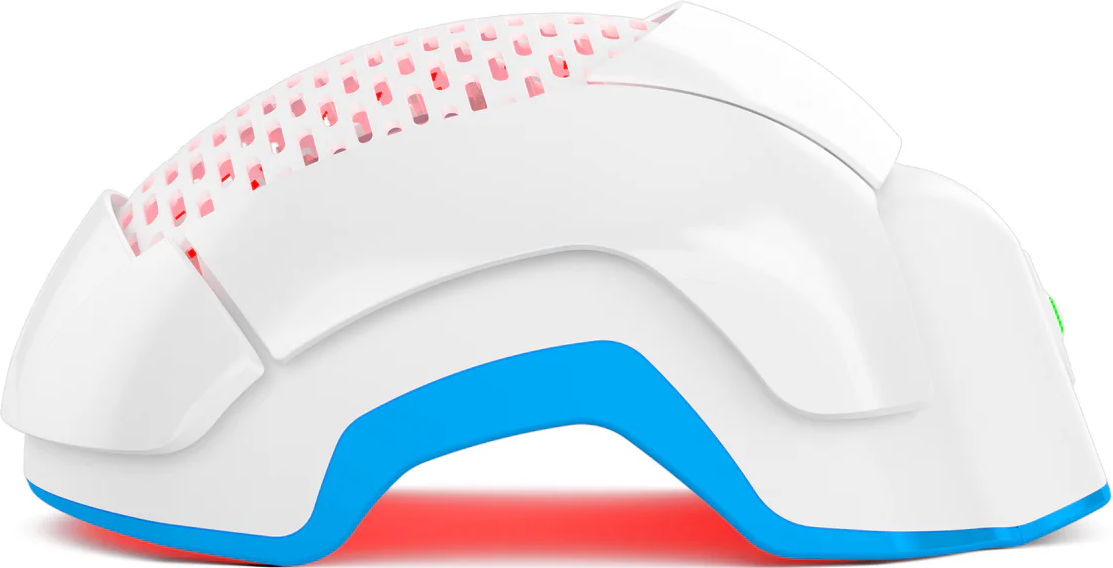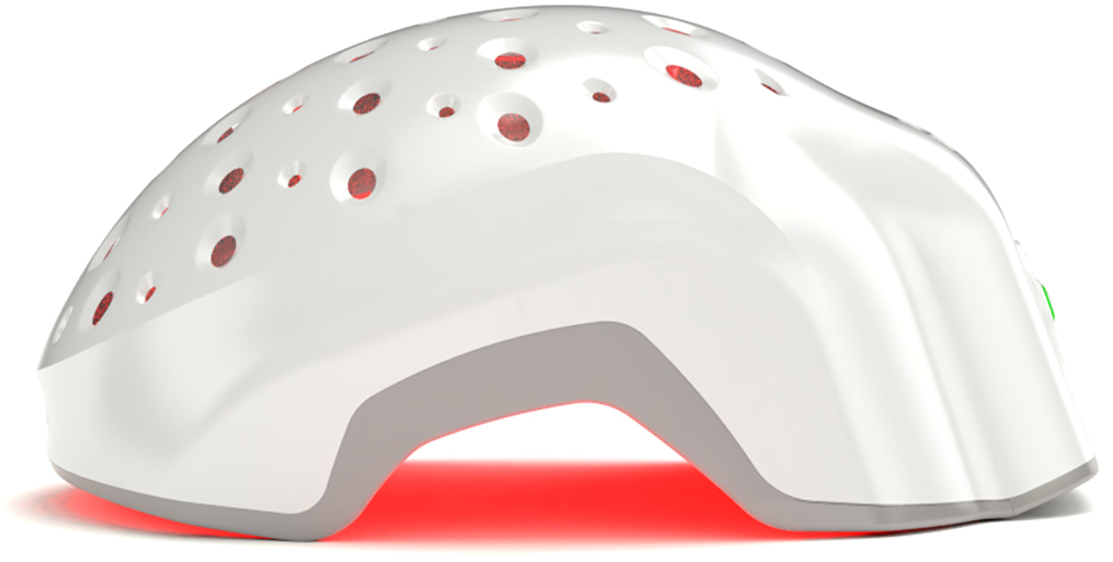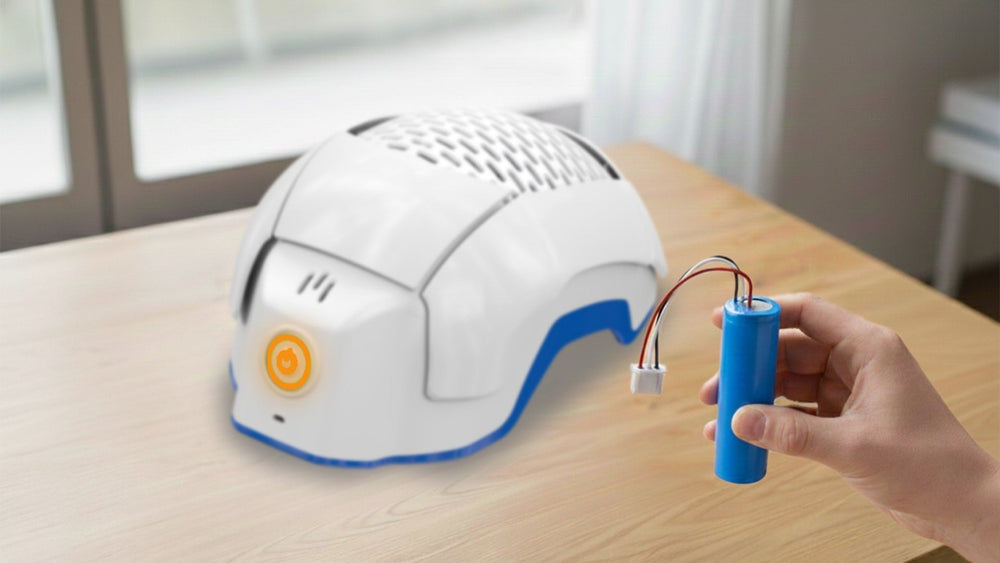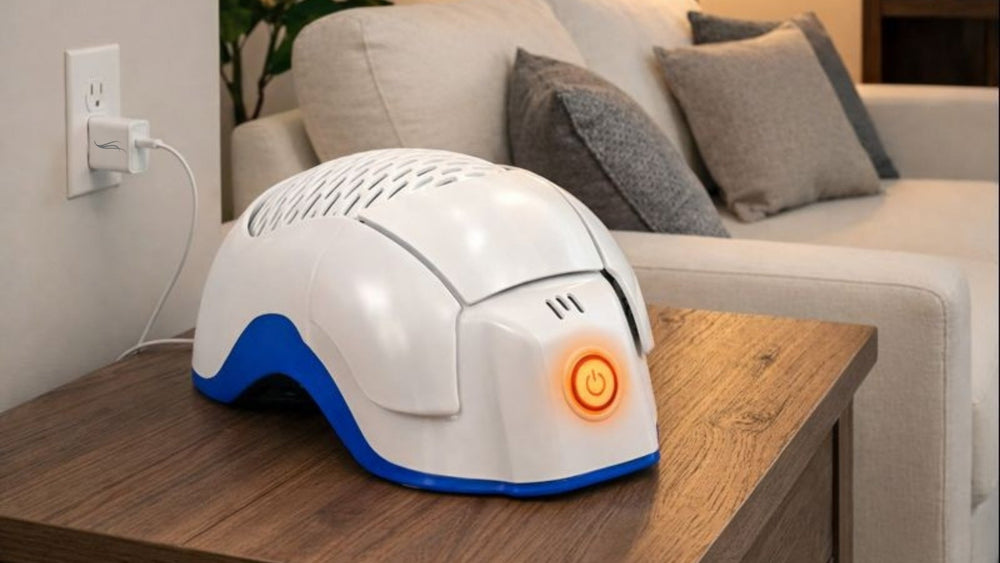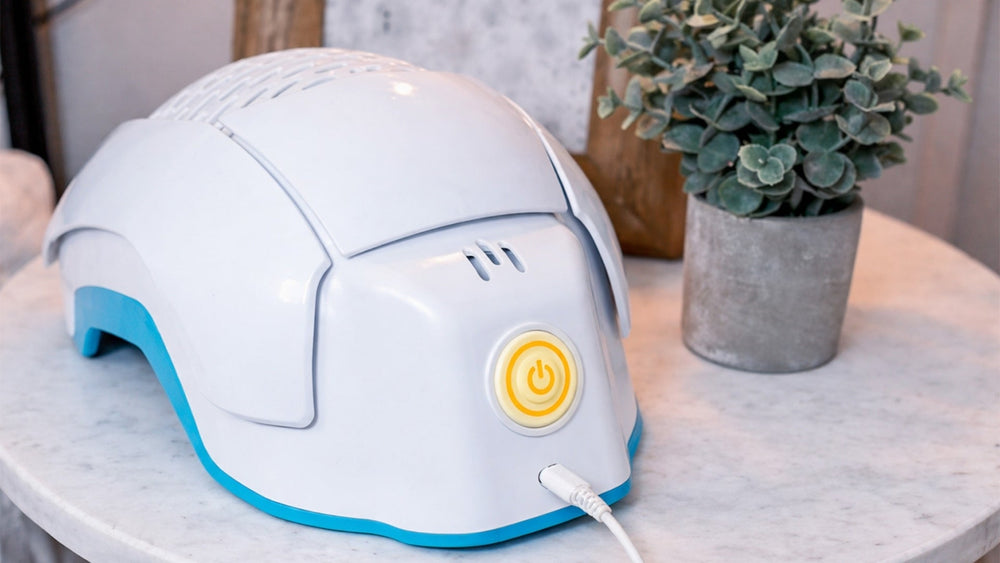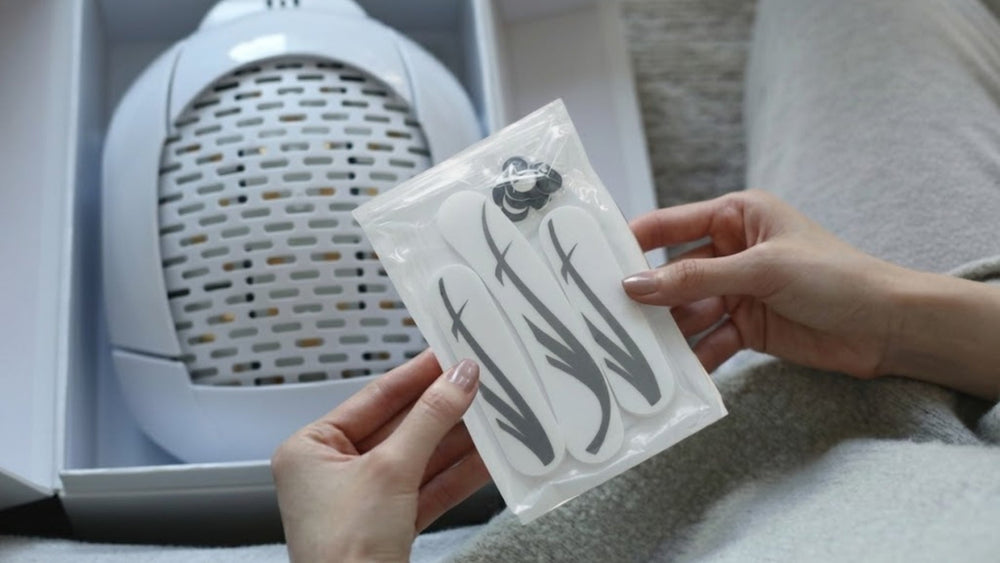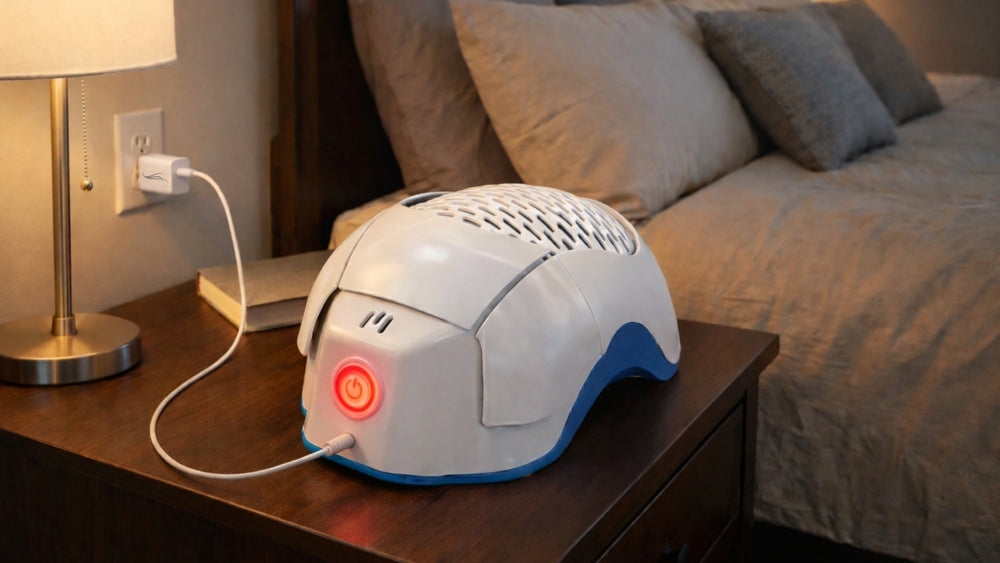

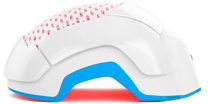






Laser Phototherapy can help some people with androgenetic alopecia grow denser, thicker hair over time. The strongest clinical studies show measurable gains in hair density, hair thickness, or hair coverage after about 16 to 24 weeks of consistent use, but the visual change is usually gradual, not cinematic, and before-and-after photos only make sense when the lighting, angle, hairstyle, and time interval are controlled.
What People Actually Mean When They Search “Red Light Therapy Before and After Photos”
Most people typing that phrase are not looking for a lecture. They want proof. They want to know whether the scalp actually looks different, whether the part line looks less rude, whether the crown stops shouting through the hair. Fair enough.
What readers hope to see in hair-growth photos
Usually, they are hoping for one of four things: less scalp show-through, thicker-looking strands, better coverage at the crown, or a widening part that seems a little less wide. Those are sensible things to look for because androgenetic alopecia tends to shrink follicles gradually, not all at once, so improvement often shows up as thicker existing hairs before it looks like dramatic regrowth.
Why hair-loss photos can be misleading
And yet... hair photos are slippery little things. Change the lighting, move the part by half an inch, fluff the roots, trim the hair, even switch from overhead light to window light, and the same scalp can look better or worse. That is one reason “red light therapy before and after photos” can be honest and still be misleading.
Why dermatology studies rely on measurements instead of photos
The stronger trials do not lean on casual snapshots alone. They use standardized photography plus objective measures such as hair density, hair thickness, hair counts, or hair coverage. That matters because a follicle can be doing better before your camera roll knows it.
One photo can encourage you. It cannot diagnose you.
What Laser Phototherapy Actually Is
Laser Phototherapy sits under the broader medical umbrella often called low-level laser therapy or photobiomodulation. In hair-loss medicine, these terms are closely related and refer to low-power light treatment intended to stimulate follicular activity without heating or damaging tissue.
Laser Phototherapy vs “red light therapy”
“Red light therapy” is the broader, public-facing phrase. Laser Phototherapy is more specific. In practical use, people often mean the same category of treatment when talking about hair devices, but the medical literature tends to use low-level laser therapy, low-level light therapy, or photobiomodulation.
What the word LASER really means
The word itself tends to spook people more than the treatment does. LASER refers to a type of light energy. What matters medically is not the drama of the word, but the wavelength, output, and device class. FDA-cleared hair-growth devices described in 510(k) documents use red laser light around 650 nm with output under 5 mW in the examples cited below. That is very far from surgical cutting lasers.
Cold lasers vs surgical lasers
This distinction is not cosmetic. Surgical lasers are designed for tissue effects that involve cutting, coagulation, or ablation. Hair-growth Laser Phototherapy devices are low-level, noninvasive devices intended to promote hair growth in men and women with androgenetic alopecia. The FDA’s consumer laser guidance also makes clear that risk depends on laser class and output, not on the mere presence of the word “laser.”
How Laser Phototherapy Interacts with Hair Follicles
The current mechanism is plausible, supported, and still being refined. Which is a healthy place for medicine to be, honestly.
Photobiostimulation and cellular energy
Photobiomodulation reviews describe light in the red and near-infrared range interacting with cellular chromophores, especially cytochrome c oxidase in mitochondria, which can affect ATP production and downstream signaling. In plainer language, the light appears to nudge follicle cells toward more active biological behavior.
How follicle miniaturization occurs in androgenetic alopecia
In androgenetic alopecia, inherited sensitivity causes follicles to shrink over time. The hairs they produce become finer, shorter, and less pigmented. The American Academy of Dermatology explains hereditary hair loss as a process in which hair follicles shrink and eventually stop growing hair, and that early treatment tends to work better.
How light stimulation supports follicular activity
Hair-specific research gives a bit more texture. A 2021 ex vivo study using 650 nm red light found promoted hair follicle proliferation and evidence suggesting delayed exit from anagen, the active growth phase. Hair-growth reviews also note that low-level light may encourage anagen re-entry and prolong anagen duration, although mechanism details are still not perfectly settled.
So no, it is not magic. It is light interacting with living tissue in a measurable way... which is less flashy than a miracle and much more useful.
Who Laser Phototherapy Is Designed For
The sweet spot, based on the better evidence, is androgenetic alopecia. Not every kind of hair loss. Not every shedding episode. Not every odd patch on the scalp that showed up after a miserable month.
What androgenetic alopecia is
Androgenetic alopecia is the inherited form of patterned hair loss seen in both men and women. In men, it often shows up as recession or thinning at the crown. In women, it more often appears as overall thinning or a widening part.
Why early-stage hair thinning responds best
The AAD notes that the earlier treatment starts, the better it tends to work. That fits the biology. Laser Phototherapy is more likely to help miniaturized but still viable follicles than follicles that have been inactive for a very long time.
Why completely inactive follicles rarely return
This is one of those annoying but important truths. If a scalp area has been slick-bare for years, expectations need to stay restrained. Clinical studies and FDA-cleared device indications focus on patterned thinning, not on promising resurrection of long-gone follicles.
What Real Before-and-After Results Look Like
Not a shampoo commercial. Usually.
Early visual improvements people often miss
The first visible gains are often modest. Hair may feel denser at the roots. The scalp may show less through the part. The crown may look softer around the edges instead of sharply exposed. That kind of change can be real even when it is not dramatic enough to make you gasp in your bathroom mirror.
Why dramatic overnight changes rarely happen
Hair growth follows a slow cycle. Hereditary thinning is also gradual. So improvement tends to stack up little by little rather than arriving with a trumpet. The AAD explicitly says several treatments a week for many months may be needed to see a bit of growth.
What dermatologists actually measure in trials
This is where the conversation gets more sober, in a good way. The clinical trials looked at things like hair density, hair diameter, hair thickness, hair count, and hair coverage. That is why a study can report meaningful benefit even when your unstandardized selfies do not look wildly different yet.
Real Results from Clinical Studies
This is the part readers usually want, even if they pretend not to.
Randomized clinical trials on Laser Phototherapy
A 24-week randomized, double-blind, sham-controlled multicenter trial reported significantly greater hair density and improved mean hair diameter in the low-level light therapy group, with no serious adverse reactions detected.
A separate 16-week multicenter randomized, double-blind, sham-controlled trial using a helmet-type device concluded that the device significantly increased hair density and hair thickness in people with androgenetic alopecia and could be a safe, effective alternative monotherapy.
A randomized trial in women found that 655 nm red light treatment significantly improved hair counts in women with androgenetic alopecia. Another 24-week sham-controlled trial found greater hair coverage, hair thickness, hair count, and investigator global assessment on the treated scalp, with no serious adverse events.
How researchers measure improvement
Researchers do this with more discipline than the average “before and after” post on the internet. They standardize photos, define treatment duration, compare against sham devices, and quantify changes rather than relying on visual impression alone. That makes the evidence far less squishy.
Where the evidence still has gaps
Still, let us not get carried away. Reviews note that treatment schedules, device designs, wavelengths, and energy settings vary across studies. A 2024 systematic review found many available treatment options for androgenetic alopecia, including low-level light treatment, while also leaning toward individualized, multifaceted care rather than one universal fix.
And that is probably the right tone here. Encouraging, yes. Reckless, no.
The Realistic Timeline of Hair Growth
This is where hope and biology have their little argument.

Weeks 1 to 4
Usually there is no striking visual change. That does not automatically mean nothing is happening. Early treatment periods are more about cellular response than visible density, and most stronger studies do not judge success after a few impatient weeks.
Weeks 4 to 12
Some people start noticing less shedding or slightly steadier hair behavior, though the more robust trial endpoints still tend to sit later, around 16 to 24 weeks. It is a bit like watching grass grow, if grass had a personality disorder and very strong opinions about timing.
Month 3 to 6
This is where the more meaningful data begin to show up in trials. Improvements in density, thickness, count, or coverage become easier to measure, and sometimes easier to see. The 16-week and 24-week studies sit right in this window.
Month 6 to 12
Real-life visual contrast often becomes more obvious here, especially if someone started early, stayed consistent, and documented progress properly. Not everyone gets a dramatic “after.” Many get a quieter win: less visible thinning, thicker strands, slower decline. That still counts.
Patience.
Why Results Differ Between People
Two people can use light-based therapy faithfully and still land in different places. Irritating, yes. Very normal, also yes.
Consistency of treatment
The AAD notes that laser therapy requires repeated sessions over many months. That already tells you the treatment is schedule-sensitive. Stop-start use makes it harder to judge whether the device failed or the routine did.
Device quality
Not all devices are built the same. FDA-cleared hair-growth devices are indicated for specific patient groups and disclose technical parameters in device documents. Professional groups also note that current devices vary in energy output. So device design, coverage, and parameters matter more than the category label on the box.
Scalp health
A healthy scalp environment still matters. Hair loss can overlap with scalp infection, inflammation, traction, medication effects, or nutritional issues. When the cause is mixed, the response to any one treatment can look muddier.
Stage of hair loss
Again, early tends to be better. The AAD says treatment works best when started early in hereditary hair loss, and FDA-cleared device indications are framed around defined thinning stages rather than end-stage absence of follicles.
Genetics
Because androgenetic alopecia is inherited, baseline pattern and follicle sensitivity differ from person to person. That means one user may see a clear cosmetic shift while another mainly gets stabilization. Both outcomes can still fit the evidence.
Combined therapies
Laser therapy is often used alongside other treatments. The AAD notes one study where low-level laser therapy was as effective as minoxidil for hereditary hair loss and that the best results in that study were seen in people who received both treatments. Professional hair-restoration guidance also notes that photobiomodulation is often used with other therapies.
How to Evaluate Before-and-After Hair Photos Honestly
A little skepticism is healthy here. Not cynical. Just awake.
Lighting and angle differences
Overhead lighting can make thinning look harsher. Softer front lighting can make the same area look fuller. A shifted camera angle can also hide or exaggerate scalp show-through. That is why standardized photography is such a big deal in trials.
Hair styling effects
Volume tricks are real. Blow-drying, fibers, root powder, changing the part, cutting layers, even simply washing the hair on a different day can change how thick the scalp looks in a photo. Which is a mildly rude feature of hair, if we are being honest.
Time interval between photos
A photo taken two weeks apart is rarely useful for judging Laser Phototherapy. The trials that found meaningful improvements were typically 16 to 24 weeks long, and the AAD also frames laser therapy as a many-month treatment.
Why clinical photos follow strict protocols
Clinical images are not magic. They are just disciplined. Same angle, same lighting, same interval, same region, same expectations. That is the standard your own progress photos should copy if you want something you can trust.
How to Get the Most Reliable Results from Laser Phototherapy
No drama here. Just useful habits.
Document progress with consistent photos
Take baseline photos before starting. Then repeat them monthly with the same lighting, same hair part, same distance, and dry hair if possible. Day-to-day changes are easy to miss. Monthly comparisons are far more honest.
Maintain scalp hygiene
Heavy buildup, scalp irritation, or untreated scalp disease can make the whole hair-loss picture harder to read. If the scalp is inflamed, infected, or unusually scaly, that deserves attention instead of blind optimism.
Use full-coverage wearable devices
FDA-cleared device documents describe systems designed to distribute red laser light across the scalp, and professional groups note that device output varies. So coverage is not a silly detail. It is part of whether the treatment field is even reaching the areas you care about.
Stay consistent
This point keeps coming back because it should. Several sessions a week for many months. That is the pattern reflected in AAD guidance and in the better trials. If you want a fair “before and after,” the routine has to be fair too.
When to Speak with a Dermatologist About Hair Loss
If your hair loss is sudden, patchy, painful, inflamed, or paired with scalp symptoms, please do not treat random internet photos like a diagnosis. The AAD recommends seeing a dermatologist because effective treatment starts with finding the cause, and not all hair loss is androgenetic alopecia.
That includes situations involving illness, medication changes, traction, infection, autoimmune hair loss, or nutritional problems. Patterned thinning can coexist with other causes, which makes self-diagnosis a bit wobbly.
Conclusion
Laser Phototherapy has real clinical support for androgenetic alopecia, but the honest version is quieter than most ad copy. Improvement usually builds over months, not days. The clearest signals in studies are better hair density, thickness, count, or coverage, while ordinary before-and-after photos are helpful only when they are standardized and interpreted with some restraint. Start early if you can. Stay consistent. And if the pattern of loss seems unusual, get the diagnosis sorted first. That part matters more than people think.