






Yes, chemical straightening can cause hair loss, but the reason matters. Most often, the “hair loss” people notice after a relaxer, keratin treatment, Brazilian blowout, or rebonding service is actually hair breakage from a weakened hair shaft, not permanent follicle loss. Still, chemical straightening can also irritate or burn the scalp, worsen traction-related thinning, or make an existing hair-loss condition more obvious.
If you are staring at hair in the sink after a straightening appointment, you are not being dramatic. Hair on the bathroom floor has a way of turning a normal Tuesday into a tiny forensic investigation.
But we need to separate the suspects.
Broken hair is one thing. True shedding from the root is another. Scalp injury, traction alopecia, central centrifugal cicatricial alopecia, and androgenetic alopecia are different again.
What Does Chemical Straightening Actually Do To Hair?
Chemical straightening is not one single treatment. It is a family of services that change how the hair fiber behaves, usually to loosen curl, reduce volume, smooth frizz, or create a straighter finish.
That includes lye relaxers, no-lye relaxers, texturizers, Japanese thermal reconditioning, rebonding, keratin smoothing, and Brazilian blowout-style treatments. They are not identical. Some are highly alkaline. Some rely heavily on heat. Some may release formaldehyde gas when heated. Some get marketed as “gentle,” which is a word hair products tend to throw around like confetti at a wedding nobody asked for.
What types of chemical straightening are we talking about?
Relaxers usually work by chemically altering the hair’s internal structure. Lye relaxers commonly contain sodium hydroxide. No-lye systems may involve calcium hydroxide and guanidine carbonate. Other straightening systems may use ammonium thioglycolate or different chemistries. The aim is broadly similar: reduce the hair’s natural curl pattern by changing structural bonds inside the fiber. This bond alteration is central to how chemical relaxers straighten hair.
Keratin treatments and Brazilian blowouts are a slightly different conversation. They are often sold as smoothing services, but many use heat to seal the treatment onto the hair. The FDA warns that some smoothing products release formaldehyde gas during heat application, especially when they contain formaldehyde, formalin, or methylene glycol.
So, no, “chemical straightening” is not one neat little box.
How do straighteners change the hair shaft?
Hair is made mostly of keratin proteins. Its shape and strength depend partly on internal bonds, including disulfide bonds. Chemical relaxers alter those bonds so the hair can be reshaped into a straighter form. That can give the hair a smoother look, but it can also reduce tensile strength, which is the hair’s ability to resist snapping under stress.
This is why chemically straightened hair can look sleek while becoming more fragile. The surface may look tidy. The inner structure may be less forgiving.
And if the same hair is later bleached, colored, flat-ironed often, brushed roughly, braided tightly, or relaxed again by mistake over the same section, the damage can stack.
Why “sleek” can still mean fragile
Smooth hair is not always stronger hair.
After chemical straightening, the hair shaft may lose some resilience. It may feel dry, rough, limp, mushy, overly soft, brittle, or strangely frizzy even though it was meant to be straighter. A review of chemical straighteners found evidence of hair-shaft damage, protein loss, inflammation, and breakage-related hair loss after straightening practices.
That is the trick. A treatment can make hair easier to style in the short term while making it easier to break in daily life.
Is It Hair Loss Or Hair Breakage?
Now, this would save people from treating the wrong problem.
A lot of people say, “My hair is falling out,” when the hair is actually snapping halfway down the strand. It can absolutely make hair look thinner. It can wreck length, fullness, shape, and confidence. But the follicle may still be alive and growing.
Different problem. Different plan.
What does hair breakage look like after chemical straightening?
Breakage usually shows up as short, uneven hairs. You may see tiny pieces around the sink, rough ends, broken hair around the crown, a widening-looking part caused by snapped strands, or edges that look thinner because the hair there keeps breaking before it can gain length.
The hair may feel gummy when wet, straw-like when dry, or weirdly limp and brittle at the same time. That contradiction is common with overprocessed hair.
Chemical injury from straighteners, dyes, and perming lotions are among the causes of acquired hair-shaft defects, including trichorrhexis nodosa, where weakened hair fractures along the shaft.
What does true shedding look like?
True shedding usually involves full-length strands coming from the root. You may see a tiny white club-shaped bulb at the end of the hair. That can happen with telogen effluvium, androgenetic alopecia, alopecia areata, traction alopecia, inflammatory scalp disease, medication effects, postpartum shedding, illness, surgery, major stress, or nutritional deficiency.
Telogen effluvium is especially sneaky because it usually starts months after a trigger, not the next morning. It is often confirmed with a pull test, and shed hairs may have white bulbs at the roots.
So if your hair snapped right after a relaxer, breakage is more likely. If long hairs with bulbs started shedding heavily three months after illness, surgery, crash dieting, childbirth, or severe stress, the plot thickens.
Why this distinction changes the treatment
Breakage needs hair-fiber care: less heat, less tension, more slip, careful detangling, fewer chemical services, and time.
Scalp burns need medical attention if there are sores, scabs, swelling, drainage, or persistent pain.
Traction alopecia needs the pulling to stop. Quickly.
CCCA needs early dermatology care because scarring hair loss can become permanent. And androgenetic alopecia, also called male or female pattern hair loss, needs follicle-focused treatment. Hair-loss diagnosis may involve a physical exam, medical and hair-care history, blood tests, a pull test, or scalp biopsy depending on the case.
|
What you notice |
More likely issue |
Common clues |
What to do next |
|
Short, uneven pieces |
Hair-shaft breakage |
Snapping, rough ends, thin-looking length |
Pause chemicals and heat, handle gently |
|
Long hairs with white bulbs |
Shedding from the root |
Diffuse hair fall, full strands |
Track timing and triggers, consider dermatologist |
|
Pain, scabs, oozing, swelling |
Scalp injury or dermatitis |
Burning during or after treatment |
Seek medical care, especially if severe |
|
Edges or temples thinning |
Possible traction alopecia |
Tight styles, extensions, ponytails, wigs |
Stop tension and get evaluated if persistent |
|
Crown tenderness or shiny scalp |
Possible CCCA or scarring alopecia |
Itch, burn, scale, spreading crown loss |
See a dermatologist early |
How Can Chemical Straightening Cause Hair Loss?
There are several routes. Some are cosmetic. Some are medical. Some are a messy overlap of both, because hair rarely reads the textbook before misbehaving.

It can weaken the shaft until hair snaps
Chemical relaxers can weaken the hair shaft by changing the internal structure that gives hair its strength. Overprocessing, overlapping relaxer onto previously treated hair, leaving chemicals on too long, using high heat, and combining straightening with color or bleach can all raise the risk of breakage.
The 2022 review on chemical straighteners found evidence of hair damage, scalp inflammation, and hair loss due to breakage. It also reported protein loss after relaxer use, with sodium hydroxide appearing more aggressive when combined with hair dye.
This is why “just touch up the roots” is structural survival.
Previously relaxed hair has already been chemically altered. Relaxing it again can push it past its tolerance. The hair may not fall from the root. It may simply snap and leave you wondering why your ends are staging a quiet evacuation.
It can irritate or burn the scalp
The scalp is skin. Obvious, yes. But it gets forgotten once the conversation turns into “length retention” and “sleek finish.”
Strong alkaline relaxers and other chemical systems can irritate or burn the scalp, especially if the skin is scratched, inflamed, or already sensitive. Studies link straighteners with irritant contact dermatitis, allergic contact dermatitis, pain, eczema-like scaling, burns, and hair loss.
The British Association of Dermatologists gives very practical guidance in its CCCA patient information: relaxers should be done by a professional, no more often than every six to eight weeks, only on new growth, and the scalp should not burn during relaxer use.
It can pile onto traction damage
Chemical straightening may make hair easier to style, but it may also leave the fiber less able to tolerate pulling. Add tight braids, sew-ins, heavy extensions, glued wigs, tight ponytails, or high-tension buns, and the hairline can start paying the bill.
Traction alopecia comes from repeated pulling forces on the follicle. Traumatic hairstyles are central, and chemical relaxation can contribute by making hair more brittle and vulnerable to damage when paired with tension.
It can reveal a separate hair-loss condition
Sometimes chemical straightening does not cause the original hair-loss condition. It reveals it.
Curly or coily hair can visually hide thinning because the texture creates volume and shadow. Once the hair is straightened, the scalp may show more clearly. A part may look wider. The crown may look sparse. The reader may think the treatment caused everything, when androgenetic alopecia, telogen effluvium, traction alopecia, CCCA, or another condition was already present.
Can Chemical Straightening Cause Permanent Hair Loss?
Sometimes. But not always.
When damage is usually not permanent
If the main issue is hair-shaft breakage, the follicle may still be fine. That means new hair can keep growing from the scalp, even if the old chemically treated lengths are damaged. Recovery then becomes a slow, slightly boring process: stop the damage, protect the new growth, trim what cannot be saved, and give the hair time.
No shortcut there. Hair grows on hair time, which is deeply inconsiderate when you want results by Friday.
Mild irritation that settles quickly may not cause lasting loss either. Temporary shedding, such as telogen effluvium, can also improve once the trigger is identified and the body resets, though regrowth may take months.
When it may become permanent
Permanent hair loss becomes a concern when the follicle is damaged, scarred, or repeatedly inflamed. This can happen with deep chemical burns, untreated scarring alopecia, longstanding traction alopecia, or CCCA.
CCCA, short for central centrifugal cicatricial alopecia, is a scarring form of hair loss that often begins at the crown. The British Association of Dermatologists advises reducing heat, avoiding tight styles, and using relaxers cautiously, including spacing them properly and avoiding scalp burning.
A shiny scalp, loss of visible follicle openings, tenderness, scaling, or crown thinning that spreads is not something to “watch for a year.” That is dermatologist territory.
The “one bad relaxer” question
Can one bad relaxer cause serious damage? Yes.
Can it cause permanent hair loss? It depends on the depth of scalp injury, whether scarring occurs, and whether the follicles are damaged. A one-time overprocessing episode may cause dramatic breakage without permanent follicle loss. But chemical burns, open sores, bald patches, or ongoing tenderness need prompt medical attention.
Hair can forgive a lot.
The scalp has limits.
What Are The Warning Signs After Chemical Straightening?
Signs of hair-shaft damage
Watch for short broken pieces, sudden roughness, ends that look thin or see-through, hair that tangles more than usual, gummy or mushy texture when wet, or snapping at the line where natural new growth meets chemically straightened hair.
Breakage often shows up during combing, washing, drying, or styling. It may look like shedding, but the pieces are usually shorter and uneven.
If your hair feels like wet cotton candy, pause. That is a warning.
Signs of scalp injury
Get more cautious if you notice burning during treatment, lasting pain, redness, swelling, blisters, scabs, oozing, crusting, bleeding, or tenderness after the service. Scalp inflammation, contact dermatitis, pain, burns, and desquamation are reported adverse effects.
A little tingling is sometimes described during chemical services, but burning should not be normalized. Again, the scalp should not burn when using a relaxer.
Signs you may need a dermatologist
Book a dermatology visit if you notice bald patches, persistent shedding, scalp pain, sores, spreading crown thinning, shiny scalp, scaling, burning, tenderness, or edges that keep receding even after you stop tight styles.
Tests such as blood tests, pull tests, and scalp biopsy are possible tools for evaluating hair loss. NYU Langone also describes pull and tug tests as methods used to assess severity and active hair loss.
Are Relaxers, Keratin Treatments, And Brazilian Blowouts Different?
Yes. And that difference matters.
Relaxers
Relaxers are designed to chemically straighten textured hair by changing the internal bonds that help form curl pattern. Lye relaxers commonly use sodium hydroxide, while no-lye relaxers often involve other alkaline systems. The chemistry can be effective, but it can also make the hair more fragile if misused, repeated too often, overlapped, or paired with heat and color.
No-lye does not mean no damage. It just means a different chemical system.
Keratin treatments and Brazilian blowouts
Keratin and Brazilian-style smoothing treatments are often marketed as smoothing or frizz-reducing services. Some use heat to seal the product onto the hair. The FDA warns that certain hair smoothing products release formaldehyde gas when heated, and exposure can cause eye irritation, breathing problems, headaches, dizziness, nausea, chest pain, vomiting, rash, and other symptoms.
OSHA has also warned that some salon smoothing products can release formaldehyde, including products marketed as formaldehyde-free. Salon workers may face repeated exposure, which matters because one client appointment is not the same exposure pattern as doing these treatments all week.
“Formaldehyde-free” treatments
“Formaldehyde-free” does not automatically mean risk-free. Some products may use alternative ingredients that have their own issues, and safety depends on the full formula, heating process, ventilation, frequency of exposure, and individual sensitivity.
Emerging reports have also raised concerns about some glyoxylic or glycolic-acid straightening products and acute kidney injury. The evidence here is still developing, mostly from case reports and case series, so it should not be overstated. But it is fair to say newer straightening systems deserve careful scrutiny, not blind trust because the label sounds cleaner.
Which is safest?
There is no single safest chemical straightening option for everyone.
The safer choice depends on your scalp health, hair condition, curl pattern, prior bleach or color, heat use, stylist skill, product ingredients, ventilation, treatment timing, and whether you already have thinning or scalp symptoms. The person with healthy, untreated hair and calm scalp is not in the same risk lane as someone with breakage, CCCA symptoms, and recent bleach.
What Is CCCA, And Why Does It Matter Here?
Central centrifugal cicatricial alopecia, or CCCA, is a scarring form of hair loss that often begins around the crown or vertex of the scalp and may spread outward. It is seen more often in women of African descent, although the full cause is not completely settled. CCCA can involve itching, tenderness, burning, scaling, and permanent hair loss if scarring progresses.
Scarring alopecia means the follicle can be replaced by scar tissue. Once that happens, regrowth in that exact area becomes much harder, and sometimes not possible with current treatments.
Which is why early evaluation matters.
Are relaxers proven to cause CCCA?
Not in a simple one-cause way.
Hair-care practices such as heat, tight styling, and relaxer use are often discussed as possible contributors or aggravators, especially when the scalp is irritated or repeatedly stressed. But CCCA is multifactorial. Genetics, inflammation, scalp biology, grooming practices, and other factors may all play roles. Dermatology resources advise people with CCCA to reduce heat, avoid tight styles, and use relaxers cautiously, but that is not the same as saying relaxers are the sole cause.
This matters because people deserve useful health information without being shamed for hair choices shaped by culture, work, habit, beauty standards, and basic manageability.
When to suspect CCCA after chemical straightening
Consider a dermatologist visit if the crown is thinning, tender, itchy, burning, flaky, or spreading outward from the center scalp. Also watch for smooth or shiny areas, loss of visible follicle openings, or hair loss that keeps progressing after you stop chemical treatments and tight styles.
If the crown feels sore and the hair is thinning there, do not just switch shampoos and hope the plot improves.
Please.
What Should You Do If Your Hair Is Falling Out After Chemical Straightening?
First, breathe. Then stop adding new stress to the hair while you sort out what is happening.
Step 1: Pause chemical treatments and heat
Pause relaxers, keratin treatments, bleach, permanent color, high-heat flat ironing, tight braids, heavy extensions, glued wigs, and rough brushing until the hair and scalp are assessed.
This does not mean you can never chemically straighten again. It means your hair is currently sending a message, and answering with more chemicals is like replying to a smoke alarm with a candle.
Step 2: Check whether it is breakage, shedding, or scalp injury
Look at the hair you are losing.
Short bits and uneven pieces point toward breakage. Long full strands with white bulbs suggest shedding from the root. Pain, scabs, swelling, burning, or crusting suggest scalp injury or dermatitis. Thinning edges may point toward traction. Crown tenderness or spreading crown loss raises concern for CCCA or another scalp disorder.
A dermatologist can examine the pattern, check for inflammation or scarring, and use tests such as a pull test, blood tests, or scalp biopsy if needed.
Step 3: Treat the hair fiber gently
If the problem looks like breakage, focus on reducing friction and mechanical stress. Use conditioner for slip. Detangle slowly. Avoid tight styles. Avoid high heat. Trim ends that are splitting upward. Consider protein or bond-support products cautiously, especially if the hair feels overly soft or weak, but do not expect any product to fully rebuild a severely overprocessed fiber.
A snapped strand cannot be talked back into one piece.
Step 4: Get medical care when the scalp is involved
If you have scalp burns, open sores, blisters, oozing, swelling, severe pain, persistent redness, or bald patches after straightening, seek medical care. Scalp injury is not the time for kitchen experiments, random oils, or “my cousin said.”
Contact dermatitis, chemical burns, infection, scarring alopecia, and inflammatory scalp disease need different care. Dermatology guidance stresses that cause-based diagnosis is the starting point for effective hair-loss treatment.
Step 5: Do not treat every kind of hair loss the same way
Breakage care will not treat CCCA. Minoxidil will not mend broken ends. Laser Phototherapy will not heal a chemical burn. A gentle shampoo will not fix longstanding traction alopecia if the pulling continues.
That sounds obvious. But in real life, panic makes people buy seven products at midnight. We have all seen the cart.
How Can You Prevent Hair Loss From Chemical Straightening?
Prevention is mostly about reducing stacked damage. One risky thing may be manageable. Five risky things at once? That is where hair starts filing complaints.
Before the appointment
Do not chemically straighten over an irritated, scratched, flaky, burned, or painful scalp. Tell your stylist about recent color, bleach, breakage, shedding, scalp conditions, medications, and any history of alopecia.
Ask what product is being used. Ask whether heat is required. Ask whether the formula contains formaldehyde, formalin, methylene glycol, or other formaldehyde-releasing ingredients. The FDA recommends reading labels and asking salon professionals whether smoothing products contain formaldehyde-related ingredients.
A strand test can help show how your hair responds. A patch test may help detect some reactions.
During application
Relaxer should be applied carefully, timed precisely, and rinsed or neutralized as directed by the product system. Overlap onto previously relaxed hair should be avoided. Treatment should focus on new growth only when doing touch-ups.
Relaxers should be done professionally, spaced no more frequently than every six to eight weeks, and applied in a way that does not cause scalp burning.
If it burns, speak up immediately. A good stylist should take that seriously.
After straightening
After chemical straightening, choose low-tension styling and gentle handling. Limit heat. Avoid immediate tight braids, heavy extensions, tight buns, and anything that makes the scalp sore. Use conditioning products that improve slip so detangling does not turn into a tiny tug-of-war.
Avoid stacking services too closely. Relaxer plus bleach plus heat plus tight style is not a routine. It is a stress test.
And hair is not required to pass.
What about sulfate-free shampoo, oils, and protein treatments?
Sulfate-free shampoo may feel gentler for some chemically treated hair, especially if the hair is dry or fragile. Oils may reduce friction and help with softness, but they do not repair a broken cortex. Protein treatments may temporarily improve the feel of weak hair, but too much can leave some hair stiff or brittle.
Use products as support. Not sorcery.
How Is Hair Loss After Chemical Straightening Diagnosed?
The diagnosis should match the pattern. This is where a dermatologist can save time, money, and a lot of bathroom-floor dread.
What a dermatologist may look for
A dermatologist may examine the scalp for redness, scaling, tenderness, sores, broken hairs, scarring, shiny patches, follicle openings, and the pattern of thinning. They may ask about hair-care practices, chemical services, heat use, family history, medication changes, illness, childbirth, weight changes, stress, and nutrition.
What to bring to the appointment
Bring the date of the chemical service, product name if available, ingredient list, before-and-after photos, a timeline of symptoms, styling history, and details about burning, pain, itching, shedding, or breakage.
Also bring your actual worry. Say it plainly: “I’m scared this is permanent.”
A good clinician has heard that before.
Why guessing can cost time
If the issue is breakage, you need to protect the fiber and avoid more processing. If it is traction alopecia, tension has to stop early. If it is CCCA, inflammation needs prompt medical care. If it is androgenetic alopecia, follicle-focused therapies may be discussed. If it is telogen effluvium, timing and triggers matter.
Same visible thinning. Different biology. Different next move.
Can Laser Phototherapy Help Hair Loss After Chemical Straightening?
It depends on what kind of “hair loss” we are talking about.
When LPT may make sense
LPT may make sense when androgenetic alopecia is present or suspected. Sometimes chemical straightening makes underlying pattern thinning more visible because straight hair can show the scalp more clearly than curls or coils. In that case, the straightening may not be the whole cause. It may be the thing that revealed the issue.
Low-level laser therapy is a potentially effective treatment option for pattern hair loss,
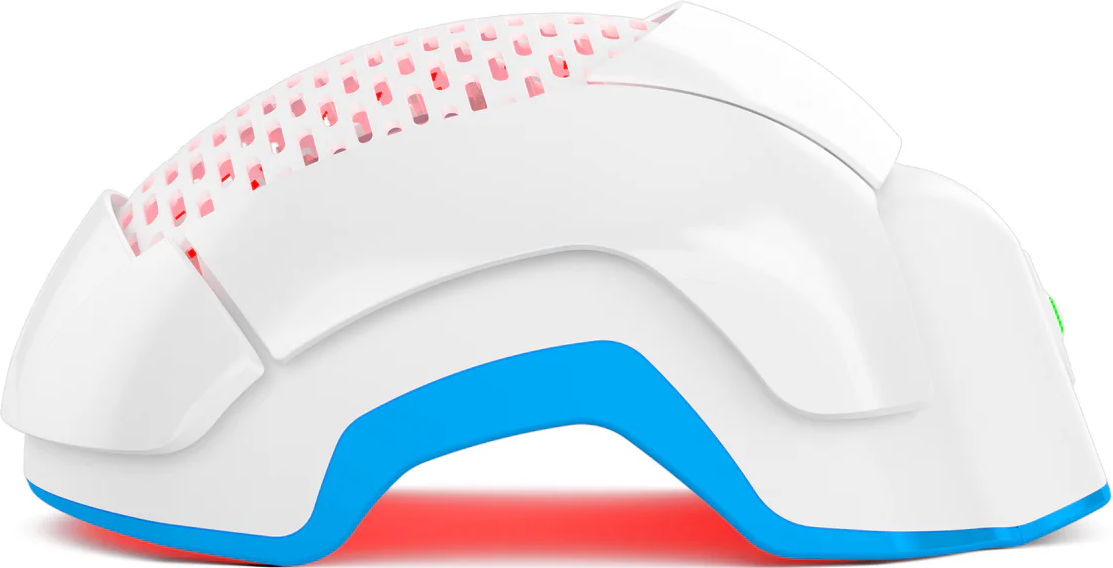
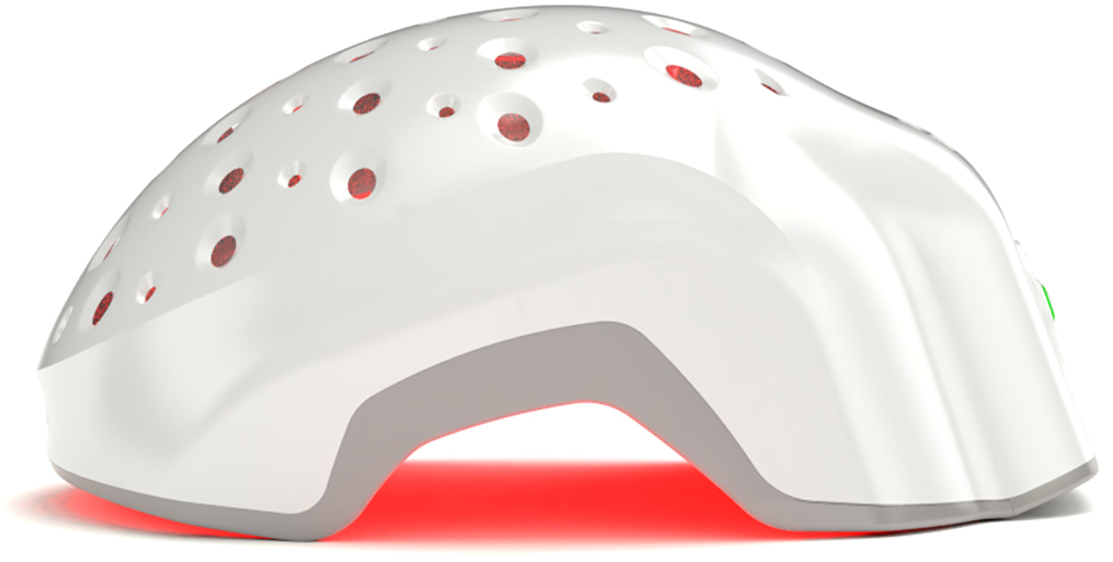
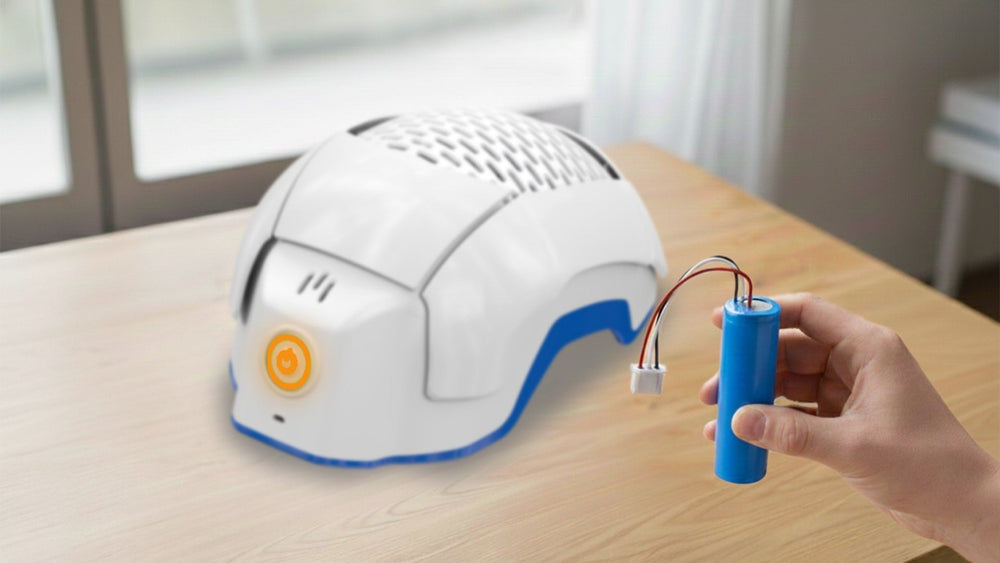
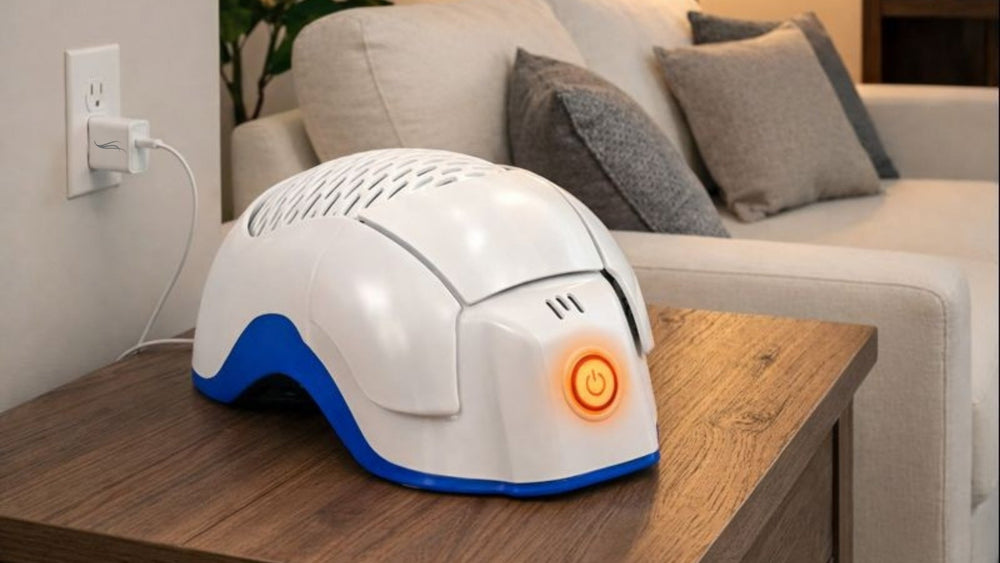
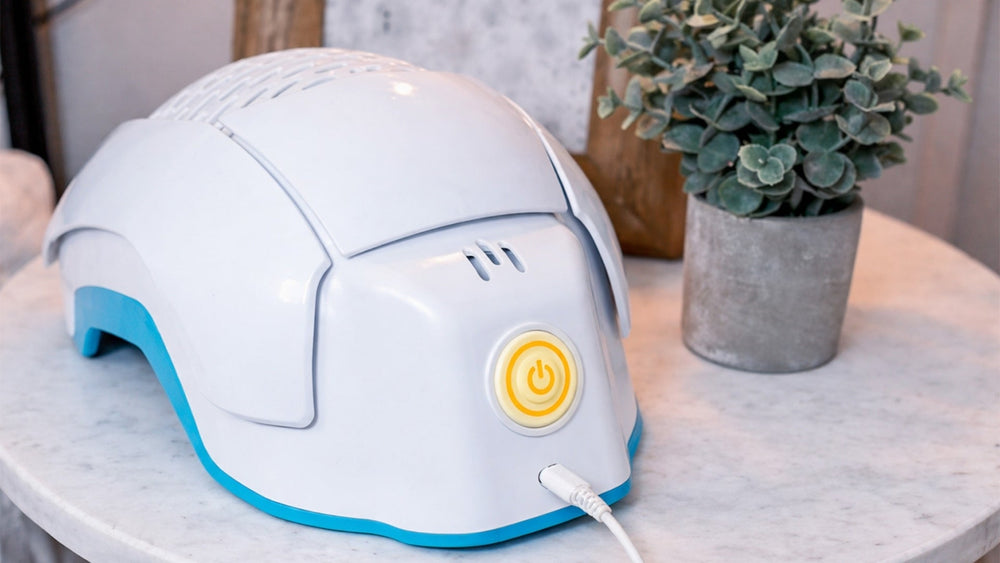
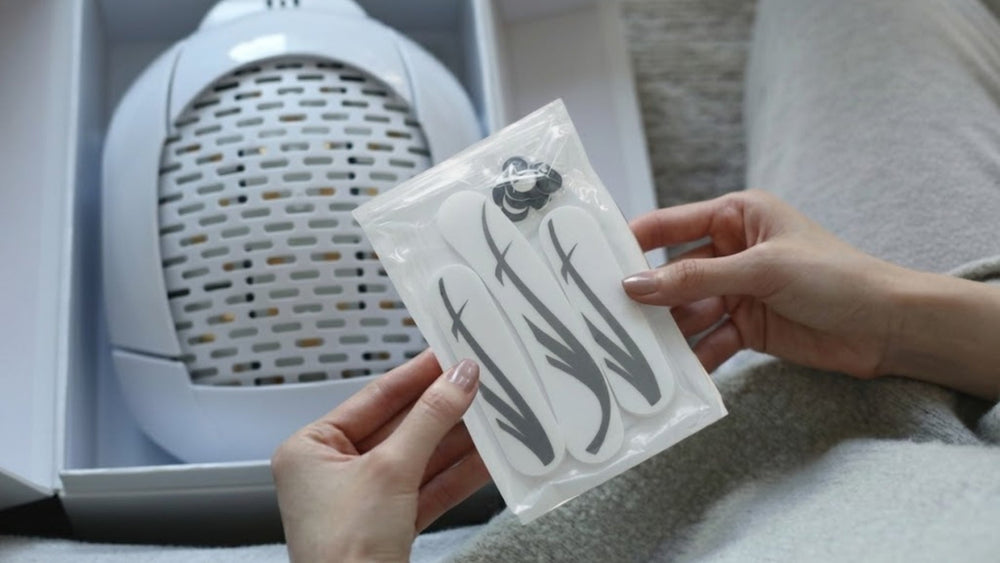
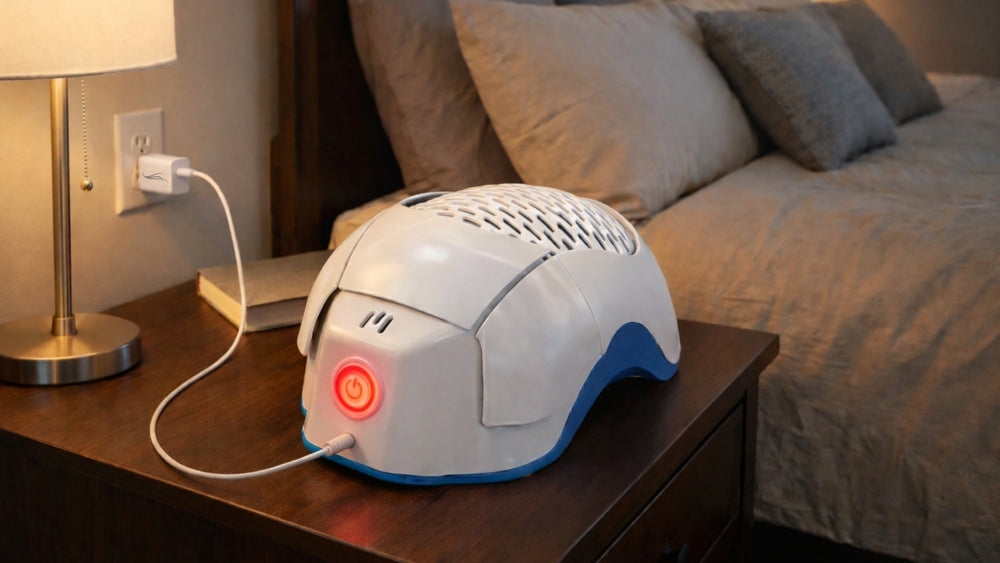
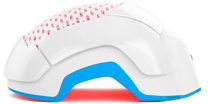
Theradome is an FDA-cleared wearable Laser Phototherapy device intended for androgenetic alopecia in men and women. In a straightening-related hair-loss article, that means Theradome may fit when someone has pattern thinning alongside chemical damage, or when straightening made existing androgenetic alopecia more obvious.
What Treatments Actually Help, Based On The Type Of Damage?
The treatment depends on what is actually happening. A neat little universal cure would be lovely. Hair, unfortunately, did not sign that contract.
|
What may be happening |
Main clue |
What usually helps |
What to avoid |
|
Hair-shaft breakage |
Short broken pieces, weak ends, snapping |
Pause chemicals, reduce heat, condition for slip, gentle detangling, trims |
More relaxer, bleach, tight styles, rough brushing |
|
Scalp burn or dermatitis |
Pain, burning, scabs, redness, swelling |
Medical care if severe or persistent, trigger avoidance |
DIY harsh treatments, oils on open skin, repeat chemical service |
|
Traction alopecia |
Thinning edges or temples, tight styles |
Stop tension early, dermatologist if it persists |
Tight braids, heavy extensions, glue, painful styles |
|
CCCA |
Crown thinning, tenderness, itch, scale, shiny scalp |
Early dermatologist care, anti-inflammatory treatment, gentler styling |
Heat, tight styles, repeated scalp irritation |
|
Telogen effluvium |
Diffuse shedding months after trigger |
Identify trigger, correct medical issues, time |
Panic-buying random growth products |
|
Androgenetic alopecia |
Gradual part widening, crown or temple pattern |
Minoxidil, dermatologist-guided care, FDA-cleared LPT when appropriate |
Assuming it is only straightener damage |
Why “hair growth products” are not always the answer
If your hair is snapping, the first goal is not “grow faster.” It is stop the breakage.
If your scalp is burned, the first goal is not styling. It is healing and medical safety.
If your follicles are miniaturizing from androgenetic alopecia, then pattern-hair-loss therapies may matter. If scarring is starting, early treatment matters even more.
When Should You Stop Chemical Straightening?
Sometimes the safest next treatment is no treatment.
Stop immediately if these happen
Stop chemical straightening and seek professional guidance if you notice burning, scabs, sores, swelling, oozing, bleeding, severe pain, bald patches, shiny scalp, spreading crown thinning, or persistent tenderness.
Also pause if your hair is snapping heavily, matting, turning gummy, or breaking in clumps.
That is not “your hair getting used to it.” That is hair asking for mercy.
Pause and reassess if your hair is already fragile
Be cautious if your hair has been recently bleached, dyed, heat-styled often, braided tightly, worn with extensions, or already breaking. Also pause if you have active dandruff-like scaling, eczema, psoriasis, seborrheic dermatitis, sores, or unexplained shedding.
Chemical straightening works best, or at least more safely, when the scalp is calm and the hair has enough structural strength to tolerate it.
What to ask before your next appointment
Ask your stylist:
-
What product are you using?
-
Will heat be applied?
-
Does it contain formaldehyde, formalin, methylene glycol, or similar ingredients?
-
How will you avoid overlapping previously treated hair?
-
What should happen if my scalp burns?
-
Is my hair currently strong enough for this service?
A good salon conversation should not feel like cross-examination. But your scalp lives with the result, so ask.
Quick Self-Check: What Might Be Happening To Your Hair?
Use this as a starting point, not a diagnosis.
-
Mostly short broken pieces after brushing or washing? Think breakage.
-
Full-length strands with white bulbs? Think shedding.
-
Burning, swelling, scabs, or sores? Think scalp injury.
-
Thinning edges after tight styles? Think traction.
-
Crown thinning with tenderness or itching? Think CCCA, and get checked.
-
Gradual widening part or crown thinning without scalp pain? Think androgenetic alopecia as one possibility.
And if more than one sounds familiar? That happens. Hair problems are rude like that. You can have breakage and pattern thinning. You can have traction and chemical damage. You can have scalp irritation sitting on top of everything like an uninvited auntie at the party.
When in doubt, get the scalp seen.
Conclusion
Chemical straightening can cause hair loss, but the mechanism matters. In many cases, the visible thinning is breakage from a weakened hair shaft, not permanent follicle loss. Still, scalp burns, dermatitis, traction alopecia, CCCA, telogen effluvium, or androgenetic alopecia can also be involved.
If you have burning, scabs, bald patches, crown tenderness, shiny scalp, or shedding that continues, see a dermatologist. If the issue is pattern hair loss, then FDA-cleared Laser Phototherapy such as Theradome belongs in the plan. If the issue is broken hair or scalp injury, treat that first.