





Current evidence does not show that correctly used topical hair fibers directly cause androgenetic alopecia, permanently damage follicles, or stop new hair from growing. An individual fiber formula or holding spray can still irritate a sensitive scalp, while scratching, rough removal, and stiff product residue may contribute to breakage or increased visible shedding.
Hair fibers change what thinning looks like. They do not treat why it is happening.
What Are Hair Fibers, and What Do They Actually Do?
Hair fibers are temporary cosmetic particles placed over thinning areas to make hair look fuller. They mainly cling to existing strands, increase their apparent bulk, and reduce how much scalp shows through.
No biological regrowth occurs during that instant visual change. The follicle count remains the same.
What are topical hair-building fibers?
Topical hair-building fibers are fine particles applied to sparse areas where some natural hair remains. They may be sold as keratin fibers, hair filler fibers, hair-thickening fibers, electrostatic fibers, or concealing fibers.
Formulas vary. Some use keratin-based material. Others may use cellulose, cotton-derived material, rayon, or synthetic fibers. Pigments are added to match hair color, and many routines include a separate fixing spray that helps the particles remain in place.
That variation matters. Quite a lot, actually.
Research involving one keratin product cannot be stretched into a permanent safety certificate for every loose powder, aerosol concealer, pigment, preservative, fragrance, or fixing spray on the shelf. Hair-product formulations may contain several potential irritants or allergens, including fragrance, preservatives, colorants, surfactants, adhesives, and film-forming ingredients (Karim et al., 2023, Alajaji et al., 2024).
And keratin on a label does not mean the product contains living hair, feeds the follicle, or becomes part of the strand growing beneath your skin. Keratin is a structural protein. Once placed on the surface, it serves a cosmetic role.
How do hair fibers make thinning hair look fuller?
Most hair-building fibers cling to existing shafts through electrostatic attraction and physical contact. By collecting around natural strands, they increase apparent thickness and make gaps between hairs less conspicuous. Matching pigment also reduces contrast between hair and visible scalp (Saed et al., 2017, Daruwalla et al., 2022).
This works particularly well when the scalp looks prominent because individual hairs have become finer or overall density has dropped. A sprinkle of matching fibers can soften the glare of a widening part or sparse crown in a few minutes.
The mirror may register more hair. The follicle count has not received the memo.
Hair fibers do not:
- Create new follicles
- Correct androgen sensitivity
- Reverse an autoimmune condition
- Treat a fungal or bacterial infection
- Correct thyroid disease
- Replace iron or another missing nutrient
- Stop traction from a tight hairstyle
- Restore follicles already destroyed by scarring alopecia
- Treat androgenetic alopecia by themselves
They are appearance aids.
That does not make them trivial. Hair camouflage can support confidence and reduce the emotional burden of visible thinning, and clinical reviews regard cosmetic concealment as a legitimate part of hair-loss care (Saed et al., 2017, Babadjouni et al., 2022).
Where do fibers tend to work well, and where do they struggle?

Hair fibers usually perform best when enough existing hair remains for the particles to catch.
Commonly suitable areas include:
- A widening center part
- Diffuse thinning
- Mild to moderate crown loss
- Early patterned thinning
- Areas of short regrowth
- Sparse zones between existing strands
They tend to struggle on smooth, completely bald skin. With little or no hair available for attachment, extra product may simply sit on the scalp. Add enough, and the coverage can start looking powdery rather than fuller.
Not the goal.
A scalp powder, colored concealer, topper, wig, or scalp micropigmentation may suit extensive loss better. The appropriate choice depends on the area involved, hair texture, lifestyle, scalp condition, and how temporary the person wants the result to be (Saed et al., 2017).
Fibers should not be applied over wet, weeping, infected, freshly punctured, or badly inflamed skin. Cosmetic success does not outrank the skin barrier.
Are topical fibers the same as implanted prosthetic fibers?
No.
Topical fibers sit on hair or skin and wash away. Surgically implanted prosthetic fibers are artificial filaments placed into scalp tissue.
The U.S. Food and Drug Administration banned prosthetic hair-fiber implantation devices because implantation was associated with infection, illness, injury, and misleading claims. That ban does not refer to ordinary sprinkle-on cosmetic fibers (U.S. Food and Drug Administration, n.d.).
Confusing these categories can make a routine styling product sound like minor scalp surgery. It is not.
|
Topical cosmetic fibers |
Implanted prosthetic fibers |
|
Placed externally |
Inserted into scalp tissue |
|
Temporary |
Intended to remain implanted |
|
Usually removed with washing |
Requires a procedure |
|
Used for cosmetic coverage |
Used as artificial replacement hairs |
|
Not the device category covered by the FDA ban |
Banned by FDA in the United States |
Do Hair Fibers Directly Damage Follicles or Cause Baldness?
No convincing evidence shows that correctly used topical fibers directly cause androgenetic alopecia, shrink follicles, alter inherited androgen sensitivity, or permanently stop hair growth.
The direct research is fairly reassuring.
It is also small.
What does the direct research show?
The most relevant published safety study involved 40 adults with hair loss, split evenly between women and men. Each participant received a commercially available keratin fiber matched to their natural hair color and used it for 90 days. Researchers then assessed satisfaction, self-reported symptoms, and selected scalp findings (Babadjouni et al., 2022).
Participants reported greater perceived volume, coverage, confidence, and attractiveness. In total, 92.5% expressed high satisfaction with the product’s color matching and coverage. No serious adverse events were reported. One participant had physician-observed erythema, meaning visible redness.
Most users did not report itching, prickling, tightness, burning, or pain.
That sounds encouraging because it is.
But the study had several important limits:
- Only 40 people participated
- Follow-up lasted 90 days
- There was no untreated comparison group
- Participants and investigators were not blinded
- One product was assessed
- Much of the information came from questionnaires
- Researchers did not measure follicular miniaturization
- They did not perform scalp biopsies
- They did not count daily shed hairs
- They did not objectively measure shaft breakage
- They did not assess inhalation exposure
- They could not reliably detect rare reactions
- The findings do not establish safety over many years
An earlier study of 40 adults also reported high satisfaction with a hair-fiber filler, particularly for scalp coverage, fullness, and color matching. Its main purpose was to assess cosmetic satisfaction rather than establish long-term follicular safety (Pinski, 2014).
So hair fibers appear to be generally well tolerated in the short term, based on limited direct research. We cannot honestly say that every formula is harmless for every scalp, every day, forever.
Can fibers suffocate hair follicles?
No, hair fibers do not suffocate follicles. The living follicle receives its oxygen and nutrients from within the skin, not from air entering through the scalp surface.
The active, hair-producing part of the follicle lies within the skin. Capillaries derived from dermal blood vessels supply oxygen and nutrients to the rapidly dividing cells of the hair bulb. The dermal papilla at the base of the follicle is particularly rich in this vascular supply (Martel et al., 2024, Hoover et al., 2023).
A layer of product may feel uncomfortable. It may hold oil, scale, sweat, or styling residue. It may make an irritated scalp harder to assess. None of this means the follicle underneath has been starved of oxygen.
Do hair fibers clog pores and block new growth?
Product can accumulate around the scalp and hair shafts, particularly when fibers are layered repeatedly with oil, sweat, dry shampoo, or holding spray.
That is buildup.
Buildup is not automatically follicular blockage, infection, or permanent hair loss. No strong clinical evidence shows that ordinary topical hair fibers routinely seal follicular openings and prevent a viable follicle from producing its next strand.
The phrase “clogged follicles” may refer to visible residue, folliculitis, acne-like bumps, scale, seborrheic dermatitis, or simply an oily scalp. Those are not one condition.
Heavy residue can still create problems. It may:
- Increase discomfort
- Make itching more noticeable
- Adhere to existing scale
- Complicate medicated-shampoo use
- Make a topical medication harder to place accurately
- Obscure redness, pustules, or scarring signs
- Encourage more scratching or scrubbing
Can fibers alter the hair-growth cycle or cause genetic hair loss?
There is no evidence that topical hair fibers increase sensitivity to dihydrotestosterone, shorten the anagen growth phase, or cause the progressive follicular miniaturization seen in androgenetic alopecia.
Pattern hair loss develops because genetically susceptible follicles respond abnormally to androgens over time. Affected follicles gradually produce finer, shorter hairs. That process occurs below the skin and is not known to be initiated by cosmetic fibers sitting on the surface (Asfour et al., 2023).
Hair fibers have also not been established as a direct cause of telogen effluvium, the diffuse shedding that can follow illness, surgery, childbirth, major weight change, certain medications, endocrine disturbance, or significant physiological stress.
A severe scalp reaction could, in theory, be followed by increased shedding. Yet that would be an indirect inflammatory event, not ordinary fiber use flipping a switch in the hair cycle.
Why might hair loss continue while someone is using fibers?
People often begin using cosmetic fibers when their thinning has become difficult to ignore. The underlying condition may keep progressing after the new product enters the routine, creating a powerful sense of cause and effect.
Sometimes the timing is misleading.
Possible explanations include:
- Androgenetic alopecia continuing beneath the coverage
- Telogen effluvium
- Alopecia areata
- Traction alopecia
- Scalp psoriasis
- Seborrheic dermatitis
- Contact dermatitis
- Medication-related loss
- Endocrine disease
- A relevant nutrient deficiency
- Central centrifugal cicatricial alopecia
- Frontal fibrosing alopecia
- Another scarring disorder
Effective treatment begins with identifying the cause rather than blaming the newest bottle by default (American Academy of Dermatology, 2022).
|
Question |
Current evidence-based answer |
Confidence |
|
Do fibers directly cause androgenetic alopecia? |
No evidence of direct causation |
Moderate |
|
Do fibers suffocate follicles? |
No |
High |
|
Can an individual product irritate the scalp? |
Yes |
Moderate |
|
Can scratching and rough removal increase breakage? |
Plausible and consistent with mechanical hair damage |
Moderate |
|
Is every product proven safe for lifelong daily use? |
No, long-term category-wide evidence is lacking |
Low |
|
Do fibers regrow hair? |
No |
High |
How Can Hair Fibers Cause Scalp or Hair Problems Indirectly?
Hair fibers are not an established direct cause of baldness, but an individual product or the routine around it can create trouble. Irritation, scratching, stiff residue, rough removal, poor medication sequencing, and delayed diagnosis are the main concerns.
Can hair fibers or holding spray cause contact dermatitis?
Yes. A person may develop irritant contact dermatitis or allergic contact dermatitis after using a scalp-applied product.
Irritant contact dermatitis occurs when an ingredient or repeated exposure damages the skin barrier. Friction, frequent cleansing, high product concentration, alcohol-containing formulas, and application over already inflamed skin may increase irritation.
Allergic contact dermatitis is a delayed immune reaction to a specific substance. Someone may use a product without difficulty for months, then become sensitized and begin reacting later. Prior tolerance does not guarantee permanent tolerance (American Academy of Dermatology, 2020, Hwang et al., 2024).
Potential triggers across hair products include:
- Fragrance
- Preservatives
- Dyes and pigments
- Adhesives
- Acrylates
- Surfactants
- Emulsifiers
- Film-forming ingredients
- Components in aerosol holding sprays
This does not mean every listed substance is dangerous. It means formulas differ, and the visible fiber is not always the guilty party. The fixing spray, shampoo, hair dye, minoxidil vehicle, or another product introduced around the same time may be responsible.
Common signs of contact dermatitis include:
- Itching
- Burning
- Stinging
- Tenderness
- Dryness
- Cracking
- Scale
- Swelling
- Blisters
- Weeping
- Crusting
- Red, purple, gray, or darker discoloration depending on skin tone
The reaction may be more obvious around the forehead, ears, eyelids, sides of the face, or neck than beneath dense scalp hair. Reviews of scalp allergic contact dermatitis note that it is often mistaken for seborrheic dermatitis and may present with hair thinning or hair loss alongside itch and scale (Hwang et al., 2024, Pham et al., 2022).
Persistent inflammation and scratching may increase visible shedding or breakage. That does not mean every faint itch has pushed the whole scalp into telogen effluvium. Mild symptoms should not be inflated into a biological calamity.
Can buildup worsen dandruff, psoriasis, or another scalp condition?
Hair fibers have not been shown to cause seborrheic dermatitis. Seborrheic dermatitis is an inflammatory condition that commonly affects sebum-rich areas and is associated with host response, skin oil, and Malassezia yeast.
Still, cosmetic residue may cling to existing flakes, make scale more conspicuous, or make medicated shampoo harder to spread over the scalp. Avoiding needed cleansing simply to preserve coverage can leave oil, sweat, scale, and styling material sitting together for longer than is comfortable (American Academy of Dermatology, 2024).
Fibers may also cover signs of:
- Scalp psoriasis
- Eczema
- Folliculitis
- Tinea capitis
- Contact dermatitis
- CCCA
- Frontal fibrosing alopecia
- Other inflammatory or scarring disorders
Scalp psoriasis can cause soreness, burning, itching, and temporary hair loss. The American Academy of Dermatology notes that scratching or forceful scale removal may loosen hair, while gentle treatment helps reduce that risk (American Academy of Dermatology, n.d.).
So, can product buildup worsen an uncomfortable scalp situation? Possibly.
Does visible residue prove that follicles have been obstructed and are dying? No.
If scale, redness, tenderness, or bumps persist, fibers should come off long enough for the scalp to be assessed properly.
Can applying or removing hair fibers cause breakage?
The loose particles themselves have not been shown to routinely snap healthy hair shafts. The wider handling routine is more likely to matter.
Breakage becomes more plausible when someone:
- Rubs product vigorously into sparse areas
- Brushes through dried fixing spray
- Scrapes residue with fingernails
- Uses harsh clarifying shampoo repeatedly
- Detangles without enough slip
- Towels the hair aggressively
- Restyles several times each day
- Handles bleached, relaxed, heat-damaged, or weathered hair roughly
Breakage is not the same as shedding.
Shedding means a whole strand has been released from the follicle during the hair cycle.
Breakage means the shaft has snapped somewhere along its length.
Miniaturized hair is a finer, shorter strand produced by a follicle affected by pattern loss.
A naturally shed telogen hair may have a club-shaped end, though it is not always easy to see. A broken strand may look short, uneven, frayed, or blunt. Miniaturized hairs muddy the inspection further because they can be naturally fine and short.
In other words, staring at one bathroom hair under the light is not a full diagnostic method.
A fiber attached to a shed strand tells you the fiber adhered successfully. It does not prove that the particle yanked the hair from its root.
Loose hairs can also remain caught among neighboring strands for several days, particularly in curly or coily hair. Washing releases them together, making one shower look responsible for several days of shedding.
For more help sorting these events out, see Theradome’s guides to hair shedding versus hair loss, new hair growth versus breakage, and the hair pull test.
Is the fixing spray more likely to cause trouble than the fibers?
It can be.
Fixing sprays and other styling aids may contain alcohol, fragrance, propellants, preservatives, or film-forming polymers. None of those ingredients is automatically damaging at the concentration used. Tolerance depends on the exact formula, how much is applied, where it lands, how often it is used, and the condition of the scalp.
A spray may cause problems if it:
- Triggers contact dermatitis
- Leaves fragile strands unusually stiff
- Is applied heavily onto irritated skin
- Produces coughing or airway discomfort
- Encourages forceful brushing
- Is layered repeatedly without cleansing
Silicones should not be condemned as a class. Neither should alcohols. Formulation chemistry is more nuanced than “natural good, synthetic bad.”
Labels rarely sort themselves into heroes and villains.
When symptoms begin, assess the complete routine. The visible fibers may take the blame while a new hairspray, dye, minoxidil solution, cleanser, or fragrance sits nearby looking innocent.
Can breathing in loose fibers or getting them in the eyes be harmful?
Long-term inhalation safety has not been studied adequately for the full category of hair-building fibers.
A 2025 review of inhaled exposure from cosmetic products found that loose powders generally create more airborne exposure than compact products, although actual risk depends on particle size, formula, dose, toxicology, frequency, and user behavior. That review did not establish that normal hair-fiber use causes chronic lung disease (Li et al., 2025).
Simple precautions are still sensible:
- Apply fibers in a ventilated room.
- Keep the container away from your nose and mouth.
- Use the smallest amount that gives acceptable coverage.
- Avoid creating a large powder cloud.
- Follow aerosol warnings.
- Stop if application repeatedly causes coughing, wheezing, throat tightness, or shortness of breath.
FDA also advises using cosmetic sprays and aerosols in well-ventilated areas and avoiding inhalation where possible (U.S. Food and Drug Administration, n.d.).
Fibers and holding sprays should be kept out of the eyes. If accidental exposure occurs, rinse thoroughly with clean water. Persistent pain, marked redness, light sensitivity, blurred vision, or any visual change needs prompt medical attention.
People with asthma or another significant respiratory condition should not assume every loose powder is equally suitable.
How Can You Use Hair Fibers Without Needlessly Irritating Your Scalp?
Most people do not need an elaborate scalp ritual to use fibers sensibly.
They need a light hand, an intact scalp, reasonable cleansing, and enough restraint not to turn a few sparse centimeters into a construction project.
Who should pause before applying hair fibers?
Avoid applying cosmetic fibers over:
- Open sores
- Bleeding scratches
- Weeping dermatitis
- Painful pustules
- Suspected infection
- A chemical burn
- Sunburned scalp
- Fresh biopsy sites
- Recent microneedling
- Fresh transplant grafts
- Unhealed scalp micropigmentation
- A severe psoriasis or eczema flare
Children with unexplained hair loss should be assessed before regular camouflage becomes the default. Hair loss in childhood may involve alopecia areata, tinea capitis, traction, hair-pulling disorders, or another condition that deserves diagnosis.
People with a history of several cosmetic allergies may benefit from dermatologist-led patch testing before adding another scalp product.
And after a procedure? Follow the treating clinician’s instructions. A universal “safe after seven days” rule would be tidy, convenient, and frequently wrong.
What is the gentlest way to apply hair fibers?
Begin with dry, styled hair unless the label for your specific product says otherwise.
Then:
- Gently expose the sparse area.
- Apply a small amount where existing hairs can catch the particles.
- Build coverage gradually.
- Avoid rubbing or grinding the fibers into the scalp.
- Keep loose powder and spray away from the eyes and mouth.
- Use fixing spray sparingly, if needed.
- Let the product dry before adding a hat or further styling.
- Wash your hands.
- Clean applicators that contact the scalp.
There is no medical basis for insisting that every fiber be placed one inch from the root. Such a rule becomes rather awkward on short hair, widening parts, and crown thinning.
The better principle is: aim for existing strands, avoid dumping a mound onto bare or irritated skin, and stop once the area looks covered.
More is not always more convincing.
How often should hair fibers be washed out?
There is no evidence-based schedule that suits every product, scalp, hair texture, and styling routine.
Remove the product often enough to:
- Keep the scalp comfortable
- Prevent troublesome residue
- Allow medicated shampoo to contact the skin
- Let topical medication reach the intended area
- Check for redness, scale, bumps, or progression
- Avoid repeated layering over sweat and oil
Wash sooner if the scalp becomes itchy, sweaty, sore, heavily coated, or visibly flaky.
A mandatory nightly double wash is not supported by the available research. Neither is automatic daily clarifying shampoo.
Overcleansing can create another problem, particularly for dry, fragile, bleached, relaxed, curly, or tightly coiled hair. The scalp needs to be cleaned adequately, not scoured into submission.
A gentler removal routine looks like this:
- Wet the hair and scalp thoroughly.
- Apply an appropriate shampoo.
- Massage with the pads of your fingertips.
- Allow water and cleanser to loosen the residue.
- Rinse well.
- Repeat only when product remains and the hair tolerates another wash.
- If fragile lengths need slip, use a small amount of rinse-out conditioner only after the fibers have been washed away, focusing on the mid-lengths and ends.
- Detangle using a method suited to your texture and hair condition.
Conditioner deserves its own tiny clarification because advice can sound contradictory here. Avoid conditioner, oils, or leave-in smoothing products before applying fibers, especially near the roots or thinning area, because a coated hair shaft may stop the particles from gripping well. If your hair needs conditioning, it is usually cleaner to do it on a non-fiber day, or after washout on the ends only.
Keep conditioner away from an irritated scalp unless your clinician says otherwise.
Skip the fingernail excavation.
Scalp scrubs, strong exfoliating acids, and routine salicylic-acid treatments are not necessary for every fiber user. They may irritate some scalps, particularly when used on inflamed or broken skin.
Is it safe to sleep, exercise, or get caught in rain while wearing fibers?
There is no evidence that sleeping in hair fibers directly causes baldness.
Removing them before bed may still reduce:
- Transfer onto facial skin
- Eye exposure
- Pillow staining
- Tangling from dried spray
- Prolonged contact on a reactive scalp
- Interference with nighttime medication
For someone who tolerates the product and follows its directions, occasional overnight wear is not known to kill follicles.
Exercise changes the cosmetic situation more than the follicular one. Sweat, heat, and friction may cause clumping, streaking, transfer, or itching. In the small 90-day study, a few participants reported discomfort associated with exercise or heat, though no serious adverse events occurred (Babadjouni et al., 2022).
Layering fresh fibers over yesterday’s product, today’s sweat, and a determined mist of holding spray may eventually become uncomfortable. Washing and starting again is often the kinder option.
Rain and wind mainly threaten appearance.
A tight hat used to protect the result deserves separate attention. Repeated tension from tight headwear or styling can contribute to traction alopecia, independently of the fibers themselves (Syed et al., 2025).
Does fiber material determine whether a product is safe?
Not by itself.
“Natural keratin,” cotton, and plant-derived cellulose are not automatically gentler than synthetic material. Natural substances can cause allergy. Synthetic ingredients can be well tolerated. Price, botanical language, and a tasteful beige label do not settle the matter.
Tolerance depends on the complete formulation:
- Fiber material
- Pigments
- Fragrance
- Preservatives
- Fixing spray
- Aerosol propellants
- Application frequency
- Quantity
- Scalp condition
- Personal allergy history
FDA does not preapprove most cosmetic products or ingredients before sale, with color additives being an important exception. Manufacturers are responsible for substantiating safety and labeling products correctly.
A label saying “FDA registered” does not mean FDA tested and endorsed the formula.
Likewise:
- “Hypoallergenic” does not mean allergy-proof
- “Dermatologist tested” does not mean nobody can react
- “Non-comedogenic” does not establish scalp-folliculitis safety
- “Natural” does not establish lower risk
- “Keratin” does not establish hair growth
Read the ingredient list. Keep the label if a reaction occurs.
Should you patch-test hair fibers?
A cautious small-area trial may help identify an obvious reaction before broad scalp use.
The American Academy of Dermatology suggests testing a new skin-care product on a small area twice daily for seven to ten days when practical. Hair fibers are not identical to leave-on skin cream, but the principle can still help reveal immediate irritation (American Academy of Dermatology, 2021).
A home trial has limits.
Passing it does not rule out:
- Delayed allergy
- Sensitization after repeated use
- A reaction caused by sweating or heat
- Irritation after larger-area application
- Sensitivity to the fixing spray
- A problem caused by product combinations
For recurring scalp or facial dermatitis, dermatologist-supervised patch testing is more useful. Standard allergens are placed on the back and read over several days because allergic reactions may be delayed.
What changes for curly, coily, bleached, relaxed, or fragile hair?
The scalp biology does not suddenly change because the strand curls.
The handling needs may.
Curly and coily hair can retain naturally shed strands among neighboring hairs until wash day, making removal-day shedding look more dramatic. Chemically relaxed, bleached, heavily heated, or weathered hair may also snap more easily during rough manipulation.
A gentler routine may involve:
- Cleansing in sections
- Using enough water to soften dried residue
- Avoiding brushing through rigid fixing spray
- Conditioning the mid-lengths and ends after fibers are removed, if the hair needs slip
- Detangling with adequate slip
- Reducing repeated restyling
- Avoiding tight braids, clips, or extensions used to hold coverage in place
Hair camouflage can be valuable for Black women, but high-tension methods, strong adhesives, and rough handling may worsen existing alopecia. Topical fibers generally add less mechanical load than attached extensions or tightly secured hairpieces, provided they are applied and removed gently (Taye et al., 2023).
When Should You Stop Using Hair Fibers or See a Dermatologist?
Pause the product when symptoms repeatedly follow application. Arrange professional assessment when the pattern suggests more than cosmetic intolerance.
Coverage can be excellent and still hide something medically important.
Which symptoms mean “pause the product”?
Stop using the fibers and fixing spray temporarily if you notice:
- Itching after most applications
- Burning or stinging
- New tenderness
- Worsening scale
- A rash along the hairline
- Eyelid, ear, facial, or neck irritation
- New bumps or pustules
- Noticeably increased breakage
- Symptoms that improve during a break and return after reuse
Wash the product away gently.
Avoid responding with a crowded shelf of essential oils, scalp scrubs, acids, heavy oils, and homemade mixtures. Adding five more variables to an irritated scalp makes the original culprit harder to identify.
Keep the container and full ingredient list. Note the shade and fixing spray. Photograph the reaction before it fades.
After a severe reaction, do not deliberately apply the product again simply to confirm the reaction. Your scalp has already made a fairly persuasive case.
Avoidance is central to contact-dermatitis care, and persistent symptoms may require medical treatment or patch testing (American Academy of Dermatology, 2020).
Which hair-loss patterns need professional assessment?
Arrange a dermatologist’s evaluation for:
- Sudden smooth round or oval patches
- Rapid diffuse shedding
- Crown-centered thinning with pain, burning, tenderness, scale, or bumps
- A shiny area with fewer visible follicular openings
- A receding frontal hairline with eyebrow loss
- Scale or redness around individual follicles
- Persistent pustules or crusting
- Significant breakage around the central scalp or hairline
- Loss around areas exposed to repeated tension
- Hair loss accompanied by fatigue, menstrual change, marked weight change, or another systemic symptom
- Progression that continues after the suspected cosmetic product has been removed
Alopecia areata often begins as a sudden, smooth round or oval patch. Eyebrows and eyelashes may also be affected (American Academy of Dermatology, 2023).
Central centrifugal cicatricial alopecia often begins at the crown and commonly affects Black women. It may cause itching, burning, tenderness, bumps, breakage, or progressive central loss. Early treatment can prevent further permanent hair loss, while delayed disease may destroy follicles and leave scar tissue (American Academy of Dermatology, 2022, American Academy of Dermatology, n.d.).
Frontal fibrosing alopecia may cause a slowly receding frontal or temporal hairline, eyebrow loss, itching, pain, or a scaly rash near the hairline. It is a scarring form of alopecia and can cause permanent loss (American Academy of Dermatology, 2022).
These conditions were not caused by cosmetic fibers merely because fibers were used over them.
The cosmetic coverage may simply have hidden the progression remarkably well.
When is urgent medical help needed?
Seek urgent care for:
- Breathing difficulty
- Throat tightness
- Rapid swelling of the face, lips, tongue, or eyelids
- Widespread hives
- Severe eye pain
- Persistent blurred vision
- Fever with spreading scalp redness
- Rapidly worsening painful swelling
- Significant pus or drainage
These symptoms go beyond ordinary cosmetic intolerance.
How does a dermatologist work out whether the fibers are responsible?
A dermatologist may ask:
- When did the symptoms begin?
- Was a new product, shade, spray, or formula introduced?
- Does the rash follow the exact area of contact?
- Are the forehead, ears, eyelids, or neck involved?
- Does the condition improve when the product is stopped?
- Is the hair loss patterned, diffuse, patchy, traction-related, or scarring?
- Are the strands breaking or shedding from the follicle?
- What other scalp products are being used?
- Is minoxidil involved?
- Has hair dye, fragrance, shampoo, or adhesive changed recently?
The examination may include trichoscopy, a magnified assessment of the hair and scalp. This can help identify miniaturization, broken hairs, inflammation, scale, loss of follicular openings, and other clues.
Hair fibers can create trichoscopic artifacts, meaning cosmetic particles may resemble or obscure scalp findings under magnification. Tell the clinician what has been applied. Ask the clinic whether the fibers should be washed out before the appointment (García-García et al., 2018).
Depending on the pattern, a clinician may also recommend:
- Patch testing
- Blood tests
- Fungal testing
- A hair-pull test
- Microscopic shaft examination
- Scalp biopsy
Bring photographs of the reaction and your product labels.
|
Continue cautiously |
Pause and observe |
Arrange medical care |
|
No discomfort |
Recurrent itching |
Painful or inflamed loss |
|
Scalp remains clear |
New mild rash |
Smooth bald patches |
|
Product removes gently |
Increasing residue |
Pustules or drainage |
|
Medication still reaches scalp |
New breakage |
Shiny or scar-like areas |
|
Hair-loss pattern is stable |
Symptoms follow one product |
Rapid progression or eyebrow loss |
Can You Use Hair Fibers While Treating the Underlying Hair Loss?
Yes. Cosmetic camouflage and medical treatment can sit in the same routine.
They simply have different jobs.
Is it reasonable to conceal hair loss while treating it?
Absolutely.
Hair fibers can offer immediate coverage while diagnosis takes place or while a treatment needs several months to produce a visible response. That cosmetic relief may support confidence at work, in photographs, at social events, or during an emotionally difficult period.
Using them is not dishonest. It is not proof that someone has “failed” to accept hair loss. It is a styling choice.
And a useful one.
The caution is that a convincing cosmetic result can make progression easier to ignore. Remove the fibers periodically, check the scalp, take standardized photographs, and keep treatment aimed at the actual diagnosis.
Which treatments are appropriate depends on the diagnosis
Hair loss is not one disease, so there is no single treatment that belongs beneath every bottle of fibers.
|
Cause of hair loss |
What fibers may do |
What treatment may involve |
|
Androgenetic alopecia |
Reduce visible scalp |
Topical minoxidil, selected prescription medicines, FDA-cleared LPT, or transplantation in suitable candidates |
|
Telogen effluvium |
Temporarily conceal diffuse shedding |
Identifying and addressing the trigger |
|
Alopecia areata |
Reduce contrast around patches when surrounding hair remains |
Diagnosis-based anti-inflammatory or immune treatment |
|
Traction alopecia |
Provide low-tension cosmetic coverage |
Removing ongoing tension and treating inflammation where needed |
|
Seborrheic dermatitis or psoriasis |
Conceal thinning but potentially complicate scale management |
Treating the scalp disorder |
|
Scarring alopecia |
Hide visible loss |
Early medical treatment to limit further irreversible damage |
|
Hair-shaft breakage |
Reduce visible unevenness |
Reducing mechanical, thermal, and chemical injury |
For a closer look at whether a widening part may represent patterned thinning, see Normal Hair Part vs. Thinning Hair Part.
Androgenetic alopecia may respond to treatments including topical minoxidil, selected oral medicines under medical supervision, hair transplantation, and certain FDA-cleared light-based devices. Suitability depends on sex, age, medical history, pregnancy potential, pattern, stage, and treatment tolerance.
Telogen effluvium requires a search for the trigger rather than a default shopping list. Alopecia areata, inflammatory scalp disease, traction, and scarring alopecia need their own diagnosis-led care.
Can hair fibers be used with topical minoxidil?
Usually, yes.
Apply minoxidil directly to the scalp first, according to the current label or your clinician’s instructions. Allow it to dry, then apply hair fibers and styling products.
DailyMed labeling specifically states that minoxidil should be placed directly on the scalp in the hair-loss area and allowed to dry before styling aids are used (DailyMed, n.d.).
A sensible order is:
- Part the hair.
- Apply the labeled amount of minoxidil to the scalp.
- Let it dry fully.
- Style the hair.
- Add fibers.
- Use fixing spray if needed.
The concern is practical delivery. Medicine intended for the scalp should reach the scalp rather than landing mainly on coated hair.
Do not assume fibers chemically deactivate minoxidil. That interaction has not been established.
Also, remember that minoxidil itself may cause itching, redness, or irritation. Some solutions contain alcohol and propylene glycol. When symptoms start in a routine containing several products, the most visible product is not automatically responsible (DailyMed, n.d., Alajaji et al., 2024).
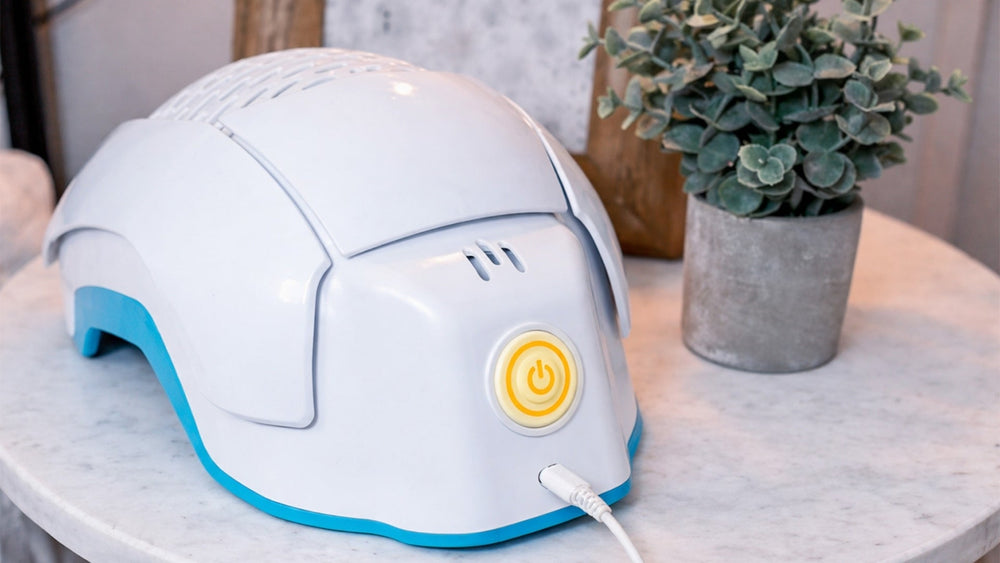
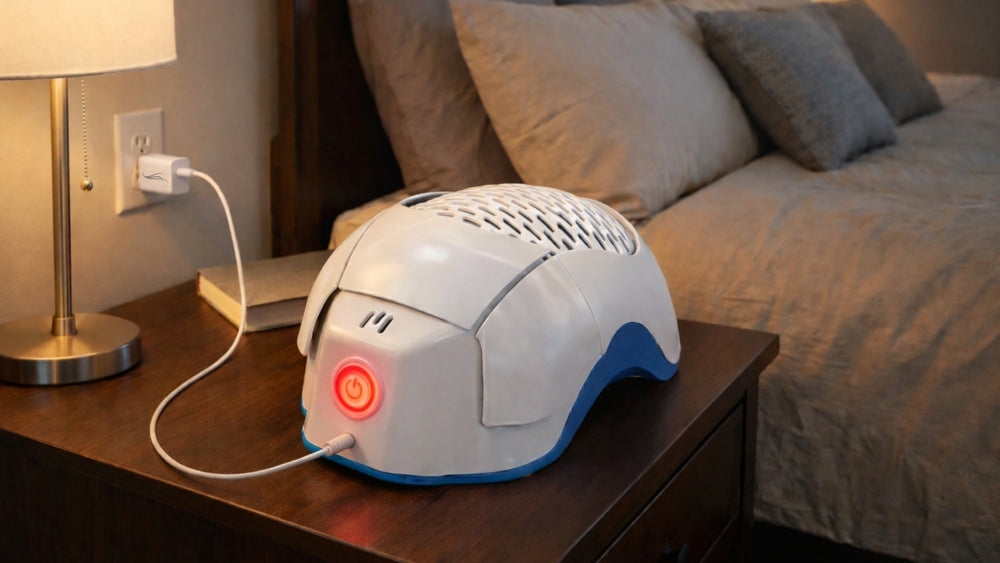
Can hair fibers be used with Theradome LPT?
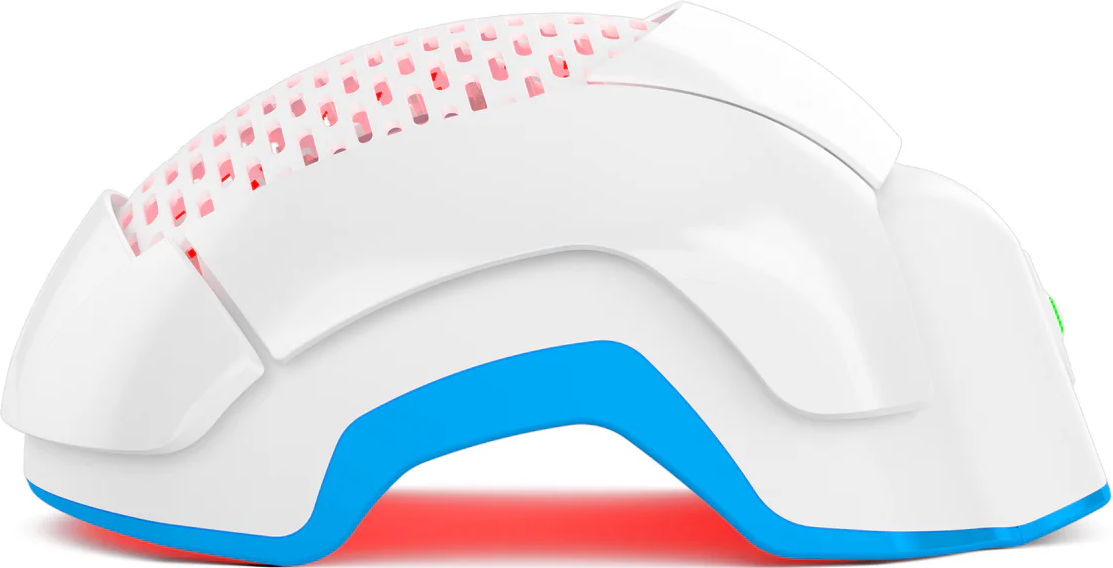
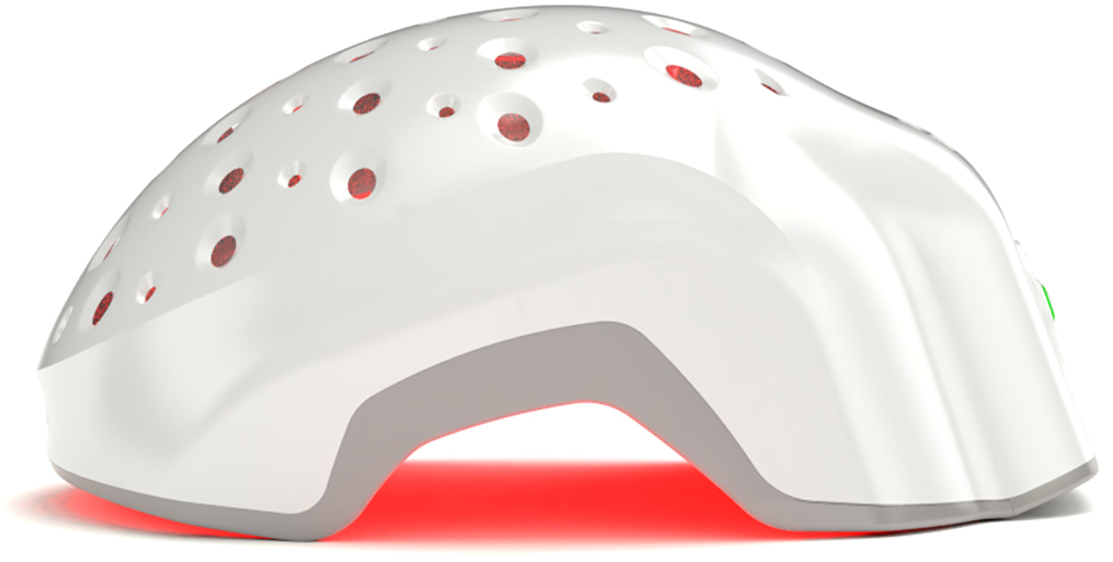
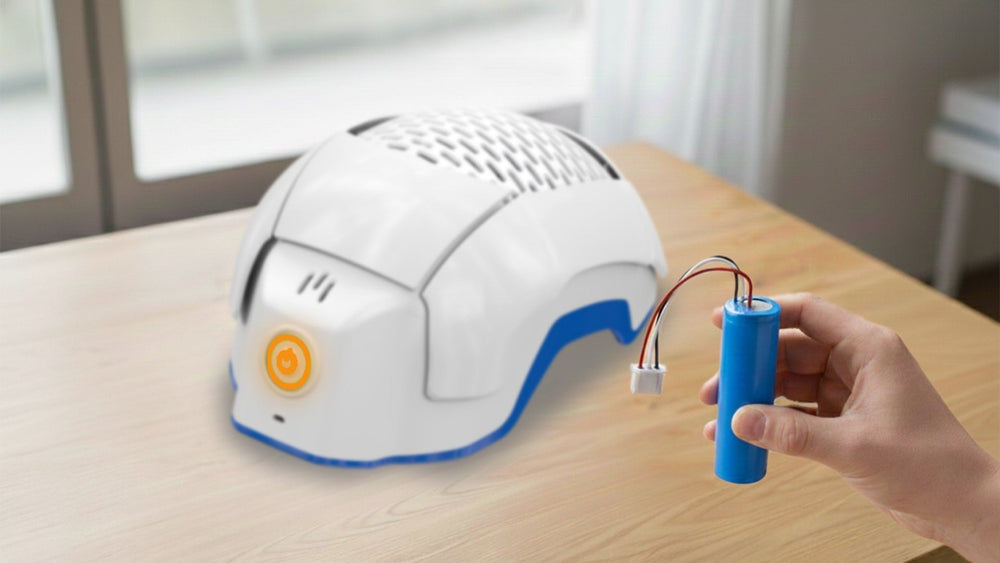
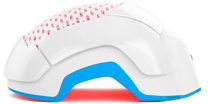
Yes, but use the Theradome device before applying fibers.
Theradome’s current guidance recommends completing the LPT session while the scalp is exposed and before applying styling creams, gels, mousse, or hair fibers. Cosmetic coverage can be added after the session (Theradome, 2026, Theradome, n.d.).
No direct clinical trial was found comparing light delivery through different quantities, shades, or formulations of hair fibers.
This practical sequence is enough:
- Prepare the hair and scalp according to the device instructions.
- Complete the LPT session.
- Apply fibers afterward.
Theradome’s LH80 PRO is FDA-cleared as an over-the-counter device for androgenetic alopecia and hair growth in men with Norwood-Hamilton IIa to V patterns and women with Ludwig-Savin I-1 to I-4, II-1, II-2 patterns, both with Fitzpatrick skin types I to IV (U.S. Food and Drug Administration, 2018).
Fibers and LPT do different jobs. One changes the view now. The other is very much relevant when the diagnosis is androgenetic alopecia.
Learn more about Theradome’s FDA-cleared LPT devices.
What about hair transplants, microneedling, PRP, or scalp procedures?
Do not apply loose particles over fresh grafts, punctured skin, biopsy wounds, active bleeding, crusting, or unhealed scalp micropigmentation.
After a hair transplant, the first two weeks are a careful healing window. NHS guidance says grafts are not secure during that period and advises not touching the grafts in the first several days, while ISHRS patient guidance notes that crusts around grafts commonly shed over roughly 5 to 14 days (National Health Service, n.d., International Society of Hair Restoration Surgery, 2005).
Some Theradome hair-fiber guidance and hair-restoration advice use the two-week mark as the earliest point when camouflage may be considered. Treat that as a common benchmark. If your surgeon says to wait longer, wait longer (Theradome, 2026).
The surgeon’s instructions take priority.
The same principle applies after:
- Microneedling
- Platelet-rich plasma injections
- Corticosteroid injections
- Scalp biopsy
- Scalp micropigmentation
- Other procedures that disrupt the skin barrier
No universal waiting period works for all procedures. Resume fibers only after the treating clinician considers the surface healed enough.
Conclusion
Hair fibers are temporary cosmetic camouflage, not an established cause of androgenetic alopecia. Current evidence does not show that they suffocate follicles, permanently block growth, or routinely make pattern loss progress faster.
Still, formulas differ. A fiber product or holding spray may irritate a sensitive scalp, and scratching, stiff residue, or rough removal can increase breakage or visible shedding.
Use the fibers if they help you feel more like yourself. Just keep an eye on the scalp beneath them. Persistent burning, swelling, pustules, painful loss, smooth patches, or scar-like areas deserve medical assessment.
Good camouflage should provide confidence.
It should not hide a condition indefinitely.