





Pumpkin seed oil for hair growth is one of the few natural options with real clinical research behind it, and that research covers pattern hair loss only. Two human trials, one against a placebo and one against minoxidil, both with measured results. It's not a miracle in a capsule, and the research itself is the first to say so.
Most things sold as natural hair remedies never get near a clinical trial. They get a nice bottle and a glowing testimonial. We're cautious about herbal remedies as a category, so this isn't a casual endorsement. But pumpkin seed oil has been through randomized human trials, a much higher bar than most of its shelf neighbors ever clear, and that earns it a closer look.
This guide covers what's actually inside the oil, how it's believed to work against DHT, what the studies found (numbers included, and the parts that don't flatter it), how people use it, and where it sits next to minoxidil, saw palmetto, and Laser Phototherapy.
What Is Pumpkin Seed Oil, and What's Actually in It?
Pumpkin seed oil comes from the seeds of Cucurbita pepo, the same plant behind your jack-o'-lantern and your grandmother's pie. Depending on the variety, the seeds are 30 to 50 percent oil, and the version worth caring about is cold-pressed, since heat can break down fragile compounds like vitamin E.
Inside that oil sits a lineup worth knowing by name. Beta-sitosterol and Delta-7-sterols (the plant sterols doing most of the work in the DHT explanation below), zinc, vitamin E, and plenty of linoleic and oleic fatty acids. One detail most articles skip: the 2014 trial didn't test a random bottle off a shelf. It used a branded capsule supplied by the company that funded the study, 100 mg of oil per capsule, four a day. The dark pumpkin seed oil in the salad dressing aisle is a cousin of that product, not a twin.
How Does Pumpkin Seed Oil Fight Hair Loss? (The DHT Mechanism)

Pattern hair loss runs mostly on one hormone: dihydrotestosterone, or DHT. Your body makes it by running regular testosterone through an enzyme called 5-alpha reductase. In follicles with a genetic sensitivity to DHT, that hormone binds to receptors and shrinks the follicle a little more with every growth cycle. Thick terminal hairs give way to thin vellus hairs, the active growth phase (anagen) gets shorter each round, and eventually the follicle quits trying.
Pumpkin seed oil's plant sterols, mainly beta-sitosterol and Delta-7-sterols, appear to partly block that same enzyme. The evidence comes from rat prostate studies and human cell lines, not scalp biopsies, and the 2014 trial didn't measure DHT either. So in people, the mechanism is an educated inference. A 2019 mouse study gives a glimpse in actual tissue. In mice whose hair growth had been suppressed with testosterone, 44% of follicles sat in the active growth phase. With 10% topical pumpkin seed oil that rose to 75%, and with 2% minoxidil it rose to 91%. Mice never exposed to testosterone sat at 95%. Not equal to minoxidil, clearly better than nothing, and still a mouse study.
What Does the Actual Research Say? (The Studies, Not the Marketing)
Two human trials carry nearly all the weight of pumpkin seed oil's reputation in pattern hair loss. Both deserve a close look, including where they fall short.
- Oral trial, 2014. Cho and colleagues gave 76 men with mild to moderate pattern hair loss either 400 mg of pumpkin seed oil a day or a placebo for 24 weeks. Hair count rose about 40% from baseline in the oil group and about 10% in the placebo group. Hair count was a secondary outcome, though. The main measures were a blinded investigator's photo ratings, which judged about 44% of the oil group improved versus about 8% of the placebo group, and self-ratings, which favored the oil at 24 weeks but not yet at 12.
- Topical trial, 2021. Ibrahim and colleagues compared 1 mL of topical pumpkin seed oil with 1 mL of minoxidil 5% foam in 60 women with female pattern hair loss, 30 per group, for three months. Under magnification, both groups showed fewer thin vellus hairs and less variation in hair thickness. Minoxidil's drop in hair shaft diversity was bigger (31.5% down to 21.3%, versus 30.5% down to 24.0% for the oil), so "comparable" doesn't mean identical. These are scalp markers, not hair counts, and there was no placebo group.
- Alopecia areata, 2019. A small study by Sharquie and colleagues applied 100% pumpkin seed oil twice a day to 58 patches in 20 patients with alopecia areata. About 71% of the patches showed regrowth over three months. Sesame oil was the comparison, there was no placebo group, and alopecia areata often regrows on its own. Read it as a lead, not a result.
Now the part most sites skip. The 2014 trial was supported by a grant from the company that made the capsules, and it tested that one branded product, so the results may not carry over to every bottle on a shelf. Hair counts came from magnified photographs of a single target spot on each scalp, and hair thickness didn't differ between the groups. A published critique pointed out that the paper shows vertex photographs only and reports no frontal hairline results. The same critique noted that six months is short, since male hormone levels swing with the seasons and can shift the hair cycle on their own.
Zooming out, a 2023 systematic review in JAMA Dermatology looked at 30 studies of nutritional supplements for hair loss in people without a known deficiency. Pumpkin seed oil was among the interventions with the highest-quality evidence suggesting a potential benefit, and the authors urged shared decision-making with a doctor. That is a long way from first-line treatment.
One more wrinkle, this time from animals. In a 2022 mouse study, a week of topical pumpkin seed oil increased follicle numbers, but the skin's collagen looked disorganized and loose under the microscope. The same study found no genotoxic or mutagenic effects from the oil. That's not necessarily a red flag, and mice aren't people. It's a reminder that "more follicles" and "perfectly healthy tissue" aren't automatically the same finding, and it's the kind of detail that gets dropped from articles trying to sell you a bottle.
What Are the Real Benefits of Pumpkin Seed Oil for Scalp and Hair?
Strip away the marketing copy and four benefits hold up against the research. None of them is a promise.
- Gentle DHT-pathway support. It leans on the same pathway as prescription finasteride, with a lighter touch. Finasteride can cause real sexual side effects in a subset of users. The 2014 authors reported no difference in sexual function scores and no change in free testosterone, though the oil is also much less potent.
- Scalp barrier support. Linoleic acid is one of the fatty acids your skin's own barrier is built from. A well-supported barrier holds moisture better, which can mean less flaking and less of that tight, irritated feeling on a dry scalp. No trial has tested this with pumpkin seed oil specifically, so treat it as reasonable rather than proven.
- Antioxidant and anti-inflammatory action. Vitamin E is an antioxidant, and zinc helps your body's own antioxidant enzymes work. In lab work, pumpkin seed oil formulations dampened an inflammatory signal (IL-6) in immune cells. Inflammation around follicles may play a role in pattern hair loss, so this isn't just a nice extra, but for now it's cell-culture evidence.
- Fewer miniaturized hairs. In the 2021 women's trial, the oil group had a real drop in thin vellus hairs and in variation between hair widths, which is what you'd expect when fewer miniaturized hairs are mixed in with healthy ones. Measured under a scope, not guessed at in a mirror.
How Do You Use Pumpkin Seed Oil for Hair Growth?
How Much Oral Pumpkin Seed Oil Should You Take?
400 mg a day is the dose with a trial behind it (four 100 mg capsules in the study). Many supplements are labeled at higher doses, and nothing suggests that's dangerous, but nobody has tested whether more works better. More isn't automatically more effective. It's just more.
Choose a cold-pressed, unrefined product and take it with a meal, since these are fat-soluble compounds. Dietary supplements aren't checked by the FDA before they reach shelves, so look for third-party testing on the label. In the 2014 trial, hair counts had separated from placebo by 12 weeks, but the self-ratings only caught up at 24. Give it at least three months, and ideally six, before deciding anything.
How Do You Apply Pumpkin Seed Oil Topically?
A routine that's easy to live with: warm a few drops between your palms, massage into the scalp for about five minutes, leave it on for 30 to 60 minutes, then wash it out properly. Twice a week is a sensible start. No trial has tested this exact routine, so treat it as a low-risk way to use an oil, not a protocol copied from a study.
Prefer a pre-shampoo option? Mix it with a lighter carrier oil like jojoba and use it as a scalp mask before washing, especially if dryness is part of your problem.
One thing worth knowing before you pour it straight from the bottle. In lab testing on pig ear skin, pumpkin seed oil loaded into tiny lipid capsules called niosomes reached hair follicles better than a plain pumpkin seed oil solution did. That doesn't make plain oil pointless. It does mean how an oil is delivered can change how much reaches the follicle, so a bottle of plain oil may not behave like a formulated product.
How Does Pumpkin Seed Oil Compare to Other Hair Loss Treatments?
None of this happens in a vacuum, so this is a rough sense of where pumpkin seed oil sits next to the names you've probably already heard.
|
Treatment |
Evidence tier |
Proposed mechanism |
Worth knowing |
|
Minoxidil |
Strong, FDA-approved |
Extends the growth (anagen) phase; the exact mechanism is still not fully understood |
Can cause scalp itching or scaling in some users |
|
Finasteride |
Strong, FDA-approved |
Blocks 5-alpha reductase directly |
Documented sexual side effects in a subset of users |
|
Laser Phototherapy |
FDA-cleared; sham-controlled trials, though studies are small and varied |
Proposed: light boosts mitochondrial ATP in follicle cells |
Needs follicles that are still alive; used on a clean scalp |
|
Pumpkin seed oil |
Modest, two human trials |
Mild 5-alpha reductase inhibition plus nutrients (inferred) |
Gentler, less potent, shorter track record |
|
Saw palmetto |
Modest, several small trials |
Similar antiandrogenic action |
Often paired with pumpkin seed oil |
|
Rosemary oil |
Modest, one head-to-head trial against minoxidil 2% |
Not well established |
Matched minoxidil 2% at six months, with less scalp itching |
|
Castor oil |
Weak to absent for growth |
Conditioning only |
No strong evidence it grows hair |
Read that table as a rough ladder of evidence, not a scoreboard. Pumpkin seed oil sits comfortably above castor oil, which has no strong evidence that it grows hair. It sits below minoxidil, finasteride, and FDA-cleared Laser Phototherapy, each backed by more and larger trials.
Can You Combine Pumpkin Seed Oil With Laser Phototherapy?
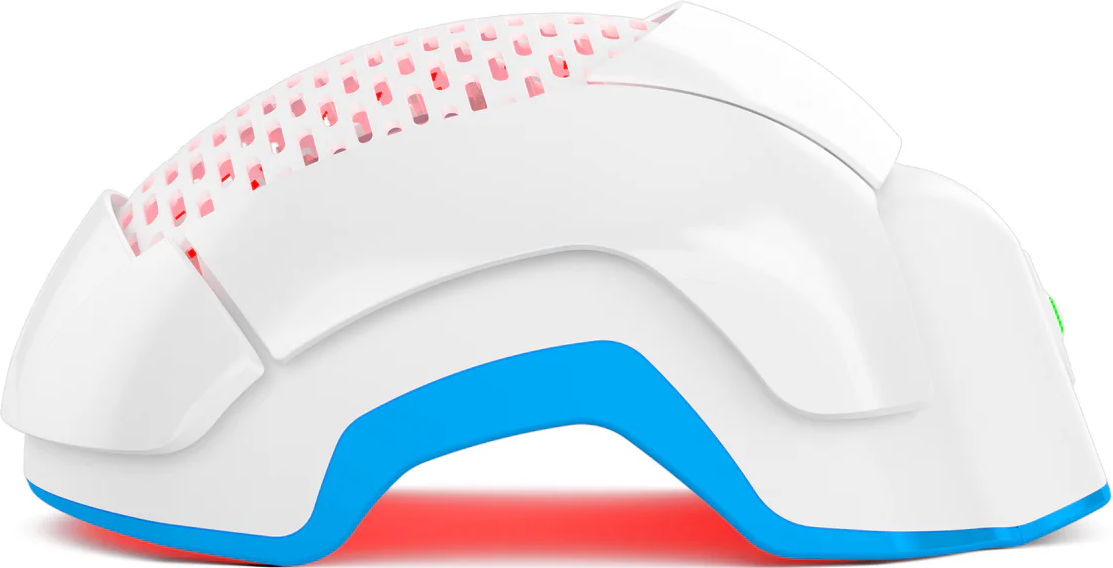
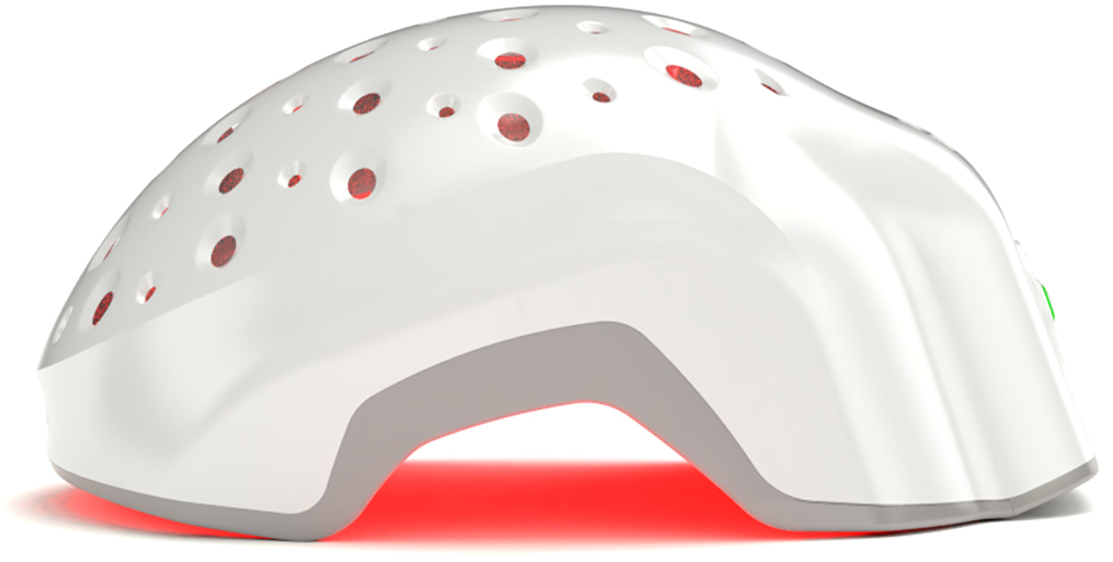
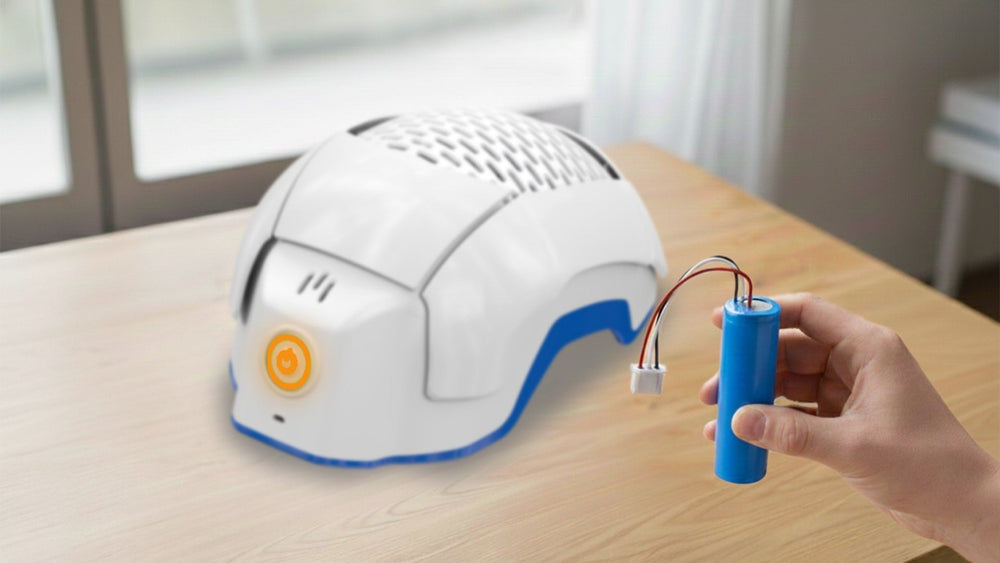
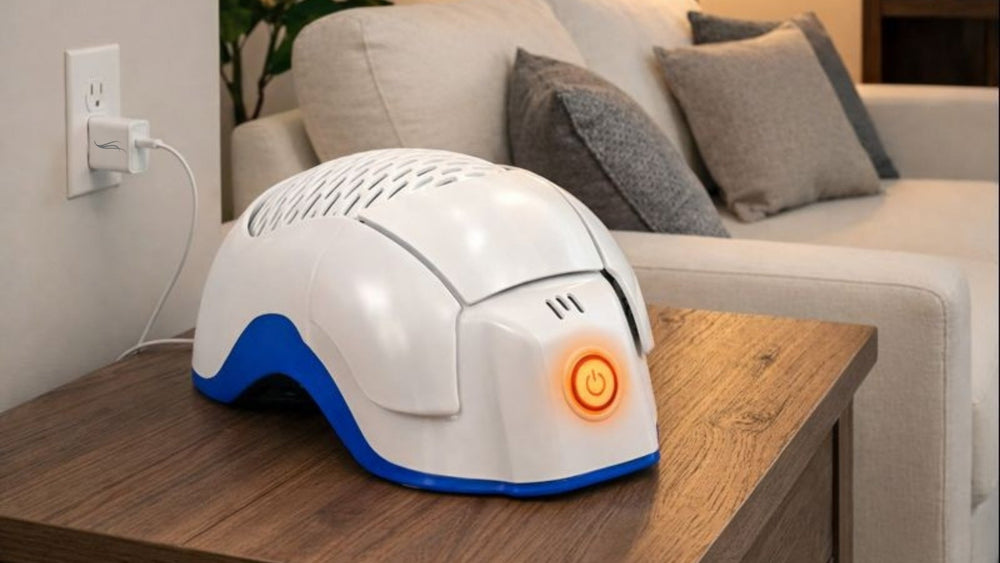
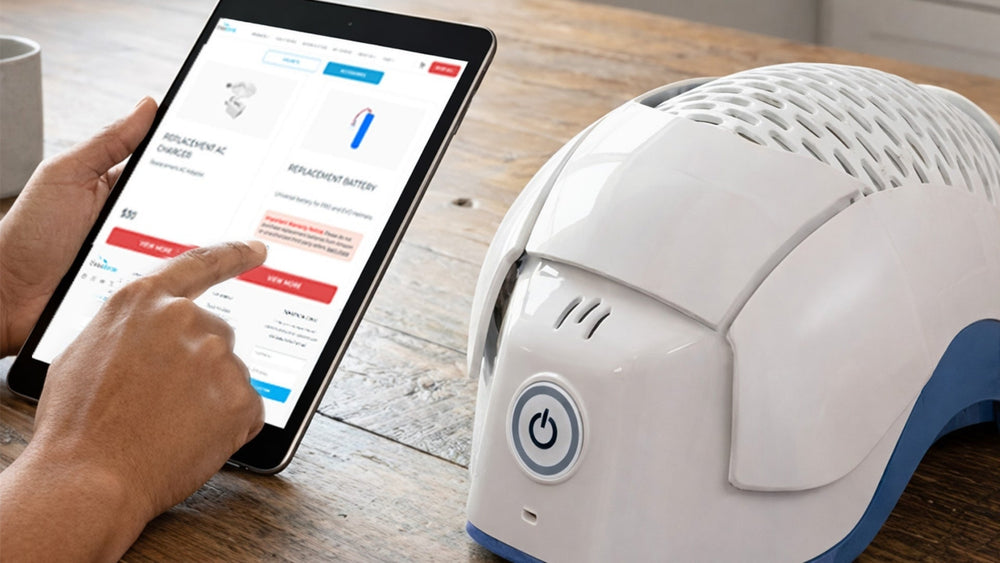
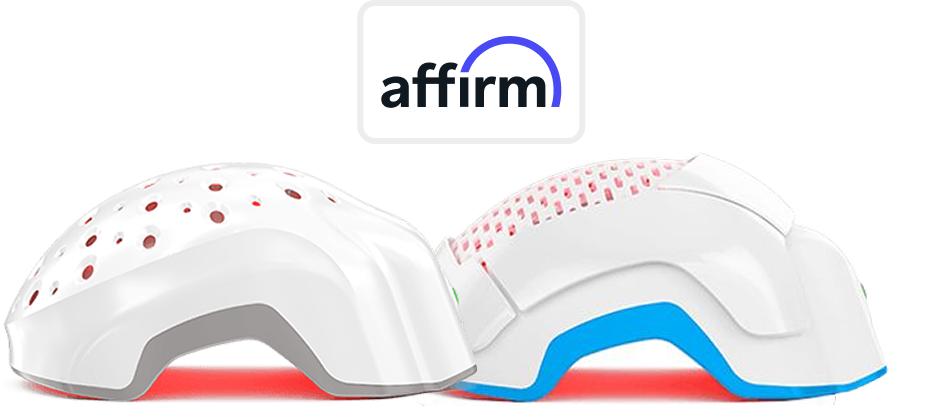
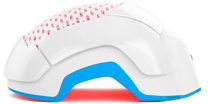
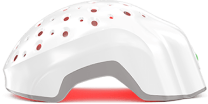
Pumpkin seed oil and Laser Phototherapy (LPT) aren't doing the same job, which is the interesting part. The oil works on the hormonal side, nudging the DHT pathway. LPT, the technology behind Theradome's laser helmet, works on the cellular side: researchers propose that follicle cells absorb red light and respond with more mitochondrial ATP, the energy cells run on. That mechanism is proposed, not proven. Two different levers, not one lever pulled twice.
Both are aimed at the same diagnosis, androgenetic alopecia, which is why the pairing makes sense on paper. Whether it beats either one alone hasn't been tested. Oral pumpkin seed oil doesn't interfere with a session. A topical oil is different. The light has to reach your scalp, and anything sitting on the skin can get in its way. Do your Laser Phototherapy session on a clean, product-free scalp first, then apply any topical afterward.
Which Pumpkin Seed Oil Myths Deserve Retiring?
"It regrows hair on a completely bald scalp."
It doesn't, and nothing about the mechanism suggests it could. A follicle has to be alive and cycling for a hormonal nudge to matter.
"More oil means faster results."
Nobody has tested doses above 400 mg against each other. Doubling up is a guess dressed as a strategy.
"Rubbing it on is the same as what got tested."
Not quite. The big oral trial used capsules, and delivery changes how much of a topical reaches the follicle.
"It's basically natural finasteride."
Related idea, very different strength. Treat it as a supporting player, not a replacement.
Who Should Be Careful With Pumpkin Seed Oil?
- Topical sensitivity. Applying oil directly to the scalp can cause irritation or a mild reaction in sensitive skin. A simple patch test, a small amount on skin checked after 24 hours, before a full scalp application is just good sense.
- Digestive tolerability. In the 2014 trial, adverse effects didn't differ between the groups, though one man on the oil reported mild abdominal discomfort. Taking capsules with food is the sensible way to lower the odds of stomach upset.
- Seed allergy. Pumpkin seed allergy is rare but can be serious. In a 2026 case series of children diagnosed with it, about two-thirds had an anaphylactic reaction, and many also reacted to tree nuts or other seeds such as watermelon seed. All of them tolerated pumpkin flesh. The reports we found involve whole seeds, and nobody has studied how that carries over to a cold-pressed oil, so anyone with a seed or tree nut allergy should check with an allergist first.
- Pregnancy and medications. There's no dedicated safety research in pregnancy or breastfeeding at hair-relevant doses, and no formal drug-interaction studies either. If either applies to you, that's a conversation for your own doctor, not a supplement label.
Conclusion
So, is pumpkin seed oil for hair growth worth trying? Modestly, yes, for pattern hair loss. It has placebo-controlled human data, which most of its shelf neighbors can't claim.
It leans on the same DHT pathway as prescription options, more gently and with a much shorter track record. Give it three to six months, expect a real but modest change, and remember neither trial covered other kinds of hair loss.
We stay cautious about herbal remedies as a group, and that holds here. Treat pumpkin seed oil as a supporting player, and pair it with something that has a bigger evidence base, like Theradome's Laser Phototherapy, so you're covering more than one angle of the same problem.