






Not soon, and probably not completely. PP405 for hair growth looks promising in early trials, but it's still investigational, Phase 3 is ahead, and approval is years away. Minoxidil, finasteride and other proven options remain the smart way to protect your hair today.
Maybe you've read the same PP405 thread three times already, and some stranger swears the future is here. You start wondering whether to stop your finasteride. But... let's slow this down before you do anything you can't undo.
As far as we can tell, no full peer-reviewed dataset for PP405 is out yet, and most numbers so far come from the company that makes it. Hair loss has seen almost no real innovation for decades, so the excitement makes sense. We'll flag every caveat as we go, and there are quite a few.
So here's the plan. We'll cover how PP405 works, what the trials showed, how it stacks up against minoxidil and finasteride, and why waiting is risky. Then we'll get practical about what to do today. Grab a coffee. This one has a lot of numbers, and we kept the boring ones out.
What Is PP405 and How Does It Work?
PP405 is an experimental gel from Pelage Pharmaceuticals, applied to the scalp, and designed to treat androgenetic alopecia, the everyday pattern hair loss that hits men and women. It's called first-in-class because no approved hair loss drug works the way it does. Its reported proposed name is suvomipic.
PP405 blocks a gatekeeper inside the cell's mitochondria, the mitochondrial pyruvate carrier (MPC). Stem cells then make more lactate, and lactate works like an alarm clock, nudging resting (telogen) follicles back into the active growth (anagen) phase. Your hormones stay out of it.
Who is behind PP405, and what is suvomipic?
PP405 came out of UCLA labs. Pelage was spun out of the university in 2018 to turn that science into a drug, and in October 2025 it closed a $120 million Series B, co-led by ARCH Venture Partners and GV (Google Ventures), to support Phase 3. Money isn't proof, but it does mean some picky investors read the data.
Now the name puzzle. In mid-2026, the WHO's drug-naming program published the proposed name suvomipic for a compound whose structure matches JXL069, a chemical that online research vendors sell. Pelage hasn't publicly confirmed that PP405 is that same substance. Until it does, treat the link as likely but unconfirmed.
Why do dormant follicles matter?
Most people miss this about a thinning scalp: the follicles are often still there. In pattern hair loss, many of them shrink and go quiet long before they die. Pelage's leaders say the stem cells in those follicles are often still present but inactive, even where hair looks gone. Think of a car parked in the garage, keys still in the drawer.
That's the whole bet behind PP405. If a follicle is asleep and not dead, maybe a gel can wake it. If it's scarred and gone, nothing on this page can help, and we'll get to that.
What does the pyruvate carrier switch actually do?
Stay with us, it's simpler than the name. Every cell burns fuel. Hair follicle stem cells can burn glucose two ways: all the way through the mitochondria, or partway, which spits out lactate. UCLA researchers reported in Nature Cell Biology in 2017 that these stem cells lean on the second route, and that lactate acts as a signal. More lactate, more stem cell activity, and the follicle moves into anagen. Less, and it stays asleep.
Then came the clever bit. When the team switched off the pyruvate carrier gene in mouse hair follicle stem cells, more pyruvate got diverted into lactate, and the hair cycle sped up. PP405 tries to copy that effect with a gel. Pelage has also reported that it activated stem cells in human tissue. Mice and lab dishes aren't your scalp, though.
Does PP405 block DHT or change hormones?
No. Finasteride and dutasteride cut DHT, the hormone that shrinks susceptible follicles. PP405 doesn't touch DHT. It works on the follicle's energy switch instead, which is why researchers call it non-hormonal. It also means nobody knows yet whether a follicle PP405 wakes will stay awake while DHT keeps leaning on it.
Latest Clinical Trial Results and Timeline (2026 Status)

Now the part everyone scrolls for. The three points that matter most come first, then how far they can be trusted, because 31% sounds wonderful until you read the fine print, and we'd rather you read it here than find out later.
- Phase 2a efficacy data: In the randomized, double-blind Phase 2a trial, 31% of men with a higher degree of hair loss gained over 20% density at week 8, four weeks after dosing ended. Nobody on placebo did.
- Safety and tolerability: The trial met its primary safety endpoint. PP405 was well tolerated, with no systemic absorption detected and no treatment-related systemic adverse events reported, according to Pelage and its chief medical officer.
- Phase 3 and market availability: Pelage plans to start Phase 3 in 2026. After that come the trial itself and FDA review. Our estimate, not the company's: roughly 2028 at the very earliest, and 2029 or later is more likely.
How much weight can those numbers carry?
Short version: enough to take PP405 seriously, not enough to plan your hairline around it.
First, the trial (NCT06393452) was built to test safety and how the drug moves through the body. It wasn't powered to prove efficacy. Second, it enrolled 78 people, and the 31% figure comes from one subgroup: men with a higher degree of hair loss. Third, dosing lasted four weeks. Real treatment lasts years, so nobody knows how long regrowth holds after you stop.
Fourth, these results are company-reported. Pelage said it would share a fuller dataset at a medical meeting in 2026, and independent, peer-reviewed data still has to follow.
What is striking is the type of change. Pelage says new terminal hair grew from follicles that had no visible hair before, while placebo gains were mostly fine, wispy vellus hairs. That's exactly what a wake-up drug should do. It's also exactly what Phase 3 has to confirm at scale.
PP405 evidence at a glance
|
What was reported |
Source |
How far to trust it |
|
31% of men with more hair loss gained over 20% density at week 8 (0% on placebo) |
Pelage Phase 2a release, June 2025 |
Encouraging, but a subgroup, four weeks of dosing, company-reported |
|
New terminal hair from follicles with no visible hair before |
Pelage; Dermatology Times interview, March 2026 |
Interesting signal; needs larger, independent confirmation |
|
Well tolerated; no systemic absorption detected |
Same sources; ClinicalTrials.gov |
Reassuring for a short study; long-term safety unknown |
|
Stem cell activation in human tissue (Ki67 marker) |
Phase 1 and lab data, AAD 2024 |
Shows the mechanism engages; doesn't prove regrowth |
|
Hair cycle acceleration in mice when the pyruvate carrier is switched off |
UCLA research, 2017 |
Explains the idea; animal results often don't carry over |
What about women, and what happened in Phase 2b?
The Phase 2a trial enrolled women and men, and Pelage is developing PP405 for both. But the headline number came from men. Women's results haven't been highlighted publicly, which doesn't mean they were poor, only that we can't say. You may also see mentions of a Phase 2b study. We couldn't confirm its results from a primary source, so we won't guess. We'll update this page when Pelage shares more.
When could PP405 reach pharmacies?
Here's the honest math. Pelage says Phase 3 begins in 2026, and as we write this in September, we couldn't confirm that it has started. Phase 3 trials for hair drugs often run a year or more, because hair takes months to grow and you need follow-up to see whether gains hold. After that comes FDA review, which takes about a year for a standard application. Add manufacturing and launch, and 2027 looks unrealistic.
Our estimate: 2028 at the very earliest, 2029 or later more likely. That's reasoning from how drug development works, not a promise from anyone, and any phase can stumble. Plenty of drugs that look great early fade in Phase 3.
PP405 Watch (September 2026)
|
Milestone |
Status |
|
Phase 1 |
Completed; well tolerated, stem cell activation reported |
|
Phase 2a (NCT06393452) |
Completed; safety endpoint met; efficacy signals in men |
|
Three-month open-label extension |
Reported complete by Pelage |
|
Detailed Phase 2a data |
Presented at AAD in March 2026; full peer-reviewed publication not yet seen |
|
Phase 3 |
Planned for 2026; start not confirmed by us |
|
FDA approval |
Not approved |
Can you buy PP405 or join a trial?
You can't buy it. Anyone selling "PP405," or the similarly named JXL069, online is selling an unregulated research chemical. Nobody can vouch for what's in the bottle, how strong it is, whether it's clean, or whether it gets through skin the way the trial gel does. Skin is an organ, not a test tube.
Want in through the front door? Pelage has a sign-up page on its website for future trials, and ClinicalTrials.gov lists studies as they open. That's the only safe route to PP405 for now.
Is PP405 Safe?
What side effects showed up?
So far, quietly reassuring. In Phase 2a, PP405 was well tolerated and met its primary safety endpoint. No systemic absorption was detected, meaning the drug didn't show up in blood in measurable amounts, which is a good sign for a scalp gel because it lowers the odds of whole-body effects. We haven't found a detailed breakdown of skin reactions in the public reports, so we won't invent one.
What don't we know yet?
Plenty. Four weeks of dosing, plus a three-month open-label extension for people who had received placebo, can't tell us what years of daily use looks like. We don't know how PP405 behaves in pregnancy, or in people who might become pregnant. We don't know how often skin irritation shows up in bigger, more varied groups, or how well hair holds once you stop.
None of this is a red flag. It's the normal gap between "safe in a small trial" and "safe for millions of scalps."
PP405 vs. Minoxidil and Finasteride: Key Differences
Three drugs, three different ideas. Finasteride goes after a hormone. Minoxidil works on how follicles behave. PP405 targets the stem cell's fuel switch. The table shows the split at a glance, and the sections after it show why the split matters.
|
PP405 |
Minoxidil |
Finasteride |
|
|
Approved? |
No, investigational |
Yes, topical over the counter |
Yes, prescription (men) |
|
Form |
Topical gel |
Solution or foam; oral used off-label |
Daily pill |
|
Main idea |
Wakes dormant stem cells by blocking the MPC |
Helps follicles stay in growth; exact action not fully mapped |
Blocks conversion of testosterone into DHT |
|
Touches hormones? |
No |
No |
Yes |
|
Best-evidenced effect |
Early signal of new terminal hair in some men |
Thickening and modest regrowth |
Slowing loss, some regrowth |
|
Main concerns |
Long-term safety unknown |
Scalp irritation, early shedding, facial hair; oral can affect heart and fluid balance |
Sexual and mood effects in some men; not for pregnancy |
|
Available now? |
No |
Yes |
Yes |
- Biological mechanism: Finasteride blocks conversion of testosterone into DHT, while minoxidil helps follicles stay in growth through mechanisms not fully mapped. PP405 targets stem cell fuel use instead, aiming to wake dormant follicles. Different lock, different key.
- Side effects: Finasteride can cause sexual and mood effects in some men. Oral minoxidil can affect heart rate and fluid balance, while topical mostly irritates the scalp. PP405 showed no systemic absorption in Phase 2a, though that trial was short.
- Regenerative potential: Minoxidil and finasteride mostly slow shrinkage or thicken hairs that still exist. Pelage reports PP405 grew new terminal hair from follicles with no visible hair before. That's the big promise, and it still needs larger trials to confirm.
PP405 vs. minoxidil
Minoxidil is the old reliable, and yes, it works for a lot of people. It's sold over the counter, in versions for men and women, as a liquid or foam. Nobody fully knows how it works, but it seems to help follicles stay in the growth phase longer. Results are usually modest, they show up around month four to six, and they fade if you stop.
Why do people quit? Early shedding that scares them, an itchy scalp, greasy hair, and a routine you can't skip. If PP405 turns out to work in people who don't respond to minoxidil, that would be big. Nobody knows yet, because no head-to-head trial exists. Could you use both someday? Possibly. But there's no combination data, so ask your dermatologist when the time comes.
PP405 vs. finasteride and dutasteride
Finasteride is the heavy hitter for men. It cuts DHT, the hormone that shrinks susceptible follicles, and in the big trials most men who took it kept their hair while a good share saw some regrowth. Dutasteride blocks more of the enzymes involved. It's used off-label for hair loss in the U.S., though it's approved for it in Japan and South Korea.
Some men steer clear because of side effects. That worry is real, even though most men tolerate finasteride well. A non-hormonal option would matter a lot to them. And it would matter even more to women, who often can't take finasteride, especially if pregnancy is possible.
Would PP405 plus a DHT blocker beat either alone? Great question, unanswered. Two different jobs on paper. No trial yet to prove it.
Who might PP405 help that today's drugs miss?
Three groups come to mind, and all of it is potential, not proof. People who never responded to minoxidil. Men who don't want a hormonal drug. And women with few good options. We'll believe it when we see it in Phase 3 data, but the gap is real, and it's why the field is watching.
Why PP405 Will Not Completely Replace Existing Hair Therapies
Here's where we land. PP405 looks more like a new tool in the toolbox than a wrecking ball. Three reasons: it can only wake follicles that are alive, it isn't here yet, and it isn't built to deal with what put those follicles to sleep.
Biological Limitations and Availability Constraints
- Requirement of living stem cells: PP405 can wake dormant stem cells, but it can't rebuild follicles that scarring has destroyed. Where stem cell populations are permanently gone, no gel, laser, or pill can bring those follicles back. Transplantation is the option there.
- Market timeline delays: Every year of waiting is a year of possible follicle shrinkage. Patients who hold out for PP405 risk losing follicles for good, so proven options today are the way to protect the density you still have.
Who won't PP405 help? It was built for androgenetic alopecia. It has no known mechanism for alopecia areata, where the immune system attacks follicles, or for scarring alopecias, where follicles are destroyed. Telogen effluvium, the sudden shedding after illness, surgery, or childbirth, usually settles once the trigger passes. Traction alopecia needs the pulling to stop. So before you pin hopes on a new gel, get the cause of your thinning named. Our hair pull test guide is a decent start, and a dermatologist's exam beats every guess.
What waiting costs. This is the part that bothers us most. Pattern hair loss doesn't pause for trials. Follicles shrink a little more each cycle, and the American Academy of Dermatology notes that the sooner treatment starts, the better the outlook. If you're in your 20s or 30s and thinking "I'll just wait for PP405," you might be gambling with the very follicles it needs to work on. Later stages leave fewer to wake.
Complementary Multimodal Treatment Protocols
- Managing hormonal drivers: PP405 wakes stem cells but isn't designed to lower DHT. Whether awakened follicles keep growing under ongoing DHT is an open question, so DHT blockers like finasteride may stay relevant for men. Women need doctor-guided plans.
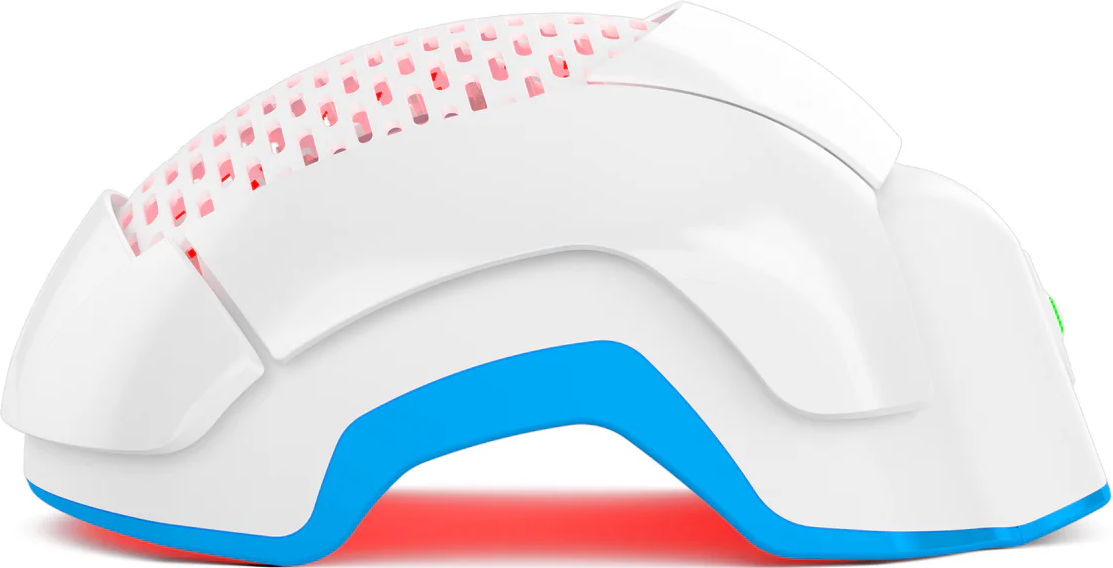
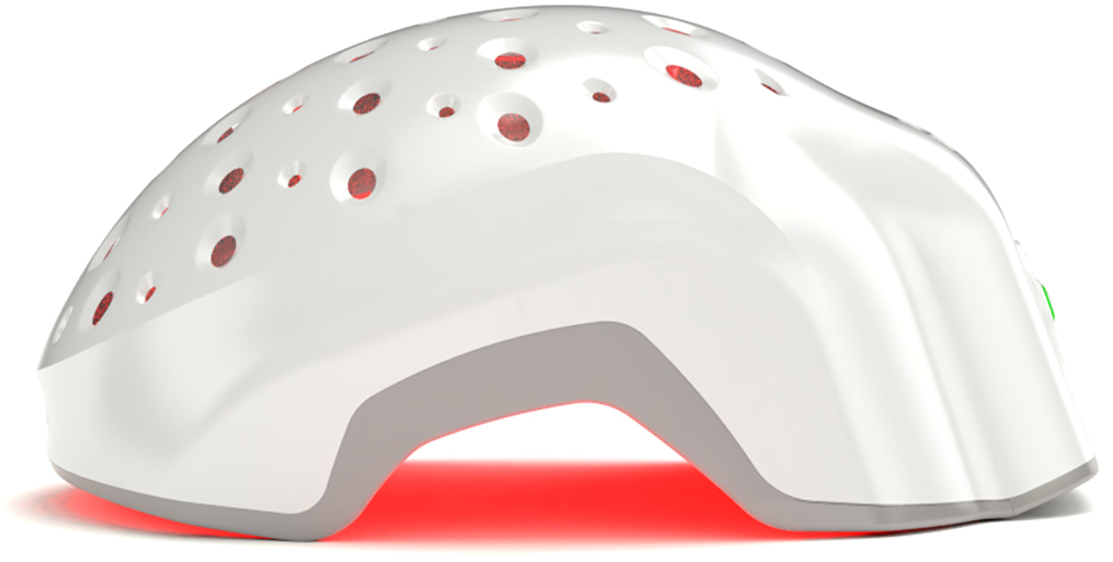
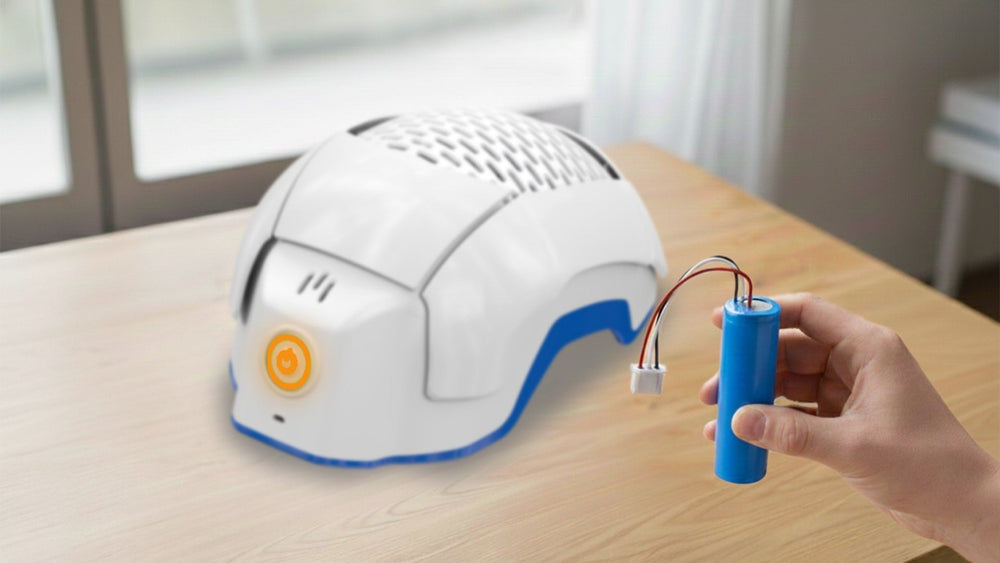
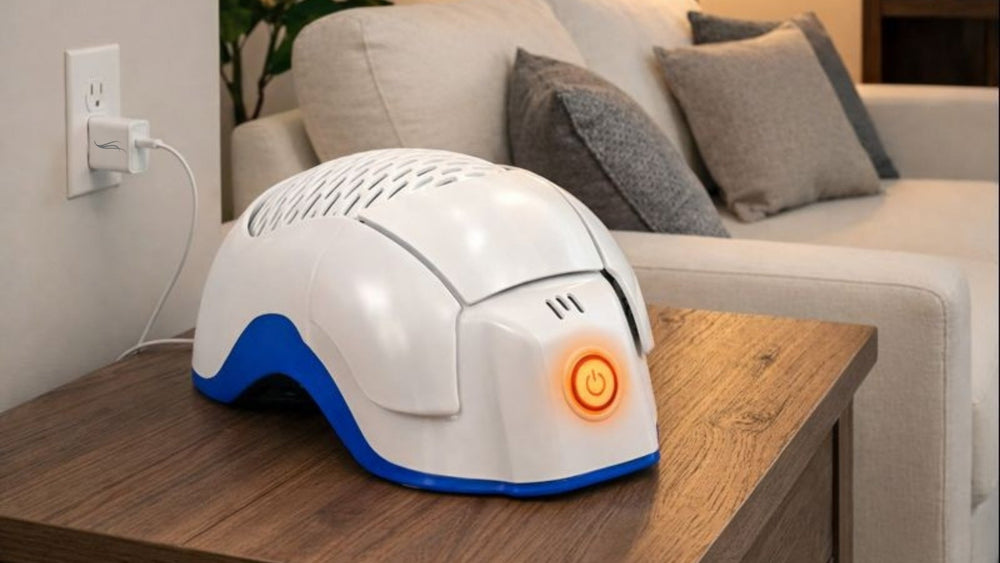
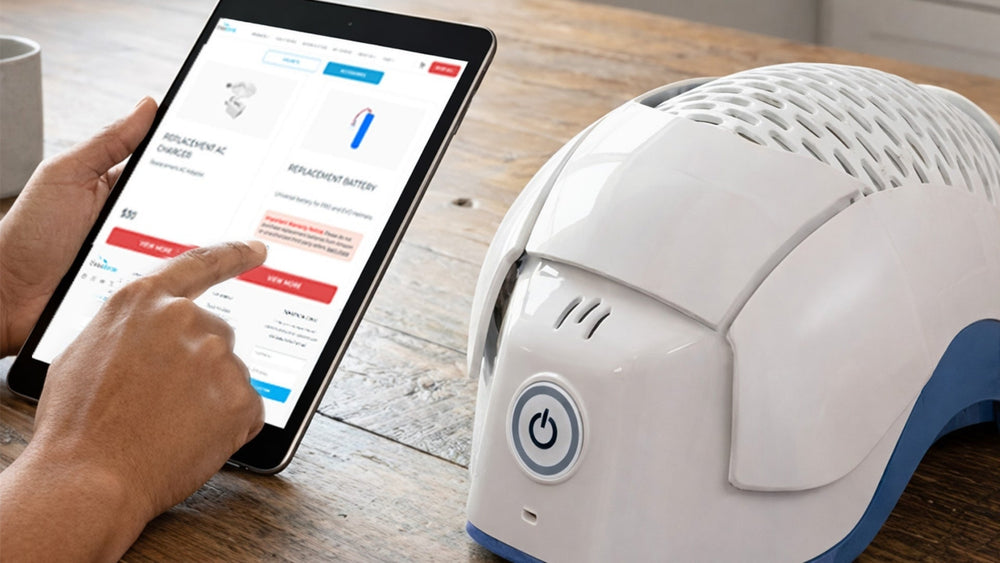
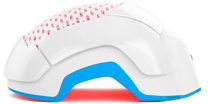
- Laser Phototherapy (Theradome): Laser Phototherapy works by a different route: light absorbed by scalp cells, proposed to lift cellular energy. Theradome is FDA-cleared for androgenetic alopecia and available now. Nobody has tested it with PP405, so we claim complementary jobs, not synergy.
Could you layer PP405 with what you use today? Probably, eventually, but nobody has data yet. The Phase 2a trial excluded people using other hair loss treatments, so we don't know how PP405 behaves next to minoxidil, finasteride, or light. Some dermatologists will guess it works fine together, since the mechanisms don't overlap. A guess is still a guess. When PP405 gets approved, ask your dermatologist how to sequence it, and don't stop your current routine on a hunch in the meantime.
What would change the verdict? Watch for four things. Does hair keep growing after dosing stops? Do the gains hold at six months, a year, two? Do the planned Phase 3 endpoints, non-vellus hair counts and follicular unit activation, show real, visible change? And does anyone run a head-to-head or combination trial against minoxidil or finasteride? If the answers come back yes, PP405 could earn a much bigger role. Until then, "replace" is a stretch.
What about other new treatments in the pipeline?
PP405 isn't alone. Clascoterone 5% topical solution, an anti-androgen applied to the scalp, has recently reported long-term data in male pattern hair loss, and other topical anti-androgens such as pyrilutamide are in development. PRP and exosome treatments are around too, with far less settled evidence. The field is finally moving. That's good news for you, and a reason to stay flexible, not to freeze your plans.
What Should You Do While You Wait?
Start with a diagnosis. Androgenetic alopecia, telogen effluvium, traction, and scarring conditions need different plans, and a dermatologist can sort them out with a scalp exam. If it's pattern hair loss, the proven options are:
- Topical minoxidil, over the counter, for men and women.
- Finasteride (prescription, for men), or dutasteride off-label in some cases.
- FDA-cleared Laser Phototherapy, drug-free, with no daily gel or pill to remember.
- Hair transplantation, for stable loss with good donor hair.
Some people combine these. PRP and microneedling have their fans, but the evidence is less settled and protocols vary. Whatever you choose, give it at least four to six months before judging. Hair grows about half an inch a month, so even good news arrives slowly.
Where does Laser Phototherapy fit?
Laser Phototherapy (LPT) shines low-power red light onto the scalp. It's cool, not thermal, so nothing burns. The proposed mechanism is that scalp cells absorb the light and shift their energy production and signaling. Randomized trials and a meta-analysis show hair density rising compared with sham devices in androgenetic alopecia.
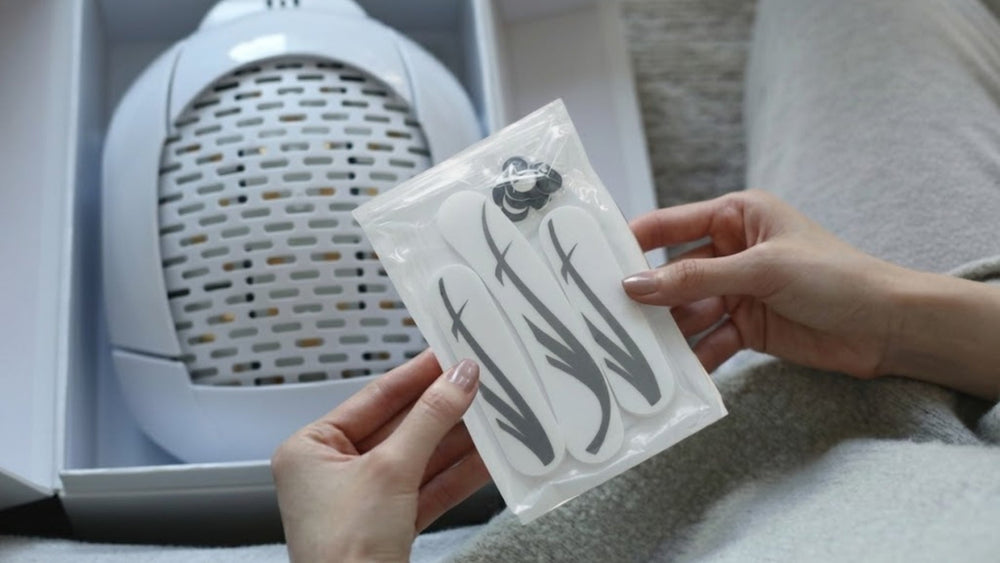
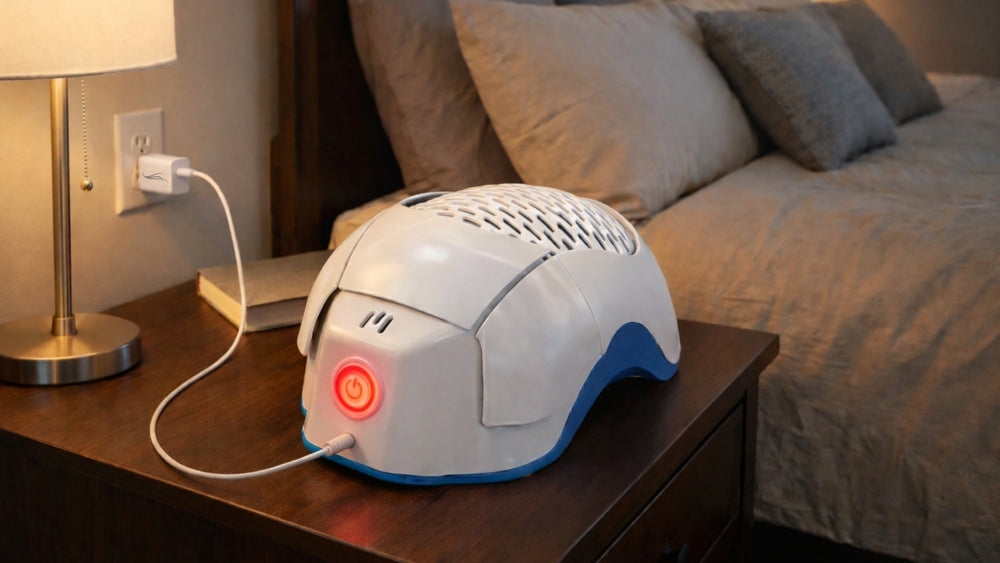
Theradome has a specific claim to make here, not a vague one. It was the first FDA-cleared wearable LPT device, full stop, a fact you can check against the clearance record. It covers the whole scalp hands-free, so there's no parting hair and aiming a comb-style laser at your own crown, hoping you hit the right spots. The LH80 PRO carries FDA 510(k) clearance K171775 for androgenetic alopecia in men with Norwood-Hamilton IIa to V patterns and women with Ludwig-Savin I-1 to I-4, II-1 and II-2 patterns, Fitzpatrick skin types I to IV. Our multi-center, double-blind, sham-controlled trial in men is registered as NCT02528552, and you can see more on our results page.
What it won't do: repair a scarred follicle, or treat traction and other causes. And nobody has tested it with PP405, so we won't pretend to know how they'd pair up. What it does offer is something you can start today, backed by a specific clearance and a registered trial, alongside a diagnosis and, if you choose, your other treatments.
How can you tell a treatment is working?
Take photos on the first of each month, same light, same angle, hair dry and parted the same way. Skip the daily mirror check. It lies. Give a treatment four to six months before judging, and remember that early shedding on minoxidil is common and usually settles. If your part keeps widening or you spot smooth, shiny patches, book a dermatologist. Don't wait for the next photo.
Wait or start now? A 60-second self-check
|
Question |
If yes |
If no |
|
Has your thinning started in the last few years? |
Start now. More follicles are still fixable. |
Start now too, and ask for a scalp exam to see how many follicles remain. |
|
Has a dermatologist confirmed the cause? |
Good. Follow their plan. |
Do that first. Treatment depends on the diagnosis. |
|
Can you and your doctor consider finasteride? |
Discuss it, along with minoxidil and Laser Phototherapy. |
Ask about minoxidil and Laser Phototherapy instead. |
|
Hoping to wait for PP405? |
Nothing stops you from treating now and adding it later. |
Even better. Get going. |
Myths and Honest Doubts About PP405
- "It's a cure." No. Early trial data show encouraging signals, not a cure. Hair loss is chronic and progressive, and gains from any treatment may need ongoing use to hold.
- "I can order it online." You can't order the real drug. Sellers using the PP405 or JXL069 names offer unregulated products with unknown purity, strength, and safety.
- "It'll make finasteride obsolete." It works differently and doesn't lower DHT. Combinations may prove better than either alone, but nobody has tested that yet.
- "It has no side effects." Short trials show good tolerance and no systemic absorption detected. That isn't the same as zero risk over years or across millions of people.
- "It works on a fully bald scalp." Only if living follicles remain. Smooth, shiny skin with no visible follicle openings often points to scarring, which no gel can fix.
- "31% of everyone gained 20% density." It was 31% of men with more advanced loss, after four weeks of dosing, in one small trial.
Conclusion
PP405 is a real advance. It targets the metabolic switch inside hair follicle stem cells, a first for hair loss medicine, and the first data are encouraging. It's also small and short, with Phase 3 still ahead. PP405 for hair growth deserves attention, not a countdown timer.
Most likely, it complements what you have rather than replacing it. Finasteride, minoxidil, and Laser Phototherapy each do a different job, and pairing a DHT-lowering approach with a follicle-waking one may prove the strongest defense against progressive thinning. That's a hope, not a result, so far.
Follicles you protect now are the ones any future drug can work on. See a dermatologist or hair restoration specialist, get the cause named, and start a proven treatment today. Add PP405 later, if it earns its place. Then check back here.