





Evening primrose oil is not a proven treatment for hair loss. It contains gamma-linolenic acid, a fatty acid that may have some relevance to skin and scalp comfort, but that is not the same as proving it can regrow hair, stop shedding, block DHT, or reverse pattern thinning.
Annoying answer? A little.
But probably the answer that saves you three months, four supplement bottles, and one very suspicious late-night checkout moment.
If your hair is thinning, shedding, breaking, or vanishing in patches, the first useful step is not “find the right oil.” It is figuring out what kind of hair loss you are dealing with. Effective hair-loss treatment starts with finding the cause, and honestly, that one sentence should sit at the top of almost every hair-loss article on the internet.
What Is Evening Primrose Oil?
Evening primrose oil comes from the seeds of Oenothera biennis, a flowering plant often sold in capsule or liquid supplement form. It has been promoted for breast pain, menopause symptoms, skin concerns, PMS, inflammatory complaints, and, because the wellness aisle is apparently never tired, hair loss too.
The National Center for Complementary and Integrative Health describes evening primrose oil as a supplement commonly used for conditions such as atopic dermatitis, breast pain, menopause symptoms, and PMS, while also stating that the evidence does not support its use for any health condition.
Evening primrose oil is not a drug. It is not FDA-cleared for hair loss. It is not a medical device. It is an oil supplement with biologically interesting fatty acids, which is a much narrower claim than “this grows hair.”
What is gamma-linolenic acid?
Gamma-linolenic acid, usually shortened to GLA, is an omega-6 fatty acid found in evening primrose oil. Memorial Sloan Kettering Cancer Center notes that evening primrose oil contains GLA, which can be converted into compounds involved in inflammatory signaling pathways.
That sounds promising on paper. Biology often does.
But hair loss is not a paper pathway. It is a real scalp with real follicles, and sometimes a real person standing in the bathroom checking the drain like it owes them money. GLA may be relevant to skin biology, but that does not prove evening primrose oil can restore hair density.
Why Do People Think Evening Primrose Oil Helps Hair Loss?
Most claims about evening primrose and hair loss seem to come from three places: skin barrier research, inflammation language, and “hormonal balance” marketing. The problem is that these ideas often get stitched together too quickly.
The logic usually sounds like this: evening primrose oil contains GLA, GLA may influence inflammatory pathways, scalp inflammation can affect hair, so evening primrose oil must help hair loss.
Not quite.
That argument skips the hard part: direct clinical evidence. Has evening primrose oil been shown in good human studies to improve hair count, hair density, hair shaft diameter, shedding rate, or follicle miniaturization in people with hair loss? That is the question. And right now, the answer is not strong enough to call it a treatment.
Why this sounds believable to someone losing hair
Hair loss makes people unusually available to hope. Not gullible. Available.
There is a difference.
When hair starts showing up everywhere except where you want it, a “natural” oil starts feeling reasonable. Shower drain. Pillowcase. Hoodie. The little sweater lint roller you now use for forensic hair analysis. Suddenly every supplement bottle on the internet looks like a tiny rescue boat.
And honestly, who can blame anyone?
People want something that feels gentle, accessible, and less intimidating than medication. They want to try something before calling a dermatologist. Evening primrose oil slips neatly into that emotional gap.
But easy does not always mean useful. Sometimes easy just means… easy.
Can Evening Primrose Oil Actually Regrow Hair?

There is no strong direct human evidence showing that evening primrose oil regrows hair.
The NCCIH says there is not enough evidence to support evening primrose oil for any health condition. That broad statement includes many of the same areas where EPO is commonly marketed, such as atopic dermatitis, breast pain, PMS, and menopause symptoms.
For hair loss specifically, the evidence gap is even more glaring. Hair-loss studies need to measure things like hair count, hair density, hair shaft diameter, anagen-to-telogen changes, or visible improvement under standardized assessment. Evening primrose oil has not earned a serious place as a stand-alone treatment for those outcomes.
So the clean answer is this: EPO is not proven to regrow hair.
Not yet. Maybe never. We do not get to fill that blank with wishful typing.
“May support scalp health” is not the same as “treats hair loss”
A product can make the scalp feel less dry. A topical oil can make hair feel softer. A supplement can have plausible biological pathways. None of that automatically means it treats alopecia.
Dry scalp is not the same as androgenetic alopecia. Itching is not the same as telogen effluvium. A greasy scalp oil sitting on the skin is not the same as reversing follicle miniaturization.
Moisturizing a cracked phone case does not fix the battery.
Same sort of mismatch.
Hair loss can come from genetics, androgen sensitivity, immune activity, postpartum shifts, medication changes, thyroid disease, iron deficiency, severe stress, traction, infection, inflammatory scalp disease, or scarring alopecia. That list is inconvenient, yes, but it is why diagnosis matters.
Evening primrose oil may be relevant to some skin and scalp-comfort discussions, mostly because of its GLA content. But it should not be relied on as a primary treatment for hair loss.
What Does the Research Say About Evening Primrose Oil?
The National Center for Complementary and Integrative Health states that there is not enough evidence to support evening primrose oil for any health condition. It also says oral evening primrose oil has not been shown to help relieve symptoms of atopic dermatitis, and that it is probably not more effective than placebo for breast pain.
That is important because many evening primrose oil claims are built on a general “supports inflammation” or “supports skin” idea. If a product struggles to show clear benefit in conditions where skin inflammation is central, we should be careful before dragging it into hair regrowth claims.
Careful, not cruel.
There may be interesting biology around GLA. There may be individual people who feel better taking it. But clinicals cannot run on “someone somewhere felt a bit improved.” Not with hair loss, where people are already spending money while silently panicking.
Cochrane found oral EPO did not help eczema
A major Cochrane review looked at oral evening primrose oil and borage oil for eczema. It included 27 studies with 1,596 participants. Nineteen studies assessed evening primrose oil, and eight assessed borage oil.
The result: Oral evening primrose oil did not meaningfully improve eczema symptoms compared with placebo.
That does not prove evening primrose oil has no possible role anywhere in skin care. But it does make one thing harder to defend: the confident claim that oral EPO calms inflammatory skin problems so well that it should be trusted for scalp-related hair loss.
A little awkward.
Because if the evidence does not hold up well for eczema, a condition directly tied to skin barrier and inflammation, the leap into hair regrowth becomes even more wobbly.
Skin hydration studies are interesting, but not hair-loss studies
Some evening primrose oil research does look at skin hydration and barrier-related outcomes. For example, a randomized double-blind study in Nutrients looked at evening primrose oil supplementation in acne patients receiving isotretinoin and assessed outcomes such as skin hydration, transepidermal water loss, and sebum levels.
A skin hydration study does not become a hair regrowth study just because the scalp is also skin. The scalp is skin, but hair loss involves follicles, cycles, immune signals, hormones, shaft damage, and sometimes scarring inflammation. Different game. Different scoreboard.
Why patents, testimonials, and product pages do not count as strong proof
Patents can describe ideas. Product pages can make a theory sound gorgeous. Testimonials can be emotionally convincing, especially when someone says, “This worked for me.” But none of those can reliably tell us whether evening primrose oil alone caused measurable hair growth.
Combination formulas are another trap. If a study uses fish oil, antioxidants, vitamins, and other oils together, it cannot prove that evening primrose oil was the reason hair improved. It may be one contributor. It may be irrelevant. It may be riding in the passenger seat taking credit for the engine.
Hair also changes on its own sometimes. Telogen effluvium can recover after the trigger passes. Postpartum shedding often improves with time. A new styling routine can reduce breakage. So yes, someone may take EPO and see improvement months later. That still does not prove EPO did the heavy lifting.
Does Evening Primrose Oil Help Scalp Inflammation, Dryness, or Itching?
Evening primrose oil is most defensible as a scalp-adjacent ingredient, not a hair-loss treatment. Its GLA content gives it a plausible connection to skin biology, but the clinical evidence is not strong enough to say oral EPO treats scalp inflammation or inflammatory scalp disease.
And the scalp can be moody.
It can itch from dryness, seborrheic dermatitis, psoriasis, contact dermatitis, fungal infection, tight styling, harsh products, or inflammation around follicles. Some of these need moisturizers. Some need antifungal care. Some need prescription anti-inflammatory treatment. Some need a dermatologist yesterday, not after three more bottles of “natural support.”
Because again: scalp comfort and follicle recovery are related sometimes. They are not identical.
Dry scalp is not the same as hair loss
A dry scalp can flake. It can itch. It can make you scratch. That scratching can rough up hair shafts and make already fragile hair behave badly.
But dry scalp does not automatically mean your follicles are shutting down.
If your hair is thinning at the crown, your part is widening, your temples are changing, or your ponytail feels thinner over time, dryness alone may not explain it. The issue could be androgenetic alopecia, telogen effluvium, medication-related shedding, iron deficiency, thyroid disease, traction, or another cause.
When oils can make scalp issues worse
Topical oils can help some people’s hair feel softer. But on the scalp, they are not always harmless little angels.
If you have seborrheic dermatitis, heavy oiling may worsen greasiness or irritation for some scalps. If you have redness, pustules, tenderness, broken hairs, patchy loss, scaling, or scalp pain, rubbing oil into the area for weeks is not a plan. It is a delay wearing a nice label.
Do a patch test if you use any topical oil. Stop if irritation worsens. And if the scalp looks angry, do not try to charm it with pantry chemistry.
Which Types of Hair Loss Could Evening Primrose Oil Help?
Androgenetic alopecia
There is no strong evidence that evening primrose oil treats androgenetic alopecia, also called male pattern baldness or female pattern hair loss. It has not been shown to block DHT, reverse follicle miniaturization, or reliably increase hair density in this condition.
Androgenetic alopecia needs a pattern-thinning plan. The 2023 review Treatment of Androgenetic Alopecia: Current Guidance and Unmet Needs notes that androgenetic alopecia is the most common cause of hair loss in men and women.
Evening primrose oil does not belong in the same evidence bracket.
Telogen effluvium
Telogen effluvium is usually diffuse shedding that follows a trigger. That trigger may be childbirth, severe illness, surgery, fever, major stress, rapid weight loss, medication changes, nutritional deficiency, or hormonal shifts.
A StatPearls review describes telogen effluvium as excessive shedding of telogen hairs after metabolic stress, hormonal changes, or medication. And acute telogen effluvium often begins a few months after a trigger and may improve once the body settles.
Evening primrose oil is not a proven treatment for telogen effluvium. The useful question is: what started the shed?
Postpartum or menopause-related shedding
Evening primrose oil is often marketed to women, especially around PMS, breast pain, and menopause symptoms. That marketing halo can make it sound relevant to postpartum shedding or menopause-related thinning.
But “marketed to women” is not the same as “proven for women’s hair loss.”
Postpartum shedding is often telogen effluvium. Menopause may coincide with female pattern hair loss, thyroid changes, iron issues, medication shifts, or other overlapping causes. More than one cause of hair loss can happen at the same time, such as postpartum shedding with early hereditary hair loss.
Also, pregnancy and breastfeeding require caution. NCCIH says evidence about evening primrose oil safety during pregnancy and breastfeeding is not conclusive.
So if someone is postpartum, breastfeeding, or trying to conceive, this is not the moment for casual supplement freestyle.
Alopecia areata
Evening primrose oil should not be presented as a treatment for alopecia areata.
Alopecia areata is an immune-mediated condition that often causes patchy, non-scarring hair loss. Current care can include dermatologist-guided treatment, and for more extensive disease, newer immune-targeted medications may be considered. A 2025 review describes alopecia areata as a chronic inflammatory disorder driven by immune dysregulation, genetics, and environmental triggers.
Patchy hair loss is not the place to experiment for six months.
If hair is coming out in round patches, or brows and lashes are affected, book proper evaluation. Please. The bottle can wait.
Traction alopecia and breakage
Traction alopecia comes from repeated tension on hair follicles. Tight buns, braids, extensions, ponytails, loc styles pulled too tight, and repeated edge tension can all play a role.
Evening primrose oil cannot untension a follicle.
Oils may make hair feel smoother. They may reduce friction in some routines. But traction alopecia needs reduced pulling, gentler styling, and early intervention before follicle damage becomes permanent. Breakage also needs hair-shaft care: less heat, less harsh handling, fewer chemical insults, better slip, and realistic trimming when ends are fried beyond negotiation.
Scarring alopecia
Scarring alopecia is not a supplement playground.
In scarring alopecia, inflammation can permanently damage hair follicles and replace them with scar tissue. Symptoms may include pain, burning, redness, pustules, scaling, shiny patches, or areas where follicle openings seem gone.
Evening primrose oil should not be positioned for this. Not gently. Not as a maybe. Not as a “natural first step.”
See a dermatologist if scarring alopecia is even a possibility. Time matters here in a very unglamorous way.
Is Evening Primrose Oil Safe?
Evening primrose oil is probably safe for many adults when taken orally for short periods, according to NCCIH. Common side effects can include stomach upset, abdominal pain, nausea, diarrhea, and headache.
So no, it is not a terrifying supplement. But it is also not risk-free.
The Cochrane eczema review noted that evening primrose oil and borage oil had fairly common mild, transient adverse effects, mainly gastrointestinal. Memorial Sloan Kettering also lists stomach pain, nausea, and headache among reported side effects.
Natural does not mean your stomach signed the consent form.
Who should be careful or avoid it?
Some people should not treat evening primrose oil as a casual add-on.
Talk with a clinician first if you take warfarin or other blood thinners, take blood pressure medication, use lopinavir, have a complex medication list, are pregnant, are breastfeeding, have a seizure history, or have a history of hormone-sensitive cancer. MSKCC warns that people with hormone-sensitive cancers should use evening primrose oil products with caution because some commercial products may combine EPO with phytoestrogen ingredients, even though EPO itself does not have intrinsic estrogenic properties.
What to do if you already bought it
Do not panic. And do not throw it across the bathroom.
If you already bought evening primrose oil, check the label, review your medications, and consider asking a clinician or pharmacist if it is safe for you. But do not use it as your main plan if your hair loss is sudden, worsening, patchy, painful, inflamed, or unexplained.
Track what is actually happening: shedding, thinning, breakage, scalp symptoms, timeline, stressors, medication changes, childbirth, illness, dieting.
How Does Evening Primrose Oil Compare With Proven Hair-Loss Treatments?
Evening primrose oil vs minoxidil
Minoxidil has stronger evidence than evening primrose oil for certain types of hair loss, especially androgenetic alopecia. The AAD says minoxidil can stimulate hair growth and prevent further loss, and that it usually takes 6 to 12 months to see whether it helps.
Evening primrose oil has not shown that kind of clinical hair-loss evidence.
This does not mean minoxidil is perfect for everyone. Some people dislike the texture, irritation, daily use, or shedding phase. Some need medical guidance. Still, evidence-wise, minoxidil is in a different lane from EPO.
One has clinical hair-loss use. The other has indirect skin-related theory.
Evening primrose oil vs finasteride or anti-androgen therapy
Finasteride and other anti-androgen approaches target hormone-related mechanisms involved in androgenetic alopecia. They are not casual choices, and they are not right for everyone, but they address a recognized pathway in pattern hair loss.
Evening primrose oil is not a DHT blocker.
Hair loss linked to androgen sensitivity, PCOS, menopause, thyroid disease, postpartum hormone shifts, or medication changes cannot be responsibly folded into one supplement claim.
Evening primrose oil vs Laser Phototherapy
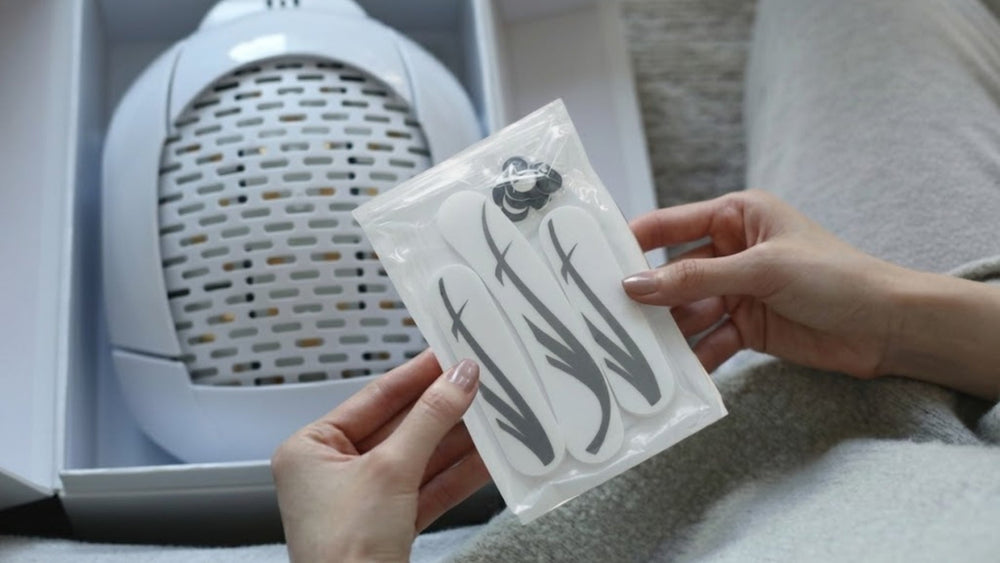
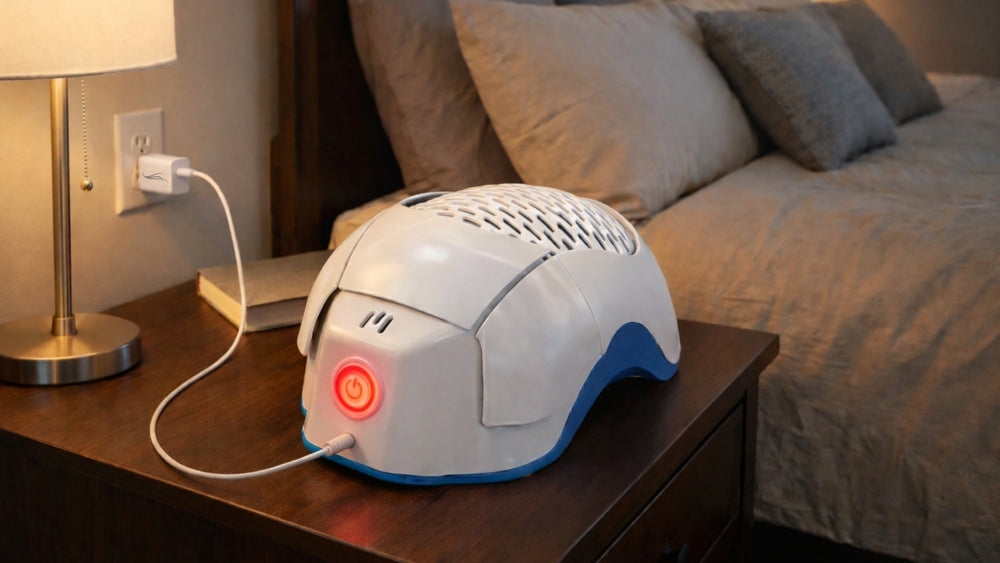
If the real issue is pattern thinning, evening primrose oil and FDA-cleared Laser Phototherapy are not really the same kind of answer.
One is a supplement with indirect theory. The other is a device category studied for androgenetic alopecia.
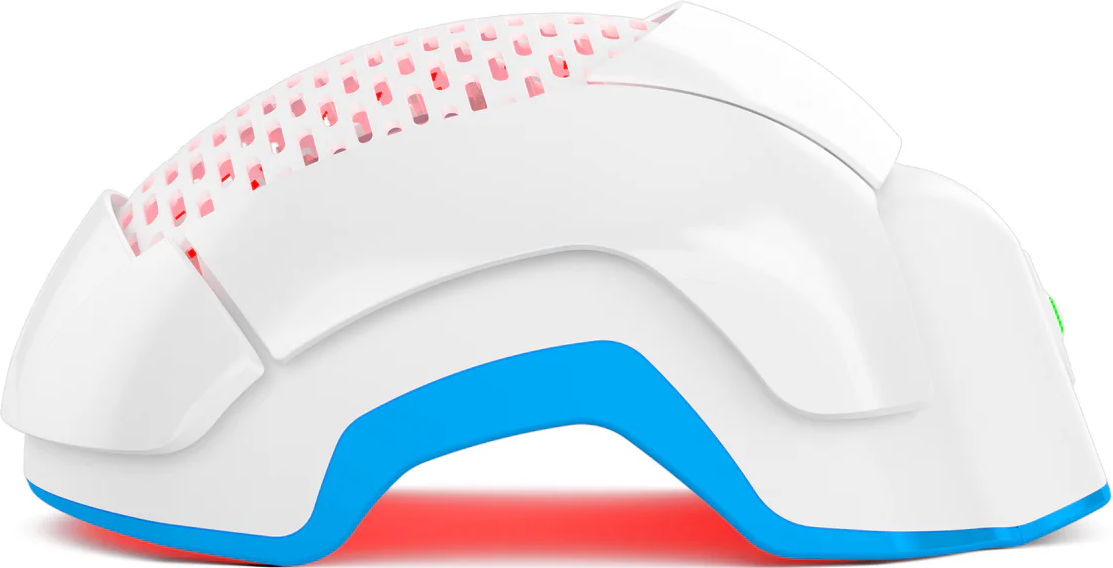
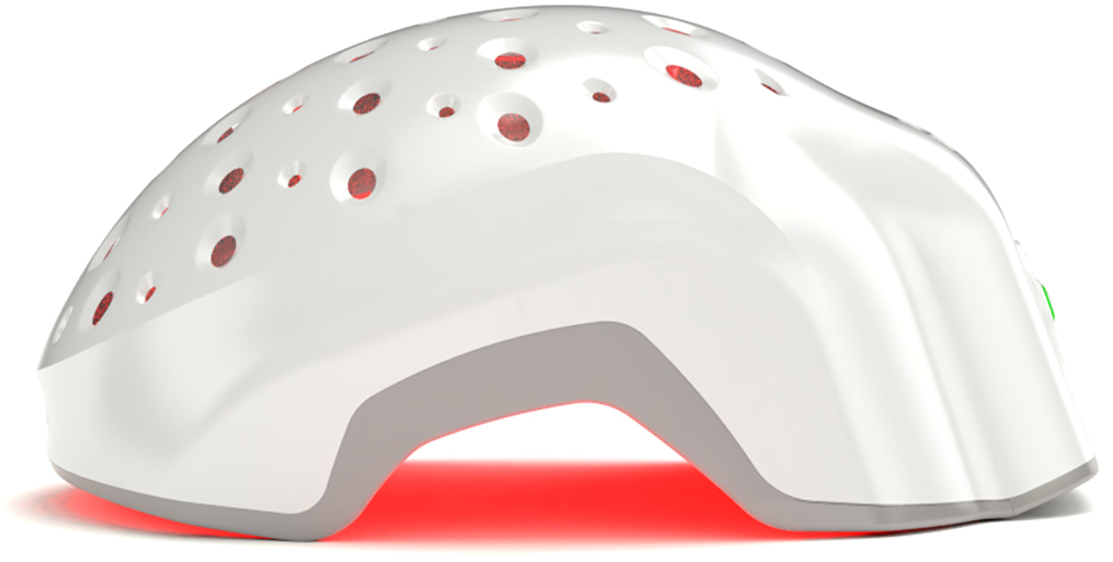
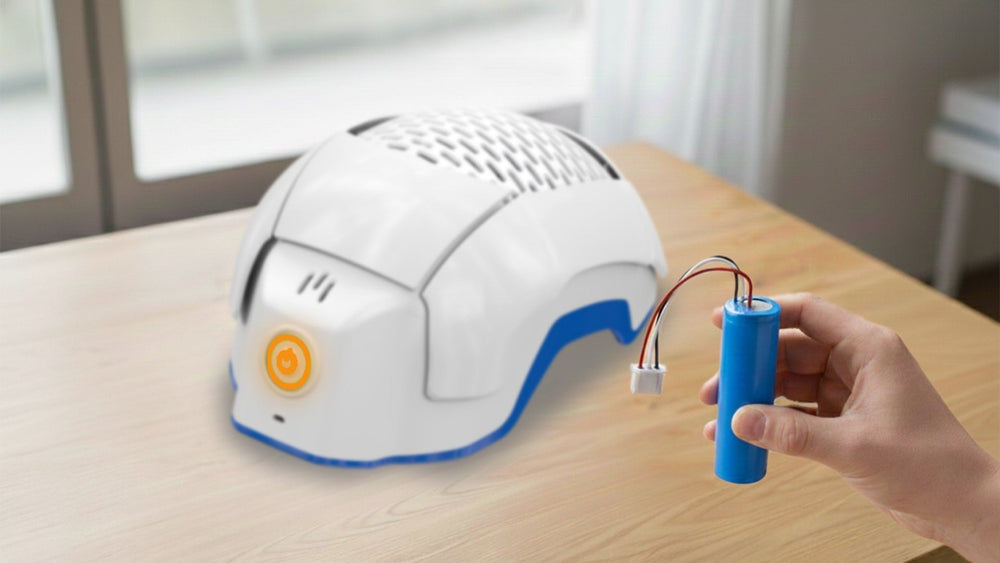
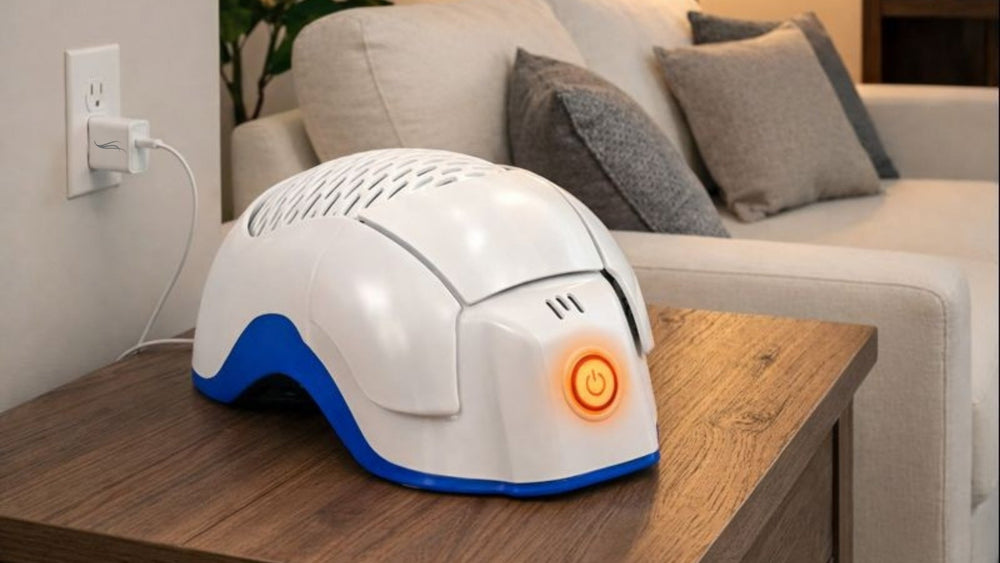
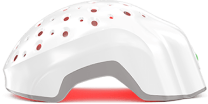
FDA 510(k) records describe the Theradome LH80 PRO as an over-the-counter therapeutic device intended to treat androgenetic alopecia and promote hair growth in males with Norwood-Hamilton IIa to V patterns and females with Ludwig-Savin I-1 to I-4, II-1, and II-2 patterns, with Fitzpatrick Skin Types I to IV.
For androgenetic alopecia, the evidence category is stronger than evening primrose oil. A systematic review and meta-analysis of randomized controlled trials found that low-level light therapy devices may increase hair density and diameter in pattern hair loss, while also noting that more long-term comparative research is needed.
Evening primrose oil vs “hair growth supplements”
Hair supplements often blur three very different ideas: correcting a deficiency, supporting general nutrition, and treating a diagnosed hair-loss condition.
Those are not interchangeable.
Biotin is a classic example. It is heavily marketed for hair, but a 2024 review in Journal of Clinical and Aesthetic Dermatology concluded that widespread marketing of biotin for hair loss in healthy people is unsupported, and that benefit is mainly tied to specific deficiency or unusual medical contexts.
So no, the answer is not “swap biotin for evening primrose oil.” That just moves the hope from one bottle to another.
If a deficiency exists, correct it. If androgenetic alopecia exists, treat that with laser phototherapy. If the scalp is inflamed, diagnose it. If hair is breaking, fix the damage pattern.
When Should You See a Dermatologist Instead of Trying Evening Primrose Oil?
See a dermatologist if your hair loss is sudden, patchy, painful, inflamed, scaly, pustular, or getting worse over time. Also get checked if you notice broken hairs, shiny smooth patches, scalp burning, tenderness, a rapidly widening part, or hair loss with fatigue, heavy periods, irregular cycles, acne, facial hair growth, fever, illness, rapid weight loss, or a new medication.
Treatment begins with finding the cause, and dermatologists may examine the scalp and nails, perform a hair-pull test, ask about health history, and order blood tests or scalp biopsy when needed.
A supplement cannot do that. A capsule cannot look at your scalp under magnification and say, “Actually, this looks inflammatory.” It cannot check ferritin, thyroid patterns, medication triggers, or whether a shiny patch has lost follicle openings.
What a dermatologist may check
A dermatologist may ask when the shedding began, whether it is patchy or diffuse, whether your scalp hurts or itches, whether you recently had an illness, childbirth, surgery, rapid weight change, severe stress, or medication switch.
They may examine the scalp, brows, lashes, nails, and hair shafts. They may do a pull test. Sometimes they order blood work. Sometimes, especially when scarring alopecia is suspected, they may recommend a scalp biopsy.
That sounds intense, but it can be clarifying. And clarity is wildly underrated when you are staring at your part every morning like it has betrayed the family.
What to bring to the appointment
Bring a timeline. Bring photos if you have them. Bring your supplement bottles, medication list, recent lab results, and notes on major stressors, illness, pregnancy, diet changes, styling routines, or family history.
Nothing fancy.
Just the clues.
Hair loss is often solved by pattern recognition. The better the clues, the less guessing.
So, Is Evening Primrose Oil Worth Trying for Hair Loss?
Evening primrose oil may be worth discussing with a clinician if you are curious, healthy enough to use it safely, and not expecting it to regrow hair. That last part matters.
If the goal is “support general skin comfort,” maybe. If the goal is “reverse my thinning crown,” no strong evidence supports that.
Evening primrose oil is optional supportive care at best, not a primary hair-loss treatment.
When it is probably not the right move
Evening primrose oil is probably not the right first move if your hair loss is sudden, patchy, painful, inflamed, spreading, scarring, or clearly worsening. It is also not a great casual experiment if you are pregnant, breastfeeding, taking blood thinners, taking blood pressure medication, managing complex health issues, or hoping for visible regrowth.
That is too much pressure to put on one oil.
Also, if you are using evening primrose oil because you are scared to start a more evidence-based treatment, name that fear. Really. It is understandable. But fear should not be allowed to quietly pick the weakest option in the room.
A better first step
Start with the hair-loss type.
Is it gradual pattern thinning? Sudden shedding? Patchy loss? Breakage? Scalp itching or pain? Did it begin after childbirth, illness, stress, medication, dieting, or a chemical service? Does it run in your family?
Those answers matter more than the supplement label.
Conclusion
Evening primrose oil is not nonsense, but it is not a proven hair-loss treatment either. Its GLA content gives it a reasonable place in skin-health conversations, yet that does not automatically mean it can regrow hair, stop shedding, or treat pattern thinning.
If your hair is changing, the smartest next move is not guessing harder. It is figuring out what kind of hair loss you have. Pattern thinning, shedding, breakage, scalp disease, traction damage, and scarring alopecia all need different answers.
Evening primrose oil may be optional support for some adults after safety review. But it should not delay diagnosis or replace better-supported care.
Your follicles deserve better than a hopeful shrug in capsule form.