






Yes, laser therapy can be used after derma rolling. But the more important question is whether derma rolling should be part of a hair growth routine in the first place.
Derma rollers work by creating tiny injuries in the scalp. Laser phototherapy works very differently. It supports cellular activity in hair follicles without wounding the tissue.
If dermarolling has already been done, laser phototherapy can help calm the unnecessary inflammation created by that process. But for long-term hair growth support, the more stable approach is simply using LPT on its own.
And before you wonder why that healing redness hasn’t gone yet… we’ll get there.
Why People Try to Stack Derma Rolling and Laser Therapy
Hair loss has a way of making people impatient. Not irrational… just eager.
Derma rolling feels active. Laser therapy feels clinical. Put them together and it sounds like momentum. Two tools, one goal.
The problem is that biology doesn’t care how motivated you are.
Stacking treatments can work, but only when each one respects what the scalp is already doing. When people rush the sequence, irritation tends to show up first. Progress usually doesn’t.
That difference matters.
What Derma Rolling Actually Does to Your Scalp
Microneedling creates controlled micro-wounds in the upper layers of the scalp. This triggers a wound-healing cascade involving platelet activation, cytokine signaling, and growth factor release. All normal. All intentional.
But it also brings temporary inflammation, increased sensitivity, and a short period where the skin barrier is compromised.
Clinical reviews describe microneedling as beneficial when used appropriately, and irritating when stacked too aggressively or too often.
What Laser Phototherapy Does (and What It Doesn’t)
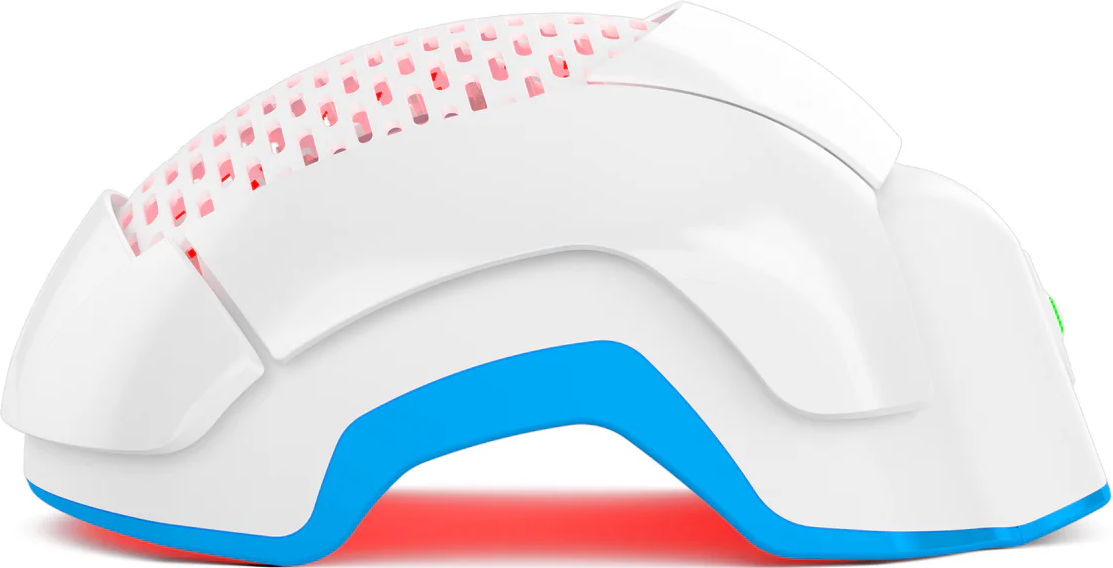
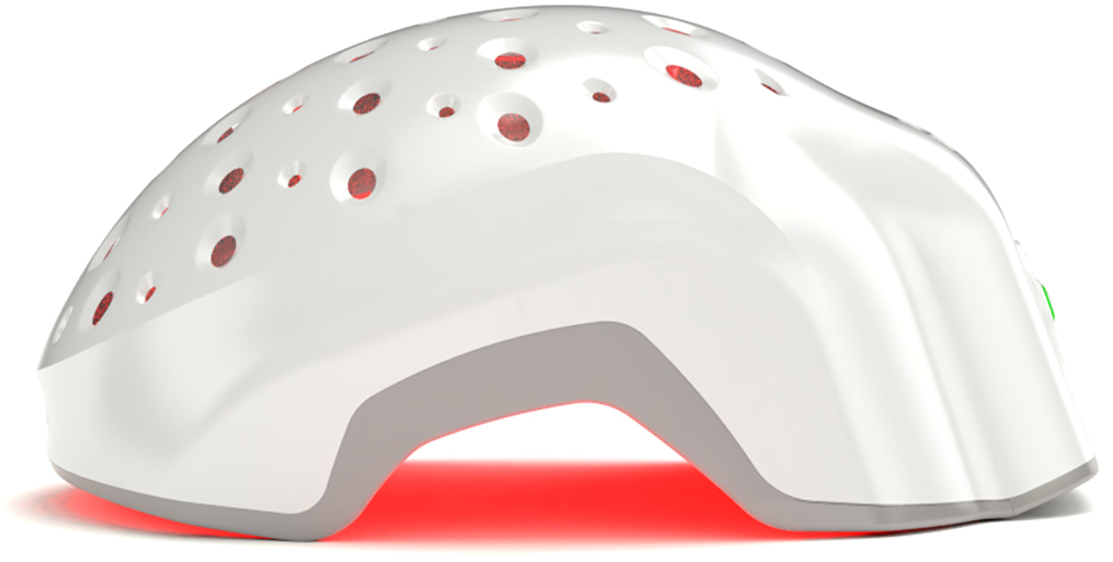
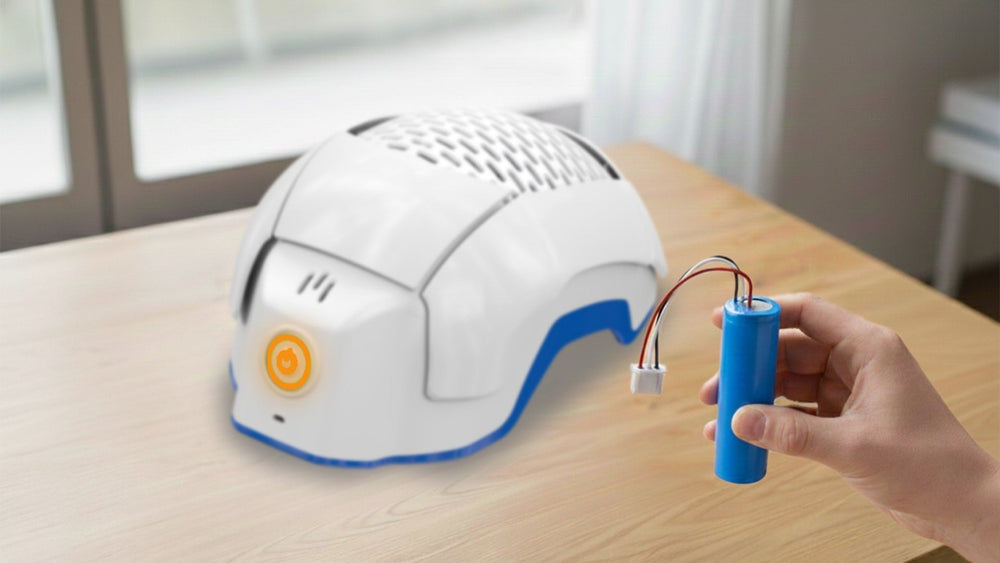
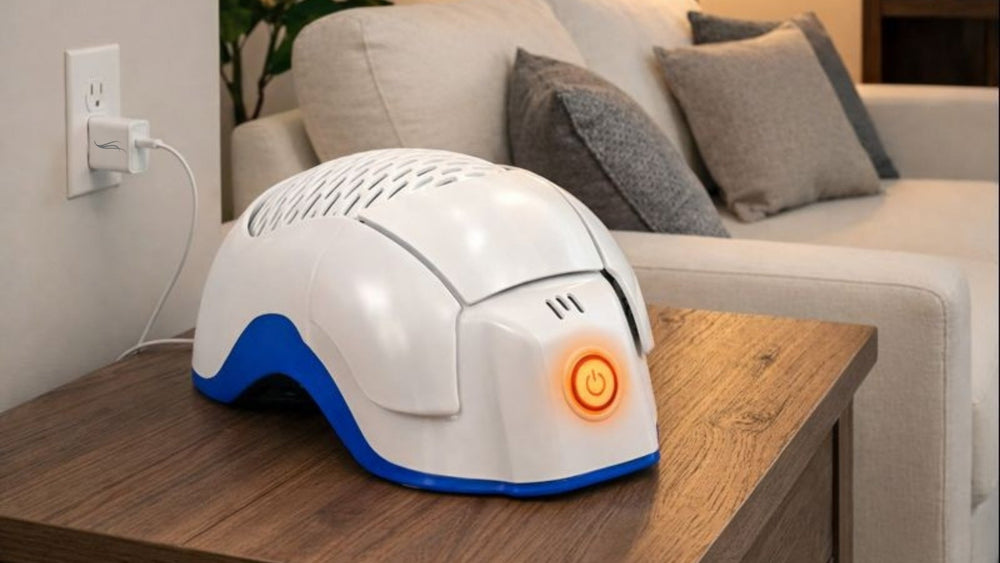
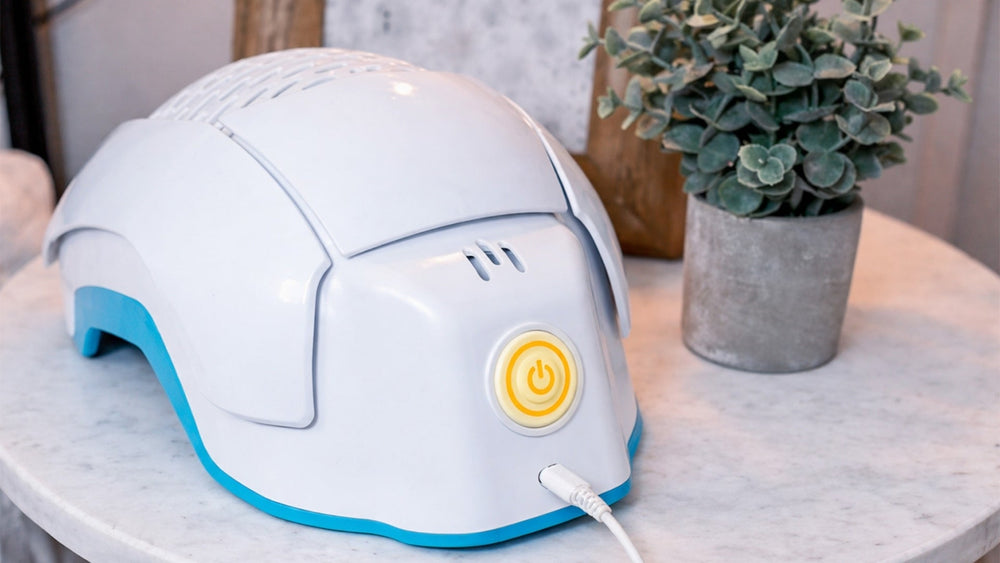
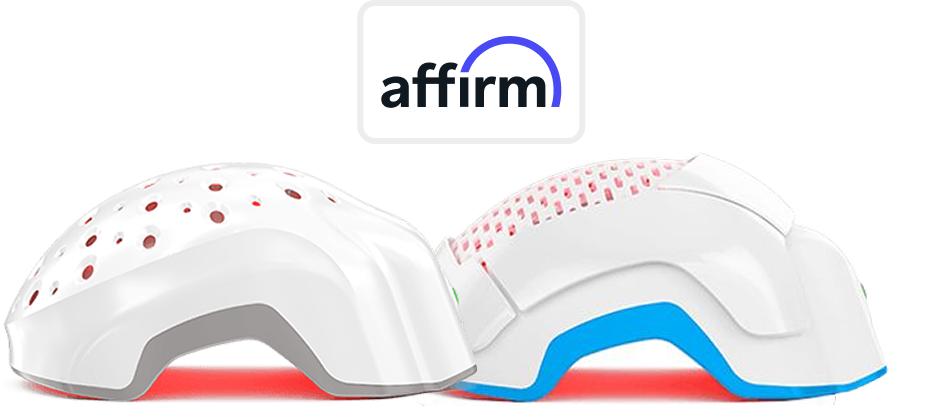
Laser phototherapy, sometimes grouped under LLLT, uses low-power cold lasers to deliver light energy to scalp tissue. These are typically FDA Class 3R devices, producing no heat and no tissue injury.

At the cellular level, light in the red spectrum interacts with mitochondrial chromophores, increasing ATP availability and modulating inflammatory signaling. This process is called photobiostimulation .
This is not burning.
It is not cutting.
It does not “force” growth.
It supports cellular activity that is already underway.
Can You Use Laser Therapy After Derma Rolling?
Yes.
But the reasoning is slightly different from what most people assume.
Derma rolling works by creating tiny controlled injuries in the scalp. Those micro-injuries trigger the body’s natural wound-healing response. As the skin repairs itself, it produces new cells and structural proteins such as collagen.
That healing process is the whole mechanism.
Now here is where laser phototherapy enters the conversation.
LPT can help calm inflammation created by dermarolling. The light energy supports cellular activity in the tissue and can help the scalp move out of its irritated state.
But using laser light immediately after creating those micro-injuries may actually shorten the natural repair cycle.
And that matters.
If the tissue heals too quickly, the full remodeling process the dermaroller was trying to trigger may not fully play out.
Which means the theoretical benefit of the injury may be reduced.
So while laser therapy is safe to use after dermarolling, the smarter approach is allowing the scalp to move through its initial recovery stage first.
Then introduce light.
Timing Matters More Than the Combination Itself
After dermarolling, the scalp enters an inflammatory repair phase.
Redness. Warmth. Sensitivity.
Those signs simply mean the skin is doing what it is supposed to do.
During that early stage, the body is coordinating its wound-healing response. Introducing another stimulus too quickly may interrupt that process.
Instead of relying on a clock, a more practical guide is simply the condition of the scalp.
If redness is still visible, if tenderness is present, if the scalp feels irritated, it is still in recovery mode.
Wait.
When the scalp settles and returns to its baseline state, laser phototherapy can then support the tissue without interfering with the repair process.
Calm first.
Then light.
Dermarollers and Hair Growth (Why We Don’t Recommend This Route)
Dermarollers look simple.
A small roller.
Hundreds of tiny needles.
Roll. Press. Stimulate.
It feels active.
It feels like you are “doing something”.
But when it comes to scalp hair growth specifically, deliberately creating injury sites across the scalp is not an approach we support.
Dermarolling Works by Creating Wounds, Not by Supporting Follicles
A dermaroller creates micro-injuries.
That is the entire mechanism.
The skin responds with inflammation and a wound-healing cascade. In certain dermatologic applications, this can be useful.
Hair follicles, however, already operate in a delicate biological environment. Repeated injury asks the scalp to focus on repairing damage rather than maintaining healthy follicle activity.
Stress first. Repair later.
Not exactly the most stable foundation for long-term hair growth.
Why We Don’t Recommend Dermarolling for Hair Loss or Regrowth
In everyday use, dermarollers tend to be:
- DIY
- non-sterile
- uneven in pressure
- uneven in depth
- frequently overused
Once the skin barrier is disrupted, risks rise.
- Irritation.
- Persistent inflammation.
- Occasional infection.
Professional microneedling in controlled medical settings is one thing.
Rolling needles across your scalp at home is something very different.
For hair loss specifically, inducing repeated injury simply is not the strategy we recommend.
Where Laser Phototherapy Fits Instead
Laser phototherapy takes a completely different approach.
- It does not injure tissue.
- It does not disrupt the skin barrier.
- It does not trigger inflammation.
Instead, it supports the cellular processes already involved in hair growth.
Rather than forcing the scalp into a repair cycle, LPT helps maintain a stable environment where follicles can function normally.
Support instead of disruption.
That difference is the whole point.
If You Have Already Used Dermarolling
Many people try dermarolling before they learn about laser phototherapy.
That is understandable.
If that is the case, the most important step is letting the scalp calm completely.
Persistent redness or tenderness means the tissue is still recovering.
Once the scalp returns to a stable condition, laser phototherapy can help reduce lingering inflammation and support normal follicle activity moving forward.
Conclusion
Derma rolling and laser phototherapy operate on very different ideas.
One creates injury and relies on the body repairing that damage.
The other supports the biological processes already responsible for healthy follicle activity.
When the scalp is repeatedly pushed into repair mode, energy shifts toward healing wounds rather than maintaining stable follicle function. That is why dermarolling is not an approach we recommend for scalp hair growth.
Laser phototherapy takes a calmer route.
Instead of stressing tissue into a response, it supports the cellular activity involved in the hair growth cycle without disrupting the scalp environment.
If dermarolling is something you have already experimented with, the priority is simple. Let the scalp settle first. Then introduce light.
But for long-term hair growth support, the more stable path is also the simpler one.
Consistent laser phototherapy.