





If you wear headphones for hours, they probably are not causing true biological hair loss on their own. What they can do, in some people, is add repeated pressure, friction, or tension to the same patch of scalp, which may contribute to hair breakage or traction-related thinning if the fit is tight enough and the habit is constant enough.
You know that little post-headphone panic?
You take them off, glance in the mirror, and suddenly there is a faint line across the top of your hair. Not a dramatic bald stripe. Just... enough weirdness to make your brain act up a bit. You part the hair. You squint. You do that deeply scientific thing where you lean closer to the bathroom light like it owes you answers.
Fair.
And, honestly, this question keeps coming up because modern life is practically welded to our heads now. Gamers. Editors. Students. Remote workers. People on flights. People pretending to be on calls so nobody talks to them in public. The concern is not ridiculous. It just needs a cleaner answer than the internet usually gives.
Can Headphones Cause Hair Loss, Really?
Usually, no.
There is good medical evidence that repeated tension can cause traction alopecia, and there is some evidence for pressure alopecia and friction-related hair damage. What is missing is strong direct research showing that normal everyday headphone use is a common, independent cause of scalp alopecia. So the medically fair answer is more awkward than a tidy yes or no. Headphones are not a proven mainstream cause of hair loss, but under the wrong conditions they can add enough mechanical stress to become part of the problem.
That middle ground matters. A lot.
Because once people notice thinning near the crown, they tend to blame the visible habit sitting on top of the head. Sometimes they are partly right. Sometimes not even close.
Why this question even exists
Part of the confusion is that people bundle four different things together and call all of them “hair loss.”
Flattening is not the same as breakage. Breakage is not the same as shedding. And shedding is not the same as a true alopecia process that is changing what the follicle itself can produce. That mix-up is where a lot of unnecessary panic starts.
Also, the top of the scalp is exactly where androgenetic alopecia often starts becoming obvious, especially in men and in many women with pattern thinning. So yes, someone can wear headphones every day, notice the crown looks thinner, and connect the dots in a way that feels logical... even when the more likely driver is genetic pattern loss that would have shown up anyway.
What Actually Happens Under Your Headphones

Traction alopecia
Traction alopecia is hair loss caused by repeated pulling or tension on the hair roots. It is well recognized in dermatology. Most often it is discussed with tight hairstyles, extensions, head coverings, and other habits that keep stressing the same follicles over and over. Early on, it can be reversible. Left going for too long, it can become scarring and permanent.
So where do headphones fit? As a possible contributor when the headband is very tight, worn for long stretches, pushed into the same area daily, or layered on top of already tense hair. A firm clamping headset over tightly pulled-back hair is a different situation from loose casual listening for an hour while folding laundry. Same object. Not the same exposure.
And that is really the theme here. Not “headphones are dangerous.” More like: repetition plus pressure plus vulnerability can add up.
Friction and hair breakage
Sometimes the follicle is fine. The hair shaft is the thing taking the beating.
Friction can rough up the cuticle, weaken the fiber, and lead to breakage that makes hair look thinner than it truly is at the root. The friction-alopecia literature is much smaller than the traction literature, but it does show that repeated rubbing can produce localized hair loss or broken hairs in the affected area. That means a headset band sliding over the same patch of hair every day could plausibly contribute to breakage, especially if the hair is already dry, chemically processed, heat damaged, or structurally fragile.
This is one of those unglamorous distinctions people skip. But it matters because broken hair and damaged follicles are not the same clinical problem. One is more about shaft integrity. The other is about what the follicle can keep producing. They can overlap, sure, though they are not interchangeable.
Pressure, which is rarer
Pressure alopecia is a real diagnosis. It usually happens after prolonged sustained pressure on the scalp, classically after long surgeries, immobilization, or certain medical or mechanical situations where the same area is compressed for an extended period. Reviews describe it as infrequent, and the mechanism is not “headwear blocks follicles from breathing.” It is more serious than that, involving pressure severe enough to impair local tissue perfusion.
That is why it would be sloppy to lump ordinary headphone use into the same bucket without qualification. A normal headset is usually nowhere near the classic pressure-alopecia scenario. But if a device is unusually heavy, painfully tight, worn for very long periods, and causing ongoing tenderness in one area... then the conversation changes a bit. Enough to pay attention.
Signs Your Headphones Might Be Part of the Problem
The first thing to look for is localisation. If the thinning, breakage, or tenderness is sitting right where the headband rests, that makes a mechanical contribution more plausible than if the loss is diffuse all over the scalp.
Other clues matter too:
- Soreness or scalp tenderness in the contact area
- Redness, bumps, or folliculitis-like irritation under the band or near pressure points
- Broken hairs of uneven length rather than cleanly shed full-length hairs
- A visible groove plus reduced density in the same place, not just temporary flattening
- Symptoms that ease when you stop wearing the headset as much
And about that “headphone dent” people talk about...
A temporary dent in the hair, or even a shallow impression in the skin and soft tissue, is not the same thing as follicle damage. If the line disappears and density looks normal once the hair settles, that is not alopecia. It is mostly just physics being mildly rude. Persistent thinning in that same groove is different.
When It’s Probably Not Your Headphones
If the thinning is gradual at the crown or temples, with no clear soreness or irritation where the headset sits, androgenetic alopecia is often the more likely explanation. That is the common hereditary pattern loss that affects both men and women, though it shows up differently. In men, it often becomes obvious at the vertex and frontotemporal scalp. In women, it often looks more diffuse through the central scalp.
If the hair is coming out in increased numbers from all over the scalp after illness, surgery, rapid dieting, major stress, hormonal changes, or certain medications, telogen effluvium is a better fit. That condition is about more hairs shifting into the resting phase and shedding diffusely. It is not usually limited to one neat band-shaped area on top of the head.
If there are sudden smooth patches, sharply defined bald spots, or eyebrow and lash involvement, then alopecia areata belongs on the list. If there is itch, scale, inflammation, or broken hairs with a scaly patch, especially in children, scalp infection also needs consideration.
So, yes, headphones get blamed because they are visible. Human brains do that. We see the object. We assign the guilt. Meanwhile the actual cause may have been unfolding quietly in the background for months.
Who’s Actually at Risk?
Not everybody wearing over-ear headphones is equally vulnerable.
People who already wear tight hairstyles, especially styles that pull hair backward, are more exposed because the follicles are under tension before the headset even goes on. People with chemically relaxed hair, frequent heat styling, or structurally fragile strands may be more prone to breakage under repeated rubbing. And people who wear a tight headset for many hours, many days a week, are simply accumulating more mechanical exposure than someone using one for a commute and a podcast.
Hair texture matters too. The traction-alopecia literature repeatedly notes greater vulnerability in some people with tightly curled or Afro-textured hair, particularly when combined with high-tension grooming practices. That is not because the hair is defective. It is because the styling burden and cumulative strain can be different.
It is rarely one thing.
Usually it is a stack of little things that finally becomes visible. A tight style. A tight band. Daily repetition. Maybe some heat damage thrown in because, apparently, the scalp enjoys drama.
How to Wear Headphones Without Messing With Your Hair
You do not need to swear off headphones and live like a monk in a cave.
You just need to reduce unnecessary mechanical stress.
Loosen the fit
If your headset leaves the scalp tender, feels like a clamp, or creates a deep groove every single time, it is too tight for your anatomy. Adjusting the fit to reduce pressure is the most practical first step because traction and pressure problems both get worse with repeated force.
Vary the positioning
A small shift in where the band rests can spread the load instead of punishing the exact same follicles every day. Tiny change but still useful. This is especially worth doing if you work or game in long blocks.
Do not stack tension on tension
If your hair is already pulled back tightly, then adding a firm band over the top is not ideal. Looser styles reduce the background strain that makes traction alopecia more likely in the first place.
Take breaks
The evidence is not from “headphone break” trials specifically, but the logic is straightforward. Less continuous pressure and friction means less repeated stress on the same spot. If you are wearing a headset for hours, intermittent breaks are just sensible scalp ergonomics.
Keep the headset clean
Sweat, sebum, residue, and microbes on pads and headbands can irritate skin and contribute to folliculitis in some settings. Headphones are not uniquely filthy objects, but... they are not exactly sterile little princes either. If the contact area gets bumpy, itchy, greasy, or inflamed, clean the device and the scalp routine around it.
Consider alternating devices
Earbuds or in-ear monitors are not automatically “better” for every person or every situation, though alternating them with over-ear devices can give the top of the scalp a rest from repeated band pressure. That is a practical suggestion, not a dermatology commandment carved into stone.
If You’re Already Noticing Thinning, What Now?
Early-stage, possibly reversible changes
If the issue is early traction-related thinning or mainly breakage, stopping the repeated stress gives you the best shot at improvement. Early traction alopecia can regrow if recognized and addressed before the follicle has been damaged for too long. The British Association of Dermatologists notes that regrowth may begin within a few months once the traction source is removed, though timing varies.
That is the encouraging part.
The less fun part is that chronic traction can eventually scar. So the “I’ll just leave it and see” approach is not always the clever one, especially if there is visible progression.
When to take it seriously
See a dermatologist if you notice:
- ongoing thinning despite reducing headset use
- tenderness, pustules, redness, or scaling
- sudden patchy loss
- broad diffuse shedding
- recession or crown loss that seems to be marching on regardless of what your headphones are doing
Because at that point the question is no longer just “Could my headphones be involved?” It becomes “What type of hair loss is this, exactly?” And that distinction changes the next step. A lot.
Medical treatment depends on the diagnosis
For traction alopecia, the foundation is removing the tension source. When there is inflammation, topical or injected corticosteroids may be used in some cases. Minoxidil is also used clinically to support regrowth, though the traction-specific evidence is not as robust as it is for androgenetic alopecia. Hair transplantation is usually reserved for longstanding permanent loss.
That is why diagnosis first, treatment second, is not just doctorly fussiness. It keeps you from treating the wrong problem with great enthusiasm and zero payoff.
Where Laser Phototherapy Fits In
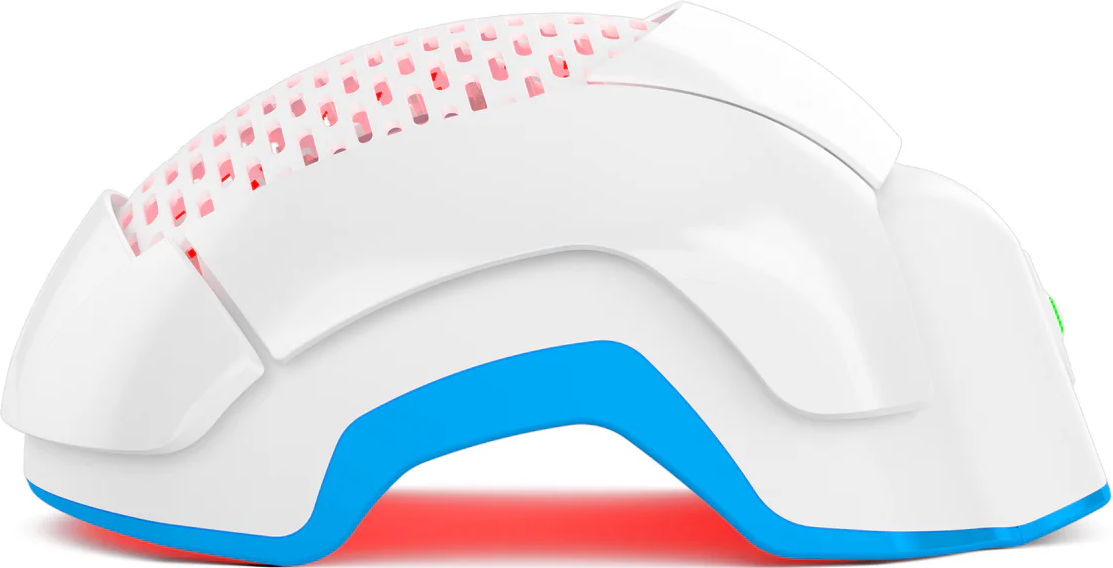
Laser Phototherapy, often discussed in the medical literature under low-level light therapy, has evidence supporting its use for androgenetic alopecia, not specifically for “headphone hair loss” as a standalone diagnosis. Systematic reviews and meta-analyses have found that light-based devices can improve hair density in pattern hair loss, with generally favorable short-term safety profiles, though study quality varies and long-term data are still developing.
If your thinning is truly just a little friction breakage from a tight headset, light therapy is not the first conversation. If your headset is irritating a scalp that also has underlying pattern loss... that is a different, more realistic overlap.
Where it can make sense clinically
Pattern hair loss and mechanical stress are not mutually exclusive. Someone can have mild androgenetic alopecia at the crown, then notice it more because a headset keeps flattening or stressing that same area. In that kind of overlap, a treatment with evidence for pattern loss may be relevant, even though the headphones were not the root cause.
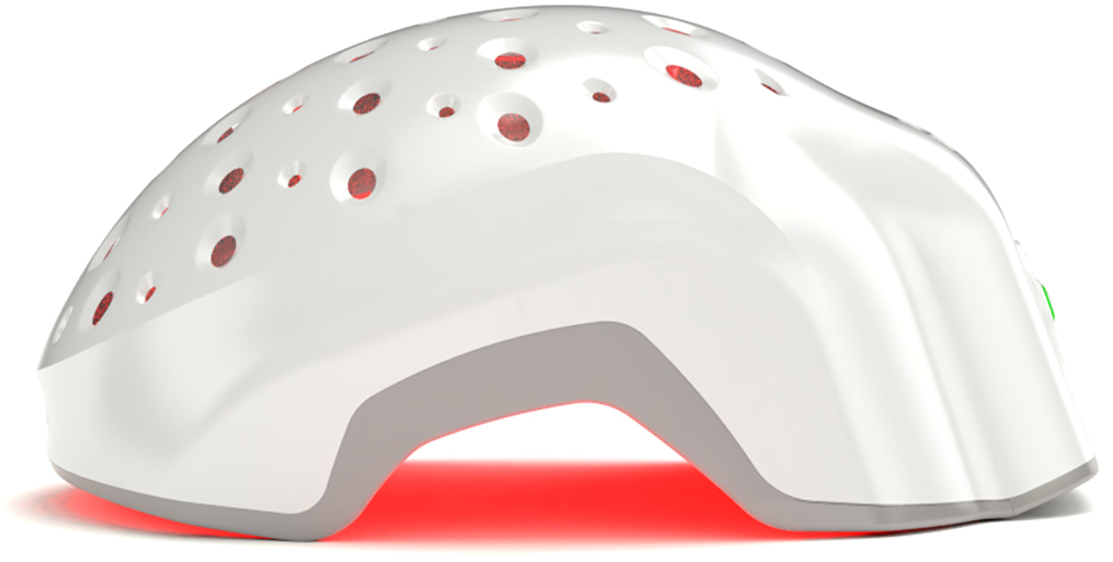
Laser Phototherapy is thought to work through photobiomodulation, influencing cellular activity in the follicle environment rather than by heating tissue. It is not a “burning laser” situation, and the modern low-level devices used for hair growth are in a very different category from surgical lasers.
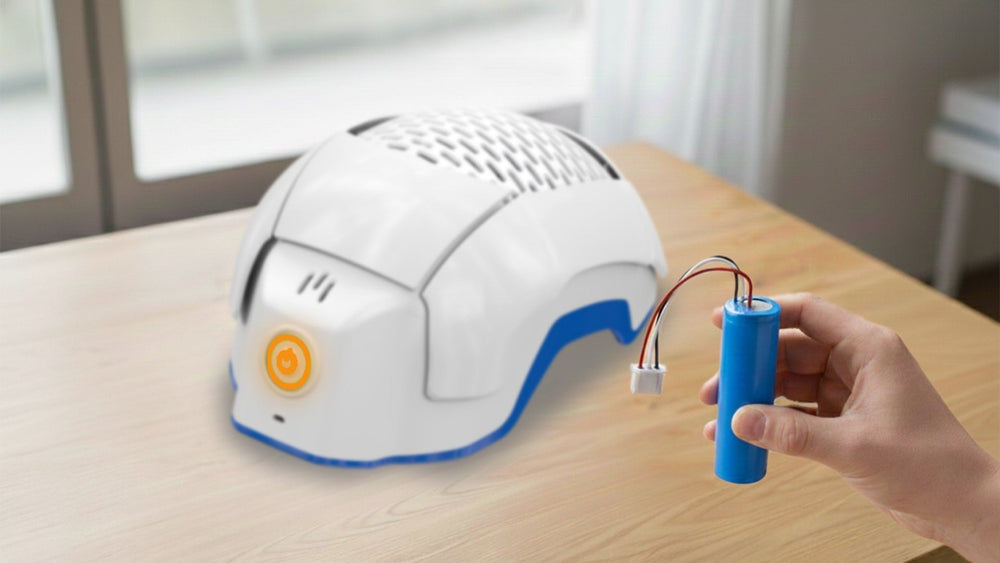
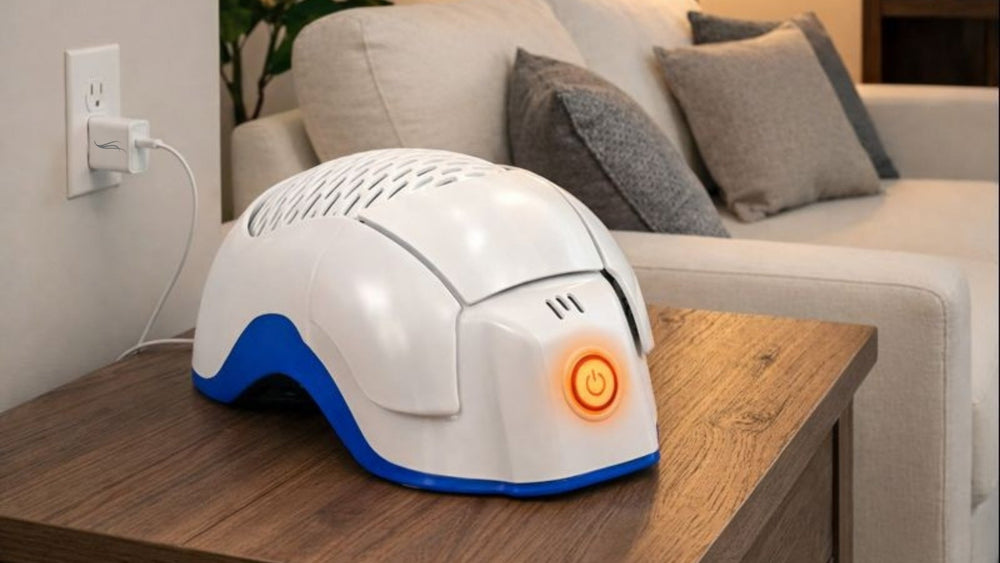
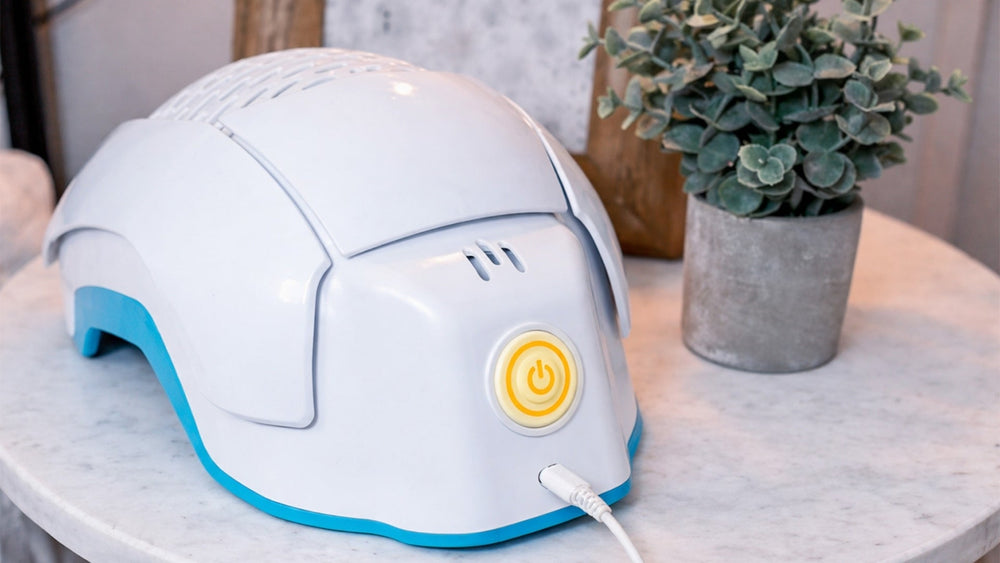
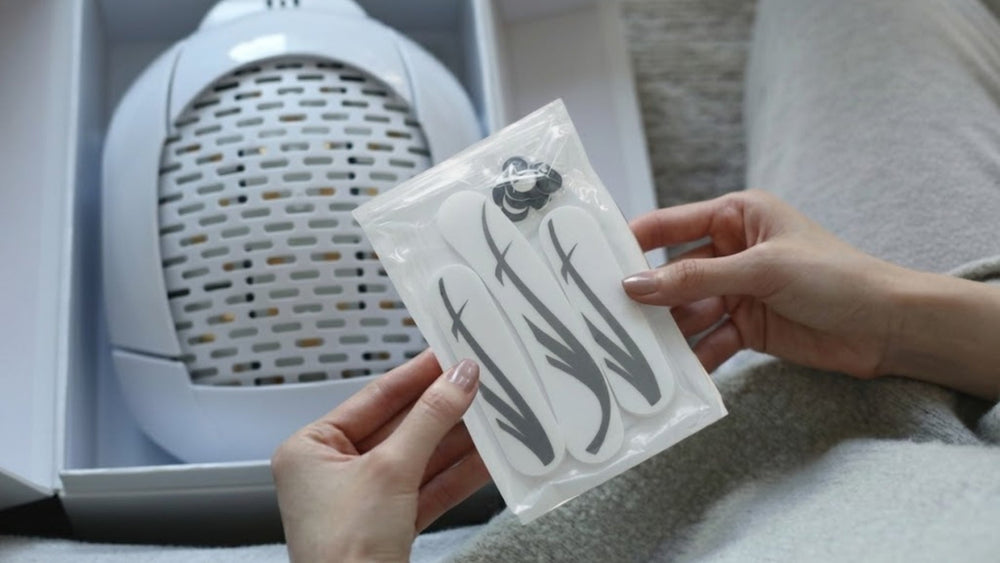
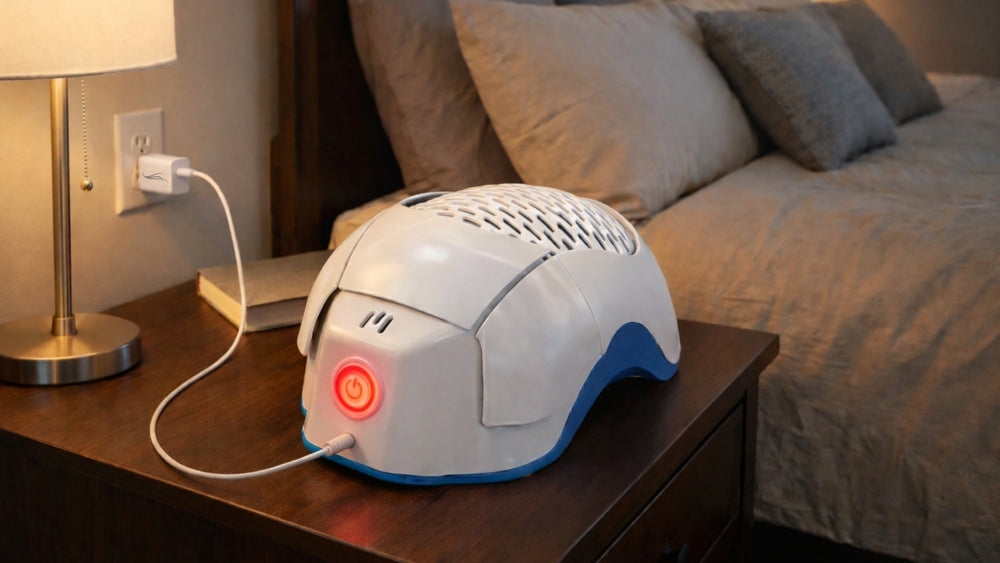
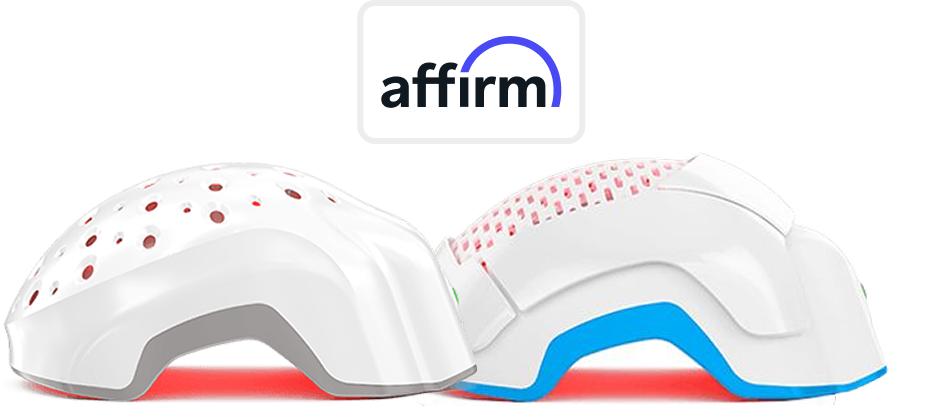
Theradome devices hold FDA clearances for promoting hair growth in men and women with androgenetic alopecia, with clearance documents publicly available through the FDA. That is the accurate regulatory language to use here: FDA-cleared, not FDA-approved.
So, if your “headphone hair loss” turns ut to be early pattern thinning that was simply made more noticeable by daily headset wear, an FDA-cleared Laser Phototherapy device such as Theradome may be one non-drug option to discuss as part of the broader management plan.
So, Should You Be Worried?
Probably not... at least not by default.
For most people, wearing headphones is not making them bald. But if the fit is very tight, the use is heavy, the same scalp area keeps getting stressed, and there are local warning signs like soreness, breakage, redness, or thinning in the exact contact zone, then yes, it is worth adjusting the habit and looking closer.
Sometimes the line in your hair is just a line in your hair. Sometimes it is your scalp giving you a small heads-up. The trick is not to panic. It is to notice which one you are looking at.
Conclusion
Headphones do not sit on the same rung as genetic hair loss, autoimmune hair loss, or classic shedding disorders. Still, they are not completely irrelevant either. In the wrong setup, especially when tight fit, repetition, and hair fragility overlap, they can add enough mechanical stress to matter.
That does not call for paranoia. Just slightly better habits.
Loosen the fit. Change the position once in a while. Do not pile headset pressure on top of already tight hair. And if the thinning keeps showing up in the same place, get the scalp properly assessed. You do not need to stop wearing headphones. You just do not want to ignore a pattern that keeps trying to introduce itself.