







No. Hair does not usually become biologically thinner just because it gets longer. What usually changes is the condition of the older part of the strand: the ends have had more time to deal with washing, brushing, heat, sunlight, friction, and plain old wear, so they can look finer, scragglier, or more see through than the roots.
Why Does Hair Often Look Thinner As It Gets Longer?
This is one of those questions that sounds simple until you actually stare at a few strands and realise hair is doing several things at once.
A person grows their hair out. The roots still look decent. The mid lengths are... mostly cooperative. Then the ends start acting like they pay no rent. They look lighter, feel drier, tangle more easily, and somehow give off that “where did all my hair go?” feeling. Fair concern.
Usually, what you are seeing is not the strand magically losing its original blueprint. It is the visual result of age and wear. Hair that has been out in the open for months, or years, has simply had more chances to get roughed up. The lower part of the hair shaft has taken more friction from clothes, towels, pillowcases, brushes, elastics, heat tools, bleaching, and UV exposure than the new growth near the scalp.
And yes, appearance matters here. Long hair can also hang flatter under its own weight, which cuts down on bounce and makes the whole head of hair seem less full even when density has not changed in any dramatic medical sense.
One more wrinkle. Not all hairs on your scalp are the same age, and not all of them make it to the same length. So by the time you get down to the ends, there are naturally fewer strands reaching that exact point. That alone can make the bottom of long hair look thinner than the top.
Length often reveals wear. It does not usually create thinning from scratch.
The Biology of Hair Thickness
To answer this properly, we need to separate hair strand thickness from how full the hair looks overall. Those get mixed together constantly, and honestly, that mix up causes half the panic.
What Determines Hair Strand Thickness?
Hair shaft diameter is largely determined while the strand is being formed inside the follicle. A 2024 review on human hair follicle biology notes that the number of matrix keratinocytes helps determine the diameter of the hair shaft and the size of the hair bulb.

That matters because once the strand leaves the scalp, it is no longer living tissue. It is a keratin fiber. Useful, important, very worth looking after... but still not alive. So the part already hanging past your shoulders is not sitting there actively remodeling itself into a slimmer version out of spite. The original caliber was set upstream, in the follicle, during formation.
Can Hair Diameter Change As It Grows?
Not in the sense most people mean.
An already emerged hair shaft does not keep biologically recalculating its diameter as it moves farther from the scalp. What can change is its surface integrity, strength, elasticity, and resistance to breakage. When the protective outer layers become damaged, the strand can feel rougher, split, snag, and look skinnier at the end because pieces of it have worn away or cracked apart.
So if you have been asking, “Does hair get thinner as it gets longer?” the clean answer is still no... but the older sections can absolutely become more damaged and less substantial looking.
Why the Ends of Long Hair Look Thinner
This is the part most people are really asking about, even if they do not phrase it that way.
Hair Weathering
Hair weathering is the gradual deterioration of the shaft caused by environmental exposure and grooming. Reviews on hair aging and hair fiber chemistry describe the free end of the fiber as especially vulnerable because it has simply been around longer. Over time, cuticle damage accumulates, the outer lipid layer becomes compromised, friction rises, and the shaft becomes more fragile.
That is why the ends can feel papery or wispy while the roots feel stronger. Same head. Same general routine. Different age on the fiber.
Split Ends
Split ends a form of structural damage. A 2024 paper on the biomechanics of splitting hairs describes splitting as a crack initiation and propagation problem in the fiber itself, while broader hair reviews explain that weathered, oxidised, cuticle-damaged shafts are more vulnerable to this kind of failure.
Once that happens, the end can fork, fray, or snap off higher up the shaft. Do that across enough strands and the bottom of the hair starts looking thin, uneven, and almost translucent in places.
Not because your follicle forgot its job. Because the older fiber has been through things.
Why Damage Concentrates at the Ends
The ends are the oldest surviving part of the hair. They have dealt with the highest cumulative exposure to brushing, combing, rough drying, sunlight, styling heat, straightening, colouring, friction against fabric, and general life. The AAD notes that brushing too much can cause split ends and that wet hair breaks more easily when combed or brushed. Reviews also describe UV related changes, porosity shifts, and cuticle deterioration in damaged hair fibers.
So yes, the lower half of your hair may genuinely feel thinner.
But the mechanism is usually wear, not mystical length sabotage.
Real Factors That Make Long Hair Look Thinner
Let us get more concrete here, because “damage” can sound vague until you put names to it.
Natural Hair Shedding
Hair grows in cycles, not in one big coordinated group project. Some hairs are actively growing, some are transitioning, and some are resting before they shed. Hair shedding and diffuse alopecia often involve shifts in these normal phases, and telogen effluvium happens when more hairs than usual move into resting and shedding after a trigger such as illness, stress, postpartum change, or nutritional strain.
This means there are naturally fewer hairs that make it all the way to a very long endpoint. So even healthy long hair often looks fuller near the scalp than at the perimeter.
Breakage and Mechanical Damage
Hair can be lost from the comb. Or the brush. Or the heat tool. Or the not-that-soft towel you keep meaning to replace.
The AAD advises keeping brushing to a minimum, notes that repeated brushing can cause split ends, and recommends handling wet hair carefully because it breaks more easily when combed or brushed. Reviews on hair cosmetics and physicochemistry also describe increased fragility after cuticle and lipid barrier damage.
Breakage matters because it reduces the amount of hair that survives to longer lengths. If many strands snap at different heights, the lower half of the hair loses bulk even though the scalp may still hold a normal number of follicles.
Gravity and Hair Weight
Long hair is heavier. This sounds obvious... because it is. But it also matters visually. Heavier hair tends to sit flatter against the head, especially in straighter textures, which reduces lift and creates the impression of less volume. Cosmetic science reviews note that fullness depends on more than just density. Diameter, length, manageability, and the way fibers interact with one another all affect how abundant the hair appears.
So sometimes the “thinness” is not the strand changing. It is the hairstyle changing the way fullness reads to the eye.
Uneven Length Distribution
Not every hair on your scalp is going to hit the same finish line. Some shed earlier. Some break sooner. Some are newer. Some have a shorter anagen phase. The duration of growth phases affects how long hair can grow and that shedding patterns vary across different forms of hair loss and hair thinning.
And that creates a curtain effect: fuller above, lighter below.
When Long Hair Reveals Real Hair Thinning
Now we shift from “this looks thinner” to “this may actually be thinner.”
That is a different conversation.
Follicle Miniaturization
In androgenetic alopecia, follicles gradually produce finer, shorter, less robust hairs over time. A 2024 systematic review of trichoscopy in androgenetic alopecia found that hair diameter variability was one of the most common findings, along with increased vellus hairs and other miniaturization signs.
So with pattern hair loss, the problem is not that a long strand keeps thinning as it hangs there. The problem is that newer hairs are being produced finer from the start.
That is a crucial distinction, and it is easy to miss if you only look at the ends.
Shortened Growth Phase
Hair length is also influenced by how long a follicle stays in anagen, or the active growth phase. When that phase shortens, hair may shed before it reaches a substantial length. Changes in cycling are part of many thinning and shedding disorders, including telogen effluvium and other diffuse alopecias.
This can create ends that look sparse or “see through,” not because the surviving strands are shrinking, but because fewer strong terminal hairs are lasting the distance.
Age Related Changes
Hair caliber and fiber quality can change with age. Reviews on hair aging discuss age related shifts in the fiber and follicle, including changes that affect perceived thickness and overall hair quality.
So if someone says, “My hair used to get long and stay thick, and now it does not,” that may reflect age related follicle output changes, patterned loss, or increased fragility... not merely the act of growing it longer.
Hair Density vs Hair Thickness
These are not the same.
Hair density is how many hairs are present in a given scalp area. Hair thickness usually refers to the diameter of individual strands. A person can have lots of fine hairs, or fewer coarse hairs, and both can give very different visual results. Reviews on female pattern hair loss and trichoscopic assessment show that density and shaft diameter both contribute to what patients perceive as thinning.
This matters because long hair can look less full for several separate reasons:
- fewer strands reaching the bottom
- smaller strand diameter from follicle changes
- shaft breakage and split ends
- flatter styling from weight
Different mechanism. Similar complaint.
Which is why people get confused, honestly.
How to Tell the Difference Between Breakage and Real Thinning
This is where a little pattern recognition helps.
Signs That Point More Toward Breakage
Breakage tends to show up as roughness, frizz, tangling, split ends, and uneven lengths. The lower portion may look scruffy rather than uniformly reduced. You may notice shorter snapped pieces through the mid lengths, not just at the root. AAD guidance on damage prevention and reviews on hair cosmetics both support this pattern of fragility and shaft deterioration.
Signs That Point More Toward Follicle Level Thinning
True thinning is more suspicious when you notice a widening part, more scalp show through, reduced density near the crown, miniaturized finer hairs, or ongoing loss that does not improve when your hair routine gets gentler. The AAD advises dermatologic evaluation when hair loss may be linked to illness, hormonal shifts, infection, deficiency, or other medical causes, and notes that dermatologists may use examination, pull testing, bloodwork, and sometimes biopsy to clarify the cause.
A blunt but useful rule: if the problem seems to start at the scalp pattern, think follicle. If it mostly lives at the ends, think shaft damage first.
Not always. But often.
How to Maintain Thick Hair While Growing It Long
This is the part people actually want after the science. Fair enough.
Protect the Hair Shaft
Gentler handling goes a long way. The AAD recommends minimizing brushing, being careful with wet hair, reducing high hold styling products that can contribute to breakage, and lowering the frequency of heat styling when possible.
Conditioning also matters. Outer surface and lipid layer help reduce friction and improve manageability, so keeping the shaft conditioned can reduce mechanical stress and help the hair survive to longer lengths in better shape.
Trim Strategically
Trims do not change how thick your follicle makes new hair. They do remove split, frayed, weathered ends before that damage travels farther up the shaft. That can make the perimeter look fuller and more even. Once the shaft is cracked and split, it is structurally compromised.
Small, regular trims can be a maintenance move, not a setback. Sometimes your ends need editing. Hair can be dramatic like that.
Support the Follicle
If the issue involves true thinning, shaft care alone is not enough. The follicle is where strand calibre is set, so scalp level support matters more than trying to rescue a damaged distal end after the fact.
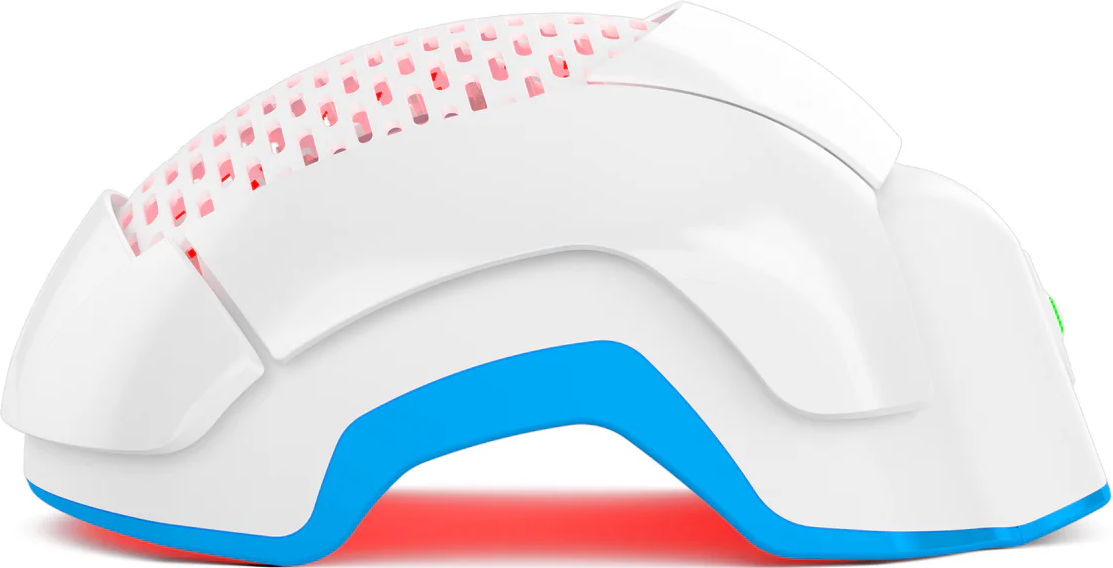
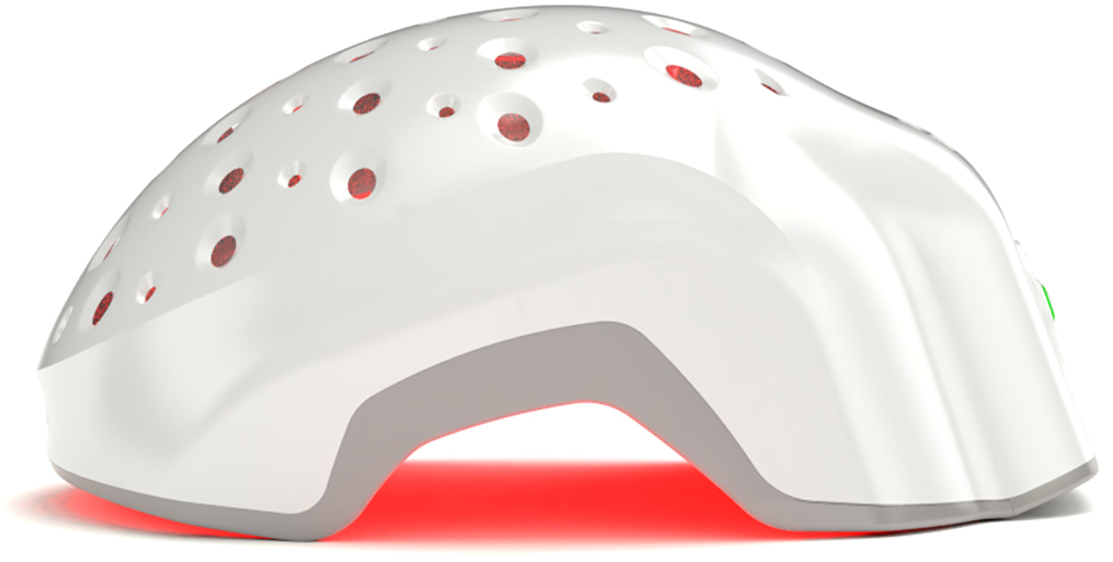
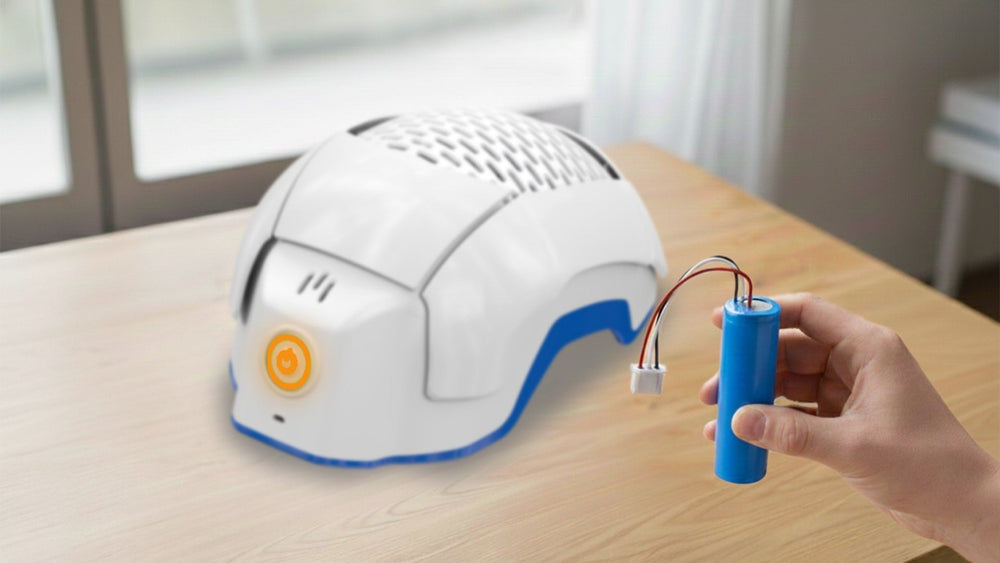
Laser Phototherapy, often grouped under low level light or laser therapy in the literature, has evidence in androgenetic alopecia and pattern hair loss rather than simple split ends. A 2021 systematic review and meta analysis found increased hair density with FDA cleared home use devices versus sham in randomized trials, and a 2024 review also described positive trial data while noting limits in protocol consistency and long term comparison data.
So, Laser Phototherapy is a follicle focused approach for appropriate hair loss contexts. It is not a magic fix for shredded ends.
Why Follicle Health Matters for Long Hair
We are back to the earlier point now... the one about where thickness actually begins.
If the follicle is producing strong terminal hairs, those strands stand a better chance of staying substantial as they grow. If the follicle is producing finer, miniaturized hairs, no amount of wishful conditioning at the bottom is going to turn them into robust long strands. You can help the shaft last longer, yes. But you cannot out-style a weakening follicle forever.
That is why the best long hair plan usually has two lanes:
- protect the length
- pay attention to what is happening at the scalp
Miss either one and the whole thing gets wobblier.
Common Myths About Long Hair and Thickness
“Cutting hair makes it grow back thicker.”
No. Cutting affects the appearance of the ends, not the diameter of new hair produced by the follicle. It can make the hair look fuller because blunt, healthy ends reflect a more even density line, but it does not change your growth machinery.
“Growing your hair long causes hair loss.”
Not directly. Length itself is not a medical cause of pattern hair loss. But long hair can reveal damage, highlight uneven density, and feel heavier and flatter, which can make existing thinning more obvious. Certain high tension styles worn repeatedly can also contribute to traction related loss, which is a separate issue from simply having long hair.
“Washing your hair makes it thinner.”
Normal washing does not make hair thin. Rough handling during washing, or combing fragile wet hair aggressively, can increase breakage. AAD guidance specifically recommends focusing shampoo on the scalp and letting it flow through the length rather than scrubbing the hair itself hard.
“Supplements will thicken hair no matter what.”
Not reliably, and not harmlessly. Reviews on nutrition and hair loss note that deficiency correction matters, but oversupplementation can backfire. Taking nutrients such as iron, zinc, or biotin only when testing shows a deficiency, because normal levels do not automatically mean a supplement will help and excess can be harmful.
So no... more capsules is not a personality trait, and it is not a plan.
Conclusion
Hair does not usually get thinner just because it gets longer. What tends to happen is less dramatic and more annoying: the ends are older, more weathered, more breakage prone, and sometimes more sparse simply because fewer hairs reach that exact length.
If you are mostly dealing with wispy ends, split ends, and roughness, think shaft damage first. If you are seeing a widening part, clear scalp show through, or finer regrowth, think follicle level thinning and get it assessed.
Long hair does ask for patience. And a bit of restraint. But the real goal is not only length. It is keeping enough healthy hair alive and substantial enough that the length still looks like itself.