







A normal hair part can show some scalp. That part usually stays fairly consistent over time. A thinning hair part, on the other hand, tends to look gradually wider because hair density drops and more follicles start producing finer, weaker hairs.
Why People Suddenly Notice Their Hair Part
It often starts in a very ordinary way. A bathroom mirror. A phone photo. A top-down light that should probably be arrested. Then you tilt your head a little and think, Wait... was my scalp always this visible? That reaction is common, and it does not automatically mean permanent hair loss. Still, if the part really is getting wider over time, it can be an early clue that density is changing.
And yes, people do misread normal variation all the time. Hair parts are supposed to show some scalp. That is the point of a part. The more useful question is not, “Can I see scalp?” It is, “Has this line changed... gradually, noticeably, and in a way that keeps happening?”
Fair question.
What Is a Normal Hair Part?
A normal hair part is simply the line where hair separates, allowing a narrow strip of scalp to be visible. In healthy hair, that line tends to look relatively even and stable, with similar density on both sides. It may not be ruler-straight on every person, and it certainly does not have to look identical from forehead to crown, but it usually does not keep widening month after month.
Natural scalp visibility along the part
Some scalp visibility is normal even in people with no hair disorder at all. Hair is being physically divided there, so you are always going to see a little skin. That visibility can be more obvious if the shafts are finer, the hair is straight rather than curly, or the contrast between scalp and hair colour is strong. Healthy baseline density also varies by person and by scalp area, which is one reason “normal” never fits into one tiny, universal measurement box.
Why hair type changes the appearance of a part
Fine hair tends to lie flatter, which means it covers less scalp per strand. Straighter hair can also reveal the part more easily than highly textured hair, which often creates more natural lift and camouflage. So... two people can have equally healthy scalps, and one may still look like their part is “wider” just because their hair fibres behave differently.
Why “normal” varies from person to person
There is no single accepted millimetre cut-off that cleanly separates a normal part from a thinning one for every sex, age group, hair type, or ethnic background. Clinicians lean more on patterns, progression, trichoscopy, and comparison over time than on one magical number. Which, honestly, makes sense. Hair biology is messier than a neat little internet chart.
What Does a Thinning Hair Part Look Like?
A thinning hair part usually looks less like a neat line and more like a gradually broadening lane of visible scalp. The shift can be subtle at first. Many people notice it in photos before they notice it in motion or in softer light. In female pattern hair loss, the central part often becomes more obvious before there are any fully bald patches.

Gradual widening of the central part
One of the earliest signs of female pattern hair loss is a centre part that slowly looks broader than it used to. Not overnight. More like, “I swear this did not look like this six months ago.” The key word is gradual. Progressive widening matters much more than one odd-looking day.
The “Christmas tree” pattern
Dermatology literature often describes a “Christmas tree” pattern in female pattern hair loss. That means the part appears narrower near the front and then opens more widely as it extends back, creating a triangular shape. If that pattern is new and becoming more obvious, it deserves attention. (PMC)
Increased scalp visibility
More visible scalp under ordinary conditions can be another clue, especially when it is paired with reduced fullness on either side of the part. Still, appearance alone can be distorted by washing, oil, styling products, or harsh overhead lighting, so this sign should be judged in context rather than in panic.
Finer hair along the part
Sometimes the issue is not a dramatic drop in hair count at first. It is that more follicles start producing thinner, softer, miniaturized hairs. Those hairs do much less visual covering, so the scalp starts showing through more even before someone notices major shedding. Trichoscopy often picks up this diameter variability as an early sign.
Reduced fullness on either side
A thinning part rarely exists in total isolation. Many people also notice a less full ponytail, less volume through the top, or hair that seems to separate too easily. That broader context helps distinguish genuine density loss from an ordinary part line that just caught bad lighting.
Normal Hair Part vs Thinning Hair Part
|
Feature |
Normal hair part |
Thinning hair part |
|
Scalp visibility |
Some is expected |
Often more visible than before |
|
Width over time |
Fairly stable |
Gradually widens |
|
Hair shaft thickness |
More uniform |
More mixed, with finer hairs appearing |
|
Density around the part |
Relatively even |
Reduced fullness around the line |
|
Pattern |
Narrower, consistent |
May broaden centrally or form a triangular pattern |
|
Usual meaning |
Normal anatomy |
Often early patterned thinning, especially in women |
This comparison reflects common clinical patterns, especially in female pattern hair loss, where widening of the centre part is often one of the first visible changes.
Why a Hair Part Becomes Wider
The simplest answer is that scalp coverage changes. And the reason scalp coverage changes, in many cases, is that the follicles themselves have changed. Not gone, necessarily. But changed.
Follicle miniaturization
In androgenetic alopecia, also called pattern hair loss, susceptible follicles gradually miniaturize. They produce hairs that are shorter, finer, and less pigmented than they used to be. Over time, those weaker fibers overlap less effectively, and the scalp becomes easier to see. This is the main biological reason a part starts to look wider.
Hair growth cycle changes
Pattern hair loss also alters the growth cycle. The growth phase shortens, and follicles spend less time producing robust terminal hairs. The result is not just “more hair falling out.” It is also poorer replacement quality. That is why a part can look thinner even when shedding does not feel dramatic.
Reduced hair shaft diameter
Diameter matters more than people realize. A scalp can lose visual density because individual hairs have become narrower, even if the reduction in follicle count is not yet severe. This is one reason dermatologists use trichoscopy to look for diameter diversity and miniaturized hairs when assessing early patterned thinning.
Conditions That Can Cause a Thinning Hair Part
A widening part does not point to one cause only. It has a differential diagnosis, which is the clinical way of saying there is more than one suspect in the room. Some are common. Some less so.
Androgenetic alopecia
This is the most common cause of a gradually widening part in women. It usually appears as diffuse thinning over the top and central scalp, often with the frontal hairline mostly preserved. In men, patterned loss more often starts with temple recession or crown thinning, though diffuse thinning through a part can still be noticed depending on hairstyle.
Telogen effluvium
Telogen effluvium is different. It is a shedding condition, often triggered by illness, childbirth, surgery, significant stress, rapid weight change, thyroid issues, medication shifts, or nutritional problems. Shedding usually starts a few months after the trigger, and new hair continues to grow. It is often temporary, though it can also reveal underlying patterned thinning that was already quietly brewing.
Traction alopecia
Repeated tension from tight hairstyles can also thin hair, especially around areas that are pulled often. If someone wears tightly secured ponytails, braids, buns, extensions, or similar styles for long periods, that repeated strain can damage follicles over time. The pattern depends on where the tension lives.
Hormonal shifts and other causes
Hormonal shifts around menopause, postpartum changes, hyperandrogenic states, and certain medical conditions can all influence hair density. That does not mean every widening part is hormonal, of course. It means the full picture matters, which is why persistent change deserves proper assessment rather than self-blame or random supplement shopping at 1 a.m.
Factors That Can Make the Part Look Worse, Even Without Hair Loss
This section matters because not every alarming mirror moment reflects a disease process.
Wet hair often clumps. Oily roots can make strands stick together. Strong overhead light can flatten volume and highlight the scalp. A camera pointed down from above can be weirdly unforgiving too. None of those things diagnose thinning. They just make the scalp more conspicuous.
So if your part looks awful right after washing, under a hot bathroom bulb, while your hair is still damp and separated... breathe. That image may be visually unhelpful. The better question is whether the part looks broader under consistent conditions over time.
And that takes us back to the earlier point. Change matters more than a single scary angle.
How Dermatologists Diagnose Hair Thinning
Dermatologists do not diagnose a thinning part from one photo alone. They usually combine medical history, scalp examination, pattern recognition, and sometimes additional testing depending on the case.
Medical history
The timing of the change matters. Was there an illness three months ago? Childbirth? A medication change? Weight loss? New scalp symptoms? A family history of patterned hair loss? Those details help separate diffuse shedding from a slow patterned process.
Trichoscopy
Trichoscopy allows clinicians to inspect the scalp and shafts more closely. In patterned thinning, they often look for shaft diameter variability, miniaturized hairs, and other clues that support follicle miniaturization rather than simple temporary shedding.
Hair pull test and lab work
A hair pull test may help if active shedding is suspected. Depending on the history, clinicians may also order targeted lab tests, especially when there are signs that thyroid disease, iron issues, or other systemic problems could be involved. The exact work-up is individual, not cookie-cutter.
Scalp biopsy, when needed
Scalp biopsy is not needed for every person with a widening part. It becomes more relevant when the diagnosis is uncertain, when scarring alopecias are a concern, or when the presentation does not fit the usual pattern.
Can a Thinning Hair Part Be Reversed?
Sometimes improvement is possible. Sometimes the more realistic goal is slowing progression and maintaining density. The answer depends on the cause, how early it is addressed, and whether the follicles are still capable of producing stronger hair.
Temporary shedding conditions, such as telogen effluvium, often improve once the trigger settles or is corrected. Pattern hair loss is different. It is usually chronic, but early treatment can help preserve and sometimes improve visible density, particularly in milder stages.
So... not hopeless. Not effortless either. Honest middle ground.
Evidence-Based Treatments for Thinning Hair
The right treatment depends on the diagnosis. That sounds obvious, but people skip it all the time. A widening part from postpartum shedding is not managed exactly the same way as hereditary patterned thinning.
Laser Phototherapy (LPT)
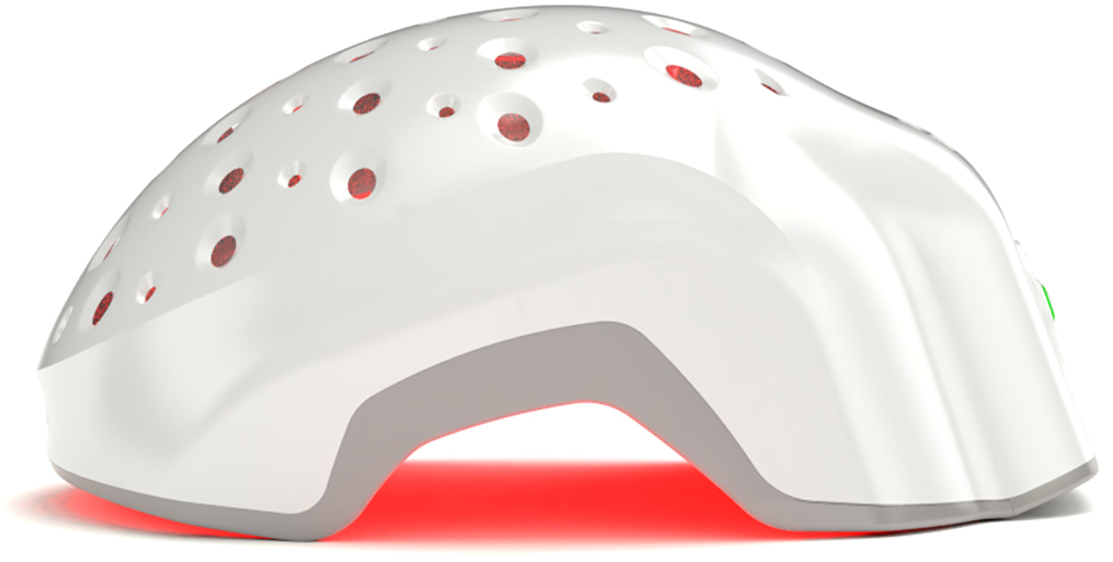
Laser Phototherapy uses low-level light energy to stimulate biological activity in tissue without heating or burning it. In medical literature, this treatment category is often discussed under low-level light or laser therapy. Reviews and controlled studies suggest it can improve hair density and thickness in androgenetic alopecia, especially with regular use over time. It is best framed as an evidence-supported support tool for follicle function, not as a magic reset button.
For readers trying to decide whether this fits a thinning part specifically, the logic is straightforward: if the widening part is driven by miniaturizing follicles that are still viable, supporting those follicles earlier is more sensible than waiting until the change becomes much more advanced. Theradome’s approach is built around that earlier-stage support mindset.
Topical minoxidil
Topical minoxidil remains one of the treatments for patterned hair loss. It is commonly recommended for women and men, and the evidence base behind it is much stronger than the usual internet hair chatter. It does not give everyone dramatic regrowth, but it can help slow loss and improve visible density in appropriate cases.
Oral and prescription options
In some cases, clinicians may use oral therapies, including finasteride in men and selected systemic options for some women under professional supervision. Low-dose oral minoxidil is also receiving growing attention, though the evidence is still developing and treatment decisions depend on the person’s medical context, risk profile, and reproductive considerations.
Fixing the trigger, when shedding is temporary
If the real issue is telogen effluvium, treating the trigger matters more than throwing random products at the scalp. That may mean addressing nutritional deficiency, thyroid problems, medication effects, major stressors, or postpartum recovery. Gentle hair care and patience matter here, even if patience is not exactly a thrilling beauty ritual.
How to Monitor Your Hair Part at Home
Home monitoring can be useful if it is done consistently. Random checks under random lights tend to produce random worry.
Use the same setup each time
Take photos with the same part position, same lighting, same angle, and ideally the same hair condition each time. Dry hair, no dramatic root oil, no fresh styling tricks. That kind of consistency makes visual change easier to judge.
Watch for trend
A single strange photo means very little. A clear pattern across several months means more. If the centre line keeps broadening, the top looks flatter, or the ponytail feels less full, that is worth following up.
Be careful with self-interpretation
Plenty of people become hyper-focused once they start checking. We have all seen this happen with skin, nails, sleep, and now... hair. Monitoring is useful. Spiraling is not. If the change seems persistent, let a professional examine it properly.
When to Seek Professional Advice
See a dermatologist or qualified hair-loss clinician if your part is clearly widening over time, if shedding is heavy, if the scalp is itchy or inflamed, or if you notice rapid change after illness, childbirth, or medication shifts. Earlier assessment gives you a better shot at identifying the cause before more density is lost.
Not every visible part is a problem. A changing part deserves attention.
Conclusion
A normal hair part is allowed to show scalp. That alone is not the problem. The more meaningful question is whether the part is becoming broader, less even, and less full over time. In many women, that kind of change is one of the earliest signs of patterned thinning, driven by follicle miniaturization rather than some dramatic overnight event.
If you think your part has changed, take a clear baseline photo and compare it under the same conditions over the next few months. Then act early if needed. For readers dealing with genuine thinning, evidence-based options such as laser Phototherapy can support follicles more effectively when started before the loss becomes more advanced.