







Yes, there are peptides used in hair products and hair-loss protocols, and some of them do show biologically interesting effects. But if you are asking whether peptides are a strongly proven, first-line answer for pattern hair loss on their own… not really. The evidence is promising in places, patchy in others, and nowhere near as settled as the evidence for treatments like minoxidil, finasteride, or light-based therapy for androgenetic alopecia.
What are peptides for hair growth, and why do they sound so convincing?
A peptide is just a short chain of amino acids. That sounds almost suspiciously simple, I know. But in biology, short does not mean trivial. These little chains can act as messengers, nudging cells toward certain behaviors, which is why they keep turning up in wound healing, skin care, and now hair products.
And this is part of why peptide marketing lands so hard. They sound clinical. They sound precise. They sound like the ingredient equivalent of someone wearing glasses and speaking softly in a lab. For hair, that appeal usually centers on the idea that peptides may support follicle signaling, anagen maintenance, and the local biology around the dermal papilla. Plausible? Yes. Automatically powerful? No… that leap is where people get a bit carried away.
One more thing. When people say “peptides for hair growth,” they are usually lumping together copper peptides, biomimetic peptides, and peptide-heavy formulas that contain several other active ingredients. Those are not interchangeable buckets, and treating them like one neat category makes the science look cleaner than it really is.
How do peptides actually interact with hair follicles?
What they’re supposed to do
In theory, peptides can support hair follicles by influencing signaling pathways involved in inflammation control, tissue remodeling, extracellular matrix support, and hair-cycle behavior. Some are studied for possible effects on dermal papilla cells or for helping follicles stay in anagen, which is the active growth phase. That is the attractive part of the mechanism. It sounds orderly. Almost elegant.
Copper peptides, especially GHK-Cu, are the best-known example here. They have a broader literature in tissue repair and regenerative signaling, which is why they keep resurfacing in hair conversations. There is biologic plausibility there. The molecule is not made up out of thin air by a copywriter on a deadline.
What they do not do
Peptides are not known to create brand-new follicles in people with androgenetic alopecia. They also do not directly cancel out the core androgen sensitivity driving pattern hair loss the way finasteride is designed to address DHT-related signaling. So even when a peptide is doing something, that something may still be too modest to overcome the bigger process unfolding in the follicle.
So yes, signaling matters. But signaling is not the same as forcefully reversing follicle miniaturization. That distinction is easy to miss, and honestly, a lot of product pages seem quite happy to let people miss it.
Is there a peptide for hair growth that actually works?

Copper peptides
Copper peptides, especially GHK-Cu, are probably the most discussed peptide class in hair care. Their appeal comes from a long-running interest in regenerative biology, wound healing, and tissue remodeling, and that gives them a more serious scientific backbone than many trend ingredients get. Still, most of that backbone is mechanistic and translational, not a stack of large independent human trials showing strong regrowth in androgenetic alopecia.
There is some human evidence suggesting peptide complexes that include GHK-related ingredients may act as complementary agents in male pattern hair loss. Complementary is the key word there.
Biomimetic peptides
Biomimetic peptides are designed to imitate or support biological signals involved in follicle behavior. Some studies on biomimetic peptide-containing formulas have shown encouraging results, including reduced shedding or better hair-cycle measures. The problem is that many of these studies are evaluating a finished proprietary formula, not a single clean peptide in isolation, which makes attribution murky. Was it the peptide? The delivery system? The blend? All of it together? A bit of each?
Because when a formula improves outcomes, companies often market the most glamorous ingredient in the bottle. Not always the ingredient doing the heavy lifting.
Other peptides in hair products
Keratin peptides, palmitoyl peptides, and similar ingredients can show up in shampoos, serums, masks, or scalp products. Some may support the hair shaft, reduce breakage, or help with hair feel and cosmetic quality. But supporting the fiber is not the same as meaningfully reversing follicular miniaturization at the root of androgenetic alopecia.
Why do some people swear peptides work while others see nothing?
Part of it is timing. Earlier thinning is usually easier to influence than advanced follicular miniaturization, where the biology has been grinding in one direction for a long while. The broader androgenetic alopecia literature supports earlier treatment being more favorable in general, even if it does not give a neat universal equation for every peptide product.
Part of it is formulation. Two products can both say “peptides” on the label and be doing very different things, at very different concentrations, with very different delivery quality. That is one reason user anecdotes are all over the place. The label looks familiar. The actual product behavior may not be.
And part of it is expectation. If someone quietly expects a serum to reverse years of androgen-driven thinning because the bottle uses the phrase “biomimetic peptide complex,” disappointment is almost baked in. A rather cruel little mismatch, really.
Are peptides better than minoxidil, finasteride, or LPT?
Against minoxidil, no, peptides do not currently have the same level of evidence. Minoxidil has years of clinical use behind it and is repeatedly included in evidence-based treatment discussions for androgenetic alopecia. It does not regrow an entire head of hair, and it is not magic, but it sits on much firmer clinical ground.
Against finasteride, the answer is also no. Finasteride addresses androgen-related signaling more directly, which matters because androgen sensitivity is central to pattern hair loss. Peptides may support the follicle environment, but that is not the same thing as directly targeting one of the core drivers of androgenetic alopecia.
Against Laser Phototherapy, the evidence still leans away from peptides as the stronger solo option. Reviews of androgenetic alopecia treatments and dermatology resources describe low-levelight therapy as an established noninvasive option with supportive evidence for hereditary hair loss in men and women, even if more long-term data are still welcome. Peptide evidence remains more fragmented and formula-dependent.
That does not make peptides pointless. It just places them where they probably belong right now: somewhere behind the more established therapies, and often as part of a broader plan rather than the whole plan.
What are the biggest limitations of peptides for hair growth?
First, penetration. A peptide can sound marvelous on paper and still struggle to get where it needs to go through the scalp barrier. Delivery is not a side issue here. It is the issue a lot of the time.
Second, standardization. “Peptide serum” is not a regulated clinical category with one accepted formulation, one dose, and one expected outcome. It is a broad commercial bucket. That makes comparison messy and consumer interpretation even messier.
Third, evidence maturity. Many peptide studies are preliminary, blend multiple actives, or follow people for fairly short periods. For pattern hair loss, which is usually chronic and slow-moving, short studies can tell you something, yes, but not everything you need.
And fourth… maybe this is the quiet one… the mechanism may simply not be forceful enough by itself in many people with established androgenetic alopecia. Good signaling can still lose to a stronger opposing process.
Why is signaling alone often not enough for hair regrowth?
Because a follicle is not a suggestion box.
You can send helpful signals, support tissue behavior, and try to make the scalp environment more favorable. But if the follicle is deeply miniaturized, metabolically sluggish, and still sitting inside an androgen-sensitive pattern, a gentle nudge may not do much on its own. That is one reason “biologically plausible” ingredients can feel disappointing in real life.
This also takes us back to the earlier point about why peptides sound so convincing. The mechanism is not nonsense. It is just incomplete. There is a difference between giving a follicle instructions and giving it enough support to act on those instructions.
What actually stimulates hair follicles more directly?
Laser Phototherapy is one of the better-known non-drug approaches here. In the literature, you will also see related phrase like low-level light therapy. Or red light therapy. The general idea is photobiomodulation: using low-level light energy to influence cellular behavior, including mitochondrial activity, in a way that may support hair growth in androgenetic alopecia.
Important distinction, because people still get twitchy around the word laser. The devices used for hair growth are not the same thing as heat-based cutting or ablative lasers used in other medical settings. The FDA clearance documents and clinical discussions around hair-loss devices describe low-level photobiostimulation rather than tissue-damaging heat.
A lot of people are not rejecting the therapy itself. They are reacting to the wrong mental image.
Why do peptides and Laser Phototherapy work better together?
If you think of peptides as instructions, Laser Phototherapy is closer to added cellular support for the follicle. Not a miracle. Not some melodramatic salvation. Just a more direct way of pushing follicle biology in a useful direction while the peptides try to shape signaling around it. That combination makes more sense than asking a peptide serum to do all the heavy lifting alone.
Supportive signals may make more sense when the follicle is also getting a better biological environment for growth-related activity. For someone already spending money on peptide formulas, that question becomes pretty practical, pretty quickly.
Where Theradome fits in
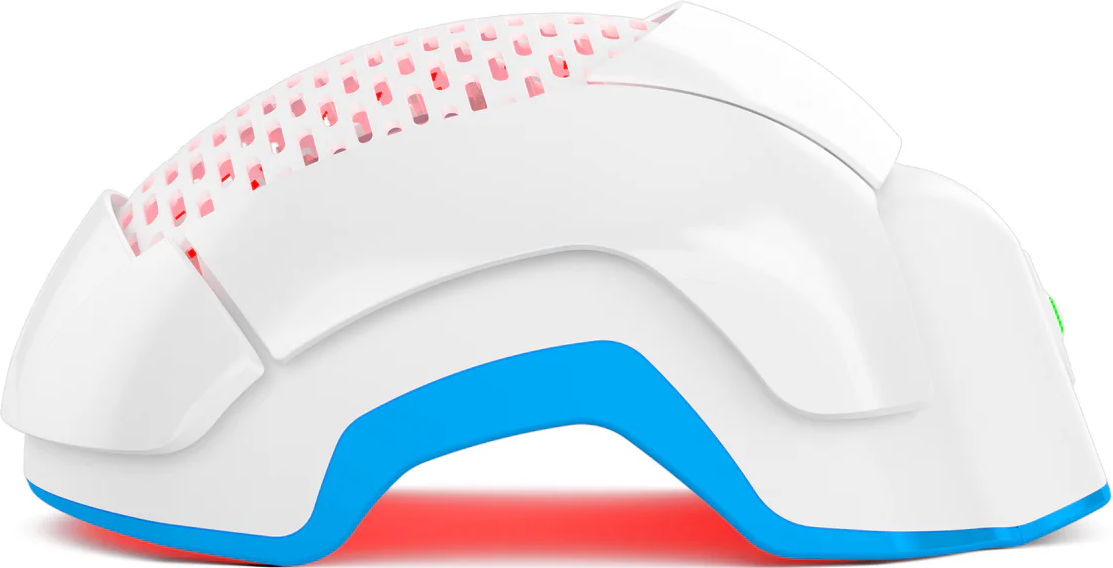
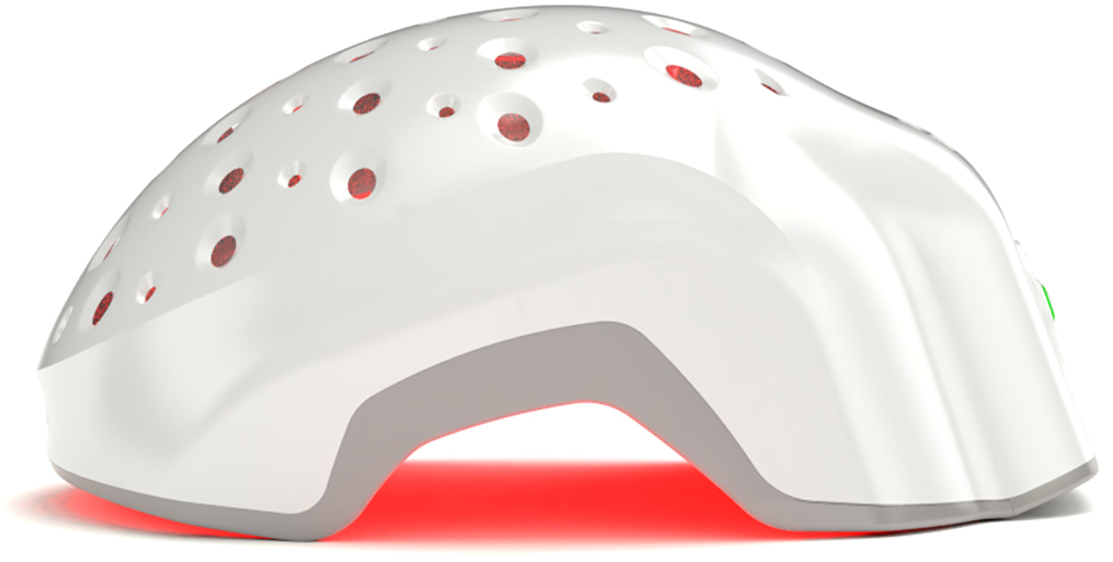
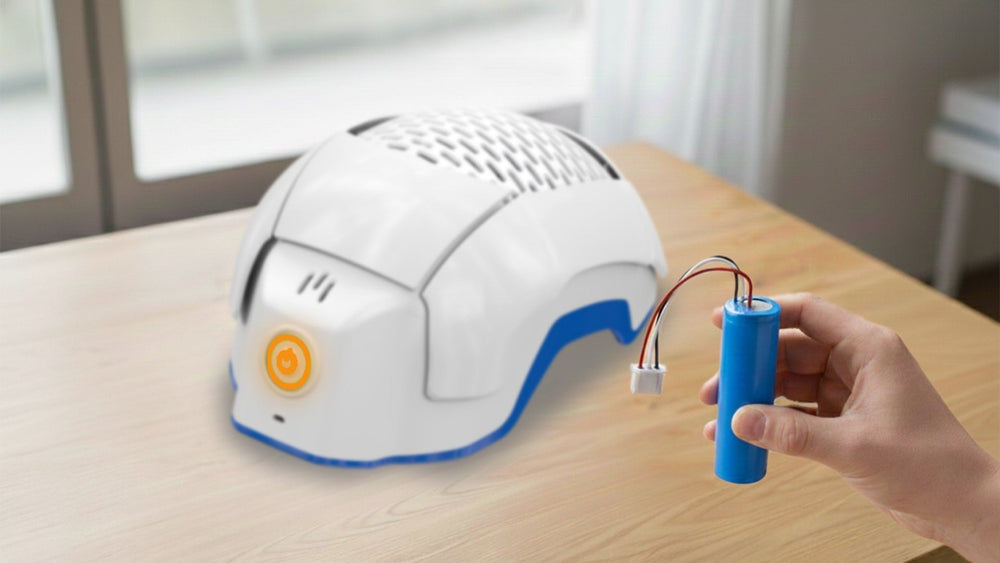
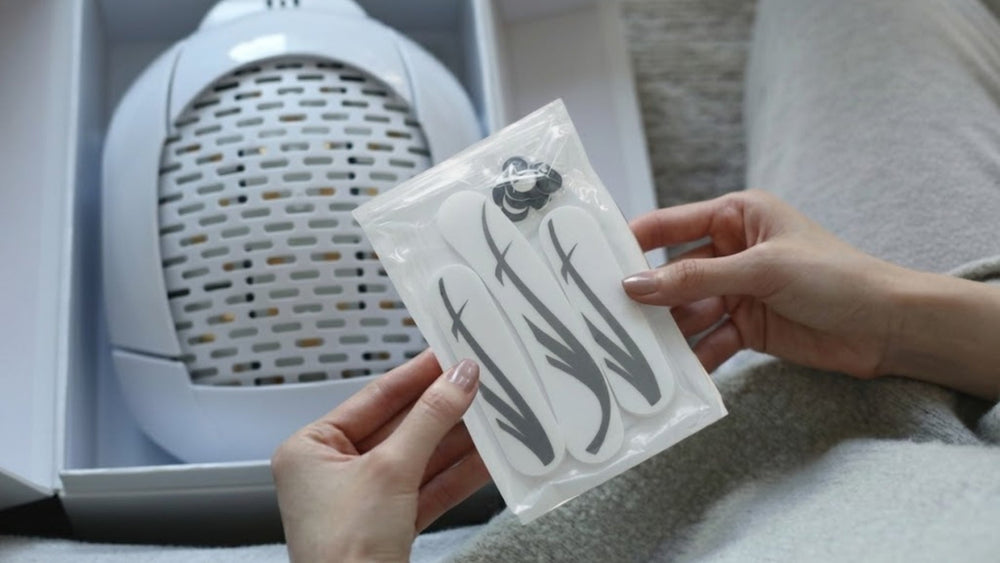
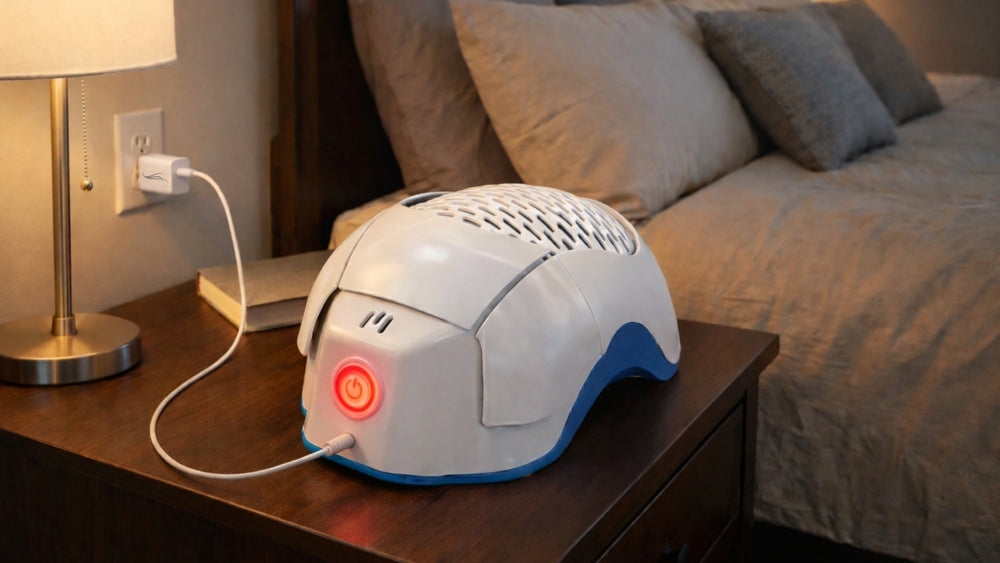
Theradome’s device platform was cleared as a wearable low-level laser helmet intended to promote hair growth via photobiostimulation, with lasers arranged for hands-free scalp treatment. The FDA clearance summary describes full-scalp laser stimulation in a wearable helmet format. Theradome also states that its prototype was first developed in 2008 and that clearance followed in 2011.
So if someone is already using a peptide serum and wants a more grounded partner for it, a wearable LPT device such as Theradome fits the logic better than just layering on yet another hopeful bottle. That is not because peptides are useless. It is because supportive signals often work better when the follicle is being directly stimulated too.
How should you use peptides if you decide to try them?
A leave-in serum usually makes more sense than a wash-off product. Contact time matters, and a peptide that goes down the drain after a brief cameo is asking a lot of your optimism.
Try to judge the product by more than the label headline. Look for transparency about the specific peptide used, the broader formula, and whether there is any published evidence behind the finished product instead of just a glamorous ingredient buried inside it.
Give it time. Hair growth is slow, a bit stubborn, and not particularly interested in your calendar. Most evidence-based hair-loss treatments need sustained use over months, not a week and a half of hopeful bathroom lighting.
And if the hair loss is sudden, patchy, inflamed, or accompanied by symptoms that do not fit typical pattern thinning, get the diagnosis sorted first. Peptides are not a replacement for figuring out why the shedding is happening.
Are peptides worth it for hair growth?
Sometimes, yes.
For someone with early thinning, realistic expectations, and a willingness to use peptides as one part of a broader approach, they may be worth trying. Especially if the product is well designed and the person is not expecting it to behave like a full medical response to androgenetic alopecia.
For someone with established pattern hair loss who wants a treatment with stronger evidence, peptides are probably not where the plan should start. They can sit in the support role. They just should not be asked to act like the lead actor when the script clearly belongs to something else.
That is really the whole thing. Peptides are not nonsense. They are not the answer to everything either. Once you stop asking them to be more than they are, they become easier to judge fairly.
Conclusion
Peptides for hair growth are real, biologically interesting, and probably a bit over-romanticized. Some may help. Some may do very little. Most sit in that awkward middle ground between good theory and still-maturing clinical proof. If the goal is serious, evidence-based help for androgenetic alopecia, peptides make more sense as support than as the whole answer. And if you are already using them, pairing them with a more direct follicle-focused approach such as Laser Phototherapy is a far more grounded move than just hoping a fancy serum will carry the whole job.