







A cowlick is a natural hair growth pattern. Balding is a progressive reduction in hair density and hair shaft calibre, most often from androgenetic alopecia. The easiest way to tell them apart is to look at pattern, hair thickness, and change over time, not one alarming mirror moment under rude bathroom lighting.
You are not the first person to stare at the crown of your head and suddenly become a part-time detective.
That little patch of visible scalp can set off a lot of internal noise. Maybe it is just your natural swirl. Maybe it is the beginning of crown thinning. Maybe it is a brutal overhead light making everything look mildly apocalyptic. The point is... one glance is not enough. This guide will help you tell cowlick vs balding in a way that is medically grounded, plainspoken, and actually useful.
What Is a Cowlick? Understanding Hair Whorls
A cowlick is a section of hair that grows in a different direction from the surrounding hair, often forming a swirl, spiral, or whorl. On the scalp, these whorls are normal anatomical patterns rather than signs of disease. Single and double parietal whorls are both documented as normal, and cowlick-related whorls can also appear along the frontal hairline.

So why does it look suspicious? Because the hair does not lie flat in one tidy direction. Instead, it radiates around a central point, which can make the scalp peek through even when density is still normal. In other words, the visual issue is often orientation, not loss.
Why Cowlicks Often Show the Scalp
Hair in a cowlick leaves the follicle at a direction that separates strands from one another. At the crown, where whorls are common, that can create a little window of scalp visibility. And yes, it can look worse with shorter hair, wet hair, or an unkind camera angle. The research on hair assessment backs the bigger point here... appearance changes a lot with positioning and standardized photography is recommended precisely because casual visual checks are unreliable.
Which is annoying, really.
Signs It’s Just a Cowlick
If you are trying to tell cowlick vs bald spot, these clues lean toward a harmless whorl rather than active thinning.
Spiral Pattern
A cowlick usually has a visible swirl or vortex pattern, with hairs growing outward around a center point. The scalp may show in the middle, but the surrounding hairs still look evenly distributed rather than sparse or scattered.
Stability Over Time
Cowlicks tend to be stable. If the visible area looks much the same in older photos and does not seem to be creeping outward over months or years, that strongly supports a natural growth pattern rather than progressive hair loss.
Normal Hair Thickness
In a cowlick, the strands in the area usually look similar in thickness, colour, and length to the rest of the scalp. You are not seeing a cluster of finer, softer, miniaturized hairs replacing stronger terminal hairs.
Consistent Density
The scalp may be visible because hairs split around the whorl, but actual density is not obviously reduced. That distinction matters. Visible scalp alone is not enough to diagnose balding.
Early Life Presence
Many people have had the same crown swirl since childhood and simply never paid attention to it until a haircut, a phone camera, or a random moment of panic made it suddenly feel... suspicious. Hair whorls are normal developmental patterns, not something that typically appears as a new disease sign in adulthood.
What Balding Actually Looks Like
When people say "balding" in this context, they usually mean androgenetic alopecia, the most common form of pattern hair loss. It is a non scarring hair loss condition characterized by gradual, patterned change and hair follicle miniaturization. In men, it often starts with temple recession and or vertex thinning. In women, it more often shows as diffuse thinning over the central or crown scalp while the frontal hairline is often preserved.
Miniaturization is the key biological shift. Over time, terminal hairs become shorter, finer, and less robust. Eventually, some follicles produce hairs that look increasingly vellus like. That is very different from a cowlick, where the problem is angle and arrangement rather than a true drop in shaft calibre.
And that is where people get tripped up. A cowlick can resemble thinning. It does not behave like thinning.
Warning Signs of Early Balding
If you are weighing balding vs cowlick, these red flags deserve more attention.
Follicle Miniaturization
In androgenetic alopecia, the affected hairs often look thinner, shorter, and softer than the surrounding hair. This variation in shaft diameter is one of the hallmark signs clinicians look for, and trichoscopy guidance notes that hair shaft thickness diversity of 20% or more supports androgenetic alopecia.
Area Expansion
A cowlick tends to hold its shape. Early crown balding tends to widen gradually. In male pattern hair loss, vertex loss commonly begins centrally and radiates outward over time, which is a very different rhythm from a lifelong stable whorl.
Hair Diameter Diversity
This one is easy to miss without close inspection. If some hairs in the area look sturdy while others look wispy, shorter, or almost translucent, that mixed calibre pattern is more consistent with miniaturization than with a normal cowlick.
Temple Recession
If the crown looks questionable and the temples are slowly moving back, that combination tilts the scale toward pattern hair loss rather than an isolated crown whorl. Male androgenetic alopecia often involves bitemporal thinning before or alongside vertex change.
Crown Thinning
In both men and women, the crown or central scalp can thin in pattern hair loss. The patterns differ a bit by sex, but the common thread is this: the scalp is becoming visible because the hairs are becoming fewer, finer, or both.
Crown Confusion: Why the Vertex Tricks People
The crown is, frankly, a bit of a trickster.
It is one of the most common places for a normal hair whorl, and it is also one of the classic sites for androgenetic alopecia, especially in men. So the same patch of scalp can either be completely ordinary or the first place where someone notices genuine thinning. No wonder people get jumpy about it.
Then add lighting. Add a fresh haircut. Add wet hair. Add a phone camera pointed straight down from above. Suddenly the crown looks like it has been personally offended by you. Yet standardized photography research exists for a reason... informal comparisons are noisy and often misleading.
So, back to the bigger clue from earlier. What matters most is not whether you can see scalp once. It is whether the pattern is static or progressive, and whether the hairs themselves still look full calibre.
Hair Density vs Hair Direction
This is the hinge point in the whole cowlick vs balding question.
A cowlick is mostly about direction. Balding is mostly about density and miniaturization. In a cowlick, the hairs may split away from a center point and leave scalp visible, while the follicles are still producing normal calibre hair. In balding, density drops and shaft thickness changes. Those are not the same event, even if the mirror makes them look oddly similar at first glance.
Could thick hair still show scalp in a crown whorl? Yes. Quite easily, actually. A whorl can expose scalp without there being actual loss. That is why density is better judged over time, with consistent images and, when needed, professional examination.
Timeline Clues: Stable Pattern vs Progressive Change
Time tells on hair.
Cowlicks are usually long standing anatomical patterns. Androgenetic alopecia is a gradual condition that tends to progress after puberty. In men, this often means slowly deepening frontotemporal recession and or vertex change. In women, it often means increasing thinning across the central scalp.
So if the crown looks the same as it did years ago, that leans cowlick. If the area looks broader than it did six or twelve months ago, or the hairs in the zone seem weaker, finer, or less dense, that leans toward proper evaluation. We are not diagnosing from a paragraph, obviously... but progression is one of the most useful clues you can track at home.
Simple Ways to Check at Home
Home checks are not a substitute for diagnosis, but they can help you stop guessing.
Photo Tracking Method
Take a photo of the crown every two to three months in the same room, under the same light, with similar hair length and angle. Clinical photography guidance exists because inconsistency makes comparison messy and, sometimes, wildly unfair.
Crown Parting Test
Try parting the hair through the crown and then compare that part to one on the side or back. If the crown part looks clearly wider and the hairs there seem finer, that is more suggestive of thinning than a simple swirl. Trichoscopic and clinical assessment of density differences often relies on comparison zones for exactly this reason.
Comparing Old Photos
Older photos can be surprisingly useful. Not glamorous, no. Useful, yes. If the same area has looked identical for years, that supports a cowlick. If it has slowly spread or become more translucent, that is harder to dismiss as mere hair direction.
Hair Texture Check
Look closely at the hairs in the suspicious area. Do they seem roughly the same thickness as nearby hairs, or are some clearly finer and shorter? That shaft diversity is one of the signs clinicians associate with androgenetic alopecia.
Lighting Consistency
Please do not let one harsh overhead photo ruin your week. Assess the area under consistent lighting conditions. Otherwise, you may just be comparing your hair to the photographic equivalent of bad manners.
When to Seek Professional Evaluation
If the area is enlarging, the hairs look finer, the temples are receding, shedding has increased, or the pattern is simply new and confusing, it is reasonable to book an evaluation. The American Academy of Dermatology notes that effective treatment starts with finding the cause, and that diagnosis often involves history, scalp examination, and sometimes additional testing depending on the presentation.
A specialist may use trichoscopy, which is a close visual examination of the scalp and hair shafts. This can reveal diameter diversity, increased single hairs in follicular units, vellus hairs, and other signs that naked eye inspection can miss.
That extra look can save a lot of second guessing.
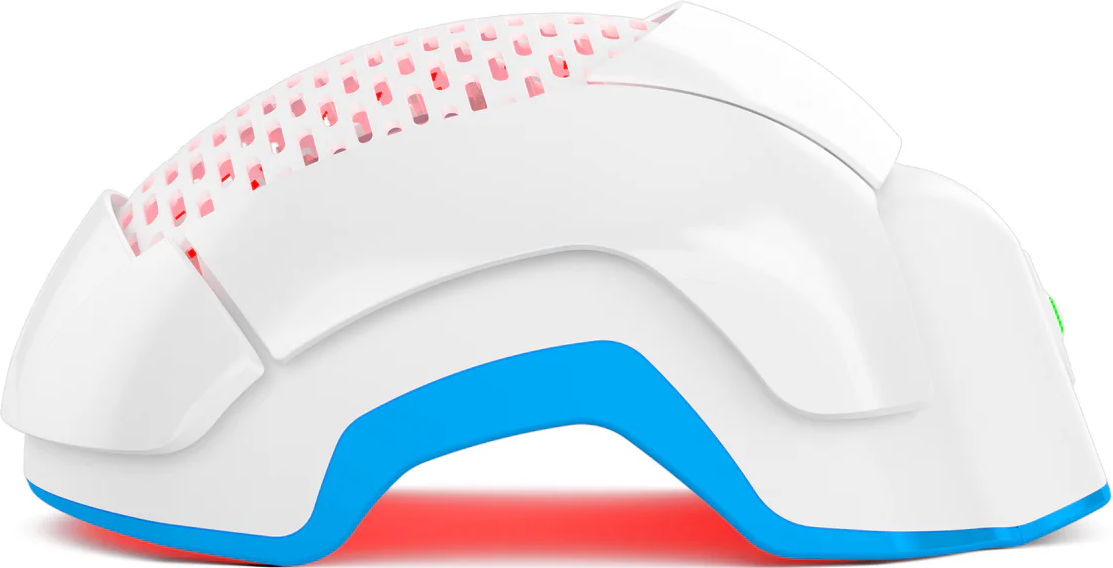
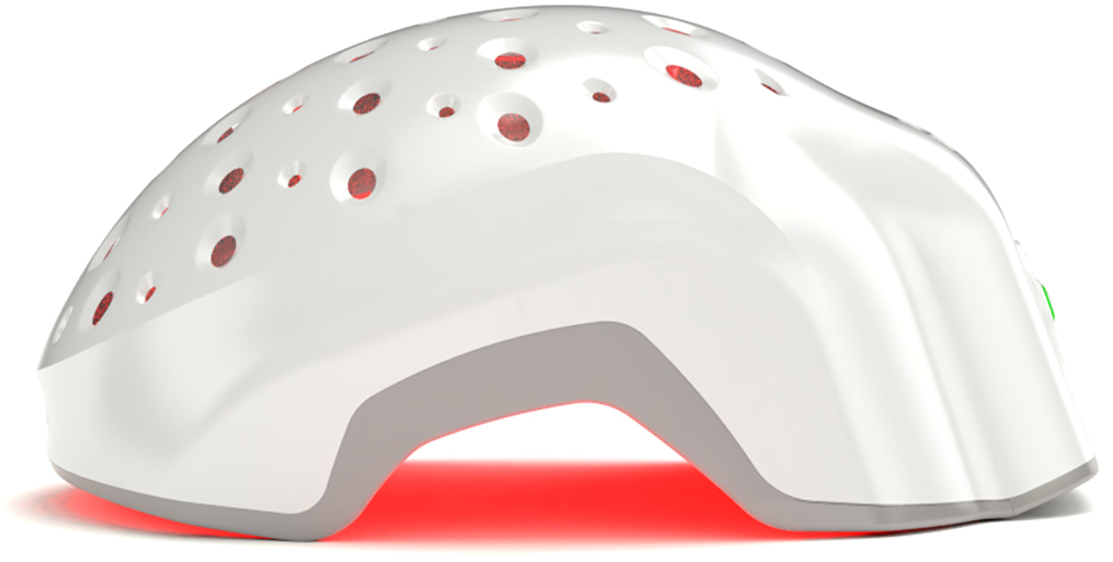
Why Laser Phototherapy Is Used for Pattern Hair Loss
In the medical literature, this category is often described as low level light therapy or low level laser therapy. In plain language, it refers to non heating light based treatment used for pattern hair loss. Reviews and randomized trials report that this approach can improve hair density in some patients with androgenetic alopecia, and systematic reviews suggest it is a potentially effective option, particularly as part of a broader treatment plan.
Emotional Reality: Why Crown Anxiety Happens
Hair has a sneaky way of messing with your head long before it changes much on your scalp.
Part of the stress comes from uncertainty. If you knew for sure it was only a cowlick, you would probably shrug and move on. If you knew for sure it was early thinning, you could make a plan. It is the in between that gets people, that odd limbo where every photo feels like evidence and every mirror feels slightly hostile. Hair loss literature also notes the real psychological burden these conditions can carry, which is one reason calm, accurate evaluation matters.
So yes, take it seriously. Just do not let one photo run the whole meeting.
Key Differences: Cowlick vs Balding
A cowlick is a natural whorl. Balding is a progressive miniaturizing condition.
A cowlick tends to be stable. Balding tends to change gradually over time.
A cowlick usually has uniform hair thickness. Balding usually shows mixed shaft diameters and finer hairs.
A cowlick can show scalp because of hair direction. Balding shows scalp because of reduced density and miniaturization.
If you are still unsure after tracking photos and checking for progression, that is exactly when a professional exam earns its keep.
Conclusion
If you are stuck on cowlick vs balding, start with three questions. Has the area always been there? Are the hairs in it still normal in thickness? Is it changing over time? A stable swirl with full calibre hairs leans cowlick. A gradually widening area with finer, weaker hairs leans toward androgenetic alopecia. The crown can be genuinely confusing, so there is no prize for pretending otherwise. Track it calmly, use consistent photos, and get it checked if the pattern is shifting. And if thinning is present, earlier action usually gives you more room to preserve what is still there.