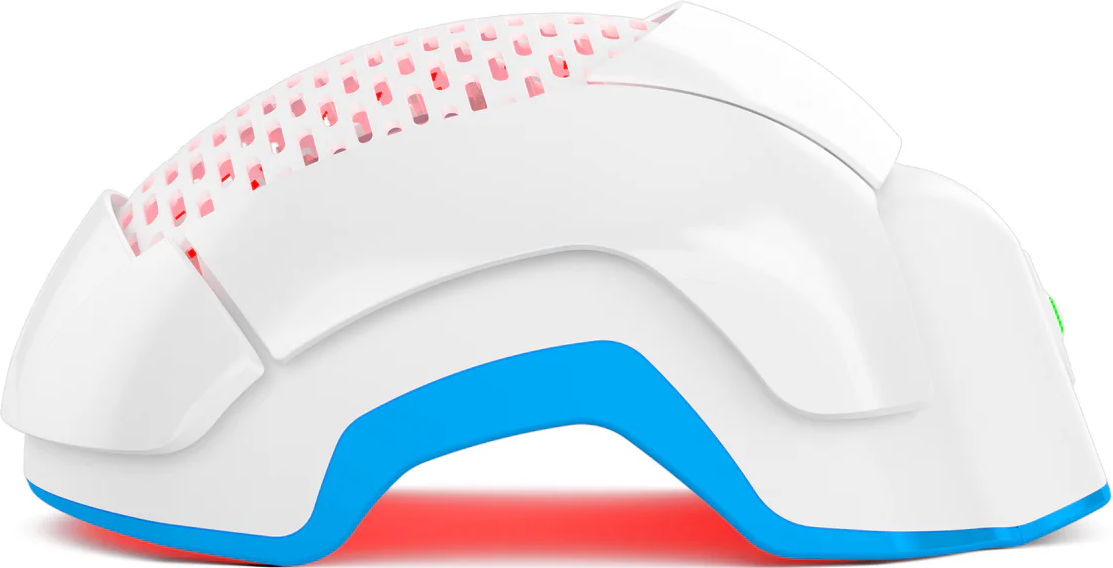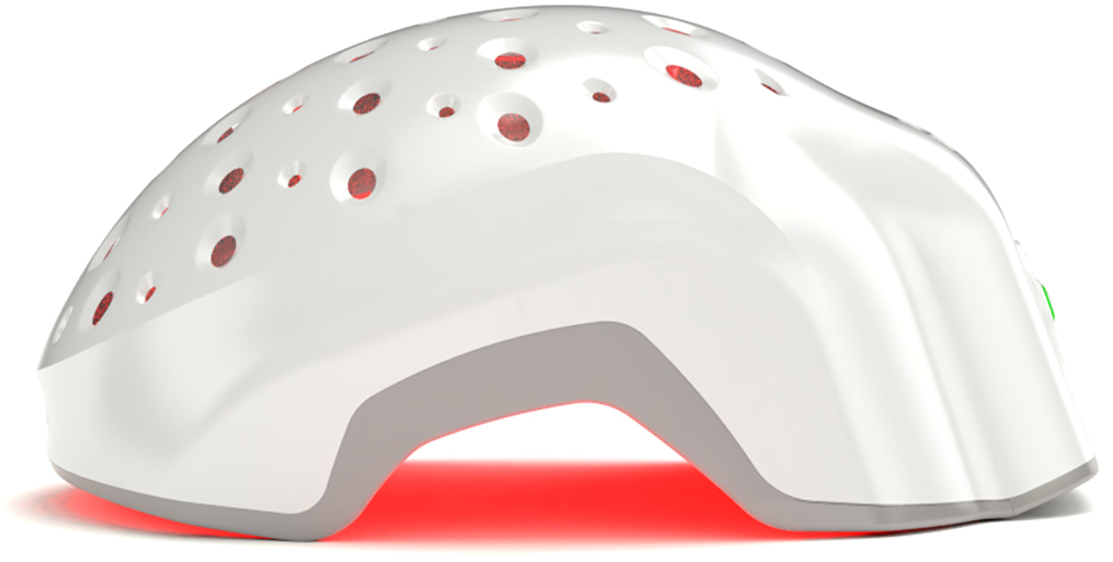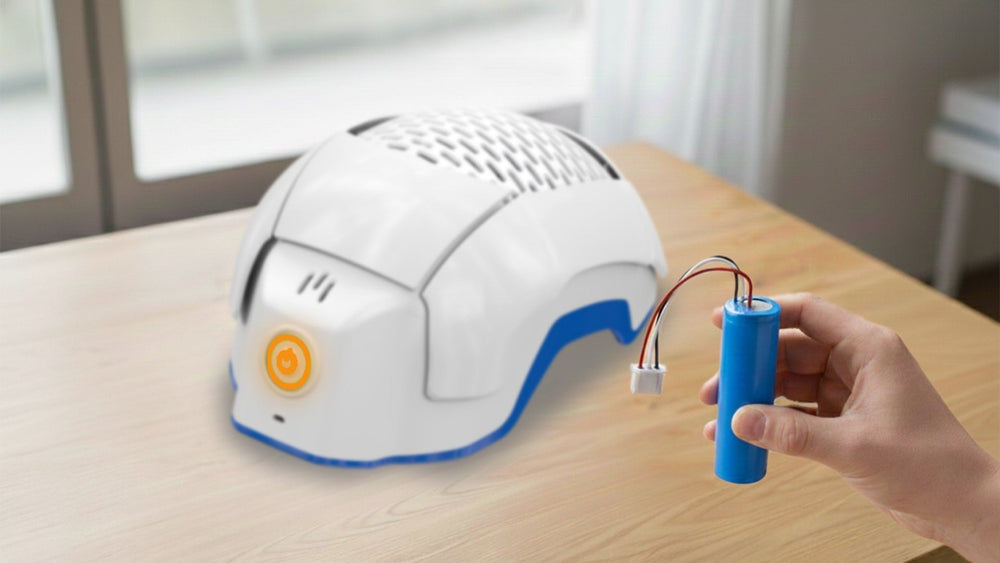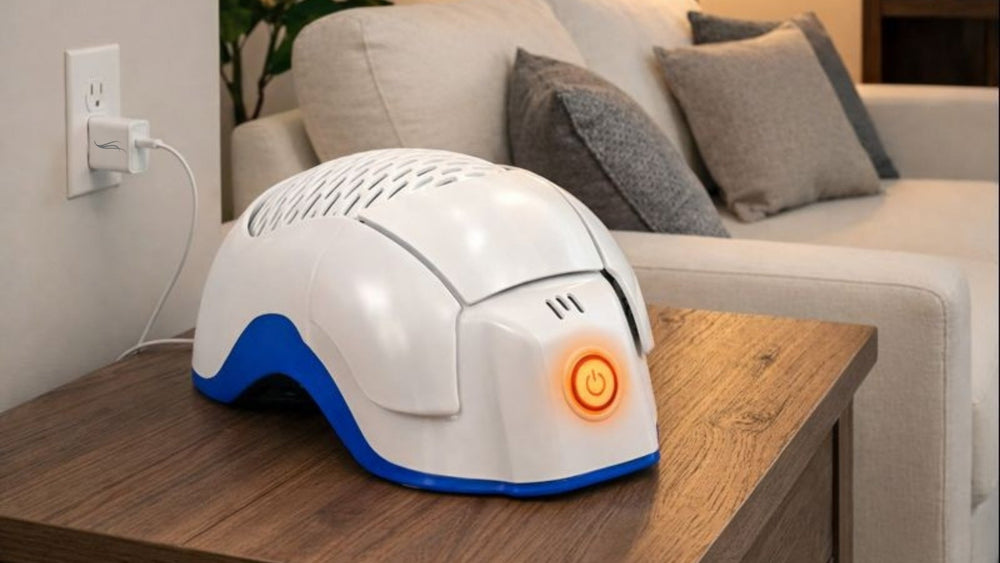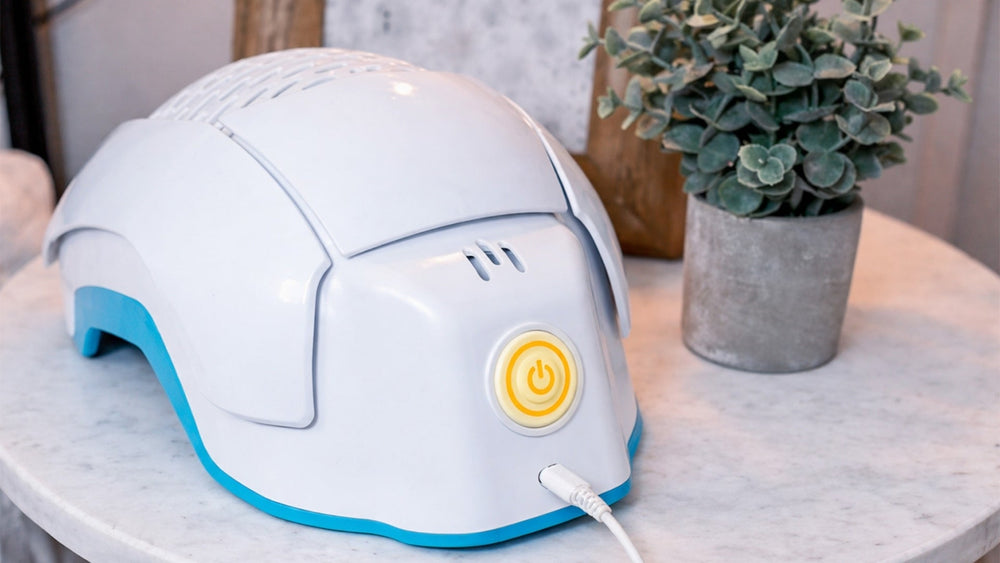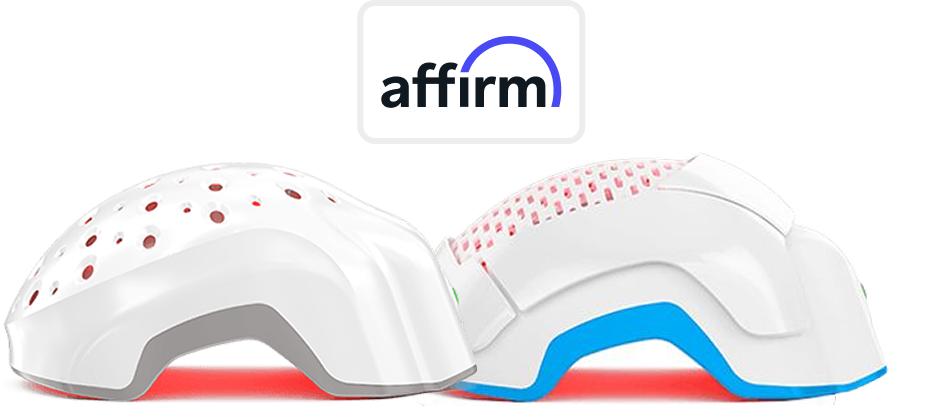






LED neck masks are being sold with a lot of confidence, but the thyroid sits directly under the thin skin of the neck. One small study found no significant thyroid or parathyroid changes after 16 weeks of use with one specific LG 630/850 nm device in 30 carefully screened healthy women, but that does not prove LED neck masks are broadly safe for the general public.
The awkward thing about LED neck masks
Beauty tech has gotten very comfortable shining light at everything.
Face? Sure.
Neck? Apparently.
Hormone-producing gland sitting right under the treatment area? Minor detail, allegedly.
The neck is not just “face extension real estate.” It houses the thyroid and parathyroid glands, which regulate some fairly important things, like metabolism, calcium balance, and hormone signaling. Tiny stuff. Barely matters. Except it very much does.
So when a product is designed to deliver red or near-infrared light directly over that area, the safety question should not be waved away with a before-and-after photo and a pink instruction booklet.
The study people may point to

There is a published study on a home-use LED neck rejuvenation device. It tested an LG Electronics SWL1 device using 630 nm and 850 nm wavelengths for 9 minutes per day over 16 weeks, with an 8-week follow-up. The study reported no significant average changes in thyroid or parathyroid function.
That sounds reassuring.
And in a narrow sense, it is.
But here is the part that matters: the study does not prove that all LED neck masks are safe. It only suggests that this specific device, used in this specific way, in this small group of screened healthy women, did not show measurable thyroid or parathyroid changes during that short window.
That is not the same thing as, “Go ahead, everybody. Light up your thyroid.”
The thyroid is not passive tissue
The whole premise of red and near-infrared light therapy is that light can affect cells.
That is the selling point.
Photobiomodulation is associated with mitochondrial activity, ATP production, nitric oxide signaling, blood flow, and tissue metabolism. So if we accept that light can stimulate skin cells, it is not wild to ask what happens when that same light is placed directly over endocrine tissue.
That concern becomes even more reasonable when you look at research showing that low-level laser therapy has been studied for thyroid conditions and may affect thyroid vascularization and function in autoimmune thyroiditis.
So no, this is not fear-mongering.
It is basic anatomy meeting basic logic.
The biggest problem: the study was small
Thirty people.
That is not nothing, but it is also not enough to confidently rule out uncommon effects, especially in the real world where consumers have thyroid nodules, autoimmune thyroid disease, abnormal lab values, medication use, and medical histories they may not even know how to interpret.
The study also screened participants before enrollment. That matters because real customers are not usually getting thyroid ultrasounds and bloodwork before buying a neck mask online.
So the people most worth studying, the ones with thyroid risk factors, are often exactly the people who get filtered out of clean little safety studies.
Convenient for data.
Less convenient for real life.
No control group means we should slow down
The wrinkle improvement data should also be read with care.
Without a sham-control group, it is hard to separate the device’s true effect from expectation, hydration, skincare changes, lighting differences, measurement bias, or people simply paying more attention to their neck for once.
That does not mean the device did nothing.
It means we should not pretend the study design was airtight.
If a beauty device wants medical-adjacent confidence, it should bring medical-grade evidence. Seems fair.
“No significant average change” is not the same as “no individual risk”
Another quiet issue: group averages can hide individual variation.
When a paper reports no significant average change in thyroid markers, that does not prove every person had no biological response. It means the group, overall, did not shift enough to reach statistical significance.
That distinction matters.
Hormones are not décor. They do not always misbehave loudly in a 16-week window.
Short follow-up is not long-term safety
Sixteen weeks of use plus follow-up is useful.
It is not the same as years of repeated exposure.
Thyroid disease can develop slowly. Nodules can be found incidentally. Autoimmune thyroid conditions can fluctuate. Medication needs can change over time.
So when a device is intended for repeated cosmetic use directly over the thyroid region, long-term data would be nice.
Actually, “nice” is too soft.
Long-term data should be expected.
Who should be especially cautious?
People should be especially cautious if they have:
- Thyroid nodules
- Hashimoto’s thyroiditis
- Graves’ disease
- Abnormal TSH, T3, or T4 levels
- Thyroid medication use
- History of thyroid cancer
- Parathyroid disorders
- Unexplained neck swelling or thyroid enlargement
For these groups, casual LED exposure over the neck should not be treated like trying a new moisturizer.
That does not mean panic.
It means ask better questions before putting light over hormone-producing tissue.
The more honest conclusion
A more accurate reading of the study would be:
In a small group of carefully screened healthy women, one LG 630/850 nm LED neck device used for 9 minutes per day over 16 weeks did not show measurable thyroid or parathyroid changes during the study period. More research is needed before broad safety claims are made for the general public, especially people with thyroid conditions or thyroid risk factors.
Less sexy than “clinically proven safe.”
Much more honest.
Why this matters for beauty tech
The beauty industry loves borrowing medical language right up until medical scrutiny walks into the room.
“Stimulates cells” sounds great when the target is collagen.
It gets a little more awkward when the target area sits above the thyroid.
You cannot market cellular activity as the benefit, then act shocked when someone asks which cells are being stimulated.
That is the whole point of the concern.
Conclusion
The current evidence is not strong enough to claim that LED neck masks are universally safe for everyone.
One small, short-term study on one screened group using one specific device is not a blank check for every neck mask on the market.
Red and near-infrared light can affect biological tissue. The thyroid is biological tissue. The neck is not an empty hallway.
Until larger, controlled, long-term studies are done, consumers should be cautious, and brands should be far more careful with broad safety claims.
Pretty lights are not the problem.
Pretending anatomy does not exist is.