





Aloe vera for hair growth is not clinically proven as a standalone hair-regrowth treatment. It may help some people with scalp comfort, dryness, itching, flaking, or softer-feeling hair, but that is not the same as reversing true hair loss.
That little distinction matters more than the internet tends to admit.
Aloe vera can be useful. Lovely, even. But if your crown is thinning, your part is widening, your edges are slowly retiring from public life, or you are suddenly shedding like your bathroom floor has a personal complaint… aloe is probably not the full answer. It may not even be the right question yet.
So yes, aloe can belong in the bathroom cabinet. It just should not be given a medical degree.
What Is Aloe Vera, Really?
When people talk about aloe vera for hair, they usually mean the clear inner gel from the aloe leaf. That is the cool, slippery part people apply to the scalp, skin, or hair strands.
That gel is not the same as aloe latex, the yellowish material near the outer rind of the leaf. Aloe latex is the part historically linked with stimulant laxative effects, and it carries more safety baggage when swallowed. The NCCIH separates topical aloe gel from oral aloe latex for a reason.
For this article, we are talking about topical aloe.
Not aloe drinks or capsules. And not some “cleanse” that promises waist-length hair… and then leaves your digestive system writing a formal complaint.
What is inside aloe vera gel?
Aloe vera gel comes from Aloe barbadensis Miller. Reviews describe it as a water-rich gel containing plant compounds such as polysaccharides, glycoproteins, amino acids, sterols, enzymes, minerals, and other constituents that may explain some of its skin-soothing and moisturizing behavior.
One compound you may see mentioned is acemannan, a polysaccharide studied in wound healing and immune-related skin research. It sounds impressive because, well, it is biochemically interesting.
But biochemically interesting does not automatically mean clinically proven for hair regrowth.
That is where aloe content online often gets squishy. A plant can have useful compounds. A scalp can feel better after using it. And still, the follicle may not suddenly produce thicker hair because gel touched the surface.
Why does aloe vera feel so convincing?
Aloe feels cooling. It spreads easily. It gives that quick “oh, that’s better” sensation, especially on dry, tight, or irritated skin.
That feeling is powerful.
And maybe this is where the myth gets its legs. When something feels soothing, people often assume it must be healing the deeper issue too. Sometimes it helps the surface. Sometimes it reduces discomfort. Sometimes it makes hair easier to handle.
But scalp comfort is not the same as follicle recovery.
The body does not always reward our neat little assumptions.
Does Aloe Vera Actually Grow Hair?

There is no strong human clinical evidence showing that aloe vera alone reliably regrows scalp hair.
That does not mean aloe vera is worthless. It means the evidence does not support the bigger claim.
The best aloe-related scalp study often cited is not actually a hair-growth study. It is a small study on seborrheic dermatitis, a flaky, inflammatory skin condition that can affect the scalp. In that double-blind, randomized, placebo-controlled trial, 44 adults used either a 30 percent aloe vera emulsion or placebo. The aloe group had better improvement in symptoms such as scaliness and itching.
A more recent review on plant extracts and alopecia discusses aloe vera as an ingredient of interest, but it also calls for larger clinical studies before aloe can be properly compared with established treatments such as minoxidil or finasteride.
Why “may support scalp health” is not the same as “regrows hair”
Aloe vera may help a dry or irritated scalp feel less angry. It may reduce itching. It may make hair feel smoother. It may even reduce the amount of breakage you see if dryness and friction are part of the problem.
But actual regrowth means follicles are producing new visible hair, or thicker hair, in a measurable way.
Different job.
For example, androgenetic alopecia involves progressive follicle miniaturization. That means affected follicles gradually produce thinner, shorter hairs. That process is not the same as “my scalp feels tight after shampoo.”
Aloe may help the tight scalp.
It is not proven to reverse miniaturization.
What would prove aloe vera grows hair?
A proper aloe vera hair-growth study would need more than soft hair, shinier curls, or a few before-and-after photos taken beside a generous window.
It would need a standardized aloe product. A placebo group. Enough participants. Clear diagnosis. Objective measures like hair count, hair density, hair shaft diameter, standardized scalp imaging, and follow-up over several months.
Also, it would need to separate people with different issues. Someone with dry breakage is not the same as someone with androgenetic alopecia. Someone with postpartum shedding is not the same as someone with scarring alopecia.
If all those people get mixed together, the results become soup.
What Aloe Vera May Help With Instead
Scalp dryness and comfort
Aloe vera may help some people whose scalp feels dry, tight, or mildly irritated. Its water-rich gel texture can feel calming, and its plant compounds have been studied for skin-related effects such as soothing and moisture support.
That is the sane claim.
If the issue is temporary dryness, aloe may be worth trying carefully. If your scalp is constantly flaking, burning, tender, crusting, or inflamed, then the problem may be seborrheic dermatitis, eczema, psoriasis, fungal infection, contact dermatitis, folliculitis, or something else that needs proper care.
Aloe can calm a surface.
It cannot diagnose the surface.
Itching and mild irritation
Aloe may reduce the feeling of mild itch or irritation for some scalps. That can matter, especially if itching leads to scratching, and scratching leads to more irritation or broken strands.
Still, not everyone’s scalp likes aloe.
The NCCIH notes that topical aloe gel is generally well tolerated, but burning, itching, rash, and eczema have been reported. A published case report also documented allergic contact dermatitis from aloe vera confirmed by patch testing.
So if aloe stings, burns, or makes your scalp feel like it has started a tiny protest, stop.
Do not “push through” a reaction. Your scalp is complaining.
Flaking and seborrheic dermatitis support
Aloe’s strongest clinical conversation is probably not hair growth at all. It is scalp comfort around inflammatory, flaky conditions.
In the 1999 seborrheic dermatitis trial, a 30 percent aloe vera emulsion improved symptoms compared with placebo. The study was small, but it was randomized, double-blind, and placebo-controlled, which makes it more useful.
But seborrheic dermatitis is usually managed with treatments that target inflammation and yeast-related activity more directly. Reviews discuss antifungal options such as ketoconazole and ciclopirox, plus other shampoo ingredients such as selenium sulfide and zinc pyrithione, depending on the case and severity.
So aloe can be a supporting actor.
Hair softness, slip, and length retention
Aloe vera can make some hair feel smoother and easier to handle. For hair that gets dry, brittle, tangled, or snappy, that may help reduce friction during detangling or washing. Less friction can mean fewer broken pieces on your shirt, in the sink, or wrapped around your fingers like a little emotional crime scene.
That can look like “growth.”
But often, it is length retention.
Length retention means the hair you already grow survives longer before snapping. That is not the same as the follicle growing hair faster or producing denser strands.
For textured hair, chemically treated hair, bleached hair, heat-styled hair, or fragile ends, breakage can be the main reason hair seems stuck at the same length. Aloe may help some people there, mostly as a cosmetic support.
What aloe vera probably will not do
Aloe vera probably will not reverse genetic pattern thinning.
It is not proven to block DHT in humans. It is not proven to restart inactive follicles. It is not proven to treat alopecia areata. It cannot restore follicles destroyed by scarring alopecia. It should not replace minoxidil, clinician-directed medication, or Laser Phototherapy when those treatments fit the diagnosis.
And it cannot tell you why your hair is falling.
The better first question is “What kind of hair problem am I dealing with?”
Hair Growth, Hair Shedding, and Hair Breakage Are Not the Same Thing
True hair growth begins in the follicle. The follicle cycles through growth, transition, rest, and shedding phases. The anagen phase is the active growth phase, and hair-cycle research describes the follicle as a dynamic mini-organ that moves through those stages repeatedly.
Real hair growth also takes time. This is why credible treatments are measured over months, not over a weekend. If a scalp product claims dramatic growth in seven days, the correct facial expression is suspicion.
Maybe even squinting.
Aloe can make hair feel better quickly. Regrowth does not usually move that fast.
What shedding means
Shedding means hair comes out from the root. Often, you will see a tiny white bulb at one end.
Some daily shedding is normal. The American Academy of Dermatology says it is normal to shed about 50 to 100 hairs per day, and DermNet gives the same general daily range.
Sudden heavy shedding is different. It may point to telogen effluvium, where more hairs shift into the shedding phase after a trigger. Those triggers can include illness, childbirth, surgery, crash dieting, medication changes, hormonal shifts, and major physical or emotional stress.
Aloe does not undo most of those triggers.
It may comfort the scalp while the body recalibrates, but it is not the boardroom where postpartum hormones, fever, iron issues, or medication effects get voted out.
What breakage means
Breakage happens along the hair shaft. You may see short broken pieces without a white bulb. The ends may look frayed. The hair may feel rough, brittle, or uneven.
Breakage can follow heat styling, bleaching, relaxers, tight hairstyles, rough brushing, dryness, friction, or chemical services that left the strand structurally tired.
Aloe may help with slip and softness. It may reduce some dryness-related snapping.
But it cannot repair a split end into a perfect strand again.
Once the strand has split, the job becomes prevention, trimming where needed, gentler handling, and not treating your hair like it owes you rent.
Quick self-check
If the hair falls from the root and has a bulb, think shedding.
If you see short snapped pieces, think breakage.
If your part is widening, your crown is thinning, or your temples are receding, think pattern thinning.
If bald patches appear suddenly, think medical evaluation.
If your scalp hurts, burns, crusts, bleeds, swells, or develops shiny smooth patches, stop treating it like a casual hair-care problem. The American Academy of Dermatology notes that effective treatment starts with finding the cause, and diagnosis may include scalp exam, hair pull testing, blood tests, or biopsy.
Aloe can wait.
A cause cannot always wait.
Can Aloe Vera Help With Hair Loss?
Aloe vera for androgenetic alopecia
Androgenetic alopecia is the most common form of pattern hair loss. In men, it often shows as temple recession or crown thinning. In women, it may show as a widening part or diffuse thinning over the top of the scalp.
The key process is follicle miniaturization. Affected follicles gradually produce thinner, shorter hairs.
Aloe vera is not proven to reverse that process.
For androgenetic alopecia, stronger evidence supports treatments such as minoxidil, finasteride where appropriate, and Laser Phototherapy. A systematic review and meta-analysis found minoxidil, finasteride, and laser or light-based therapy effective for men with androgenetic alopecia, and minoxidil effective in women.
Aloe vera for telogen effluvium
Telogen effluvium is usually diffuse shedding after a trigger. The trigger might be fever, illness, childbirth, surgery, medication change, crash dieting, thyroid disease, low iron stores, or a major stressor. StatPearls describes telogen effluvium as excessive shedding after metabolic stress, hormonal change, or medication exposure.
A Canadian management algorithm also describes treatment as identifying and correcting the trigger where possible.
Aloe may soothe your scalp if it feels irritated during a shedding episode.
It will not correct the trigger.
If your body is shedding after illness, childbirth, restrictive dieting, or a medication change, aloe gel is not useless, but it is not the main lever either.
Aloe vera for alopecia areata
Alopecia areata is immune-mediated hair loss. It often shows as sudden round or patchy bald spots, though it can be more extensive.
The American Academy of Dermatology describes alopecia areata evaluation and treatment as dermatologist-led, and current medical options may include corticosteroids, immunotherapies, and newer JAK inhibitors for appropriate severe cases. A 2025 review discusses alopecia areata as an immune-mediated condition with expanding therapeutic options.
Patchy loss needs proper eyes on it.
Aloe vera for traction alopecia
Traction alopecia comes from repeated pulling on the hair follicle. Tight braids, ponytails, buns, extensions, weaves, wigs, heavy loc styles, and repeated edge tension can all contribute.
The core treatment is reducing traction. Reviews on traction alopecia emphasize early intervention and hairstyle changes before the damage becomes permanent.
Aloe may calm irritation along the hairline.
It cannot cancel a hairstyle that keeps pulling the follicle every day.
Aloe vera for scarring alopecia
Scarring alopecias can permanently destroy hair follicles. Signs may include burning, pain, tenderness, redness, scaling, pustules, shiny patches, or progressive bald areas.
This is not the place for a six-month DIY experiment.
Clinical reviews emphasize that scarring alopecia needs early diagnosis and treatment because follicles may not regrow once scarred.
If the scalp hurts or looks inflamed, do not wait to see whether aloe “starts working.”
Nope.
That is the moment to get medical care.
Aloe vera for hair loss from scalp conditions
Some scalp conditions can worsen shedding, itching, scratching, or breakage. Seborrheic dermatitis, psoriasis, eczema, allergic contact dermatitis, fungal infection, and folliculitis can all make the situation murky.
Aloe may help mild comfort in some people. The seborrheic dermatitis trial gives a limited reason to consider it supportive for symptoms.
But persistent flakes, crusting, pain, odor, pus, or broken hairs may need treatment aimed at the actual condition. For example, fungal scalp infection often needs antifungal medication rather than cosmetic soothing.
So yes, comfort matters.
But the cause matters more.
Can Aloe Vera Cause Hair Loss?
Aloe vera is not known as a common direct cause of hair loss. Most people who tolerate topical aloe will not suddenly shed because they used the gel.
The more realistic issue is irritation.
If aloe vera or an aloe-containing product causes dermatitis, burning, itching, or scratching, the scalp may become more inflamed and the hair may break more easily. Sometimes the culprit is not aloe itself. It could be fragrance, dyes, drying alcohols, preservatives, or another ingredient hiding inside a “soothing” formula.
When aloe vera can irritate the scalp
Topical aloe gel is generally well tolerated, according to the NCCIH, but occasional burning, itching, rash, and eczema have been reported. Aloe-related allergic contact dermatitis has also been documented in the medical literature.
Stop using aloe if you notice:
- burning
- stinging
- swelling
- rash
- hives
- worsening itching
- tenderness
- eczema-like patches
- flakes that suddenly get angrier
And please do not call it “purging.”
Scalps do not need motivational speeches while irritated.
Why raw aloe is not automatically safer
Fresh aloe can feel more wholesome. You slice the leaf, scoop the gel, and suddenly the bathroom has a small herbal apothecary mood.
Nice.
But raw aloe is not automatically safer. It may contain latex residue if prepared carelessly. It can spoil. It can irritate sensitive skin. And the gel from the plant may not be standardized in any meaningful way.
Store-bought aloe products have their own issues. Some contain fragrance, dyes, alcohol, preservatives, or very little actual aloe.
So the better question is “what exactly is touching my scalp, and does my skin tolerate it?”
Patch test instructions
Patch test before applying aloe vera to the scalp.
Apply a small amount behind the ear or on the inner arm. Wait 24 to 48 hours. If you notice burning, itching, swelling, rash, or hives, do not put it on your scalp.
Avoid aloe on open wounds, raw scratched skin, infected areas, or painful inflamed patches unless a clinician has said it is safe.
How to Use Aloe Vera on Hair and Scalp Safely
Choose the right aloe product
Choose a simple aloe product if you can. Fragrance-free is usually wiser for sensitive scalps. Check the ingredient list for drying alcohols, strong fragrance, dyes, or unnecessary add-ons.
You may see terms like Aloe barbadensis leaf juice, Aloe barbadensis leaf extract, or aloe vera gel. Those names can help, but they do not automatically tell you how much aloe is in the product or whether the formula will suit your scalp.
“Contains aloe” can mean a meaningful amount.
It can also mean aloe waved politely from the back of the ingredient list.
Basic scalp mask method
Start with a clean scalp. Apply a thin layer of aloe vera gel to areas that feel dry, tight, or mildly itchy. Leave it on for about 20 to 30 minutes, then rinse with lukewarm water.
Try once weekly at first.
That is enough data for your scalp to give feedback without turning your routine into a ten-step ritual with side quests.
If your scalp feels calmer, fine. If it burns, itches, flakes more, or feels coated and uncomfortable, stop.
Should you leave aloe vera overnight?
You can, but most people do not need to.
Overnight aloe may irritate some scalps, dry into a film, create buildup, or leave hair feeling stiff. If you want to test it, patch test first and start with a shorter window before trying longer contact.
Your scalp does not need a sleepover with every ingredient.
Twenty minutes may be plenty. Sometimes restraint is the whole trick.
Can you mix aloe vera with minoxidil?
Do not mix aloe vera directly into minoxidil unless a clinician or pharmacist tells you to.
Minoxidil is a medication with specific instructions. Adding gels, creams, oils, or conditioners may affect drying time, irritation, or absorption. Reviews on female-pattern hair loss identify topical minoxidil as the medication with the strongest evidence for female-pattern hair loss.
If you use both, keep them separate.
Use minoxidil as directed. Use aloe at another time if your scalp tolerates it. If minoxidil irritates your scalp, ask a dermatologist or pharmacist before improvising a bathroom chemistry set.
Can aloe vera be used with Laser Phototherapy?
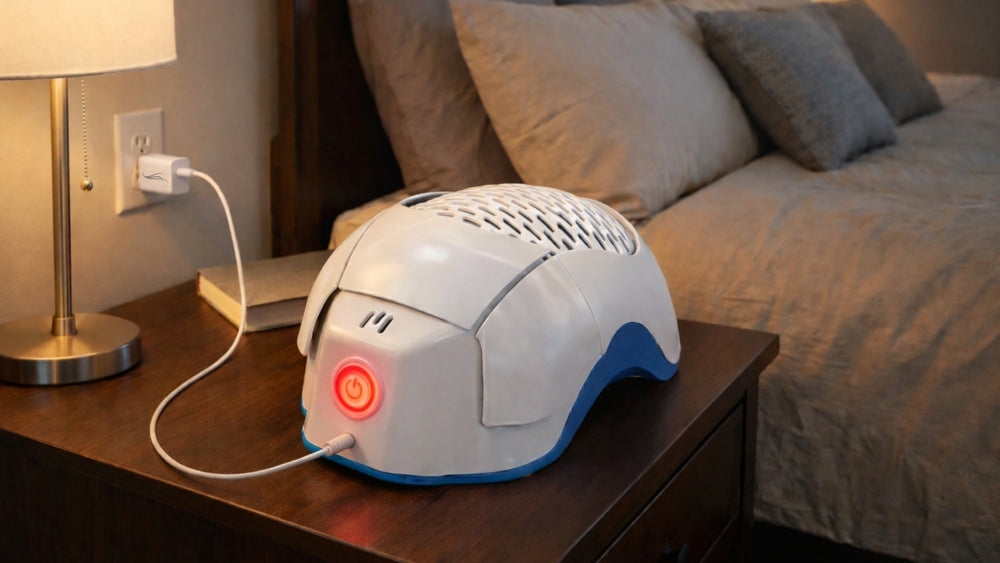
Aloe vera may be used separately as scalp comfort care if your skin tolerates it. But Laser Phototherapy should be used according to device directions, usually on a clean scalp without heavy residue sitting in the way.
Do not apply gels, oils, or thick products right before an LPT session unless the device instructions specifically allow it.
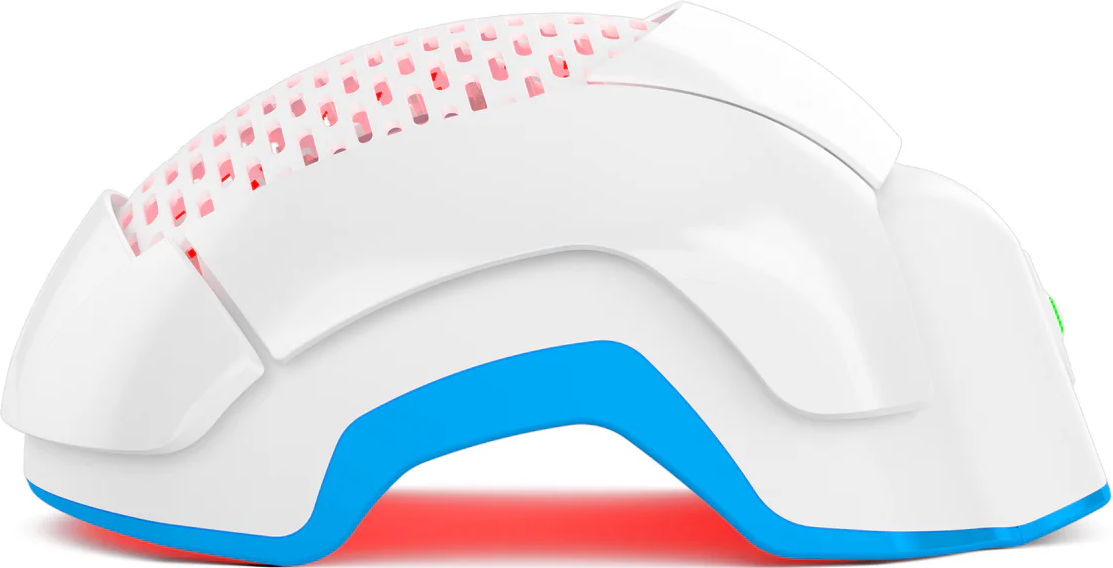
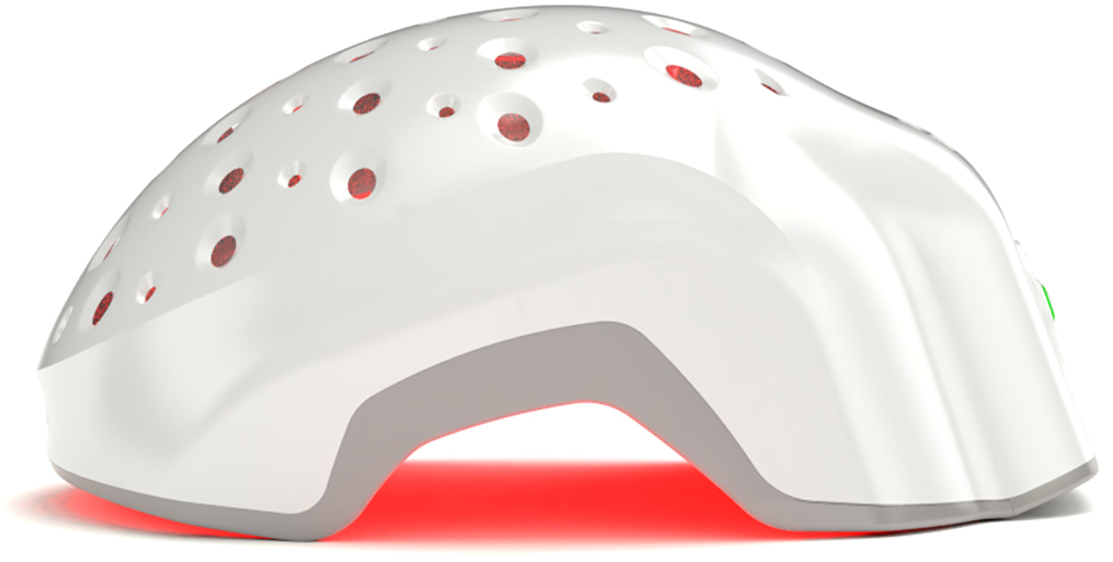
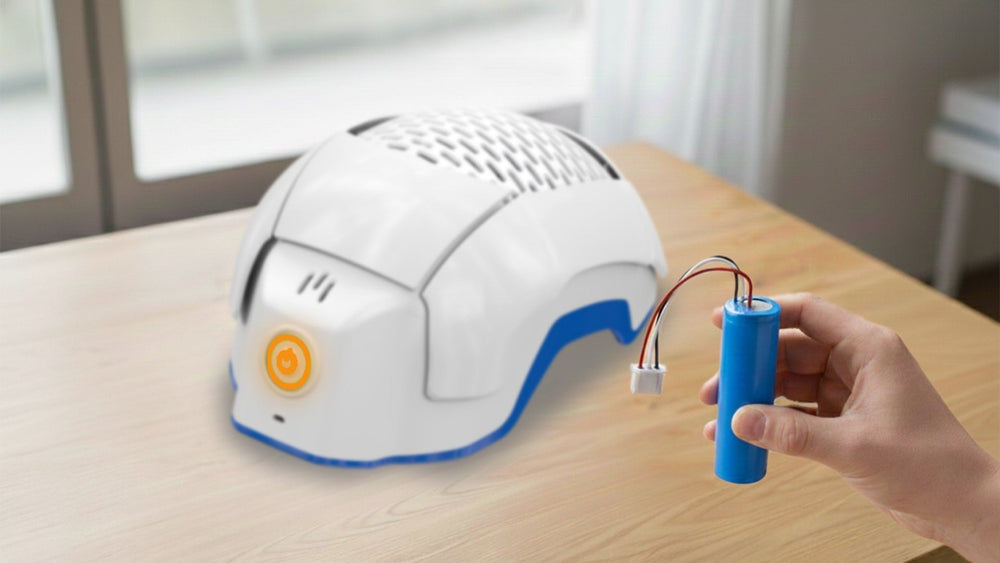
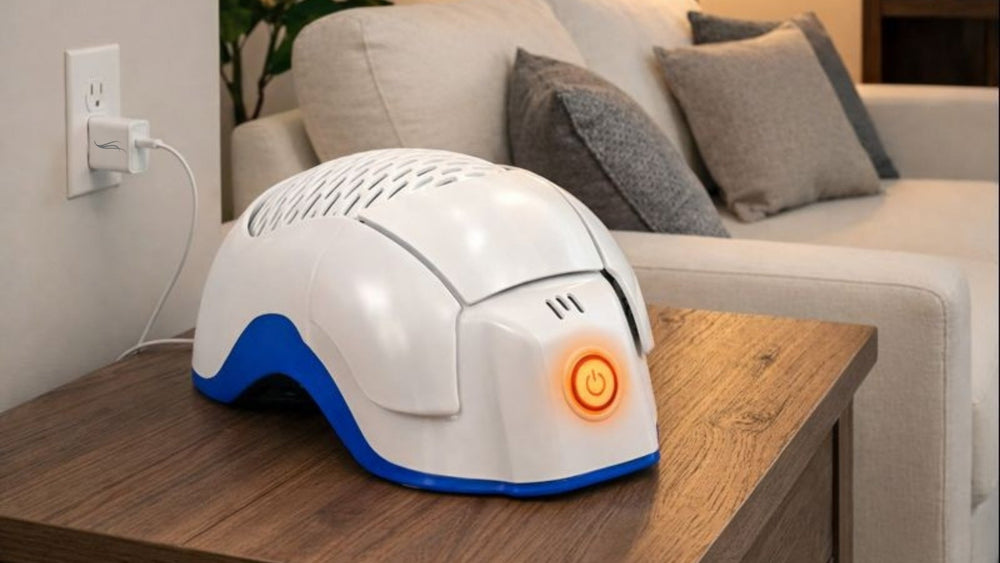
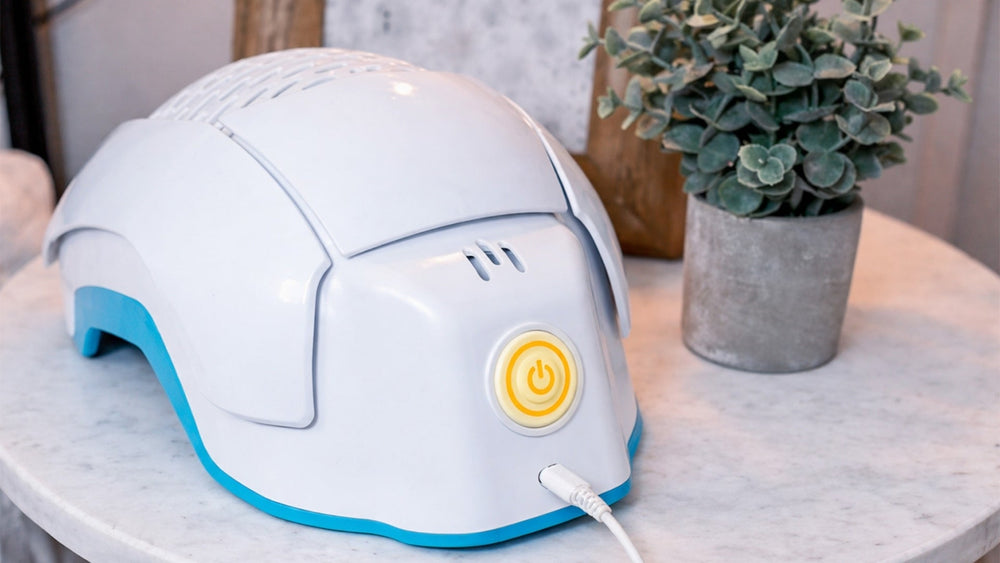
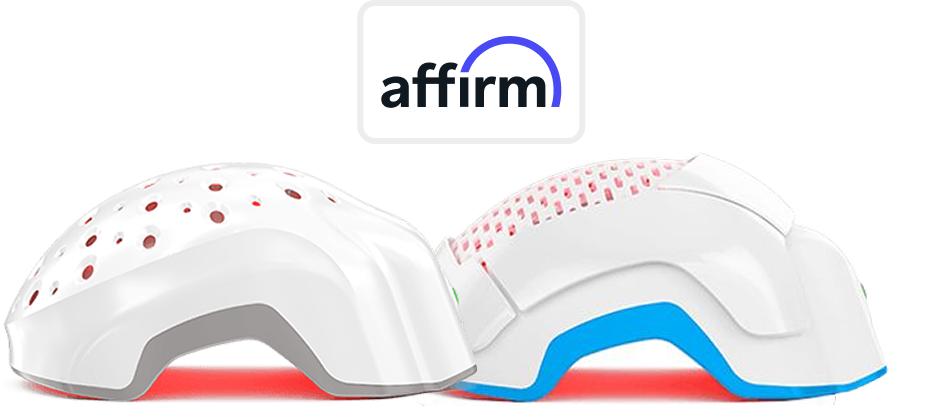
FDA 510(k) documentation describes the Theradome as an over-the-counter therapeutic device intended to treat androgenetic alopecia and promote hair growth in specified male and female hair-loss patterns.
Aloe and LPT do not have the same job.
Aloe may comfort the surface. LPT belongs in the clinical conversation around androgenetic alopecia.
Aloe Vera Versus Proven Hair Growth Treatments
Aloe vera versus minoxidil
Minoxidil has stronger evidence for androgenetic alopecia than aloe vera.
A systematic review and meta-analysis found that minoxidil was effective for women with androgenetic alopecia, and that minoxidil, finasteride, and laser or light-based therapy were effective for men with androgenetic alopecia.
A 2023 review on female-pattern hair loss also describes topical minoxidil as the treatment with the highest level of evidence.
Aloe can soothe.
Minoxidil has regrowth data.
Aloe vera versus finasteride or clinician-directed medication
Finasteride is used in appropriate male patients with androgenetic alopecia because it affects androgen pathways involved in follicle miniaturization. Other clinician-directed options, including dutasteride or antiandrogens such as spironolactone in selected female-pattern cases, may be considered depending on the person, diagnosis, pregnancy risk, medical history, and side-effect profile.
Aloe vera does not have comparable evidence for androgen-driven thinning.
So if the concern is crown thinning, a widening part, or a receding hairline, aloe may support scalp comfort, but it should not be the main plan.
Aloe vera versus Laser Phototherapy (LPT)
Laser Phototherapy uses controlled light energy to support hair growth in androgenetic alopecia when used as directed. In research literature, this category may be described using terms such as low-level laser or light therapy.
A 2021 review reported that laser or light-based therapy has been shown to stimulate hair growth in men and women with androgenetic alopecia, while also noting that device type, study design, and long-term data still matter.
Another systematic review and meta-analysis found that FDA-cleared laser or light-based devices increased hair density in pattern hair loss compared with sham devices.
Aloe vera versus dandruff shampoos
If the concern is dandruff or seborrheic dermatitis, aloe vera may feel soothing, but medicated shampoos often have stronger support.
Clinical reviews discuss antifungal and anti-inflammatory approaches for seborrheic dermatitis, including ingredients such as ketoconazole, ciclopirox, selenium sulfide, and zinc pyrithione depending on presentation and severity.
Aloe may be a comfort add-on.
If flakes keep returning like they have a lease agreement, treat the scalp condition properly.
Aloe vera versus oils and DIY trends
Aloe vera is not the only natural hair remedy with a fan club. Castor oil, rosemary oil, onion juice, rice water, coconut oil, and half the kitchen cupboard have all had their turn.
The issue is not that natural ingredients are bad. Some can be useful.
The issue is claim size.
Softness is not density. Shine is not follicle recovery. A scalp that feels better is not automatically growing more hair.
That sounds obvious until you are standing in front of the mirror, holding a leaf, bargaining with your hairline.
Been there, emotionally at least.
When Should You Stop Using Aloe and See a Dermatologist?
Red flags you should not ignore
Stop relying on aloe vera and get professional help if you notice:
- sudden patchy bald spots
- rapid shedding that lasts more than a few weeks
- scalp pain, burning, tenderness, swelling, pus, crusting, or bleeding
- shiny bald patches
- scaling with broken hairs
- hair loss after a new medication
- hair loss with fatigue, weight change, heavy periods, acne, or irregular cycles
- persistent itching or flaking that does not improve
- thinning around the crown, temples, part line, or edges
The AAD says effective treatment begins with finding the cause, and a dermatologist may use scalp exam, hair pull testing, blood tests, or scalp biopsy when needed.
This is how you stop feeding the wrong problem.
What a clinician may check
A clinician may ask when shedding started, whether it is sudden or gradual, what medications you take, whether you recently had illness, childbirth, weight loss, surgery, stress, new hair products, or tight hairstyles.
They may examine the scalp for redness, scale, broken hairs, scarring, miniaturization, tenderness, pustules, or patchy loss. They may use dermoscopy or trichoscopy. In some cases, they may order blood tests or do a scalp biopsy.
Mayo Clinic also lists blood tests, pull tests, scalp biopsy, and light microscopy as possible parts of hair-loss evaluation.
This part can feel clinical and annoying.
But the wrong diagnosis can waste months. Sometimes years. And hair loss already takes enough from people without adding confusion to the bill.
What to do while waiting for an appointment
Keep the routine plain. Gently plain. Almost suspiciously plain.
Use a mild shampoo. Avoid tight styles. Pause harsh chemical treatments if the scalp is irritated. Do not stack five active products on angry skin. Take clear monthly photos in the same lighting and angle. Write down when shedding started, what changed, and what products you used.
If aloe feels soothing and does not irritate your scalp, you can use it cautiously.
But do not let it delay care if you have red flags.
Where Theradome Fits in This Conversation
Scalp comfort is one lane. Pattern thinning is another.
Aloe vera may help the scalp feel calmer.
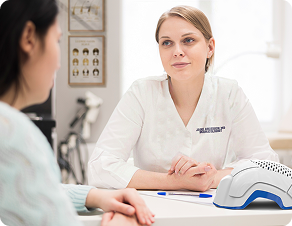
Theradome belongs in a different conversation: androgenetic alopecia and pattern thinning. FDA documentation for Theradome describes it as an over-the-counter therapeutic device intended to treat androgenetic alopecia and promote hair growth in specific male and female hair-loss patterns.
So if your issue is mild dryness or itching, aloe may be reasonable supportive care.
If your issue is progressive pattern thinning, you need evidence-based thinking. That may include minoxidil, clinician-directed medication, and FDA-cleared Laser Phototherapy where appropriate.
Why “natural versus clinical” is the wrong fight
Hair care often gets framed as natural versus clinical. Gentle versus serious. Plant-based versus medical.
Aloe can be gentle and still not be enough. Minoxidil can be evidence-backed and still irritate some scalps. LPT can be clinical and still be non-drug and at-home when used as directed. Dermatology can be necessary and still feel like the appointment you keep postponing because, well, life.
The better question is not “natural or clinical?”
It is: what does your scalp or follicle actually need?
That one question saves a lot of money. Also bathroom shelf space.
A simple way to think about it
If aloe vera helps your scalp feel less dry or itchy, use it carefully.
If your hair is breaking, reduce friction, heat, chemical stress, and rough handling.
If your hair is shedding heavily, look for the trigger.
If your hair is thinning in a pattern, consider treatments with stronger clinical support, including FDA-cleared Laser Phototherapy for androgenetic alopecia where appropriate.
And if your scalp hurts, crusts, burns, or looks scarred, please do not negotiate with it using plant gel.
Mini Checklist: Aloe Vera, Scalp Care, or Hair-Loss Treatment?
Use this quick self-sorter before choosing your next step.
Aloe vera may be reasonable to try if:
- Your scalp feels mildly dry or tight
- You want softer-feeling hair
- You have mild irritation without broken skin
- You patch tested first
- Your concern is mostly dryness or breakage
Aloe vera is probably not enough if:
- Your part is widening
- Your crown is thinning
- Your temples are receding
- Your edges are thinning from tension
- You have sudden shedding
- You have bald patches
- Your scalp burns, hurts, crusts, or bleeds
Get evaluated if:
- Hair loss is sudden, patchy, painful, inflamed, or rapidly worsening
- You suspect androgenetic alopecia, alopecia areata, telogen effluvium, traction alopecia, or scarring alopecia
- You have fatigue, weight changes, heavy periods, irregular cycles, fever, scalp pain, or medication changes around the same time
Conclusion
Aloe vera may be a helpful scalp-care ingredient. It can soothe, soften, cool, and make an irritated scalp feel less dramatic for some people.
Lovely.
But aloe vera for hair growth is not a proven standalone regrowth treatment. If the real issue is androgenetic alopecia, sudden shedding, patchy loss, traction damage, infection, or scarring alopecia, the answer needs to be more specific than “try aloe.”
Use aloe if it suits your scalp. Patch test first. Keep expectations sane.
And if your hair loss has a pattern, trigger, pain, inflammation, or speed behind it, get the cause checked. That is how you stop wasting time on the wrong door.