






Hair that looks thick at the roots but thin at the ends often means fewer hairs have made it all the way to the bottom of your hairstyle. The individual strands may not be “turning genetically thin” from root to tip. More often, the ends look sparse because some hairs broke, shed, were layered shorter, or simply have not grown long enough yet.
That distinction matters. A lot.
Your roots show newer growth. Your ends show what has survived washing, brushing, heat, color, friction, ponytails, weather, sleeping, and the occasional “I’ll detangle this later” decision that later becomes everyone’s problem.
Thin ends do not automatically mean permanent hair loss. Still, if you also notice a widening part, visible scalp, patches, sudden shedding, pain, burning, severe itching, scaling, or other scalp changes, it is worth getting checked by a dermatologist.
What Are You Actually Seeing?
|
What you notice |
What it may mean |
What to do next |
|
Roots look full, but the ends are wispy or see-through |
Fewer hairs have survived to the same length |
Check for breakage, split ends, roughness, and styling habits |
|
Ends feel rough, dry, tangled, or frayed |
The older shaft may be damaged |
Reduce heat, friction, chemical overlap, and harsh detangling |
|
Hair grows at the scalp but never seems to get longer |
Growth may be happening, but retention is poor |
Focus on protecting length, not just “boosting growth” |
|
Short hairs near the roots look soft and tapered |
Possible regrowth |
Compare timing with a previous shedding trigger |
|
Ends look thin after layers, texturizing, or razor cutting |
Haircut shape may be creating the taper |
Ask a stylist about a fuller perimeter |
|
Part looks wider or scalp is more visible |
Possible scalp-level thinning |
Consider a professional hair-loss assessment |
|
Thin ends come with pain, itching, patches, scale, or sudden shedding |
A scalp or medical issue may be involved |
See a dermatologist |
Hair is annoying like that. One visual clue can have several meanings.
Does “Thin” Mean Finer Strands or Fewer Full-Length Hairs?
People use the word thin for different things.
Sometimes they mean low density, meaning fewer hairs are growing from an area of the scalp. Sometimes they mean fine hair, where each strand has a naturally smaller diameter. Sometimes they mean sparse ends, where the lower part of the hairstyle looks see-through because fewer strands have reached that length.
Those are not the same thing.
If your hair is thick at the root and thin at the end, the first question is not “How do I make every strand thicker?” It is: Are the ends thin because the strands themselves are finer, or because fewer strands are still there?
Often, it is the second one.
Hairs can shed from the root. Hairs can break halfway down. Hairs can be cut into layers. Hairs can grow back after shedding and remain too short to contribute to the ends yet. The bottom of the hairstyle may therefore look thinner even when the follicles near the scalp are still producing hair.
That is why this topic can feel confusing. The mirror gives you one picture. The causes underneath may be doing several different things at once.
Why Are the Ends More Vulnerable Than the Roots?

Your roots are newer. Your ends are older.
Simple, but it explains a lot.
The visible hair shaft is made of keratinized material. Once a hair fiber leaves the scalp, it cannot repair itself like living skin. The outer layer, called the cuticle, helps protect the inner fiber and reduce friction. Over time, heat, brushing, chemical processing, sun exposure, washing, drying, rubbing, and tangling can wear that protective surface down. Hair-care research describes this gradual wear as hair weathering. A review in Polymers explains how hair structure can be damaged by physical, chemical, and environmental stress.
So the top three inches of your hair may be relatively new. The final three inches may have survived years of styling choices, pillow friction, weather, and salon history.
Your roots are the new arrivals. Your ends have tenure.
This does not mean every long-haired person has unhealthy ends. It means the older part of the strand usually needs more protection, especially if the hair is long, color-treated, relaxed, frequently straightened, tightly styled, or naturally prone to dryness and tangling.
Could Layers, Curls, or Normal Tapering Explain Thin Ends?
Yes. And this is where people sometimes panic for no reason.
A layered haircut removes weight from the lower portion of the hairstyle. Texturizing, thinning shears, face-framing pieces, grown-out bangs, and razor cutting can all make the ends look lighter. The hair may be healthy, but the shape is built to taper.
Curl pattern can change the picture too. Curly and coily hair may look full near the roots because of volume and shrinkage, while the ends appear thinner when the hair is stretched, straightened, wet, or clumped into sections.
Wet hair is especially dramatic. It gathers into ropes and suddenly everyone is standing in the bathroom wondering whether their hair has betrayed them overnight.
Not necessarily.
If the ends feel smooth, do not snag much, and match the shape of your cut, the issue may be mainly visual. If the ends feel rough, split, brittle, or constantly tangled, damage and breakage become more likely.
Is It Breakage, Shedding, Regrowth, or Scalp Hair Loss?
Breakage, shedding, regrowth, and scalp hair loss can all make the ends look thinner, but they do it in different ways.
Breakage happens when the hair shaft snaps before reaching its full length. Shedding happens when the whole hair releases from the follicle. Regrowth creates shorter new hairs near the scalp. Scalp hair loss affects the follicle itself, often changing density, hair thickness, or hair growth over time.
What Does Hair Breakage Look and Feel Like?
Breakage often leaves short, uneven pieces through the hair. You may notice tiny fragments on your clothes, sink, pillow, or brush. The ends may look frayed, blunt, split, pale at weak points, or unevenly chopped even though you did not cut them.
A common clue is this: your hair seems to grow at the roots, but the length barely changes.
That can happen when the follicle is still producing hair, but the lower shaft keeps snapping. The problem is not always growth. Sometimes it is retention.
Growth is happening. Retention is losing.
Breakage is often linked with heat tools, bleach, relaxers, repeated color, rough brushing, tight hairstyles, extensions, towel friction, or detangling through resistance. Dermatologists at the American Academy of Dermatology list several everyday habits that can damage hair, including rubbing shampoo through the length, skipping conditioner, towel rubbing, brushing wet hair harshly, using frequent heat, and pulling hair tightly.
What Does Shedding Look Like?
Shedding is different. A shed hair comes out from the follicle, so it is usually a full-length strand rather than a short broken piece.
Some shedding is part of the normal hair cycle. But a noticeable increase can happen after childbirth, illness, surgery, fever, rapid weight loss, severe stress, restrictive dieting, or medication changes. This kind of temporary shedding is often called telogen effluvium. A clinical review in Cureus describes telogen effluvium as a diffuse shedding condition that can follow physical or emotional triggers.
Here is the sneaky part: shedding today can make the ends look thinner later. Why? Because fewer long hairs remain in the hairstyle while new ones are still too short to reach the bottom.
Hair has terrible timing.
Could the Short Hairs Near My Roots Be Regrowth?
Yes, short hairs near the scalp may be regrowth, especially if you recently went through a shedding episode.
Regrowing hairs often feel softer and may have naturally tapered tips. They can appear as a loose halo around the hairline, part, crown, or throughout the scalp. That can make the root area look fuller while the lower lengths still look sparse.
Recovery can look messy before it looks full.
Short hairs can also be breakage. Broken hairs are often more irregular in length and may have rough, blunt, frayed, or split tips. Regrowth tends to look more tapered and less jagged, although the difference is not always obvious at home.
If you are unsure, compare photos taken once a month in similar lighting. Not every day. Daily mirror-checking is how a person loses an afternoon and possibly a little dignity.
For a closer comparison, read How to Know If Your Hair Is Growing or Breaking.
What Signs Point to Follicular Miniaturization?
Follicular miniaturization happens at the scalp. It is commonly associated with androgenetic alopecia, also known as pattern hair loss.
Instead of producing strong terminal hairs as consistently as before, affected follicles may begin producing hairs that are finer, shorter, or less dense over time. This does not usually show up as “only my ends look thin.” It more often shows up as a widening part, thinner crown, receding temples, reduced ponytail size near the base, or more visible scalp.
So look upward too.
If the scalp still looks full and the main issue is rough, broken, wispy ends, shaft damage or poor length retention may be the better starting point. If the scalp itself looks thinner, or the part is gradually widening, professional evaluation makes sense.
Both can happen together. Someone can have damaged ends and pattern hair loss. That is why treating the ends alone may not solve a scalp problem, and treating the scalp alone will not magically mend the last three inches of hair.
What Can You Safely Check at Home?
Start with five calm minutes and good lighting.
Look at your part, crown, temples, and hairline. Compare them with older photos if you have them. Then inspect the ends. Are they forked, rough, frayed, dry, or snapping? Are you seeing mostly full-length hairs, or tiny broken pieces?
Next, think through the last few months:
- Any bleaching, coloring, relaxing, straightening, or perming?
- More heat styling than usual?
- Tighter ponytails, braids, buns, weaves, or extensions?
- A recent layered or texturized cut?
- Illness, childbirth, major stress, surgery, rapid weight loss, or diet changes?
- More scalp itching, burning, flaking, pain, or tenderness?
This quick check cannot diagnose you. It can point you toward the next sensible move.
And please, no aggressive tugging tests in the bathroom. You are not cross-examining a witness.
What Causes Hair Ends to Become Thin, Wispy, or See-Through?
Thin ends often come from repeated wear rather than one dramatic event. The same hot tool. The same tight elastic. The same bleach overlap. The same rough detangling routine. Small stress, repeated enough times, becomes a visible change.
That is the unglamorous truth. Hair damage rarely walks in holding a sign.
How Do Friction and Everyday Handling Cause Breakage?
Hair breaks more easily when it is repeatedly pulled, rubbed, stretched, twisted, or dragged through tangles.
Common friction sources include:
- Brushing from the roots through knots
- Rough towel-drying
- Wringing wet hair
- Repeatedly wearing elastics in the same spot
- Tight buns, ponytails, braids, cornrows, locs, weaves, or extensions
- Heavy clip-ins or tightly anchored extensions
- Rough collars, scarves, hats, helmets, seatbelts, or bag straps
- Sleeping with hair loose when it tangles badly
- Habitual twisting, scratching, or rubbing
The AAD recommends gently massaging shampoo into the scalp rather than rubbing it through the entire length, using conditioner after shampooing, wrapping hair to absorb water instead of rubbing it dry, and detangling from the ends upward. Their healthy-hair guidance also recommends using low or medium heat and a heat-protective product when heat styling.
Tight styles deserve a special mention. They can break hair along the shaft, and if they repeatedly pull on the follicle, they may contribute to traction alopecia. The AAD notes that pain, stinging, crusting, scalp tenting, broken hairs around the forehead, a receding hairline, or patches where hair is pulled tightly are warning signs.
Pain is not proof that a style is secure. It is a warning.
How Do Heat, Bleach, Dye, Relaxers, and Straightening Affect the Ends?
Heat and chemical processing can weaken the hair shaft, especially when they are repeated or concentrated on older lengths.
Flat irons, curling tools, hot combs, and blow-dryers can dry and stress the fiber. Bleach and permanent color can roughen the cuticle and weaken the internal structure. Relaxers and chemical straighteners alter the hair’s shape by changing bonds within the fiber, which can leave the hair more vulnerable when the process is too strong, too frequent, or overlapped onto previously treated hair.
New roots may have received one treatment. The ends may have received three rounds of bleach, two color corrections, weekly flat-ironing, and a brave silence. So when the bottom looks thinner than the top, the ends may simply be carrying more history.
This is why stylists often warn against applying bleach or relaxer to already processed lengths unless there is a clear reason and proper care. The older hair is more fragile.
What helps?
- Use lower heat when possible
- Reduce repeated passes with hot tools
- Avoid using flat irons on wet hair unless the tool is designed for that
- Use heat protectant as directed
- Space chemical services
- Tell your stylist your full color or straightening history
- Avoid repeatedly processing the same ends
- Stop and reassess if hair feels gummy, unusually stretchy, rough, or weak
No one needs a lifetime ban on styling. The goal is less cumulative punishment, not a purity contest in the bathroom.
For more, read What Is Hair Breakage?.
Can Washing or the Wrong Products Make the Ends Look Thinner?
Washing is not automatically bad for hair. Poor washing technique can be.
The scalp should be cleaned often enough for your hair type, oil level, activity, product use, and scalp condition. The AAD advises washing based on how quickly the hair gets dirty or oily, then applying shampoo mainly to the scalp rather than the full length. They also recommend conditioner after washing to help detangle and manage hair.
Conditioner matters because it reduces friction. Less friction usually means easier detangling, fewer knots, and less snapping.
It will not weld split ends shut forever. Let us not ask conditioner to become a tiny carpenter.
Heavy oils, butters, or styling creams may also make fine ends clump into stringy sections. That can make the bottom look sparse even when the hair count has not changed. Product buildup can do something similar by making lengths feel stiff, dull, coated, or oddly separated.
“Sulfate-free” does not automatically mean better. “Natural” does not automatically mean gentle. “Repair” does not always mean permanent structural repair. Formula, hair type, and usage matter more than the front-label romance.
Do Sunlight, Wind, Swimming, or Water Quality Matter?
They can, but they should not steal the whole article.
Sun exposure can dry and weather hair over time, especially hair that is already lightened or chemically treated. Wind can increase tangling. Pool water can make hair feel rougher and harder to manage. The AAD recommends wearing a swim cap, rinsing after swimming, using an appropriate swimmers’ shampoo when needed, and following with conditioner. Those steps are mainly about limiting dryness, roughness, tangling, and extra grooming damage.
Water quality may affect how the hair feels, lathers, shines, or holds mineral buildup. But hard water should not be treated as the main cause of thin ends without looking at more common culprits first.
Your shower water may be part of the annoyance. It is not always the ringleader.
Why Do Texture, Strand Diameter, and Hairstyle History Matter?
Different hair types need different handling.
Fine hair may look sparse sooner because each missing strand changes the overall look more visibly. Coarse hair can still break. Curly and coily hair may be more prone to tangling, dryness at the ends, and shrinkage that hides uneven lengths until the hair is stretched.
The key is not blaming the texture. The key is matching the care.
Curly or coily hair often benefits from more slip, sectioning, patient detangling, and low-tension styling. Fine straight hair may need lighter conditioner and less product weight. Bleached, relaxed, or chemically straightened hair needs extra care around overlap, heat, and rough handling.
Protective styles can genuinely help reduce daily manipulation, but only when they are not too tight, too heavy, or left in too long. If a style hurts, causes bumps, pulls at the hairline, or leaves broken hairs around the edges, it is not protecting enough of the right things.
A style can be beautiful and still too much for the follicle. Both can be true.
Can Illness, Diet, Hormones, or Medication Make Ends Look Thin?
Sometimes, indirectly.
Health changes usually affect the hair being produced at the scalp or the amount of shedding. They do not usually target only the last few inches of hair. But if shedding increases, fewer long hairs may remain in the hairstyle, and the ends can look thinner for a while.
Possible triggers include illness, childbirth, surgery, major stress, rapid weight loss, restrictive dieting, thyroid changes, iron deficiency, or certain medications. If the timing fits, or if you have symptoms such as fatigue, heavy periods, unexplained weight changes, or sudden shedding, it is sensible to speak with a clinician.
Supplements should not be the first reflex. A deficiency should be identified before treating it. More capsules do not mend a split strand sitting outside the scalp.
Several causes can overlap. That is often the whole point.
Can Thin Ends Become Thick Again Without Cutting Them?
Thin ends can often look better with gentler care, conditioning, styling changes, and a cleaner shape. But if the ends are already split, rough, and breaking, they cannot fully rebuild themselves.
Products can smooth. They can protect. They can reduce friction. They can make the hair behave better.
Still, damaged hair is not living skin. Once the shaft is badly fractured, it does not biologically heal itself.
Can Damaged Hair Repair Itself?
Not in the full biological sense.
Conditioners, oils, leave-ins, and some repair products can coat the surface, improve slip, reduce static, reduce tangling, and make damaged hair feel smoother. A hair-cosmetics review describes conditioners as products that can improve manageability, reduce friction, and help protect the shaft.
That is useful. Very useful, actually.
But making hair feel smoother is not the same as rebuilding the original untouched fiber. If the cuticle is badly worn or the strand is split, a product may temporarily improve appearance, but it cannot make that fiber new again.
Temporary is not useless.
It just needs to be called temporary.
Should You Cut Thin or Split Ends?
Not always.
If your ends are thin because of layers, natural tapering, shrinkage, or mixed hair lengths, cutting is optional. You may prefer a blunter shape, but that is a styling choice.
If the ends are rough, constantly tangling, highly see-through, splitting, or snapping even with gentle handling, a trim may help. Removing damaged ends can make the perimeter look fuller and reduce the knots that keep causing more breakage.
A small dusting may be enough for mild damage. A larger trim may be more practical when several inches are compromised.
Cutting does not make follicles grow faster. It does not change your genetic strand diameter. It can help the hair look fuller at the bottom because the weakest, most uneven ends are gone.
What Can Conditioner, Oils, Protein Products, and Bond Builders Actually Do?
Think of products by function.
Conditioner helps reduce friction and makes detangling easier.
Leave-in conditioner or detangler can add slip between washes, especially for long, curly, coily, dry, or processed hair.
Oils may help with lubrication, shine, and reducing some roughness, depending on the hair and the oil.
Protein products may temporarily improve the feel or strength of some damaged hair, but they are not needed by everyone.
Bond-building products vary widely. Some may help damaged hair perform better, but the claim depends on the product and the type of damage.
Heat protectants can reduce heat stress when used properly. They cannot make unlimited heat safe.
A good product helps your hair behave better. But if the end is already split into tiny broom bristles, no bottle should be allowed to pretend it owns a time machine.
How Long Will It Take for the Ends to Look Fuller?
Some changes are quick. Others take time.
A blunt trim can make the ends look fuller immediately. Conditioner can improve softness and slip after one wash. Reducing breakage may become noticeable over several weeks if you also reduce the habit causing the damage.
Replacing old damaged length takes much longer because new hair has to grow from the scalp and survive to the ends. That may take months or years depending on length, growth rate, breakage, shedding, texture, and trimming.
Watch for early signs:
- Fewer short broken pieces
- Less tangling
- Easier detangling
- Smoother ends
- Fewer fresh splits
- Better length retention
- More consistent fullness between trims
The old ends may misbehave while newer growth improves.
Annoying, yes. Strange, no.
What Routine Helps Stop More Breakage and Protect New Length?
The most useful routine is the one that removes the biggest source of damage first.
For one person, that is daily heat. For another, bleach overlap. For someone else, tight ponytails, heavy extensions, rough detangling, or not using enough conditioner.
Do not change everything out of panic. Hair panic shopping has a way of producing six bottles, no plan, and one very cluttered shelf.
Which Habit Should You Change First?
Ask yourself which of these happens most often:
- High heat
- Bleach, color, relaxer, or straightener overlap
- Tight styling
- Heavy extensions or weaves
- Rough detangling
- Repeated elastic placement
- Minimal conditioning
- Frequent swimming without rinsing and conditioning
- Shoulder-level rubbing from collars or straps
- Twisting, scratching, or pulling at the same area
Then ask the more useful question:
What is my hair being asked to survive every week?
Start there.
If the answer is “I flat iron the same front pieces every morning,” begin with heat. If the answer is “my braids hurt for three days after installation,” begin with tension. If the answer is “I rip through knots because I am late,” begin with detangling.
Small changes can add up, especially when they target the real source.
How Should You Wash and Condition Fragile Ends?
Wash your scalp according to your actual scalp needs. Oil, sweat, styling products, flakes, and scalp conditions all matter.
Massage shampoo into the scalp. Do not scrub the entire length into a foamy knot. Let the lather run through the rest of the hair as you rinse.
Use conditioner after shampooing. Fine or straight hair may do better with conditioner concentrated on the ends. Dry, curly, coily, long, or processed hair may need more generous conditioning through the lengths. AAD healthy-hair guidance supports adjusting washing and conditioning to hair type.
If your hair tangles easily, add a leave-in conditioner or detangler. Use enough to create slip, but not so much that the ends clump into greasy little ropes.
And if your scalp is itchy, flaky, sore, or inflamed, treat it as a scalp issue. Do not keep piling products on top and hoping the scalp forgets.
Scalps do not forget. They complain.
What Is the Gentlest Way to Detangle and Dry Hair?
Add slip first. Conditioner, detangler, or water can make a huge difference, depending on your texture and routine.
Start at the ends. Once the bottom section moves freely, work a little higher. Hold the hair above the tangle so the pulling force does not travel straight to the root.
Use your fingers, a wide-tooth comb, or a brush that suits your hair type. Straight hair may do better when allowed to dry slightly before combing. Thick, curly, or coily hair may detangle better while damp and conditioned. The AAD recommends combing the ends first and moving upward to reduce damage.
To dry, squeeze or wrap the hair gently with a towel or T-shirt. Avoid rough rubbing. Avoid twisting wet hair into a tight rope.
Air-drying can help some people, but it is not automatically perfect. If hair stays wet, tangled, and rubbing against clothing for hours, friction can still become part of the problem.
There is no single holy comb.
How Can You Reduce Heat and Chemical Damage Without Giving Up Styling?
Use the lowest heat that still gives you the result you want. Reduce repeated passes. Keep hot tools moving. Avoid concentrating heat on the oldest, weakest ends.
For flat irons, hair should generally be dry first unless you are using a tool specifically designed for wet-to-dry styling. Use heat protectant as directed. A rushed mist over the top layer while the underneath gets roasted is not exactly strategy.
For chemical services, be honest with your stylist about your full hair history. That includes color, bleach, relaxer, smoothing treatments, at-home dye, and the emergency box-color incident no one wants to discuss but absolutely matters.
Try to avoid repeated chemical overlap on previously processed lengths. Space aggressive services when possible. If your hair feels gummy, oddly stretchy, rough, or unusually fragile, pause before adding another process.
This is not about never styling your hair. It is about not asking the ends to survive the same injury on repeat.
How Should You Handle Ponytails, Braids, Extensions, Sleep, and Swimming?
Rotate ponytail and bun placement. Choose smooth, covered elastics. Keep styles loose enough that your scalp does not hurt, sting, or feel pulled upward.
If braids, cornrows, weaves, locs, wigs, or extensions cause pain, bumps, crusting, or hairline breakage, adjust them early. The AAD warns that repeated pulling can lead to traction alopecia, and the longer it continues, the greater the risk of lasting hair loss.
At night, loosely securing long hair may reduce tangling. Satin or silk pillowcases, bonnets, or scarves may reduce friction for some people, though they should be treated as support, not a cure.
For swimming, wet the hair first if practical, use a cap, rinse after swimming, then cleanse and condition as needed. Pool water can make hair rougher, and rougher hair often needs more detangling. There it is again: one problem inviting another.
How Should the Routine Change for Straight, Curly, Coily, Fine, or Processed Hair?
Fine or straight hair: Use lighter conditioner, especially near the scalp. Avoid heavy products that make the ends separate into strings. Be careful with wet brushing and repeated heat.
Curly or coily hair: Work in sections, use enough slip, detangle patiently, and watch for knots or breakage hidden by shrinkage. Low-tension styling matters.
Bleached, relaxed, or chemically straightened hair: Prevent overlap, reduce heat, condition consistently, and treat older lengths as more fragile even when they feel smooth.
Long hair: Protect the final inches from rough collars, straps, elastics, and hurried brushing. The ends have been around longer. A little ceremony is fair.
A Two-Week Breakage Reset
For the next fourteen days:
- Pause the harshest heat or chemical habit.
- Wear low-tension styles.
- Shampoo the scalp gently.
- Condition every wash.
- Use a leave-in or detangler if your hair needs more slip.
- Detangle from the ends upward.
- Avoid placing elastics in the same spot every day.
- Photograph the scalp and ends in similar lighting.
- Notice whether you are seeing full-length hairs or short broken pieces.
- Book a trim assessment if the final inches keep knotting, splitting, or snapping.
If you notice pain, burning, severe itching, scale, pustules, sudden shedding, patches, or visible scalp thinning, do not wait out the two weeks. Get checked.
When Could Thin Ends Point to a Scalp Issue?
Thin ends alone are often a length-retention or hair-care issue. But thin ends plus scalp changes deserve more attention.
A dermatologist should evaluate hair changes when you notice:
- A widening part
- Increased scalp visibility
- Crown thinning
- Temple or hairline recession
- Smooth patches
- Sudden heavy shedding
- Pain, burning, tenderness, or severe itching
- Scaling, crusting, redness, sores, or pustules
- Broken hairs close to the scalp with irritation
- Eyebrow or eyelash loss
- Hair loss after illness, childbirth, surgery, rapid weight loss, medication changes, or restrictive dieting
The AAD explains that symptoms such as burning, tenderness, intense itching, scaling, pus-filled bumps, and other scalp changes may occur with medical hair-loss conditions.
A professional assessment may include a scalp exam, hair history, review of medications and health changes, and targeted testing when needed. Not everyone needs a long list of tests. The point is to match the evaluation to the pattern.
If your scalp looks the same and the damage is mainly at the ends, practical hair care may be enough to start. If the scalp is changing, the question is bigger than split ends.
Where Does Laser Phototherapy Fit?
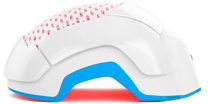
Laser Phototherapy, or LPT, works at the scalp and follicle level. It does not repair hair that has already split, snapped, or become chemically damaged at the ends.
If the issue is mainly poor length retention, the focus should be protecting the shaft: less breakage, gentler handling, fewer damaging habits, and trims where needed. If the issue includes androgenetic alopecia, LPT may become relevant because the concern has moved from the ends to the follicles.
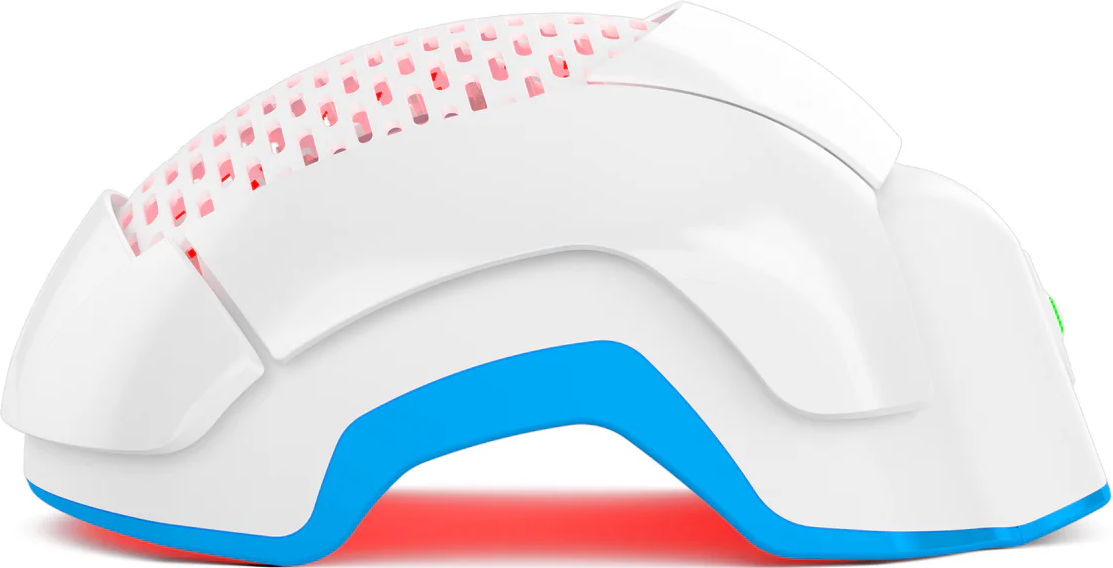
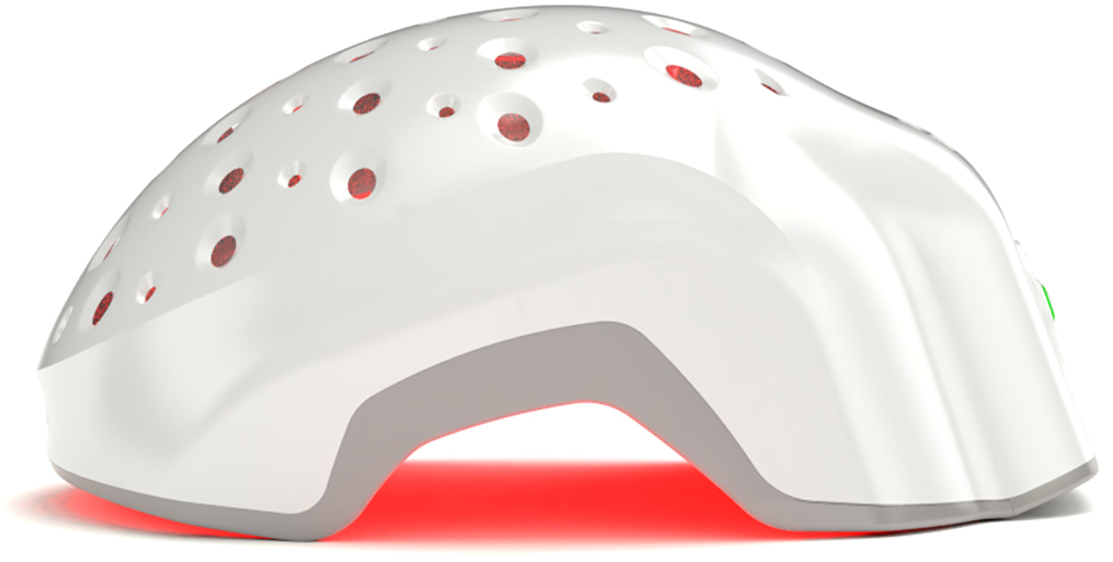
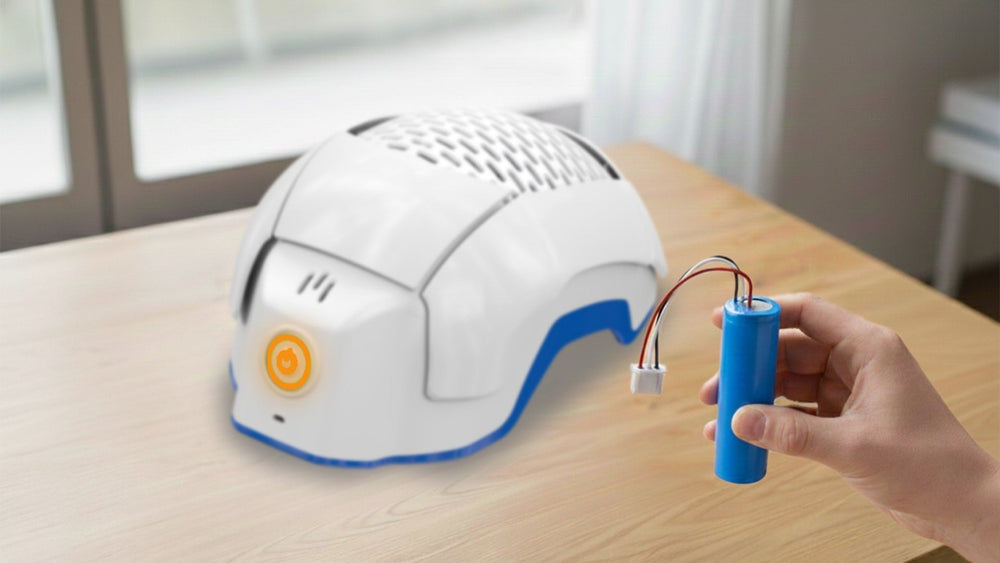
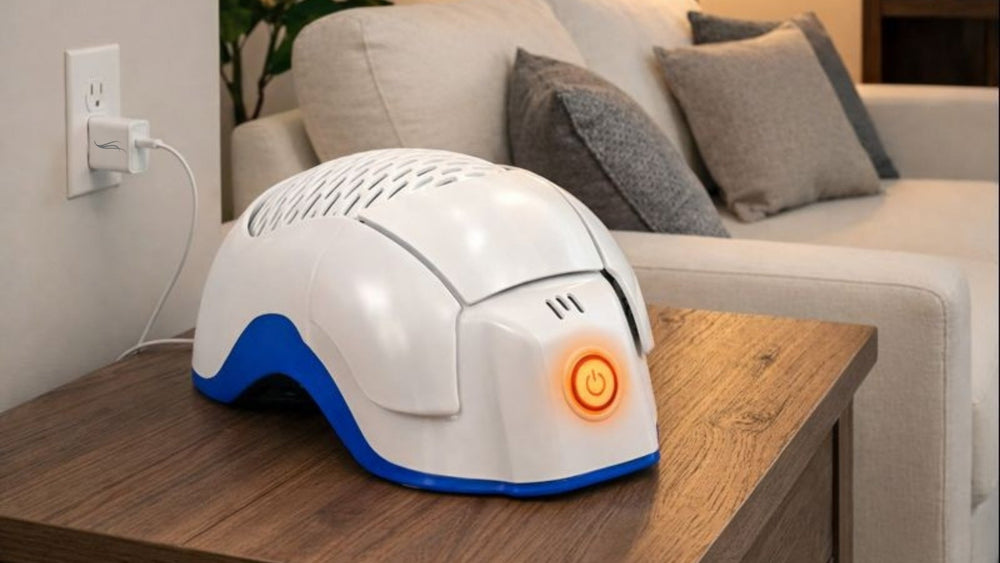
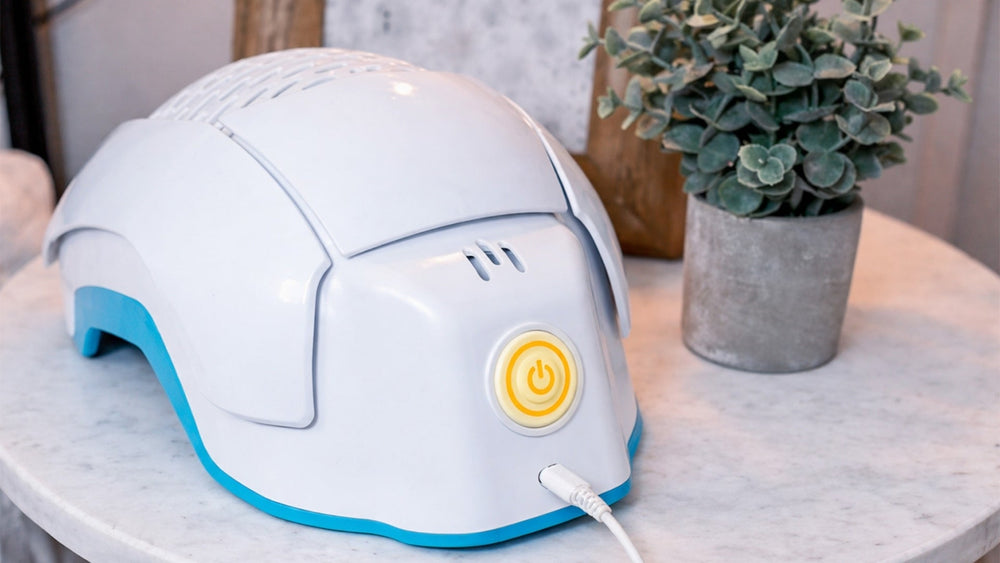
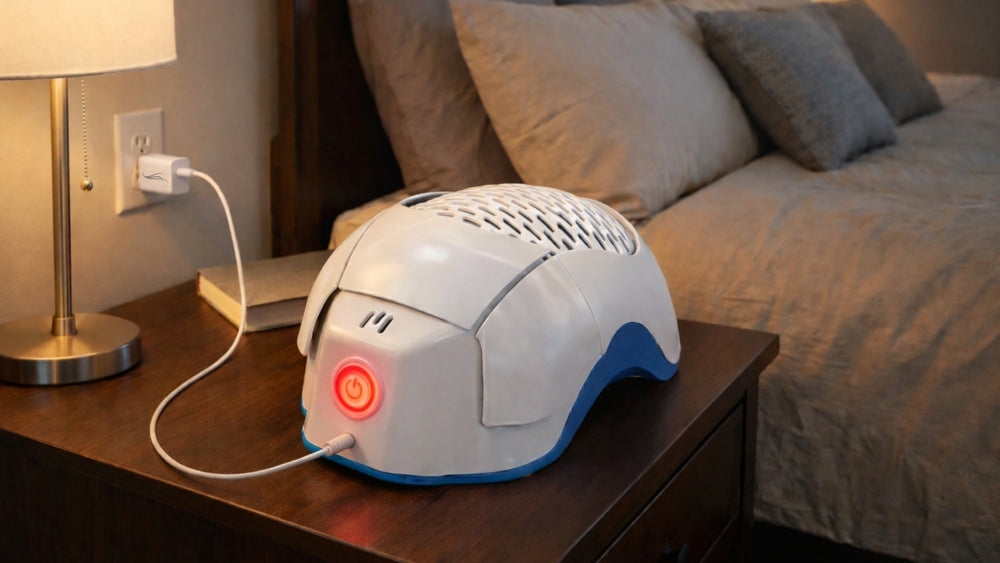
Theradome is an FDA-cleared LPT device indicated for androgenetic alopecia and hair growth in specified male and female patterns. Research reviews of laser and light-based therapies for pattern hair loss report improvements in hair density compared with sham devices, although results vary by person, device, treatment consistency, and study design. A review in the Journal of Clinical and Aesthetic Dermatology summarizes randomized controlled trials of FDA-cleared home-use laser and light devices for pattern hair loss. Read the review here.
So yes, LPT can belong in a hair-thickness conversation when follicular thinning is part of the picture.
But it does not patch up battered ends. It does not replace conditioner. It does not undo bleach overlap. It will not negotiate with a split end and bring the two sides back together.
Someone with both androgenetic alopecia and damaged ends may need two tracks:
- Follicle support for scalp-level thinning
- Shaft protection for the lengths and ends
Conclusion
Hair that is thick at the roots but thin at the ends often means fewer hairs have survived to full length. The strands are not necessarily becoming genetically thinner from root to tip.
Start by checking what kind of “thin” you are seeing. Rough, split, frayed ends point toward breakage or weathering. Smooth tapered ends may reflect layers, curl pattern, or normal mixed lengths. A widening part, crown thinning, recession, patches, sudden shedding, pain, burning, or scalp irritation deserves professional attention.
Protect the length you already have. Reduce the biggest source of damage. Condition well. Detangle gently. Trim when the ends are too compromised to keep.
And if thinning begins at the scalp, treat it as a scalp question.
Your roots show what is growing now. Your ends show what survived.