






Pure castor oil for hair growth has not been convincingly shown to make human scalp hair grow faster, increase hair density, or regrow areas affected by hair loss. It may improve shine, lubrication, softness, and length retention by helping some strands break less easily. But those benefits occur mainly on the hair fiber you can see and touch.
Human research has not shown that castor oil reaches the follicle at an effective dose, activates cellular energy there, or triggers new growth. So, while it may help existing hair look healthier and break less, it has not been proven to regrow lost hair.
Castor oil has earned quite a reputation. Edges. Brows. Lashes. Beards. Bald spots. Somewhere along the way, one thick vegetable oil was handed a workload that would make an entire dermatology clinic sigh.
The appeal is easy to understand, though. It is affordable. It has a long history in hair care. It feels substantial in your hands, which can make it seem more potent than an oil that slips away quietly. Then come the online photographs, usually paired with a solemn voice saying, “I did this for seven days.”
But hair growth, hair retention, and shinier strands are different outcomes. Very different.
That distinction matters because castor oil may be useful in a hair-care routine. It simply should not be mistaken for a treatment that has been proven to reverse hair loss.
Does Castor Oil Help Hair Growth According to Research?
Current research does not establish pure topical castor oil as a dependable human hair-growth treatment. The more defensible evidence concerns hair luster, while support for increased growth rate, density, shaft diameter, or regrowth remains inadequate.
Recent mixed-oil research is worth discussing. Still, the limitations change what we are allowed to conclude.
What Did the 2022 Systematic Review Find?
A 2022 systematic review by Phong and colleagues assessed published research on coconut, castor, and argan oils in relation to hair growth, hair quality, and infestation.
For castor oil, the researchers found weaker support for improving hair quality through greater luster. They found no strong evidence supporting castor oil for hair growth or infestation treatment. That remains the clearest research summary for the question most readers are asking. (Phong et al., 2022)
A systematic review attempts to search for, select, and assess relevant studies using predefined methods. It usually carries more weight than an opinion piece or a broad narrative discussion because the authors are not meant to choose only the papers that fit an appealing conclusion.
There was still not much high-quality castor-specific research to review. That is important. A systematic review cannot manufacture strong evidence from a thin stack of small or indirect studies.
An oil coating can alter how light reflects from a strand. In an optical hair study, castor oil was among the cosmetic oils found to increase perceived luster through changes in reflected light and contrast. That finding says something useful about appearance. It does not show that additional hairs emerged from the scalp. (McMullen & Jachowicz, 2003)
What About the 2025 Rosemary-Castor Oil Trial?
A 2025 randomized trial included 90 adults between 18 and 55 years old. Participants were assigned to one of three topical oil groups for 90 days:
- Rosemary-lavender oil
- Rosemary-castor oil
- Coconut oil
The investigators reported improvements in several hair measurements within the rosemary-containing groups, including growth rate, length, thickness, density, shedding, and scalp-related measures. The rosemary-castor group reportedly improved from baseline across a number of those outcomes. (Patel et al., 2025)
Castor oil was combined with rosemary, so its contribution cannot be separated from the other ingredient or the complete commercial formula. The participants were described as healthy volunteers rather than people selected for a clearly diagnosed form of alopecia. Ninety days is also brief when the treatment question involves durable changes within the human hair cycle.
There is another snag. Coconut oil was called the comparator, but it is not an inactive substance on the hair shaft. Coconut oil has its own documented physical effects on hair fibers, including reduced protein loss under studied conditions. (Rele & Mohile, 2003)
The trial was funded by the company associated with the tested products. One author reported company employment, and company-linked support was involved in the work. Financial involvement does not automatically make a result false. It does mean independent replication becomes particularly important.
What this trial can tell us
A rosemary-castor formulation produced measurable changes during a short human study and deserves further independent testing.
What this trial cannot tell us
It cannot show that pure castor oil caused the changes. It also cannot establish castor oil as a treatment for androgenetic alopecia, alopecia areata, traction alopecia, telogen effluvium, or scarring hair loss.
Does the 2026 Mouse Study Change the Answer?
A 2026 preclinical pilot study tested rosemary and castor oil, alone and in combination, in a mouse model. The authors reported hair-growth-related changes, particularly with the combination, but made clear that results from mice cannot be transferred directly to human use. (Mathenge et al., 2026)
Mouse fur research can help identify a possible biological lead. It cannot establish that applying a household oil blend reverses miniaturization in a human scalp.
The species differ. Their hair cycles differ. The experimental conditions differ too.
So, no. The mouse study does not overturn the human evidence gap.
What Is the Ricinoleic Acid and Prostaglandin Theory?
Castor oil contains a high proportion of ricinoleic acid, often close to 90% of its fatty-acid content. This unusual composition contributes to the oil’s thickness and many of its industrial and cosmetic properties. (Patel et al., 2016)
The hair-growth claim often starts with a separate piece of research. In 2012, Garza and colleagues reported that prostaglandin D2 was elevated in bald scalp from men with androgenetic alopecia and could inhibit hair growth in experimental systems. (Garza et al., 2012)
Then, in 2015, researchers used computer modelling to screen plant compounds as possible prostaglandin D2 synthase inhibitors. Ricinoleic acid appeared among the compounds predicted to interact with the target. (Fong et al., 2015)
“In silico” means the work was carried out using computer modelling.
The study did not show that castor oil:
- Reached human follicles at an effective concentration
- Inhibited the enzyme inside a living human scalp
- Increased human hair density
- Reversed follicular miniaturization
- Produced a safe and repeatable clinical response
- Worked at the amount people normally apply at home
Why Do So Many People Sincerely Report Faster Growth?
Some people may genuinely notice that their hair becomes longer while using castor oil. That observation does not have to be fabricated for the explanation to be wrong.
Reduced breakage can improve length retention. A heavy coating may also make strands appear darker, shinier, smoother, or temporarily more substantial. A natural shedding episode might settle during the same period. The person may have started wearing looser styles, using less heat, or handling their ends more gently too.
And photographs… well, photographs can be surprisingly cooperative.
Lighting, wetness, part placement, camera distance, styling tension, product residue, and the direction the hair lies can all change how dense an area looks. Short hairs may be new growth, miniaturized strands, existing hairs made more visible, or snapped fibers.
If the ends stop breaking, could the hair seem to have grown faster even when the follicles kept their normal pace?
Absolutely.
What Can Castor Oil Actually Do for Your Hair and Scalp?

Castor oil benefits for hair are more believable when we keep them close to the fiber itself. It can coat strands, increase shine, reduce surface friction, and make some hair easier to handle.
What Is Castor Oil?
Castor oil is a vegetable oil extracted from seeds of the Ricinus communis plant. It consists largely of triglycerides rich in ricinoleic acid, which gives the oil its distinctive viscosity and chemical behavior. (Patel et al., 2016)
Commercially processed castor oil is not the same thing as raw castor beans. Raw beans contain ricin, a dangerous water-soluble protein. Proper processing separates the oil from that protein, and commercially prepared oil does not normally contain ricin. Raw castor beans should never be crushed into a homemade scalp mixture. (Audi et al., 2005)
Castor oil contains fat. It does not supply the scalp with a balanced source of protein, iron, thyroid hormone, or other internal materials needed to correct common medical causes of hair loss.
So when a label says the oil “nourishes follicles,” hold on for a moment.
It may condition the fiber.
What Is the Difference Between Hair Growth and Hair Retention?
These terms often get shuffled together, and then the oil receives credit for whichever result sounds most impressive.
|
Change |
What it means |
|
Faster hair growth |
A follicle produces fiber at a greater rate |
|
Greater density |
More visible hairs occupy a measured scalp area |
|
Increased shaft diameter |
Individual fibers emerge thicker |
|
Regrowth |
A follicle begins producing adequate visible hair again |
|
Less breakage |
Fewer strands snap along their lengths |
|
Better length retention |
More existing fiber remains attached |
|
More luster |
Light reflects differently from the hair surface |
The hair shaft above the skin is keratinized material. It can be coated, lubricated, smoothed, colored, tangled, weathered, and broken. A follicle is a living mini-organ beneath the scalp.
The shaft can be pampered. The follicle still makes its own decisions.
Can Castor Oil Improve Shine, Softness, or Manageability?
Yes, for some people.
Castor oil forms a dense coating over the hair fiber. That coating can change light reflection and increase luster. It may also reduce friction as strands slide across one another, making combing or detangling easier in hair that responds well to heavier oils. (McMullen & Jachowicz, 2003)
This may be especially helpful for certain coarse, tightly curled, weathered, bleached, relaxed, or breakage-prone fibers. “May” is doing honest work there. Strong castor-specific trials measuring breakage reduction are scarce.
The oil cannot permanently mend split ends or rebuild dead fiber. A coating may make a rough or split area feel smoother for a while, but the physical damage remains.
A little can be enough.
Can Castor Oil Help a Dry or Flaky Scalp?
Castor oil may reduce water loss from uncomplicated dry skin by leaving an occlusive film. Whether that feels soothing or suffocating depends on the scalp and the amount used.
But dry-looking scale is not always simple dryness.
Seborrheic dermatitis, scalp psoriasis, contact dermatitis, and tinea capitis can all cause flaking. Some also cause redness, itching, broken hairs, soreness, or hair loss. The American Academy of Dermatology advises that treatment should match the condition causing the scale. (American Academy of Dermatology Association)
Laboratory reports of antimicrobial activity do not prove that castor oil treats dandruff, bacterial folliculitis, scalp ringworm, or yeast-associated inflammation in people.
It may soften flakes.
That does not mean it treated what made them appear.
Someone with persistent itching, marked redness, thick scale, pustules, broken hairs, or a spreading patch should seek a diagnosis rather than repeatedly sealing the area under more oil.
Do Jamaican Black, Cold-Pressed, or Other Castor Oils Work Better?
No form of castor oil has been shown in strong comparative human research to regrow hair better than another.
Processing affects color, smell, consistency, stability, and personal preference. Those differences are real. But superior hair growth is not established.
Is Jamaican Black Castor Oil Better for Hair Growth?
Jamaican black castor oil is traditionally produced using roasted castor beans, which gives the finished oil its darker appearance and characteristic aroma.
It has deep cultural relevance in Caribbean and Black hair-care practices. That history should be discussed with respect, not reduced to either “ancient proof” or dismissive folklore.
Still, no high-quality comparative human trial shows that Jamaican black castor oil grows more scalp hair than regular castor oil. There is also no convincing clinical support for claims that ash in the oil opens follicles, stimulates roots, or turns a dark color into greater potency.
Jamaican black castor oil may suit someone’s texture, routine, or preference.
It has not been shown to regrow hair better than ordinary castor oil.
Is Cold-Pressed, Organic, Unrefined, or Hexane-Free Oil More Effective?
These labels describe how an oil was sourced or processed. They may matter for environmental preferences, aroma, color, minor constituents, stability, or how the product feels.
They do not establish stronger hair-growth activity.
“Unrefined” is not automatically safer. A simple formula from a traceable manufacturer may be easier to assess than an unlabeled mixture containing fragrances, essential oils, or ingredients that are difficult to identify after a reaction.
There is no clinically supported best castor oil for hair growth. None of the common versions has demonstrated reliable superiority for regrowth.
Choose based on tolerability and cosmetic use.
Does Castor Oil Grow Edges, Eyebrows, Eyelashes, or Beard Hair?
Edges
Castor oil may help reduce breakage around the hairline if fragile fibers are snapping during styling. It cannot cancel the force from tight braids, ponytails, wigs, extensions, adhesives, or repeated edge manipulation.
Early traction alopecia can sometimes improve after tension stops. Longstanding traction may scar follicles and cause permanent loss. (American Academy of Dermatology Association, 2024)
Eyebrows
There is no convincing clinical trial showing that castor oil regrows eyebrows.
Brow thinning may come from overplucking, eczema, alopecia areata, thyroid disease, frontal fibrosing alopecia, or scarring. An oil cannot be assumed to treat every cause because the applicator happens to fit neatly above the eye.
Eyelashes
Castor oil has not been shown to produce reliable eyelash growth.
Ordinary cosmetic or hair oil should not be placed inside the eye or along the waterline. Eye exposure can cause irritation or blurred vision from an oily film, while contact allergy may affect the eyelids. (Verheyden et al., 2017)
Beard hair
Castor oil may soften and coat beard fibers. It cannot create follicles where genetics produced few or none.
And a smooth, spreading bald patch anywhere on the scalp, beard, or brows deserves assessment. That is especially true when the skin looks inflamed, scaly, painful, or unusually smooth.
|
Product type or use |
What may differ |
What has not been shown |
|
Regular castor oil |
Texture, source, processing |
Reliable hair regrowth |
|
Jamaican black castor oil |
Color, roasting, aroma |
Superior follicular growth |
|
Cold-pressed oil |
Extraction process |
Better regrowth than refined oil |
|
Castor-oil mixture |
Spreadability and other ingredients |
That castor oil caused the result |
|
Brow, lash, or beard use |
Conditioning of existing hairs |
Creation of new follicles |
Can Castor Oil Cause Hair Loss or Scalp Problems?
Castor oil does not have a recognized, predictable “shedding phase.” It can, however, contribute indirectly to trouble if it causes dermatitis, intense itching, severe tangling, difficult cleansing, or residue that a particular scalp does not tolerate.
Can Castor Oil Cause Contact Dermatitis?
Most people tolerate cosmetic castor-oil ingredients, and safety reviews have generally considered them safe under current cosmetic conditions of use. That broad reassurance does not mean an individual reaction is impossible. (Expert Panel for Cosmetic Ingredient Safety, 2024)
Allergic contact dermatitis to castor oil has been documented in medical reports. Symptoms may include itching, redness, burning, flaking, swelling, weeping, or an eczema-like rash. Eyelids can become involved when the product spreads from the hairline or brows. (Sánchez-Guerrero et al., 2010)
Sometimes the oil is responsible. Sometimes the culprit is fragrance, a preservative, an essential oil, or another botanical ingredient in the same bottle.
And reactions do not always appear after the first use. Sensitization can develop after earlier applications seemed uneventful.
Wash the product off and stop using it if persistent burning, itching, redness, swelling, or weeping develops. Facial swelling, breathing difficulty, or severe eye involvement needs urgent medical attention.
What Is Acute Hair Felting?
Acute hair felting is sudden, severe matting in which strands become compressed into a dense mass that is extremely difficult to separate.
A published case involved a 20-year-old woman whose long hair matted abruptly after she applied coconut and castor oil and then washed it. The authors suggested that the viscosity of castor oil, the length of the hair, rubbing, and washing may have contributed. (Maduri et al., 2017)
This was one case report. It cannot tell us how commonly felting occurs, and it involved more than castor oil alone.
It does tell us the risk exists.
If hair begins forming a hard, inseparable mass, stop rubbing and do not drag a brush through it with mounting determination. That can increase breakage and traction. Careful professional detangling may help, though severe cases can require cutting.
Does Castor Oil Clog Follicles or Cause Folliculitis?
Calling castor oil universally “comedogenic” or saying it blocks follicles and causes hair loss goes beyond the available evidence.
Its thickness can leave residue. In someone prone to hairline acne, follicular bumps, or an oily and inflamed scalp, heavy use may contribute to occlusion or make cleansing harder.
Folliculitis is not one disease with one cause. It may be bacterial, fungal, inflammatory, irritant-related, or associated with friction and occlusion. Painful pustules, crusting, tenderness, or a spreading eruption should be assessed properly.
And ordinary genetic hair loss is not caused by a layer of oil physically sealing every follicle shut. That explanation is wonderfully tidy. Biology is less obliging.
People prone to bumps or scalp greasiness may prefer keeping castor oil on the mid-lengths and ends.
Can Castor Oil Worsen Dandruff, Seborrheic Dermatitis, or Psoriasis?
Castor oil is not an established treatment for dandruff, seborrheic dermatitis, scalp psoriasis, or tinea capitis.
Oil may soften adherent scale temporarily. It may also make the scalp feel greasier, heavier, or harder to clean. Direct castor-specific evidence about worsening these conditions is limited, so it would be equally careless to claim that everyone with dandruff must avoid it.
Use condition-specific care.
Seborrheic dermatitis often responds to medicated shampoos and, when needed, prescribed anti-inflammatory treatment. Psoriasis may require scale-softening, topical medication, light treatment, or systemic care depending on severity. Tinea capitis, particularly in children, commonly requires prescription oral antifungal medication. (American Academy of Dermatology Association)
When Should You Stop Using Castor Oil?
Stop and wash it off if you notice:
- Burning or persistent itching
- Redness or swelling
- Weeping or blistering
- New painful bumps or pustules
- Worsening scalp scale
- Eye irritation
- Unusual stickiness or matting
- Considerably more breakage during removal
Do not keep applying it because a tingling sensation has been interpreted as follicular activity. Tingling may simply mean the scalp is irritated.
If symptoms are severe, involve the eyes or face, or continue after the oil has been removed, seek medical care.
How Can You Use Castor Oil More Safely?
There is no clinically established castor-oil dose, dilution ratio, contact time, or weekly schedule for hair growth.
The suggestions below concern cautious cosmetic use. They are not a validated regrowth protocol.
Should You Patch Test Castor Oil First?
A small home spot check may help flag obvious irritation before the product is used across the scalp.
Apply a tiny amount to a small area of intact skin and monitor it for immediate and delayed redness, itching, burning, or swelling over the next 24 to 48 hours. Do not test it on broken, inflamed, or freshly treated skin.
Passing a small test does not guarantee that repeated use will remain trouble-free. Formal patch testing carried out by a dermatologist is also different from a home spot check.
Someone with eczema, multiple cosmetic allergies, or a history of facial swelling should be more cautious.
Where Should You Apply Castor Oil?
When the goal is conditioning, begin with the hair shaft.
Use a small amount on dry or friction-prone mid-lengths and ends. Distribute it gently rather than saturating the entire head on the first attempt. You can always add a little. Removing a heavy castor-oil coating is less flexible.
The oil may make coarse, curly, coily, bleached, relaxed, or weathered strands feel more lubricated. It cannot permanently mend damaged cuticles or fuse split ends.
Scalp application is optional.
Avoid casually oiling over open sores, a weeping rash, painful pustules, suspected infection, or a freshly microneedled scalp. Follow your clinician’s instructions after a hair transplant or other procedure rather than adding oil during delicate healing.
Should Castor Oil Be Diluted?
There is no medically validated universal ratio.
Mixing castor oil with a lighter cosmetic oil may improve spreadability, reduce heaviness, and make washing easier. Jojoba, grapeseed, argan, and sweet almond oils are commonly used for this purpose.
That mixture is easier to handle. It is not automatically more effective for growth.
Check the complete ingredient list. Nut allergies, fragrance sensitivity, and reactions to essential oils still matter. Essential oils are concentrated substances and should not be poured into scalp mixtures by instinct.
How Often Should You Use It, and Can You Leave It Overnight?
Use frequency should depend on the cosmetic goal, hair response, scalp tolerance, and how easily the oil comes out.
Daily application has not been shown to make hair grow faster. Overnight use has not shown a growth advantage either.
Leaving it on overnight may increase:
- Pillow transfer
- Eye exposure
- Facial bumps
- Scalp residue
- Irritation
- Matting
- Cleansing difficulty
A brief pre-shampoo application may be practical for some people, but there is no medically established 30-minute limit. Start conservatively and watch how the hair responds.
More oil does not mean more hair.
If removal takes three shampoos and a negotiation with your ends, was the amount really helping?
Probably not.
How Should You Wash Castor Oil Out?
Use a mild shampoo and gentle handling.
One wash may be enough if only a small amount was applied. A second wash may be useful after a heavier coating, but nobody needs a mandatory double clarifying wash every time.
Frequent strong clarifying shampoos can leave already fragile fibers rougher or drier. Aggressive scrubbing and very hot water add more friction precisely when the hair is heavy, wet, and vulnerable.
Use less oil at the next application rather than repeatedly trying to out-clean a fully lacquered head.
Does Hair Type Change How Castor Oil Should Be Used?
Yes. The same oil can feel luxurious on one head and glue-adjacent on another.
Coarse, tightly curled, weathered, chemically treated, or highly breakage-prone hair may tolerate heavier lubrication. Fine, straight, oily, or low-density hair may look flat, separated, or less full.
Informal porosity labels can help people describe how products sit on their hair, but they are not precise medical diagnoses. A thick oil may remain on the surface of some low-porosity fibers and become difficult to distribute.
For locs, repeated heavy use may leave residue or attract lint if cleansing is difficult. For braids, extensions, wigs, and weaves, oil cannot neutralize excessive tension.
A style that hurts is too tight. The American Academy of Dermatology warns that continued pulling can lead to traction alopecia and, over time, permanent loss. (American Academy of Dermatology Association, 2024)
Can You Use Castor Oil With Minoxidil or Laser Phototherapy?
Minoxidil
Do not pour castor oil into a minoxidil bottle or apply both as one improvised mixture.
Official topical minoxidil directions generally require applying the product directly to a dry scalp and allowing it to dry before other hair products are used. Product instructions vary by concentration and formulation, so follow the label supplied with yours. (DailyMed)
A clinician or pharmacist can advise on spacing products when both are being used. Correct minoxidil application should take priority over a cosmetic oil routine.
Laser Phototherapy
Follow the device instructions concerning scalp cleanliness, dryness, and hair-product residue. A heavy coating immediately before a helmet session may be uncomfortable and could make the routine harder to follow consistently.
Castor oil has not been shown to increase the effect of Laser Phototherapy.
The two are not equivalent because both happen to be used at home.
How Should You Track Whether Castor Oil Is Helping?
Decide what result you are testing before you start.
For a cosmetic trial, useful outcomes include:
- Softer hair
- Easier detangling
- Greater shine
- Less snapping
- Improved manageability
- Less residue than expected
- No irritation
Do not rename those results “regrowth.”
For photographs, keep the lighting, part, angle, camera distance, styling, and hair dryness as consistent as possible. Compare like with like. A wet center part under overhead bathroom lighting should not be compared with dry, fluffed hair beside a sunny window.
Memory is generous. Standardized photographs are less sentimental.
Stop if the effort, buildup, irritation, or washing burden outweighs the cosmetic benefit.
What Should You Do If Your Hair Is Truly Thinning or Shedding?
Castor oil for hair loss becomes a risky idea when “hair loss” has not been defined.
Diffuse shedding, breakage, pattern thinning, traction, autoimmune patches, infection, and scarring disease require different responses. Some settle with time. Some need early treatment to preserve follicles.
Is It Shedding, Breakage, or Progressive Hair Loss?
A shed telogen hair is usually a full-length fiber released from the follicle, often with a small club-shaped end. Broken hairs tend to be shorter, uneven, and missing the complete root end.
A widening part, thinning crown, receding temple, or shrinking ponytail may suggest progressive pattern hair loss. Smooth round or oval patches can occur with alopecia areata. Pain, burning, pustules, heavy scale around follicles, or shiny skin may point toward inflammatory or scarring disease.
A person can have more than one issue at once.
Someone with postpartum shedding may also have bleached ends snapping. A person with genetic thinning may develop traction around the hairline. The scalp does not promise to submit one problem at a time for administrative convenience.
The American Academy of Dermatology recommends finding the cause before selecting treatment. (American Academy of Dermatology Association)
Which Hair-Loss Conditions Will Castor Oil Not Treat?
|
Pattern or symptom |
Possible cause |
Why castor oil is not enough |
|
Widening part, crown thinning, or receding hairline |
Androgenetic alopecia |
It has not been shown to reverse follicular miniaturization |
|
Diffuse shedding after illness, birth, surgery, dieting, or major stress |
Telogen effluvium |
It does not correct the trigger or reset the cycle |
|
Thinning edges after tight styling |
Traction alopecia |
It cannot remove ongoing mechanical force |
|
Smooth round patches |
Alopecia areata |
It does not treat autoimmune activity |
|
Crown loss with pain, itching, scale, or bumps |
Central centrifugal cicatricial alopecia |
It does not suppress scarring inflammation |
|
Receding frontal band with eyebrow loss |
Frontal fibrosing alopecia |
It cannot restore destroyed follicles |
|
Scale, broken hairs, and tenderness in a child |
Tinea capitis |
It usually requires prescription antifungal treatment |
|
Hair loss with fatigue, weight change, menstrual symptoms, or severe dieting |
Medical or nutritional cause |
Topical oil cannot correct an internal problem |
Androgenetic alopecia
Pattern hair loss involves progressive miniaturization of susceptible follicles. In women, it often appears as reduced density and a widening part. In men, it commonly affects the temples, frontal scalp, and crown.
Castor oil has not been shown to stop that miniaturization.
Telogen effluvium
Telogen effluvium is excessive shedding that may appear several months after childbirth, fever, illness, surgery, rapid weight loss, restrictive dieting, significant stress, or certain medication changes. It often improves once the trigger resolves, though persistent or recurrent shedding needs assessment. (American Academy of Dermatology Association)
Castor oil may lubricate the lengths during recovery. It cannot reverse the internal hair-cycle shift.
Traction alopecia
Traction alopecia results from repeated pulling. Early change may improve when tension stops. Longstanding traction can scar the follicles and become permanent. (American Academy of Dermatology Association, 2024)
Oil cannot negotiate with physics.
Alopecia areata
Alopecia areata is an autoimmune condition that commonly causes sudden round or oval patches. It may also affect eyebrows, eyelashes, beard hair, and nails. Treatment can include corticosteroids and other immune-directed medicines selected according to age and severity. (American Academy of Dermatology Association)
Castor oil does not suppress the immune attack.
Scarring alopecia
Central centrifugal cicatricial alopecia often starts around the crown and is seen more frequently in Black women, though anyone can develop it. Pain, itching, tenderness, scale, bumps, or central breakage may occur. Early anti-inflammatory treatment can help prevent further permanent loss. (American Academy of Dermatology Association)
Frontal fibrosing alopecia often causes a receding frontal band and eyebrow loss. The scalp may itch or hurt, and small scaly bumps can appear near the hairline. Once follicles are destroyed and replaced by scar tissue, they cannot produce hair again. (American Academy of Dermatology Association)
This is where delay matters.
A shiny, painful, steadily expanding area is not a cue to order a larger bottle.
Which Treatments Have Stronger Evidence?
Treatment should match the diagnosis. There is no sensible universal list where everyone leaves with the same foam, tablet, oil, and helmet.
For androgenetic alopecia, treatments with stronger human support include topical minoxidil, selected prescription medicines under medical supervision, hair transplantation for suitable candidates, and Laser Phototherapy for appropriate pattern hair loss.
Topical minoxidil has a larger clinical record than castor oil for pattern hair loss. Official minoxidil labeling gives product-specific directions and warnings, including applying it as directed and seeking medical advice for certain symptoms or unsuitable patterns of loss. (DailyMed)
Laser Phototherapy is a non-drug option studied mainly for androgenetic alopecia. A 2025 systematic review and meta-analysis found that low-level laser and LED interventions improved hair density in androgenetic alopecia compared with controls, while also noting that study methods and devices varied. Evidence for other alopecia types was less established. (Perez et al., 2025)
That pooled review should not blur the device distinction. FDA materials state that Light Emitting Diodes and Intense Pulsed Light products do not meet the definition of a laser, while FDA laser classifications describe laser devices as using coherent, collimated, typically monochromatic radiation.
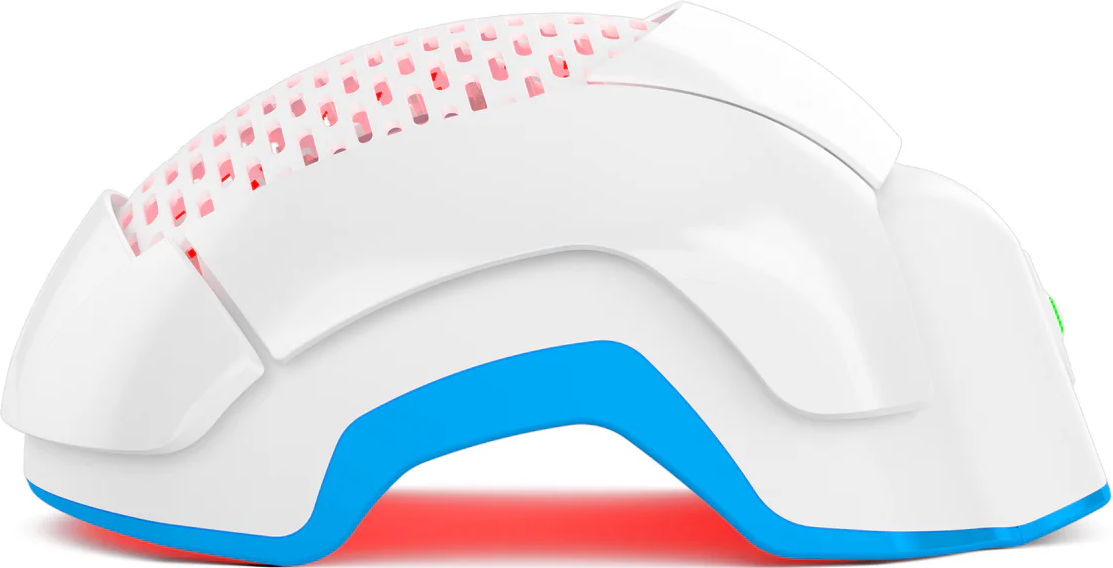
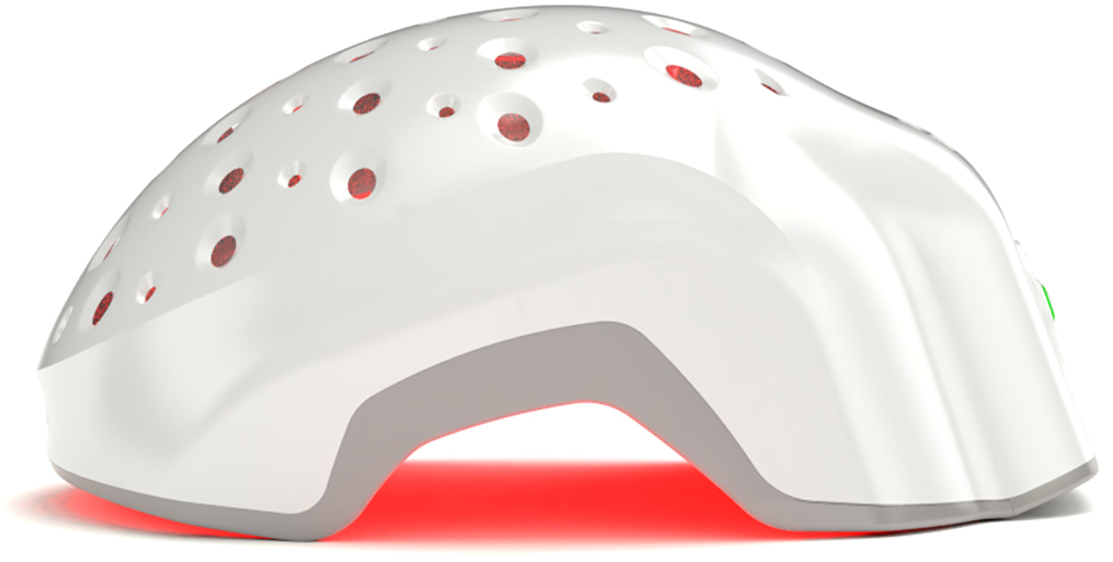
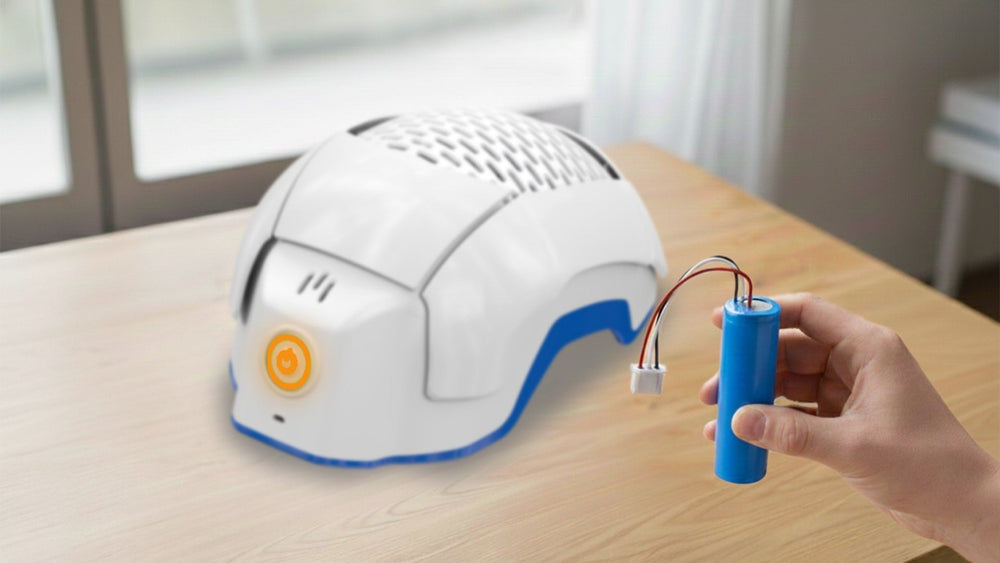
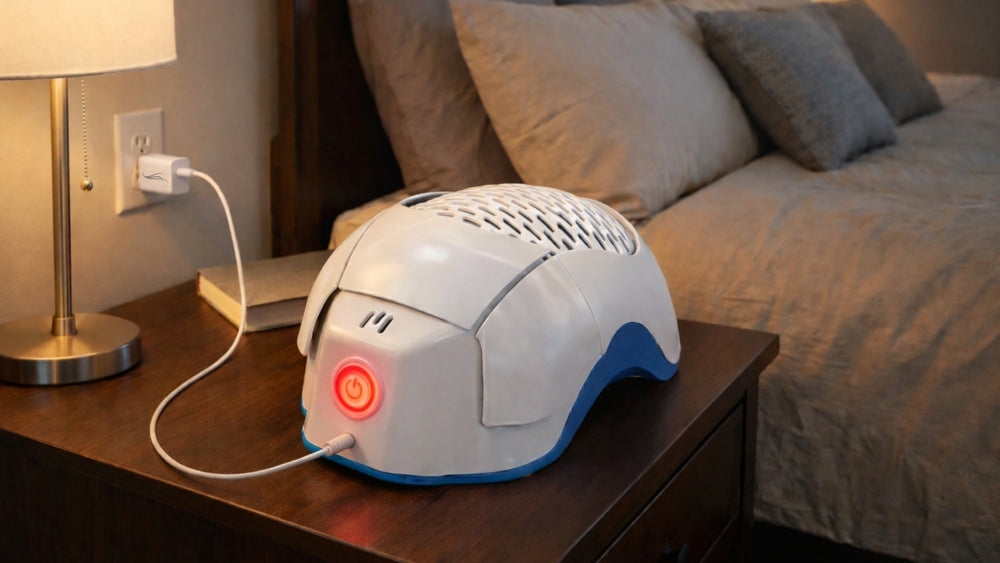
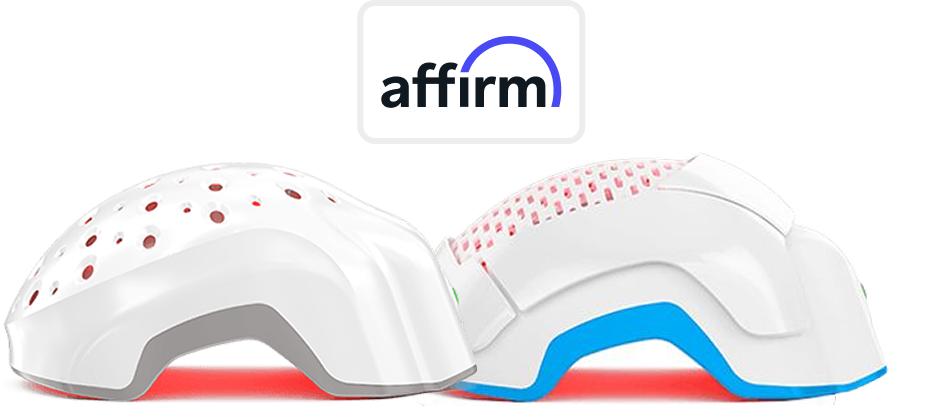
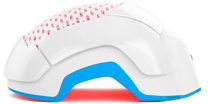
Theradome’s FDA 510(k) summary describes the LH80 PRO as a low-level coherent light therapy device that uses 80 coherent light diodes inside a helmet. So when this article discusses Theradome LPT, it is referring to Theradome’s laser-based coherent-light technology, not ordinary LED masks or general red-light products. (U.S. Food and Drug Administration, 2018)
A separate meta-analysis of randomized trials involving home-use low-level light or laser therapy devices also reported greater hair-density change with active treatment than with sham devices in pattern hair loss. (Lueangarun et al., 2021)
These findings concern the treatment category. They do not mean every light-emitting product has identical testing, output, indication, or performance.
Theradome is FDA-cleared. Its current over-the-counter indication covers treatment of androgenetic alopecia and promotion of hair growth in specified male Norwood-Hamilton and female Ludwig-Savin hair-loss classifications, within the skin-type range stated in the clearance. (U.S. Food and Drug Administration, 2018)
LPT is not a replacement for antifungal treatment, immune-directed care, correction of an internal trigger, or early management of scarring inflammation.
For an appropriate person with pattern hair loss, though, it may form part of an evidence-led plan, either alone or alongside clinician-recommended treatment.
Castor oil can stay in the bathroom as a conditioner.
It should not quietly take over the follicle-treatment job.
When Should You See a Dermatologist?
Seek professional assessment for:
- Sudden or rapidly progressing hair loss
- Smooth round or oval bald patches
- A steadily widening part or receding hairline
- Eyebrow or eyelash loss
- Scalp pain, burning, marked itching, pustules, crusting, or bleeding
- A smooth or shiny area with fewer visible follicular openings
- Hair loss in a child
- Shedding that does not settle within the expected recovery period
- Hair loss alongside fatigue, weight change, menstrual changes, or other body symptoms
- A possible medication-related trigger
- Severe irritation or matting after castor-oil use
A dermatologist may use your medical and styling history, scalp examination, a hair-pull test, trichoscopy, selected blood tests, fungal testing, or a scalp biopsy. Which tests are appropriate depends on the pattern and symptoms. (American Academy of Dermatology Association)
The aim is not to make every shed hair frightening.
It is to stop months of guesswork while a treatable condition keeps moving.
Conclusion
Castor oil may help hair look shinier, feel smoother, and survive grooming with less friction. For some strands, that can mean less breakage and better length retention.
But castor oil for hair growth remains an unproven treatment. Current research does not show that pure castor oil reliably increases density, reverses miniaturization, restores scarred follicles, or fills bald areas.
Use a small amount if your hair likes it. Stop if your scalp becomes irritated or the fiber turns sticky and difficult to manage.
Most importantly, do not let an oil trial delay care for progressive thinning, sudden shedding, bald patches, pain, inflammation, or shiny areas. The useful question is not only, “Which oil should I apply?”
It is, “Why is my hair changing?”