







Topical tretinoin is not established as a common cause of hair loss, and alopecia is not listed among the adverse reactions in the current US prescribing information reviewed for Retin-A Micro. Still, tretinoin can irritate skin near the scalp or hairline, and that irritation may contribute to rubbing, breakage, or apparent local thinning. Diffuse shedding deserves a wider medical look rather than an automatic guilty verdict. (FDA, 2025)
The plot thickens a bit. Tretinoin has also been studied as an off-label treatment for androgenetic alopecia, usually alone in small early studies or alongside topical minoxidil. Those findings are interesting, but they do not make tretinoin a proven stand-alone hair-loss treatment, nor do they confirm the familiar online claim that a four-to-eight-week “tretinoin shed” is expected.
So, yes, the answer has a few corners. Not evasive corners. Medical ones.
A Quick Pattern and Timing Check
|
What you notice |
Timing or location |
What it may suggest |
Sensible next move |
|
Burning, peeling, itching, or tenderness with short broken hairs |
Mainly where tretinoin touches the hairline or scalp |
Irritant dermatitis, friction, or breakage |
Pause any extra irritants and contact the prescriber if symptoms are marked or persistent |
|
More full-length hairs shedding from all over the scalp |
Often begins a few months after an internal trigger |
Telogen effluvium or another diffuse shedding disorder |
Review illness, surgery, childbirth, weight change, medications, hormones, and nutrition from the prior three to six months |
|
A widening centre part or gradually thinner ponytail |
Progressive over months or years |
Female pattern hair loss |
Arrange a dermatologist assessment rather than waiting for the skincare routine to explain it |
|
Temple recession or crown thinning |
Gradual and patterned |
Androgenetic alopecia, sometimes traction |
Seek diagnosis early because treatment is diagnosis-specific |
|
Smooth round or oval patch |
Sudden and sharply defined |
Alopecia areata |
Book a dermatologist visit |
|
Pain, pustules, thick scale, shiny skin, or loss of follicular openings |
Any timing |
Possible inflammatory, infectious, or scarring condition |
Seek prompt medical assessment |
These are clues, not a home diagnosis. Hair has a mischievous habit of making several conditions look alike from three feet away. The decision aid draws on diagnostic guidance for pattern hair loss, alopecia areata, traction alopecia, and scarring conditions.
Can Topical Tretinoin Actually Cause Hair Loss?
Tretinoin is a prescription retinoid used mainly for acne in the formulation covered by the current Retin-A Micro label. That label lists local skin reactions including dryness, redness, swelling, peeling, itching, blistering, burning, stinging, and dermatitis. It does not list alopecia among the clinical-trial or postmarketing adverse reactions. (FDA, 2025)
That omission is reassuring. It is not a mathematical proof that no individual could ever notice hair changes while using the drug. Clinical trials may be too small to detect very rare events, postmarketing reports can be incomplete, and acne studies are not designed around scalp photography or hair counts.
Still, wording matters. Calling hair loss a “known tretinoin side effect” runs ahead of the available evidence. Calling it impossible runs the other way, equally fast and with equally poor brakes.
Could irritation near the hairline cause apparent thinning?
Yes, indirectly, and this is more plausible than a dramatic claim about facial tretinoin suddenly switching off follicles across the scalp.
When tretinoin reaches the hairline, brows, beard area, or scalp, it can irritate the skin there. A sore, flaky margin tends to get rubbed, scratched, scrubbed, or picked. Add tight styling, bleach, relaxer, high heat, rough brushing, or naturally fragile short hairs, and breakage becomes much easier to mistake for follicular shedding.
The distinction is not cosmetic nitpicking. A snapped strand needs gentler handling and time to regain length. A shed hair has completed part of its follicular cycle. A progressively miniaturizing hair may point toward androgenetic alopecia. Three different problems, three different plans.
Has topical tretinoin been proven to cause telogen effluvium?
No convincing human evidence currently shows that ordinary facial tretinoin use reliably causes telogen effluvium.
Systemic retinoids and excess vitamin A are linked with medication-related hair shedding in the medical literature. Topical tretinoin is a different exposure. In a pharmacokinetic study, absorption averaged about 2 percent after a single application and after 28 days of daily use, while long-term users averaged about 1.1 percent. Blood concentrations of tretinoin and its metabolites did not materially rise in that study.
Low absorption does not mean zero absorption, especially when someone applies too much, treats a large area, uses it on broken skin, or combines it with procedures that disrupt the barrier. But it does make a casual leap from “oral retinoids can affect hair” to “my facial cream caused diffuse scalp shedding” scientifically shaky.
And timing can be a useful bouncer at the door. Classic telogen effluvium is usually noticed a few months after the trigger, not the morning after the first application.
Can tretinoin permanently damage hair follicles?
There is no good clinical evidence that routine topical facial tretinoin permanently destroys scalp follicles. Reviews of topical use have not established a clear link with noncutaneous adverse events, although absence of evidence cannot exclude an exceptionally rare individual reaction.
Persistent loss, shiny or scar-like skin, loss of visible follicular openings, pustules, marked pain, or steadily advancing recession should not be filed under “tretinoin adjustment.” Those signs may point toward another condition, including scarring alopecia, which can cause permanent loss if treatment is delayed. (American Academy of Dermatology, n.d.-d)
A skin reaction can be unpleasant. Sometimes very unpleasant. But irritation and follicular destruction are not interchangeable terms.
Why Do Tretinoin and Hair-Loss Claims Seem to Contradict Each Other?

Is topical tretinoin the same as isotretinoin?
No.
Topical tretinoin is all-trans retinoic acid applied to the skin. Oral isotretinoin is a systemic retinoid used for severe acne. Oral tretinoin is also used in a very different medical setting, including acute promyelocytic leukaemia. They belong to the same broad drug family, but route, dose, absorption, indication, and risk are not interchangeable.
A 2022 systematic review of oral isotretinoin studies reported hair loss in 3.2 percent of patients receiving less than 0.5 mg/kg per day and 5.7 percent among those receiving at least 0.5 mg/kg per day. The authors could not perform a reliable inferential comparison because the studies varied and hair outcomes were not measured consistently. Those percentages should not be pasted onto topical tretinoin. (Lytvyn et al., 2022)
This mix-up is common online because the drug names look like siblings who borrowed each other’s coats. Clinically, though, the distinction is not optional.
Can retinoic acid help and hinder follicles under different conditions?
Apparently, yes. Or, more cautiously, laboratory and early clinical work suggests that retinoic acid can push follicle biology in different directions depending on dose, tissue state, timing, and the model being studied.
In 2005, researchers treated isolated human scalp follicles with all-trans retinoic acid in organ culture. Hair-shaft elongation slowed, and follicles entered a premature catagen-like regression associated partly with increased transforming growth factor beta 2 signalling. That study provides a plausible biological route for retinoid-related follicle inhibition. It does not show that a standard amount applied to facial skin creates the same concentration inside scalp follicles. (Foitzik et al., 2005)
A much newer paper reported almost the opposite direction in androgenetic alopecia models. Retinoic acid appeared to activate hair-follicle stem cells through Wnt and beta-catenin signalling in cell work, organ culture, mice, and a small human comparison. The clinical portion was encouraging, but small and in need of independent replication. (Wen et al., 2025)
Contradiction? Not necessarily.
A chemical signal can be helpful within one biological range and unhelpful outside it. Healthy follicles, miniaturised follicles, cultured tissue, facial skin, and directly treated scalp are not identical test beds. The more honest sentence is also the less catchy one: retinoic acid affects follicle biology, but we cannot predict a person’s hair outcome from one laboratory pathway alone.
Does surface peeling mean the scalp is “purging” hairs?
No established evidence supports a routine tretinoin hair purge.
Tretinoin can increase epidermal turnover and cause visible peeling. Hair follicles do not behave like clogged pores ejecting old hairs so new ones can queue politely behind them. Surface flaking does not prove that follicles are renewing, and increased shedding should not be recast as a sign that treatment is working.
That comforting explanation can delay a proper diagnosis. It can also persuade someone to keep applying an irritating product to an angry scalp. Neither is a win.
What Does the Research on Tretinoin for Hair Loss Actually Show?
Tretinoin for hair loss is an off-label use. The US Food and Drug Administration defines off-label use as prescribing an approved drug for a condition, dose, or route not included in its approved labelling. Off-label prescribing can be medically reasonable, but the FDA has not determined that the drug is safe and effective for that unapproved use. (FDA, 2018)
This is where internet copy often becomes suspiciously athletic. A small study appears, then leaps over several missing trials, lands beside a checkout button, and calls the landing “clinical proof.” Let us slow that down.
What did the 1986 tretinoin hair-growth study find?
Bazzano and colleagues studied topical tretinoin alone and with 0.5 percent minoxidil in 56 people with androgenetic alopecia. After one year, the authors reported terminal hair regrowth in 66 percent of those treated with the combination and “some” regrowth in about 58 percent treated with tretinoin. (Bazzano et al., 1986)
Those numbers sound muscular until the study design is put back into the room. It was small, treatment groups were limited, outcome methods were dated, wording such as “some regrowth” was broad, and the minoxidil concentration was much lower than the 2 percent and 5 percent formulations widely used now. Large modern trials have not replicated stand-alone tretinoin efficacy well enough to make it a standard first-line treatment.
Promising signal. But thin foundation.
Does tretinoin improve minoxidil absorption?
A 1990 crossover study in 19 healthy men found that tretinoin increased the skin absorption of topical minoxidil, apparently by changing stratum-corneum permeability. (Ferry et al., 1990)
That result supports a delivery effect. It does not automatically prove better hair density. More penetration can also increase irritation or systemic exposure, which is why “stronger absorption” should not be treated as a universally desirable outcome.
And it certainly does not justify mixing two prescriptions in the bathroom cap with the confidence of a person seasoning soup.
Is minoxidil plus tretinoin better than minoxidil alone?
A 2007 randomized, double-blind comparative trial enrolled 31 men with androgenetic alopecia. One group used 5 percent minoxidil plus 0.01 percent tretinoin once daily. The other used 5 percent minoxidil alone twice daily. After treatment, the combination performed broadly similarly to twice-daily minoxidil. It was not clearly superior. (Shin et al., 2007)
That result leaves a narrow, useful possibility. A once-daily combination might be convenient for selected patients under medical supervision. Yet the trial lacked a once-daily minoxidil-only arm, included only men, and was small. We cannot tell how much of the result came from tretinoin, how broadly it applies, or whether the combination improves outcomes beyond a properly used standard regimen.
Can tretinoin help people who do not respond to minoxidil?
Topical minoxidil must be converted to minoxidil sulfate by sulfotransferase enzymes in the follicle. A 2019 study measured follicular enzyme activity in 20 participants. After five days of 0.1 percent tretinoin, 43 percent of participants initially predicted to be minoxidil nonresponders shifted into the predicted-responder category. (Sharma et al., 2019)
That is a biomarker finding.
It does not mean 43 percent grew visibly denser hair. The study did not establish long-term regrowth, durability, ideal dosing, or a treatment algorithm. It suggests a mechanism worth testing in larger trials, nothing more heroic than that.
What did the newer retinoic-acid study add?
Wen and colleagues assessed retinoic-acid signalling in androgenetic alopecia using human follicle tissue, cultured cells, organ culture, mouse models, and a small clinical comparison. The human portion included 60 participants, with 30 using 0.025 percent tretinoin cream and 30 using 5 percent minoxidil solution for six months. The paper reported improvements in several hair measures and proposed activation of follicular stem cells through Wnt and beta-catenin signalling. (Wen et al., 2025)
The breadth of the laboratory work is a strength. The clinical part, though, was small, lacked a vehicle-placebo group, and does not yet supply the kind of replicated evidence needed to place tretinoin beside established first-line treatments. It also studied direct scalp treatment in people with androgenetic alopecia, not facial use in someone worried about shedding.
Two separate questions again.
What is the fairest evidence verdict?
Tretinoin may have a role as a clinician-selected adjunct for some people with androgenetic alopecia, particularly in a carefully formulated minoxidil regimen. The evidence is preliminary to moderate at best, depending on the exact claim.
What it does not support is a universal scalp concentration, a fixed waiting period between products, a guaranteed rescue for minoxidil nonresponse, or home mixing. Published studies have used 0.01 percent, 0.025 percent, 0.05 percent, and 0.1 percent tretinoin for different purposes. That scatter alone should make anyone suspicious of a one-size-fits-all recipe.
The scalp is skin, yes. It is not merely forehead with more vegetation.
Is Tretinoin Really the Most Likely Cause of Your Shedding?
Are you seeing shedding, thinning, or breakage?
These terms often get tossed into one conversational drawer, but they describe different clues.
Shedding means more full-length hairs are releasing from follicles. Acute telogen effluvium often produces diffuse shedding across the scalp, commonly a few months after illness, surgery, childbirth, major weight loss, medication change, or another physiological stressor. (American Academy of Dermatology, n.d.-b)
Thinning means density is gradually decreasing. A widening central part, finer hairs, or slowly reduced ponytail volume can suggest female pattern hair loss and other forms of androgenetic alopecia. Temple recession and crown thinning may suggest male pattern hair loss, though traction and other conditions can overlap.
Breakage leaves shorter, irregular strands. Chemical processing, heat, tight styling, rough manipulation, and friction may contribute. If the change sits precisely along the irritated application edge, breakage deserves a place near the top of the list.
One scalp can have more than one problem. Annoying, but common.
Which other triggers should be checked?
If diffuse shedding begins after starting tretinoin, map the prior three to six months. Include:
- High fever, infection, or significant illness
- Surgery or anaesthesia
- Childbirth or another major hormonal shift
- Starting or stopping hormonal contraception
- Rapid weight loss or a very low-calorie diet
- Low protein intake
- Heavy menstrual bleeding or suspected iron deficiency
- Thyroid symptoms or diagnosed thyroid disease
- New medication or dose change
- Oral isotretinoin or another systemic retinoid
- Starting minoxidil
- Major psychological strain
- Tight braids, locs, extensions, wigs, adhesives, or ponytails
- Bleaching, relaxing, colouring, or frequent high heat
Most people who develop telogen effluvium notice shedding a few months after the trigger, and fullness often returns within roughly six to nine months once the trigger has passed. Ongoing triggers can prolong it.
Minoxidil deserves its own tiny footnote because it is often started beside tretinoin. The American Academy of Dermatology notes that topical minoxidil may cause a temporary increase in shedding during the first two to eight weeks. If both products began together, blaming tretinoin alone is not a sound causal test.
Can supplements fix suspected tretinoin shedding?
Do not begin biotin by reflex.
Biotin deficiency can cause thinning hair, but deficiency is rare, and evidence does not support routine high-dose biotin for people without a deficiency. High supplemental doses can also interfere with certain laboratory tests, including some thyroid and cardiac assays. (NIH Office of Dietary Supplements, 2022)
The broader supplement shelf is not automatically kinder. Excess vitamin A, selenium, and vitamin E have been associated with hair loss. Testing and treatment should follow the clinical findings, not the panic level.
Which signs need faster medical attention?
Seek prompt assessment for:
- Smooth round or oval bald patches
- Rapidly receding frontal hairline
- Eyebrow loss alongside frontal recession
- Pustules, drainage, bleeding, or thick crust
- Marked scalp pain, tenderness, or burning
- Loss of follicular openings or shiny scar-like areas
- A boggy swollen patch
- Scaling with broken hairs, especially in a child
- Severe facial swelling, widespread hives, or trouble breathing
Alopecia areata often begins with a smooth round or oval patch. Scarring disorders can produce pain, inflammation, shiny skin, or permanent follicle loss. Tight styles can also cause traction alopecia, and prolonged traction may become permanent.
Waiting for a supposed “purge” to pass is not a sensible plan when the pattern looks inflammatory or scarring.
What Should You Do if Hair Loss Starts After Tretinoin?
Write down:
- The date tretinoin began
- Brand or generic name
- Strength and vehicle, such as cream, gel, lotion, or microsphere gel
- Amount and frequency
- Whether it touched the scalp, temples, brows, or beard
- Any recent strength or schedule increase
- Other skincare and scalp products
- Minoxidil start date
- Prescription and over-the-counter medicines
- Hormonal medication changes
- Illnesses, surgery, childbirth, weight change, and diet changes
- Styling, chemical, and heat habits
Take photographs of the centre part, temples, frontal line, and crown in consistent lighting, at the same distance, with the hair in a similar condition. Monthly comparison is usually more useful than photographing every anxious Tuesday.
Try not to change five variables at once. That erases useful clues.
Should you stop tretinoin immediately?
Severe burning, swelling, blistering, crusting, marked dermatitis, or worsening eczema warrants prompt contact with the prescriber. The FDA label advises reducing application frequency or discontinuing treatment temporarily or permanently when irritation is severe. (FDA, 2025)
Mild diffuse shedding without skin symptoms is different. Contact the prescriber, but do not assume that abruptly stopping every treatment will identify the cause. Hair-cycle changes unfold slowly, so a quick stop-and-start experiment can create more confusion than clarity.
And no deliberate rechallenge on an inflamed scalp. Curiosity has limits.
How can irritation near the hairline be reduced?
Use tretinoin only as prescribed. More product and more frequent application do not produce faster acne improvement, but they can intensify irritation. Avoid applying it to sunburned, eczematous, broken, or severely irritated skin. Harsh cleansers, abrasive products, salicylic acid, sulfur, resorcinol, and other drying treatments may worsen local reactions when layered without clinical guidance.
Do not turn facial directions into a scalp protocol. Direct scalp use is off-label and should be clinician-directed, especially when it involves minoxidil, microneedling, chemical procedures, or a compounded formula.
There is no well-supported universal rule telling every person to begin at 0.025 percent two nights weekly, wait a fixed number of minutes, or increase after exactly four weeks. Those tidy schedules look reassuring. The evidence is not that tidy.
How will a dermatologist work out the cause?
A dermatologist will assess onset, distribution, scalp symptoms, medication changes, family history, nutrition, hormonal timing, hair-care practices, and direct exposure. Examination may distinguish full-length shedding from shaft breakage, patterned miniaturisation, smooth patches, infection, or inflammation. Trichoscopy can reveal shaft-diameter diversity, broken hairs, scale around follicles, miniaturisation, and loss of follicular openings.
Depending on the findings, testing may include a pull test, fungal studies, a scalp biopsy, or targeted bloodwork. A complete blood count, ferritin or other iron studies, and thyroid testing may be considered when the history supports them. Every patient does not need an identical laboratory bundle, and no single ferritin target guarantees regrowth.
The useful clinical question is not simply, “Did this begin after tretinoin?” It is, “Does the timing, pattern, examination, dose relationship, and alternative-cause review make tretinoin likely, possible, or merely nearby?”
What about pregnancy and breastfeeding?
Topical tretinoin is absorbed far less than oral retinoids. A 2015 meta-analysis did not identify a major increase in congenital malformations, miscarriage, low birth weight, or prematurity after inadvertent first-trimester topical retinoid exposure. More recently, a 2026 Nordic cohort included 2,172 first-trimester topical-retinoid exposures and found no substantial increase in major congenital malformations among pregnancies resulting in a birth. The authors still advised avoiding topical retinoids during pregnancy because the study could not capture pregnancies that ended before birth and could not rule out every possible risk.
So the practical advice has not flipped. The American College of Obstetricians and Gynecologists generally recommends avoiding topical retinoids while pregnant. Someone who becomes pregnant while using topical tretinoin should contact the prescriber rather than assuming the risk is identical to oral isotretinoin. It is not. (American College of Obstetricians and Gynecologists, n.d.)
During breastfeeding, direct studies are limited. LactMed considers topical use low risk because absorption is poor, while advising that tretinoin should not be applied to the nipple or areola and that infant skin should not contact treated areas. (National Library of Medicine, 2024)
A compounded scalp product may contain minoxidil or other ingredients with separate reproductive considerations. Each ingredient needs its own review.
Which Hair-Loss Treatments Have Stronger Evidence?
Treatment follows diagnosis. That sentence is not glamorous, but it saves a remarkable amount of wasted time.
Where does topical minoxidil fit?
Topical minoxidil has a far larger clinical evidence base for androgenetic alopecia than tretinoin. It is FDA-approved in specific formulations for male and female pattern hair loss, and dermatologists commonly recommend it for early pattern thinning. Results take months, continued use is usually needed to maintain benefit, and scalp irritation or temporary early shedding can occur.
Tretinoin should not be presented as a replacement for minoxidil. Its most plausible current role is as a medically supervised adjunct in selected patients, not an automatic upgrade for everyone.
Where do finasteride and other prescription medicines fit?
Finasteride reduces conversion of testosterone to dihydrotestosterone and is FDA-approved for male pattern hair loss. Other oral or topical prescriptions may be considered according to sex, diagnosis, age, pregnancy potential, medical history, side-effect profile, and clinician judgment. A 2024 systematic review found support for several pharmacologic and procedural options in androgenetic alopecia, while also noting meaningful differences in evidence quality and patient suitability.
These medicines are not interchangeable with tretinoin. Tretinoin does not block DHT, and adding it does not correct every mechanism driving patterned thinning.
Where can Laser Phototherapy fit?
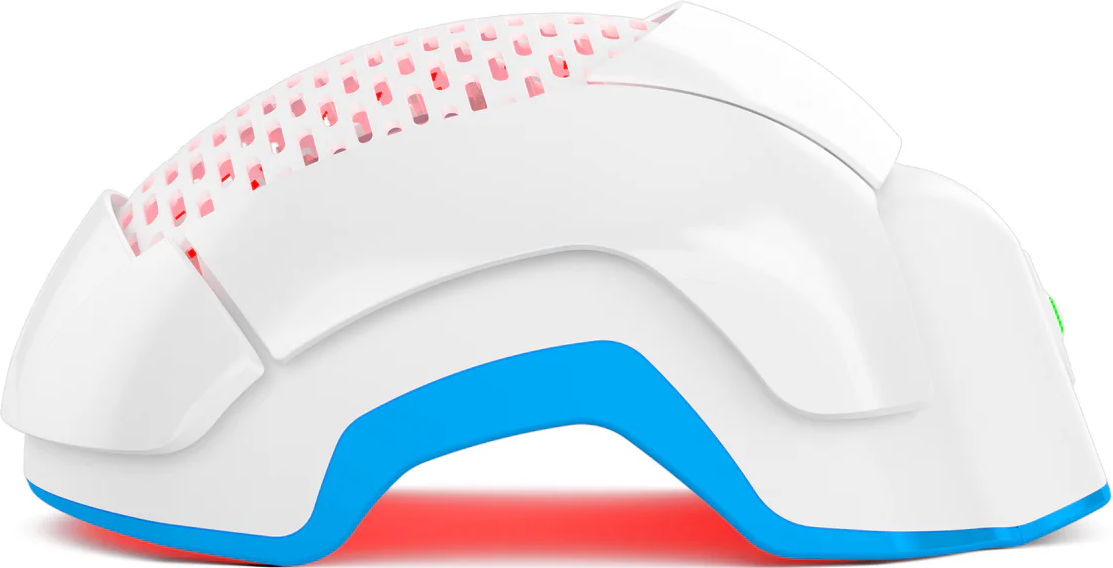
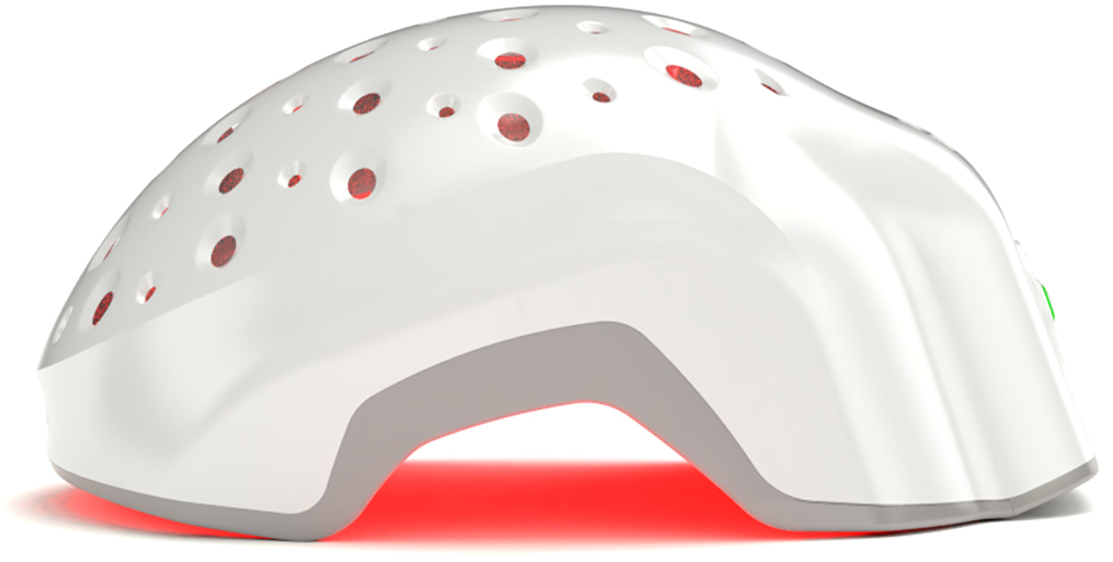
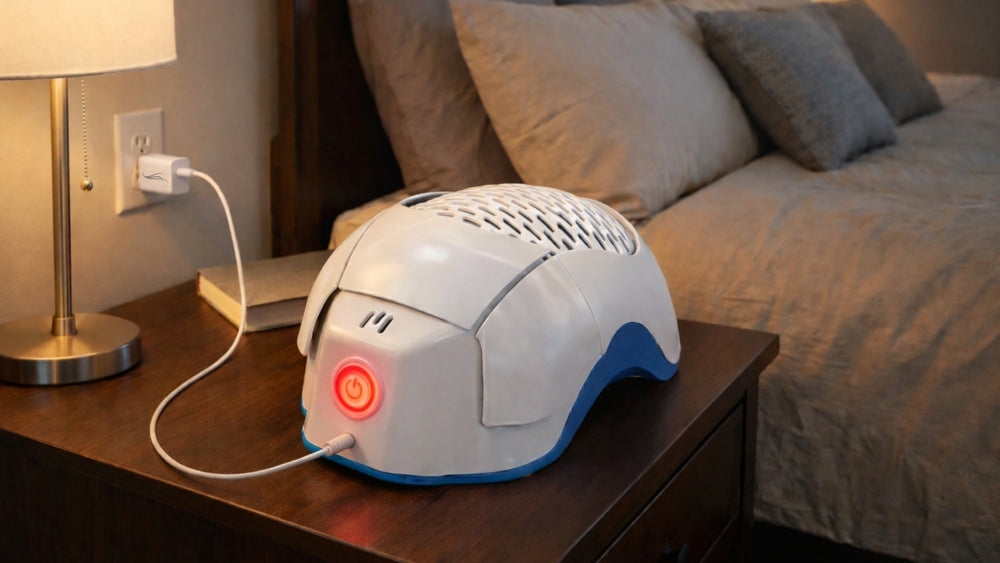
Laser Phototherapy, or LPT, can be considered for appropriately diagnosed androgenetic alopecia. Randomized sham-controlled research on low-level laser devices has reported increased hair density in men and women with pattern hair loss, and systematic reviews include light-based devices among supported non-drug options. Results vary by device, protocol, study quality, and patient selection.
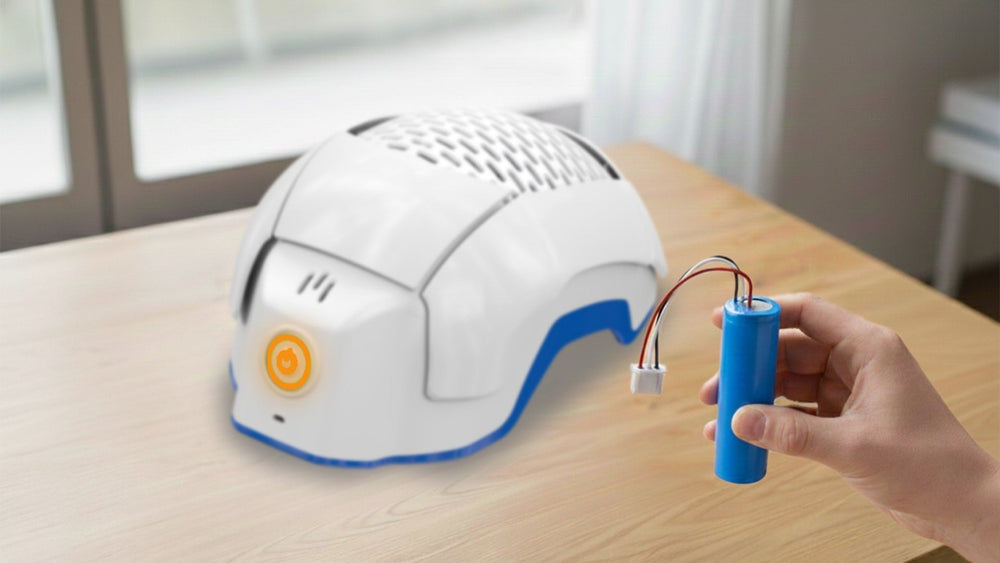
Theradome is FDA-cleared for the specified male and female androgenetic-alopecia patterns and skin types stated in its 510(k) indications. FDA clearance is device- and indication-specific. It is not a blanket claim for telogen effluvium, alopecia areata, fungal infection, traction injury, or scarring alopecia.
LPT may suit someone seeking a non-drug option or a broader, clinician-guided plan for pattern hair loss.
What if the diagnosis is not androgenetic alopecia?
Then the treatment changes.
Acute telogen effluvium often improves after the trigger resolves. Alopecia areata may require corticosteroids, contact immunotherapy, or systemic treatment depending on severity. Tinea capitis requires antifungal medication. Traction alopecia requires removal of the pulling force. Scarring alopecia needs prompt anti-inflammatory treatment to preserve remaining follicles.
Tretinoin is not a generic answer to the word “hair loss.” Neither is minoxidil. Neither is LPT.
That earlier pattern check suddenly matters quite a lot.
Conclusion
Topical tretinoin is not established as a common cause of hair loss, and current US prescribing information does not list alopecia as an adverse reaction. Local irritation can still cause flaking, rubbing, and breakage near treated hairs. Diffuse shedding, meanwhile, calls for a broader review of timing, illness, hormones, weight change, nutrition, medications, minoxidil use, styling, and inherited pattern loss.
Research on tretinoin for hair loss is intriguing but limited. Small studies suggest possible roles in minoxidil delivery, follicular sulfotransferase activity, and androgenetic-alopecia treatment. They do not support a universal scalp recipe or casual home mixing.
The practical move is gloriously unglamorous: identify the pattern, protect irritated skin, document the timeline, and get the diagnosis right. Hair treatment works much better when it is aimed at the condition actually sitting on the scalp.