





Probably not in the way most people mean it. Based on the published literature, Olaplex is described as a hair-shaft bond builder, not a follicle treatment, so the better-supported concern is breakage or scalp irritation in some users, not proof that it directly causes pattern hair loss or other follicle-driven alopecia.
What People Really Mean When They Ask “Does Olaplex Cause Hair Loss?”
Usually they are not asking for a chemistry lecture.
They are asking something more like this: Why does my hair suddenly look worse, feel weaker, or come out in the shower after I started using this? That panic is real. Hair changes do weird things to your brain. A few extra strands on your hands and suddenly you are mentally pricing wigs by lunch.
Also, people use “hair loss” to describe several different things at once. Root shedding. Breakage. Dryness. A wider part. A bad wash day that turns into a conspiracy. So before we pin anything on Olaplex, we need to separate what happened to the strand from what happened to the follicle. That distinction changes the whole answer.
Hair Loss vs Hair Breakage
This is the part people skip. Then everything gets muddled.
The American Academy of Dermatology draws a real distinction between hair shedding and hair loss. Excessive shedding, often telogen effluvium, tends to happen when more hairs than usual enter the resting and shedding phases. Hair loss, in a stricter medical sense, involves a process that interrupts normal growth or damages the follicle itself.
Hair Loss From the Root
When hair is lost from the root, the problem is usually biological. Pattern hair loss, telogen effluvium, alopecia areata, thyroid disease, iron deficiency, traction, medication effects, postpartum change, autoimmune disease… that kind of territory. Genetics, hormones, stressors, thyroid disease, nutritional deficiency, medications, and autoimmune causes are among the common reasons people lose hair.
Hair Breakage Along the Shaft
Breakage is different. The strand snaps somewhere along its length because the fiber is brittle, overprocessed, weathered, or just plain cooked. You may see shorter pieces, rough ends, frizz, uneven fullness, and hair that seems not to “grow,” when really it grows and then keeps snapping.
What Olaplex Actually Does to Hair
Published descriptions of Olaplex’s signature ingredient, bis-aminopropyl diglycol dimaleate, center on repairing damaged disulfide bonds in the hair shaft. A 2024 cosmetics paper discussing commercial repair products states that this ingredient can react with free thiols and form an artificial extended disulfide bridge, which has been reported to repair damaged hair. A 2025 in vitro hair-repair paper likewise describes disulfide-bridge regeneration as a way to improve damaged fiber strength and elasticity.

That matters because the hair shaft is dead tissue. Useful tissue, sure. Emotionally expensive tissue, definitely. But still dead. So a bond builder can change how the fiber behaves without acting directly on the follicle that makes the hair. That is why the basic mechanism here points far more toward shaft repair and possible shaft-related problems than toward direct causation of androgenetic alopecia or another follicle disease.
Hair Loss
True follicle-level loss is usually tied to conditions like androgenetic alopecia, telogen effluvium, alopecia areata, traction alopecia, or scarring processes. StatPearls describes androgenetic alopecia as a genetically determined condition driven by an excessive androgen response and follicular miniaturization. Cleveland Clinic similarly places hereditary loss, hormonal shifts, thyroid disease, nutritional issues, stressors, and some medical treatments on the common-cause list.
Hair Breakage
Breakage, on the other hand, fits with chemical processing, repeated heat, friction, harsh routines, and weakened strand structure. That is exactly the lane bond-builders sit in. So if someone says, “My hair felt weird after using Olaplex,” the first clinical question is not automatically What did it do to the follicle? It is often What state was the shaft already in?
So… Can Olaplex Cause Hair Loss?
Based on the sources reviewed, there is no published clinical proof showing that Olaplex directly causes follicle-level hair loss as a general effect. What the literature does support is narrower, and frankly more believable: Olaplex is a bond-building cosmetic treatment for damaged fibers, hair products can sometimes trigger irritant or allergic scalp reactions, and many cases of “hair loss” turn out to be breakage, shedding from another trigger, or an underlying condition that happened to become obvious around the same time.
That “around the same time” part causes a lot of trouble. Humans are pattern-making creatures. We see event A, then event B, and our brains sprint off with a clipboard.
Why Some People Think Olaplex Is Causing Hair Loss
More than one thing can be true here. A product may not be a proven direct cause of follicle loss, while a person’s experience still feels awful and deserves a proper explanation.
1. Breakage That Looks Like Hair Loss
If hair has already been heavily bleached, over-lifted, repeatedly heated, or otherwise compromised, even a repair-focused routine may not be enough to stop snapping. The research around bond repair is about improving fiber performance, not resurrecting hair that has been pushed past its structural limit. In other words, the strand can still fail. And when enough strands fail, the mirror does not care whether the problem is “breakage” or “loss.” It just looks thinner.
2. Scalp Irritation or Sensitivity
Hair products can cause irritant contact dermatitis or allergic contact dermatitis. A review on hair care product dermatitis notes that shampoos, conditioners, dyes, bleaches, straighteners, medications, vehicles, preservatives, and fragrances can all play a role in scalp reactions. A 2024 review focused on scalp allergic contact dermatitis notes that hair thinning or hair loss can be part of the presentation, and repeated allergen exposure may worsen inflammation and aggravate follicles.
So yes, a person can react badly to a hair product. That does not automatically prove a specific brand causes hair loss as a default effect across users. It means scalp reaction belongs on the differential when there is itching, burning, redness, flaking, or tenderness.
3. Telogen Effluvium Timing Tricks People
This one gets missed all the time.
AAD explains that excessive shedding often shows up a few months after the stressful event that triggered it. Acute telogen effluvium usually appears about two to three months after the stressor or body change. StatPearls also notes that telogen effluvium can become obvious one to six months after a trigger. So someone can start a new product in January, shed in March, and blame January… while the real trigger may have been December flu, rapid weight loss, a medication change, childbirth, surgery, high fever, or a rough patch that quietly pushed more hairs into telogen.
Mean little timeline, honestly.
4. An Existing Hair-Loss Condition Finally Becomes Obvious
Pattern hair loss is common. Androgenetic alopecia is progressive miniaturization driven by androgen response and genetics. And hereditary loss is the most common type overall. Sometimes a person already has a gradually widening part or reduced density, then a bout of shedding or breakage makes the background issue suddenly obvious. That can feel like the product “caused” the problem when it may have just revealed it.
5. Online Claims and Lawsuits Add Noise, Not Diagnosis
There were consumer lawsuits and wide media coverage around allegations that Olaplex products caused hair loss and scalp injury. That history is real. It is also not the same thing as clinical proof of causation. Legal complaints describe allegations. Medical conclusions need controlled evidence, reproducibility, plausible mechanism, and diagnostic exclusion of other causes. Those are different standards, and mixing them makes readers even more anxious.
When You Should Actually Be Concerned
Not every bad hair week needs a full spiral. Some do.
If you are seeing sudden large-volume shedding, a clearly widening part, patchy loss, scalp pain, marked itch, redness, burning, scaling, loss of eyebrow or body hair, or ongoing thinning that does not settle, get it assessed. Cleveland Clinic recommends medical evaluation for excessive shedding, scalp irritation, and sudden loss of large amounts of hair. Testing may include a pull test, blood work, scalp exam, biopsy, or hair microscopy depending on the case.
If the shed hair has a club-shaped bulb at one end, that leans more toward root shedding than breakage. If what you are seeing is mostly shorter snapped pieces, rough ends, and uneven lengths, that leans more toward shaft damage. Clinical evaluation still matters, but that simple distinction can keep you from blaming the wrong thing for weeks.
What To Do If Your Hair Feels Thinner or Weaker
Start simple. Then get more targeted.
Step 1: Reset the Shaft
If the main issue is brittleness, roughness, or snapping, focus first on gentle cleansing, reducing thermal and chemical insult, keeping the fiber flexible, and cutting back on routines that leave hair feeling stiff or overworked. Bond repair can help the shaft in the right context, but it is not magic, and hair that has been badly damaged may still need time, trimming, and a less aggressive routine.
Step 2: Check the Scalp
If there is itch, redness, burning, flaking, swelling, or tenderness, consider the possibility of irritant or allergic dermatitis and get medical advice. The 2024 dermatitis reviews point to patch testing and careful product review when scalp reactions are suspected. That is not overreacting. That is just cleaner detective work.
Step 3: Support the Follicle if the Problem Is Actual Hair Loss
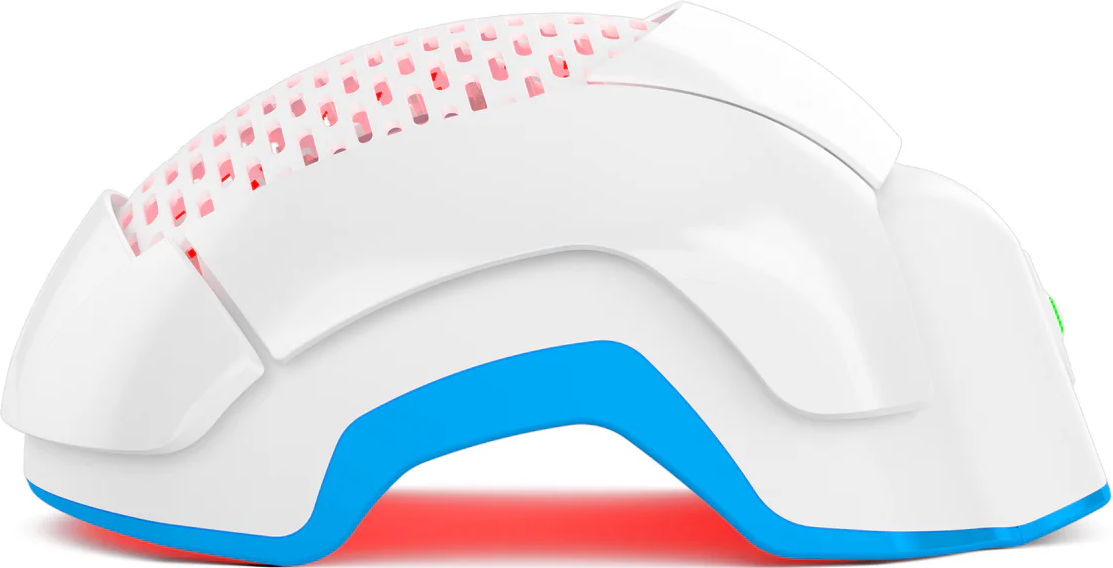
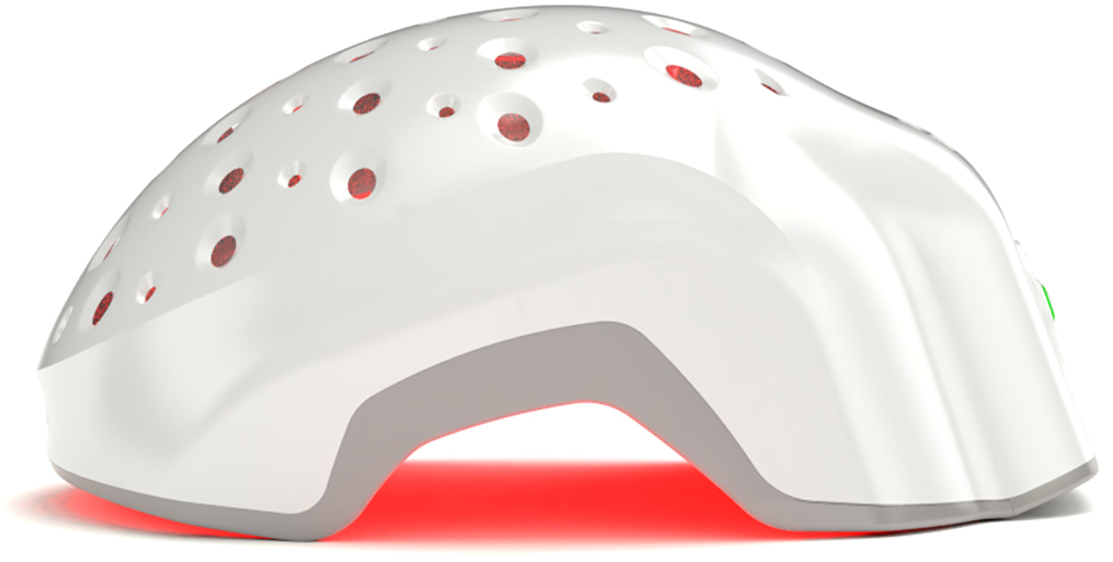
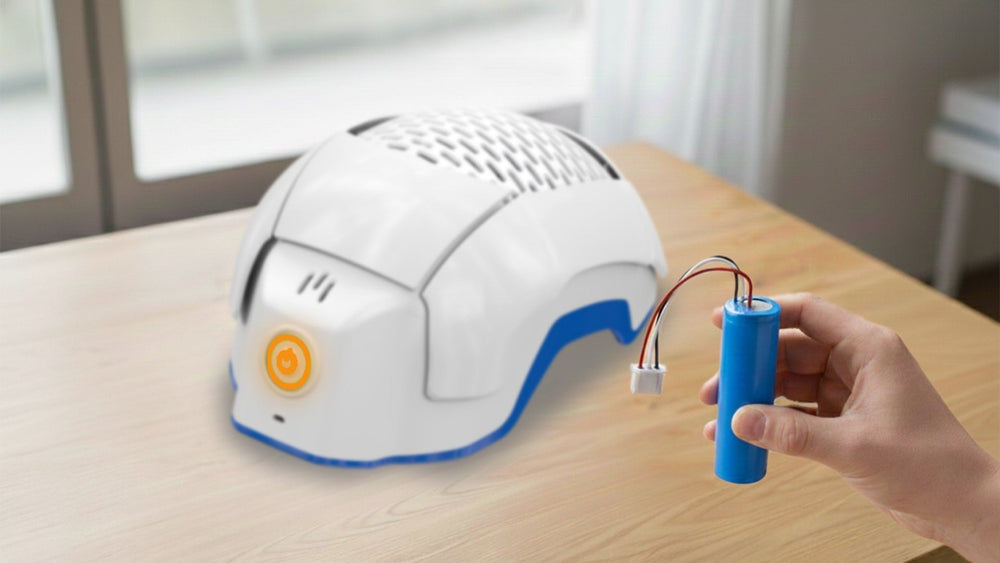
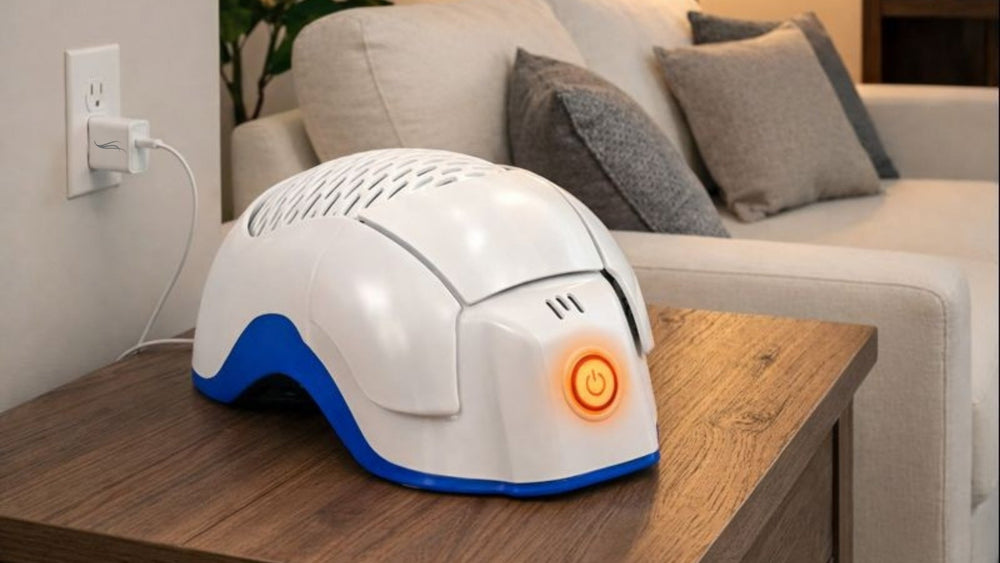
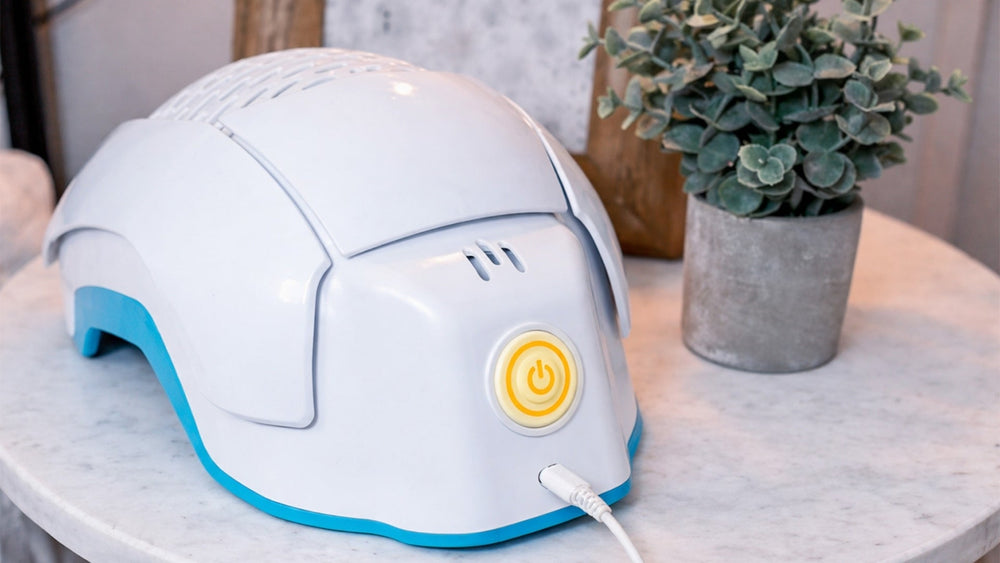
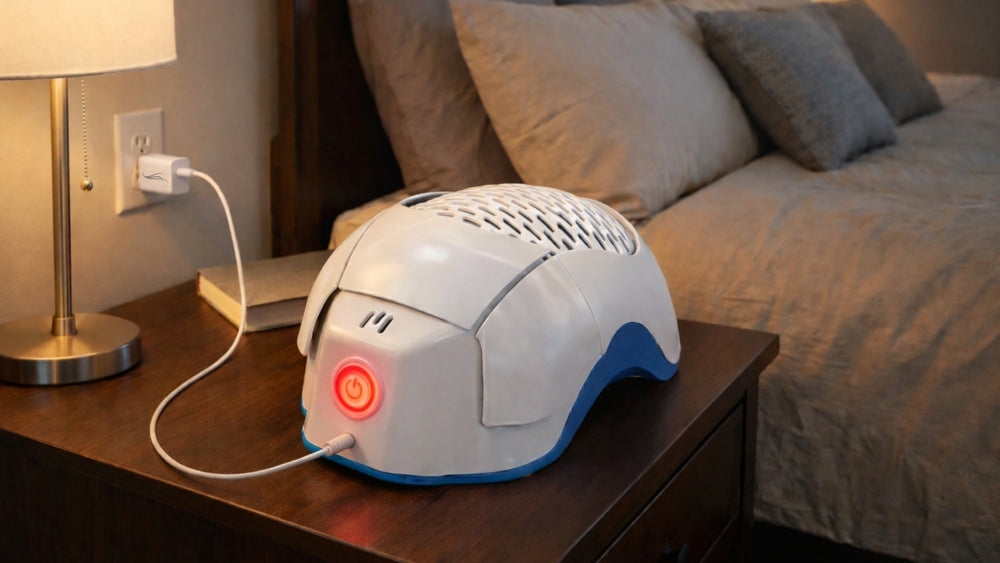
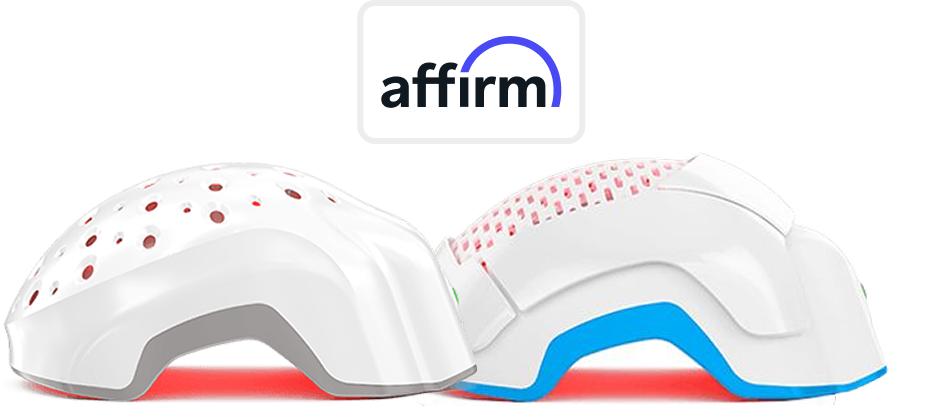
When the issue is follicle-level thinning, you need follicle-level treatment. Medications, low-level laser therapy, and transplantation are evidence-based management options for androgenetic alopecia. A meta-analysis of FDA-approved home-use low-level light and laser devices concluded that low-level light or laser therapy is potentially effective for pattern hair loss, and the FDA clearance documentation for Theradome describes its intended use as promoting hair growth via photobiostimulation.
That difference matters more than people expect. A strand product can make damaged hair look and behave better. A follicle treatment is trying to influence the growing apparatus itself.
Where Most Hair Products Fall Short
Most products live on the surface. Useful surface work, sure. Conditioner matters. Repair matters. Cosmetic elegance matters more than some people admit. But if the underlying issue is androgenetic alopecia, telogen effluvium, inflammation, thyroid disease, or iron deficiency, a prettier strand routine will not settle the root cause by itself. That is why people feel misled so often. They are using a shaft solution for a follicle problem.
And to be fair, the marketing language across hair care has trained people to expect impossible things from bottles.
A More Complete Approach to Hair Health
The sensible approach is not either-or. It is shaft care for damaged hair and cause-based treatment for true hair loss.
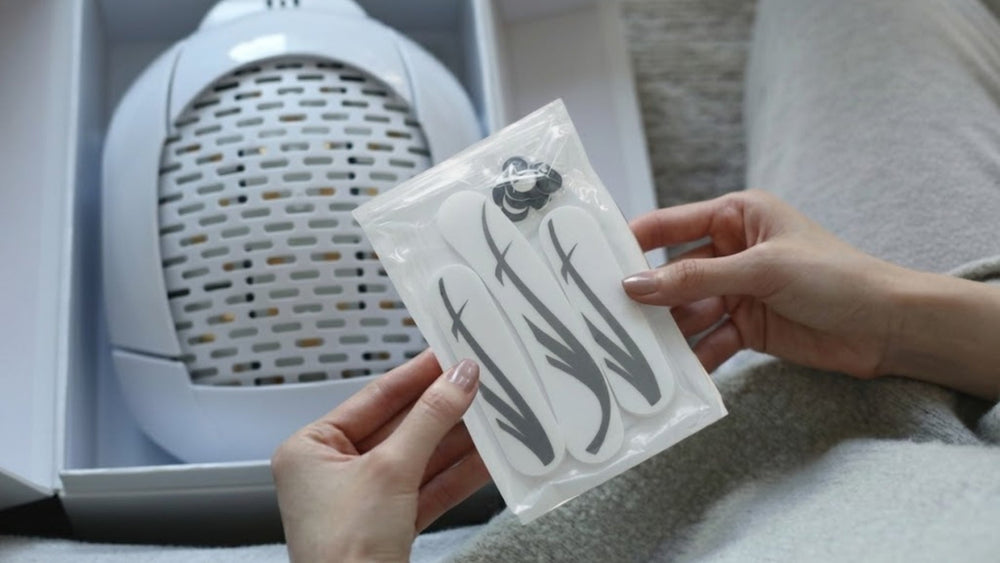
If you have chemically stressed hair, a bond-building product may have a reasonable place in the routine because the hair-fiber literature supports disulfide-bond repair and improved mechanical behavior. If you also have real thinning at the root, then it makes sense to add a treatment that actually targets the follicle, whether that is a prescription option when appropriate, or an FDA-cleared low-level laser device used consistently. Theradome’s FDA clearance paperwork identifies it as a low-level laser therapy device intended to promote hair growth via photobiostimulation, which is a very different job from what a bond builder does.
Different tools. Different jobs.
Conclusion
Olaplex is not well supported by published evidence as a direct cause of follicle-level hair loss in the general sense people usually mean. What is more plausible is a mix of breakage, scalp sensitivity, delayed shedding from another trigger, or an underlying hair-loss condition becoming obvious at the same time.
So if your hair feels worse after using it, do not dismiss your experience… but do not jump straight to the wrong conclusion either. Check whether you are seeing snapping or root shedding. Pay attention to scalp symptoms. And if thinning is happening at the root, shift quickly toward treatments and medical evaluation that actually address follicles, not just fibers.