






Yes, the hair you can see and touch is biologically dead. More precisely, the visible hair shaft above your scalp is made from non-living, keratinized cells. The living part is beneath the skin, inside the hair follicle, where new hair is produced. NCBI’s StatPearls separates hair into the visible shaft outside the skin and the follicle beneath the skin, noting that the shaft above the epidermis is made of non-living, keratinized epithelial cells.
So, your ponytail is technically dead.
But the follicle making it is very much alive.
That one split explains a lot: why hair can grow but cutting it does not hurt, why products can make strands feel better but cannot biologically “revive” them, and why true hair-growth support has to make sense at the scalp and follicle level.
Hair shaft vs hair follicle
|
Feature |
Hair shaft |
Hair follicle |
|
Where it is |
Above the scalp |
Under the skin |
|
Living status |
Non-living |
Living tissue |
|
Main material |
Keratinized cells |
Active follicle structures |
|
Has nerves? |
No |
Surrounding tissue has nerve supply |
|
Can heal itself? |
No |
Can respond to biological signals and disease processes |
|
Main role |
Appearance, texture, breakage, shine |
Growth, cycling, shedding, thinning |
What does “dead hair” actually mean?
Dead does not mean bad
When we say hair is dead, we are using a biology term, not insulting your ends.
The visible strand has already gone through a hardening process called keratinization. By the time it emerges from the scalp, it is no longer living tissue. It does not have blood vessels. It does not have nerves. It cannot rebuild itself after injury the way skin can. NCBI describes the shaft above the epidermis as non-living and keratinized, while the follicle below the skin remains living.
Dead, in this case, is normal.
Not tragic. Not dirty. Not “cut it all off immediately while sad music plays in the background.”
It simply means the strand is a formed fiber, not active tissue.
Why people confuse dead hair with damaged hair
Most people do not say “my hair is dead” because they just read a histology chapter over breakfast. They usually mean their hair feels dry, rough, split, frizzy, limp, gummy, overprocessed, or weirdly straw-like.

That is damaged hair, or at least hair that is acting damaged.
And yes, dead hair can still become damaged. A wool sweater is not alive either, but you can still scorch it, stretch it, snag it, bleach it into sadness, or wash it until it feels like a retired dishcloth. Same idea. Different bathroom drama.
The American Academy of Dermatology notes that fragile hair can break, and that habits such as rough handling, heat styling, tight hairstyles, and chemical services can add stress to the hair fiber. It also recommends conditioner, leave-ins, lower heat, gentler handling, and avoiding styles that pull too tightly.
So the cleaner distinction is this:
Dead hair is normal. Damaged hair is injured material.
That sentence will save people a lot of money.
What is hair made of?
The hair shaft: the part you see
The hair shaft is the visible part of hair above the scalp. It is made from keratinized cells, meaning cells that have hardened and become rich in keratin, a tough structural protein.
This is where people sometimes get a bit imprecise. Hair is often called “dead skin cells,” but that is not the best wording. It is more accurate to call it a specialized keratinized structure produced by the hair follicle. Each strand has two main structures: the visible shaft outside the skin and the follicle underneath the skin surface. The shaft above the epidermis is made of non-living, keratinized epithelial cells.
In normal words: the strand is a finished fiber.
A very personal fiber, apparently, because one bad hair day can emotionally rearrange an entire morning.
The cuticle, cortex, and medulla
The shaft is not just one plain tube. It has structure.
The cuticle is the outer layer. Think of it as the strand’s protective surface. When the cuticle lies flatter, hair often feels smoother and looks shinier. When it is roughed up, hair may tangle, snag, frizz, or feel like it has been arguing with a cheap hotel towel.
The cortex makes up much of the fiber and helps determine strength, texture, and color. The shaft includes a cortex, surrounding cuticle cells, and sometimes a central medulla, with the cortex playing a major role in the hair’s physical and mechanical properties.
The medulla is the inner region. Not every hair has a prominent one, and for most everyday hair-care decisions, it is not the star of the show.
Still, structure matters. A strand can be dead and still have architecture. Tiny architecture, but there it is.
Why damaged hair cannot truly “heal”
Living skin can repair itself because living cells respond, divide, and rebuild tissue.
Visible hair cannot do that.
Once the shaft is split, cracked, chemically weakened, or heat-damaged, it cannot biologically heal itself. A conditioner may smooth the feel. A leave-in may reduce friction. A protein or bond-support product may temporarily help the fiber behave better, depending on the formula and damage pattern.
But “revive” is not the right biological word.
The AAD’s damage guidance is useful here because it does not pretend hair-care products perform resurrection. It says conditioner coats strands and can reduce breakage and split ends, and it recommends practical steps such as gentle shampooing, conditioner, leave-in products, lower heat, and looser styling.
The sane goal is not to bring dead hair back to life.
It is to protect what is already grown while supporting the living follicle where growth actually begins.
What part of hair is alive?
The hair follicle: the living factory under the scalp
The follicle is the living structure beneath your skin that produces the hair shaft. It sits below the surface, tucked into the skin, doing the actual biological work while the visible strand gets all the attention and most of the expensive creams.
NCBI describes the follicle as the structure under the skin surface, while the shaft is the visible portion outside the skin. The follicle also contains root sheaths and enlarges at the base to form the hair bulb.
The follicle belongs to a larger unit that includes the sebaceous gland and the tiny arrector pili muscle, which is involved in goosebumps. Follicles also have nerve supply, which helps explain why hair movement and pulling can be felt through the skin and follicle area.
The hair bulb, matrix, and dermal papilla
At the base of the follicle sits the hair bulb. This is where the strand starts being made.
Inside that lower follicle region, matrix cells are actively dividing and moving upward. As those cells rise, they begin to harden and become part of the shaft. StatPearls describes the hair bulb as the region that actively produces hair, and it identifies the matrix as the area where mitotically active cells move upward and integrate into the hair shaft.
The dermal papilla sits inside this lower follicle area and helps regulate follicle behavior through signaling. It is an important structure associated with the signals that influence shaft size and color.
Melanocytes also matter here because they help provide hair color while the strand is being made. So when gray hair appears at the roots, it is not because the already-grown strand suddenly had a midlife crisis halfway down its length. The new fiber is being produced with less pigment.
Why this distinction matters for hair growth
This shaft-versus-follicle split is the whole point of the article.
If your ends are rough, split, or snapping, your problem is likely happening along the shaft. That calls for gentler care, less friction, lower heat, conditioning, and sometimes a trim.
If your part is widening, your crown looks thinner, your temples are changing, or shedding suddenly feels out of character, the follicle and hair cycle deserve attention. That is a different conversation.
Same head. Different problem.
And treating them like the same thing is how people end up putting expensive masks on thinning hair and wondering why the mirror is still being rude.
If hair is dead, how does it grow?
Hair grows because the living follicle produces new material at the root.
The tip of your hair is not “growing.” It is just being carried farther from the scalp as new keratinized material forms below it and pushes upward. By the time the strand is visible, it has already become non-living.
So trimming the ends does not send a growth memo to the follicle. It can make hair look cleaner, reduce split ends, and help length retention if breakage is the issue, but it does not speed production at the root.
Would be convenient, though. Very annoying that biology did not ask us.
The hair growth cycle
Hair follicles do not produce hair in one endless straight line. They cycle.
The major phases are anagen, catagen, telogen, and exogen. Anagen is the phase when the follicle grows a new shaft, catagen as regression, telogen as rest, and exogen as shedding. It also notes that scalp hair can remain in anagen for years, while eyebrow and eyelash growth phases are much shorter.
Plainly:
- Anagen: the active growth phase.
- Catagen: the brief shift away from active growth.
- Telogen: the resting phase.
- Exogen: the hair releases and sheds.
This is why some shedding is normal. Your follicles are not all clocking in and clocking out together, thank God. If they did, wash day would look like a tiny horror film in the drain.
Why scalp hair can grow longer than eyebrows
Scalp hair grows longer because many scalp follicles stay in the active growth phase for much longer than eyebrow or eyelash follicles. Scalp anagen can last about 2 to 6 years, while eyebrow and eyelash anagen lasts only a few months.
That is why eyebrows usually stop at eyebrow length and do not politely become curtains.
Why does cutting hair not hurt, but pulling hair does?
The shaft has no nerves
Cutting hair does not hurt because the shaft is non-living and has no nerves. That is the simple bit.
If you cut the visible strand, you are cutting keratinized fiber. Not living tissue. Not nerve-rich skin. Not the follicle.
This is also why a haircut only hurts emotionally when the fringe comes out three inches shorter than agreed.
The follicle and scalp can feel pain
Pulling hair is different because tugging a strand also tugs on the follicle and the skin around it.
Hair follicles have sensory and autonomic nerve supply, and that sensory information from hair stimulation contributes to touch detection.
So when a tight ponytail starts to ache, that is not the dead shaft complaining. It is your living scalp and follicle area asking, with increasing irritation, why you have chosen violence.
Tight hairstyles matter beyond discomfort too. Frequently wearing hair tightly pulled back can cause traction alopecia over time. So, avoid styles that pull strongly on the hair.
When “hair pain” is actually a scalp warning
A little tension from a tight style is one thing. Persistent scalp pain, burning, itching, redness, scaling, pustules, tenderness, or sudden shedding is another.
That is when “my hair hurts” may actually mean “my scalp needs a closer look.”
A dermatologist or qualified hair-loss professional can help separate styling tension from inflammation, infection, autoimmune hair loss, dermatitis, or other scalp conditions. Hair loss has many causes and finding the cause improves the chance of getting the right result.
Is dead hair the same as damaged hair?
No. Dead hair and damaged hair are not the same.
Every visible strand is dead. That is normal. Damaged hair is hair whose structure has been weakened, cracked, roughened, overprocessed, split, or made more fragile.
That distinction matters because it changes the solution. You do not need to “fix” hair because it is dead. It is supposed to be. You care for it because dead fibers can still be worn down by heat, friction, chemical processing, UV exposure, tight styling, rough brushing, and general life.
General life, by the way, is shockingly rude to hair.
Common signs your hair is damaged, not just “dead”
Damaged hair may show up as split ends, mid-shaft breakage, dullness, frizz, a rough feel, increased tangling, loss of elasticity, or fragile little snapped pieces around the sink.
Bleached or heavily processed hair may feel porous, gummy when wet, or brittle when dry. Heat-stressed hair may lose its usual bounce and start snapping in small bits. Tight styling may cause soreness, breakage, or thinning at high-tension areas.
AAD notes that thinning or falling hair is fragile and easily damaged, and it recommends conditioner after shampoo, leave-ins or detanglers, microfiber towels, less heat, and looser hairstyles to reduce breakage, split ends, and further hair loss from pulling.
What hair products can honestly do
Hair products can improve how the shaft looks, feels, and behaves.
Conditioners can coat the strand and reduce friction. Leave-ins can help with detangling. Some oils can add slip or reduce roughness. Certain protein or bond-support formulas may temporarily reinforce weak areas or improve manageability, depending on the type of damage and the formula used.
But they do not make the strand alive.
This is where marketing language gets a bit theatrical. “Repair” might mean smoother feel, improved combing, less breakage during handling, or temporary structural support. It should not be read as biological healing.
A dead shaft cannot regenerate itself.
When trimming is the sanest option
Split ends cannot be permanently healed back into untouched hair.
They can be temporarily smoothed. They can be made less visible. They can be treated so the strand feels less ragged for a while.
But if the end is split, the most reliable way to remove the split is to cut it off.
Sometimes scissors are the adult in the room.
If hair is dead, why does it turn gray?
Hair color is added while the strand is being made
Hair color comes from pigment added during hair formation inside the follicle. Melanocytes in the follicle region contribute melanin as the shaft is produced.
Melanocytes in the hair bulb and matrix region are part of the system that gives hair its color while the shaft is being formed.
So gray hair usually does not mean an old strand suddenly changed its mind halfway down. It means newer hair emerging from the follicle has less pigment.
That is why gray shows up at the roots.
The strand is basically arriving with a different paint job.
Why gray hair starts at the root
Because new hair is made at the root, pigment changes appear there first.
If a follicle produces less melanin, the new growth coming out of that follicle may appear gray, silver, white, or less pigmented. The already-grown length usually stays the color it was when it formed, unless it is affected by dye, bleaching, environmental exposure, or cosmetic changes.
Simple.
Not always emotionally simple, but mechanically simple.
What not to claim about gray hair
Be careful with anything promising to reverse gray hair.
Some medical conditions, deficiencies, or medication-related changes may affect hair appearance in specific cases, but ordinary graying is not something a shampoo, gummy, or casual supplement can reliably reverse. Broad claims about “restoring natural color” should be treated with suspicion unless they are backed by strong clinical evidence in the exact population being discussed.
Does dead hair mean hair loss is hopeless?
No. Shedding does not automatically mean balding.
Hair follicles naturally cycle, and shedding is part of that cycle. The hair cycle is growth, regression, rest, and shedding, and hair renewal continues throughout life.
A shed hair may have a tiny pale bulb at the end. That does not automatically mean the follicle died. Often, it means the hair was released as part of the cycle.
Still, context matters.
A few hairs on your shirt is not the same as sudden handfuls in the shower. A seasonal wobble is not the same as a widening part that keeps widening. This is where people either panic too early or wait too long. Neither is ideal.
Breakage is a shaft problem
Breakage means the hair fiber snapped somewhere along its length.
Broken hairs are often shorter, uneven, or scattered through the hair. You may notice little pieces around the sink, rough ends, flyaways, or a loss of length even though the roots are still producing hair.
That is different from follicle-driven thinning.
Breakage can make your hair look thinner, yes. It can make the ends look sparse. It can make length retention feel impossible. But it does not automatically mean your follicle has stopped working.
This is why the earlier split matters: strand problem, follicle problem, or both?
That one question saves a lot of guessing.
Thinning often points to follicle biology
Gradual thinning at the crown, widening along the part, temple recession, or finer regrowth may point toward follicle-level change, especially in androgenetic alopecia.
Androgenetic alopecia is a common pattern hair-loss condition in which susceptible follicles gradually produce thinner hairs. The AAFP review describes hair growth phases and notes that androgenetic alopecia may be diffuse or patterned, while treatment decisions depend on the cause and clinical context.
Hair loss has many causes and diagnosis matters before treatment. It recommends seeing a board-certified dermatologist because earlier evaluation can improve the chance of getting useful results.
So if the scalp density is changing, do not treat it like dry ends.
That is like using furniture polish on a leaky roof. Satisfying for twelve seconds, then deeply unhelpful.
When to stop guessing and get checked
Consider professional evaluation if you notice sudden shedding, patchy loss, scalp pain, redness, scaling, burning, pustules, fast part widening, temple recession, crown thinning, or hair loss after illness, childbirth, surgery, medication changes, restrictive dieting, or major stress.
Also get help if the worry is starting to eat your day.
Hair anxiety can get loud. It can make one shower drain look like a courtroom exhibit. A professional can help sort normal shedding from breakage, telogen effluvium, androgenetic alopecia, traction alopecia, inflammatory scalp disease, alopecia areata, or another cause.
The point is not to scare you.
The point is to stop guessing in the dark with a wet comb in your hand.
Can dead hair be repaired?
It can be improved, but not biologically revived
Dead hair can be improved cosmetically. It cannot be biologically revived.
That is the honest version.
You can make the shaft feel softer, look smoother, tangle less, break less during handling, reflect light better, and behave more politely. You can reduce future damage. You can trim split ends. You can use products that coat or reinforce the fiber.
But the strand will not heal itself from the inside because it is not living tissue.
What actually helps the shaft look and behave better
The boring things help more than people want them to.
Use conditioner after shampooing. Detangle gently. Reduce rough towel rubbing. Use a leave-in if the hair snags easily. Keep heat lower when you can. Avoid holding hot tools on the same section for too long. Give tight hairstyles a rest. Be careful with repeated bleach, relaxers, perms, or chemical straightening.
AAD recommends many of these same damage-reduction steps, including conditioner after shampoo, leave-in conditioner or detangler, microfiber towels, limiting hot tools, lower blow-dryer heat, avoiding tight pulled-back styles, and combing gently.
What cannot be fixed with surface care
Conditioner cannot reverse follicle miniaturization.
Oil cannot diagnose unusual shedding.
A mask cannot treat alopecia areata.
A shampoo cannot “feed” the dead shaft.
Surface care matters, but it has a lane. When hair loss is driven by follicle cycling, genetics, inflammation, autoimmune activity, medication, illness, or a deficiency, the answer is not simply to coat the strand harder.
What supports the living part of your hair?
Start with the cause, not the panic purchase
If the concern is growth, shedding, or thinning, the first question is not “what should I buy?”
It is “what is happening?”
Hair loss has many causes and finding the cause gives you a better chance of getting the result you want. It also notes that dermatologists are trained to diagnose conditions affecting hair, skin, and nails.
That matters because different causes need different responses. Telogen effluvium, androgenetic alopecia, traction alopecia, alopecia areata, scalp psoriasis, fungal infection, medication-related shedding, and breakage are not the same beast wearing different hats.
Some recover. Some progress. Some need treatment. Some need a styling change.
Some just need you to stop bleaching the poor thing every time life gets stressful. We’ve all had a week.
Nutrition matters when there is a real gap
A balanced diet supports normal hair biology, including follicle cell activity. Protein, iron, and other nutrients can matter when intake is low or deficiency exists.
But supplements are not automatically useful just because hair is shedding. Taking supplements to regrow hair can seem easy, but too much of certain nutrients can worsen hair loss, and a blood test can help determine whether someone is low in specific nutrients.
So yes, nutrition matters.
But random supplement stacking? Different story.
Especially in hair loss, “more” is not always smarter. Sometimes “more” is just expensive urine and a confused lab result.
Evidence-based hair-growth treatment is follicle-directed
If a treatment is meant to support growth, it needs to make sense at the follicle level.
Common evidence-based options for androgenetic alopecia include minoxidil, finasteride for appropriate male patients, and certain laser or light-based devices, depending on the diagnosis, patient, and product. Minoxidil can help early hair loss, though it cannot regrow an entire head of hair, and it may take 6 to 12 months to see results.
Topical minoxidil is safe and effective for androgenetic alopecia in women, and finasteride is used for male androgenetic alopecia, with side effects that should be discussed.
Growth concerns belong with the follicle. Surface concerns belong with the shaft. Sometimes both need attention, but they are not the same job.
Where does Laser Phototherapy fit in?
Laser Phototherapy, or LPT, fits into this conversation because the visible hair shaft is not the part we are trying to “wake up.”
The follicle is.
The follicle is living tissue. It contains active cells involved in producing the hair shaft, managing the hair cycle, and moving hairs through growth, rest, and shedding phases. So if the goal is to support real hair growth, the target cannot just be the dead strand sitting above the scalp. It has to make biological sense at the follicle level.
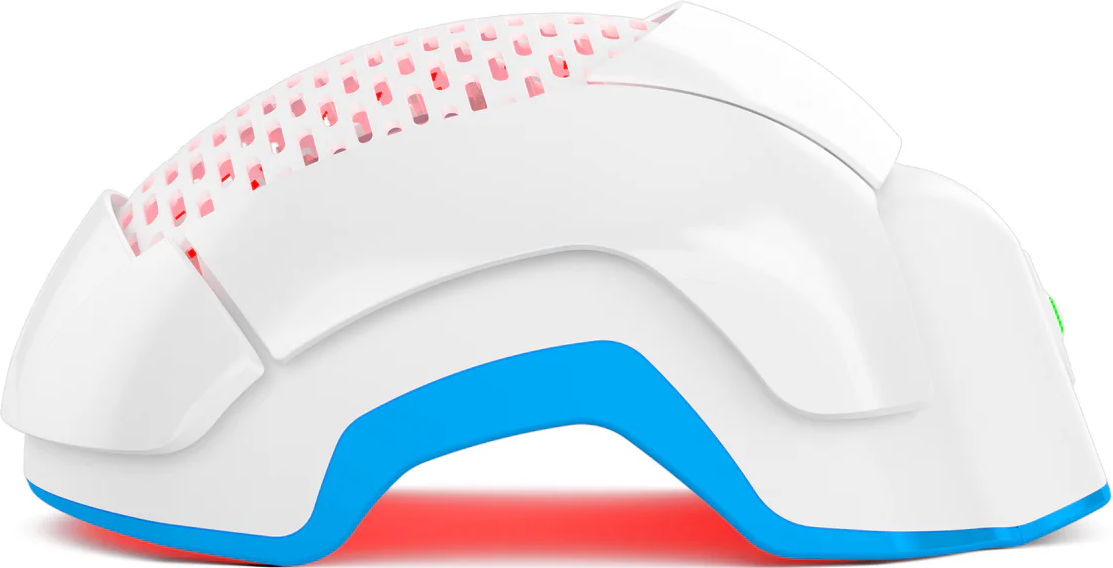
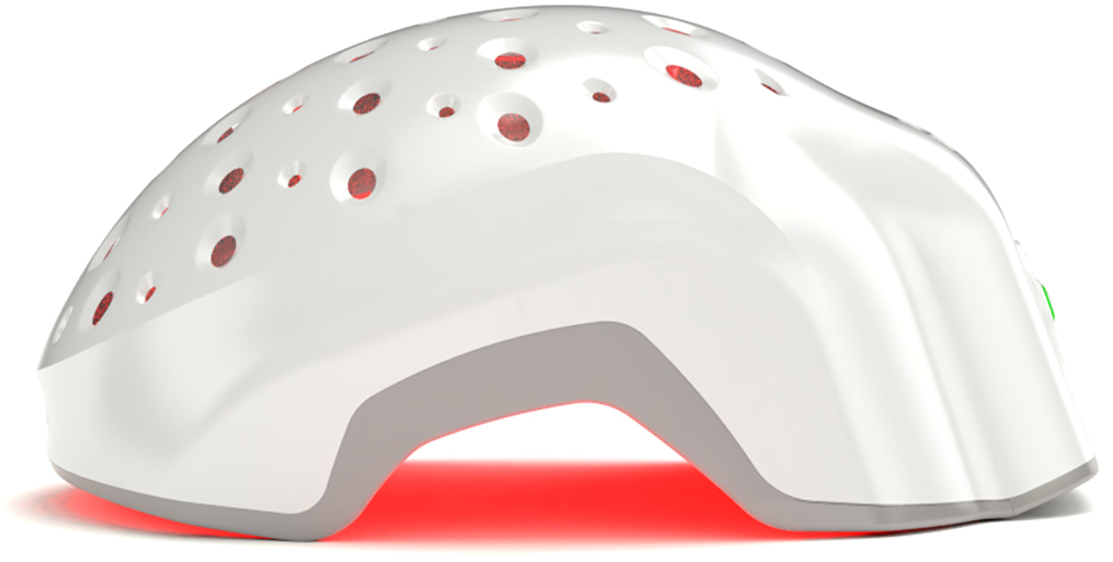
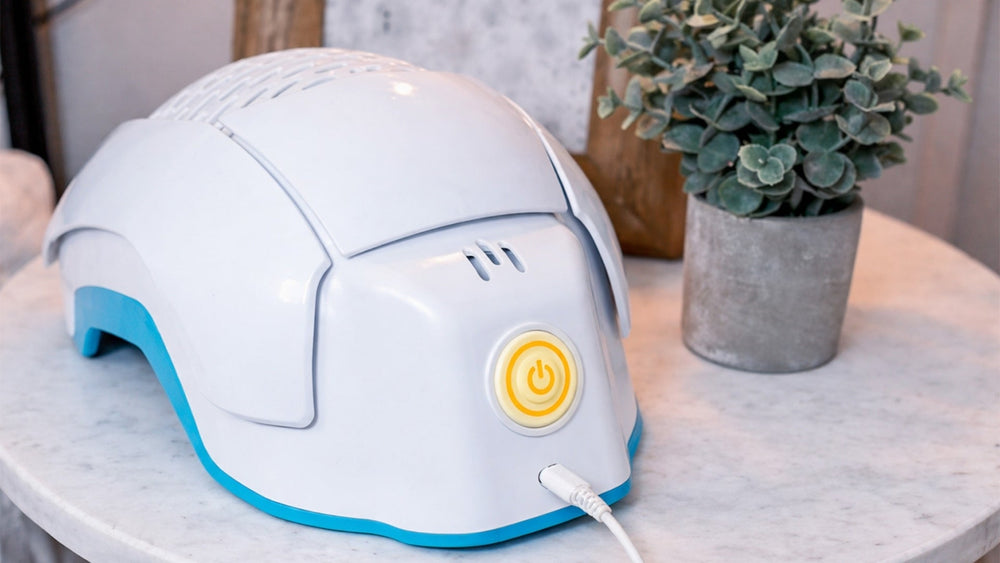
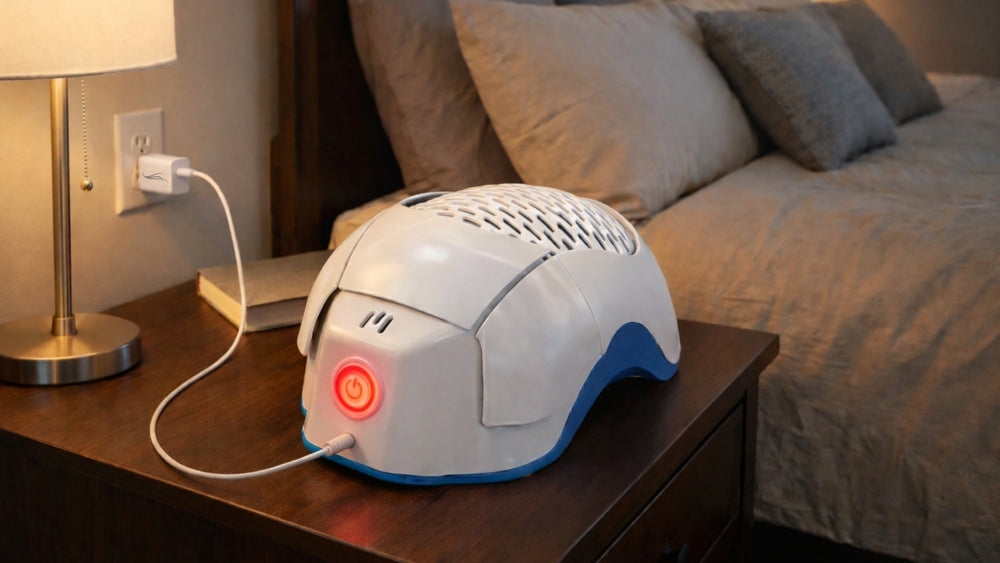
LPT is designed around that idea. Low-level laser light is aimed at the scalp so it can reach the follicle area, where living cells can respond to light-based signals. In the broader research, this is often discussed under low-level laser therapy, low-level light therapy, or photobiomodulation. One proposed mechanism is that specific wavelengths of light may interact with mitochondria, the cell’s energy-related structures, helping influence cellular activity in ways that can support follicles during the growth phase.
Cell behavior.
LPT is not smoothing the dead shaft like a conditioner. It is not sealing split ends. It is not making a fried strand suddenly act innocent again. Its relevance is deeper down, where the follicle is still alive and biologically responsive.
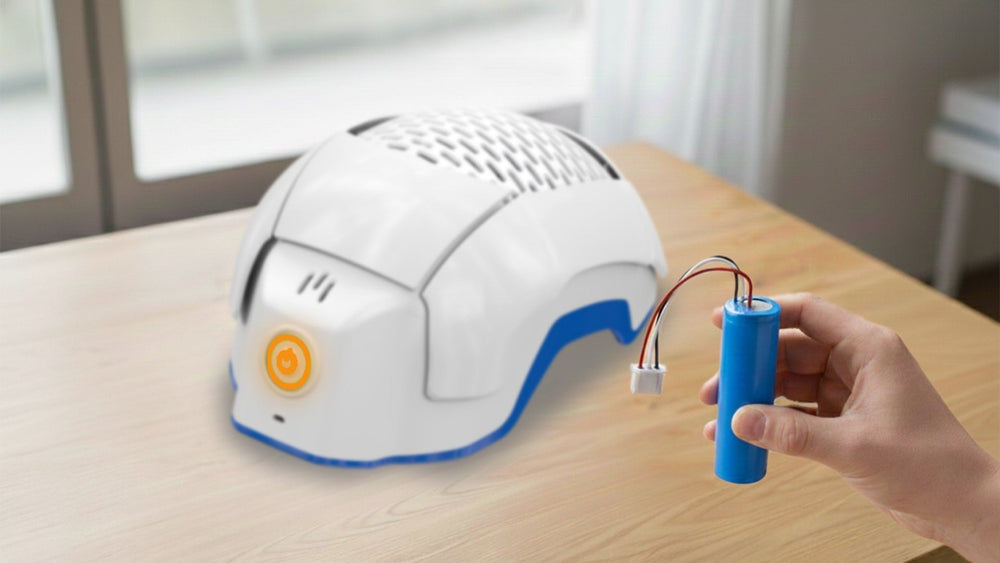
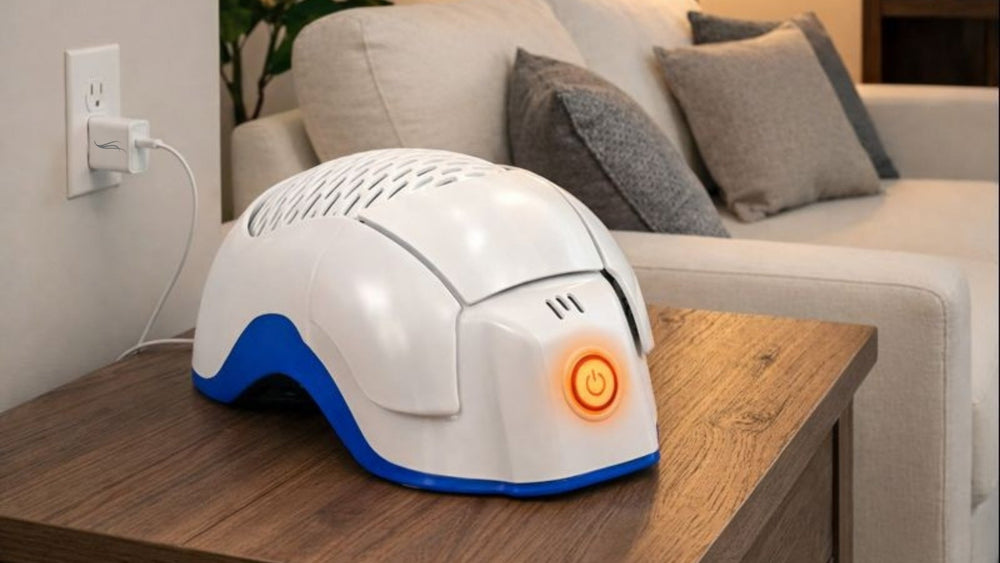
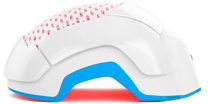
For pattern hair loss, especially androgenetic alopecia, that follicle-level focus matters because the issue often involves follicles producing thinner, weaker hairs over time. Laser phototherapy devices, including laser helmets, have been studied for hereditary hair loss, and some clinical research has found improved hair density compared with sham devices in men and women. The evidence is not a blank check for every kind of shedding, but it does support LPT as a follicle-directed option worth discussing in the right context.
The hair shaft is dead, but the follicle is alive. LPT belongs in the second conversation.
The living one.
Why “laser” does not mean surgical laser
The word “laser” makes some people tense up. Fair. Hollywood has done lasers no favors.
But lasers are not one thing. A surgical laser used to cut tissue is different from a low-level laser device designed for non-heating use. The difference depends on wavelength, power, exposure, design, and use instructions.
LASER stands for Light Amplification by Stimulated Emission of Radiation. In this context, “radiation” means emitted energy, not automatically the scary ionizing kind people often think of.
Used properly, LPT is not trying to burn, cut, or heat the scalp. It is meant to deliver controlled light energy to the follicle area. That is the whole point.
Still, safety wording should stay grown-up. Low-power does not mean “impossible to misuse.” The cleaner claim is that these devices are non-heating and safe when used as directed.
Quick myth check: what “dead hair” does and does not mean
Does trimming make hair grow faster?
No. Trimming affects the shaft, not the follicle.
It can remove split ends, make hair look neater, and reduce breakage that keeps length from showing. But it does not make the follicle produce hair faster.
Does shaving make hair thicker?
No. Shaving cuts the shaft bluntly, which may make regrowth feel sharper or look temporarily denser at the surface.
The follicle itself has not suddenly become more productive. It is just a blunt edge doing blunt-edge things.
Can conditioner feed hair?
No. Conditioner does not feed the hair shaft because the shaft is non-living.
What conditioner can do is coat the strand, reduce friction, improve slip, and help cut down breakage and split ends. Conditioner coats strands and reduces breakage and split ends.
Does a white bulb mean the follicle died?
Usually, no.
A small pale bulb at the end of a shed hair often means the hair was released from the follicle as part of the cycle. It does not automatically mean permanent loss. Since follicles cycle through growth, rest, and shedding, the presence of shed hairs does not, by itself, diagnose balding.
Context matters again.
It keeps doing that.
Is “dead hair repair” real?
Only in a limited cosmetic or structural-support sense.
A product may help a dead strand feel smoother, look shinier, break less during handling, or temporarily behave better. But it cannot make the shaft alive. It cannot make a split end permanently whole. It cannot treat follicle miniaturization from the outside of the strand.
“Repair” needs a translator.
What should you do if your hair feels dead?
If it feels dry, rough, or frizzy
Start with the shaft.
Use a gentle shampoo. Condition after washing. Add a leave-in or detangler if hair catches easily. Use a microfiber towel or soft T-shirt instead of rough towel-rubbing. Reduce high heat when possible. Be kinder when detangling wet hair.
AAD recommends conditioner after every shampoo, leave-in products or detanglers to reduce breakage, split ends, and frizz, microfiber towels to reduce drying time, and less reliance on hot tools.
If it keeps breaking
Look at what is happening along the strand.
Are the broken pieces short? Are the ends splitting? Does hair feel elastic in a bad way when wet? Did the breakage start after bleach, heat, a relaxer, extensions, or constant tight styles?
If yes, your living follicle may not be the main problem. Your shaft may be taking a beating.
You may need gentler handling, fewer chemical services, lower heat, a protective leave-in, less tension, and sometimes a trim.
The trim is not punishment. It is triage.
If it is shedding more than usual
Track what changed.
Did shedding increase after illness, surgery, childbirth, medication changes, restrictive dieting, intense stress, or a major health shift? Is it sudden? Is it lasting longer than expected? Is the scalp sore, red, itchy, scaly, or inflamed?
See a board-certified dermatologist because hair loss has many causes, and getting to the cause improves the chance of useful treatment.
A little shed hair is normal. A major change deserves attention.
If it looks thinner at the scalp
Look at the pattern.
A widening part, crown thinning, temple recession, or finer hair near the scalp can point toward follicle-level changes rather than simple shaft damage.
Take consistent photos in the same lighting every few weeks. Note the timeline. Bring that information to a dermatologist or qualified professional if the change continues.
Do not treat scalp thinning like dry ends.
Conclusion
So, is hair dead?
The strand you see is, yes. The follicle beneath it is not.
That tiny difference explains why hair can grow from the root but not heal at the ends, why cutting does not hurt but pulling does, why conditioner can help the shaft feel better but cannot treat true thinning, and why growth support has to make sense at the follicle level.
Dead hair is not bad hair. It is normal hair.
But if the shaft is breaking, protect it. If the scalp looks thinner, get the cause checked. And if you are choosing a growth-support option, choose one that respects the biology instead of sweet-talking the dead part.
Your hair is not simple.
Neither are you, frankly.