







Can amoxicillin cause hair loss? Not directly, as far as the evidence shows. Hair loss isn't a listed side effect on amoxicillin's FDA label, and the shedding some people notice a couple of months after a course is usually a delayed reaction to being sick, not to the drug itself. It's alarming to see, but it usually reverses.
The name for it is telogen effluvium. A high fever, an infection, or any big physical stress can push a batch of growing hairs into their resting phase at the same moment, and roughly three months later they shed together. The antibiotic's effect on your gut bacteria might add to the load, but that link is far less settled.
Below you'll find how to tell this apart from pattern hair loss, which blood tests are worth asking about, what a large 2026 Swedish study found about amoxicillin and gut bacteria, and when a shedding episode deserves a dermatologist instead of more waiting.
Does Amoxicillin Directly Cause Hair Loss?
Amoxicillin is a broad-spectrum, penicillin-class antibiotic prescribed for ear, sinus, throat, chest, and urinary infections, among others. Its FDA prescribing information names diarrhea, rash, vomiting, and nausea as the most common adverse reactions, and hair loss isn't among them, not even in the postmarketing reports. The only "hair" on that whole label is black hairy tongue, which stays in your mouth.
A label isn't the last word, though. Postmarketing lists come from voluntary reports, and we found no study that follows hair loss after amoxicillin specifically. So the careful way to put it is that a direct effect hasn't been shown, which is different from saying it has been ruled out. What is well documented is the process that explains most cases, and it doesn't need the drug to be toxic to your follicles at all.
Wondering about a different antibiotic? Our broader guide covers whether antibiotics in general can cause hair loss.
How Can Amoxicillin and the Infection Behind It Trigger Hair Loss?

First, the mechanism in plain terms. On a healthy scalp, about 90 percent of follicles are growing at any moment and about 10 percent are resting, according to a Cutis review of medication-induced hair loss. A big physical stress can send many growing follicles into rest at once. The resting phase lasts about three months, then those hairs let go. That's why a fever in January can show up in your brush in April.
Four routes are worth knowing about. Only the first has solid support, so each one below is labeled with how strong the case is.
- Illness and fever (well supported). Physical stress is the classic trigger. StatPearls describes telogen effluvium as a reactive process set off by metabolic stress, hormonal changes, or medications, and American Family Physician lists febrile illness among the usual causes of this diffuse shedding.
- Gut bacteria disruption (plausible, unproven). Antibiotics change the bacteria in your colon, and the amoxicillin label says as much. Whether that change is big enough to stress hair follicles has not been shown.
- Nutrient absorption (a theory). If a rough patch in your gut ever reduced how well you absorb iron, zinc, or B vitamins, hair could feel it. Nobody has demonstrated this after amoxicillin, which is why testing beats guessing.
- Rare allergic-type reactions (poorly documented for hair). Penicillin-class drugs can cause immune reactions, and the label warns about serious skin reactions. A new rash, swelling, or blistering means calling your doctor that day, whatever your hair is doing.
One more suspect deserves a mention: everything else you took while you were sick. The same Cutis review notes that many medicines can trigger telogen effluvium and that the cause is often hard to pin down, because shedding shows up months after the trigger. Bring your full medication list to any appointment.
What Did the 2026 Swedish Study Find About Amoxicillin and Gut Bacteria?
Researchers at Uppsala University matched Swedish prescription records with stool samples from 14,979 adults, then asked whether antibiotics taken over the previous eight years still showed up in people's gut bacteria. For some, they did. According to the university's summary, clindamycin, fluoroquinolones, and flucloxacillin had the biggest effects. In the paper itself, penicillin V, extended-spectrum penicillins such as amoxicillin, and nitrofurantoin were associated with only a few species.
That's good news for amoxicillin's long-term footprint, and it's worth being exact about its limits. Each person gave a single stool sample, so the study shows associations years later, not what happened in the weeks right after a course. It measured bacteria, not hair. Nothing in it tells us whether any antibiotic made anyone shed.
So here's the fair way to use it. If you were afraid amoxicillin had wrecked your gut for years, you can relax a little. If you want to know why your hair is falling out now, the illness is still the better suspect.
What Does Antibiotic-Related Hair Loss Look Like?
Three features tend to show up together.
- Delayed onset. Hairs in the resting phase hold on for about three months before they fall, so shedding usually starts one to six months after the trigger. That gap is why people blame this week's shampoo for last winter's fever.
- Even thinning across the scalp. Hair comes out in handfuls in the brush or the shower drain, and the whole head looks thinner. You don't get a single round bald spot or a hairline sliding backward, which point to other conditions.
- Reversible. The follicles aren't damaged, only mistimed. A review in Cureus reports that acute telogen effluvium, meaning shedding for under six months, remits in about 95 percent of cases.
How much is too much? Most people lose roughly 50 to 100 hairs a day, according to the International Society of Hair Restoration Surgery. During a shed you may lose more, but a drain is a poor measuring tool. A monthly photo of your part and crown, taken in the same light, tells you far more.
Is It Telogen Effluvium, Pattern Hair Loss, or Alopecia Areata?
These three get mixed up all the time, and they behave very differently. Family medicine guidance separates them mainly by pattern, timing, and the pull test.
|
Telogen Effluvium |
Androgenetic Alopecia |
Alopecia Areata |
|
|
Pattern |
Even thinning across the whole scalp |
Part, crown, and hairline, thinning gradually |
Smooth, round or oval patches |
|
Onset |
Weeks to months after a trigger |
Slowly, over years |
Can appear suddenly, no illness needed |
|
Pull test |
Positive across the scalp |
Often negative away from the thinning area |
Positive around patch edges; diffuse forms can mimic telogen effluvium |
|
Usual course |
Settles on its own once the trigger passes |
Progressive without treatment |
Unpredictable, may recur |
|
Runs in the family? |
Not a factor |
Often |
Sometimes |
Two things can be true at once, though. A study in Archives of Dermatology (now JAMA Dermatology) points out that telling chronic telogen effluvium from androgenetic alopecia can be hard when both are present in the same person. So if your part keeps widening after the shedding has calmed down, or the thinning concentrates at the crown and temples, that is pattern hair loss showing itself, and the antibiotic didn't cause it.
How Do You Evaluate Hair Shedding After Amoxicillin?
How Do You Track the Timeline?
Start by counting backward from the day the shedding began. Look at the one to six months before it, with three months as the likeliest spot, and write down every illness, fever, medicine, surgery, birth, big weight change, and stressful stretch. Then photograph your part and crown once a month in the same light. Photos beat memory, and they give your doctor something to compare.
Which Blood Tests Are Worth Asking About?
Doctors commonly start with thyroid function (TSH), ferritin, vitamin B12, and vitamin D, and sometimes zinc. A 2024 case-control study offers a useful reality check. It compared 90 women with chronic telogen effluvium against 90 women without it. Zinc was significantly lower in the shedding group and selenium was significantly higher. Ferritin, B12, thyroid tests, vitamin D, copper, and biotin did not differ.
Two cautions. This was a single-center study of women with chronic shedding, and it excluded anyone who had recently taken broad-spectrum antibiotics, so it can't tell us what happens after amoxicillin. And the selenium result is a good argument against grabbing a shotgun multivitamin, because more isn't safer when your own numbers may already be fine. Treat the study as a reason to measure before you supplement, and let your doctor decide what, if anything, needs correcting.
What Should You Tell Your Doctor?
Bring the dates you tracked, the name and dose of every medicine you took during the illness, and a list of every supplement you use, since some can skew lab results. Mention fever days, recent surgery or childbirth, big diet or weight changes, and any family pattern of hair loss. Photos help. So does saying whether your scalp itches, burns, or hurts.
When Should You See a Dermatologist?
The standard first step is a hair pull test, and American Family Physician's 2024 review describes how it's done. Book a visit sooner rather than later if you notice any of these:
- Shedding that continues past six months, which is the point where acute telogen effluvium becomes chronic.
- Smooth bald patches, or a part and crown that keep thinning after the shed has settled.
- Scalp pain, burning, scaling, or bumps.
- Fatigue, weight changes, or irregular periods alongside the shedding, which can point to thyroid or other causes.
Can Anyone Get This, Including Kids and Pregnant Women?
Yes to the first part. StatPearls notes that telogen effluvium can affect people of any age, gender, or background, and children can shed after a high fever too. Unexplained patchy hair loss in a child should still be checked by a pediatrician, since other conditions such as alopecia areata and tinea capitis look different and need different treatment.
On pregnancy, the amoxicillin label lists it as Pregnancy Category B, which means animal studies showed no harm to the fetus, though there are no adequate studies in pregnant women, and it should be used only if clearly needed. That's about the baby, not the hair. Postpartum shedding is its own hormone-driven version of telogen effluvium and happens with or without antibiotics. Talk to your prescriber about any medicine during pregnancy.
If pattern hair loss runs in your family, a shed can land on top of thinning that was already under way, which is part of why the two get confused.
What Actually Helps Hair Recover After Amoxicillin?
Mostly time. The Cutis review expects notable regrowth several months after the trigger is gone, and hair grows only about half an inch a month, so even good recovery looks slow. What you can do is remove obstacles.
- Finish your antibiotic course as prescribed. The FDA label warns that skipping doses or stopping early can reduce effectiveness and make resistant bacteria more likely. Call your prescriber if the hair worries you instead of quitting on your own.
- Test first, then correct what is actually low. If bloodwork finds a real gap, fixing it makes sense. If it doesn't, extra pills won't speed anything up.
- Eat in a way your gut likes. No study shows probiotic supplements speed hair recovery after antibiotics. Varied, fiber-rich meals are low risk and good for you anyway. Check with your doctor before adding supplements if you have a medical condition.
- Go easy on thin hair. Tight styles, heavy heat, and harsh chemical treatments add damage when hair is already shedding. Gentle handling costs nothing.
Where Does Laser Phototherapy Fit?
The honest answer comes first. Laser Phototherapy (LPT) has its evidence in androgenetic alopecia. Its role in telogen effluvium is not established. A 2019 meta-analysis of randomized trials found that low-level laser therapy significantly increased hair density in adults with androgenetic alopecia, though the trials varied. A 2018 review of 13 clinical trials reached a similar conclusion. We found nothing comparable for shedding after infection, and since most telogen effluvium resolves on its own, nobody should be sold a device for it.
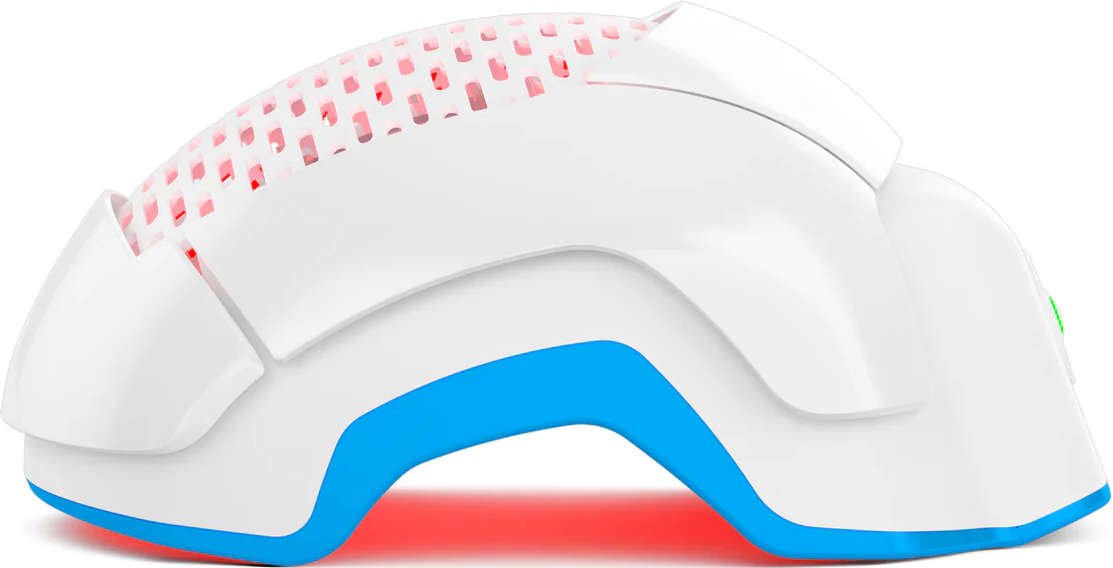
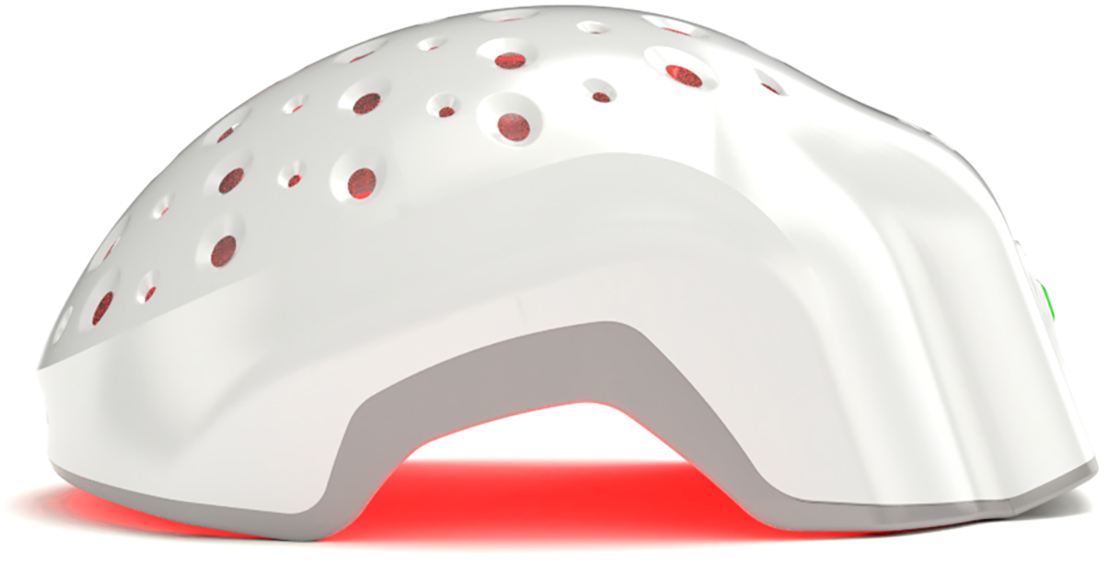
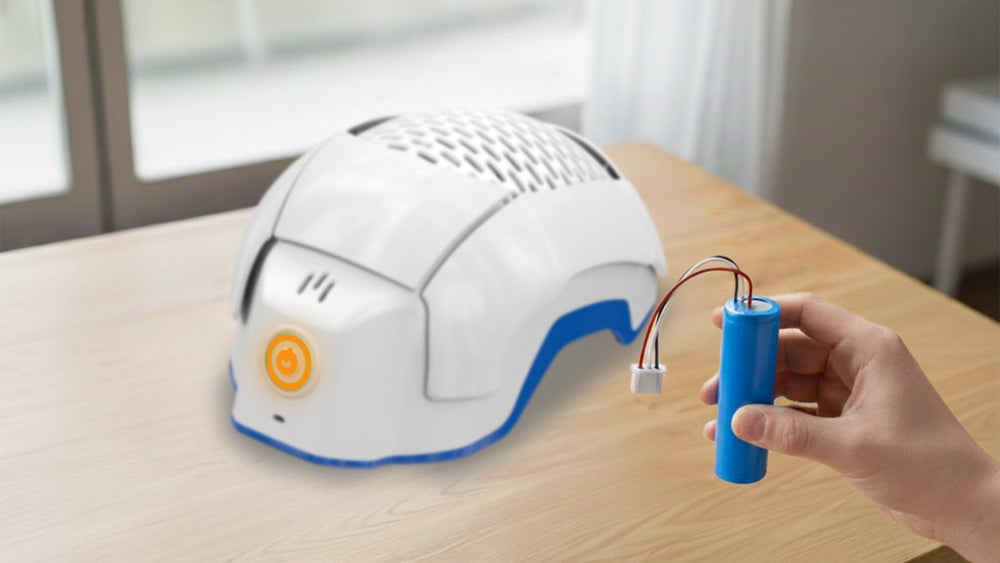
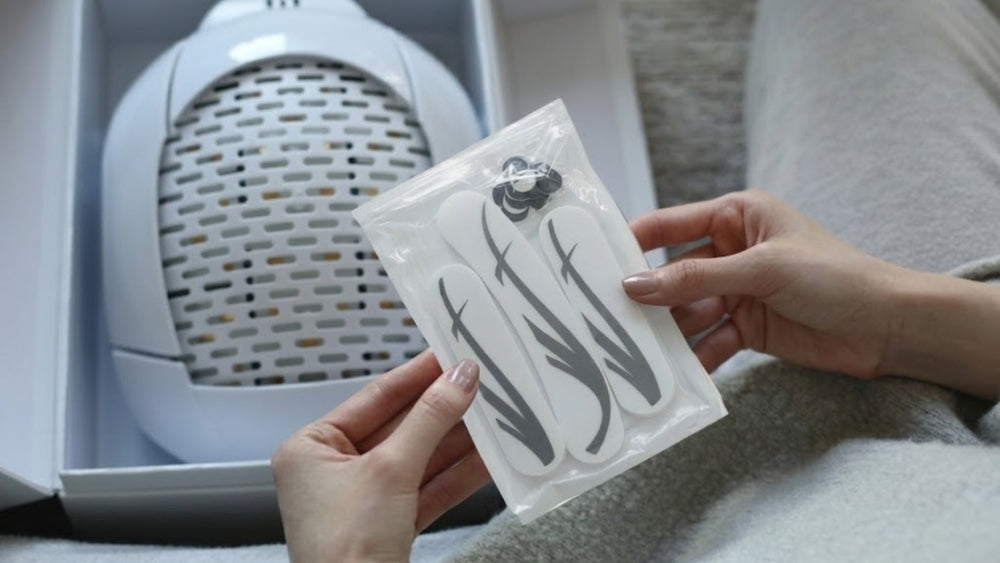
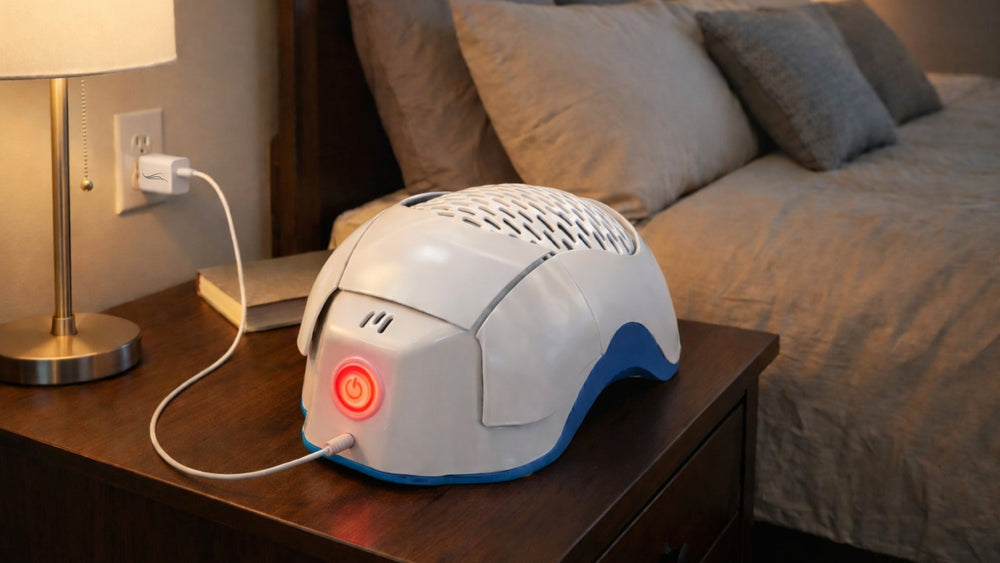
So why mention it? Because shedding and pattern hair loss overlap. A shed is often the moment someone first notices thinning that was already under way. If a dermatologist tells you that's what is happening, that is the situation LPT is for. Theradome, the first FDA-cleared wearable LPT device, is cleared for androgenetic alopecia, treats the whole scalp hands-free, and runs 20-minute sessions. Researchers propose that scalp cells absorb the light and respond with changes in cellular energy production, but that mechanism is proposed, not proven.
It won't hurry along a post-antibiotic shed, and it isn't meant to. If you'd like to know whether your pattern looks like a fit, Theradome's 2-minute hair quiz is a reasonable place to start.
Which Myths Are Worth Retiring?
"Antibiotics always cause hair loss."
They don't. Shedding after a course is uncommon, delayed, and usually tied to the illness.
"If it's shedding, it's permanent."
Acute telogen effluvium remits in most cases, and the follicles aren't scarred.
"I should stop my antibiotic to save my hair."
Please don't. An unfinished course risks an incompletely treated infection, which is a bigger problem than a temporary shed.
"I need a pile of supplements right now."
Test first. The 2024 study found selenium higher, not lower, in the shedding group.
Conclusion
Amoxicillin itself isn't a documented cause of hair loss. The likelier sequence is an infection, a fever, and perhaps some gut disruption, followed a few months later by telogen effluvium, a temporary shed that leaves the follicles intact. The 2026 Swedish study is reassuring about amoxicillin's long-term footprint on gut bacteria, though it can't speak to hair.
Track your dates, ask your doctor about bloodwork before buying supplements, and finish your antibiotic course. See a dermatologist if shedding passes six months, comes with patches or scalp symptoms, or your part keeps widening after things calm down. That last pattern can point to androgenetic alopecia, and that is where Laser Phototherapy has real evidence behind it.