







Poliosis is a patch of white or gray hair that grows from a group of follicles that have run short of pigment. It's a sign, not a disease. Most of the time it's harmless, now and then it points to something worth checking, and the fix starts with finding out which one you've got.
After that, it's simple: you treat the cause, and you color the hair if you feel like it.
What Is Poliosis?
Poliosis is a localized patch of white hair caused by missing or reduced melanin in a cluster of hair follicles. DermNet sums it up in one line: it's a clinical sign rather than a diagnosis. Hold onto that idea. The rest of this guide hangs on it.
What Does Poliosis Mean, and How Do You Say It?
The word comes from the Greek polios, meaning gray. You say it pol-ee-OH-sis. Doctors often use the full name, poliosis circumscripta, which just means the white hair stays inside a defined patch. The most famous version sits right at the front hairline and has its own nickname: the white forelock.
How Does Hair Get Its Color, and What Goes Wrong in Poliosis Hair?
Every hair follicle keeps a small reserve of melanocyte stem cells. Each time a new hair starts growing, some of those cells mature into melanocytes, the pigment makers that load melanin into the strand down at the hair bulb. Black, brown, red, blond: all of it comes from that handoff.
In poliosis, a group of follicles loses the handoff. A 2013 review in the Journal of the American Academy of Dermatology describes the affected bulbs as having less melanin, fewer melanocytes, or none at all. Sometimes the pigment cells never arrived during development. Sometimes they were there for years and then got destroyed or switched off.
A rough comparison: an office where every printer prints in color except one row by the window. Same paper, same printers. That row just ran out of ink.
Is Poliosis a Disease or a Sign?

It's a sign. The white hair can't hurt you, can't spread to anyone, and doesn't stop the follicle from growing hair. What matters is why the pigment stopped, and that question shapes everything below.
What Are the Symptoms of Poliosis?
The main symptom of poliosis is a sharply outlined tuft, streak, or patch of white or silver hair surrounded by hair of your normal color. That's usually the whole list. The useful clues are where it shows up and what else is going on around it.
What Does Poliosis Look Like?
The patch can be as small as a pencil eraser or as wide as a stripe running back from your hairline. The edges tend to be crisp. Every hair inside it is white from root to tip, which is one way it differs from ordinary graying, where white and pigmented hairs mix together in that salt-and-pepper way.
The skin underneath may look completely normal. Or it may be pale too, which dermatologists call leukoderma. That small detail helps sort out the cause, so it's worth a look in good light.
Where Can Poliosis Appear?
Anywhere hair grows. Scalp, eyebrows, eyelashes, beard, body hair. The scalp gets the most attention because everyone can see it.
The eyelashes deserve more attention than they get. White lashes or brows are linked to a few inflammatory eye conditions, so they're a reason to book an eye check, not just to buy a better mascara.
Is One White Hair Poliosis?
No. Poliosis means a group of follicles in one spot. A single white strand in your part is regular graying, the same thing your parents complained about at your age. It isn't a diagnosis. It's a birthday.
Can Poliosis Start at Any Age, and Does It Itch or Feel Different?
Poliosis can be there at birth, appear in childhood or the teen years, or turn up for the first time in adulthood. The white hair itself doesn't itch or hurt. If the area is sore, scaly, or bumpy, that's coming from whatever is happening underneath, and it's worth telling a doctor.
The hairs may feel different, though. Hair without pigment often grows coarser and more brittle, according to the University of Miami's dermatology team. So your white streak may have its own opinions about the flat iron.
Poliosis vs Gray Hair, Vitiligo, and Other Look-Alikes
The fastest way to tell poliosis from its look-alikes is the pattern. Poliosis is a tight, local patch. Most other white-hair conditions spread out, mix in, or involve the whole head.
|
Condition |
Pattern |
Skin involved? |
The giveaway |
|
Poliosis |
One or more defined patches |
Sometimes |
Every hair in the patch is white |
|
Canities (age-related graying) |
All over, salt-and-pepper |
No |
Slow, scattered, mixed with pigmented hair |
|
Premature graying |
All over, but early |
No |
Starts young, often runs in families |
|
Vitiligo |
White skin patches |
Yes |
White hairs, if any, sit inside pale skin |
|
Albinism |
Whole head and body |
Yes |
Present from birth, eyes affected too |
|
Canities subita ("overnight" whitening) |
Sudden, diffuse |
No |
Dark hairs fell out, white ones stayed |
|
Bleach or white piedra |
Along the shaft |
No |
Product history, or gritty bumps on the hair |
One thing the table makes obvious: poliosis is about color, not hair count. You don't lose hair from it. That's exactly why it confuses people who are also noticing their part getting wider, and we'll come back to that a bit later. If you've ever wondered whether your silver strands mean you're losing hair, our guide on Gray Hair vs. Hair Loss sorts that out.
The 60-Second Patch Check
Editor: build as a tap-through interactive. Each answer routes to one of three results: "Likely harmless, keep an eye on it," "Book a dermatologist," or "See a doctor soon."
- Has the patch been there since birth, unchanged?
- Is it sitting on or around a mole?
- Are your eyelashes or eyebrows involved?
- Is hair falling out in or near the patch?
- Have you noticed changes in your vision or hearing?
A yes to the first question alone usually means a stable, harmless patch. A yes to any of the others is a good reason to have a dermatologist take a look.
What Causes Poliosis?
Poliosis has two big families of causes. In one, you're born with it because pigment cells never reached part of your skin. In the other, something later damages or silences pigment cells that used to work fine. Medications, infections, and the occasional mole fill out the list.
Is Poliosis Genetic? Conditions Present From Birth
Some poliosis is written into your genes. These are the main ones.
Piebaldism. This is the textbook white forelock. According to MedlinePlus Genetics, about 90 percent of people with piebaldism have one, and it's caused by changes in the KIT or SNAI2 genes. Those changes stop pigment cells from traveling to certain areas while a baby develops, so the patch is there from birth and stays put for life. It usually runs in families, since one copy of the gene change is enough, but it can also appear with no family history at all.
Waardenburg syndrome. This is a group of genetic conditions that affect pigment and hearing. MedlinePlus notes it accounts for 2 to 5 percent of all hearing loss present from birth. In type 1, the white forelock shows up in roughly 43 to 48 percent of people and hearing loss in roughly 47 to 58 percent, per GeneReviews. Some people also have two different eye colors or unusually bright blue eyes. The forelock may be there at birth or appear in the teen years, and it sometimes regains color over time.
Tuberous sclerosis complex (TSC). TSC is a genetic condition that causes noncancerous growths in organs like the brain, heart, kidneys, and skin. Pale skin spots, often called ash-leaf spots, are its most common early sign. In a study of 106 children with TSC, 97 percent had them, and many were visible at birth. When one of those spots lands on the scalp, brows, or lashes, the hair growing through it can come in white. Doctors have reported poliosis as one of the first clues in infants, which is why a white patch in a baby always deserves a pediatric check.
A handful of rarer genetic conditions have also been linked to poliosis, including neurofibromatosis type 1, Tietze syndrome, Marfan syndrome, and prolidase deficiency.
Autoimmune and Inflammatory Causes
When poliosis shows up for the first time in adulthood, the immune system is often involved.
Vitiligo. In vitiligo, the immune system destroys melanocytes in the skin, leaving pale patches. Hair inside those patches can turn white too. Dermatologists call that leukotrichia, and they read it as a sign that the follicle's pigment reserve has been used up. Research in the Indian Journal of Dermatology, Venereology and Leprology describes it as an ominous sign for treatment response, which matters later when we talk about recoloring.
Alopecia areata. This autoimmune condition causes patchy hair loss, and it has a strange preference: it tends to target pigmented follicles. A UK case-control study notes that when hair grows back after alopecia areata, it often comes in white where dark hair used to be. Color frequently returns later.
This is also the best explanation for those famous "went white overnight" accounts, known as canities subita or Marie Antoinette syndrome. The hair doesn't bleach itself in a night. The pigmented hairs shed fast and the white ones stay behind. A review of 196 published cases found only 44 that could be authenticated. The hair didn't change color. The dark hairs just left the party early.
Vogt-Koyanagi-Harada (VKH) disease. VKH is a rare autoimmune condition that attacks pigmented tissue in the eyes, inner ear, skin, and the membranes around the brain. It usually starts with headaches and eye inflammation. Weeks to months later, the American Academy of Ophthalmology's EyeWiki notes, vitiligo and poliosis can appear, often in the eyelashes and eyebrows. It's estimated at about 1 in 400,000 people a year and affects young women and people with darker skin more often.
Alezzandrini syndrome. This is a very rare one-sided relative of VKH. According to DermNet, it can begin with gradual vision loss in one eye, followed years later by vitiligo and white lashes or brows on the same side of the face. Hearing changes have been reported too.
Moles, Halo Nevi, and the Rare Melanoma Link
A halo nevus is a mole that develops a pale ring around it because the immune system is going after its pigment cells. On the scalp, hair growing through that ring can turn white. It's been reported in children too, including a 9-year-old girl who suddenly developed white hair over a mole.
Now the part nobody enjoys typing into a search bar. Poliosis has occasionally been reported as a sign of melanoma, usually when white hair appears over a mole that's also changing. One published case report describes melanoma arising in a scalp mole with a central white patch. It's rare. But a white patch sitting on top of a mole, especially one that's growing, bleeding, or changing color, should be seen by a dermatologist soon. Not a panic. A look.
Medications, Shingles, Radiation, and Injury
Some medicines can whiten hair in patches. DermNet lists topical imiquimod, chloramphenicol, and bimatoprost, plus oral acitretin and chloroquine. Latanoprost glaucoma drops have whitened eyelashes in reported cases, which is a little ironic for a drug family better known for making lashes longer. Medication-related patches can regain color after the drug stops, so talk to your prescriber before changing anything on your own.
Poliosis can also follow shingles (herpes zoster) or radiation therapy to the area. Scalp injury has been reported as a trigger too. Deep scarring, though, usually destroys the follicle outright, so a bad burn or surgical scar tends to leave no hair rather than white hair.
What Causes a Grey Patch of Hair Suddenly? Stress, Vitamins, and Thyroid
If you're wondering what causes a grey patch of hair to appear out of nowhere, the honest answer is usually one of the causes above, most often alopecia areata, vitiligo, or a medication. The popular suspects deserve a fair hearing, though.
Stress. A 2020 Harvard study published in Nature found that stress fires up fight-or-flight nerves, which burn through the pigment stem cells in hair follicles. Real finding, important research. It was done in mice, though, and it grayed their hair all over, not in one tidy patch. Stress may well speed up graying in people. It isn't a known cause of poliosis.
Vitamins. Several studies, including one in young adults in India, link low vitamin B12, ferritin, and vitamin D to premature graying. That's diffuse, all-over graying. No deficiency has been shown to cause a single white patch.
Thyroid. There's no good evidence that thyroid problems directly cause patchy white hair. The link is indirect. Autoimmune thyroid disease tends to travel with vitiligo and alopecia areata, both of which can cause poliosis, so your doctor may still check your thyroid.
Is Poliosis Dangerous? When to See a Doctor
Poliosis itself isn't dangerous. White hair can't hurt you. The cause is what matters, and most of the time the cause is harmless too. Some situations, though, deserve a professional look sooner rather than later.
|
Keep an eye on it |
Book a dermatologist |
See a doctor soon |
|
The patch has been there since birth and hasn't changed |
A new patch appears in an adult |
White lashes or brows plus eye pain, redness, light sensitivity, or blurry vision |
|
The cause has already been diagnosed and managed |
Any white patch in a child |
A white patch on a mole that's growing, bleeding, or changing color |
|
Nothing else seems different |
The patch comes with pale skin spots elsewhere |
Hearing changes, or headaches and a stiff neck before the whitening |
|
Hair is falling out in or near the patch |
A baby with several pale skin spots, or with seizures |
Not sure who to call? Start with a dermatologist. If your lashes or brows are involved, add an ophthalmologist. Hearing changes call for an audiologist. For a baby or child born with a patch, the pediatrician is the first stop, and a geneticist may come next.
And for what it's worth, booking the appointment doesn't mean something is wrong. Most of these visits end with "that's fine, keep an eye on it," which is a perfectly good use of an afternoon.
How Is Poliosis Diagnosed?
Poliosis is diagnosed by looking at it. Finding out why it happened takes a few more steps, and which ones you'll need depends on your age, your history, and what else turns up.
- Your history. Expect questions like these: When did it appear? Does anyone in the family have one? What medications do you take, including eye drops? Any recent shingles, radiation, or scalp injury? Any changes in your vision or hearing?
- A physical exam and a Wood's lamp. This handheld ultraviolet light makes pale skin glow, so it can reveal patches the naked eye misses, including ones hiding under the white hair or elsewhere on the body.
- Trichoscopy (dermoscopy). A magnified look at the hair and scalp. It can show white regrowth, broken hairs, and whether pigment still sits around the follicles, which hints at how much color the area could get back.
- An eye exam and a hearing test. These come in when the lashes or brows are white, or when a syndrome like Waardenburg or VKH is on the table.
- Blood tests. Thyroid and autoimmune screening often make sense when vitiligo or alopecia areata is suspected. B12 and iron come in if your graying is widespread rather than patchy.
- A biopsy. A tiny skin sample shows whether melanin or melanocytes are missing from the hair bulbs. It's mainly used when the patch sits on a mole or a bump, or to rule out look-alikes.
- Genetic testing. Offered when a congenital cause like piebaldism, Waardenburg syndrome, or tuberous sclerosis is suspected.
One small habit makes these visits far more useful: take a photo of the patch in the same light every month. Memory is a terrible ruler. Photos aren't.
If hair loss is also part of what's going on, our hair pull test guide shows how clinicians sort shedding from breakage.
Poliosis Treatment: What Actually Works?
There's no single cure for poliosis. Treatment means two separate jobs: dealing with whatever caused it, and, if you want, changing how the white hair looks. Plenty of people only need the second job. Some need neither.
Why Does Poliosis Treatment Start With the Cause?
A white forelock you've had since birth needs nothing medical. A new patch from vitiligo, alopecia areata, or an eye condition needs care aimed at that condition, because that's where the real health stakes live. Treating the cause can protect your eyes, your hearing, or the rest of your hair. It doesn't always bring the color back, and it's better to know that going in.
What Medical Treatments Help, by Cause?
|
Cause |
What dermatologists may use |
What to expect for the white hair |
|
Vitiligo |
Ruxolitinib cream, narrowband UVB, excimer laser, topical steroids, calcineurin inhibitors |
Skin usually responds better than hair that's already white |
|
Alopecia areata |
Steroid injections or creams, JAK inhibitors for severe cases |
White regrowth often regains color over time |
|
VKH or other eye inflammation |
Eye-focused anti-inflammatory treatment |
Protects vision; white lashes usually stay white |
|
Halo nevus or a changing mole |
Exam, and a biopsy if anything looks off |
Depends on what's found |
|
A medication |
A review with your prescriber |
Color may return once the drug stops |
One real step forward: in July 2022, the FDA approved ruxolitinib cream for nonsegmental vitiligo in people 12 and older. In the trials behind that approval, roughly 3 in 10 people reached at least 90 percent improvement in facial vitiligo after a year. Those numbers describe skin, though. Hair is a tougher customer.
Why Is White Hair Harder to Recolor Than Skin?
When skin regains color in vitiligo, much of that new pigment travels up from the melanocyte reserve tucked inside hair follicles. Hair that's already white inside a patch usually means that reserve has run dry, so there's little left to send. You can't restock a shelf from an empty warehouse.
That's why dermatologists treat white hairs inside vitiligo as a sign of a slower, harder response. Not impossible. Just harder.
Can a Hair Transplant or Cell Graft Fix Poliosis?
Sometimes, yes. Follicular unit transplantation, used for vitiligo since 1998, moves pigmented follicles into the white area, and their pigment cells can migrate out and recolor the patch. Melanocyte cell grafts work on a similar idea. Both need stable disease, meaning nothing new has spread for a while, plus a surgeon who does this regularly.
How Do You Safely Color a Grey Patch of Hair, Brows, and Lashes?
For scalp and beard hair, dye is the cheapest, fastest, and most reliable fix there is. White hair has no pigment to fight with, so color usually takes well. Patch-test every new dye on a small area of skin first, as the box instructs.
Your eyebrows and eyelashes are a different matter. Never use hair dye or permanent tint near your eyes. The FDA warns that permanent lash and brow dyes have caused serious eye injuries, including blindness, and it has approved no color additives for permanently dyeing lashes or brows. Mascara and brow pencils made with eye-area colors are the safe route.
Or keep it. Plenty of people wear a white streak as a signature, and it's hard to argue with that. If you're also covering thinning nearby, our guide on whether hair fibers cause hair loss covers the safest way to use them.
Should You Pluck White Hairs?
Plucking won't make more white hairs grow. Follicles don't gossip, and each one runs on its own. But repeatedly pulling hair from the same follicle can damage it until it stops producing hair at all. In a poliosis patch, that trades white hair for no hair, which is nobody's idea of an upgrade.
Do Natural Remedies or Supplements Reverse Poliosis?
No credible evidence shows that oils, onion juice, herbal blends, or supplements bring color back to a poliosis patch. Supplements fix a deficiency that's been measured, and those deficiencies are linked to all-over graying, not patches. Be wary of any product promising to reverse white patches without telling you what caused them or pointing to a real trial.
Can Poliosis Go Away? The Outlook by Cause
Sometimes poliosis goes away, and sometimes it's a lifelong feature. It depends almost entirely on the cause. As DermNet puts it, the patch may stay stable, but hair can regain color in some situations, such as alopecia areata and medication-related cases.
|
Cause |
Outlook for the white patch |
|
Piebaldism |
Permanent and stable |
|
Waardenburg syndrome |
May regain color over time |
|
Alopecia areata |
Color often returns as regrowth matures |
|
Medication-related |
Color may return after the drug stops |
|
Vitiligo with white hairs |
Hard to reverse without surgery |
|
Halo nevus |
Varies from person to person |
Why does alopecia areata so often bounce back while vitiligo rarely does? It comes down to that pigment reserve again. In alopecia areata, the immune attack seems to leave enough of the reserve alive for color to return. In vitiligo with white hairs, the reserve itself is the casualty.
One practical note: if the skin under your patch is pale too, it has no melanin to protect it from the sun. A hat or a dab of sunscreen on exposed scalp skin is cheap insurance.
Living With a White Streak
Nobody warns you about the conversation part. You'll get asked who does your highlights. You'll get asked if it's on purpose. If you have a child with a white forelock, you'll get asked about it at the playground, usually by someone who means well and phrases it badly.
A short, calm answer works best. "It's called poliosis. I was born with it" or "It's a pigment thing, totally harmless" closes the topic without turning it into a lecture. With kids, simple and matter-of-fact beats mysterious: your hair just makes less color in that one spot, and lots of people have it.
Feeling self-conscious about it is normal, and so is coloring it. So is keeping it. Some of the most striking haircuts walking around today were never booked at a salon. And if someone compliments your highlights, you're allowed to just say thank you.
Poliosis and Hair Loss: Where Does Laser Phototherapy Fit?
Laser Phototherapy (LPT) won't bring color back to a poliosis patch. Where it fits is the thinning that sometimes shows up alongside it, when that thinning turns out to be androgenetic alopecia.
Does Poliosis Cause Hair Thinning?
No. Poliosis is about color, not how many hairs you have. But a few of its causes, especially alopecia areata and VKH disease, can cause white hair and hair loss at the same time. And pattern hair loss is common enough that plenty of people simply have both, unrelated, on the same head. Two problems sharing a scalp doesn't make them the same problem.
Can Laser Phototherapy Bring Color Back to a White Patch?
No study shows that Laser Phototherapy restores color to white hair, and we're not going to pretend otherwise.
There is one interesting thread for the curious. Researchers in Taiwan have studied low-energy red laser light at 632.8 nanometers on segmental vitiligo skin. In one study of 40 people, 60 percent saw marked repigmentation after repeated sessions, and lab work tied the effect to mitochondria inside pigment cells. Other experts note results elsewhere have been far more modest. And all of it involves skin, not hair, and not Theradome's indication. It's early science, worth knowing about, not a promise.
When Does Theradome Make Sense for Someone With Poliosis?
When the thinning around or beyond your patch is androgenetic alopecia, the genetic pattern hair loss behind the widening part, the receding temples, and the see-through crown.
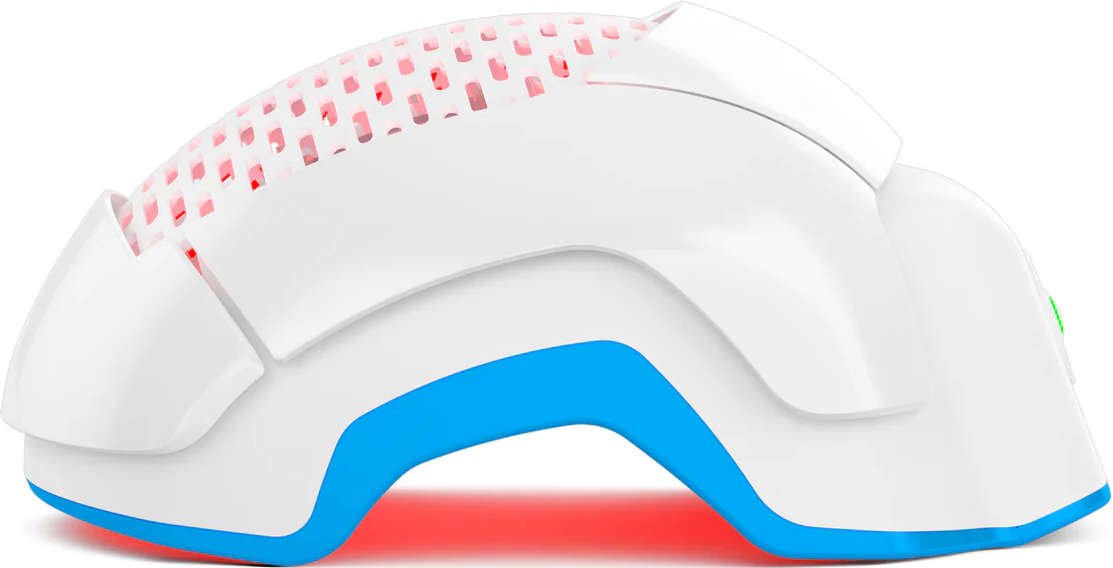
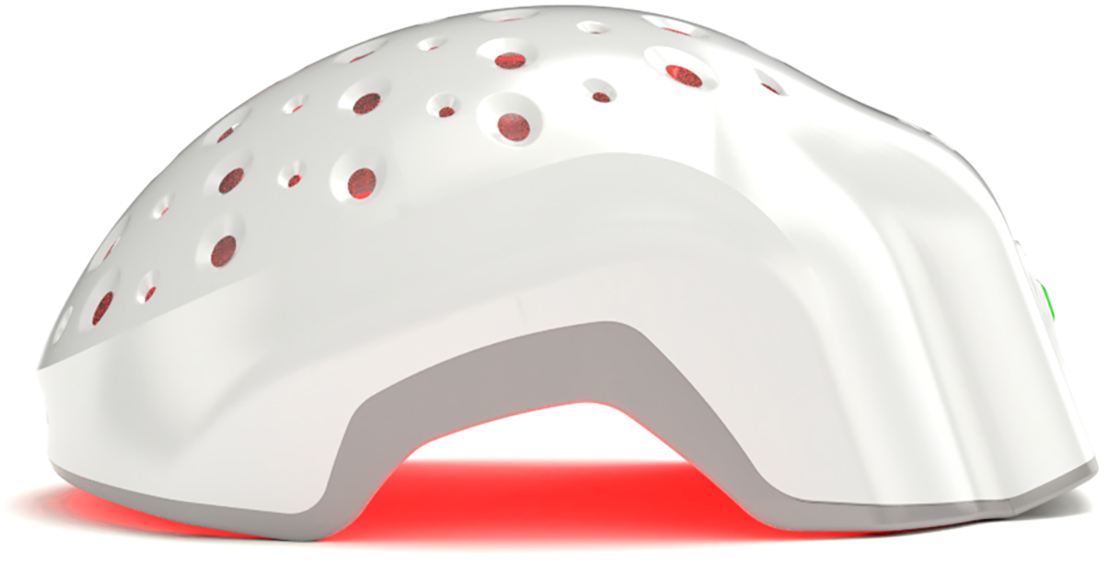
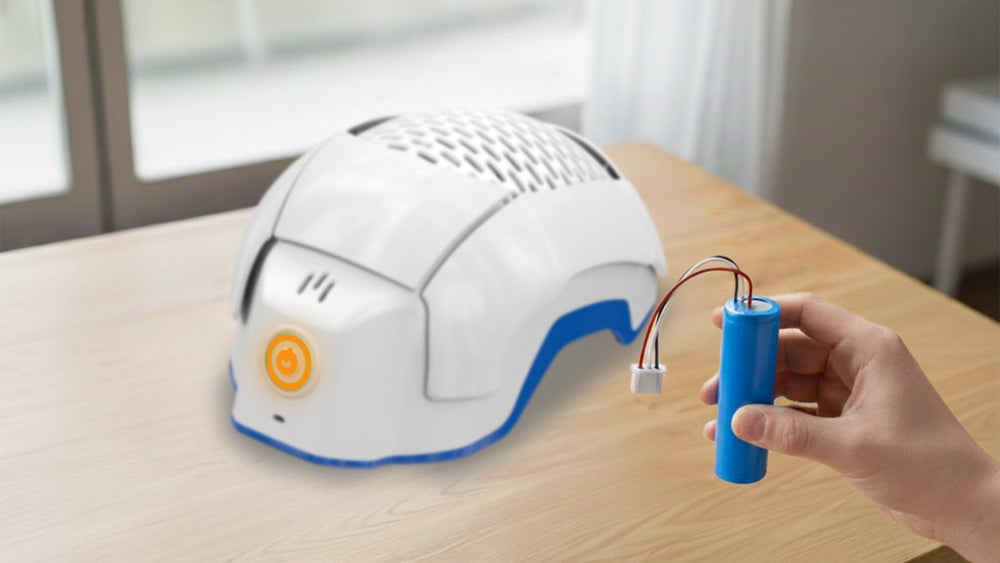
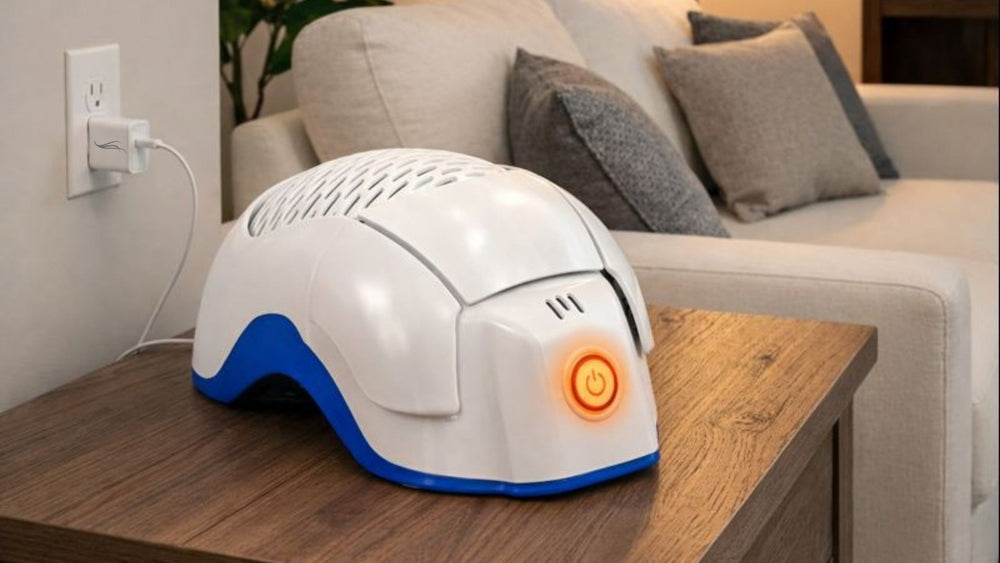
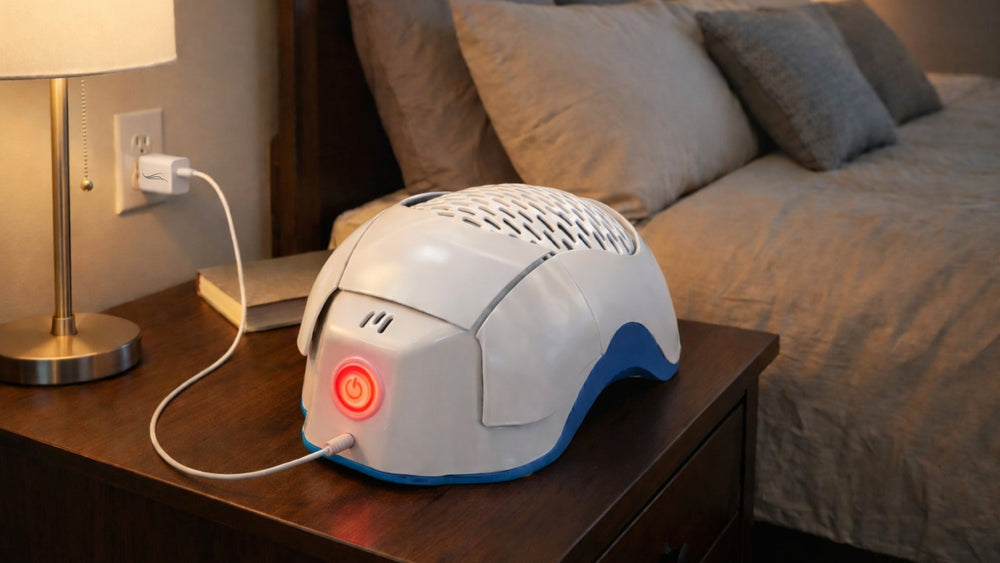
That's the job Theradome was built for. Theradome was the first FDA-cleared wearable Laser Phototherapy device, and the LH80 PRO is FDA-cleared for androgenetic alopecia in men with Norwood-Hamilton IIa to V patterns and women with Ludwig-Savin I-1 to I-4, II-1, and II-2 patterns, with Fitzpatrick skin types I to IV. Its red laser light is absorbed by mitochondria in follicle cells, supporting the ATP production that fuels growth. It treats the whole scalp hands-free in 20-minute sessions while you get on with your evening.
A safety note. The light is low-energy and contains no UV. If you're also dealing with active vitiligo, alopecia areata, or any eye condition, check with your dermatologist before adding anything new to your routine. Good care runs in order: diagnosis first, then the right tool.
Not sure whether you're looking at a white patch, pattern thinning, or both? Take the Theradome Hair Loss Quiz. It takes about two minutes and points you toward the right next step.
Which Poliosis Myths Deserve Retiring?
"Poliosis means you're aging early."
No. Age-related graying is scattered and gradual across the whole head. Poliosis is a defined patch with its own causes, and babies can be born with it.
"Stress turned my hair white overnight."
Hair doesn't bleach itself in a night. Most sudden whitening is alopecia areata shedding dark hairs and leaving the white ones behind. Stress may speed up graying, but that's a slower, all-over process.
"Pluck one white hair and three come back."
Each follicle works alone, so plucking can't recruit its neighbors. Repeated plucking can damage the follicle, though, so leave the tweezers in the drawer.
"A white patch always means something serious."
Most patches turn out to be harmless. The ones worth checking quickly are new patches in adults, patches in children, and patches over moles or near the eyes.
"The right vitamins will bring the color back."
Supplements correct a measured deficiency, and those deficiencies are linked to all-over graying. No vitamin has been shown to recolor a poliosis patch.
"It's contagious."
It isn't. You can't catch poliosis from a hug, a hairbrush, or a shared pillow.
Conclusion
So, what is poliosis? It's a patch of white hair from follicles that ran short of pigment. It's a sign, not a disease, and most of the time it's harmless.
The real work is finding the cause. That matters most when the patch is new in an adult, shows up in a child, sits over a mole, or arrives with eye, hearing, or hair loss changes. From there, treat the cause, color the hair if you'd like, and keep permanent tints far away from your lashes and brows.
Today, take a photo of the patch in good light. If it's new, book a dermatologist. And if thinning is also on your mind, get that diagnosed too. If it turns out to be androgenetic alopecia, FDA-cleared Theradome Laser Phototherapy belongs in that conversation.