






Why do some hair treatments make hair look better at first, then worse? Because most fast results happen on the hair shaft, and the shaft is dead fiber. Coatings, heat, and chemicals smooth it, swell it, or reset it, so you see the payoff the same day. Then the effect washes out, or it reveals weaker hair underneath. Treatments that change how hair actually grows work at the living follicle, and those take months.
One more thing before we start: not every "worse" phase means damage.
Week one after the keratin appointment, your hair is ridiculous. In a good way. It swings when you turn your head. It reflects light like it's been hired for a shampoo commercial. A stranger in the elevator asks where you get it done.
Week six, you're at the bathroom sink holding a brush with a little nest of short, snapped pieces in it, tilting your head under the vanity light and wondering whether your part was always this wide.
Maybe yours wasn't keratin. Maybe it was a thickening serum, a bond mask, a tingly "growth" tonic from the internet, or a treatment that worked beautifully right up until you stopped using it. Same feeling either way. And nothing here says you were silly. You bought what the mirror showed you. The mirror just left some parts out.
Why Do Some Hair Treatments Make Hair Look Better at First?
Most hair treatments make hair look better fast because they work on the hair you can see, not the part of you that grows it. Hold onto that split. It explains nearly everything else in this article.
What's the difference between the hair shaft and the follicle?
The shaft is the strand itself. It's made of keratin, it has no nerves and no blood supply, and by the time it leaves your scalp it's finished tissue. StatPearls describes the club hair your follicle eventually sheds as fully keratinized, which is the medical way of saying the living part of the job is over.
The follicle is the living part. It sits in the skin, gets fed by tiny blood vessels, and takes its instructions from a cluster of cells at its base called the dermal papilla.
Think of a factory and the rope it produces. Nearly every product on your bathroom shelf is rope paint. Good paint, sometimes. But still paint.
That's also why the popular fear that products "suffocate" follicles doesn't hold up. Follicles get their oxygen from blood vessels under the skin, not from air on the surface. We cover this in more depth in our guide to whether hair fibers cause hair loss.
Can damaged hair actually be repaired?
Cosmetically, partly. Biologically, no.
Healthy hair carries a thin natural lipid layer (called 18-MEA) that keeps it slick and water-resistant. Bleach, alkaline chemicals, and rough handling strip it. Good conditioners stand in for that layer by neutralizing static and lubricating the cuticle, according to a dermatology review of hair cosmetics in the International Journal of Trichology. That's real protection. It cuts friction, and less friction means less breakage.
The same review is blunt about the "rebuilding" ingredients, though: added amino acids do not replace or restore damaged keratin structure. And heat damage inside the shaft can't be patched at all. It can only be protected from getting worse, then grown out.
Labels play in the gap here. Under U.S. law, a cosmetic exists to cleanse, beautify, or alter appearance. The FDA says claims that a product will restore hair growth make it a drug, with a very different set of rules. So when a shampoo says "repair," read it as "looks repaired."
Why do cosmetic results show up in minutes when real growth takes months?
Because your hair runs on a quarterly reporting schedule, not a daily one.
At any given moment, about 85% to 90% of your follicles are in the growing phase (anagen), which lasts years. The resting phase (telogen) lasts about three months before a hair is shed. Healthy hair grows around 0.35 mm a day, roughly half an inch a month, per StatPearls.
Two practical consequences:
- A coating works the second it dries. A follicle-level change needs whole growth cycles before you can see it.
- Shedding trails its trigger. The American Academy of Dermatology (AAD) notes most people notice excess shedding a few months after the stressful event that caused it. So the product you started three weeks ago often gets blamed for something that began three months ago.
Which Hair Treatments Look Great at First and Cause Problems Later?

They fall into four groups: coatings, treatments that change the hair's structure, DIY scalp remedies, and medical treatments that fade once you stop. Only some of them actually damage anything. The table sorts them before we go through each one.
|
Treatment |
Why it looks better at first |
What "worse" looks like |
Real damage? |
Usual timing |
|
Silicone-heavy shampoos and conditioners |
Shine, slip, smoothness |
Limp, dull, clumpy hair from buildup |
No, buildup |
Weeks of layering |
|
Volumizing and thickening products |
Strands swell and look fuller |
Hair looks thinner when you stop |
No, the prop is gone |
As soon as you stop |
|
Heavy protein treatments |
Firmer, stronger feel |
Stiff, straw-like, snappy hair |
Possible, mostly buildup |
Weeks of stacking |
|
Heavy scalp oils |
Soft, shiny lengths |
Flaking and itch on prone scalps |
Scalp irritation |
Days to weeks |
|
Keratin treatments and "hair botox" |
Glassy, straight, frizz-free |
Breakage, dryness, flatness |
Yes, heat and chemicals |
Shows as it washes out |
|
Relaxers, bleach, hot tools |
Sleek, bright, polished |
Breakage, frizz, short snapped pieces |
Yes |
From a few sessions to several months |
|
Tingling serums and DIY remedies |
A "working" sensation |
Itch, rash, irritated scalp |
Scalp irritation |
Days to weeks |
|
Minoxidil, finasteride, PRP (after stopping) |
Real regrowth while in use |
Gains fade after stopping |
No, the condition resumes |
About 3 to 12 months |
Do silicone shampoos and heavy conditioners damage hair?
The silicone itself isn't the problem. Buildup is.
Silicones earn their place. Conditioners work by neutralizing the negative charge on hair and lubricating the cuticle, and the review we mentioned earlier calls silicone the most widely used conditioning agent there is. Some even boost shine by reflecting light, and a silicone heat protector helps stop water inside the hair from boiling under a flat iron.
The trouble starts with layering. Some conditioning polymers cling to hair so well that ordinary shampoo struggles to lift them, and leave-in products on fine, straight hair can make it look oily and dull. Coated strands clump together, and clumped strands show more scalp. That's how you end up with hair that looks thinner on Friday than it did on Monday, without a single strand actually going anywhere.
The fix is boring and effective: a clarifying wash roughly every 10 shampoos (less often if your hair is heavily bleached), then conditioner on the lengths.
Why does hair look thinner after you stop volumizing products?
Because the prop is gone, not the hair.
Thickening products really do plump strands. In one study cited by that same review, an acrylate polymer with dimethicone increased the cross-section of existing hairs by roughly 10%. That's a genuine, visible difference. It's also temporary by design, so when you stop, your hair drops back to its own diameter. Nothing was lost. You just got used to the upgraded version.
Is "protein overload" real?
Stiff, straw-like hair after stacking protein masks is widely reported, and many stylists swear by the idea. But it isn't a defined medical condition, and we found no clinical research that measures it.
What the science does say: protein ingredients stick readily to hair, especially bleached hair, and they don't rebuild damaged keratin. So a plausible explanation is buildup of a stiff film on already fragile strands. If your hair feels like uncooked spaghetti after a month of "strengthening" products, clarify, pause the protein, and see if the softness comes back.
Can hair oils make your scalp worse?
For some scalps, yes. For others, not at all.
Oils can help the lengths. The scalp is a different place. The yeast linked to dandruff (Malassezia) breaks down scalp oils and releases fatty acids like oleic acid. In research summarized in a review of seborrheic dermatitis and dandruff, putting oleic acid on the scalp did nothing visible in people without dandruff, yet it triggered flaking in dandruff-prone scalps. So if heavy scalp oiling left you flakier and itchier a week later, you may simply have the susceptible kind of scalp.
Why do keratin treatments and "hair botox" backfire?
The glassy finish is heat-set chemistry, and the damage comes from the heat and the repeats.
Despite the name, keratin isn't doing the straightening. According to the dermatology review, heat and water loosen the hair's hydrogen bonds, and formaldehyde then cross-links the keratin into a neat, straight, very shiny alignment. To get there, a flat iron is run over the same section 15 to 20 times. Great for the photos, rough on the protein. As washes strip the surface coating over the following weeks, that heat-weakened fiber starts to show.
And "hair botox"? No botulinum toxin anywhere. The same review lists it as one of several names for the Brazilian keratin treatment.
Now the part that deserves calm attention. Many "formaldehyde-free" smoothing products use ingredients such as methylene glycol or glyoxylic acid that release formaldehyde when heated. An exposure study found salon treatments, including ones labeled formaldehyde-free, could produce formaldehyde levels meeting or exceeding occupational limits. The FDA said in 2023 that it planned to ban formaldehyde in these products, then missed deadline after deadline. Its latest regulatory agenda targets November 2026 for publishing the proposal, and as of October 2026 nothing had been formally proposed, let alone banned. So ask your stylist exactly what's in it, and insist on good ventilation.
Why do relaxers, bleach, and hot tools look flawless before breakage shows?
Because each one weakens the fiber in ways the finish hides.
Relaxers work at a pH of 12 to 13, which swells the hair and opens the cuticle. The review notes breakage usually happens where new growth joins previously relaxed hair, and one survey it cites recorded hair loss in 47% of users and frizz in 67% after chemical straightening. That's a survey of people's own reports, not a controlled trial, but the pattern is clear.
Bleach and permanent color strip that protective lipid layer. The AAD says it outright: many treatments that improve how hair looks can damage it, leaving it dry and brittle. Their rule of thumb is to stay within three shades of your natural color.
Hot tools can literally boil water inside the strand. Doctors call the result bubble hair, and one case report describes dry, brittle hair after just two sessions of flat-ironing wet hair. That's the fast end of the range. More often, heat damage builds quietly over weeks and months of regular styling before the snapping starts.
Stacking services multiplies all of it. The AAD recommends one chemical service at a time, relaxing or perming first and waiting two weeks before coloring.
One sensitive point, because it matters. Central centrifugal cicatricial alopecia (CCCA) is a scarring type of hair loss that often starts at the crown and is more common in Black women. Relaxers and hot combs have been suspected for decades, but studies haven't shown a consistent link, and genes play a part. What isn't in doubt: the AAD says early treatment can stop it from spreading. Burning, tenderness, or thinning at the crown deserves a dermatologist, not another product.
Do tingling serums and DIY scalp remedies actually work?
Tingling is a sensation, not a growth signal. If it were, peppermint gum would have cured baldness decades ago.
That tingle usually comes from menthol, alcohol, or other irritating ingredients. Some DIY remedies go further than tingling. Raw garlic left on skin, especially under a covering, can cause blistering irritant reactions that look a lot like burns. Essential oils are a known cause of allergic contact dermatitis, sometimes after weeks of trouble-free use, and common fragrance compounds like linalool become more likely to trigger allergy once they oxidize in an opened bottle.
Rosemary oil deserves a fair hearing. In a six-month trial of 100 people with pattern hair loss, rosemary oil and 2% minoxidil produced similar hair count gains, and neither showed a change at three months. Scalp itching also rose in both groups. So: one small study, real promise, and not a free pass for your scalp.
Why does hair look worse after stopping minoxidil, finasteride, or PRP?
Because these treatments were holding back an ongoing condition. When you stop, the condition picks up where it left off. That's not damage from the treatment.
- Minoxidil: The official drug label says that if you stop, the normal hair loss process starts again and newly regrown hair will probably be lost in three to four months.
- Finasteride: According to the American Academy of Family Physicians, its benefits fade within about 12 months of stopping. Any change should go through the prescriber.
- PRP: In one study summarized in a clinical review, hair density peaked around three months and dropped by 6 and 12 months (while staying above baseline). A meta-analysis by an ISHRS committee recommends maintenance sessions every 3 to 6 months.
- Hair transplants: The grafts themselves last. But the AAD notes thinning can continue around them, which is why doctors often pair surgery with medicine.
- Steroid injections for alopecia areata: They often help, but long-term use can thin the skin at the injection site.
Here's the reframe worth keeping. "It stopped working when I quit" usually means "it was working."
Is It Damage, or Is the Treatment Just Wearing Off?
"Wearing off" brings you back to where you started. Damage leaves you worse than where you started. That one distinction will save you a lot of 2 a.m. scrolling.
How do you tell breakage from shedding from true hair loss?
Look at the hair itself, then look at where it's coming from.
|
What you notice |
Breakage |
Shedding |
True hair loss |
|
The fallen hair |
Short, uneven piece with no bulb |
Full-length hair, often with a small white bulb at the root end |
Hairs growing back finer and shorter over time |
|
Where it shows |
Where heat, chemicals, or brushing hit hardest |
Spread across the whole scalp |
Part line, crown, or temples, depending on the cause |
|
What caused it |
The shaft snapped |
The follicle finished a cycle |
The follicle is producing less |
|
Does it recover? |
Yes, as healthy hair grows out |
Usually, once the trigger passes |
Depends on the cause, so get it checked |
For scale, losing 50 to 100 hairs a day is normal, per the AAD. If you want a closer look, our guides to the hair pull test, hair shedding vs. hair loss, and new hair growth vs. breakage walk through what clinicians check.
Was it the treatment, or was your hair already thinning underneath?
Often it was already happening, and the treatment just happened to be standing nearby.
The AAD lists common triggers for heavy shedding: losing 20 pounds or more, giving birth, serious stress, a high fever, surgery, an illness, or stopping birth-control pills. Because shedding trails its trigger by a couple of months, a salon visit three weeks ago is a convenient suspect for something that started much earlier.
Pattern hair loss (androgenetic alopecia) is sneakier still. It moves slowly and hides beautifully under volume products and a good blowout. When the styling washes away, what you're seeing may be real, gradual thinning that was there all along. Our guide to a normal part vs. a thinning part helps you check.
Which treatments look worse before they look better?
Some real treatments flip the pattern, and knowing which ones keeps you from quitting at exactly the wrong moment.
- Minoxidil: It can push resting hairs out early to make room for new growth. The drug label says hair loss may continue for up to two weeks after starting, and to see a doctor if it goes on longer.
- Hair transplants: The AAD says transplanted hairs fall out between two and eight weeks after surgery, and by month three hair may look thinner than before. Both are normal. Most people see results between six and nine months.
- Laser Phototherapy (LPT): Most people notice the opposite, with shedding slowing down first. But in fairness, a 24-week sham-controlled helmet trial listed temporary shedding and scalp itching among reported side effects, and another randomized trial explained early shedding as a short-lived telogen phase. So if it happens, it's known, and it's temporary.
|
Better, then worse |
Worse, then better |
|
Works on the shaft (coatings, heat, chemicals) |
Works on the follicle (minoxidil, transplant, sometimes LPT) |
|
Instant results |
Results take months |
|
"Worse" means buildup, breakage, or the effect wearing off |
"Worse" means old resting hairs making way for new ones |
|
Fix: change the routine |
Fix: usually patience, plus a doctor if it lasts |
Why Do We Keep Falling for the Instant Fix?
Because human brains are wired to trust what they can see today over what they're promised in six months. Thinning hair turns that dial all the way up.
A few forces stack up at once. Visible results feel like proof, while slow biological change feels like nothing is happening, even when something is. Week one sticks in your memory as the benchmark, so every week after it feels like decline. And once you've spent money and a Saturday on something, quitting feels like losing twice.
Then there's the label language. "Instantly fuller." "Visibly thicker." "Repairs from within." These phrases are legal for cosmetics because they describe how hair looks, which is exactly the loophole we covered earlier. None of this makes anyone foolish. It makes them human, and a little tired of looking at their part.
Who Is Most Likely to Get Caught Out?
Anyone can, but some hair and some life stages show the "better, then worse" swing more dramatically.
|
Factor |
Why it matters |
How solid is the evidence? |
|
Fine or already-thinning hair |
Fewer strands to hide residue, clumping, or lost hairs |
Reasoning |
|
Curly and coily hair |
A thinner cuticle makes it more prone to breakage. The review also puts average scalp follicle counts at about 90,000 in people of African descent versus about 120,000 in white people, which is why a volume drop after straightening can leave more scalp showing |
|
|
Bleached or chemically treated hair |
More porous, so it soaks up both conditioners and harsh chemicals faster |
|
|
After childbirth or around menopause |
Hormonal shedding often lines up with trying new products, so the wrong thing gets blamed |
|
|
Sensitive or eczema-prone scalp |
Higher odds of a contact reaction to new formulas |
Reasoning |
If you tick two or more boxes, go slower with new treatments, change one thing at a time, and keep a photo record.
What Should You Do If a Treatment Already Made Your Hair Worse?
Stop the suspect, go gentle, write things down, and let healthy hair grow in while you keep an eye on your scalp.
What should you do first?
- Stop the treatment you suspect. One change at a time, so you can tell what actually helped.
- Wash gently. Massage shampoo into the scalp and let it rinse through the lengths. The AAD also recommends conditioner after every wash.
- Photograph it monthly. Same light, same angle, dry hair, nothing sprinkled on top. Our guide to taking good scalp photos helps.
- Resist the rescue mission. A cart full of new products bought at midnight makes it impossible to know which one worked, and your scalp didn't ask for a group project.
How long does damaged hair take to grow out?
At about half an inch a month, damaged lengths grow out slowly, and there's no product that speeds up the calendar. An AAD statement on flat-iron damage notes that most breakage-related loss is temporary because growth itself isn't affected, but badly damaged hair can take up to two years to fully replace.
A trim helps more than most people expect. In one pair of bubble hair cases, avoiding heat let new growth come in normal, and a haircut noticeably improved how the area looked. Short, frayed, bulbless pieces point to a trim problem. Diffuse shedding or a widening part points to a follicle problem, and that needs a diagnosis.
When should you see a dermatologist?
Sooner than you'd think, especially if the scalp itself is complaining.
|
Keep going, gently |
Pause and watch |
See a dermatologist |
|
|
How it feels |
Comfortable |
Mild itch after a product |
Burning, pain, tenderness |
|
Scalp |
Clear |
Some flaking or redness |
Pustules, crusting, spreading redness |
|
Hair |
Normal shedding |
Short broken pieces |
Thinning that keeps going, a widening part |
|
Pattern |
Nothing new |
Loss that follows where a product went |
Shiny, smooth patches, crown thinning, eyebrow loss |
A dermatologist can use trichoscopy (a magnified scalp exam), a pull test, blood work, or patch testing to find the cause. If the pattern points to scarring, speed matters, because scarred follicles don't come back.
How Do You Choose Hair Treatments That Won't Backfire?
Ask what a product does to the shaft versus the follicle, and what happens when it wears off. Five questions cover most of it:
- Does it change the strand (coating, heat, chemicals) or the follicle?
- Is there heat involved, and does anything in it release formaldehyde when heated?
- How often does it need repeating, and what does it cost per year?
- Is it compatible with my color, relaxer, or other treatments?
- What will my hair look like if I stop?
A helpful rule: anything promising visible results in minutes is cosmetic by definition. Treatments that change growth come with timelines measured in months. The minoxidil label says it can take up to eight months to see your best results. Transplants take six to twelve. That's normal for anything real.
Daily habits matter too. The AAD's list of damaging habits includes rubbing shampoo into the lengths, towel-rubbing, frequent hot tools on high heat, and styling products with long-lasting hold. Swap those out and every other treatment gets an easier job.
Where Does Laser Phototherapy Fit?
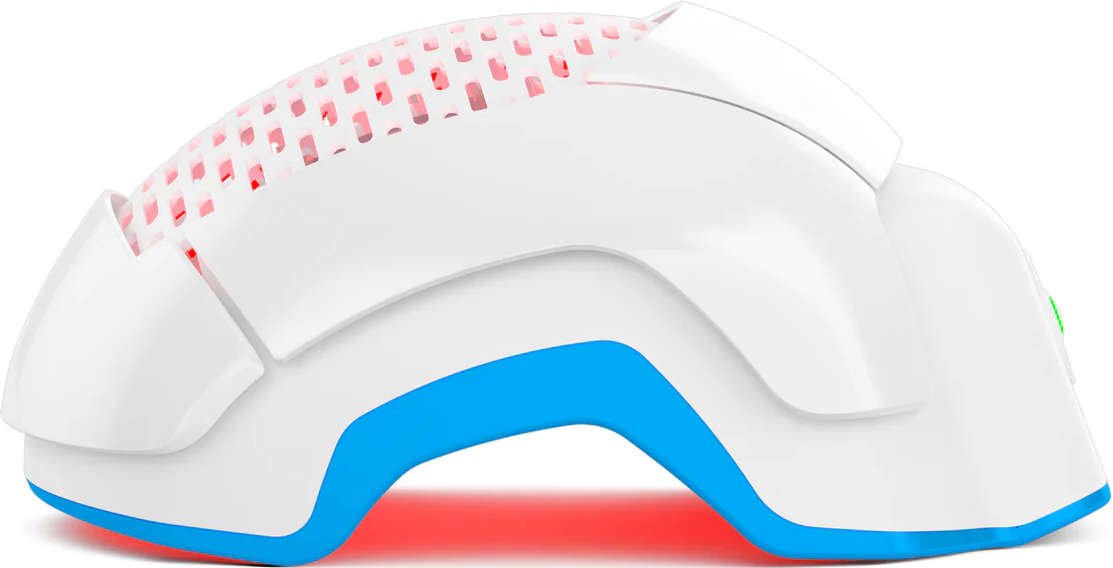
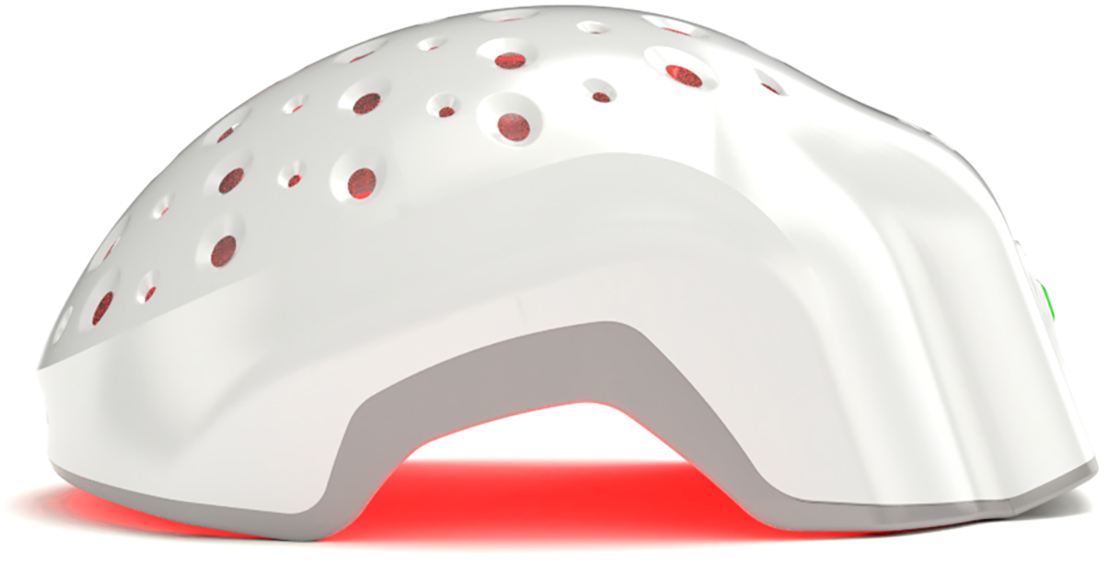
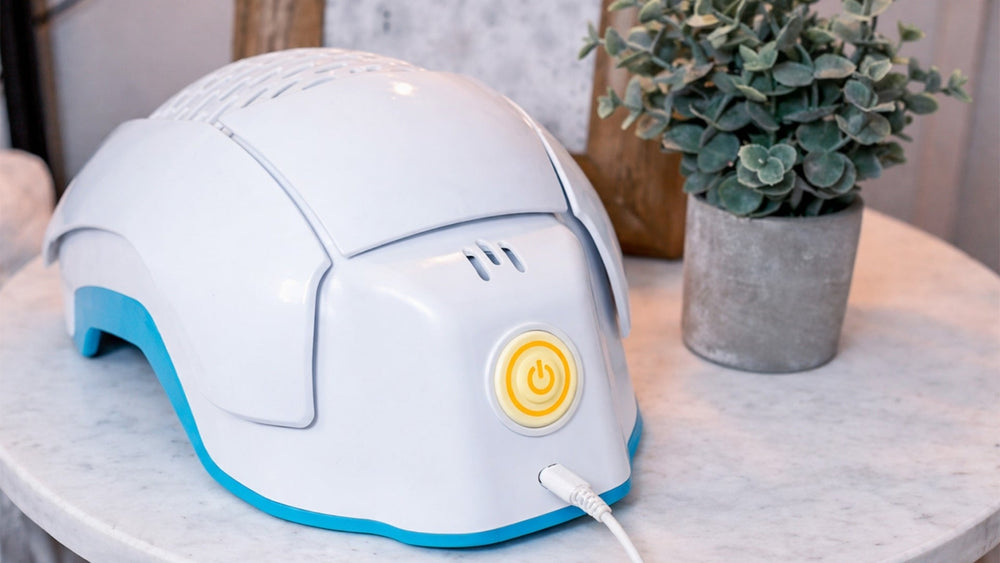
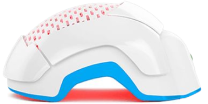
Laser Phototherapy sits on the other side of the shaft-versus-follicle line. It coats nothing, heats nothing, and changes no hair chemistry. It targets the follicle in androgenetic alopecia (pattern hair loss), and like every real growth treatment, it takes months to show.
How is Laser Phototherapy different from treatments that coat hair?
Laser Phototherapy (LPT) shines low-power red light onto the scalp. Researchers propose that follicle cells absorb that light and respond with changes in energy production and signaling. That mechanism is still being studied.
What's certain is simpler: there's no residue to build up, nothing to wash out, and no strand chemistry to wear off. Which means none of the "better, then worse" traps from earlier in this article apply to it.
What results can you realistically expect, and when?
Meaningful, measurable gains over months. Here's what the research shows, starting with our own trial.
- In our own 26-week, double-blind, sham-controlled trial, run across four U.S. research centers (NCT02528552), 49 men used either the Theradome LH80 PRO (27 men) or an identical-looking LED sham device (22 men), 20 minutes twice a week. Total hair counts rose by an average of 10.4 hairs with Theradome and fell by 14.0 with the sham, and terminal (thicker) hairs rose by 4.8 versus a drop of 9.7.
- In a 24-week, sham-controlled trial, a laser helmet significantly outperformed an identical-looking fake device for both hair density and hair thickness.
- A 2026 prospective study in Dermatologic Therapy followed people with pattern hair loss who used a home helmet three times a week for 48 weeks. On average they gained 25 hairs per square centimeter and about 15% in hair thickness, the improvements kept building through the whole year, and no device-related side effects were reported.
- Theradome users most often notice shedding slow down first, then fuller-looking hair around months four to six, with bigger changes by nine to twelve months. Results vary from person to person.
Compare that with the keratin timeline: gorgeous in week one, snapping by week six. LPT works in the opposite direction. Quiet at first, better with time.
Does Laser Phototherapy stop working if you stop?
Yes, and we'd rather you hear it from us. Pattern hair loss is a lifelong tendency, not a one-time problem. As we've written before, stopping treatment will likely let hair loss resume. That's the same maintenance reality as minoxidil and finasteride, and the same reframe applies: the condition resuming isn't damage done. A short break is fine, too. You can go about four weeks before the benefits start to reverse.
Can you use Laser Phototherapy with minoxidil, fibers, or styling products?
Yes, in the right order. Use the helmet on a clean scalp with nothing on it, then apply minoxidil, fibers, or styling products afterward. If you're already on minoxidil or finasteride, our usage guide recommends continuing them as you start LPT.
Who is Theradome for, and who isn't it for?
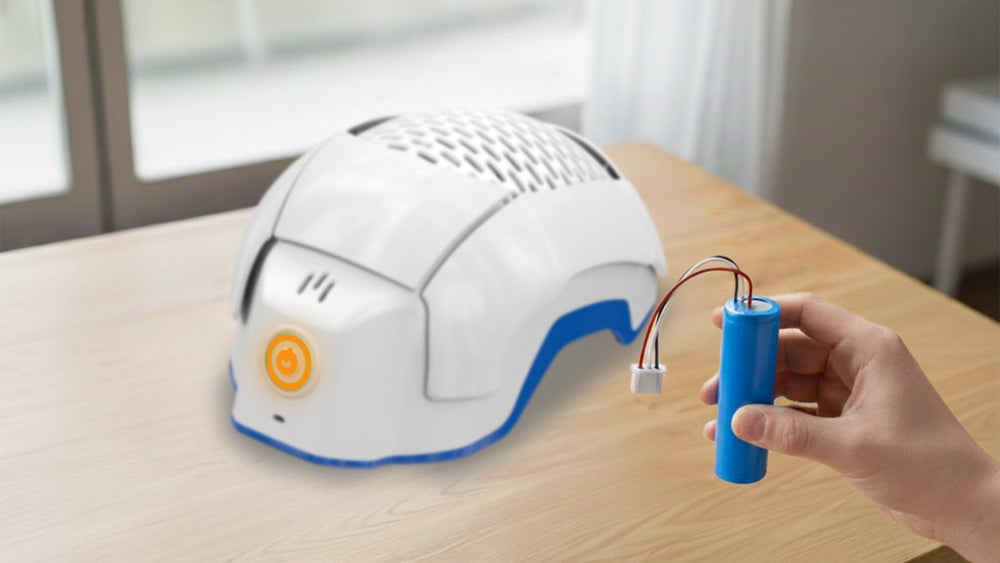
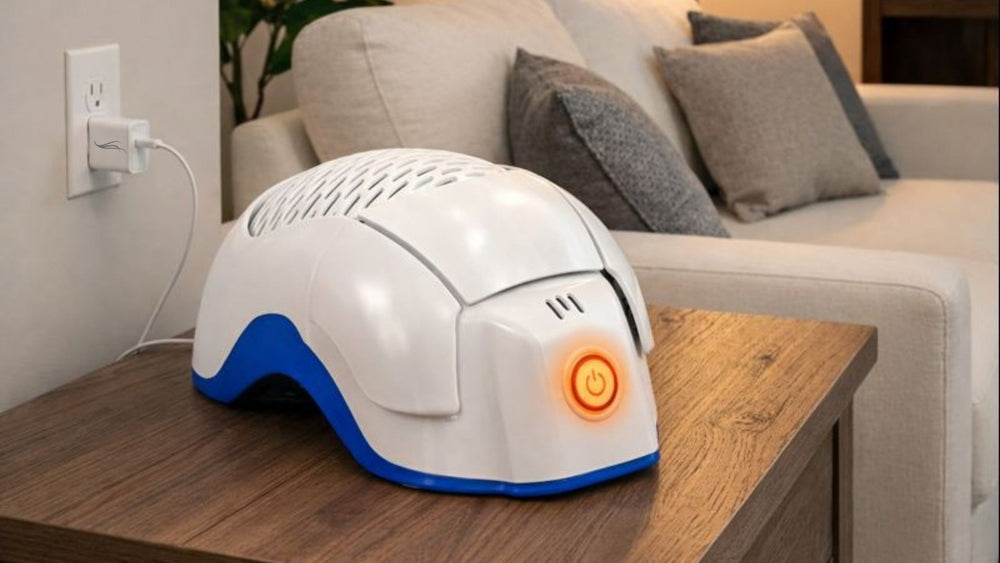
Theradome's FDA record goes back to March 2012, when its first clearance (510(k) K113097) allowed prescription use for women. In June 2013, it became the first wearable laser device FDA-cleared for over-the-counter use. Today's LH80 PRO was cleared over the counter for both men and women in January 2018 (510(k) K171775), covering men with Norwood-Hamilton IIa to V patterns and women with Ludwig-Savin I-1 to I-4, II-1, and II-2 patterns, with Fitzpatrick skin types I to IV. It treats the whole scalp hands-free in 20-minute sessions, twice a week.
It isn't the answer for chemical breakage, scarring alopecia, or very advanced loss where few working follicles remain. It's also not for use during pregnancy or by people with scalp cancer.
Not sure where your hair loss fits? Take the Theradome quiz to see whether Laser Phototherapy matches your pattern and stage.
Which Hair Treatment Myths Deserve Retiring?
"If it tingles, it's working."
Tingling usually comes from menthol, alcohol, or irritants. It tells you about your nerve endings, not your follicles.
"Silicones suffocate your follicles."
Follicles get oxygen from blood vessels under the skin. Silicones can build up on strands, which is a cleansing problem, not a breathing one.
"Keratin treatments put keratin back into your hair."
The straightening comes from heat and cross-linking chemistry. Added proteins don't rebuild damaged keratin.
"Natural means safe for your scalp."
Garlic can blister skin, and essential oils are a known cause of allergic reactions. Natural and gentle aren't the same thing.
"If a treatment stops working when I quit, it must have damaged me."
Usually the opposite. It was holding back a condition that resumes once treatment stops.
"The right mask can repair damaged hair."
Masks can protect and smooth damaged hair, and that's worth doing. But the shaft doesn't heal. Healthy hair has to grow in behind it.
Conclusion
So why do some hair treatments make hair look better, then worse? Because most fast fixes work on the dead shaft. Coatings build up, heat and chemicals weaken the fiber, and some medical treatments fade after you stop because the hair loss underneath picks back up.
The smarter question for any treatment isn't how it looks in week one. It's what your hair looks like once the effect wears off, and whether anything was actually lost.
Today, take one photo of your part in good daylight and keep it. Go easy on heat and chemicals, and change one product at a time. If your pattern looks like androgenetic alopecia, Laser Phototherapy is worth raising with your doctor, or you can start with our quick quiz.