







Fish oil may support scalp health and hair quality in some people, mainly because it supplies the omega-3 fatty acids EPA and DHA. But current human evidence does not show that fish oil, by itself, is a proven treatment for hair loss or a reliable way to regrow thinning hair, especially in androgenetic alopecia.
Why fish oil keeps showing up in hair conversations
Fish oil benefits for hair get talked about like they sit somewhere between common sense and folklore. Eat healthy fat, nourish the body, support the scalp, get stronger hair. It sounds tidy. Real life is not always that tidy.
A lot of supplement content quietly skips one awkward point. Hair loss is not one thing. Pattern thinning, telogen effluvium, traction alopecia, alopecia areata, breakage, scalp disease... those do not behave the same way, and they definitely do not respond to the same tool. So before fish oil gets treated like a universal fix, we need to slow down a bit and ask a less glamorous question: what exactly is it supposed to be doing here?
Fair question.
What is fish oil, really?

Fish oil is a supplement derived from fish that mainly provides EPA and DHA, the two long-chain omega-3 fatty acids most people mean when they talk about fish oil. Plant foods such as flax or chia mainly provide ALA, which the body converts to EPA and DHA only to a limited degree, so they are not a clean substitute if the goal is specifically to raise EPA and DHA levels.
That matters because people often mash all omega-3s into one blurry category. They are related, yes, but not interchangeable in any neat way. The NIH’s Office of Dietary Supplements also notes that omega-3 supplements come in different forms and formulations, which means “fish oil” is not one perfectly standardized thing on a shelf.
Why would hair care about omega-3s at all?
Hair follicles are busy little structures. They cycle through growth, transition, rest, and shedding phases, commonly described as anagen, catagen, telogen, and exogen. That cycling depends on tightly regulated cellular signaling, and the follicle itself is not passive. It is biologically active tissue with ongoing energy and structural demands.
Omega-3s enter the conversation because they become part of cell membranes and can influence signaling pathways involved in inflammation. So the logic is not absurd. If a nutrient changes the cellular environment, maybe it could help the follicle environment too. Maybe. That “maybe” is doing honest work there.
What controls hair growth at the follicle level?
Hair growth is shaped by the follicle cycle, follicle size, and the local signaling environment. The dermal papilla plays a central role in helping regulate growth activity, and disruption of the normal cycle can change how long hairs stay in growth versus how quickly they move toward shedding.
Nutrients matter, of course. But they are not the same thing as a direct signal to a miniaturized follicle. Supporting the general environment and reversing a diagnosed hair-loss process are related ideas... not identical ones.
Where nutrients fit... and where they do not
If someone has poor overall nutrition, significant deficiency, or a broader health issue that is showing up in hair, correcting that can matter. On the other hand, nutrition is not a magic override for every hair problem. Reviews on diet and hair loss keep repeating this in slightly different language, and with good reason. Both deficiency and unnecessary supplementation can cause trouble.
So yes, hair is biological. Internal inputs matter. But when people jump from that truth to “fish oil regrows hair,” they are sprinting past several missing steps.
Does fish oil reduce inflammation around follicles?
This is the strongest biologic argument in fish oil’s favor. EPA and DHA can shift lipid mediator balance and influence inflammatory signaling. The NIH describes omega-3 biology in terms of effects on pathways linked to inflammatory processes, which gives a plausible reason to study fish oil in scalp and follicle contexts.
Plausible, though, is not the same thing as proven in hair. It means the mechanism is worth taking seriously. It does not mean the outcome has already been cleanly demonstrated in people with real-life thinning.
Does fish oil affect oxidative stress or cell stability?
Possibly. Omega-3 fatty acids are incorporated into cell membranes, and that is part of why they keep showing up in discussions about tissue function and resilience. But once the conversation gets very specific... hair density, shaft diameter, regrowth of miniaturized follicles... the human evidence becomes much thinner than the supplement marketing voice usually suggests.
That gap matters. A lot.
Does fish oil help the scalp itself?
There is a reasonable argument that fish oil may help some people at the scalp level more than at the regrowth level. If omega-3 intake supports systemic inflammatory balance and overall skin biology, then scalp comfort or condition could improve in some cases. But direct, high-quality human proof for fish oil as a scalp-specific hair treatment is still sparse.
So when people say their hair “felt better” on fish oil, that may not be nonsense. It just may not mean what they think it means.
So... does fish oil actually help hair?
Fish oil may support general hair and scalp health in some people, and it may be more relevant when overall diet is poor or when the issue is partly tied to broader nutritional context. But current evidence does not justify calling fish oil a proven treatment for hair loss or a dependable way to regrow thinning hair.
One more time, because this is where people get sold a little too eagerly. Supportive is not the same as corrective. Helpful in the background is not the same as clinically meaningful regrowth.
Does fish oil work for androgenetic alopecia?
Not as an established stand-alone treatment. Androgenetic alopecia is the common form of pattern hair loss, and current dermatology guidance does not place fish oil alongside standard evidence-based options in the way it treats therapies like minoxidil.
If someone has miniaturization from pattern loss, fish oil may be background support at best. It is not the main lever.
What about telogen effluvium?
Telogen effluvium is different. It can follow illness, stress, hormonal shifts, nutritional problems, and other systemic triggers. In that setting, improving nutrition may help the recovery environment if there is a real dietary gap or broader nutritional issue involved. Still, there is not strong direct evidence that fish oil specifically treats telogen effluvium on its own.
What about alopecia areata?
Alopecia areata has immune-mediated features, so people sometimes speculate that omega-3s could help because of their biologic effects on inflammatory pathways. That speculation is understandable. It is not the same thing as guideline-backed treatment. The American Academy of Dermatology discusses therapies such as corticosteroids and, in some cases, minoxidil to help maintain regrowth. Fish oil is not presented as a standard treatment.
What about traction alopecia or breakage?
If the problem is traction alopecia from repeated pulling, tight styles, extensions, or similar mechanical stress, fish oil is not addressing the main cause. The AAD is very clear that tight hairstyles themselves can lead to traction alopecia.
Not every hair problem is asking for a capsule. Sometimes it is asking for less tension. Less heat. Less damage. Less denial, maybe.
Where does Laser Phototherapy fit differently?
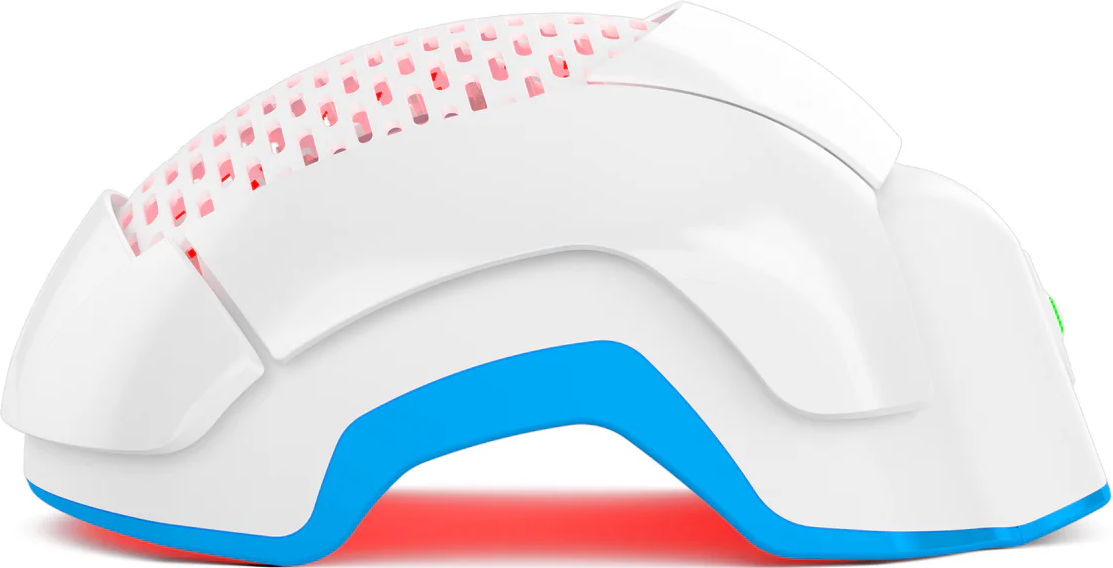
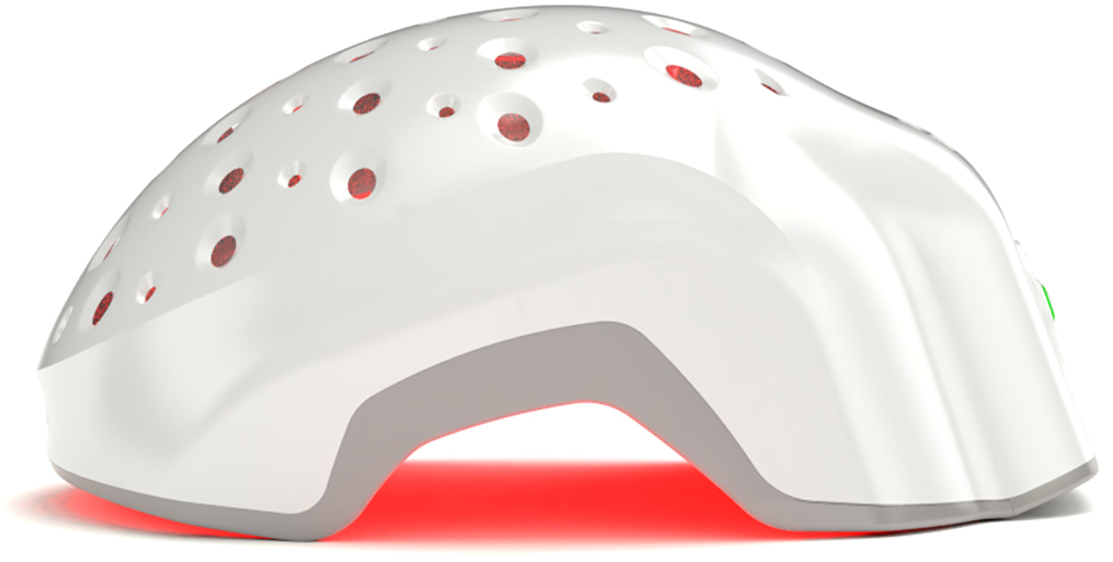
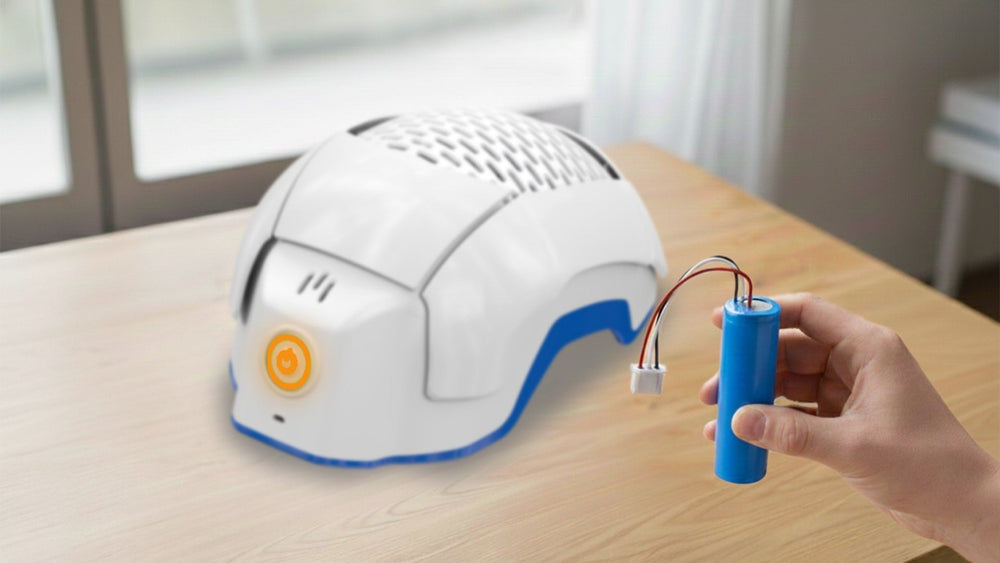
Fish oil is an internal nutritional input. Laser Phototherapy, or LPT, is a direct external intervention aimed at the follicle environment. Those are different categories. One does not cancel the other, and they should not be described as the same kind of tool.
If fish oil is background support, LPT is the more targeted move. That distinction is worth keeping clean, especially because supportive nutrients often get over-celebrated while direct follicular interventions get flattened into the same vague “hair wellness” bucket. They are not the same thing.
Why supplements alone often fall short
Because hair loss is rarely impressed by vague effort.
Someone can take a reasonably good supplement, eat a little better, treat their body well... and still keep thinning if the underlying problem is androgenetic alopecia, chronic traction, autoimmune activity, or another condition needing targeted care. That is why dermatology guidance keeps circling back to diagnosis instead of endless supplement gamble.
Who might actually benefit from fish oil for hair?
The most sensible candidates are people who are trying to improve overall nutritional quality, those who eat very little fatty fish, or those whose hair concerns sit alongside broader scalp or skin concerns rather than clearly advanced pattern loss. Even then, “benefit” may look more like support than reversal.
People who expect fish oil to wake up dormant, miniaturized follicles on its own are probably expecting too much. And that is not negativity. It is just keeping the lights on.
Who probably should not lean on fish oil as the main move?
People with significant genetic thinning. People with clear traction habits that are still going on. People with patchy hair loss suggestive of alopecia areata. People with persistent shedding who have not actually figured out the cause yet. In those situations, using fish oil as the centerpiece can delay better decisions.
Is eating fish as good as taking supplements?
Fatty fish and seafood are the main food sources of EPA and DHA, according to the NIH. So yes, food can absolutely supply these fats. Supplements are mostly a convenience tool when dietary intake is low or inconsistent.
Plant omega-3 sources are still useful foods, but they mainly provide ALA, and conversion to EPA and DHA is limited. So when someone asks whether walnuts or flaxseed are basically the same as fish oil for this purpose... not really, no.
How much fish oil should you take for hair?
There is no established hair-specific fish oil dose backed by major dermatology guidelines. The NIH provides broader information on omega-3 intake and supplement safety, but not a validated dose for hair regrowth.
So any article claiming a precise “right dose for hair growth” is pretending to know more than the evidence currently gives us.
How long would it take to notice anything?
Hair moves slowly. Even standard hair treatments such as minoxidil generally take months before results can be assessed properly, and the most-cited combination omega study ran for six months. That means fish oil, if it helps at all, is not a quick-change act.
Is fish oil safe?
Usually, yes, for many people. The NIH lists common side effects such as unpleasant taste, bad breath, heartburn, nausea, gastrointestinal discomfort, diarrhea, headache, and odor-related complaints. That is not glamorous, but it is useful.
The NIH also notes that the FDA has concluded supplements providing no more than 5 grams per day of combined EPA and DHA are safe when used as recommended. But “safe” is not a blank check. Interactions and individual medical context still matter, especially if someone takes anticoagulants or has other health issues.
Does supplement quality matter?
Yes. Quite a lot, actually. The NIH points out that omega-3 supplements vary in formulation, and labels need to be checked for the types and amounts of omega-3s they provide. That alone should make anyone a bit more cautious about acting like all fish oil products are interchangeable.
And this circles back to the earlier point. When the category itself is variable, the evidence gets harder to apply cleanly to whatever random bottle someone grabbed on a Tuesday.
So where does fish oil fit in a smarter hair plan?
Fish oil makes the most sense as part of a broader, more adult plan. Better diet. Better diagnostic clarity. Less supplement mythology. More respect for what kind of hair loss is actually happening. If someone wants supportive nutrition in the background, fine. That can be reasonable.
But when the goal is actual hair restoration, background support is rarely enough by itself.
Conclusion
Fish oil may help support hair and scalp health in some people, mainly because EPA and DHA are biologically relevant omega-3 fatty acids with plausible effects on inflammatory signaling and cell function. What it does not currently have is strong human evidence as a stand-alone hair-regrowth treatment. The best positive study used a mixed supplement, not fish oil alone.
So if you are looking at fish oil for hair, keep it in the right lane. Supportive, maybe. Central answer to thinning, not usually. And if the shedding keeps going, or the part is widening, or the scalp is telling you something is off... getting the cause right matters more than chasing the next shiny capsule.