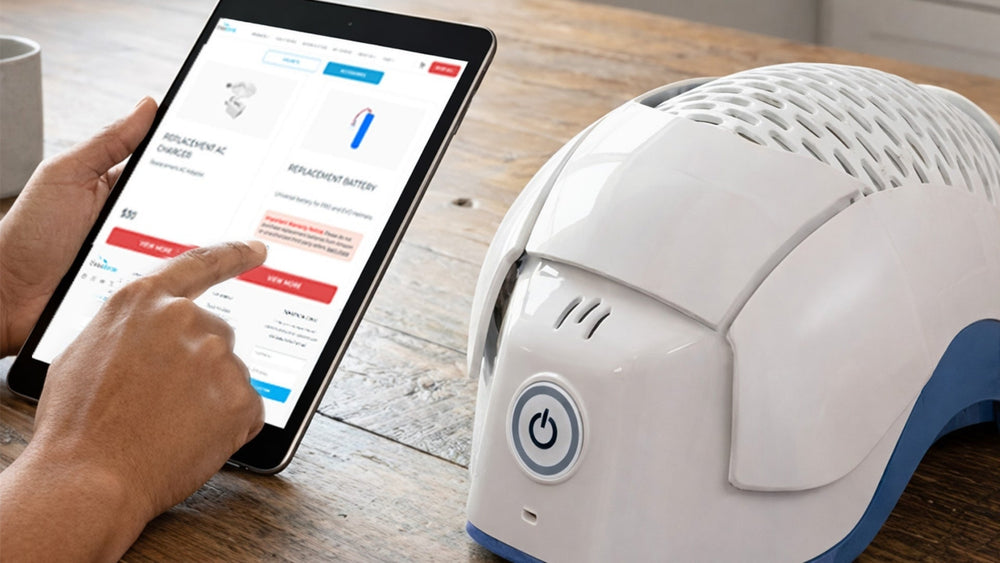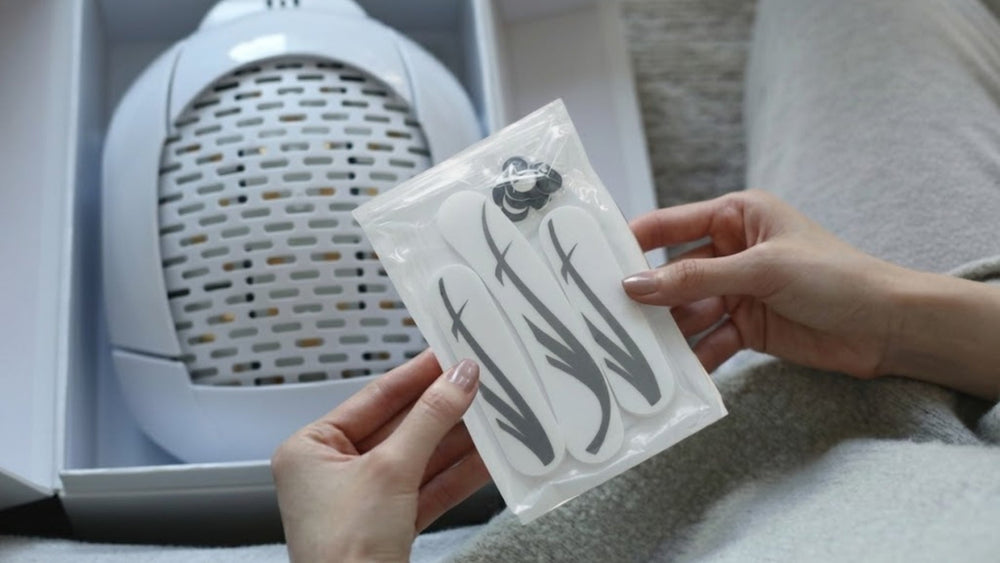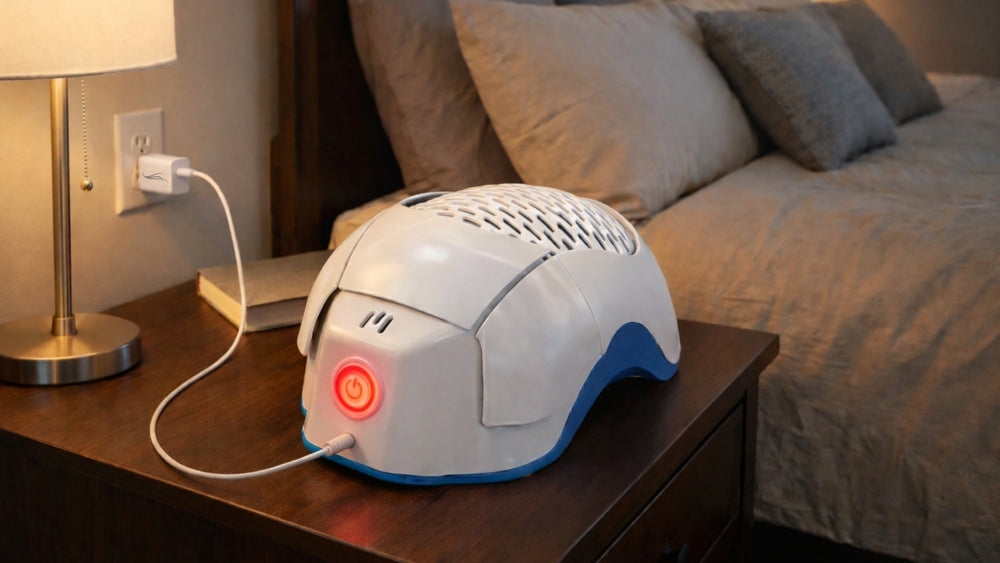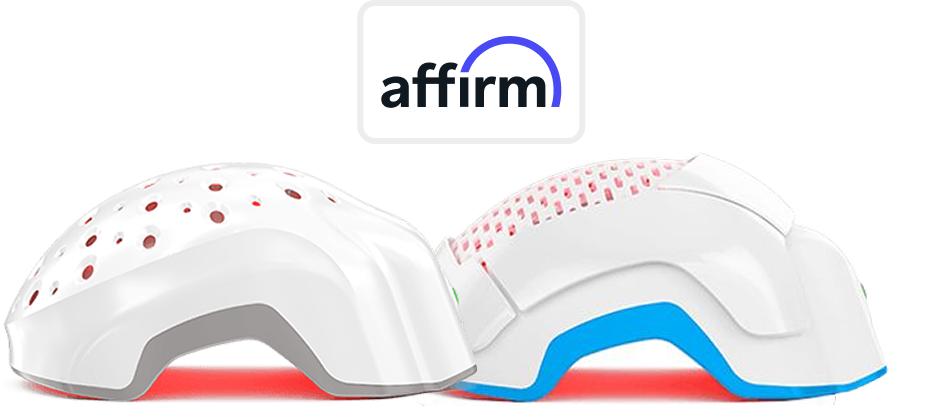








A lot of people quit LLLT early because hair changes happen biologically first and visually later. The early weeks can feel quiet, even pointless, then the studies that do show improvements usually measure outcomes closer to 24–26 weeks, not at week three or week six.
One more thing (because it matters). LLLT is a routine, not a rescue button. When the routine breaks, outcomes often flatten. That part is painfully human.
What patients expect from LLLT vs what hair biology actually does
Most people buy (or start) LLLT with a very normal, very human expectation. “If it works, I’ll see it soon.”
And… hair does not really cooperate with that timeline.
Hair growth is cyclical. Follicles shift through growth, transition, rest, and shedding phases. So a therapy can be doing something at the follicle level while your bathroom mirror keeps acting unimpressed. That cycle framing is discussed across dermatology literature and is one reason many studies measure outcomes months later instead of weeks later.
Also, a lot of people don’t start from the same baseline. “Hair loss” is not one neat bucket. Androgenetic alopecia behaves differently than telogen effluvium, alopecia areata, or scalp inflammation-driven shedding. That mismatch alone can set someone up to quit early because they were solving the wrong problem with the right discipline. (It happens.)
If you’ve been watching your part widen or your temples creep back, you’re already on alert. So when you start something and don’t see a shift fast, your brain calls it a threat. “I’m wasting time.” That’s not stupidity. That’s stress math.
Why LLLT has a built-in delay before you see anything
Hair follicles move through phases, and the visible hair shaft is basically the “receipt” you get later. It’s not instant feedback.
That’s why controlled studies often run for 24 weeks (roughly six months). In a 24-week multicenter trial, the LLLT group showed significantly greater hair density (and improved hair diameter) compared with sham treatment.
Similarly, a sham-controlled trial of a laser comb evaluated outcomes at 26 weeks and found statistically significant increases in terminal hair density in treated groups. (Jimenez et al., 2014)
So yes, the time lag is built into both the biology and how researchers measure success.
What “working” means in clinical studies
In everyday life, “working” tends to mean, “I can see it.”
In research, “working” is often measured by things like:
- terminal hair counts or density in a target area
- hair shaft diameter
- investigator-rated global photography scores
- patient-reported impressions (which, interestingly, do not always line up perfectly with measured change)
Those measures show up in multiple randomized, sham-controlled trials.
And zooming out, meta-analyses and systematic reviews that include multiple trials tend to conclude LLLT can improve hair parameters in androgenetic alopecia, while noting limitations like device differences and follow-up length.
That “limitations” part matters. It’s not a magic wand. It’s a modality with conditions.
The quiet phase that causes most people to quit

This is the phase where you’re doing the sessions, you’re trying to be patient, and… nothing looks different.
Not even slightly.
It can feel like you’re being pranked by your own scalp.
And the irony is, this is often the exact phase where quitting becomes most tempting because there’s no visible reward to reinforce the habit. The World Health Organization has written about how adherence drops in long-term therapies when benefits feel delayed or abstract. Not hair-specific, but painfully relevant to hair routines.
If you’re the sort of person who needs quick, obvious feedback to stay consistent, you’re not “bad at this.” You’re just human.
Still. The biology doesn’t care.
Early shedding, no sensation, no drama: common signals people misread
Temporary shedding has been reported as an adverse effect in at least one randomized sham-controlled helmet study.
Shedding can happen for different reasons, so it’s not a standalone verdict. Some people interpret shedding as “the treatment caused hair loss,” then stop immediately. Sometimes that’s understandable panic. Sometimes it’s just a timing collision with the natural shedding cycle.
If you ever feel unsure, that’s where a clinician or trichology professional check-in can help. Not to “sell” anything. Just to confirm what’s going on.
Why you may not feel anything at all
LLLT is not supposed to burn or heat the scalp. Its proposed mechanism is photobiomodulation, often discussed through mitochondrial chromophores like cytochrome c oxidase and downstream signaling effects.
So if you’re waiting for tingling as proof, you might wait forever.
No sensation does not equal no biological response. It usually just means the device is doing what low-level phototherapy does.
What not to use as a progress check
- Daily mirror scans
- Moving your hairline forward with wishful lighting
- Comparing yourself to someone online who might be using two prescriptions plus a hair transplant and a ring light
Also… your memory is not a measurement tool. It’s a storyteller. Sometimes a dramatic one.
Consistency is the real treatment most people struggle with
This part gets awkward because it’s not about lasers, wavelengths, or follicle theory.
It’s about life.
Trials typically use set routines over months. Example: daily or regular use schedules across 24 weeks in controlled designs.
When real people do it, routines collide with travel, late nights, caregiving, burnout, “I’ll do it tomorrow,” and that one week you decide to reorganize your entire house instead of doing the one small thing that actually mattered.
A systematic review and meta-analysis of FDA-cleared home-use devices discusses potential effectiveness, while also pointing out that devices vary and long-term follow-up and comparisons are still needed.
So if you’re inconsistent, it’s not that you’re doomed. It’s that you’re no longer matching the conditions under which the evidence was gathered. That’s the cleanest way to say it.
Why different LLLT devices lead to very different experiences
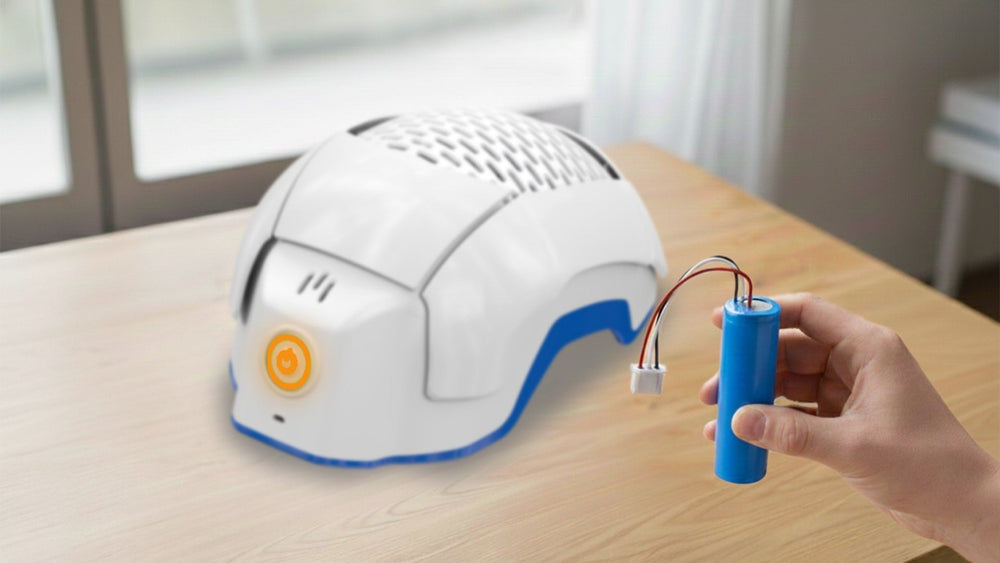
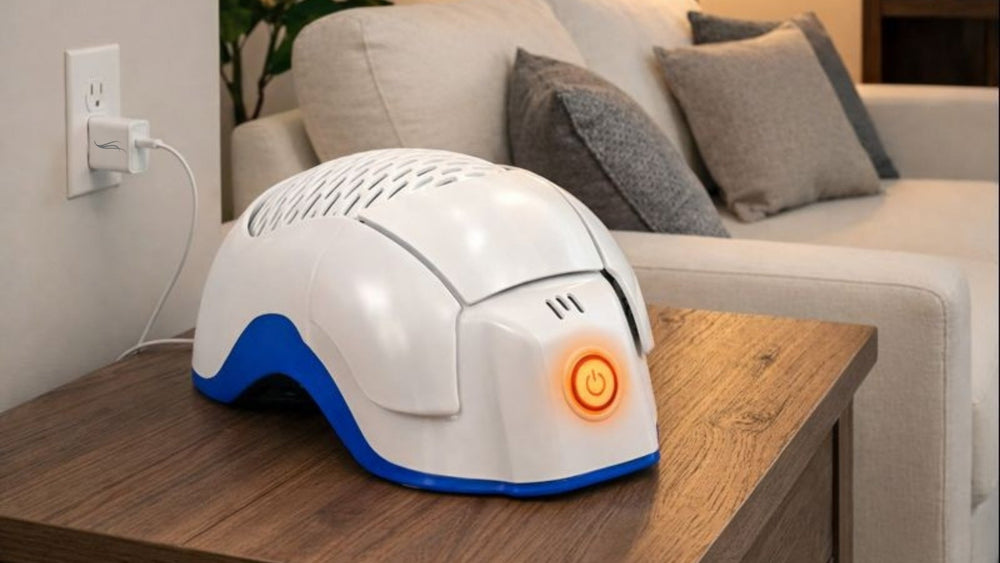
People love lumping “LLLT” into a single thing. In practice, home devices differ a lot. Design, coverage, output, and user adherence all shape the experience.
Clinical trials often specify wavelength ranges and durations. In the 24-week helmet study, treatment involved defined wavelengths and a set exposure time, and outcomes were measured against sham.
A Thai randomized sham-controlled trial also used a helmet-type device and reported improvements in hair density and diameter at week 24, with side effects like pruritus and temporary shedding.
Even within “cleared devices,” parameters differ. Which is part of why broad statements like “LLLT didn’t work for me” can be missing key context.
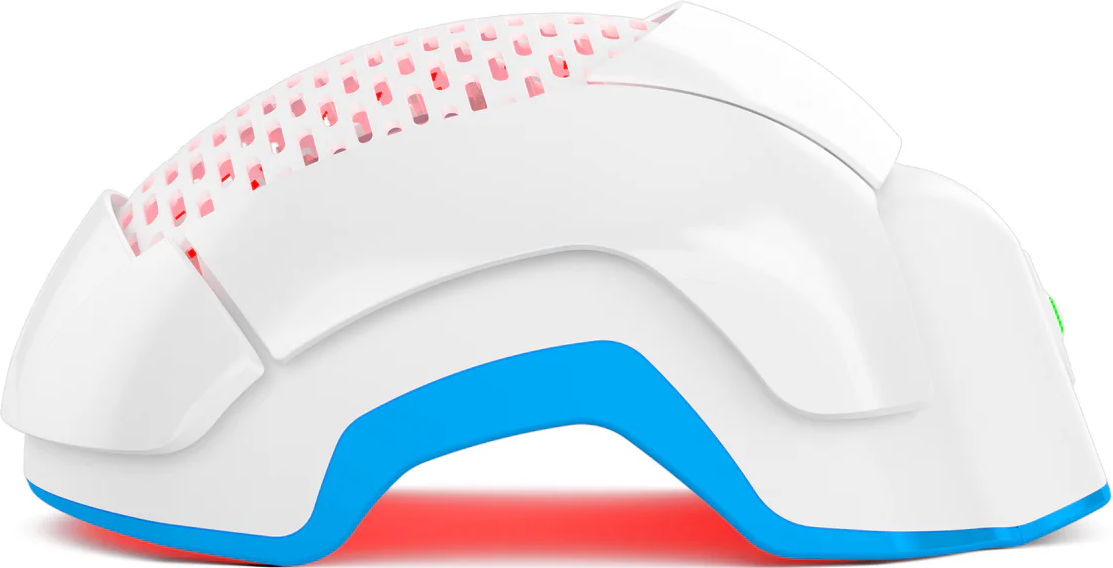
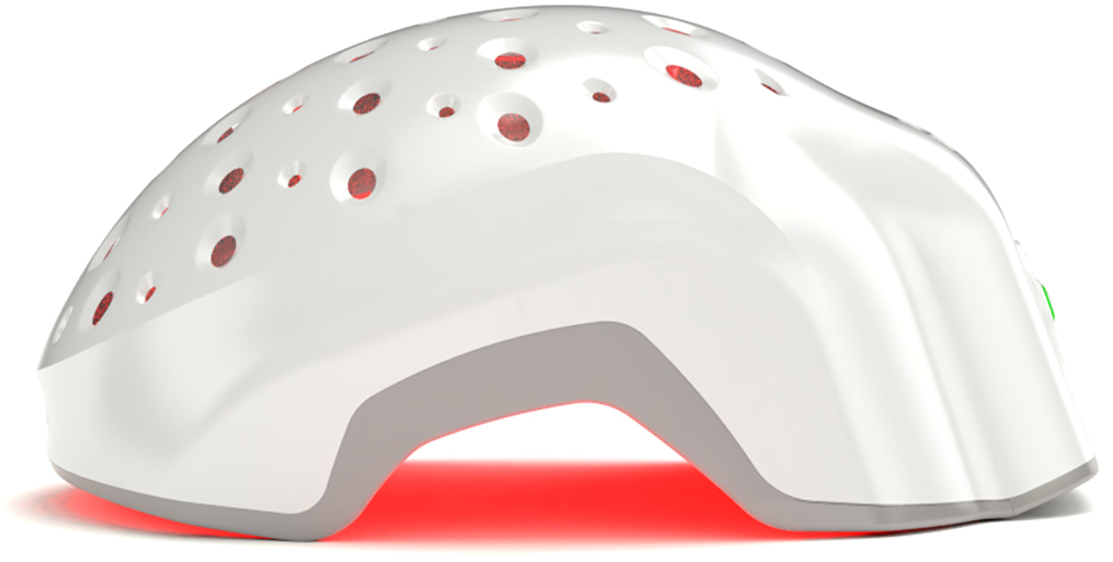
In the United States, many hair laser devices are marketed under FDA 510(k) clearance pathways, meaning “substantially equivalent” to a predicate device for intended use, not the same thing as drug approval. The FDA’s own listing for a Theradome device shows this under the 510(k) database.
That regulatory clarity helps people avoid buying random light gadgets that use vague language and no real documentation.
Fear, skepticism, and the word “laser”
Some people quit early because the word “laser” triggers a mental image of cutting, burning, or sci-fi damage.
Low-level light therapy in dermatology is generally discussed as non-thermal, non-ablative, and aimed at photobiomodulation rather than tissue destruction.
Also, dermatology organizations often describe low-level light treatments as safe and non-invasive in cosmetic contexts, while still advising caution with at-home devices and expectations. The American Academy of Dermatology has publicly discussed low-level laser therapy as potentially effective for hereditary hair loss in referenced study discussions.
If someone quits because they’re scared, the answer is not “push through.” It’s education. Calm, boring, grounded education. The kind that makes your shoulders drop.
Why people quit right before the inflection point
Many people quit right before things shift because they confuse “I can’t see it” with “nothing is happening,” and the routine fatigue hits hardest exactly when the biology still needs time. The pivotal measurement windows in randomized trials are often around week 24 or 26.
Another layer. People compare themselves to faster-acting interventions, then judge LLLT by the wrong yardstick. Meta-analyses often place LLLT among modalities with evidence for androgenetic alopecia, alongside minoxidil and finasteride, while still emphasizing that outcomes vary and evidence quality differs by study design.
Adherence drops in long-term treatments across health conditions, especially when routines are inconvenient and rewards are delayed. That’s a known global pattern.
How to evaluate progress without sabotaging yourself
If you want your expectations to match the evidence base, align your checkpoints closer to how controlled trials measure outcomes. Many assess at 24 weeks, 26 weeks, or both.
Short-term check-ins can still matter, but they’re better for routine tracking than for verdicts.
Photos, not memory
Standardized photos help because they reduce “today’s mood” from hijacking your conclusions. Clinical studies rely on objective measures and standardized assessments for a reason.
Same lighting. Same angle. Same distance. Same parting.
When professional input helps
If you’re unsure whether you’re dealing with androgenetic alopecia, telogen effluvium, scalp inflammation, or something else, a professional assessment can clarify diagnosis and expectations. Reviews emphasize that hair loss has multiple causes and that treatment response depends on the type and severity.
Also, if shedding is sudden, severe, or paired with scalp symptoms, don’t self-guess for months. That’s not bravery. That’s delay.
Conclusion
Most early quitters are not lazy. They’re exhausted, skeptical, busy, and hungry for visible proof.
LLLT asks for patience because the scalp tends to change quietly before it changes obviously. That delay shows up in biology and it shows up in how studies measure outcomes, often around the 24–26 week mark.
If you want a fair evaluation, borrow the study timeline, track progress objectively, and get diagnosis clarity when things feel uncertain. Calm structure beats panic pivots. Almost every time.