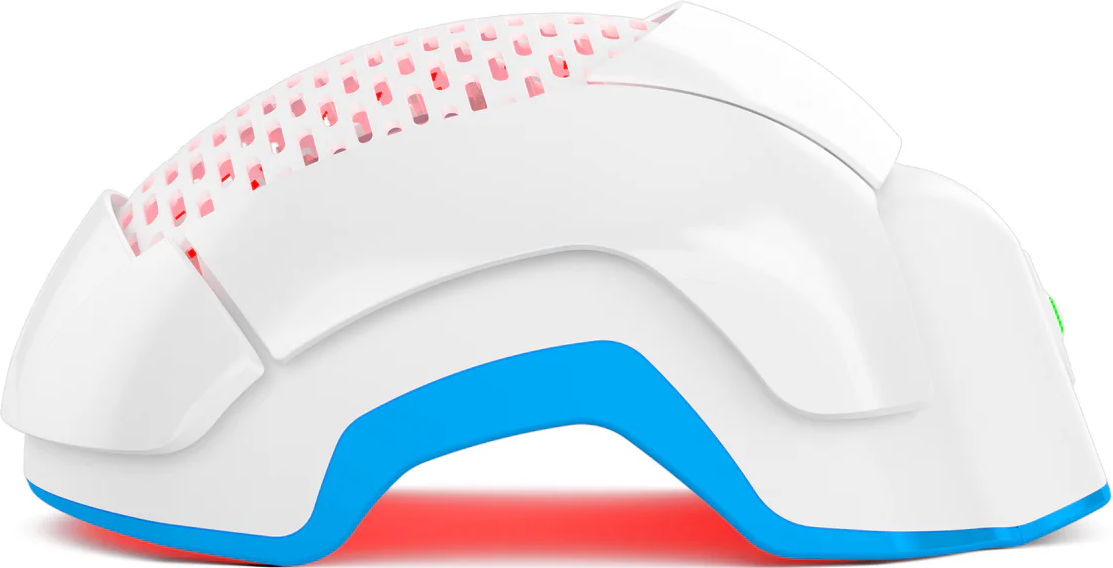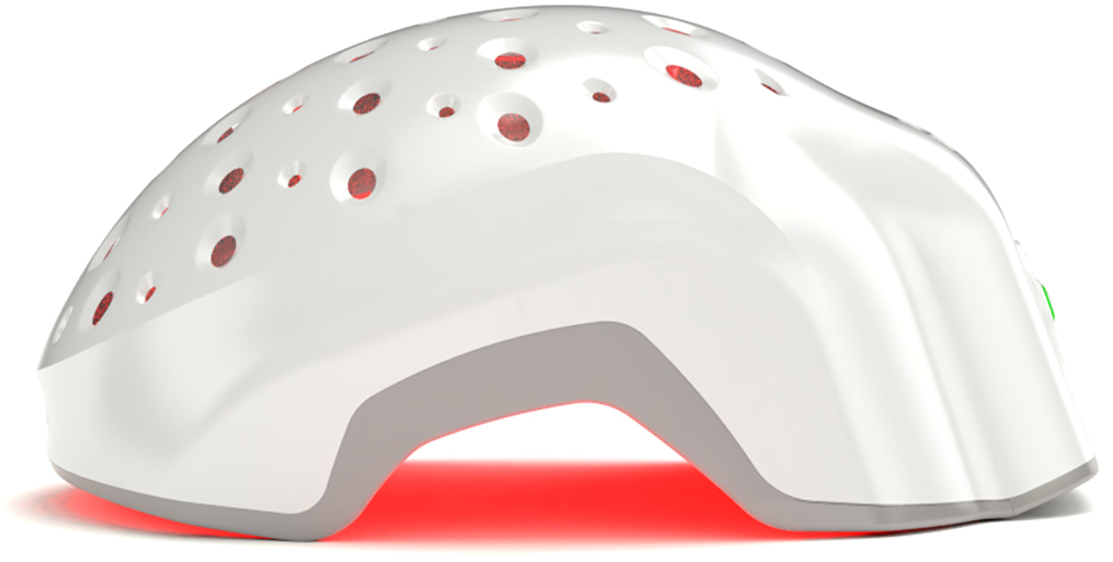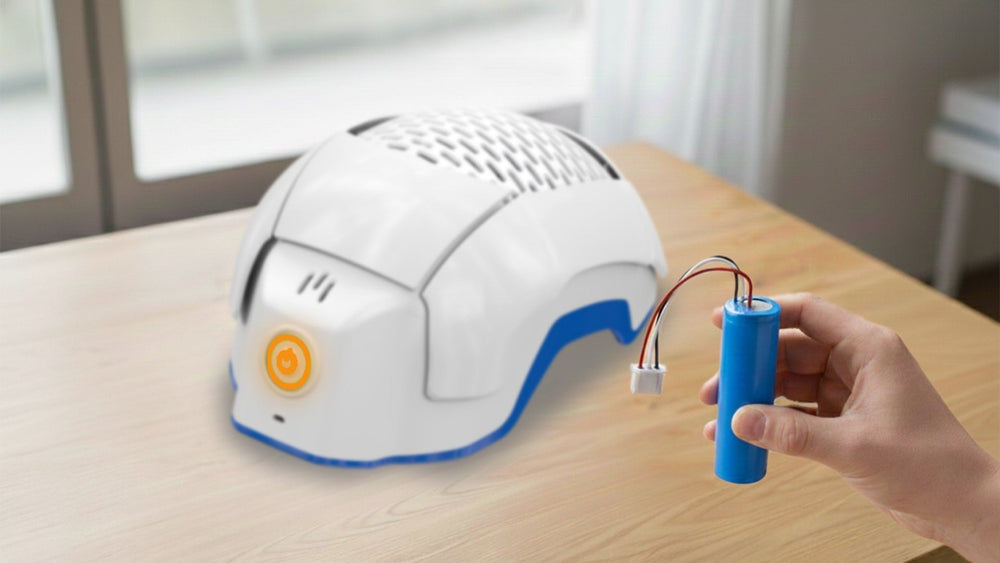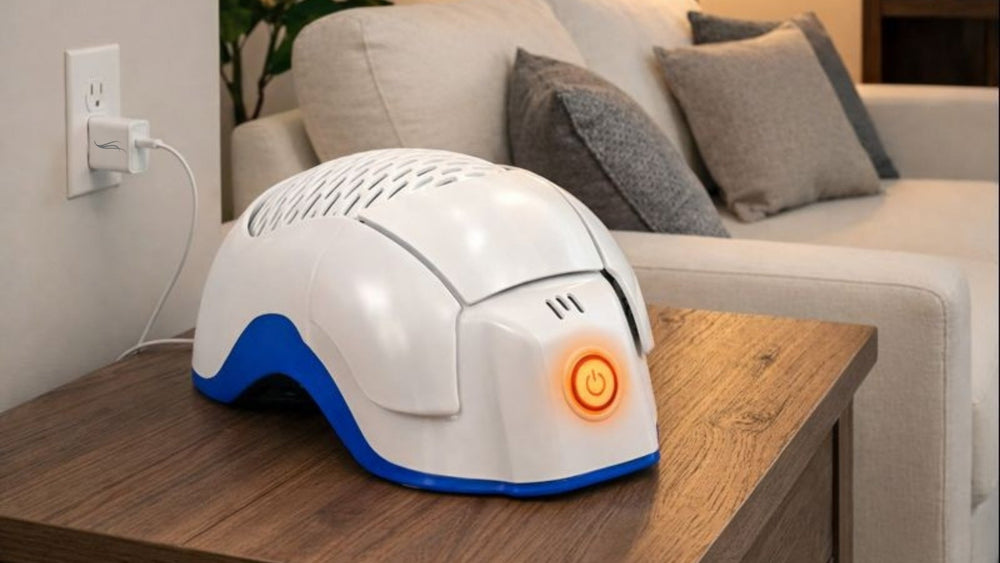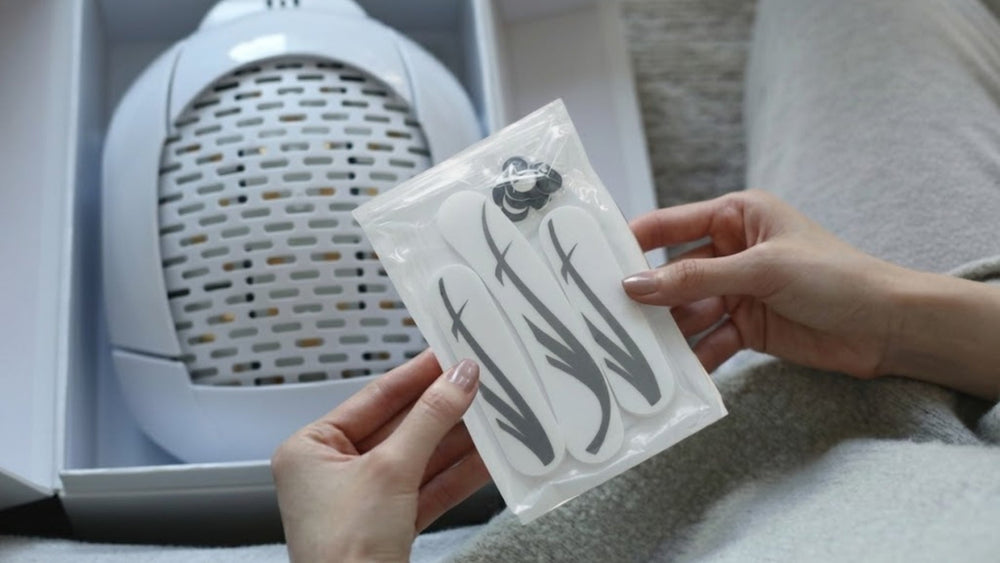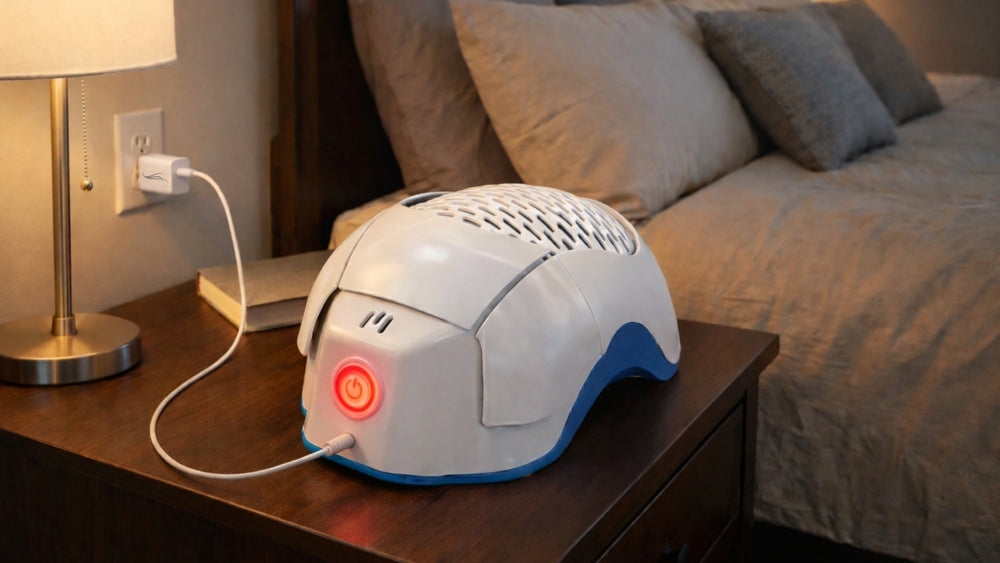








Theradome does not dye hair, “add pigment,” or directly reverse greys. But if you grow more hair (or thicker hair shafts) in areas that were thinning, your hair can look darker because there’s less scalp showing through and light reflects differently off denser fibers.
What People Usually Mean When They Say “My Hair Got Darker”
Most people aren’t actually talking about melanin biology when they say “darker.”
They’re describing a look. A visual shift that’s hard to pin down in a mirror at 7:12am.
“Darker” often means: less scalp peeking through, hair looking less see-through at the crown, part line not screaming, strands feeling less wispy. That’s appearance, not a pigment lab. And it makes sense because hair appearance is strongly influenced by fiber surface structure, alignment, and light scattering. (Yes, your hair is basically doing physics all day.)
Thinning hair often looks lighter even if the color of each strand did not change.
How Hair Color Actually Works (And Why It’s Hard to Change)

Melanin, melanocytes, and the hair growth cycle
Hair color comes from melanin, which is produced by melanocytes in the hair follicle during the active growth phase. Melanin is incorporated into the hair shaft as it’s formed.
Once the hair fiber is out, that strand is essentially a dead keratin structure. It can get sun-faded, chemically lightened, stained, dulled… sure. But it doesn’t suddenly start manufacturing more pigment from within.
Why grey hair happens
Greying is mainly linked to problems with maintaining melanocyte stem cells over time. In research that looked at hair follicles and stem cell maintenance, graying is tied to defective self-maintenance of melanocyte stem cells. That’s the core idea.
You’ll also see it described in clinical reviews as “canities” or “achromotrichia,” with lots of nuance about genetics, oxidative stress, autoimmune links, and micronutrient issues in some cases.
So… greying is not “your hair ran out of dark shampoo.” It’s a follicle pigment system issue.
What Laser Phototherapy (LPT) Actually Does
Theradome is a wearable Laser Phototherapy (LPT) device intended to treat androgenetic alopecia and promote hair growth (for specific pattern classifications) as an OTC therapeutic device in its FDA 510(k) materials. You can see that in the FDA summaries:
What does LPT generally aim to do in hair loss research? The literature often discusses photobiomodulation-type mechanisms and then measures outcomes like hair density (hairs/cm²), sometimes hair thickness, and patient-reported improvement.
Two good high-level, clinically oriented sources that summarize the research base for low-level light/laser approaches in pattern hair loss:
Important (and I’m being deliberately unromantic here): these sources discuss hair growth outcomes. They do not position LPT as a pigment-restoration tool.
So Why Does Hair Sometimes Look Darker After Theradome?
Increased hair density reduces scalp show-through
If you have thinning at the crown or along the part, you can get a pale “halo” effect from visible scalp. Your scalp is reflecting light. It’s bright compared to your hair. So even dark hair can look… less dark.
When hair density improves, scalp visibility decreases. That alone can make your hair look deeper in tone from a normal viewing distance. Clinical studies on home-use LLLT/laser devices commonly use hair density change as a key endpoint, which helps explain why this “darker” perception shows up in real people with pattern loss.
So, it’s often scalp, not pigment.
Thicker hair shafts change light reflection
Hair fibers scatter and reflect light based on their surface and internal structure. Small differences in shaft diameter, cuticle condition, alignment, and porosity can shift hair’s apparent color and luster.
So if your strands become less miniaturized and more “normal caliber,” your hair may stop looking airy and translucent.
Healthier growth changes visual contrast
Miniaturized hairs (common in androgenetic alopecia) can be finer and shorter. When more terminal-like hairs are present, the visual contrast shifts.
Also, styling changes. People unconsciously change their styling when they feel improvement. They part differently. They stop slicking hair tight because they’re not trying to hide a thin patch anymore. That can alter perceived color too (yes, hair psychology is a thing).
This is why before-and-after photos can be tricky unless they control lighting and angle. Human eyes are easily fooled.
Does Theradome Reverse Grey Hair?
No.
Theradome is not a “grey reversal” device, and LPT is not established as a pigment-restoration therapy in the clinical hair loss literature. The device indications in FDA summaries focus on androgenetic alopecia and promoting hair growth.
And biologically, greying is tied to melanocyte stem cell maintenance problems over time. That’s a different lane.
What can happen is this: if you have both thinning and some greys, fuller growth in pigmented hairs can make the grey hairs feel less dominant visually. That’s “less noticeable,” not “re-pigmented.”
What Changes Are Realistic, and When Do They Happen?
Timeline
Hair grows in cycles. So even if a therapy supports follicles, you don’t see change overnight. That’s why most clinical discussions around hair growth interventions talk in months, not days. Reviews of laser approaches discuss this general pattern of repeated treatment and measured outcomes over time.
What you’ll likely notice first
Often, people notice:
- slightly better coverage in harsh bathroom lighting
- the part looking narrower
- hair behaving better when styled (less “floaty”)
That’s consistent with the idea that density and fiber caliber changes influence appearance more than pigment shifts.
Why results differ between people
Pattern hair loss is… personal. Genetics, baseline miniaturization, and consistency all matter.
Also, the classification ranges in FDA documentation exist for a reason. Devices are cleared for certain patterns and populations in their indications, not “everyone, everywhere, forever.”
If you’ve been dealing with thinning for years, it’s normal to want a dramatic “color comeback.” The brain likes neat wins. Biology is rarely that neat.
Common Misunderstandings Worth Clearing Up
1. “Lasers change hair color.”
Cold, low-level light is not hair dye. It is not bleaching. It is not adding pigment. The intended use in these devices is hair growth support in androgenetic alopecia, not shade modification.
2. “If it looks darker, pigment must be back.”
Not necessarily. Hair appearance is shaped by structure and light scattering.
3. “Light always increases pigment.”
Visible light can affect melanocyte biology in skin in complex ways, depending on wavelength and context, but that is not the same as “this helmet brings back hair pigment.”
When to Talk to a Dermatologist or Trichology Clinician
If any of these are happening, don’t play guessing games in your bathroom mirror:
- sudden patchy loss
- rapid greying far earlier than family patterns
- scalp pain, scaling, bleeding, or intense itching
- eyebrow or lash thinning alongside scalp changes
Premature greying can sometimes be associated with broader issues (nutritional, autoimmune, endocrine), and reviews recommend assessment when the pattern seems unusual.
Conclusion
Theradome does not directly make hair darker in the way a dye does, and it does not “switch pigment back on.” What it can do, when it works well for someone with pattern hair loss, is support fuller growth. Fuller growth often means less scalp show-through and thicker-looking fibers, and those two things can make hair appear deeper and richer in color.
That “darker” look is usually optics. Structure. Light.
If you’re hoping for grey reversal, it’s better to hold that expectation lightly. Greying is tied to melanocyte stem cell maintenance, and that’s a different biological problem.
If you’re mainly trying to look like yourself again, with more coverage and less see-through hair, the “darker” effect can still feel like a win.