







Hair thinning on one side is usually a sign that something local is going on. Sometimes it is only visual asymmetry from parting, breakage, or styling habits. Other times it points to a real hair loss pattern such as traction alopecia, alopecia areata, tinea capitis, or early androgenetic alopecia, which can look uneven at first.
Maybe you noticed it in a bathroom mirror. Maybe a photo got a little too honest. Maybe your part suddenly looks wider on one side and now your brain will not leave it alone. Fair enough. Uneven thinning feels oddly personal, mostly because hair loss is usually talked about as a whole-head problem, not a left-side-versus-right-side betrayal.
Still, one-sided thinning is not random. It usually means one of two things. Either the hair only looks thinner on that side because of how it sits, breaks, or reflects light... or a local process is affecting that area more than the rest.
Is It Normal for Hair to Be Thicker on One Side?
Yes, up to a point. Human bodies are not built with ruler-straight symmetry, and neither are scalps. Hair direction, whorls, shaft thickness, curl pattern, and where you part your hair can all make one side appear fuller than the other, even when the follicles themselves are doing roughly the same job. Dermatology reviews describe hair loss diagnosis as pattern-based for a reason. Appearance can mislead before biology does.
Visual asymmetry vs biological hair loss
Visual asymmetry means the hair is arranged differently. Biological hair loss means the scalp on that side is actually producing fewer or finer hairs. Those are not the same thing. If you change your part, wash and dry your hair differently, or look at it under softer lighting and the “thin side” mostly disappears, that leans toward appearance. If the same side keeps looking sparse across photos, styles, and lighting, that starts to feel more real.
Why hair parts exaggerate thinning
A fixed side part can make one side seem weaker because it repeatedly exposes the same scalp line and trains hair to separate in the same place. Add a bit of breakage or flattening and the difference can look larger than it is. Not dramatic. Just enough to send you into a very unglamorous zoom-in session on your front camera.
When asymmetry becomes suspicious
It becomes more concerning when the scalp is increasingly visible on one side, the density gap is obvious, or that area is also itchy, flaky, sore, patchy, inflamed, or full of short broken hairs. Those clues push this out of the “maybe my hair is just behaving oddly” category and into “something specific may be happening here.”
Persistent change matters.
How Hair Follicles Actually Work Across the Scalp
Each follicle cycles through growth, transition, rest, and shedding. Those stages are called anagen, catagen, telogen, and exogen. Visible fullness depends on how many follicles are actively growing, how thick the shafts are, and whether the follicles are staying robust or gradually miniaturizing. In androgenetic alopecia, for example, the problem is not that follicles vanish overnight. They progressively produce finer, shorter hairs over time.
Why some scalp zones lose density earlier
Scalp regions do not all behave the same. In patterned hair loss, some zones are genetically more susceptible than others, which is why thinning often favors the frontal scalp, temples, or crown instead of affecting every inch evenly. That regional behavior is well established. True left-versus-right biological independence, though, is much less established. So if only one side seems affected, clinicians usually widen the differential rather than assuming one half of the scalp simply “ages faster.”
Why thinning sometimes looks one-sided at first

Early patterned thinning can look asymmetric before the overall pattern becomes obvious. One side may reveal more scalp because the hairs there are lying flatter, are slightly finer, or are being stressed more by styling. So yes, androgenetic alopecia can appear one-sided at first. But if the asymmetry is marked, focal, or patchy, it is wise not to stop there.
How follicle miniaturization changes hair diameter
Miniaturization is a sneaky process. The follicle still works, just not with the same authority it once had. Thick terminal hairs gradually become finer, shorter, and less pigmented. That is why early thinning often looks like reduced volume or extra scalp show-through before it looks like “baldness” in the dramatic sense people fear.
Can Pattern Hair Loss Start on One Side?
It can look that way, yes. But classic androgenetic alopecia is still considered a patterned, usually bilateral process rather than a truly unilateral disease. A 2024 review describes androgenetic alopecia as progressive follicle miniaturization with characteristic clinical patterns in men and women, not as a one-sided disorder in its own right.
So if you are seeing hair thinning on one side, the careful answer is this: early pattern loss is possible, but it should not be the only explanation considered. If the area is sharply focal, suddenly patchy, inflamed, or full of broken hairs, other causes move up the list quickly.
The Most Common Causes of Hair Thinning on One Side
Traction alopecia
This is one of the most common and most believable reasons for one-sided thinning. Traction alopecia happens when hair is repeatedly pulled with enough tension to stress the follicle. Tight ponytails, braids, weaves, extensions, clips, glued pieces, and even a hairstyle that pulls harder on one side than the other can do it. Early on, it may improve when the tension stops. Leave it going long enough and it can become permanent.
Alopecia areata
Alopecia areata is an autoimmune condition that causes non-scarring hair loss, often in smooth patches. A person may first describe it as “thinning” rather than a patch, especially if the area is small or hidden by surrounding hair. Trichoscopy can reveal characteristic clues such as yellow dots, black dots, short vellus hairs, and tapering hairs.
Hair breakage and styling damage
Not every thin-looking area is true follicle loss. Repeated heat, aggressive brushing, bleaching, relaxing, and rough handling can leave one side with more snapped hairs and less visible bulk. That side may look sparse, but the issue is shaft damage rather than the follicle going offline. Broken hairs of uneven lengths, rough texture, and visible fragility all point that way.
Trichotillomania
Trichotillomania is hair-pulling disorder. It can create very uneven loss with hairs at multiple lengths, odd borders, and a pattern that does not quite behave like alopecia areata or pattern loss. Some people know they are pulling. Some barely register it until someone else points it out. Trichoscopy is very helpful here too.
Fungal infection, especially tinea capitis
Tinea capitis is a fungal infection of the scalp and hair. It can cause scaling, broken hairs, localized thinning, tender areas, and sometimes inflamed swollen patches called kerions. It is more common in children, but adults can get it too. Because it can lead to scarring in severe cases, prompt treatment matters.
Temporal triangular alopecia
This one gets missed. Temporal triangular alopecia is a benign, non-scarring, usually unilateral patch of thinning in the frontotemporal scalp. It often appears in childhood, though some cases are recognized later. It can be mistaken for alopecia areata, but the pattern and dermoscopic findings are different.
Early pattern hair loss that only looks asymmetric
And yes, back to the earlier point... sometimes one-sided thinning really is the first visible hint of androgenetic alopecia. Not because the condition is unilateral in essence, but because the early visual expression is uneven. The tricky part is not overcalling this and missing a more local cause.
Conditions That Can Look Like One-Sided Hair Thinning
A thin-looking side is not always losing more hair. Sometimes that side has finer shafts, more frizz collapse, more breakage, a deeper part, or a hair whorl that opens the scalp. Seborrhoeic dermatitis can also make one area look rougher and less dense because of scale, itch, and inflammation, though it is not usually the cleanest standalone reason for isolated unilateral thinning.
This is why dermatology leans so heavily on pattern, scalp findings, and trichoscopy. The mirror gives clues. It does not give diagnoses.
Could Stress or Lifestyle Factors Cause One-Sided Thinning?
Stress matters for hair, absolutely. But the classic stress-linked shedding pattern, telogen effluvium, is usually diffuse. It tends to show up as increased shedding or all-over reduction in density, not a neat left-side-only or right-side-only problem. So if stress is part of your recent life, it may still be relevant... just probably not as the whole explanation for unilateral thinning.
What about sleeping on one side? The honest answer is that current dermatology literature does not treat side sleeping as a proven primary cause of true unilateral alopecia. It may increase friction, flatten one side, or make breakage and asymmetry more obvious. That is plausible. But it does not sit in the same evidence tier as traction alopecia, alopecia areata, or tinea capitis.
A small but useful distinction.
How Dermatologists Diagnose Hair Thinning on One Side
Scalp examination and history
A dermatologist usually starts with timing, symptoms, and pattern. When did it begin? Was it sudden or gradual? Is there pain, itch, scale, tenderness, or shedding? Do you wear styles that pull? Any recent illness, medication change, or pulling habit? Hair diagnosis often looks deceptively simple from the outside, but the history does a lot of heavy lifting.
Trichoscopy and imaging
Trichoscopy is a non-invasive way to magnify the scalp and hair shafts. It helps separate conditions that can look similar to the naked eye. Dermatologists may identify yellow dots in alopecia areata, broken hairs in trichotillomania, scaling and fungal clues in tinea, or pattern changes that support androgenetic alopecia. The American Academy of Dermatology notes that dermatologists often use a dermatoscope when diagnosing alopecia areata.
Lab tests and biopsy when needed
Not everyone needs blood work or a scalp biopsy. Testing is guided by the pattern and the suspicion. If the history suggests diffuse shedding, labs may help identify triggers such as thyroid issues or iron deficiency. If scarring alopecia is possible, biopsy becomes more important because histopathology can distinguish scarring from non-scarring processes.
Treatments That Can Help Restore Hair Density
Stopping mechanical damage
If the cause is traction or breakage, the first treatment is not glamorous. It is restraint. Looser styling, less pulling, less heat, less friction, fewer “I’ll just slick it back one more time” days. Early traction alopecia often improves when tension stops. Longstanding traction may not. That is why catching it early matters so much.
Medical treatments for hair loss
Treatment changes with diagnosis. Alopecia areata often responds to corticosteroids, especially in limited disease. Tinea capitis needs antifungal treatment, often systemic rather than just topical shampoo. Androgenetic alopecia may be treated with agents such as topical minoxidil, oral finasteride in appropriate male patients, or other individualized options depending on sex, age, risk profile, and clinician guidance. None of those belong in a casual copy-and-paste routine without a proper diagnosis first.
Laser Phototherapy (LPT)
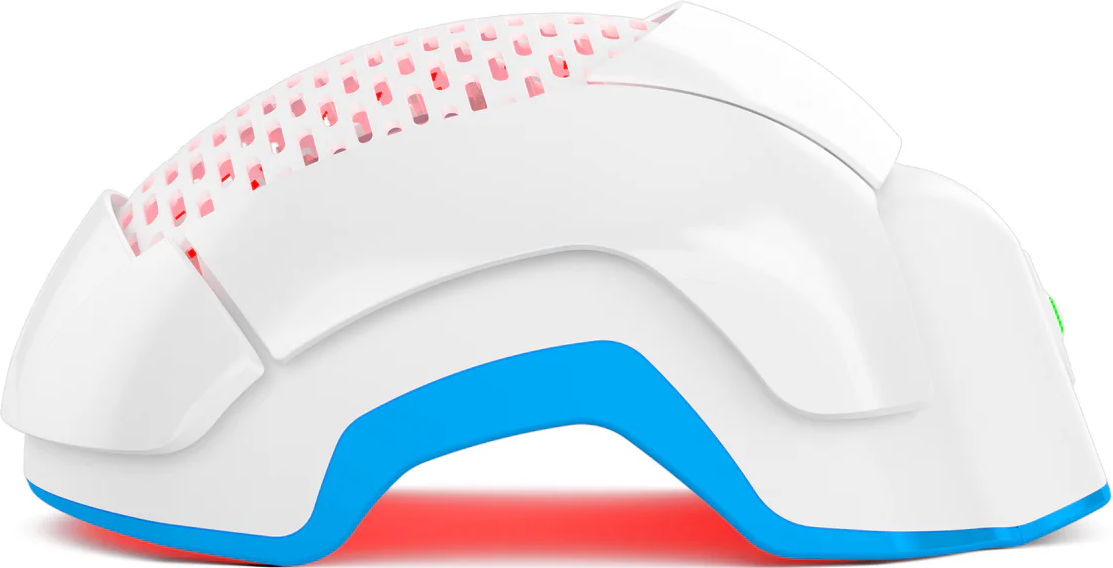
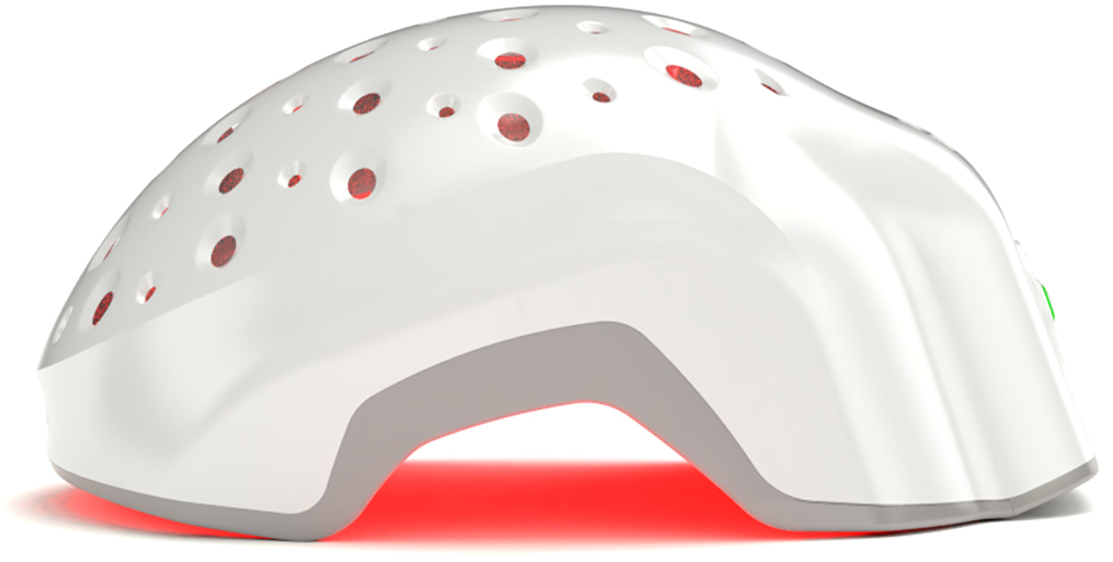
When one-sided thinning turns out to be part of broader patterned thinning, Laser Phototherapy (LPT) can be a reasonable supportive option. The strongest evidence for light-based treatment is in androgenetic alopecia. A recent review and meta-analysis concluded that low-level laser therapy is promising for androgenetic alopecia, while evidence for other alopecia types is still thinner and more limited. The proposed mechanism is photobiomodulation, meaning light influences cellular activity without heat damage. That point matters. This is not a burning laser. Not even close.
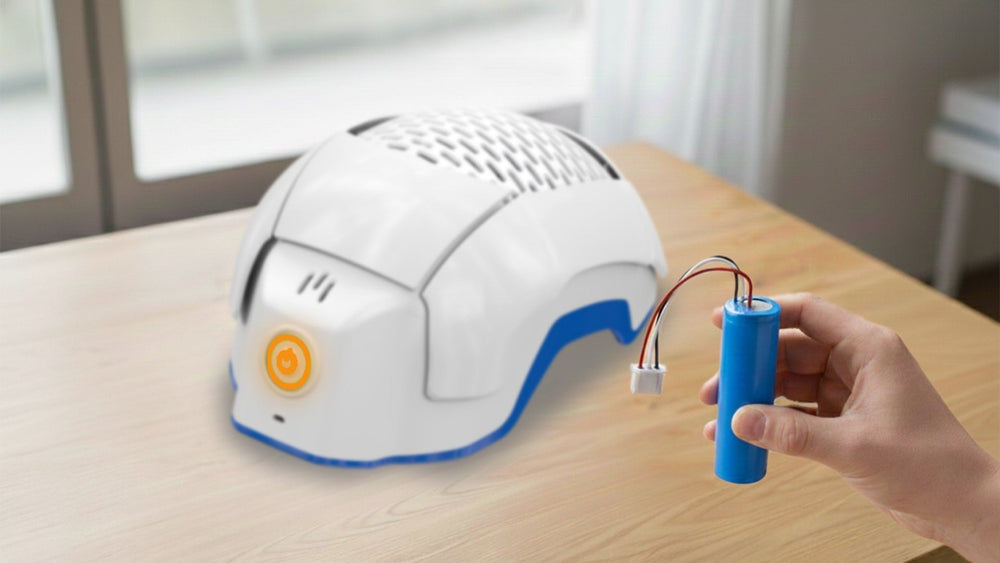
For a wearable device, full-scalp coverage matters because early thinning that looks one-sided may still sit inside a larger patterned process. Theradome’s FDA-cleared wearable LPT devices are designed for full-scalp delivery rather than spot treatment, which makes more sense when the real issue is not just “that side looks worse today,” but overall follicle support across susceptible areas. Still, if the real culprit is traction, fungal infection, or an autoimmune patch, the priority is treating that root cause first.
Daily Habits That Protect Hair Follicles
Keep tension low. Rotate styles. Be gentler when detangling. Treat scalp scale and inflammation early instead of waiting until your scalp starts acting like it has filed a formal complaint. And if a side part is making the same area look sparse every day, changing the part can sometimes tell you whether you are dealing with optics, breakage, or something more substantive.
No, this is not the thrilling part of hair care. But it is the part that prevents problems from snowballing.
When Should You See a Dermatologist?
You should get it checked if the thinning is sudden, clearly patchy, painful, scaly, inflamed, rapidly worsening, or associated with broken hairs, pustules, swollen areas, or loss of eyebrow or beard hair. You should also go sooner rather than later if there is a tender swollen patch, because inflammatory tinea can scar if it is ignored.
And if you have been squinting at the same spot for three months wondering whether it is “probably nothing,” that is usually your cue.
The Good News About One-Sided Hair Thinning
Many causes of one-sided thinning are manageable, and some are reversible when addressed early. Traction can improve. Alopecia areata often regrows. Tinea can be treated. Even early patterned thinning gives you more room to act when you catch it sooner rather than later. The main mistake is not noticing. It is guessing for too long.
Conclusion
If your hair looks thinner on one side, do not assume one thing and miss another. Mild asymmetry can be visual. Real one-sided thinning, though, usually points to something local such as traction, patchy autoimmune loss, infection, breakage, or early patterned change that only looks uneven at first. The right next step is not panic. It is pattern recognition, scalp assessment, and getting help if the change is persistent or clearly progressing. When the cause is identified early, you usually have more room to protect the follicles you still have... which, honestly, is the part that counts.