






Hair usually turns brittle when the outer cuticle gets worn down and the inner cortex loses some of its protection. That tends to happen from repeated heat, chemical processing, friction, traction, UV exposure, or a mix of those things. Less often, sudden brittleness can be tied to thyroid disease, nutrient deficiency, scalp disease, or a hair-shaft disorder.
What Does “Brittle Hair” Actually Mean?
Brittle hair is hair that has become fragile enough to snap more easily than it should. In practical terms, it often feels rough, dull, dry-ish, tangly, and strangely unwilling to stretch. It may also look like it “stopped growing,” when what is really happening is that it keeps breaking before the length has a chance to accumulate.
Dry hair and brittle hair overlap, yes, but they are not identical. Dryness describes a feel and surface state. Brittleness describes reduced resilience of the fiber itself. One can feed the other, obviously... but brittle hair is the bigger structural complaint.
It also helps to separate breakage from shedding. Shedding is when a whole hair completes its cycle and leaves from the follicle. Breakage is when the strand fractures somewhere along its length, leaving uneven shorter hairs, frayed ends, and that annoying “why is the sink full if my roots still look the same?” feeling.
The Biology Behind Brittle Hair: What Is Actually Happening?
A hair fiber is built in layers. The cuticle sits outside like overlapping scales, and the cortex underneath carries much of the strand’s strength, elasticity, and pigment. When the cuticle becomes chipped, lifted, or stripped away, the cortex is more exposed to friction, moisture shifts, and cracking. That is a big part of why damaged hair feels rougher and breaks more easily.
Hair strength also depends on keratin organization and the bonds that help keep the fiber coherent. Heat, bleach, UV exposure, and harsh chemical processing can disrupt those structures. Over time the strand loses flexibility. So instead of stretching a little and bouncing back, it reaches its limit faster and simply gives up. Snaps.
There is a mildly rude elegance to hair, really. It will tolerate quite a bit... until it will not.
The Most Common Reasons Hair Becomes Brittle
For most adults, brittle hair is not mysterious. It is accumulated weathering. The big categories are mechanical, thermal, chemical, and environmental damage, and they often pile on top of one another rather than arriving politely one at a time.

Heat Styling Damage
Frequent blow-drying, flat ironing, hot combing, and curling can damage the cuticle and weaken the fiber over time. Dermatologists specifically advise using lower heat, letting hair air-dry when possible, and limiting how often hot tools touch the strand because repeated heat contributes to fragility and breakage.
UV exposure can add to the problem. Sunlight has been linked to lipid oxidation, disulfide bond cleavage, higher porosity, rougher surfaces, and more brittle-feeling hair. So yes, sometimes the culprit is not just the flat iron. It is the flat iron, the weekend sun, and the bleach appointment from six weeks ago, all acting like old friends.
Chemical Processing
Bleach is one of the most efficient ways to weaken a hair fiber. Chemical lightening oxidizes components of the strand, including surface lipids and cystine-related structures, which can leave hair drier, rougher, and more vulnerable to fracture. Repeated coloring, relaxing, or chemical straightening can do the same, especially when layered too closely together.
DermNet lists hair straightening, overheating, chlorinated water, and hair trauma among acquired causes of trichorrhexis nodosa, the most common structural hair-shaft abnormality. In that condition, the weak shaft partially fractures and the cortical cells fragment at the break point.
Mechanical Stress
Mechanical damage sounds boring until you realize how much of hair care is basically controlled friction. Aggressive brushing, rough towel rubbing, combing wet hair without enough slip, tight ponytails, braids, extensions, and repeated traction all increase stress on an already weathered strand. The AAD recommends looser styling, gentler drying, and less manipulation for exactly that reason.
Conditioner helps here, not because it performs some cinematic resurrection, but because it lowers friction, improves combing, flattens the cuticle a bit, and reduces static. That is not trivial. Less drag during detangling means fewer broken fibers. Sometimes the least glamorous advice is the one that actually pays rent.
Environmental Exposure
Hair sits out in the elements. UV radiation, chlorinated water, salt water, and pollution can all add to fiber weathering. Recent reviews describe UV-related reductions in ceramides and lipids, along with barrier compromise that may increase brittleness. DermNet also notes frequent swimming in chlorinated water as a trigger for acquired shaft damage.
And pollution... well, not glamorous either. Human studies and reviews suggest environmental pollutants can accelerate structural degradation of the fiber. Not dramatic overnight, usually. More like a slow cumulative tax.
Could an Internal Health Issue Be Making Your Hair Brittle?
Sometimes, yes. Just not as often as people assume.
Most brittle hair still comes back to repeated external damage. But when the change is sudden, widespread, out of character for your routine, or paired with other symptoms, it is sensible to widen the frame a little.
Thyroid Imbalance
Hypothyroidism is well known for causing coarse, dry, brittle, slow-growing hair, sometimes with diffuse shedding and loss of the outer third of the eyebrows. Thyroid hormones influence hair cycling, so when thyroid function is off, the emerging hair may behave differently long before anyone starts blaming the shampoo.
Nutritional Deficiencies
Protein-energy malnutrition and deficiencies involving iron, zinc, or biotin can affect hair quality. Reviews note that inadequate protein and certain micronutrient deficits may contribute to fragility, thinning, and poorer fiber formation. Still, the jump from “possible deficiency” to “everyone needs supplements” is a leap too far. Bloodwork matters. Context matters.
Biotin deserves one clean sentence. Actually, two.
Biotin deficiency can affect hair and nails, but routine biotin use for healthy people with self-perceived hair problems is not well supported by strong evidence. The more recent reviews are pretty direct about that. The wide marketing around it has run ahead of the research.
Hormonal Changes and Aging
Menopause and aging can alter hair texture, volume, and overall resilience. Reviews describe thinning, reduced volume, and texture changes during menopause, largely related to hormonal shifts and aging biology. That does not mean menopause automatically equals brittle hair for everyone. It means the hair you have at 52 may not behave exactly like the hair you had at 28, even with the same routine.
Pregnancy deserves a mention here too. Actually… more than a mention.
During pregnancy, rising estrogen levels tend to keep more hair in the growth phase, which can make hair feel fuller or thicker for a while. But after delivery, hormone levels shift again, and a larger number of hairs may enter the shedding phase at once. That part gets talked about a lot.
What gets talked about less is texture.
Some people notice their hair feels different after pregnancy. Drier. Rougher. Slightly more fragile than it used to be. Not always dramatically brittle, but… not quite the same either.
It’s not universal. And it’s not always permanent.
But it happens often enough that if your hair started behaving differently somewhere around that period, it’s not random. It’s your biology adjusting in real time.
How to Tell If Your Hair Is Brittle (Simple At-Home Check)
A rough home check is the elasticity test. It is not a diagnosis, and it certainly does not replace a scalp exam, but it can help you tell the difference between flexible hair and a strand that has become over-weathered. The idea tracks with the basic principle from hair-fiber science that healthier strands tolerate some stretch, while heavily damaged ones fail faster.
Try it like this:
- Wash your hair as usual and let one loose strand stay slightly damp.
- Hold that single strand between your fingers and gently pull.
- If it stretches a bit and returns, elasticity is still there.
- If it barely stretches, feels rigid, or snaps quickly, brittleness is more likely.
One strand can misbehave for random reasons, so do not build your whole personality around a single bathroom experiment.
There’s another method clinicians sometimes use, called the tug test.
It’s a bit more direct. Slightly less gentle, too.
Instead of stretching a single strand, a small section of hair is held at both ends and gently pulled in opposite directions to see whether any fibers snap under tension. The idea is simple: hair that breaks easily under controlled pulling is likely more fragile than it should be.
You wouldn’t want to get carried away with it. Obviously.
But it helps illustrate something the stretch test sometimes hides... hair can look fine until it’s actually stressed.
That’s usually when brittleness shows up.
What Actually Helps Repair Brittle Hair?
The short version is plain. You do not “repair” an old damaged shaft back into untouched hair in the strict biological sense. What you can do is reduce ongoing damage, improve the feel and handling of existing fibers, and protect new growth so it comes in with a better chance of surviving daily life.
Reduce Ongoing Damage
Start with subtraction. Lower the heat. Space out chemical services. Stop yanking through knots like you and the knot are in a personal feud. The AAD recommends looser hairstyles, gentler drying, less hot-tool use, and post-swim cleansing plus conditioner after pool exposure. Those are not cute little tips. They are the actual first line.
Improve Hair Care Routine
Use conditioner regularly. That does not mean the exact same product works for everyone, but the principle is stable. Conditioners reduce friction, make detangling easier, flatten cuticle scales somewhat, and improve shine and manageability. They are especially useful after shampoo because shampooing can leave hair more negatively charged and more prone to friction.
And no, frequent washing is not automatically the villain. One controlled study found no objective detriment to hair from more frequent cleansing in its population, with better scalp and hair satisfaction at higher wash frequency. So the smarter framing is this: brittle hair is usually more about how you cleanse, dry, detangle, and style than some universal number of washes per week.
Lifestyle Factors That Support Stronger Hair
If your diet is erratic, protein intake is low, or you are dealing with a documented deficiency, it is reasonable to address those internal building blocks. The AAD advises supplementation when blood tests show you are not getting enough biotin, iron, or zinc, and advises improving protein intake when it is inadequate. That is a far better path than grabbing five hair supplements because the label looked persuasive at 1:12 a.m.
Also worth saying... scalp disease matters. If you have scale, itch, inflammation, or broken hairs with scalp changes, conditions such as tinea capitis or inflammatory scalp disorders can enter the conversation and need proper diagnosis, not just richer conditioner.
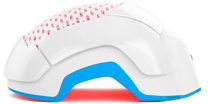
Supporting Stronger New Hair Growth With Laser
There’s one part of this conversation that’s easy to overlook.
Brittle hair is mostly about the strand you can already see. The damage has happened. You manage it. You work around it. You try not to make it worse.
But new hair is still being formed at the follicle.
And that part… that’s still very much alive.
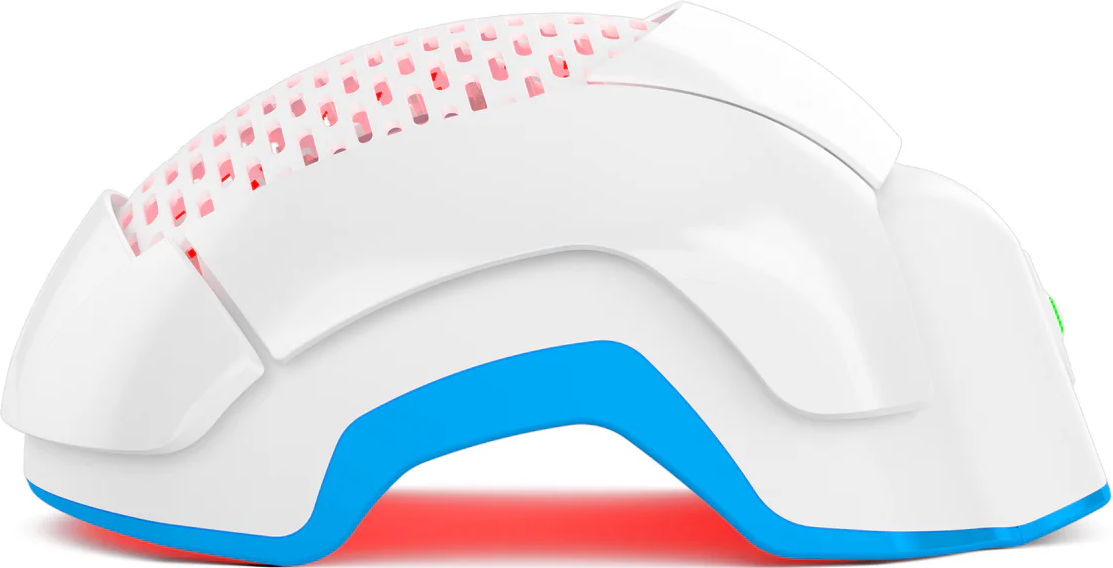
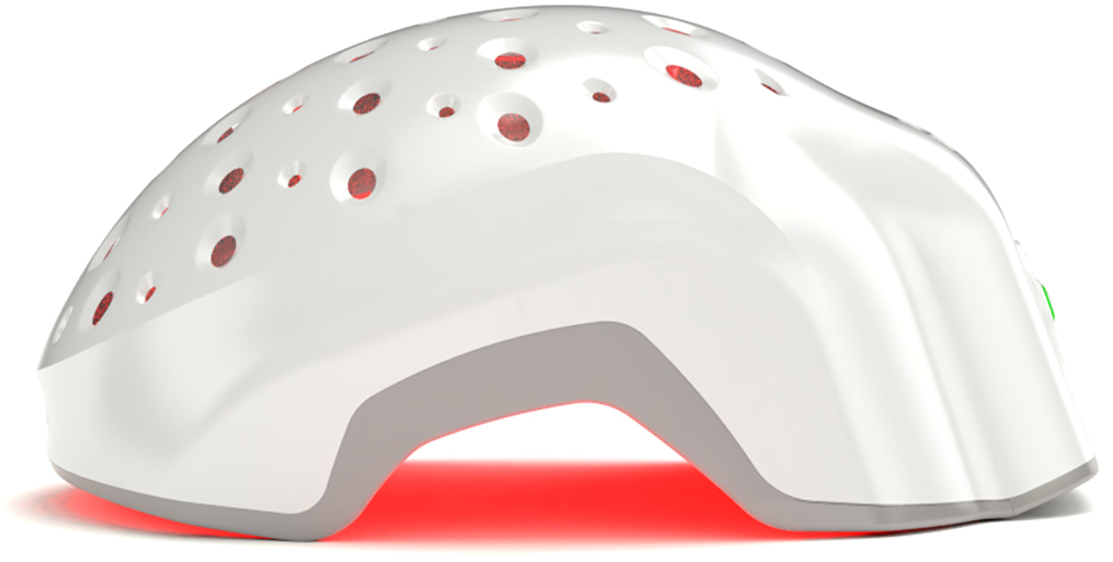
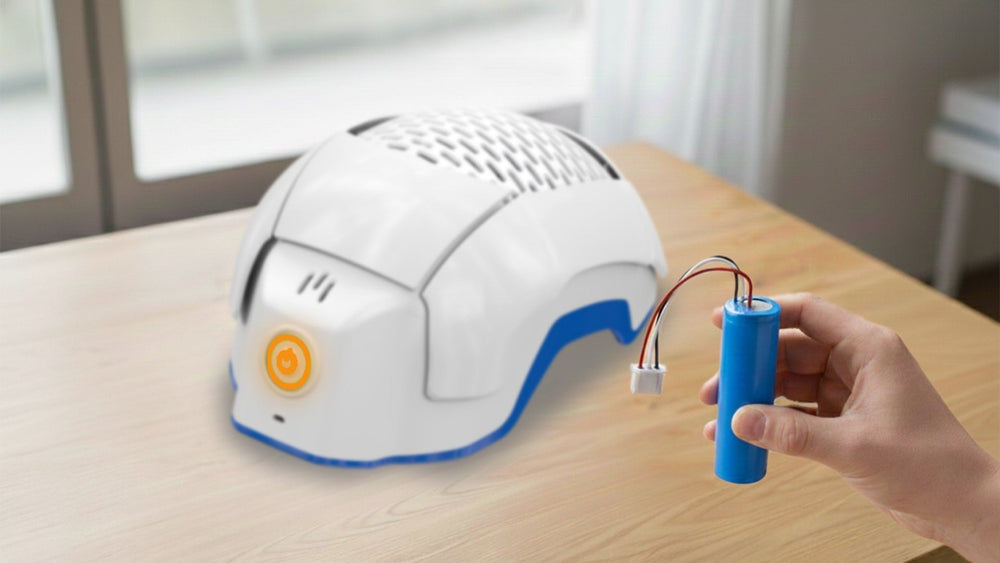
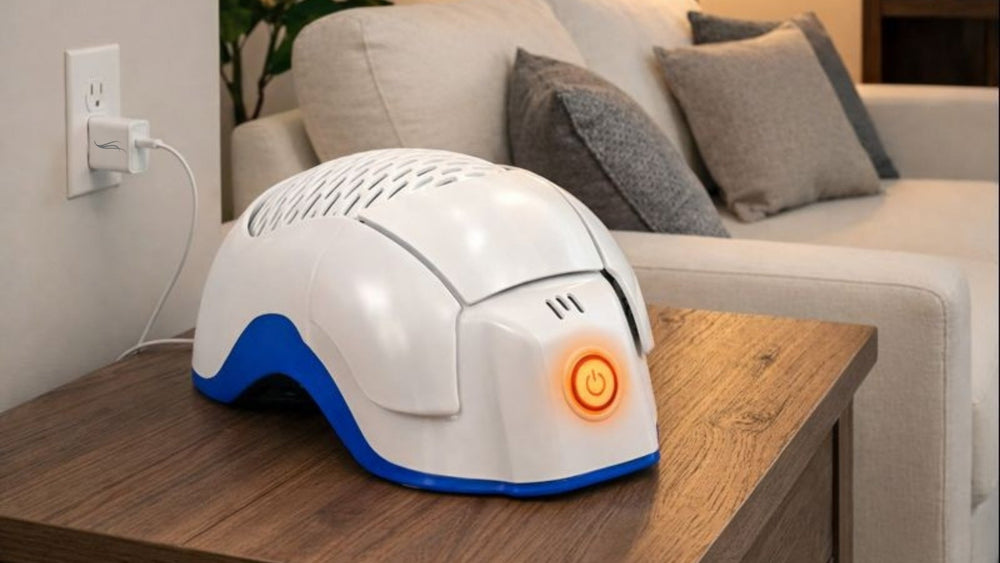
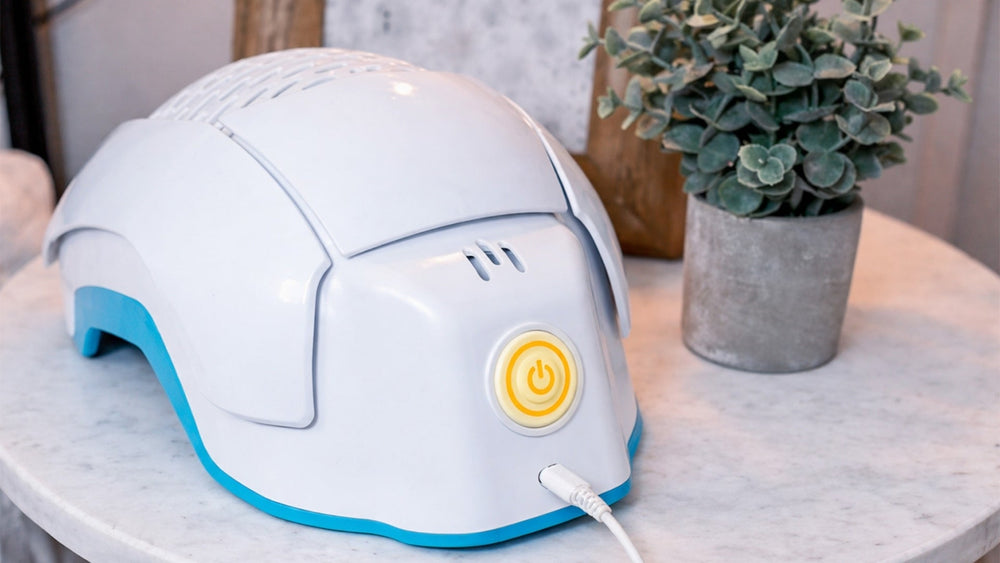
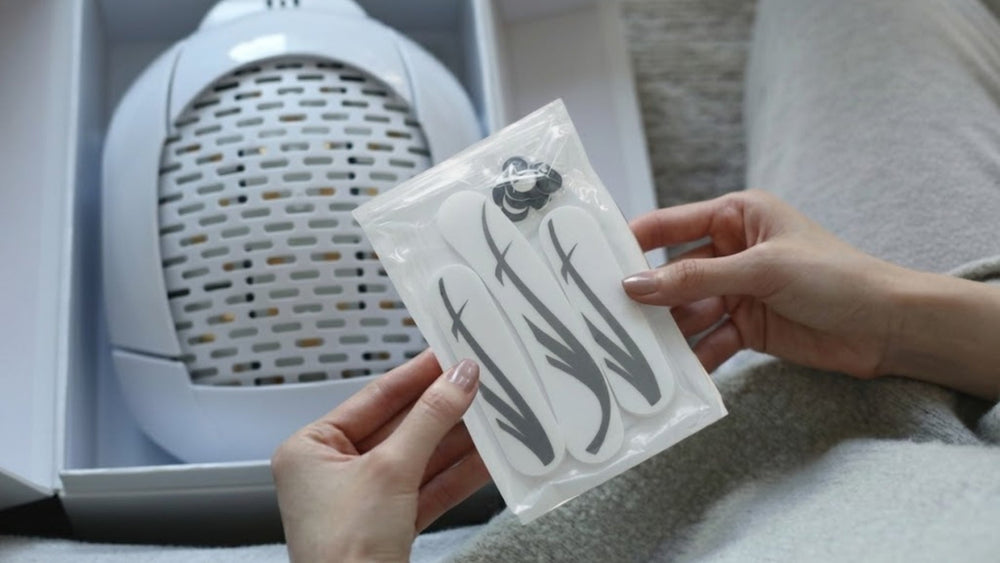
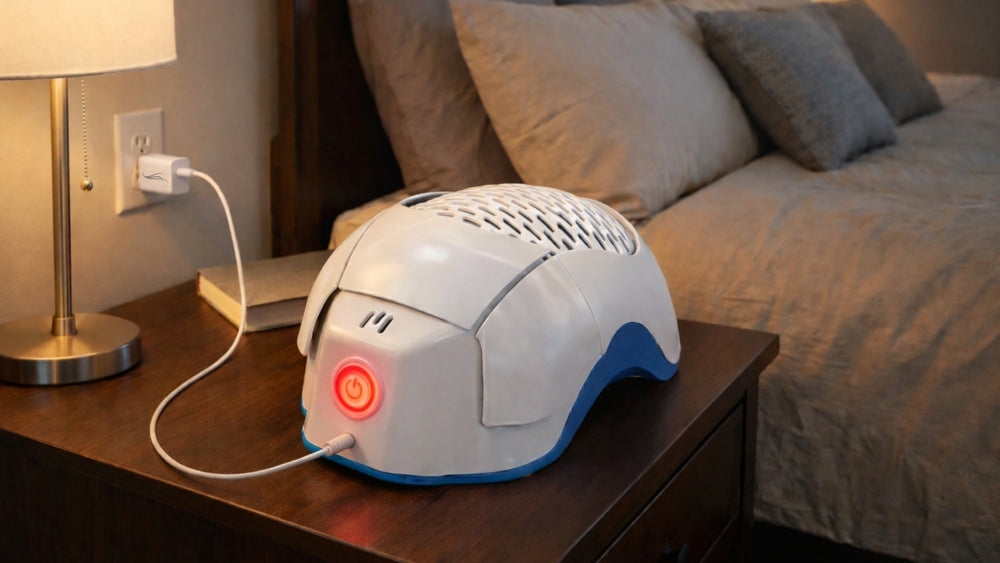
Laser Phototherapy, often referred to as LPT, sits in that space. It doesn’t patch up split ends or reverse chemical damage along the shaft. That’s not its role.
What it can do, based on clinical evidence in androgenetic alopecia, is support follicle activity in a way that improves hair density and thickness over time. In other words, it’s working upstream, where the hair is actually being produced.
So if someone is dealing with both brittle hair and early thinning… which is more common than people realize… it becomes less about choosing one approach over the other.
It’s about doing both things at once.
Protect what you have.
And give new growth a better starting point.
Hair Breakage vs Hair Loss: Why the Difference Matters
People mix these up all the time, and fair enough. Both can leave you staring at a brush with a mildly offended expression.
But they are different.
Breakage means the fiber is fracturing along its length. Hair loss means the follicle is releasing or producing fewer hairs. You can have one without the other, and you can also have both at once. That last part matters because someone with androgenetic alopecia may also have fragile, weathered strands, which makes the overall change look worse and feel more distressing.
When Should You Talk to a Dermatologist or Trichologist?
Please get checked if brittle hair arrives with patchy loss, eyebrow thinning, scalp scale, redness, pain, pustules, sudden diffuse shedding, or a rapid texture shift. Those patterns can point to thyroid disease, infection, inflammatory scalp disease, or structural shaft disorders that are not going to sort themselves out because you switched pillowcases.
Clinical assessment may involve history, scalp examination, trichoscopy, microscopic review of the shaft, and sometimes blood tests. DermNet specifically notes dermatoscopy and microscopic examination in hair-shaft abnormalities, and the AAD discusses blood testing when nutritional or systemic causes are suspected.
Where Follicle Health Fits Into the Picture
This is where people sometimes blur two different problems.
Brittle hair is mainly a shaft issue. Pattern hair loss is mainly a follicle issue. They can overlap, but they are not interchangeable. If someone has both, shaft-protective care helps preserve what is growing, while follicle-directed treatment helps improve the quality and density of future growth.
Laser Phototherapy, or LPT, belongs in that follicle-directed bucket. Systematic reviews and recent reviews support low-level light or laser therapy as a potentially effective option for pattern hair loss, with evidence for improved hair density in randomized trials. What it does not do is magically seal split, weathered fibers already sitting outside the scalp. Existing damage still needs gentle handling. New growth still needs protection. Different jobs.
And yes, the safety point matters. Reviews describe low-level light therapy as using red or near-infrared light without a heat-based, tissue-burning mechanism. So if brittle hair coexists with androgenetic alopecia, LPT can make sense as part of the follicle side of the plan... not as a substitute for fixing the breakage habits that got the shaft into trouble in the first place.
Conclusion
Brittle hair is usually your hair shaft telling the truth a little too loudly. The cuticle has taken a hit, the cortex is less protected, and the strand has lost some of its bounce. Most of the time the drivers are familiar... heat, bleach, traction, friction, sun, pool water, rough handling. Less often, there is a thyroid, nutritional, scalp, or structural issue sitting underneath. The useful part is that the response is usually practical: reduce damage, improve slip, protect new growth, and get assessed when the pattern feels off. Hair may be dramatic, yes. It is still biological. And biology, thankfully, gives us something to work with.