







Ovulation itself usually isn’t a direct cause of hair loss. The hormone shifts around ovulation are real, but they’re brief, and hair follicles tend to react on a slower clock. What often happens is this: ovulation becomes the moment you notice shedding that was set in motion earlier, or shedding that’s tied to something else (like telogen effluvium, PCOS, or early female pattern thinning).
What Actually Happens During Ovulation?
Ovulation sits in the middle of the menstrual cycle. In the follicular phase, estrogen rises as a follicle develops. Around mid-cycle there’s an LH surge that triggers ovulation, and then progesterone rises in the luteal phase. It’s a neat system, even when it’s annoying.
Two grounding points before we attach hair to any of this…
- These shifts are measured in days, not months.
- Hair growth biology tends to be slower and more delayed than most people expect. Which is why the timing can feel… personal. (It isn’t. But it feels that way.)
How Hair Growth Timing Really Works
Your scalp hairs don’t all grow in unison. Each follicle cycles through phases: growth (anagen), transition (catagen), and rest/shedding (telogen). That cycling is normal. What changes in many shedding conditions is how many hairs are nudged into telogen at once.
This matters because follicles don’t react instantly to a signal (hormonal, metabolic, stress-related). A lot of the time, the “event” and the “shed” are separated by weeks to months.
Why Shedding Shows Up Late
With telogen effluvium, diffuse shedding often appears around three months after a trigger. That timeline shows up again and again in dermatology patient guidance and clinical reviews.
So if you’re noticing more hair in the brush right around ovulation, the more likely story is: something earlier influenced the cycle, and ovulation simply gave you a calendar anchor to point at.
Can Ovulation Cause Hair Shedding at All?

Most of the time, not directly, not in the “ovulation happened → hair fell out this week” sense.
Hair follicles are responsive to hormones in general, yes. Reviews on hormone–follicle biology describe effects from androgens, estrogens, thyroid hormones, and more.
But ovulation-related hormone fluctuations are typically brief, and the hair cycle is typically slow.
So when might ovulation feel related?
- If you’re already in a shedding episode and you’re tracking your cycle closely, you may notice clustering (and assign cause).
- If there’s an underlying endocrine issue (PCOS, thyroid disease) that changes baseline hormone dynamics, the cycle can feel louder.
- If anxiety is already running hot (honestly… who wouldn’t be anxious), the brain is a pattern-making machine.
That last point is not dismissive. It’s just… how we’re built.
Why Ovulation Often Gets Blamed Anyway
Sometimes the biology is boring and the psychology is doing cartwheels.
People often notice shedding during moments when they’re already paying attention to their bodies: tracking ovulation, dealing with PMS, noticing skin changes, weighing themselves, checking discharge, the whole checklist.
Add one more hair in the sink and suddenly it feels like a plot.
Also, grooming patterns can cluster shed hairs. If wash days line up with mid-cycle routines, you can see a bigger “shed event” in the shower. Telogen hairs that were going to release anyway choose that day to be dramatic.
And yes… stress changes how we interpret bodily signals. The hair may be doing something mild while your nervous system is doing something loud.
Shedding vs Thinning — This Distinction Changes Everything
If you take only one thing from this article, make it this: shedding is not the same as thinning.
Telogen Effluvium (Shedding)
Telogen effluvium is one of the most common causes of diffuse shedding, often triggered by physiological stressors, illness, major life events, postpartum changes, medications, and nutritional issues. It can present as clumps in the shower or handfuls in the brush, and it often starts months after the trigger.
It also often improves once the trigger resolves, though the timeline can test your patience. The British Association of Dermatologists notes that TE often settles and that the shedding phase commonly lasts 3–6 months, with regrowth taking longer.
TE is scary to see, but it is often reversible.
Female Pattern Hair Loss (Thinning)
Female pattern hair loss (a form of androgenetic alopecia) is more about progressive miniaturization and reduced density over time, often at the crown/part line, rather than sudden all-over shedding. Clinical guidance highlights that pattern matters: diffuse shedding is often TE, while patterned thinning points to androgenetic alopecia.
This is where people can get stuck: you can have both. TE can “unmask” underlying pattern thinning.
So if you’ve been saying, “It comes and goes with my cycle,” but the part line keeps widening month after month… that’s a different conversation.
When Ovulation Timing Does Matter More
PCOS and Androgen Sensitivity
If cycles are irregular (or ovulation feels unpredictable) and there are signs of hyperandrogenism (acne, hirsutism, scalp thinning), PCOS belongs on the shortlist.
The Endocrine Society’s clinical practice guideline lays out diagnostic and management approaches, and the AE-PCOS Society task force emphasizes that PCOS is defined around hyperandrogenism plus ovarian dysfunction, with exclusion of related disorders.
Hair-wise, PCOS doesn’t “make you shed because ovulation happened.” It can shift the endocrine environment in a way that affects follicles over time. The hormone–follicle review literature discusses how androgens interact with dermal papilla cells and can influence terminal/vellus changes depending on location and sensitivity.
If this is you, the most helpful move is not obsessing over cycle day 14. It’s getting a clinician to evaluate the whole endocrine picture.
Perimenopause and Hormonal Instability
Perimenopause is a different rhythm. Cycles can become irregular, ovulation may not happen consistently, and hormone variability can be wider. That shift can coincide with changes in hair diameter and density over time. Primary care guidance summarizing hair loss patterns notes that hair fiber diameter changes with age and life stage, and that patterns matter for diagnosis.
If your cycles are changing and hair feels thinner overall, it may be less about ovulation specifically and more about the broader hormonal transition.
What Ovulation Does Not Do to Hair
Let’s be clear, because panic loves ambiguity.
Ovulation does not:
- scar your follicles
- permanently “switch off” growth on its own
- create sudden irreversible thinning within a week
When irreversible or scarring processes exist, they tend to have their own clinical patterns and require specialist evaluation. General diagnostic guidance recommends seeing a board-certified dermatologist to identify cause because management depends on the diagnosis.
One more thing.
If you’re looking at mid-cycle shedding and thinking, “My body is betraying me,” I get why it lands like that.
But biologically, that’s rarely the right interpretation.
What to Do If You Notice Cyclical Shedding
If shedding is mild, short-lived, and not progressive, reassurance may genuinely be enough.
Hair shedding can fluctuate. Wash day counts are noisy. And TE episodes often settle once triggers resolve. The BAD patient guidance notes TE frequently improves without specific treatment, though regrowth takes time.
Sometimes the best move is… to stop changing five things at once.
When to Investigate Further
Consider getting evaluated if:
- shedding is heavy and lasts beyond a few months
- you see widening part/vertex thinning
- cycles are irregular or there are androgen-related symptoms
- scalp symptoms or patchy loss appear
- you’ve had a recent stressor 2–4 months earlier and shedding keeps accelerating
A clinical diagnostic approach emphasizes characterizing hair loss as diffuse, patterned, or focal, then tailoring workup and management accordingly.
A dermatologist may use history, exam, pull tests, and sometimes labs depending on context. The goal is to name what’s happening, not guess.
Supporting Hair Through Hormonal Noise (Without Overcorrecting)
If there’s one habit that quietly worsens hair stress, it’s frantic switching: products, supplements, routines, diets, scalp acids, you name it.
Steady care tends to be kinder: gentle handling, avoiding aggressive traction, and giving regrowth time. That’s consistent with broad clinical guidance that treatment should match cause, and that many shedding conditions resolve once the trigger is addressed.
Worth saying: hair is one of the first places we look for “proof” that something is wrong. It’s visible. It’s emotional. And it’s easy to treat as a scoreboard.
It isn’t.
Laser Phototherapy as Cycle-Agnostic Support
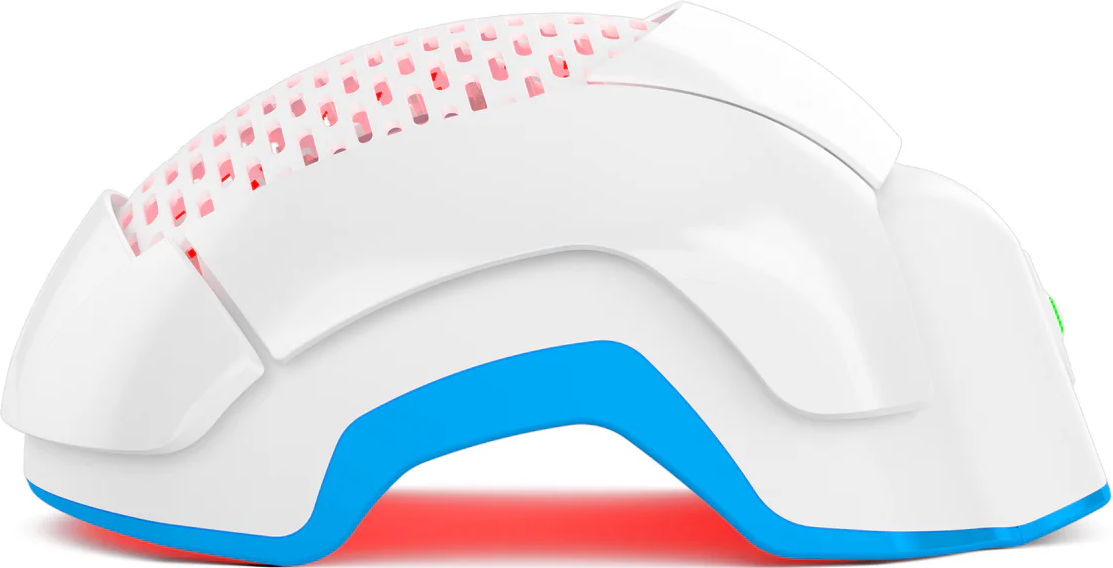
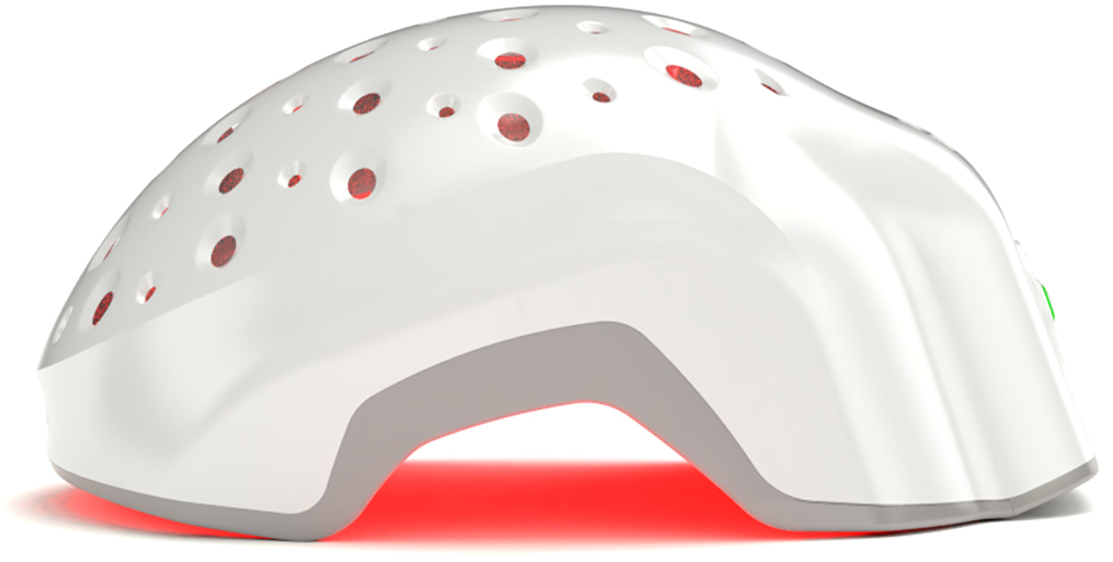
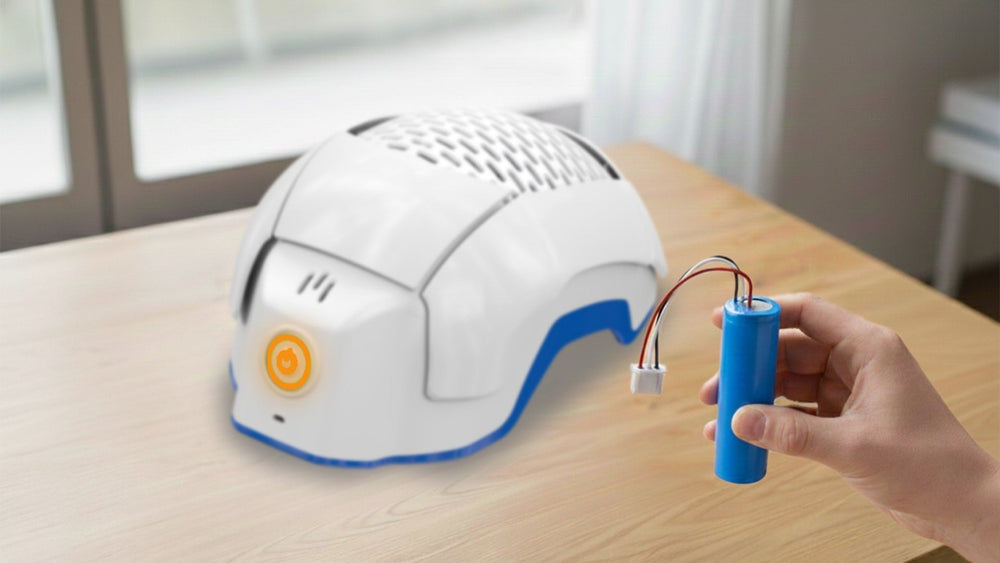
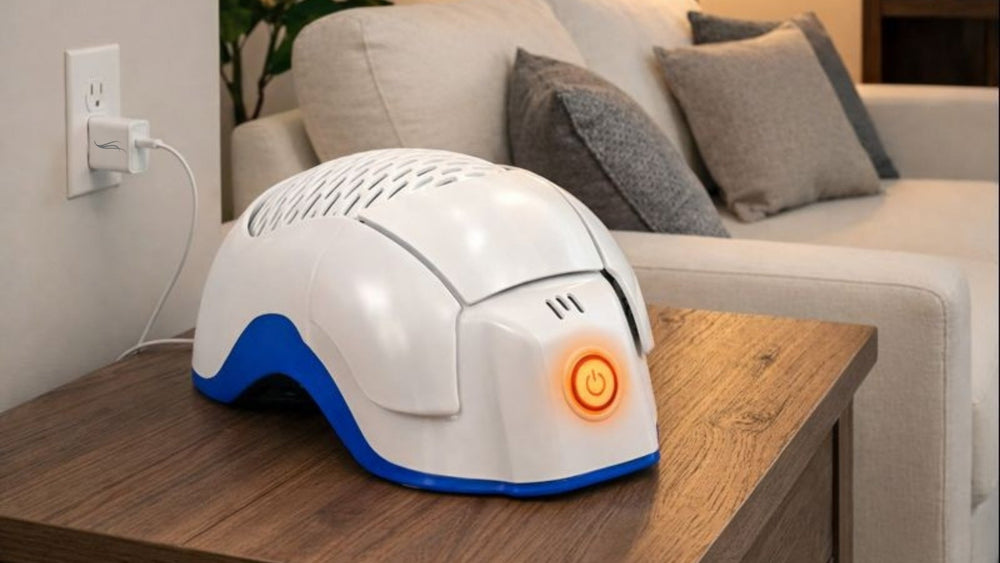
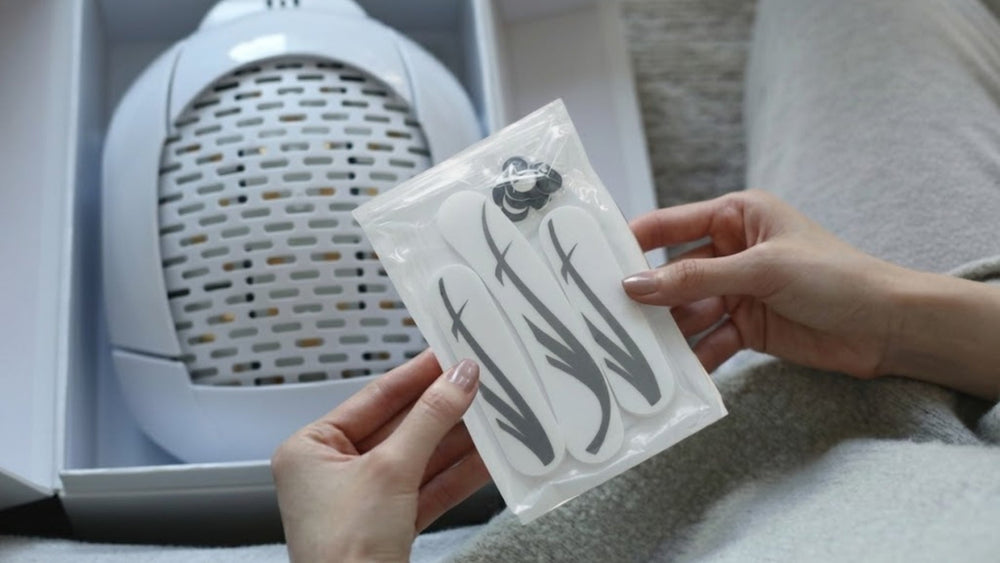
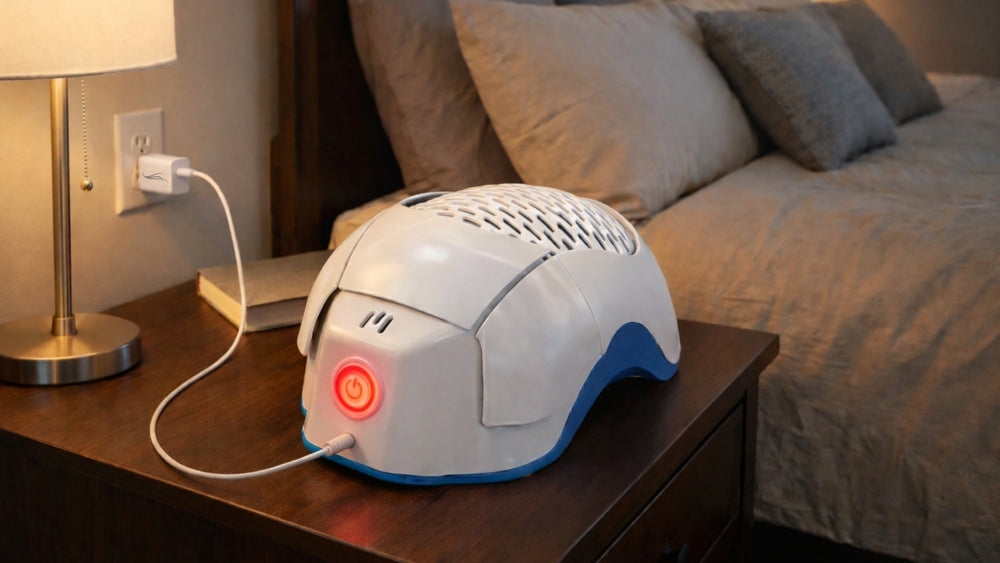
If your hair concern is related to androgenetic alopecia (pattern thinning) or you’re looking for a consistent, non-drug supportive modality, Laser Phototherapy (LPT) is one of the better-studied device-based options in the broader low-level light therapy category.
Mechanistically, hormones and LPT are different lanes. Hormones influence follicle biology via systemic signaling; LPT aims at follicle cellular activity via photobiomodulation pathways described in the medical literature around light-based therapy.
A practical way to think about it: if cycles make your hair feel unpredictable, a consistent supportive routine can reduce the urge to “chase” the calendar.
And no, this is not the part where we pretend a device changes ovulation. It doesn’t. That’s not the point.
A 6-Week “Cycle + Shed” Tracker
If you want something simple (and slightly calming), try this for six weeks:
- Cycle day:
- Wash day? yes/no
- Shedding today: low / medium / high
- Scalp feel: itchy / normal / sore
- Stress level: low / medium / high
- Any triggers 2–4 months ago? illness / diet change / major stress / postpartum / medication shift
Patterns show up. Sometimes the pattern is “wash days look dramatic.” Sometimes it’s “this started after that flu in November.” That’s useful.
Conclusion
Ovulation usually isn’t a direct hair-loss trigger. The cycle changes hormones for a short window, while hair follicles tend to respond slowly, often with delayed shedding that appears months after something else set it in motion.
If what you’re seeing is sudden, diffuse shedding, telogen effluvium is a common, often temporary explanation, especially when there’s a trigger in the previous few months.
If what you’re seeing is gradual thinning, widening part lines, or irregular cycles with androgen signs, it’s worth getting evaluated for pattern hair loss or PCOS, because the plan changes.
You don’t need to fight your body’s calendar. You need clarity. Then consistency.