







Rice water may help some hair look smoother, feel stronger, and break less, which can make it seem like it is “growing” faster. But there is not strong clinical evidence that plain DIY rice water directly stimulates human hair follicles or reverses patterned hair loss. The stronger research is on rice bran extracts, which are not the same thing as the cloudy jar sitting in your bathroom.
What Is Rice Water, Really… and Why Do People Swear By It?
Rice water is the starchy liquid left after soaking, boiling, or fermenting rice. People use it as a rinse, a brief mask, or sometimes a scalp treatment because it is cheap, easy, and old enough to feel trustworthy before anyone even checks the evidence.
Part of its reputation comes from long-repeated cultural references, including East Asian beauty traditions. Those references help explain why rice water became a thing, but they do not count as clinical proof that it regrows hair. Helpful context, yes. Proof, no.
A lot of people search “rice water for hair growth” when what they really want is one of three things: less shedding, less breakage, or actual regrowth in thinning areas. Those are different problems. Hair that snaps is not the same as a follicle that is miniaturizing. The internet likes to mush them together anyway.
What’s Actually Inside Rice Water? (And What That Means for Your Hair)
Rice water contains starches and small amounts of rice-derived compounds that are often described as including amino acids, trace vitamins, and other plant components, though the exact mix depends on the rice type and how you make it. That sounds nice. It also sounds a little more precise than the evidence really allows for plain DIY batches, because homemade rice water varies wildly from jar to jar.
The stronger literature in this area tends to focus on rice bran rather than plain rice water. Rice bran contains compounds such as γ-oryzanol, tocopherols, tocotrienols, phytosterols, and phenolic acids, and those ingredients are the ones showing up in more serious mechanistic and clinical papers. So when a blog tells you rice water is loaded with this or that and then jumps to hair-growth conclusions, it is often borrowing confidence from rice bran extract studies.
Inositol… the one everyone talks about
Inositol is the rice-related term that gets repeated most often in hair articles. The general idea is that it may help support the hair fiber, especially damaged hair, rather than act like some direct follicle-on switch. That distinction is not small. It is the distinction.
So yes, if you have seen rice water praised as though inositol is marching straight into the scalp and ordering your follicles back to work… that is doing a bit much. A more careful reading of the evidence supports hair-fiber protection far more comfortably than dramatic claims about true regrowth.
Does Rice Water Actually Grow Hair… or Just Make It Look Like It Does?

There is no strong human clinical evidence that plain DIY rice water directly increases the biological growth rate of hair from the follicle. Dermatologists at the University of Minnesota say the evidence for rice-water growth claims is not there, and the 2022 systematic review that gets cited most often is really about rice products, especially rice bran, not ordinary homemade rice water.
That does not mean every person who thinks it helped is wrong.
It means the mechanism they are crediting may be wrong.
Growth vs retention
Hair can appear to “grow” faster when it is simply breaking less. That is one of the most sensible explanations for the before-and-after chatter around rice water. If strands are smoother, slightly more resilient, and less likely to snap during washing, combing, or styling, you keep more length. Your hair looks longer. Your tape measure may even agree. But the follicle may be doing exactly what it was doing before.
That is why “hair growth” and “length retention” should not be treated like twins. They are cousins at best. One happens at the follicle. The other happens because the visible hair shaft survives long enough to stop ending its life in your sink.
Why results feel real anyway
Because some of them are real… just not in the way the caption says.
Smoother hair reflects light differently. Hair that tangles less feels healthier. Hair that breaks less looks fuller over time. And once a routine becomes a little ritual, people understandably start attributing every improvement to the rice water itself, even when other parts of life changed too, such as diet, washing habits, heat styling, or just paying closer attention.
That is not me rolling my eyes at DIY care. Not at all. It is just a reminder that hair can be visually persuasive in ways biology is not.
What Rice Water Can Do for Your Hair (The Real Benefits)
The more believable benefits sit at the level of the hair fiber. Rice-derived ingredients have shown protective and conditioning potential in cosmetic research, including effects related to water retention, emolliency, and damage prevention. A 2023 paper on rice derivatives in hair care found protective effects in experimental testing on stressed hair fibers, which fits much better with claims about feel, manageability, and reduced damage than with sweeping claims about new follicle growth.
So, if rice water seems to leave your hair shinier, less rough, easier to detangle, or a bit less fragile, that is plausible. Those are the kinds of benefits that make sense here. Not magical speed-run regrowth. Not “wake up dormant follicles by Saturday.” Just better behavior from the hair you already have.
Which, to be fair, is still useful.
Sometimes very useful.
Especially if your real problem is breakage pretending to be slow growth.
The Risks No One Mentions Until It’s Too Late
Dryness and stiffness
Rice water is not automatically gentle just because it started life in a kitchen. University of Minnesota dermatologists warn that it may not help at all and can even damage some hair, partly because the starch content may pull moisture away and leave strands feeling dry or rough. Hair that already breaks easily may be the first to complain.
Overuse and buildup
When people keep piling rice water onto the hair and scalp, especially without a clear reason or schedule, buildup becomes more likely and the hair may start feeling stiff, dull, or straw-like. The internet often calls this “protein overload,” though that label can get tossed around a little too casually. The practical point is simpler: if your hair gets harder, drier, and grumpier after repeated use, more rice water is probably not the answer.
Who should be careful
If your hair is already fragile, highly processed, heat-damaged, or naturally prone to dryness, caution makes sense. And if your scalp is irritated, flaky, inflamed, or you are dealing with noticeable thinning, patchy loss, pain, or rapid shedding, a DIY rinse should not be asked to do a dermatologist’s job. The American Academy of Dermatology stresses that effective treatment begins with finding the cause. That part is boring, maybe, but boring is often where the real progress starts.
Plain vs Fermented Rice Water… Is One Actually Better?
Fermented rice water gets talked about like it has a graduate degree and plain rice water barely passed attendance. The idea is that fermentation changes the chemical profile and may increase certain bioactive compounds. In plant and cosmetic research more broadly, fermentation can alter activity and antioxidant behavior. What it has not done, at least not convincingly, is prove that homemade fermented rice water grows human scalp hair better than plain rice water.
So is fermented rice water “better”? Maybe chemically different, yes. Clinically superior for hair growth in humans, not established. That is the honest version. Also, uncontrolled home fermentation is still uncontrolled home fermentation. If something smells off, looks off, or has been sitting around like a forgotten science fair project, that should probably not go on an irritated scalp.
How to Use Rice Water Without Messing Up Your Hair
Preparation methods
Most people make rice water by soaking rice in water, boiling rice and keeping the leftover water, or soaking then allowing the mixture to ferment. None of these home methods has strong evidence showing it is the superior option for hair growth. So choose the least fussy route your hair tolerates best, not the one with the most dramatic online testimonials.
Application
If you want to try it, treat it like a cautious experiment, not a belief system. Apply it mainly to the hair lengths first, especially if your concern is breakage or roughness. Leaving it on briefly, then rinsing thoroughly, is more sensible than marinating your scalp in it for ages and waiting for enlightenment.
Frequency
Start low. Once weekly is already plenty for a trial run. If your hair starts feeling brittle, rough, coated, or just oddly annoyed, stop. There is no prize for persistence when the strand is clearly sending complaint letters.
Rice Water vs Real Hair Loss Treatments
When the issue is true androgenetic alopecia, the evidence-backed conversation shifts fast. The American Academy of Dermatology lists minoxidil among common treatments, and notes that it can reduce hair loss and stimulate some regrowth, though not full restoration. For men, finasteride is also a recognized FDA-approved option, and other treatments may be added depending on the person and diagnosis.
Low-level laser or light therapy also belongs in this medical conversation. A 2017 meta-analysis concluded that minoxidil, finasteride, and low-level laser light therapy were effective for promoting hair growth in androgenetic alopecia, and StatPearls includes low-level laser therapy among established nonsurgical options.
That puts rice water in its place. Which is not an insult.
It means rice water may fit as a surface-care adjunct, while proven treatments are the ones addressing follicle biology more directly.
When Rice Water Is Not Enough (And What That Usually Means)
If you are seeing widening part lines, progressive thinning at the crown or temples, bald patches, scalp inflammation, sudden excessive shedding, or breakage that does not make sense, it is time to stop treating the situation like a beauty routine problem. Baylor College of Medicine points out that hair loss can stem from genetics, hormones, nutrient deficiencies, medications, traction, stress, autoimmune disease, and more. Same symptom. Very different causes.
This loops back to that earlier point about growth versus retention. If the follicle is the problem, hair-shaft tricks will only get you so far.
Where Laser Phototherapy Fits
Rice water, when it helps, helps mostly at the level of the visible strand. Laser phototherapy, by contrast, belongs to the category of treatments aimed at follicle activity. That difference is exactly why these two things should never be described as interchangeable.
And yes, we prefer the term Laser Phototherapy when talking about this area. The older term LLLT is common in the literature, but the treatment itself involves carefully controlled low-level light exposure rather than the sort of laser imagery people carry around from films and bad assumptions. In pattern hair loss, the evidence base for laser-based treatment is materially stronger than the evidence base for DIY rice water.
A more complete approach
If someone likes rice water because it makes the hair shaft feel better, fine. That can sit in a routine. But if the real goal is to address follicle miniaturization, relying on rice water alone is like polishing the frame when the engine is the part asking for attention. Warm analogy, yes. Still true.
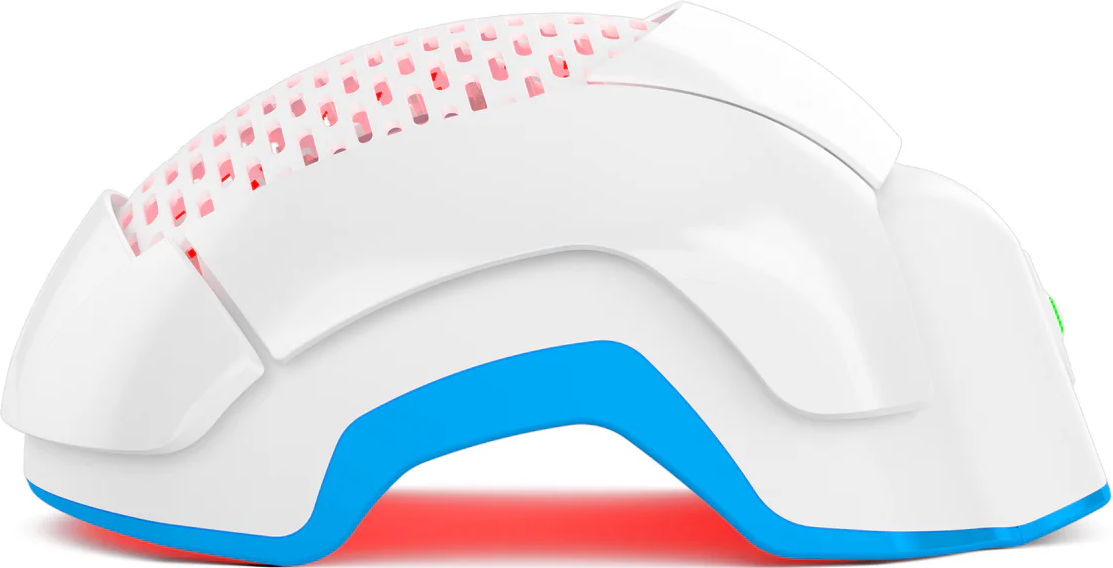
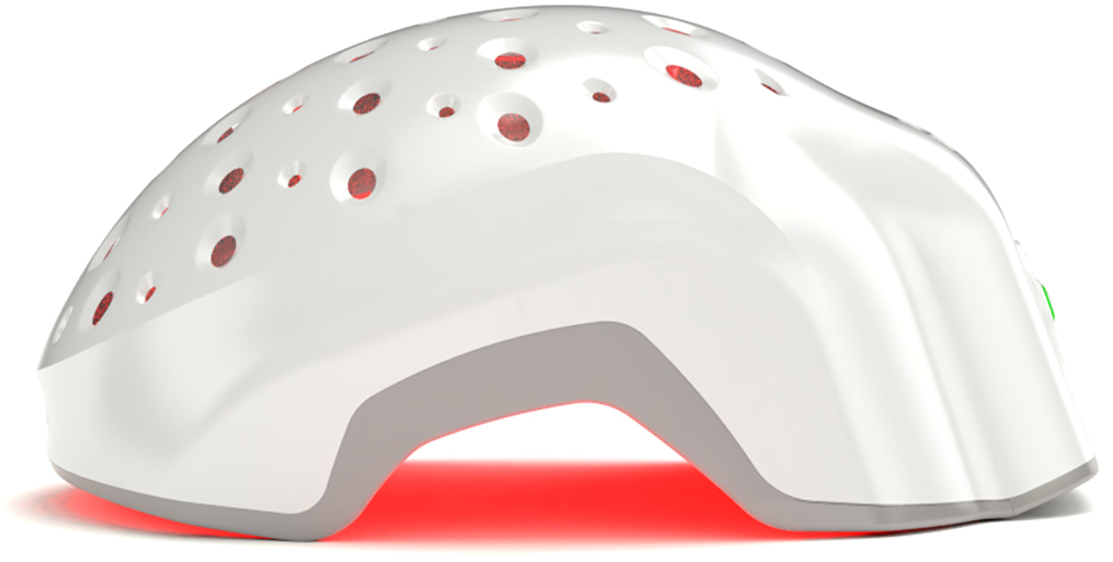
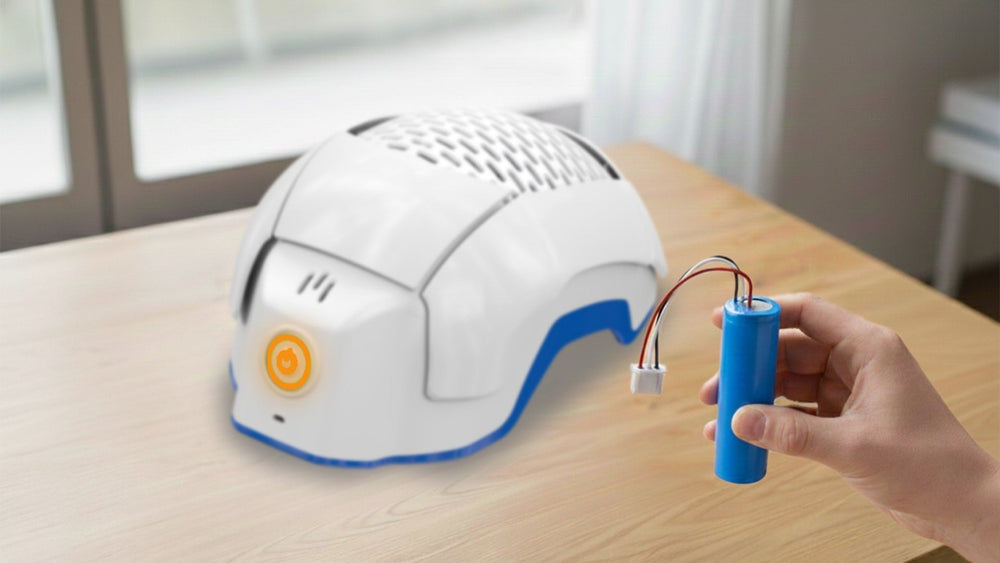
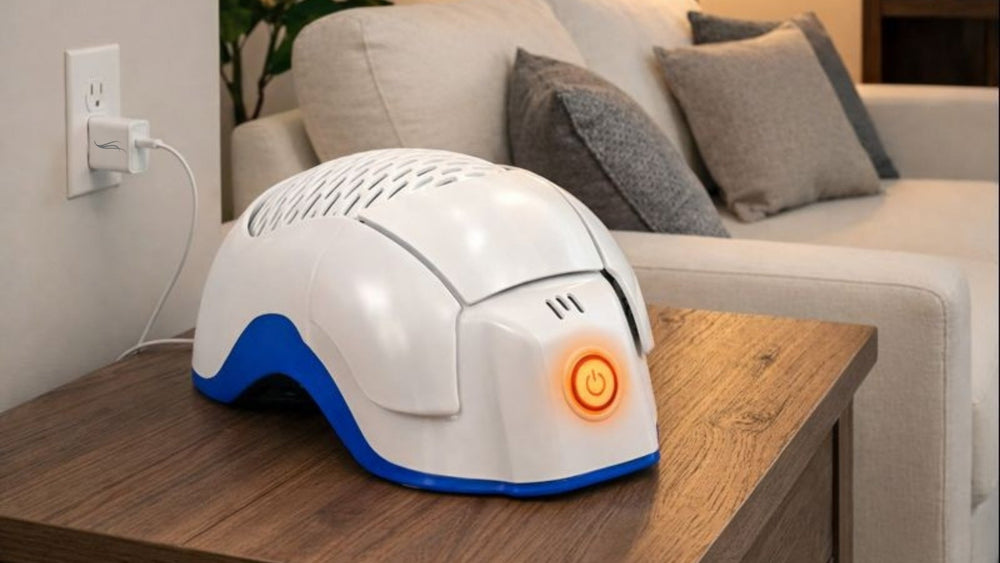
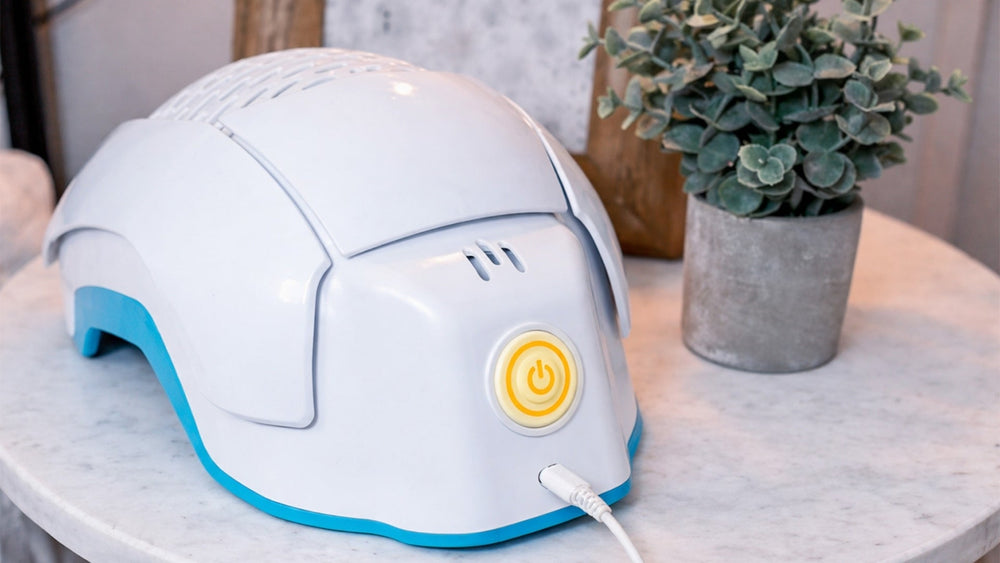
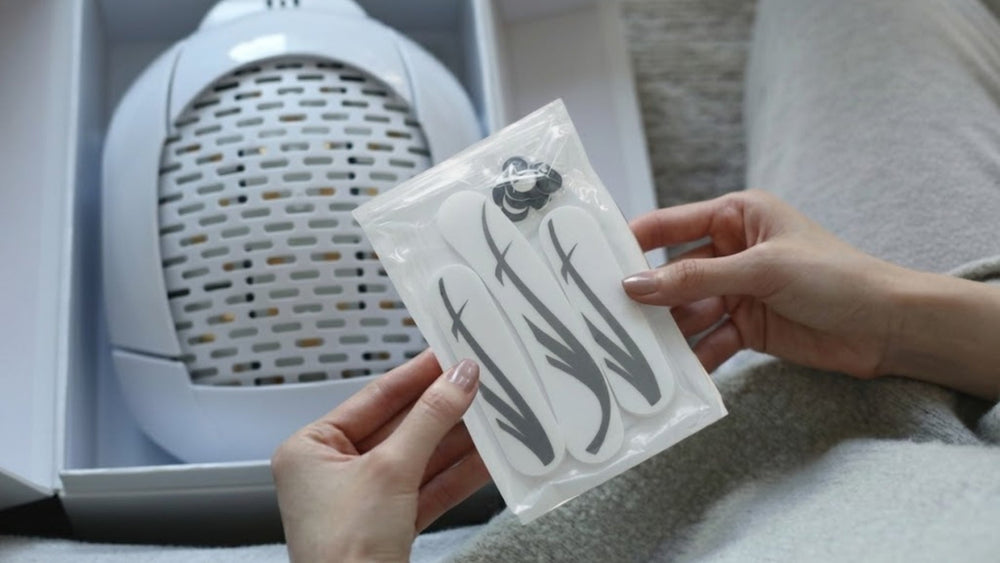
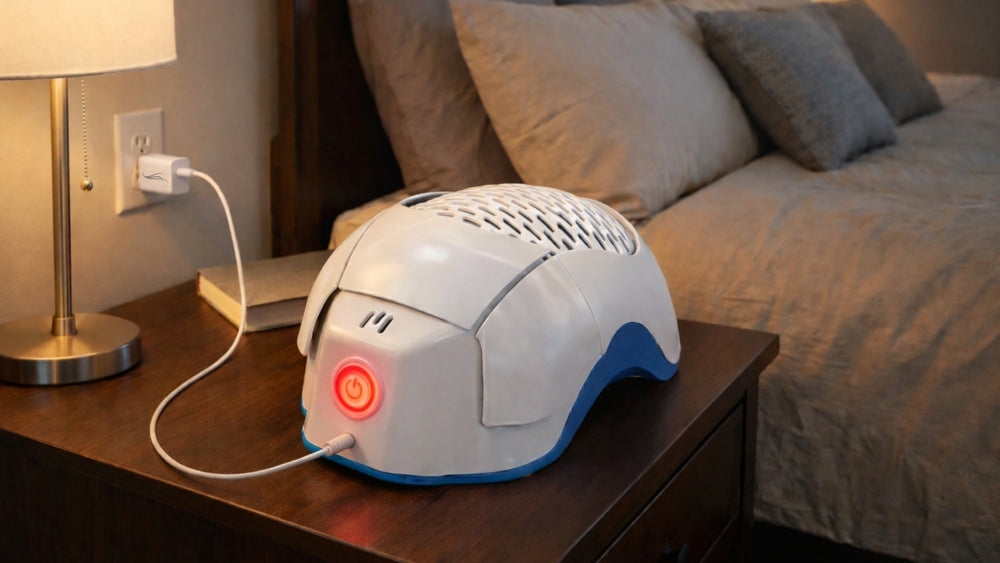
That is where a medical-grade wearable laser phototherapy device can make more sense as the serious layer of the plan. Rice water may support the hair you can see. Laser phototherapy is the category with evidence aimed at the follicle. Different jobs. Different expectations.
So… Is Rice Water Worth Trying?
If your goal is shinier, smoother, slightly stronger-feeling hair and you are willing to test it gently, rice water may be worth a careful try. That is the fair answer. It is cheap, simple, and for some people it may help the hair hold onto length a bit better by reducing breakage.
If your goal is meaningful regrowth in thinning areas, though, the evidence just does not let rice water wear that crown. Not honestly. In that setting, it makes more sense to think in terms of diagnosis first, then proven options such as minoxidil, finasteride where appropriate, and laser-based treatment.
Conclusion
Rice water is not nonsense. It is just often asked to do a job the evidence does not support. The most believable upside is better hair-fiber behavior, not direct follicle regrowth. So if your strands feel a little nicer with it, lovely. Keep your expectations adult-sized. And if what you are seeing is real thinning, widening parts, or patterned loss, move the conversation toward diagnosis and treatments that actually have clinical footing. Your hair deserves a little less internet folklore and a little more precision.