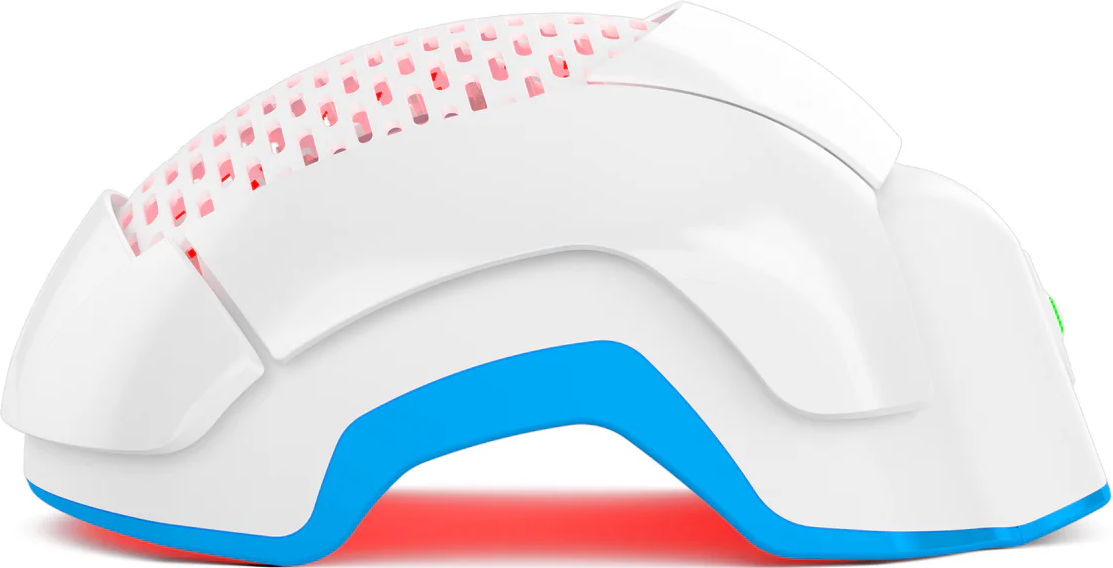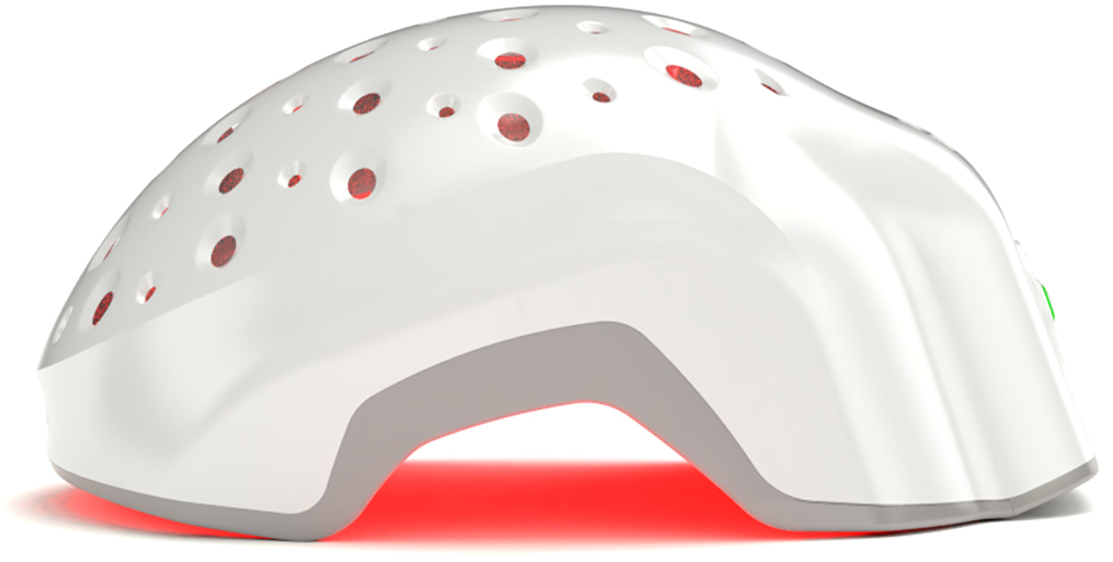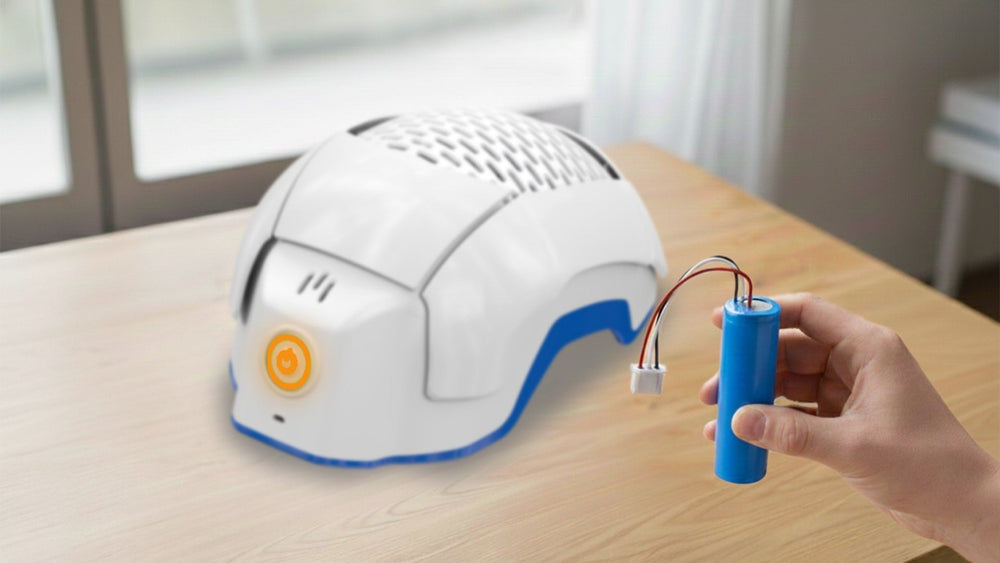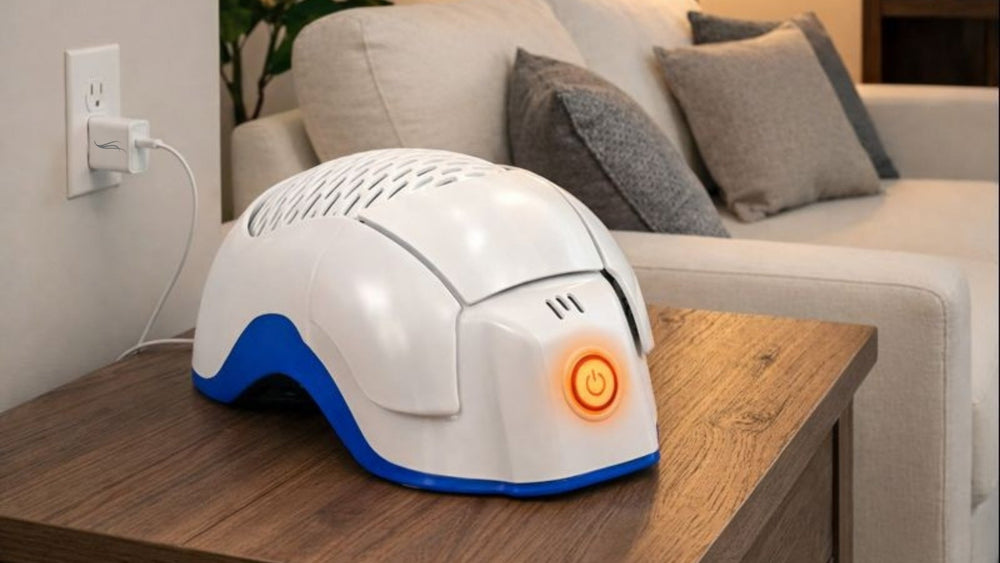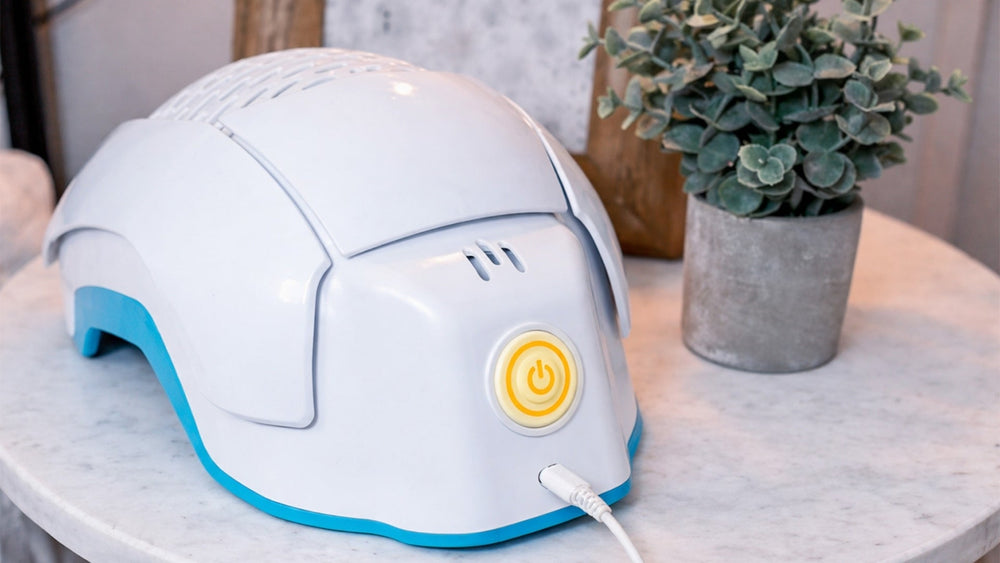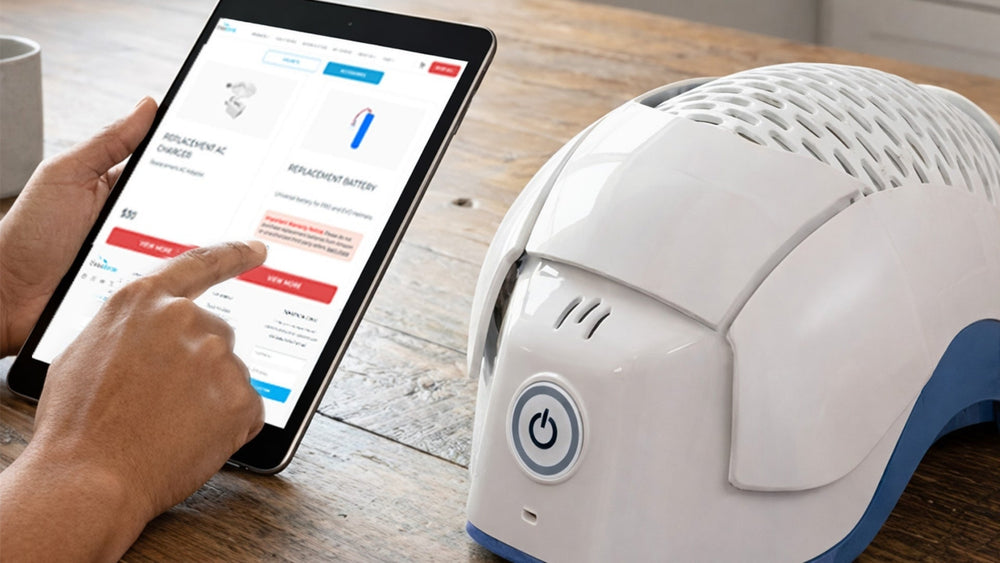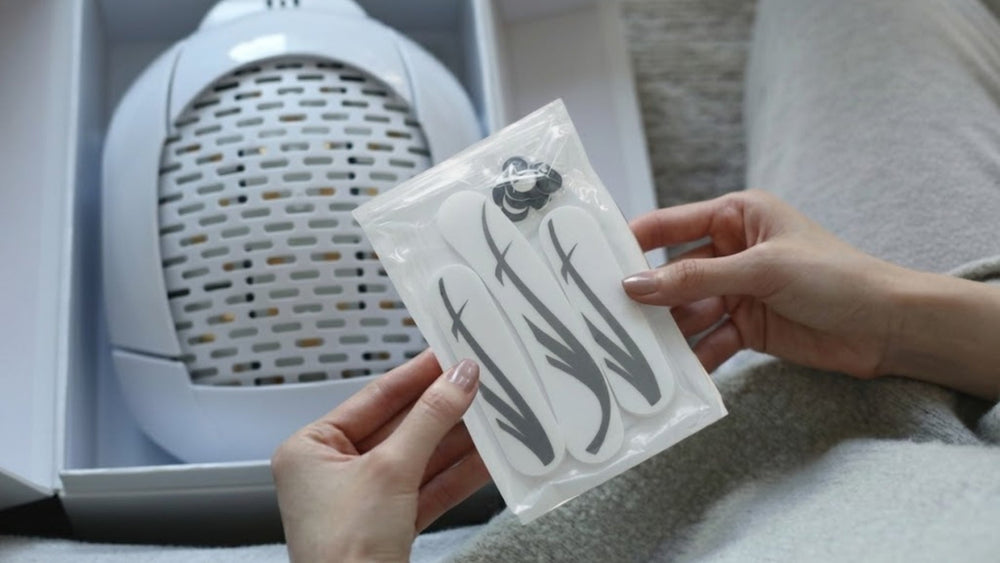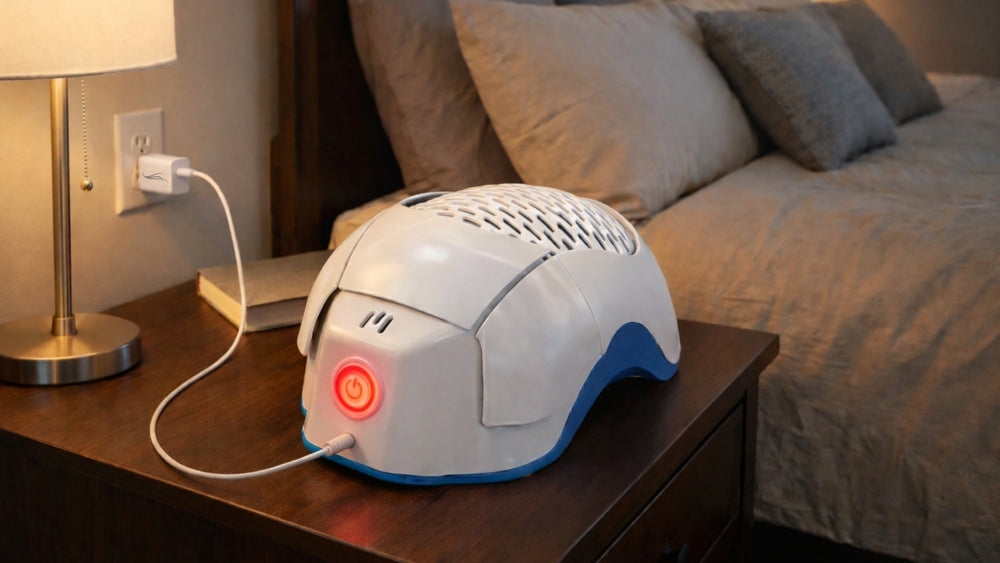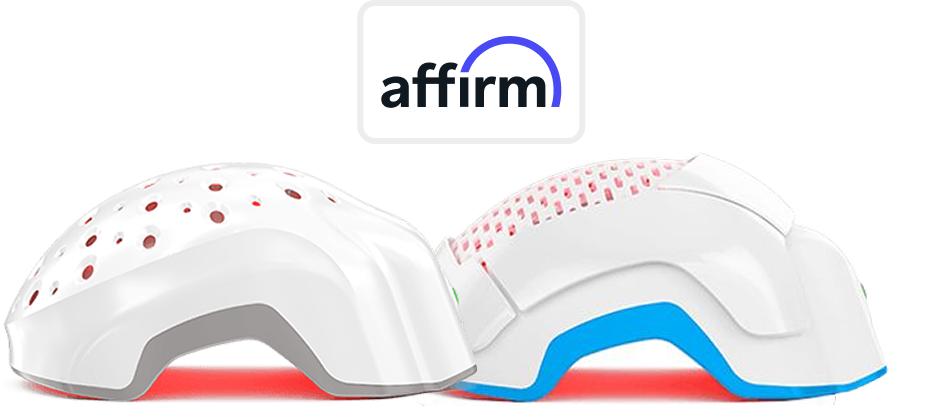






Laser phototherapy (LPT) is a low‑energy red/near‑infrared light method that can stimulate hair follicles without heat or damage. It’s safe for many people and can help improve hair density — but only when used with good devices, correct dose, and patience.
Why So Many Myths about LPT?
Most people looking for help with hair loss are bombarded. Not gently introduced (bombarded) with content that ranges from harmlessly vague to flat-out misleading. Spend five minutes online and you’ll find LPT devices promising miracles, red light gadgets tossed into influencer reels, blogs regurgitating marketing copy... and no regulation to separate science from salesmanship.
Even the FDA (while responsible for clearing devices) doesn’t police the information floating around about them. So when someone’s desperately searching for answers, what they often find is a digital junk drawer: half-truths, reused claims, and marketing spun as science.
Some of this comes from a well-meaning place. But a lot of it doesn’t.
Some of it’s driven by eager manufacturers who don’t fully understand photobiomodulation. Some by content writers with no trichological background. And some by sellers banking on the fact that hair loss, frankly, makes people vulnerable. Especially when they’ve already tried the shampoos and serums. The supplement stacks. The internet forums.
So it’s no surprise myths stick. They don’t just exist — they thrive. They feed off uncertainty, the way misinformation always does.
That’s exactly why we wrote this guide: to clear the fog. To meet confusion with evidence. To give hair loss sufferers a little less guesswork — and a little more grounded clarity.
Myths About Technology & Power
Myth 1: LED Lights Are the Same as Lasers
What people think: “If it glows red, it must do the same job.”
What science says: This one’s a classic filter error. Yes, both LEDs and lasers emit red light, but the similarities end at color. A true laser delivers a narrow wavelength, coherent beam, and high photon density focused through tissue; LEDs, by contrast, emit a broad spread of wavelengths with high beam divergence and low photon output. Only lasers show the characteristic speckling pattern when diffused through tissue: a direct sign of coherence and depth‑penetration potential.
In simpler terms: you can shine a red LED at your scalp and feel the glow — but unless the light is engineered to reach the follicle in sufficient dose, you’re essentially bathing hair in surface light with minimal impact.
“Red” doesn’t mean “ready.” Laser-grade optics, beam profile, and tissue penetration matter far more than the glow.
Also Read: LEDs vs LASER for hair growth
Myth 2: More Lasers = More Hair
What people think: “If a device has 300 diodes instead of 80, it must regrow hair faster.”
What science says: Here’s where dosage science gets real. From the Arndt‑Schulz curve in photobiomodulation: at low doses you stimulate, at high you inhibit. A helmet packed with hundreds of lasers can generate excessive heat, overload tissue, or suffer from beam interference and power drop‑off. Indeed, in some measurements of laser caps, thermal sensor tests showed the output falling from 5 mW to <1 mW within minutes because of overheating.
More emitters without controlled fluence, beam geometry, cooling, and optics can reduce efficacy and even degrade performance.
Quality of delivery matters more than quantity of emitters.
Myth 3: Higher Dose Always Means Faster Results
What people think: “If 5 mW hits the scalp, 50 mW must work faster.”
What science says: Wrong assumption. In LPT and broader PBM research, photon flux and fluence must stay within the therapeutic window. Over‑dosing can trigger cellular stress responses, reduce ATP production, or cause micro‑inflammation, nullifying benefit. Many successful hair growth trials used moderate energy densities and adhered to safe power densities over defined time.
Also, high power doesn’t guarantee depth — if beam is wide or scattered, much of the energy never reaches the target.
Power only works when balanced. Think “just right,” not maximal.
Also Read: The Perfect Dose for Hair Growth - IntelliDose
Myth 4: Pulsing Lasers Work Better Than Continuous
What people think: “Pulsed lasers are smarter. Continuous light is outdated.”
What science says: This myth stems from a real phenomenon — in vitro studies where pulsed lasers triggered more cellular activity than continuous-wave (CW) light in specific settings. But context is everything. Those results came from isolated cell cultures, not living scalps with variable tissue depth, blood flow, and anatomical variation.
For hair regrowth, most rigorous human trials to date have used continuous-wave delivery — and yielded clinically significant results. Pulsing can offer theoretical benefits: reduced heat, biological entrainment, frequency-specific stimulation. But in LPT for hair, the superiority of pulsing over CW isn’t proven.
Pulsing might help in theory. But don’t dismiss continuous wave — it’s already backed by stronger clinical outcomes.
Myth 5: More Scalp Coverage Guarantees Better Results
What people think: “Just make sure the scalp is bathed in light — problem solved.”
What science says: Full scalp coverage sounds good — until you realize penetration is everything. Hair follicle stem cells sit 3–5 mm below the skin, especially in thicker or inflamed scalps. Light that doesn’t reach them is functionally useless.
LEDs, unless tightly collimated, scatter rapidly and lose intensity within 1–2 mm. A poorly designed helmet can “cover” the head while delivering zero therapeutic fluence to the follicle layer.
This is why clinical-grade LPT devices focus not just on surface area but on beam geometry, wavelength tuning, and power density. A blanket of ineffective light is no better than a soft glow in the dark.
Surface glow doesn’t equal therapeutic reach. Penetration (not just coverage) determines effectiveness.
Myths About Dosage, Wavelength & Protocols
What people think: “All red light’s the same. Wavelength is a marketing gimmick.”
What science says: This is flat-out wrong. Hair follicle structures (e.g. cytochrome c oxidase) have specific absorption peaks, most notably in the 630–680 nm range. Wavelength governs not just what tissue absorbs the light, but how far that light travels. Longer wavelengths penetrate deeper — essential for accessing follicular targets.
While a flashy 700 nm light might “look cool,” if it’s outside the bioactive window, it’s clinically inert.
Wavelength is foundational. Choose devices calibrated for follicular bioactivation, not aesthetics.
Myth 7: UV or Other Non‑Red Light Can Grow Hair
What people think: “Light is light (UV, blue, red) it all stimulates growth, right?”
What science says: No. Photobiomodulation (PBM), the mechanism underlying LPT, operates within a defined optical window (typically between 600–1100 nm. Within that window, photons can be absorbed by mitochondrial chromophores like cytochrome c oxidase, driving ATP production, gene expression, and cellular repair.
UV and blue light (under 500 nm) fall outside this window. Worse, they can be mutagenic — damaging DNA, triggering oxidative stress, and even accelerating cell death in skin and follicular structures.
UV is not only ineffective for hair regrowth — it may be actively harmful. Any LPT device claiming to use UV or high-frequency light for therapeutic gain is, at best, misinformed.
If it’s UV, it’s not PBM. And it’s not helping your hair.
Myth 8: Treatment Time Doesn’t Matter
What people think: “Just turn the helmet on occasionally. It’ll work eventually.”
What science says: Photobiomodulation is dose-dependent. The total energy delivered (defined as irradiance × time × frequency) is what drives follicular response.
In most high-quality RCTs, the effective dose window has consistently fallen around 15–25 minutes per session, 2–4 times per week, over a span of 16 to 26 weeks.
Too little? No clinical effect. Too much? Risk of inhibitory response due to the biphasic dose curve.
Consistency is just as important as dose. Sporadic usage (even with a high-powered device) fails to sustain the cellular cascade needed for hair growth.
LPT isn’t magic. It’s a protocol. Stick to the protocol.
Myths About Side Effects & Suitability
Myth 9: LPT Causes Shedding
What people think: “I started laser therapy and now I’m shedding. It’s making things worse.”
What science says: Shedding during the initial weeks of LPT is not uncommon — and it’s almost always a sign of efficacy, not damage.
Hair follicles cycle through anagen (growth), catagen (regression), and telogen (rest). Effective LPT can push follicles prematurely out of telogen and into anagen — triggering a transient shed of weak or miniaturized hairs to make way for healthier growth.
This phase is temporary, typically lasting 2–6 weeks. Beyond that, users see stabilization and, in most responsive patients, net density improvement.
Importantly, a systematic review published in PMC showed a large treatment effect size (SMD = 1.27) in favor of LPT over sham, with minimal adverse events — none of which included pathological shedding.
Early shedding ≠ harm. It’s often your follicles rebooting.
Myth 10: Improved Blood Flow Is the Main Effect
What people think: “LPT just boosts circulation. That’s why it works.”
What science says:
Circulation does improve with LPT, through mechanisms like nitric oxide (NO) release and vasodilation. But it’s not the main show.
Hair regrowth from LPT is driven by photobiomodulation of mitochondrial function — specifically the activation of cytochrome c oxidase, leading to ATP production, anti-inflammatory signaling, and gene expression tied to growth.
The idea that blood flow alone explains regrowth is a simplification — like saying fertilizer grows plants but forgetting about sunlight, soil pH, and genetics.
LPT’s vascular effects are supportive, not central. Without the intracellular stimulation of follicular stem cells and progenitor cells, circulation alone doesn’t restore miniaturized follicles.
Myth 11: LPT Changes Hormones
What people think: “Will this mess with my testosterone or estrogen?”
What science says: There’s no credible evidence (in humans or animals) that LPT has any systemic endocrine impact.
LPT acts locally, on follicular tissues, with no measurable effect on androgen levels, receptor density, or systemic hormonal pathways.
If a device could alter hormone levels from outside the skin, the FDA would treat it as a drug.
No randomized controlled trials (RCTs) or FDA filings for LPT devices report hormonal shifts — and any claim to the contrary lacks peer-reviewed support.
Your hormones aren’t touched. The light stays on your scalp, not in your bloodstream.
Myth 12: LPT Works Best with Certain Hair Colors
What people think: “Laser therapy only works if your hair is blond or light.”
What science says: Unlike laser hair removal, which relies on melanin absorption, LPT targets cellular chromophores like cytochrome c oxidase — not pigment.
That means response isn’t dictated by hair color. LPT bypasses pigment pathways entirely — and most clinical trials include participants across a spectrum of hair shades.
No meaningful correlation has been shown between color and efficacy in hair regrowth RCTs. The few small studies hinting at differences failed to reach statistical significance.
The confusion arises because laser hair removal and LPT use lasers for opposite goals (destruction vs. stimulation) and their mechanisms are completely distinct.
Red, blond, black, or gray — if the follicle’s alive, it can respond.
Myth 13: Darker-Skinned People Can't Use LPT
What people think: “LPT must be unsafe or ineffective on dark skin tones.”
What science says: This myth comes from confusion between laser hair removal (which does carry pigmentation-based risks) and laser phototherapy — which doesn’t rely on melanin absorption.
LPT operates through non-melanin chromophores — targeting mitochondrial enzymes like cytochrome c oxidase. Its mechanism bypasses pigmentation and instead focuses on follicular metabolic stimulation.
Fitzpatrick skin types I–VI have shown safe response in both clinical and in-practice settings. While the literature thins out slightly for skin types V and VI, the lack of data isn’t evidence of harm — it’s just a research gap.
No phototoxicity or pigment-related side effects have been reported in darker skin types when correct devices and protocols are used.
Melanin doesn’t block the benefits. Skin tone isn’t a deal-breaker — but using clinically vetted devices still matters.
Myth 14: LPT Can Revive Dead Follicles
What people think: “Even completely dead follicles can be brought back to life with enough light.”
What science says: There’s a huge difference between dormant, miniaturized, and dead follicles.
LPT is excellent at reactivating miniaturized follicles, especially those in early-to-mid stages of androgenetic alopecia. It stimulates mitochondrial energy production, gene expression, and stem cell proliferation, which can reverse miniaturization to some extent.
But when a follicle is fibrosed, calcified, or entirely replaced with scar tissue, the game’s over. LPT is a stimulator, not a resurrection tool.
Too many users delay intervention — then expect LPT to work miracles on follicular ruins. That’s not how this tech works.
LPT can nudge sleepy follicles awake — but it can’t dig them out of the grave.
Myth 15: Anyone Can Build an LPT Device
What people think: “It’s just a bunch of red lights and a helmet. I could make this myself.”
What science says: The difference between a DIY light cap and a therapeutic-grade LPT device is light years wide.
Proper LPT systems are calibrated to deliver:
- Precise wavelengths (often ~650–680nm),
- Controlled irradiance,
- Optimized duty cycles, and
- Validated treatment protocols —
all within safe exposure limits defined by IEC, FDA, and medical laser safety codes (like 21 CFR 1040.10/1040.11).
Unregulated devices are where most LPT failures start.
Without proper optics, diode spacing, heat dispersion, and dosage control, your “DIY red light” is either a flashlight or a frying pan — not photobiomodulation.
Also, FDA 510(k) clearance isn’t just for bragging rights. It’s proof the device has met essential safety, performance, and biocompatibility thresholds.
If you wouldn’t stitch your own wound, don’t trust your hair follicles to a soldered LED hat.
Also Read: How to Spot Fake LPT Devices in the Market?
Where LPT Fits in the Hair-Loss Toolbox
LPT is non-hormonal and non-invasive. It pairs well with finasteride, minoxidil, PRP, or transplant, depending on condition and tolerance. Some studies show additive benefit when combined with topical treatments.
Classic treatments have downsides — medications carry side-effect profiles, surgery is invasive. LPT offers an accessible adjunct or alternative for many users.
Safety, Side Effects & When to Consult a Pro
Studies consistently report minimal side effects — occasional itching, mild redness, scalp tenderness.
Contraindications:
- Photosensitive conditions or medications
- Active scalp malignancy
- Recently transplanted grafts (consult surgeon)
- Pregnancy / limited data (seek clinical advice)
If you're unsure or have scalp diseases (psoriasis, lichen planus, etc.), consult a trichologist/dermatologist before using.
Practical Tips for Home Use
- Always follow the dose schedule — treat like brushing your teeth.
- Part dense hair to improve penetration.
- Keep the device clean — wipe connectors and interior surfaces.
- Be patient — results often appear after 3–4 months.
- Stick with devices that show published data, clearances, and warranty support.
Conclusion
These myths have misled many — but when assessed through a clinical lens, LPT stays standing. It’s not perfect, but it’s scientifically founded and quietly powerful. Use a verified device like Theradome, follow proper protocols, and temper expectations with patience. Trust your hair health to evidence.