







Onion juice may help some people with patchy alopecia areata, based on one small older clinical study. That is a much narrower claim than “onion juice grows hair.” There is no strong clinical evidence that onion juice treats common pattern hair loss or the kind of diffuse shedding people often call “thinning.”
Why onion juice even became a thing
It makes emotional sense, honestly. Hair starts thinning, someone is tired of being disappointed, and a kitchen remedy feels oddly comforting. Cheap. Familiar. Slightly unhinged, maybe... but familiar. And when enough people online swear it worked for them, the whole thing starts to feel more solid than it really is. No lab coat required.
That “natural means safe and worth a try” reflex is common in hair loss. The American Academy of Dermatology even warns that people often reach for vitamins, supplements, and over-the-counter products before they get the cause identified, which is a problem because hair loss is not one single condition wearing different outfits. It is a bundle of different disorders with different triggers and different treatment logic.
And that detail changes everything.
What the one real study actually found
The study people keep pointing to was published in 2002 by Sharquie and Al-Obaidi. It tested topical crude onion juice in people with patchy alopecia areata, using a tap-water comparison group. Participants applied the treatment twice daily for two months. The paper reported that terminal coarse hair regrowth began after 2 weeks in the onion-juice group, with visible regrowth in 73.9% at 4 weeks and 86.9% at 6 weeks. In the tap-water group, regrowth was reported in only 13% at 8 weeks.
Those numbers are the reason this remedy refuses to die.
But they need context. The study was small, limited to patchy alopecia areata, and did not compare onion juice with a standard active treatment used in modern dermatology. It also sits there, a bit lonely, because the internet talks about it far more than the medical literature has meaningfully built on it. So yes, it is real. No, it is not enough to crown onion juice as a proven hair-growth treatment across the board.
The detail most people miss
That study was not about “hair loss” in the broad, sloppy, everyday sense.
It was about alopecia areata, which is an autoimmune condition. In alopecia areata, the immune system targets the hair follicle, often causing round or oval patches of hair loss. Some cases can regrow on their own. Some relapse. Some need treatment. It is its own beast.
This is where a lot of onion-juice content quietly drifts off the rails. A person with a widening part reads about a study in patchy autoimmune hair loss and assumes the same result should apply to their thinning crown. But those are not the same biological problem. Not even close.
Why it might help alopecia areata, and only there

We can make a cautious case for plausibility. Onion contains sulfur-rich compounds and other bioactive molecules, including flavonoids such as quercetin, and these compounds are often discussed for antioxidant and anti-inflammatory effects in broader biological settings. That does not prove hair regrowth by itself, of course. Still, it helps explain why researchers were willing to test onion juice on scalp disease in the first place.
In alopecia areata specifically, the question is not “does this nourish hair?” as much as “could this somehow alter the local inflammatory or immune environment enough to help regrowth?” That is still partly speculative. The 2002 study showed an outcome. It did not fully settle the mechanism. So the most honest wording is that onion juice may help some people with patchy alopecia areata, and we do not yet have a clean, robust explanation for exactly how much of that effect is reproducible and why.
Why it does not translate to most hair loss
Pattern hair loss
Androgenetic alopecia is the common pattern-hair-loss type behind many receding hairlines, thinning temples, and widening parts. Dermatology guidance treats it as a condition tied to genetics and androgen sensitivity, with progressive follicle miniaturization over time. That means the follicle gradually produces shorter, finer, weaker hairs. Different biology. Different target. Different treatment game.
That is why approved or commonly recommended options for pattern hair loss center on things like minoxidil and, for many men, finasteride. The AAD notes that minoxidil has been shown in clinical trials to reduce hair loss, stimulate growth, and strengthen existing strands, while finasteride can slow additional loss in many men. Onion juice does not sit in that evidence class, and it does not address androgen-driven follicle miniaturization the way those treatments are designed to.
Stress shedding
Then there is telogen effluvium, the diffuse shedding that often appears after a trigger such as illness, surgery, childbirth, rapid weight loss, medication changes, or intense stress. This sort of shedding commonly starts a few months after the trigger, not the next morning, which is why people often misread the timeline and credit the last thing they rubbed on their scalp. Hair shedding settles... and the onion gets the applause.
So when someone says, “onion juice helped my hair come back,” we have to ask a more annoying but much better question: what kind of hair loss did they actually have? Without that, the claim is all fog and confidence.
What onion juice is actually doing, at best
At best, onion juice may be affecting the scalp environment in a narrow subset of cases rather than acting like some universal growth switch. That distinction matters. A scalp can feel calmer, cleaner, or simply more “treated” without meaning the underlying cause of hair loss has been addressed. People often blend those experiences together. We should not.
And this is where sulfur gets over-romanticized. Yes, sulfur matters in the body. Yes, keratin contains sulfur. But jumping from “hair contains sulfur” to “put sulfur-rich onion juice on the scalp and hair will grow” is... a stretch. A very human stretch. Still a stretch. The evidence does not support that leap for general hair thinning.
Why so many people swear it works
Because sometimes hair comes back anyway.
Alopecia areata can spontaneously regrow in some cases. Stress shedding often improves once the trigger settles and the hair cycle catches up. Even pattern hair loss can fluctuate enough that a person notices “better hair days” after changing a routine. Add hope, timing, a pungent ritual, and a phone camera, and suddenly a DIY remedy feels medically proven in the court of public opinion.
There is also the simple psychology of effort. When a treatment is messy, smelly, and inconvenient, people often feel it must be doing something serious. It feels earned. That does not make it useless. It just means the emotional weight of a remedy can be bigger than the biological one.
The part nobody talks about enough
Odor and social reality
Onion juice smells like... onion juice. Not “fresh produce.” Not “herbal.” Onion. And if a treatment is miserable to use consistently, that matters more than people pretend. A remedy you quit after nine weird, stinging, slightly humiliating applications is not much of a remedy in real life. No matter how noble it looked on a blog.
Scalp irritation
Topical treatments can irritate, and dermatology guidance is clear that scalp products can cause redness, itching, and contact reactions. Onion juice is not exempt from that just because it came from a kitchen rather than a lab. Sensitive scalp? Existing dermatitis? Broken skin? That is not a cute place to run experiments.
DIY inconsistency
There is also no standardized home-prep protocol backed by strong clinical evidence. Red onion, white onion, raw, blended, strained, left on for twenty minutes, left on for an hour... the internet treats all of that like interchangeable folklore. It is not. The often-cited clinical study used crude onion juice twice daily. It did not validate every homemade version floating around online.
So... should you actually try it?
If you have patchy hair loss that looks like alopecia areata, onion juice sits in the “interesting but limited” bucket. It is not absurd to be curious about it. But it is still wiser to get the diagnosis right, because dermatologists have more established ways to manage alopecia areata, including corticosteroids and other condition-specific options depending on severity and age.
If you have a receding hairline, thinning crown, or widening part, onion juice is a poor bet compared with treatments that actually have a stronger evidence base for pattern hair loss. That does not make onion juice evil or fake. It just makes it the wrong tool for the job. And wrong tools waste time, which hair loss tends to punish.
Mostly.
What actually targets hair loss more directly
Laser Phototherapy
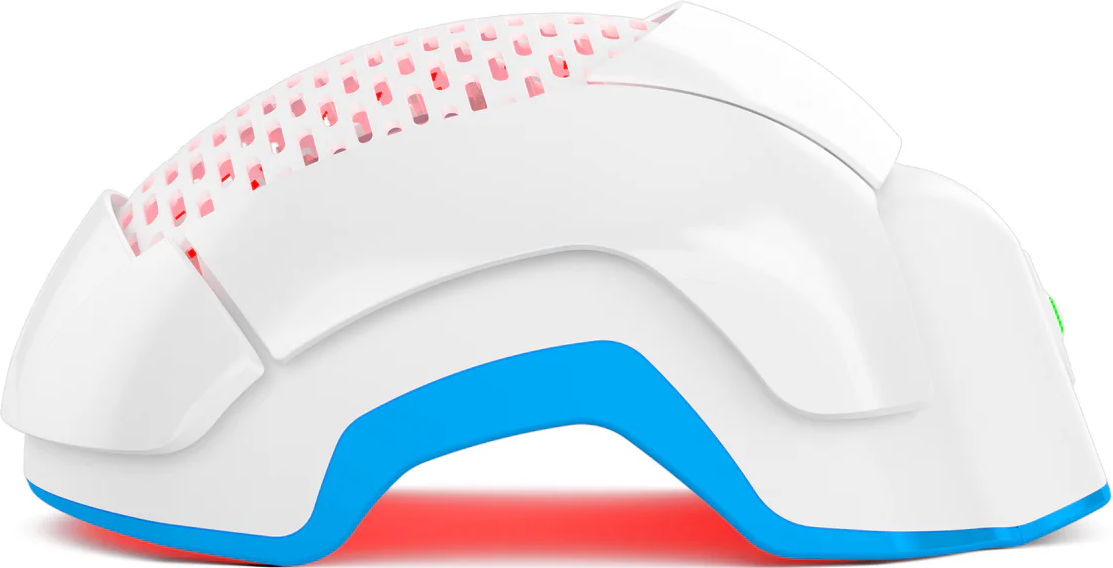
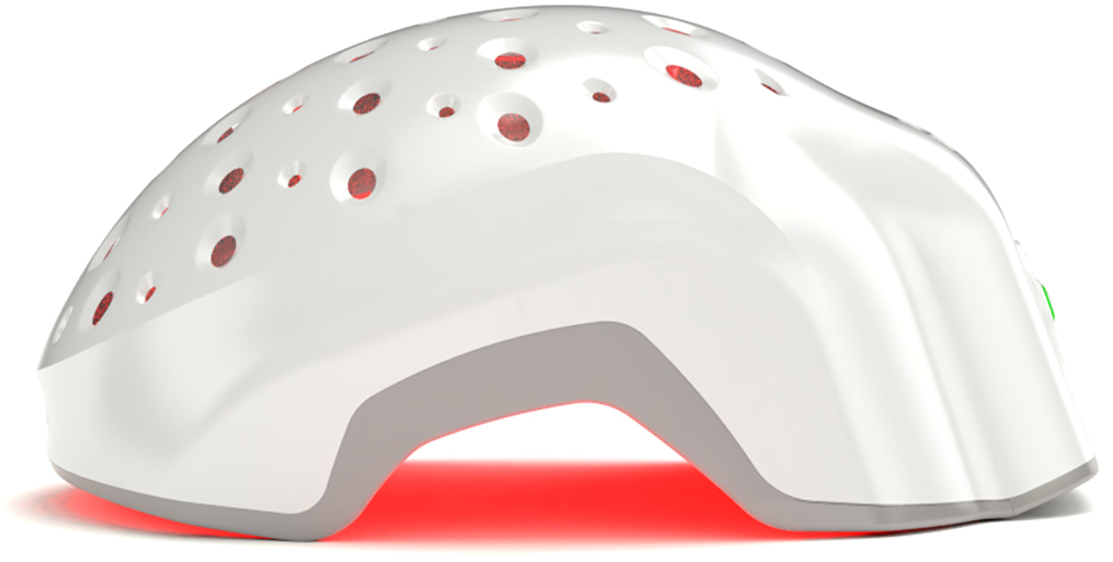
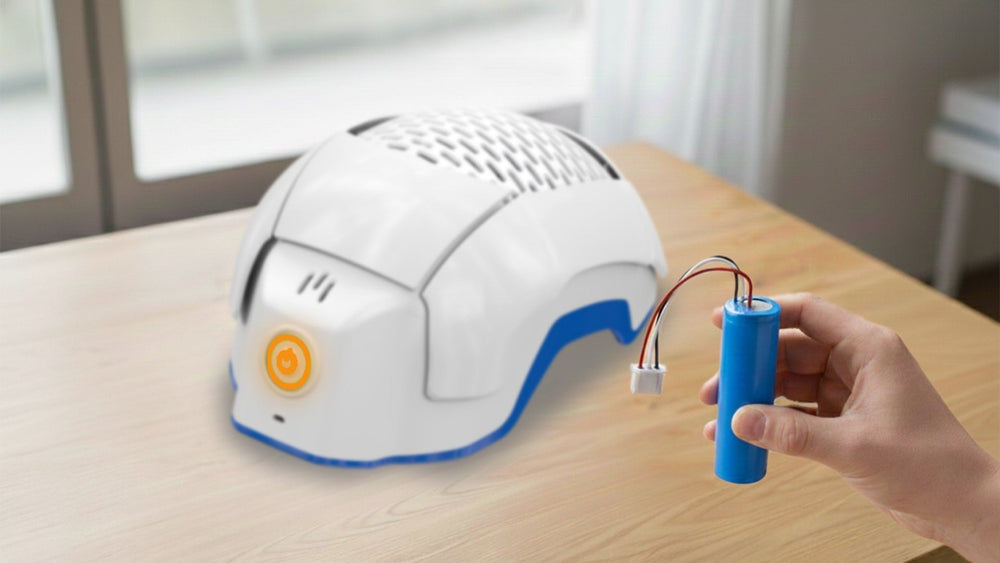
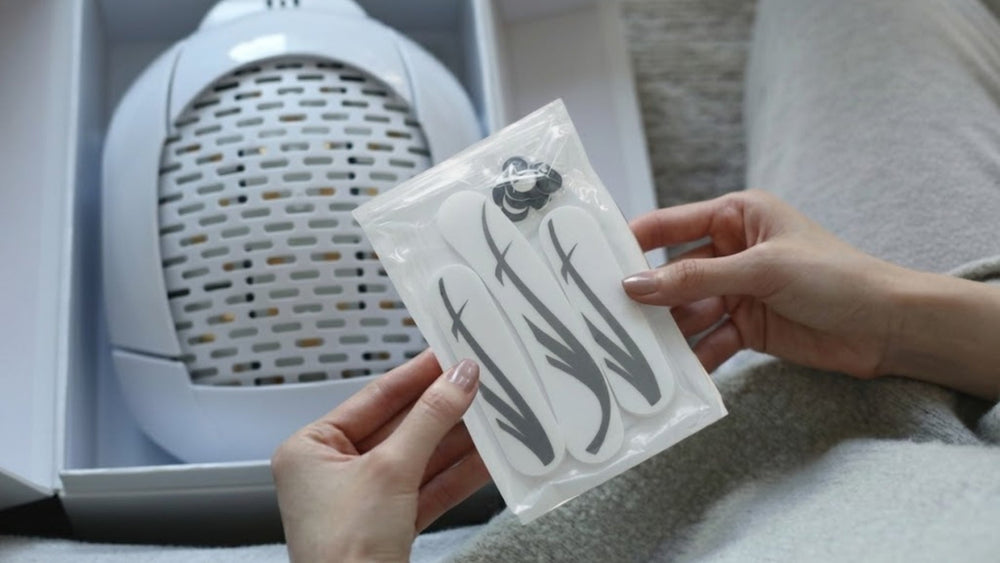
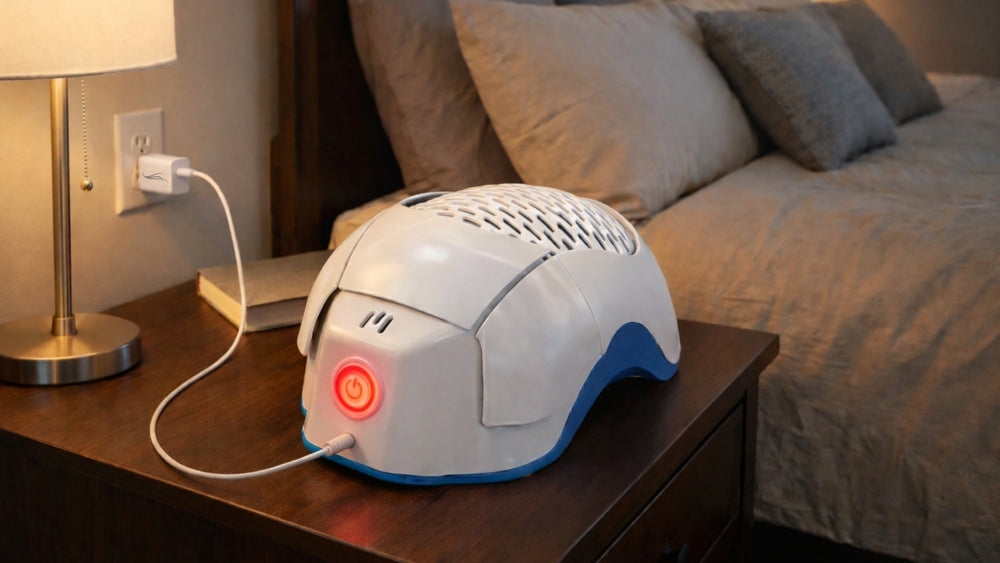
Laser Phototherapy, often grouped under low-level light treatment language, is another option people hear about. Dermatology guidance will most likely include laser treatment among options for certain patients with hereditary hair loss. The important part is that a device-based treatment aims to give a controlled, repeatable dose instead of asking you to improvise with produce in your bathroom and hope your scalp finds the ritual persuasive. Different level of control. Different level of rigor.
When you should stop guessing and get help
Patchy hair loss. Rapid shedding. Scalp pain. Burning. Scaling. Broken hairs. Eyebrow loss. Sudden widening of the part. Those are good reasons to stop crowdsourcing your scalp and get a proper evaluation. The AAD is very clear that effective treatment begins with finding the cause, because treating “hair loss” without a diagnosis is like buying random keys and hoping one opens your front door.
And a board-certified dermatologist really can save you months of noise. Sometimes longer.
Conclusion
Onion juice is not pure nonsense. That is important to say. There is a real clinical study behind it, and the results in patchy alopecia areata were good enough to keep the topic alive. But that is a very specific condition, and the evidence does not justify turning onion juice into a broad answer for ordinary thinning, stress shedding, or a receding hairline.
So the calm, grown-up answer is this: if you are dealing with patchy loss, get the diagnosis right and talk with a dermatologist. If you are dealing with pattern hair loss, lean toward options built for that biology. Onion juice may have a place in the conversation. It just should not be running the conversation.