







Does rheumatoid arthritis cause hair loss? Sometimes it is part of the chain, but usually not in the blunt “RA is attacking your scalp” way people fear. Hair loss in someone with rheumatoid arthritis is more often tied to medication effects, body stress from flares or illness, telogen effluvium, alopecia areata, anemia, thyroid disease, scalp inflammation, or pattern hair loss happening at the same time.
Can Rheumatoid Arthritis Cause Hair Loss Directly?
Rheumatoid arthritis can sit very close to the hair-loss problem. Close enough that it deserves attention. But it is rarely the whole answer by itself.
RA is an autoimmune inflammatory disease. The immune system drives inflammation, mostly in the joints, although RA can have wider effects. The American College of Rheumatology notes that RA may affect small joints, larger joints, and organs such as the eyes, lungs, and heart.
Hair follicles, though, need a more specific conversation.
RA is not usually described as a primary hair-loss diagnosis in the way alopecia areata is. Alopecia areata is its own autoimmune condition, where immune activity affects hair follicles and can cause nonscarring hair loss, often in patches, according to the American Academy of Dermatology.
With RA, the situation tends to be less tidy. Medication changes. Flares. Poor sleep. Low iron. Thyroid changes. A pattern-thinning problem that was already creeping along quietly before the RA flare made everything look worse.
Why this distinction matters for treatment
The cause decides the plan. Not the panic. Not the amount of hair in the drain. The cause.
If the shedding is linked to methotrexate or leflunomide, the next call is usually to the rheumatologist. If it is telogen effluvium, the plan often centers on the trigger and time. If it is alopecia areata, a dermatologist needs to assess it. If it is androgenetic alopecia, treatment may include minoxidil, clinician-directed options, and FDA-cleared Laser Phototherapy.
Same complaint, but different machinery.
This is why “RA causes hair loss” is too blunt to be helpful. Yes, it may comfort you for half a second, then send you toward random vitamins, scalp oils, and the kind of bathroom-shelf clutter that slowly becomes part of the furniture.
What Is Rheumatoid Arthritis?
Rheumatoid arthritis is a chronic autoimmune inflammatory disease. In plain terms, the immune system reacts against the body’s own tissues and creates inflammation. The CDC describes RA as an autoimmune and inflammatory disease in which the immune system attacks healthy cells, causing painful swelling in affected areas.
Most people think of RA as joint pain, and yes, that is a major part of it. Swollen fingers. Stiff wrists. Knees that feel like they filed a complaint overnight. But RA can also come with fatigue, appetite changes, sleep disruption, anemia, medication changes, and general body stress.
Hair notices body stress.
Not instantly. But it notices.
RA treatments can also enter the hair-loss conversation
RA is often treated with disease-modifying antirheumatic drugs, usually called DMARDs. The American College of Rheumatology lists methotrexate, leflunomide, hydroxychloroquine, and sulfasalazine as common DMARDs. If those do not control the disease well enough, rheumatologists may use biologic medicines or targeted drugs such as JAK inhibitors.
These treatments can protect joints and reduce disease activity. That part matters, a lot.
But some can also have side effects, and hair shedding is one of the possible ones with certain medications. Not for everyone. Not even for most people taking methotrexate.
Why Might Hair Loss Happen When You Have RA?

Some RA medications can contribute to hair shedding in certain people. Methotrexate is the one many patients worry about first. NHS says methotrexate is usually the first medicine given for RA, and NHS medicine guidance lists hair loss as a possible side effect.
Leflunomide also has a clearer hair-loss signal than some other RA drugs. The European Medicines Agency lists increased hair loss among frequently reported adverse effects for Arava, the leflunomide brand.
None of this means you should stop medication on your own. Please do not make your joints pay because your scalp started sending smoke signals.
Call the clinician. Build the timeline. Get the cause checked.
Telogen effluvium after a flare, illness, or body stress
Telogen effluvium is one of the most likely explanations when someone with RA suddenly notices diffuse shedding. Diffuse meaning all over, not one smooth bald patch.
The basic idea is simple enough: the body goes through a stressor, and more hairs than usual shift into the resting phase. Later, those hairs shed. StatPearls describes telogen effluvium as excessive shedding of resting hair after metabolic stress, hormonal changes, or medication.
The irritating bit is the delay. A trigger often happened around three months earlier, though the window can range from one to six months, according to StatPearls.
So the hair loss you see today may be linked to the flare, fever, surgery, medication change, or brutal stress your body dealt with weeks ago.
Hair has terrible timing.
Autoimmune overlap, especially alopecia areata
People with one autoimmune disease can sometimes have another, although that does not mean every symptom gets blamed on autoimmunity. Alopecia areata is a separate autoimmune hair-loss condition, often causing patchy loss.
The American Academy of Dermatology says alopecia areata can affect the scalp, beard area, eyebrows, eyelashes, or other hair-bearing areas. It may show up as round or oval patches, and a dermatologist can diagnose it.
This is where the shape of the hair loss matters. A smooth patch near the temple is not the same clue as handfuls of diffuse shedding after a flare.
Anemia, iron issues, thyroid disease, and nutrition
RA can be associated with anemia, and anemia can matter for hair shedding. A 2024 systematic review and meta-analysis estimated anemia prevalence in RA at 10.25 percent, while noting that rates vary by population and study methods.
Iron testing can be a little slippery in RA because inflammation affects ferritin. StatPearls notes that ferritin is an acute-phase reactant, meaning it can rise during inflammation. So a “normal” ferritin level may not always close the case when inflammation is active.
Thyroid disease is another big one. The British Thyroid Foundation says severe and prolonged hypothyroidism or hyperthyroidism can cause diffuse hair loss across the scalp, and regrowth is usual after successful thyroid treatment, although it can take months and may be incomplete.
Pattern hair loss that happens alongside RA
Androgenetic alopecia, often called pattern hair loss, can happen in people with RA for the very ordinary reason that common hair loss still happens to people with chronic illness.
A telogen effluvium episode can also make pattern thinning more obvious. StatPearls notes that in women, pattern hair loss can be unmasked by telogen effluvium after a stressor shifts more hair into the shedding phase.
That does not mean the flare “created” pattern loss from nothing.
More often, it reveals what was already quietly happening. Like the scalp turned the lights on in a room you were not ready to inspect.
This is where FDA-cleared Laser Phototherapy has its strongest home-use device evidence. Pattern thinning.
We will come back to that.
Is It RA Hair Loss, Medication Shedding, or Something Else?
Diffuse shedding all over
Diffuse shedding usually means hair is coming out from across the scalp rather than from one defined patch. You may notice it in the shower, brush, pillowcase, or hands after washing. The ponytail may feel thinner. The part may look wider, but not always in a clean pattern.
This can fit telogen effluvium, medication-related shedding, thyroid disease, iron deficiency, chronic illness stress, or a mix of more than one thing. StatPearls notes that alopecia evaluation may include blood work such as complete blood count, iron studies, and thyroid tests when clinically relevant.
Round or patchy bald spots
Patchy hair loss needs a different response. Alopecia areata is one possibility, but patchy loss can also come from fungal infection, scarring alopecia, inflammatory scalp disease, or other skin conditions.
The American Academy of Dermatology notes that alopecia areata may affect the scalp, beard, eyebrows, eyelashes, or other areas. Because treatment depends on the diagnosis, patchy loss is a good reason to see a dermatologist rather than guessing.
A patch deserves a proper look.
Widening part, crown thinning, or receding hairline
A widening part, thinning crown, or gradually receding hairline often points toward androgenetic alopecia. This type of hair loss tends to be slow and patterned. In women, it often shows as part-line widening or reduced density over the top of the scalp. In men, it may show as recession, crown thinning, or both.
A 2023 review on female pattern hair loss says topical minoxidil has the highest level of evidence for female pattern hair loss. A meta-analysis in the Journal of the American Academy of Dermatology found minoxidil, finasteride, and low-level laser light therapy effective for promoting hair growth in androgenetic alopecia.
Pain, burning, crusting, pus, shiny patches, or scarring
Pain, burning, crusting, pustules, bleeding, shiny patches, or areas where follicle openings seem absent are not casual signs. They can suggest infection, inflammatory scalp disease, or scarring alopecia.
A review in CMAJ explains that primary cicatricial alopecias involve irreversible destruction of hair follicles and replacement with fibrous tissue. The same review notes that biopsy from an active edge or inflamed area can help identify the cause.
So if the scalp looks angry, do not wait for a shampoo to become a dermatologist.
Please.
Breakage rather than shedding from the root
Not every hair in the sink fell from the follicle. Some snapped.
Breakage often shows up as short pieces, frayed ends, uneven lengths, or hair that breaks during detangling. Tight hairstyles can make it worse. The American Academy of Dermatology says styles that pull tightly, including tight braids, cornrows, locs, buns, ponytails, weaves, extensions, and rollers worn to bed, can contribute to traction alopecia.
RA hand pain can also make hair care harder. If your fingers hurt, “gentle detangling” can feel like a miniature engineering project.
No one talks about that enough.
Can Methotrexate Cause Hair Loss?
Yes, methotrexate can cause hair loss in some people. Not everyone. Not even most people. But enough that it belongs in the conversation.
NHS says hair loss from methotrexate is unlikely to be permanent and advises talking to a doctor if it bothers you, since a clinician may lower the dose or suggest another medicine. The Arthritis Foundation estimates that methotrexate is responsible for hair loss in about 1 percent to 3 percent of people.
Methotrexate works partly by affecting cell growth. That is useful in controlling inflammatory immune activity, but hair follicles also contain rapidly dividing cells. And sometimes the scalp gets caught in the administrative mess.
What methotrexate hair loss usually looks like
Methotrexate-related hair loss usually looks more diffuse than patchy.
The FDA prescribing information for methotrexate tablets includes alopecia among reported adverse reactions. Still, a label cannot tell you whether your personal shedding is from methotrexate, telogen effluvium, iron deficiency, thyroid disease, pattern hair loss, or something else.
That is why the pattern matters.
If you are seeing round patches, eyebrow loss, beard patches, scaling, pain, redness, or nail pitting, do not assume methotrexate explains everything.
Folic acid may help some methotrexate side effects, but ask your doctor
Rheumatologists often prescribe folic acid with methotrexate to reduce certain side effects. The American College of Rheumatology says folic acid or folinic acid can decrease side effects during methotrexate therapy.
But the dose and schedule should come from your clinician. Not a forum. Not a cousin. Not the supplement aisle.
Do not stop methotrexate on your own
Do not stop methotrexate suddenly because your hair is shedding. That may feel tempting, especially if wash day has become emotionally rude, but stopping RA treatment without guidance can risk flares and joint damage.
The American College of Rheumatology advises patients to take medications as prescribed and tell their doctor about side effects or problems.
That is the move: document the shedding, call your rheumatologist, ask about folic acid, dose, labs, and whether another hair-loss cause should be checked.
Your scalp matters. Your joints also matter.
Can Other RA Medications Cause Hair Loss?
Leflunomide
Leflunomide can be associated with increased hair loss. The European Medicines Agency lists increased hair loss among frequently reported adverse effects of Arava.
A review in Australian Prescriber described leflunomide-related alopecia as dose-dependent, diffuse, often mild to moderate, and usually transitory, with reported occurrence between 6 percent and 23 percent in that review.
That does not mean leflunomide is always the culprit. It means if the timeline fits, it should be reviewed.
Biologics and TNF inhibitors
Biologic medications are harder to summarize cleanly. Hair loss is not the main adverse effect people usually associate with most RA biologics, but rare paradoxical scalp and alopecia events have been reported, especially with TNF inhibitors.
Case reports have described alopecia universalis or alopecia areata-like events in RA patients receiving anti-TNF treatment, including adalimumab in published reports.
JAK inhibitors can confuse the conversation
JAK inhibitors can make this topic feel oddly upside down. Some JAK inhibitors are used for inflammatory diseases, and some are also used for severe alopecia areata.
For example, two phase 3 trials published in The New England Journal of Medicine found oral baricitinib superior to placebo for hair regrowth in severe alopecia areata at 36 weeks.
That does not mean every person with RA and shedding needs a JAK inhibitor.
Different diagnosis. Different risk profile. Different specialist conversation.
If hair loss is patchy or severe, the job is to diagnose it first. The drug conversation comes after that.
The medication timeline matters
Write down when each medication started. Dose changes too. Steroid tapers. New supplements. Flares. Fevers. Surgery. Big stressors. Weight loss. Anything that made your body say, “Excuse me, what are we doing?”
Hair often reacts late. StatPearls notes that telogen effluvium may appear one to six months after a trigger, often around three months.
Could It Be Telogen Effluvium From RA Stress or Flares?
What telogen effluvium is
Telogen effluvium is a form of diffuse shedding. More hairs than usual move into the resting phase, then shed later. It is usually nonscarring, which means follicles are generally preserved.
That last part matters.
StatPearls describes telogen effluvium as diffuse, often acute hair shedding after metabolic stress, hormonal changes, or medication. A review in Journal of Clinical and Diagnostic Research describes it as a common cause of diffuse nonscarring hair loss after a triggering event.
This is why RA hair loss can feel so confusing. The flare may have calmed down. Your hair may only now be reacting.
Why the timing feels so unfair
Telogen effluvium is delayed. A body stressor can happen, the hair follicles shift phases, and shedding shows up later like a bill you forgot existed.
Triggers may include severe infection, surgery, trauma, postpartum hormone changes, hypothyroidism, crash dieting, low protein intake, medication, and iron deficiency, according to StatPearls.
An RA flare can be part of that wider stress picture. So can a bad infection while immunosuppressed. So can a period of eating poorly because pain made normal routines harder.
Is telogen effluvium permanent?
Acute telogen effluvium is often temporary once the trigger is addressed. The British Association of Dermatologists says telogen effluvium usually improves without specific hair-growth treatment, although shedding may last three to six months and fullness can take longer to return.
That does not mean every person gets a perfect bounce-back by Tuesday.
Hair grows slowly. Slower than hope. Slower than impatience. Slower than anyone wants while staring at a widening part under bathroom lighting designed by an enemy.
If shedding lasts beyond six months, worsens, or comes with scalp symptoms, get checked.
When telogen effluvium can reveal pattern thinning
Telogen effluvium can reveal underlying androgenetic alopecia. StatPearls notes that in women, pattern hair loss can be unmasked by telogen effluvium after a stressor shifts more follicles into the shedding phase.
That is a sneaky little distinction. The shedding did not necessarily cause pattern hair loss. It may have exposed it.
This is where a clinician may look for miniaturized hairs, part-line widening, crown thinning, or family history.
And it is where Laser Phototherapy becomes important, if the diagnosis points to pattern thinning.
Could RA Be Linked to Alopecia Areata?
Alopecia areata is an autoimmune hair-loss condition. RA is autoimmune too. That shared category can matter, but the two conditions are not the same.
The American Academy of Dermatology says alopecia areata can cause hair loss on the scalp, beard area, eyebrows, eyelashes, or other areas. A 2025 review describes alopecia areata as a complex chronic inflammatory disorder with unpredictable nonscarring hair loss.
Signs that point away from simple RA shedding
Round bald spots. Sudden smooth patches. Eyebrow or eyelash loss. Beard patches. Nail pitting. A tingling or burning sensation before the patch appears.
Those signs lean more toward alopecia areata or another dermatologic condition than simple diffuse shedding.
Scalp pain, crusting, pustules, heavy scale, shiny patches, or loss of visible follicle openings should also move the reader toward dermatology.
This is where waiting can be costly. Especially if scarring is involved.
Treatment is dermatologist-led
Alopecia areata treatment depends on the extent of hair loss, age, duration, pattern, and patient preference. The American Academy of Dermatology says a treatment plan may include corticosteroids to regrow hair and minoxidil to help maintain regrowth in some cases.
Severe alopecia areata now has stronger systemic treatment options than it once did. Baricitinib, for example, showed superiority over placebo in two phase 3 trials for severe alopecia areata.
But again, diagnosis first.
Always diagnosis first.
What Blood Tests or Health Issues Should Be Checked?
Anemia and iron status
RA can be associated with anemia, including anemia of inflammation and iron deficiency anemia. A 2024 systematic review and meta-analysis estimated anemia prevalence in RA at 10.25 percent, while noting wide variation between studies.
For hair shedding, iron status can be relevant. StatPearls says iron deficiency evaluation may include complete blood count, serum iron, iron saturation, and ferritin. It also notes that ferritin rises with inflammation, which can complicate interpretation.
Ferritin is useful, but it is not always a simple yes-or-no answer in inflammatory disease.
Thyroid disease
Thyroid dysfunction can cause diffuse hair loss. The British Thyroid Foundation says severe and prolonged hypothyroidism or hyperthyroidism can cause hair loss across the scalp rather than in discrete patches, and regrowth is usual with successful treatment, although it can take months and may be incomplete.
A 2023 review notes that thyroid hormones influence hair growth, metabolism, and follicle behavior.
If shedding comes with cold intolerance, constipation, unusual weight change, palpitations, heavy fatigue, menstrual changes, or feeling “off” in a way that is not your usual RA baseline, thyroid testing may be worth discussing.
Vitamin D, zinc, B12, protein, and diet
Nutrient gaps can contribute to shedding, especially when intake is low or there is a true deficiency. Protein matters for hair shaft production. Iron matters when low. Zinc, vitamin D, and B12 can matter in the right person.
But “can matter” is not the same as “buy every bottle.”
RA can make eating well harder. Pain affects cooking. Fatigue affects appetite. Medication can affect nausea. Money, time, energy, mobility, all of it can get tangled in the most ordinary tasks.
Why biotin should not be the default answer
Biotin gets marketed like hair’s favorite vitamin, but the evidence is much less enthusiastic.
A 2024 review titled Biotin for Hair Loss: Teasing Out the Evidence found limited evidence supporting biotin supplementation for hair growth in people without deficiency and raised concerns about lab-test interference. The FDA also warns that biotin can interfere with certain lab tests and lead to incorrect results.
So, no, biotin should not be the reflex answer for RA hair loss.
If there is a proven deficiency, that is different.
How Do Doctors Diagnose Hair Loss When You Have RA?
Build a timeline first
Start with dates.
When did the shedding begin? When did the RA flare happen? Did a medication start or change? Any steroid taper? Fever? Surgery? Postpartum shift? Rapid weight loss? New supplement? Big stressor? Thyroid symptoms? Heavy periods?
This sounds boring. It is also one of the most useful things you can do.
Telogen effluvium can appear months after a trigger, according to StatPearls. Medication-related shedding may line up with a drug or dose change. Pattern hair loss may have been gradual for years and suddenly became more obvious after shedding.
Scalp and hair pattern exam
A clinician may look for diffuse shedding, round patches, miniaturized hairs, broken hairs, scale, redness, scarring, pustules, follicle openings, or signs of traction.
Loss of follicle openings can matter because scarring alopecia can permanently damage follicles. A review in CMAJ describes primary cicatricial alopecias as conditions where hair follicles are irreversibly destroyed and replaced by fibrous tissue.
This is why a scalp exam can change the whole treatment path.
Possible tests
Possible blood tests may include complete blood count, ferritin, serum iron, iron saturation, thyroid tests, vitamin or mineral testing when indicated, and RA disease activity review. StatPearls lists CBC, iron studies, ferritin, serum iron, total iron binding capacity, and thyroid testing as possible investigations in alopecia evaluation when relevant.
A scalp biopsy may be used if scarring alopecia or another unclear inflammatory scalp condition is suspected. In scarring alopecia, biopsy site matters. The CMAJ review notes that biopsy from an active margin or inflamed area can help identify the underlying diagnosis.
That is not something a selfie can solve.
Who should you see? Rheumatologist, dermatologist, or both?
See the rheumatologist if shedding started after a new RA medication, dose change, or flare, or if you have other medication side effects.
See a dermatologist if hair loss is patchy, painful, inflamed, scaly, persistent, scar-like, or unclear.
Sometimes you need both. Because hair loss can sit at the awkward intersection of immune disease, medication, skin, hormones, nutrients, and genetics.
How Is Hair Loss With RA Treated?
If it is medication-related shedding
If medication seems involved, speak with your rheumatologist. The plan may include monitoring, lab checks, folic acid review if methotrexate is involved, dose adjustment, or medication change when medically appropriate.
NHS advises talking to a doctor if methotrexate-related hair loss bothers you, because the clinician may adjust the dose or suggest a different medicine. The American College of Rheumatology also advises patients to take medicines as prescribed and report side effects.
If it is telogen effluvium
Treatment for telogen effluvium usually means identifying and correcting the trigger. That might mean recovering from illness, reviewing medication, treating thyroid disease, correcting iron deficiency, improving protein intake, or giving the hair cycle time to reset.
The British Association of Dermatologists says telogen effluvium usually improves without specific hair-growth treatment, although shedding may last three to six months and volume can take longer to return.
The waiting is hard. Truly.
But sometimes the body is not failing. It is recovering loudly.
If it is alopecia areata
Alopecia areata is dermatologist-led. Treatment may include corticosteroids, topical therapies, minoxidil in some plans, or systemic medicines for severe cases.
The American Academy of Dermatology notes that corticosteroids can be used to help regrow hair and minoxidil may help maintain regrowth in some cases. Severe alopecia areata may involve JAK inhibitor treatment under specialist care, supported by phase 3 baricitinib trial evidence.
Laser and light-based treatments have also been studied in alopecia areata, but the evidence is not as settled as it is for androgenetic alopecia. A systematic review on laser and light therapy combined with topical minoxidil for alopecia areata found evidence ranging from very low to moderate certainty. So, diagnosis first.
Always diagnosis first.
If it is anemia, thyroid disease, or nutrient deficiency
Treat the confirmed issue.
If iron deficiency is present, the clinician may recommend iron replacement and look for the reason levels are low. If thyroid disease is present, treating it may help hair recover over time. The British Thyroid Foundation says regrowth is usual after successful thyroid treatment, although it may take months and may not be complete.
The key phrase is confirmed issue.
Not “my hair is shedding, so I bought six supplements and now my stomach is angry.”
If it is androgenetic alopecia or pattern thinning
If the diagnosis is androgenetic alopecia, treatment may include topical minoxidil, clinician-directed oral options, antiandrogen treatment for appropriate women, finasteride for appropriate men, and device-based options such as Laser Phototherapy.
A 2023 review states that topical minoxidil has the highest level of evidence for female pattern hair loss. A 2021 systematic review and meta-analysis found that low-level laser therapy devices improved hair density and thickness in androgenetic alopecia, though devices and protocols varied across studies.
If there are signs of scarring alopecia or infection
Pain, pustules, crusting, shiny scar-like patches, loss of visible follicle openings, or rapidly spreading bald areas need prompt dermatology care.
Scarring alopecia can permanently damage follicles. The CMAJ review on primary cicatricial alopecia explains that these conditions involve irreversible follicle destruction and replacement with fibrous tissue.
This is not a “let me see what happens” situation.
Where Does Laser Phototherapy Fit If You Have RA and Hair Loss?
LPT evidence is strongest for pattern hair loss
Laser Phototherapy, or LPT, has its strongest clinical evidence in androgenetic alopecia, also called pattern hair loss.
A 2021 systematic review and meta-analysis found that low-level laser therapy devices improved hair density and hair thickness in androgenetic alopecia, though device types, study methods, and treatment protocols varied. A broader review of low-level laser and LED therapy across alopecia types also found that most available patient data still comes from androgenetic alopecia studies, with much smaller numbers in alopecia areata, telogen effluvium, scarring alopecia, and chemotherapy-induced alopecia.
Its role beyond androgenetic alopecia is still being studied
Some light-based treatments have been studied outside androgenetic alopecia, including alopecia areata.
For alopecia areata, studies include different light sources, wavelengths, protocols, combination treatments, and patient groups. A review on laser and light therapy with topical minoxidil for alopecia areata reported evidence certainty ranging from very low to moderate. A separate systematic review on excimer laser and light therapy for alopecia areata also focused on a specific 308 nm excimer approach.
Why Theradome may still matter
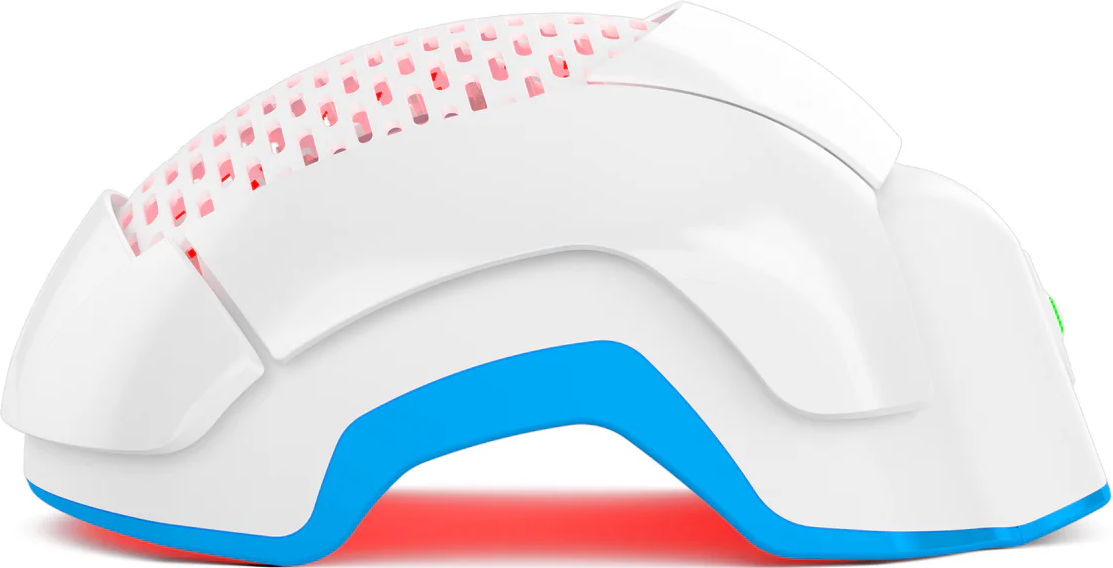
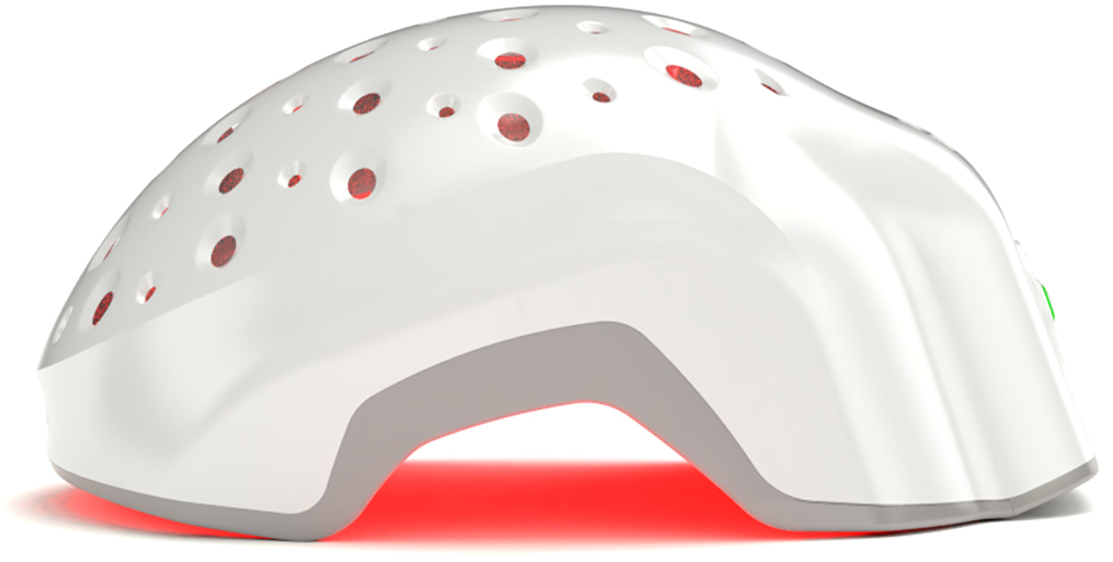
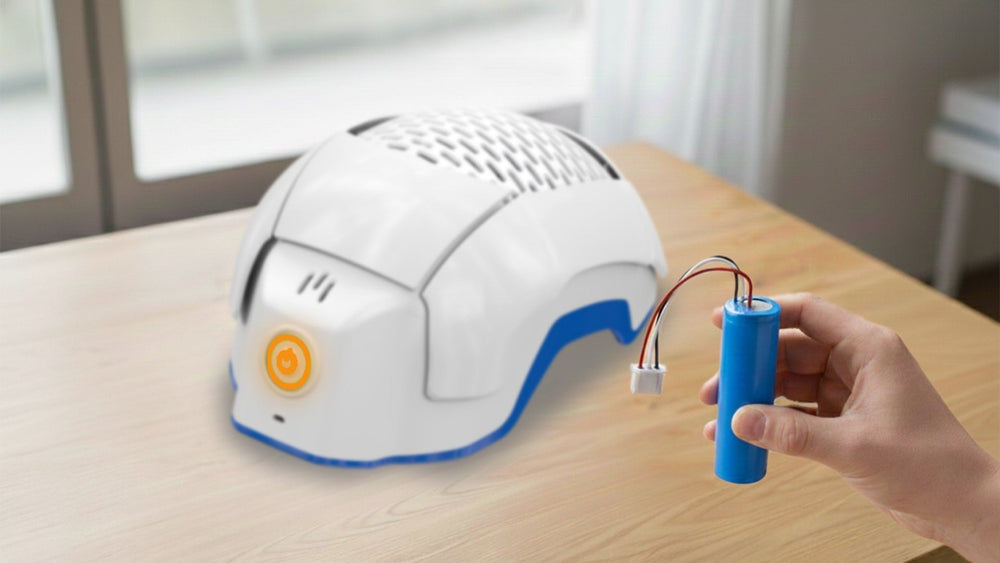
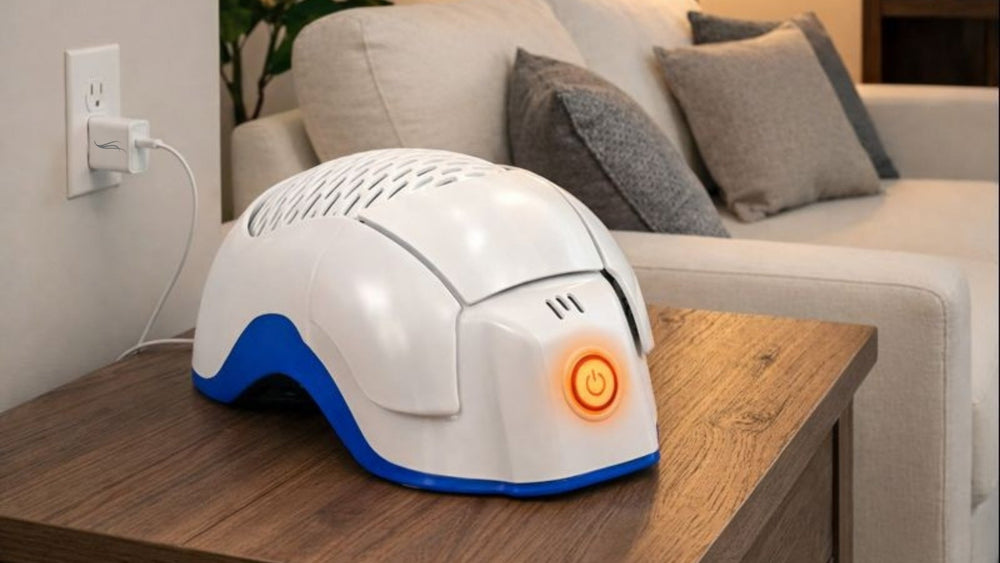
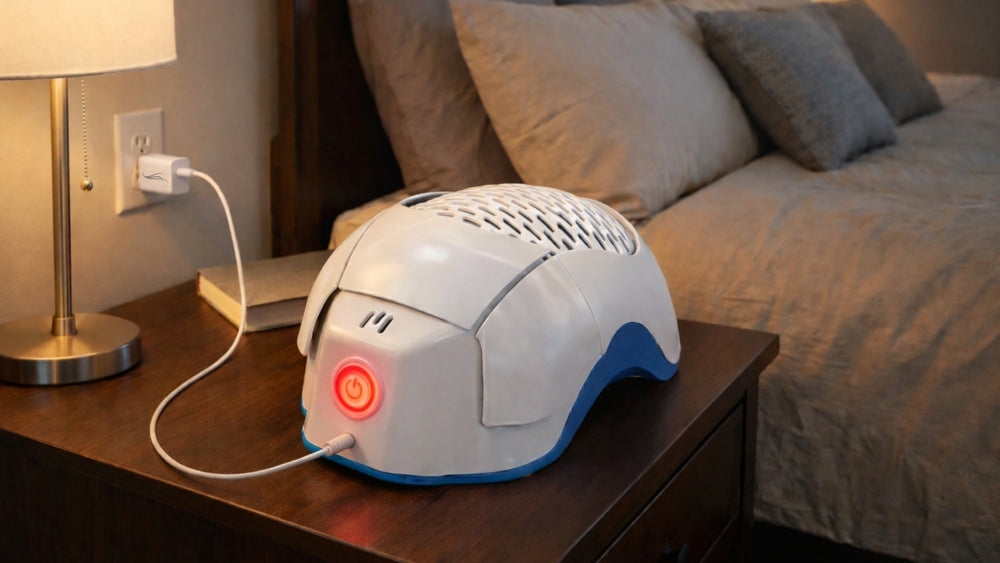
Theradome may matter if a person with RA also has androgenetic alopecia. That may show as crown thinning, part-line widening, gradual density loss, or a receding pattern, especially if telogen effluvium has made the thinning more visible.
The FDA 510(k) summary for Theradome LH80 PRO describes it as an over-the-counter therapeutic device intended to treat androgenetic alopecia and promote hair growth in specified male and female pattern classifications. The FDA’s live 510(k) database also lists K171775 for Theradome LH80 PRO.
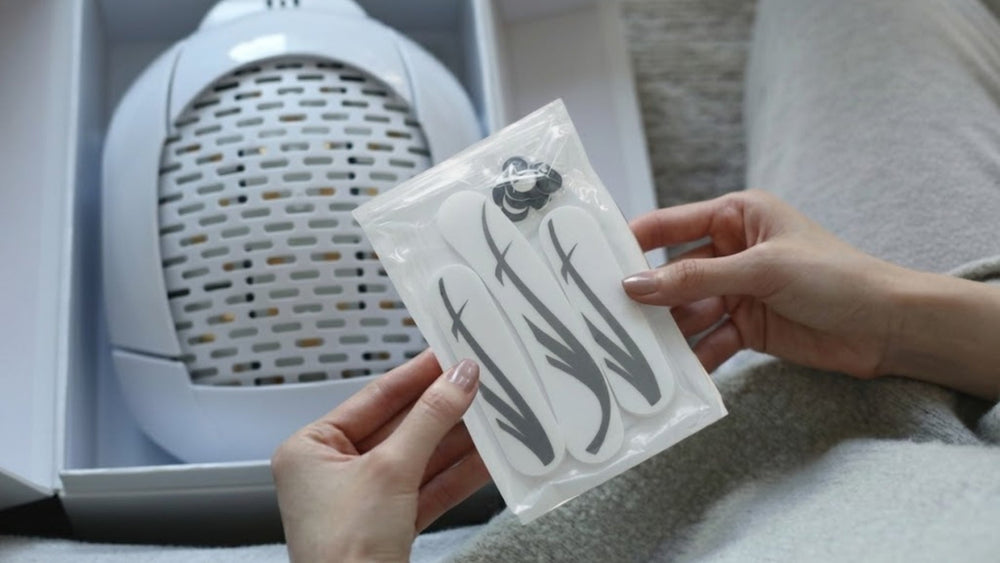
There is also a practical point. Theradome is hands-free. For someone with RA hand pain or limited dexterity, that may make consistent use easier.
Sometimes usability is not a small thing.
What Can You Do At Home While You Wait for Answers?
Reduce breakage while shedding is active
Use gentle detangling, reduce high heat, avoid harsh chemical services during active shedding, and avoid hairstyles that pull tightly. The American Academy of Dermatology says tight hairstyles can contribute to traction alopecia when they repeatedly pull on the hair.
A note on conditioner, because context matters: conditioner can help with slip and detangling when hair is shedding or fragile. If you use cosmetic hair fibers, follow the fiber product instructions, since some fiber routines work better without conditioner right before application.
Different situation. Different rule.
Use the wide-tooth comb. Be boring. Boring is sometimes protective.
Do not panic-wash or avoid washing entirely
Washing hair does not cause true follicle loss. It releases hairs that were already ready to shed.
During telogen effluvium, that can look shocking because more resting hairs shed around the same time. Avoiding washing can make the shed look worse later, and it may leave the scalp itchy or irritated.
Wash gently.
Keep a hair-loss timeline
Take photos in similar lighting every two to four weeks. Note when shedding started, recent flares, medication changes, dose shifts, infections, surgery, stress, diet changes, thyroid symptoms, menstrual changes, and supplements.
A messy phone note is fine.
You are not preparing a legal deposition. You are giving your clinician something better than “it started… maybe recently?”
Make hair care RA-hand friendly
If hand pain makes hair care difficult, choose tools that ask less from your joints: wide-grip brushes, pump bottles, lightweight dryers, easy-open caps, microfiber towels, looser styles, and simpler routines.
People talk about “self-care” as if it always comes with candles and soft lighting. Sometimes self-care is buying a bottle you can open without negotiating with your knuckles.
Skip the miracle shelf
Try not to buy five products before you know the cause. Hair loss is emotional enough without turning the bathroom into a tiny museum of regret.
Start with the pattern. Build the timeline. Review medication. Check targeted labs if appropriate. Get the scalp examined when signs point that way.
Then choose treatment.
Not the prettiest order. The safest one.
When Should You Call a Doctor About Hair Loss With RA?
Call your rheumatologist if hair loss started after medication changes
Call your rheumatologist if shedding began after starting or changing methotrexate, leflunomide, a biologic, a JAK inhibitor, or steroids. Also call if shedding appears with mouth sores, severe nausea, unusual bruising, fever, major fatigue, or other new symptoms.
Medication side effects should be reviewed by the person managing the medication.
Sounds obvious. But easy to forget when the hairbrush looks accusatory.
See a dermatologist for patchy, painful, inflamed, or persistent hair loss
See a dermatologist if hair loss is patchy, painful, burning, scaly, crusted, pustular, shiny, scar-like, rapidly worsening, affecting eyebrows or eyelashes, or lasting longer than expected.
The American Academy of Dermatology provides patient guidance on many forms of hair loss and notes that dermatologists diagnose and treat hair-loss conditions.
Ask about targeted blood work if shedding is diffuse
For diffuse shedding, ask your clinician what testing fits your symptoms. Possible checks may include CBC, ferritin, iron studies, thyroid tests, and selected nutrient labs. StatPearls lists CBC, iron studies, ferritin, serum iron, total iron binding capacity, and thyroid testing as possible investigations in alopecia evaluation.
Do not demand every test because we mentioned it.
Ask what makes sense.
What to bring to the appointment
Bring your medication list, doses, start dates, supplement list, photos, flare timeline, recent illness history, recent surgeries, scalp symptoms, menstrual changes, postpartum status if relevant, and any labs you already have.
Basically, bring the breadcrumbs.
The clinician still has to interpret them, but at least they are not starting in the dark.
Myths About Rheumatoid Arthritis and Hair Loss
Myth 1: RA always causes hair loss
No. RA can be linked to hair loss, but it is not usually a simple direct cause. Medications, telogen effluvium, alopecia areata, anemia, thyroid disease, scalp conditions, traction, and pattern hair loss can all be involved.
The label “RA” is not enough.
The pattern matters.
Myth 2: Hair loss means your RA medication is dangerous
Not necessarily. Some RA medications can contribute to shedding in some people, but they can also protect joints and reduce disease activity.
NHS advises speaking with a doctor if methotrexate-related hair loss bothers you, because the clinician may adjust the dose or suggest another medicine.
Side effects deserve attention. They do not automatically mean the medication is wrong.
Myth 3: Biotin fixes RA hair loss
Usually, no. Biotin deficiency can affect hair, but routine biotin supplementation is not well supported for most hair loss. A 2024 review found limited evidence for biotin in people without deficiency and noted concerns about lab-test interference.
Biotin is not evil.
It is just wildly overpromoted.
Myth 4: LPT treats every kind of RA-related shedding
Not quite. Laser Phototherapy has its strongest evidence in androgenetic alopecia. Light-based therapies have been studied in other hair-loss settings, including alopecia areata, but the evidence is more mixed, smaller, and less settled than the pattern hair loss evidence.
So yes… LPT may be worth discussing when pattern thinning is present, and its role in other hair-loss causes should be handled by diagnosis and clinician guidance.
Myth 5: If hair is shedding, follicles are dead
Not usually. Telogen effluvium is nonscarring, which means the follicles are generally preserved. Many cases improve once the trigger is addressed.
But scarring alopecia is different. The CMAJ review on primary cicatricial alopecia explains that these conditions can permanently destroy follicles.
So do not panic.
Also do not ignore red flags.
So, What Is the Most Sensible Next Step?
If you have RA and your hair is falling out, start with the pattern and timing.
Is it diffuse shedding? Patchy loss? Widening part? Crown thinning? Breakage? Scalp pain? Did it start after a medication change, flare, fever, surgery, steroid shift, weight loss, postpartum change, or stressful season?
That is a long list. Sorry.
But the right treatment depends on the right category. Methotrexate shedding is not alopecia areata. Alopecia areata is not iron deficiency. Pattern hair loss is not scarring alopecia.
And back to the first point: RA may be connected, but the hair-loss type decides the plan.
The simple RA hair-loss checklist
Use this before your appointment:
- Did shedding begin after a new RA medication or dose change?
- Was there a flare, infection, fever, surgery, postpartum shift, major stress, or weight change one to six months earlier?
- Is the hair loss diffuse, patchy, patterned, or mostly breakage?
- Any scalp pain, burning, redness, crusting, scaling, pustules, or shiny patches?
- Any fatigue, heavy periods, cold intolerance, constipation, weight change, or palpitations?
- Any family history of pattern hair loss?
- Any new supplements, especially high-dose biotin?
- Do you have photos from before the shedding started?
Bring the list. Even if it is ugly.
Conclusion
Rheumatoid arthritis can be connected to hair loss, but the cause is usually more specific than “RA did it.” Medication effects, telogen effluvium, alopecia areata, anemia, thyroid disease, scalp conditions, traction, and pattern thinning all point to different next steps.
Start with the pattern. Build the timeline. Speak with your rheumatologist before changing medication, and see a dermatologist if loss is patchy, painful, inflamed, persistent, or unclear.
If the diagnosis is androgenetic alopecia or pattern thinning, FDA-cleared Laser Phototherapy may belong in the plan. If the cause is something else, treat that first.
Hair can feel personal. But the plan should still be precise.