







Most men’s scalp hair grows about 0.35 millimeters per day, or close to 1 centimeter per month. Some men grow a little faster, some a little slower, because hair growth is biology, not a train schedule. A human phototrichogram study reported an average growth rate of 0.35 ± 0.03 mm per day in men.
How long your hair can become depends mostly on how long each follicle stays in the anagen phase, the active growth phase. Scalp anagen is often described as lasting around 2 to 8 years, while catagen and telogen are much shorter parts of the hair cycle.
For curly hair, the answer can feel annoying. Your hair may be growing normally at the scalp, but the curls can make that new length look shorter than it really is.
Tiny betrayal, honestly.
We’ll keep the question simple in this article: how fast male hair grows, what sets its possible length, why curly hair can look stuck, and when “slow growth” may actually be breakage or hair loss.
How Long Does Male Hair Usually Take to Grow?
|
Question |
Practical answer |
The catch |
|
How much does male hair grow in a month? |
About 1 centimeter for many men |
Individual growth varies |
|
How long does 1 inch take? |
Roughly 2 to 3 months |
Trims and breakage can stretch the timeline |
|
Does curly hair grow more slowly? |
Not necessarily |
It may look shorter because of shrinkage |
|
How long can a man’s hair become? |
There is no single male maximum |
Anagen duration and retained length matter |
|
Does cutting make hair grow faster? |
No |
It may improve damaged ends, not root growth |
|
Why does hair look stuck? |
Shrinkage, trimming, breakage, shedding, or hair loss |
A recent change needs closer attention |
These estimates describe hair produced at the root. They do not guarantee that every millimeter will remain on the ends, especially if the hair is breaking, being trimmed often, or curling back toward the scalp.
How Fast Does Male Scalp Hair Grow, and How Long Does Curly Hair Take?
What is the average male hair-growth rate?
A strong working estimate is 0.35 mm per day.
That number comes from phototrichogram research, where a small scalp area is measured over time. In one study, men had an average scalp-hair growth rate of 0.35 ± 0.03 mm/day, while women measured slightly higher at 0.38 ± 0.03 mm/day. Another phototrichogram study of normal adult men reported the same average vertex growth rate of 0.35 ± 0.03 mm/day.
At that pace, male scalp hair grows approximately:
- 2.45 mm per week
- 10.5 mm in 30 days
- 1.05 cm in 30 days
- 0.41 inches in 30 days
- About 5 inches per year
So yes, the old “half an inch per month” phrase is close enough for casual talk. But it is a rounded estimate, not a rule carved into the scalp by tiny follicle accountants.
Some men will be below it. Some will be above it. Even different areas of the same scalp can behave differently, especially when hair loss starts affecting certain regions.
How long will one, three, six, or twelve inches take?
Using the 0.35 mm/day average, the rough production timeline looks like this:
|
New hair length |
Approximate time |
|
1 inch |
About 2.4 months |
|
3 inches |
About 7 months |
|
6 inches |
About 14 to 15 months |
|
12 inches |
About 29 months |
|
18 inches |
About 43 months |
|
24 inches |
About 58 months |
This is only the time needed to produce the hair fiber. It does not include trims, breakage, shedding, or curly-hair shrinkage.
For example, if your hair grows about 1 centimeter per month but you trim 2 centimeters every three months, your visible gain will be much smaller than your actual production. And if the ends are snapping, the root may be doing its job while the length keeps disappearing like socks in a dryer.
A rough growing-out timeline from a close buzz cut may look like this:
|
Goal |
Rough timeline |
|
Visible curls |
3 to 8 months |
|
Short twists or starter braids |
6 to 12 months |
|
Ear-length look |
12 to 24 months |
|
Small tied section or top knot |
12 to 24 months |
|
Chin-length look |
20 to 36 months |
|
Shoulder-length look |
30 to 48 months or longer |
Hairstyle timelines depend on starting length, curl pattern, density, trimming, breakage, and how much length a style needs before it works.
One man’s “finally enough for a bun” is another man’s “absolutely not, this thing is still a puffball.”
Why may curly hair take longer to look long?

Curly hair can grow at the root while looking like it is taking its sweet time.
The simple reason: curls bend. A curved strand does not hang straight down the way a straight strand does. So the true length of the hair fiber may be greater than the length you see when the hair is dry and resting.
This is why curly hair often looks longer when stretched, wet, blow-dried, or styled under tension. Then it dries, contracts, and suddenly the mirror acts like nothing happened. Rude, but normal.
The American Academy of Dermatology notes that curly or tightly coiled hair can be more prone to dryness and breakage, which also affects how much length is retained. So with curly hair, the question is not only, “How fast is it growing?” It is also, “How much of that growth is showing, and how much is staying intact?”
So, how long does it take for curly hair to grow for a male?
Usually about the same basic production timeline as other scalp hair, around 1 centimeter per month. But visible length may lag because of shrinkage, styling, and breakage.
What can an average growth rate not tell you?
An average growth rate cannot tell you your personal maximum length.
It also cannot tell you whether your ends are breaking, whether your temples are thinning, whether you need treatment, or whether your curls are simply hiding progress.
Speed tells us how quickly hair is produced. It does not tell us how many years each follicle will keep producing the same strand.
What Is Terminal Length, and What Sets a Man’s Maximum Hair Length?
Is terminal hair the same as terminal length?
No.
Terminal hair is a type of hair. It is generally thicker, longer, and more pigmented than fine vellus hair. Most adult scalp hair is terminal hair. Beard hair after puberty is terminal hair too.
Terminal length is different. It refers to the approximate length a person’s hair can reach before the strand sheds, breaks, gets trimmed, or stops accumulating more visible length.
People mix those up because the word “terminal” sounds like final boss language.
But a newly growing terminal hair can be tiny. A terminal hair is not necessarily a hair that has reached its final length.
How does the hair-growth cycle control length?
Your scalp follicles do not make one endless strand forever. They cycle through phases.
Anagen
Anagen is the active growth phase. This is when the follicle produces the hair fiber. Scalp anagen commonly lasts for years, often described as about 2 to 8 years, though estimates vary by source, method, and individual biology.
This phase is the big one for length.
If a follicle stays in anagen for longer, that hair has more time to grow. If anagen is shorter, the strand sheds sooner and may never become very long.
Catagen
Catagen is the transition phase. Growth stops, and the lower part of the follicle begins to shrink back. It usually lasts only a few weeks.
Telogen
Telogen is the resting phase. The hair no longer grows, but it may remain in place for a while before shedding. A new cycle later begins beneath it.
A useful detail: scalp follicles do not all cycle together. If they did, everyone would shed most of their hair at once, which would be a deeply uncivilized design choice.
Instead, follicles cycle independently. This is why you can have long hairs, shorter new hairs, and shedding hairs on the same scalp at the same time.
Can you calculate your genetic hair limit?
You can estimate what a strand might produce over time. You cannot calculate your exact genetic maximum from a simple formula.
A basic mathematical illustration is:
|
Anagen duration |
Approximate hair produced at 0.35 mm/day |
|
2 years |
About 25.6 cm or 10 inches |
|
3 years |
About 38.3 cm or 15 inches |
|
5 years |
About 63.9 cm or 25 inches |
|
7 years |
About 89.4 cm or 35 inches |
This is a mathematical illustration, not a biological prediction.
It assumes the hair grows at the same rate every day. It assumes no trims. No breakage. No illness. No hair loss. No chemical damage. No uneven follicle behavior. Basically, it assumes hair lives in a spreadsheet.
It does not.
So, the longer a follicle stays in anagen, the more length it can potentially produce.
But your personal retained length also depends on whether that fiber survives. A man with a long anagen phase can still struggle to grow visibly long hair if the ends keep breaking. Another man with excellent retention may appear to grow hair quickly because less of it is being lost.
How much do genetics, sex, age, and family history matter?
Genetics influence hair characteristics, including texture, thickness, density, hair-cycle behavior, and susceptibility to patterned hair loss. But genetics should not be treated like a tiny receipt that lists your exact future hair length.
Family history may offer clues. If many relatives can grow very long hair, that may suggest longer growth phases or good retained length in the family. If patterned hair loss is common, that may also matter. Still, family history cannot tell you your exact terminal length.
There is also no reliable rule that men’s scalp hair has one fixed maximum. Many men cut their hair before they ever test how long it can become. So culture and grooming habits can make long male hair seem more biologically unusual than it really is.
Age can change hair too. Hair may become finer, drier, grayer, or less dense over time. But gray hair can still grow. Pigment loss does not automatically mean the follicle has shut down.
Why are some hairs shorter than their neighbours?
Because scalp follicles are not synchronized.
A short hair may be new. It may have started growing after an older strand shed. It may come from a naturally shorter-cycling follicle. Or, in some cases, it may be miniaturizing because of androgenetic alopecia.
One short hair by itself says very little.
Look for the pattern.
Why Can Curly Hair Look Stuck Even When It Is Still Growing?
Curly hair can hold a lot of length in a compact shape.
A straight strand tends to show more of its length downward. A curled strand bends back toward itself. So the stretched length may be much longer than the dry visible length.
That is the everyday reason a man can grow hair for months and still feel like the mirror is being petty.
Shrinkage is not automatically a problem. It is often just how textured hair behaves. But it can make progress harder to judge, especially if you only look at dry length.
A better approach is to track two things:
- Resting length: how the hair looks when dry and unstretched
- Stretched length: how long the strand is when gently extended
That second number is usually more useful for tracking true growth.
Is breakage cancelling out the growth at your roots?
Maybe.
If the root produces about 1 centimeter per month but the ends lose about 1 centimeter through breakage, the hair can look stuck. The follicle is not asleep. The length is just being removed from the other end.
Common breakage triggers include:
- Excessive heat
- Bleaching or relaxing
- Rough towel drying
- Tight braids, buns, loc maintenance, or ponytails
- Heavy extensions
- Aggressive brushing or combing
- Detangling without enough slip
- Repeated friction from hats, collars, helmets, or bedding
- Split ends and knots that are left too long
The American Academy of Dermatology recommends gentle handling, reduced heat exposure, careful detangling, and avoiding styles that pull tightly because these habits can help reduce damage and hair loss related to styling.
For curly or tightly coiled hair, this matters even more because dryness and breakage are common complaints. Dermatologists specifically advise using conditioner, detangling gently, and choosing habits that reduce friction and snapping.
How should a man measure curly-hair growth?
Do not measure every day.
Please.
At 0.35 mm/day, one week of growth is only about 2.45 mm. A different camera angle, stronger pull, humid morning, or slightly flattened curl can erase that difference. Then you end up squinting at your phone like a detective in a very low-budget hair investigation.
Use a calmer method:
- Choose one small section of hair.
- Measure it in the same condition each time, preferably dry and detangled.
- Gently stretch the strand without yanking.
- Use the same ruler or tape.
- Take a clear photo from the same angle.
- Repeat every 6 to 8 weeks.
- Take whole-head photos every 8 to 12 weeks.
- Record trims, heat use, chemical treatments, tight styles, shedding, and scalp irritation.
Consistent photographs matter because hair growth is slow. A month can be hard to judge by memory. Photos keep the argument honest.
Especially when your bathroom lighting has decided to become your enemy.
Have You Reached Terminal Length, or Is Something Else Affecting Your Progress?
Before assuming you hit your natural limit, check what kind of “stuck” you are seeing.
|
What you notice |
More likely explanation |
Sensible next step |
|
Stretched length increases, but dry length barely changes |
Shrinkage |
Keep tracking stretched length |
|
Short broken pieces appear often |
Breakage |
Reduce heat, friction, tension, and rough handling |
|
You trim often and see little gain |
Length is being removed |
Track how much is cut |
|
Sudden shedding after illness, surgery, weight loss, or major stress |
Possible telogen shedding |
Monitor timing and seek care if persistent |
|
Temples recede or crown looks thinner |
Possible androgenetic alopecia |
See a dermatologist |
|
Pain, burning, patches, heavy scale, or shiny areas |
Possible scalp disorder |
Seek medical care promptly |
Sometimes the answer is boring. You trimmed more than you realized.
Sometimes it is practical. The ends are snapping.
And sometimes it is medical.
Is it shrinkage, breakage, shedding, or trimming?
If stretched length is increasing but dry length looks the same, shrinkage is likely part of the issue.
If you see short broken pieces, frayed ends, or rough tangly tips, breakage may be stealing the new length.
If you see more whole hairs shedding than usual, especially after illness, surgery, substantial weight loss, or a new medication, shedding may be involved. The AAD notes that excessive shedding can occur after stressors such as childbirth, illness, weight loss, and fever, often with a delay.
If you are trimming regularly, count the trims. A small “dusting” here and there still removes fiber.
The point is not to panic over every strand. The point is to stop calling every plateau “bad genetics.”
Could shorter hairs indicate androgenetic alopecia?
Yes, especially when the shorter hairs follow a pattern.
Androgenetic alopecia, often called male pattern hair loss, can make susceptible follicles produce thinner, shorter hairs over time. This is called miniaturization. The temples, front, and crown are common areas, while the back and sides are often less affected (American Academy of Dermatology Association, 2022b).
Signs to watch for:
- Gradual temple recession
- A hairline moving back
- Crown thinning
- More scalp showing under light
- Shorter, finer hairs in a pattern
- Less density even without dramatic shedding
This is different from a healthy curl looking shorter because it shrinks. It is also different from damaged ends breaking off.
If the pattern is changing, take photos of the hairline and crown every month or two. Then speak with a board-certified dermatologist. Earlier evaluation is usually more useful than waiting until the change is obvious to everyone except the bathroom mirror.
When should slow-looking growth be checked by a professional?
Consider a dermatologist if you notice:
- Progressive temple recession
- Crown thinning
- Sudden or heavy shedding
- Smooth patches
- Many broken hairs in one area
- Scalp pain, burning, or tenderness
- Pustules, crusting, or heavy scale
- Shiny bald areas
- Loss of visible follicle openings
- Hair loss after a new medication
- Hair loss with illness, major weight loss, or other symptoms
A dermatologist may examine the pattern, ask about timing, review medications and health changes, inspect the scalp, and use tools such as trichoscopy or targeted lab testing when needed.
A clinician can often help identify whether the issue is shedding, breakage, androgenetic alopecia, inflammation, infection, or another scalp condition.
What they usually cannot do is measure your exact lifetime terminal length in one visit.
What Can Help You Keep More of the Length You Grow?
Which washing and detangling habits reduce unnecessary damage?
Think of this in two parts.
The scalp produces the hair. The shaft has to survive.
Shampoo frequency should depend on your scalp and hair. Sweat, oil, dandruff, buildup, hairstyle, and texture all matter. Some men need frequent cleansing. Others with curly or coily hair may do better with less frequent washing and more conditioning. The right schedule is the one that keeps the scalp comfortable and the hair manageable.
When washing, focus shampoo on the scalp. Do not pile the lengths into a rough knot and scrub like the hair owes you rent.
Conditioner can help reduce friction and improve slip during detangling. For curly hair, that can be the difference between gentle separation and a sink full of tiny broken pieces. Dermatologists often advise combing thick or curly hair while conditioner is still in the hair, because that can reduce breakage during handling.
Practical habits that help:
- Detangle in sections.
- Start near the ends, then move upward.
- Use fingers or a wide-tooth comb if that suits your texture.
- Add conditioner or detangler for slip.
- Avoid ripping through knots.
- Blot or squeeze water out instead of rubbing hard with a towel.
- Use less heat where possible.
- Avoid styles that feel painful or pull tightly.
Do trims, protective styles, heat, and chemicals affect length?
Yes. Mostly through retention.
Trims do not make roots grow faster. A classic controlled study found that shaving did not increase hair growth rate, thickness, or total hair produced. Cutting can still help if the ends are split, rough, or tangling so badly that they keep snapping.
Protective styles can help by reducing daily manipulation. But a style stops being protective when it pulls, hurts, creates bumps, or thins the hairline. The AAD warns that tight styles can contribute to traction alopecia, and that early signs include broken hairs, thinning around the hairline, and scalp symptoms such as pain or stinging.
Heat can make hair easier to shape, but too much heat can weaken the shaft. Lower settings, less frequent use, and shorter contact time are safer choices than turning every styling session into a small domestic furnace.
Chemical processing can also affect retention. Bleach, relaxers, perms, and repeated processing can weaken hair and increase breakage. That does not mean every man must avoid all styling forever. It means the oldest ends need a little respect. They have been through things.
Can food or supplements increase terminal length?
Good nutrition supports normal hair production. Severe calorie restriction, inadequate protein, rapid weight loss, and true nutrient deficiencies can contribute to shedding or poor hair quality.
But more nutrients do not automatically mean faster hair.
If a deficiency is present, correcting it may help the body return toward normal function. If there is no deficiency, adding more tablets is unlikely to rewrite your anagen phase. Iron, vitamin D, zinc, and protein all have roles in health, but supplementation should be based on real need, medical history, symptoms, and testing where appropriate.
This is where hair advice online gets slippery. “Nutrients matter” is true. “Everyone needs a hair-growth stack” is not.
When Can Treatment Help, and Where Does Laser Phototherapy Fit?
Does normally growing hair need treatment?
No.
Healthy hair growing around 1 centimeter per month does not need treatment simply because someone online promised three times that rate.
Curly-hair shrinkage is not male pattern hair loss. Broken ends are not a follicle disease. And a natural length plateau is not automatically a medical emergency.
Treatment becomes relevant when there is a treatable reason hair is thinning, shedding, miniaturizing, or failing to retain length.
Which treatments have evidence for male androgenetic alopecia?
For male androgenetic alopecia, the AAD lists several treatment options, including minoxidil, finasteride, laser therapy, platelet-rich plasma, and hair transplantation depending on the person’s situation.
Minoxidil can help some men with male pattern hair loss. It is usually applied to the scalp and needs continued use to maintain results. Possible downsides include irritation, dryness, itching, and unwanted hair growth if it spreads to nearby skin.
Finasteride is an oral prescription medication for male pattern hair loss. It reduces DHT activity by inhibiting 5-alpha-reductase and can help slow progression in some men. Possible adverse effects should be discussed with a qualified clinician before use.
Neither minoxidil nor finasteride is a fix for shrinkage, rough detangling, or snapped ends.
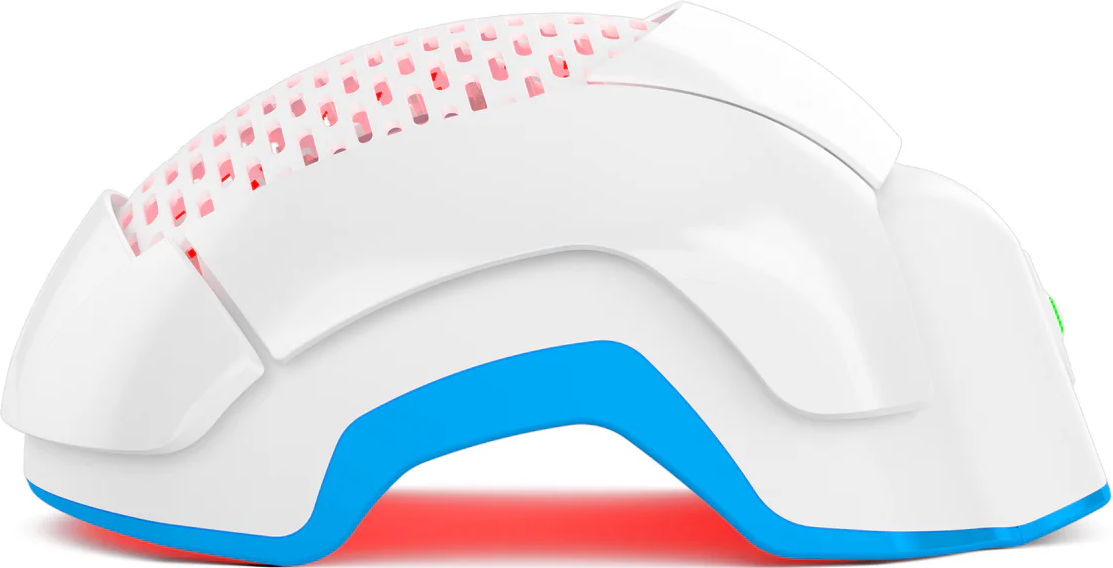
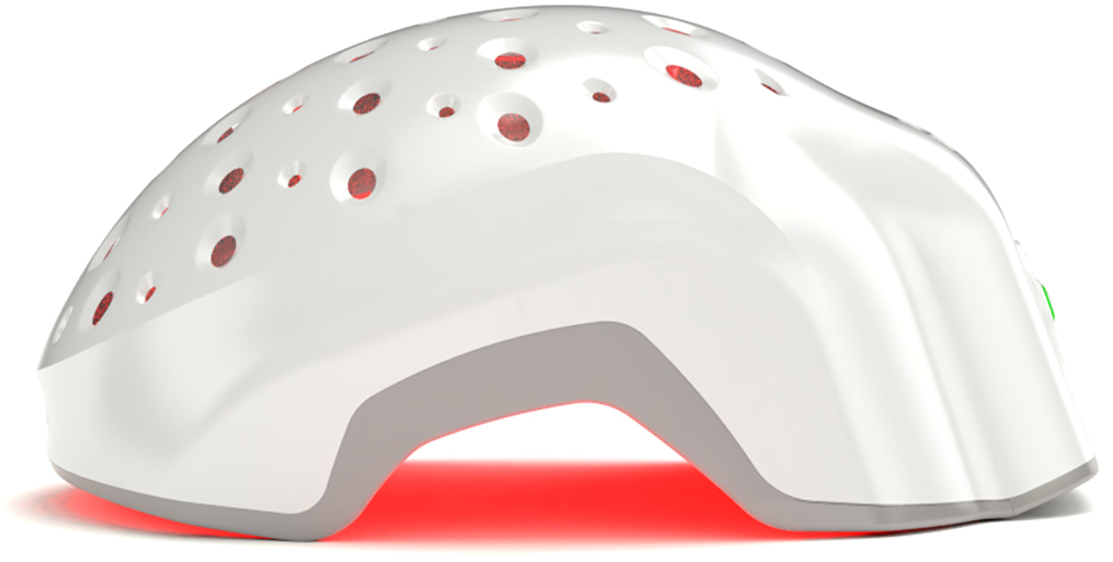
What about LPT and Theradome?
Laser Phototherapy (LPT) is relevant when the concern is androgenetic alopecia.
Published research often refers to this category as low-level laser therapy, low-level light therapy, or photobiomodulation. Reviews report that light-based treatment can improve hair counts or density in some people with androgenetic alopecia, though device design, wavelength, dose, schedule, and study length vary.
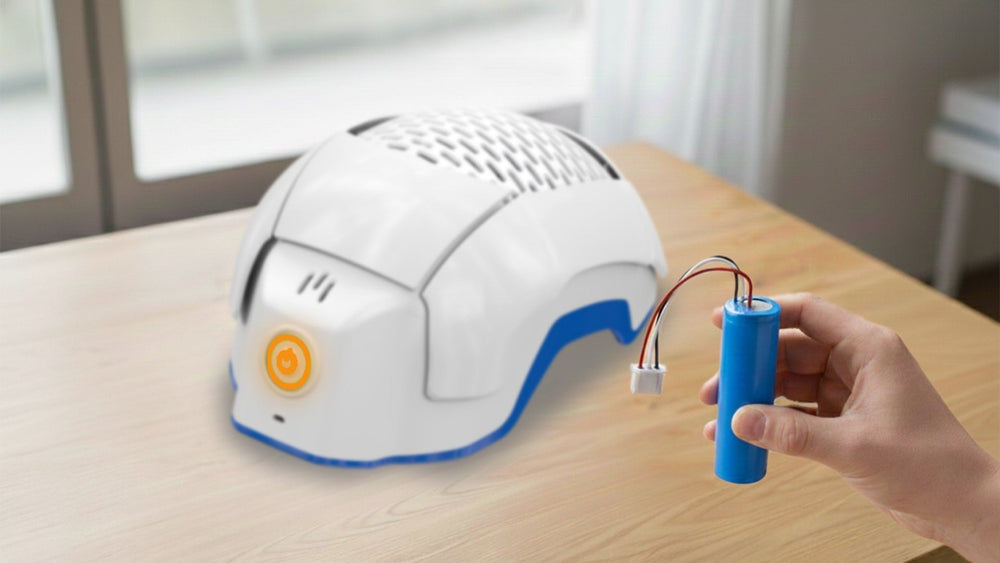
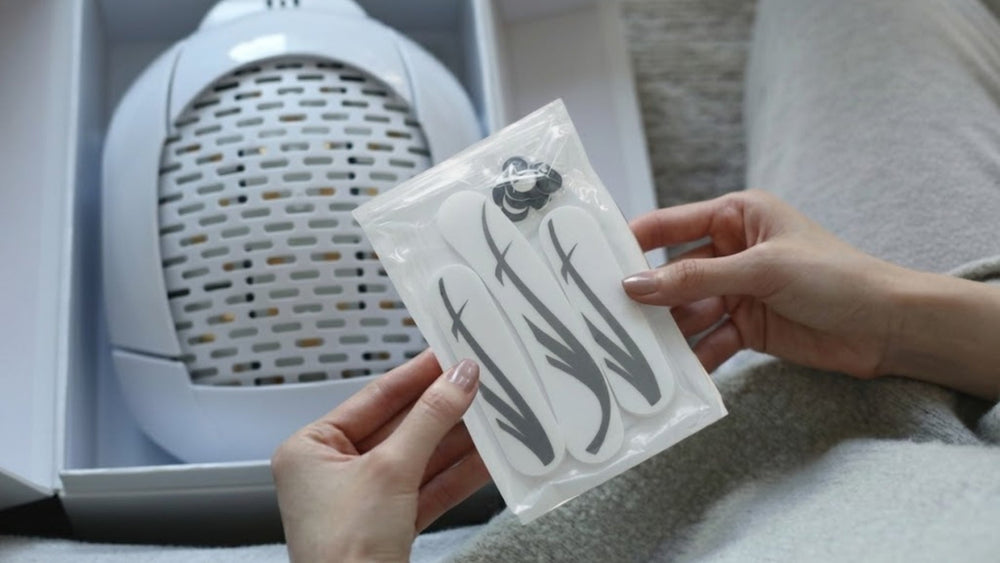
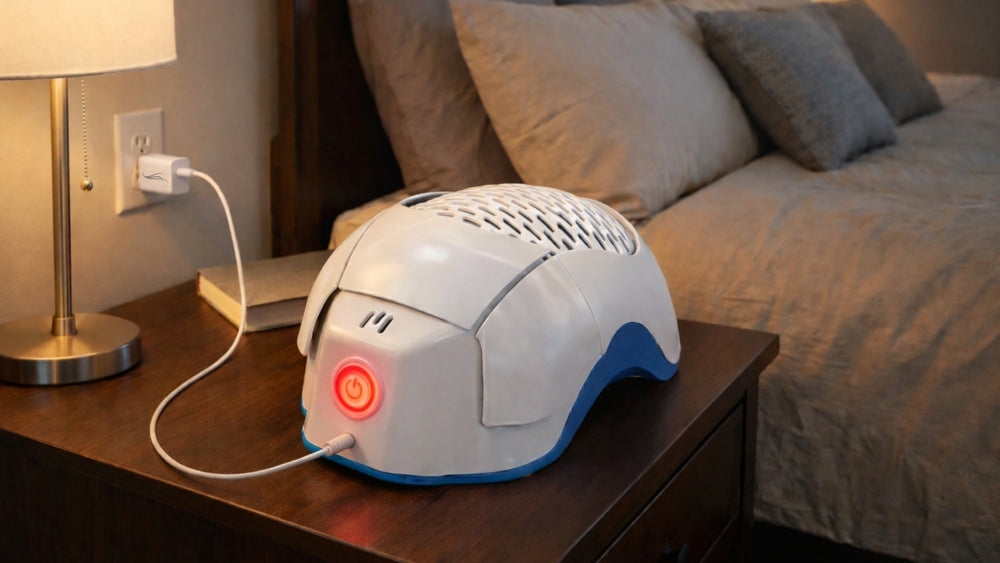
Theradome is an FDA-cleared wearable LPT device for specified androgenetic alopecia indications. It is an over-the-counter device intended to treat androgenetic alopecia and promote hair growth in males with Norwood-Hamilton IIa to V patterns and females within specified Ludwig-Savin classifications, with Fitzpatrick skin types I to IV (U.S. Food and Drug Administration, 2018).
So if a man’s “slow growth” is really normal curly-hair shrinkage, LPT is not the answer to that specific problem.
If his progress is being limited by breakage, he needs to protect the hair shaft.
If the issue is androgenetic alopecia, with thinning, miniaturization, or patterned loss, then evidence-based treatment options become relevant. LPT may be one of those options for appropriate candidates.
A simple way to say it: know the problem before choosing the tool.
Conclusion
Male scalp hair commonly grows around 0.35 mm per day, or close to 1 centimeter per month. How long it can become depends mostly on anagen duration, retained length, and whether breakage or hair loss is interfering.
Curly hair can make progress harder to see because it shrinks and bends. That does not mean it is not growing.
Track stretched length over time. Photograph consistently. Record trims. Treat the ends kindly. And if your hairline, crown, shedding pattern, or scalp comfort changes, get medical guidance early.
The goal is not to force healthy hair past an imaginary number. It is to understand what your follicles are producing, protect what you have grown, and respond wisely when the pattern changes.