






Nitric oxide plays a real role in human cell signaling, including the biology of hair follicles. It is also discussed in Laser Phototherapy because light may interact with mitochondria, ATP production, and nitric-oxide-related signaling inside living follicle tissue.
That part matters.
But nitric oxide is not a proven standalone hair-loss treatment. And thinning hair does not automatically mean your scalp needs beetroot juice, arginine powder, citrulline capsules, or a shiny “NO booster” with gym-bro confidence and very little human hair data.
So nitric oxide may be part of how healthy follicle cells communicate and respond to Laser Phototherapy, but simply increasing nitric oxide has not been shown to reliably regrow human scalp hair.
What Has Actually Been Shown?
|
Question |
Current answer |
Evidence strength |
|
Do human follicle cells produce nitric oxide? |
Yes. Cultured dermal papilla cells have produced measurable nitric oxide. |
Human-cell research |
|
Does DHT affect nitric oxide in follicle cells? |
Yes, in one cultured-cell study. |
Human-cell research |
|
Does low nitric oxide cause common hair loss? |
Not established. |
No validated clinical diagnosis |
|
Does raising nitric oxide regrow scalp hair? |
Not proven in adequate human trials. |
Insufficient human treatment evidence |
|
Does Laser Phototherapy support pattern hair loss? |
Several controlled trials and reviews support benefit in androgenetic alopecia. |
Human clinical evidence |
|
Is nitric oxide the only reason LPT works? |
No. It is one proposed pathway within a broader cellular response. |
Mechanistic model |
What Is Nitric Oxide?
Nitric oxide, often shortened to NO, is a small gas made naturally inside the body. Cells use it as a signaling molecule. It helps regulate several processes, including blood-vessel tone, immune activity, nerve signaling, inflammation, protein behavior, and mitochondrial function.
In 1998, Robert F. Furchgott, Louis J. Ignarro, and Ferid Murad received the Nobel Prize in Physiology or Medicine for research showing that nitric oxide acts as a signaling molecule in the cardiovascular system. A gas acting like a messenger sounded odd at first. Then the evidence became impossible to ignore.
That Nobel work established nitric oxide as biologically important.
It did not establish nitric oxide as a hair-growth treatment.
And that is where many claims get a little too excited for their own good.
The body makes nitric oxide through enzymes called nitric oxide synthases. These enzymes use the amino acid L-arginine to produce nitric oxide and L-citrulline. Reviews of nitric oxide synthase biology describe three main enzyme forms: neuronal NOS, inducible NOS, and endothelial NOS.
Nitric oxide can then affect cells through several routes, including cGMP signaling, protein modification, mitochondrial signaling, and inflammatory pathways. It is not a simple “good” or “bad” molecule.
At controlled levels, nitric oxide can support normal cell communication. In other settings, especially when inflammation and oxidative stress are involved, nitric oxide-related chemistry can contribute to tissue stress. Reviews on nitric oxide and peroxynitrite describe this two-sided role clearly.
What Does Nitric Oxide Do in Hair Follicles?

Human hair follicles are living mini-organs. Under the scalp, they contain dermal papilla cells, matrix cells, melanocytes, stem-cell regions, immune signals, and cycling follicle structures.
That living tissue matters.
The visible hair strand above the scalp is mostly keratinized fibre. It is not sitting there running mitochondrial calculations. The follicle below the skin is where biological signaling happens.
The strongest direct human-follicle evidence comes from a 2003 study by Wolf and colleagues. The researchers cultured human dermal papilla cells and found that these cells produced nitric oxide. They also detected endothelial nitric oxide synthase, or eNOS, in those cells.
That is important because dermal papilla cells help regulate follicle behavior, hair cycling, and hair production.
Then came the finding people are tempted to stretch.
When the researchers exposed the cultured cells to DHT, nitric oxide production increased roughly threefold. Testosterone did not produce the same effect in that experiment. The DHT-related response appeared to involve inducible nitric oxide synthase.
Threefold sounds huge.
It was huge as a measured cell-culture signal. It was not threefold more hair.
The study did not test a nitric oxide treatment. It did not measure scalp hair density. It did not show that raising nitric oxide blocks DHT, reverses follicle miniaturization, or restores pattern hair loss.
Nitric oxide is part of the follicle’s biological language, and DHT can affect that language in cultured dermal papilla cells. What that means clinically still needs care.
Androgenetic alopecia, often called male or female pattern hair loss, involves genetic susceptibility, androgen signaling, follicle miniaturization, and hair-cycle changes. DHT can shrink susceptible scalp follicles over time, even though androgens may stimulate hair in other areas, such as the beard.
Does Low Nitric Oxide Cause Hair Loss?
Low nitric oxide is not currently an accepted medical diagnosis for common hair loss.
There is no validated “nitric oxide deficiency hair loss” test. No established scalp target. No proven oral dose. No saliva-strip reading that tells you your follicles need more nitric oxide.
Some studies have reported differences in nitric-oxide-related or oxidative-stress markers in people with hair-loss conditions. For example, a 2021 study examined serum biomarkers in androgenetic alopecia and reported differences involving nitric oxide and oxidative-stress markers.
A serum marker does not tell us exactly what nitric oxide is doing inside one scalp follicle, beside one dermal papilla cell, at one stage of the hair cycle. It may reflect disease activity, tissue stress, inflammation, compensation, or something else sitting nearby in the biology.
Association is not the same as cause.
Can You Increase Nitric Oxide to Regrow Hair?
At this point, no oral supplement, food, exercise method, ordinary topical product, or prescription vasodilator has been proven to regrow human scalp hair by raising nitric oxide.
Several newer studies are interesting, but most are early-stage and use combination delivery systems.
A 2023 study tested a formulation combining minoxidil with a nitric oxide donor inside hyaluronic-acid liposomes. It reported favorable delivery and hair-related findings in cell and mouse models, but the treatment was not nitric oxide alone. It was minoxidil plus nitric oxide plus a specialized carrier system.
A 2025 study tested microneedles loaded with minoxidil and a nitric oxide donor. Again, this was not proof that a simple nitric oxide product regrows human hair. Microneedles, minoxidil, the donor chemistry, and the delivery material all matter.
That distinction is the whole point.
A research-grade delivery system is not the same thing as a supplement capsule or a scalp serum bought after midnight because the ad caught you in a vulnerable mood.
What about beetroot, arginine, and citrulline?
Beetroot and leafy greens can supply dietary nitrate. The body can convert nitrate and nitrite through pathways related to nitric oxide. L-arginine is used by nitric oxide synthase. L-citrulline can raise arginine availability in some settings.
These links are real.
But they are not proof of hair regrowth.
The NIH Office of Dietary Supplements discusses beetroot, arginine, citrulline, and related ingredients mainly in the context of exercise performance, not as proven treatments for androgenetic alopecia. It also notes that evidence for some of these performance uses is limited or mixed.
So healthy eating matters. Adequate protein matters. Correcting a true deficiency can matter. But beetroot juice has not been shown to reverse pattern hair loss.
A post-workout pump is not a follicle count.
How Does Minoxidil Relate to Nitric Oxide?
Minoxidil should not be reduced to a nitric oxide treatment. It is a medication with its own pharmacology and direct human evidence for androgenetic alopecia.
But the relationship is more nuanced than simply saying, “No connection.”
Minoxidil began as a vasodilator. It affects vascular smooth muscle, potassium channels, and several follicle-related pathways. A comprehensive review describes minoxidil as acting through multiple possible routes, including vasodilatory activity, anti-inflammatory effects, Wnt/β-catenin signaling, possible antiandrogenic activity, and changes in anagen and telogen timing.
Older work on minoxidil’s hair-growth mechanism also notes that, despite decades of use, its exact action on the hair follicle remains incompletely understood. Proposed effects include stimulation of cell proliferation and changes in vascular endothelial growth factor and prostaglandin synthesis.
Minoxidil may sit near nitric-oxide-related biology in the broader discussion of vascular and cellular signaling, but its proven role in hair loss does not prove that nitric oxide supplements or topical NO boosters regrow hair.
How Does Nitric Oxide Relate to Laser Phototherapy?
This is where nitric oxide becomes much more relevant.
Laser Phototherapy, or LPT, uses low-power red laser light to influence biological activity in hair-follicle tissue without cutting or intentionally heating the scalp. In the main photobiomodulation model, light reaches cells in the follicle area and interacts with mitochondrial chromophores, especially cytochrome c oxidase.
Mitochondria help produce ATP, the energy-carrying molecule cells use for many functions. When red or near-infrared light interacts with cytochrome c oxidase, researchers propose that it may alter nitric oxide binding or release, improve electron transport, support ATP production, and shift downstream cellular signaling.
That is the real cellular-rejuvenation connection.
Laser Phototherapy may support cellular energy and signaling in living follicle tissue, with nitric oxide involved as one part of that proposed response.
Light, mitochondria, ATP, and follicle activity
Follicle cells need energy to perform normal work: cycling, signaling, producing hair fibre, managing stress responses, and maintaining cellular activity. ATP is one of the core energy currencies involved in that work.
LPT is understood to deliver light energy that can interact with mitochondrial pathways. In photobiomodulation research, this has been linked to increased ATP production, nitric oxide changes, reactive oxygen species signaling, calcium signaling, and changes in gene expression.
Inside a viable follicle affected by androgenetic alopecia, that kind of support may help push cellular activity in a more favorable direction.
May.
That word matters. Because the mechanism is still being studied.
Human LPT trials usually measure hair density, terminal hair count, shaft thickness, photographs, satisfaction, and safety. They generally do not measure nitric oxide directly inside the follicle before and after treatment.
What human evidence supports LPT for pattern hair loss?
Several randomized or sham-controlled studies and reviews support low-level laser or light therapy for androgenetic alopecia.
A 2019 systematic review and meta-analysis found that low-level laser therapy significantly increased hair density compared with sham treatment in adult androgenetic alopecia.
Another systematic review and meta-analysis of FDA-cleared home-use low-level light and laser devices also reported significant improvement in hair density compared with sham treatment.
A broader meta-analysis of photobiomodulation for androgenetic alopecia found hair-density improvement in favor of treatment over control, although study designs, devices, and protocols varied.
So yes, LPT belongs in an evidence-based discussion of pattern hair loss.
But evidence does not mean every person responds in the same way. Device design, wavelength, dose, treatment time, consistency, diagnosis, and follicle viability all matter.
A follicle still capable of activity is very different from a follicle destroyed by scarring. No polite red laser can talk scar tissue into becoming a working follicle again.
Where Does Theradome Fit?
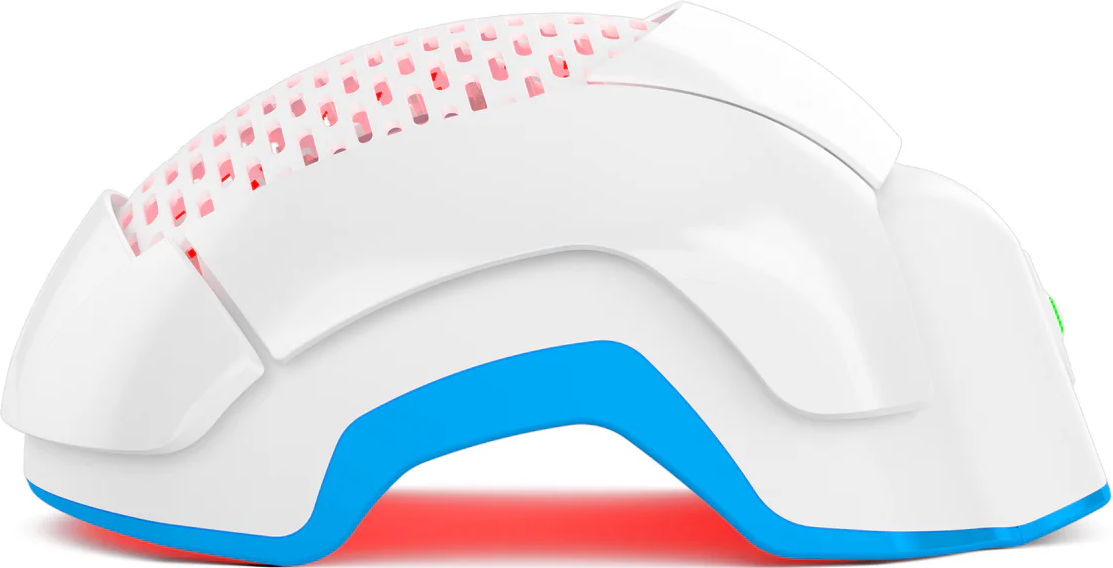
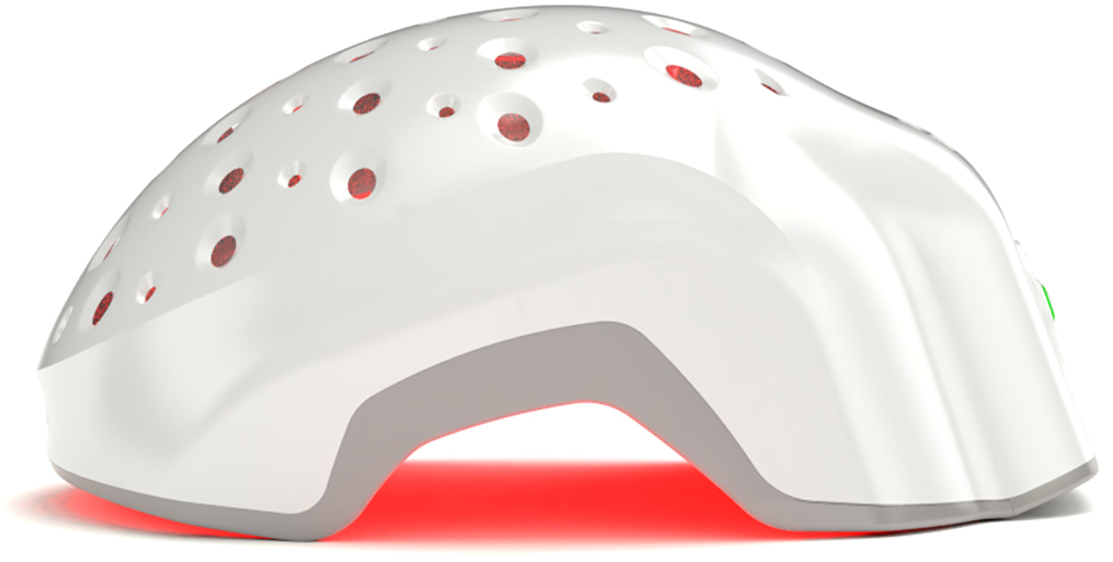
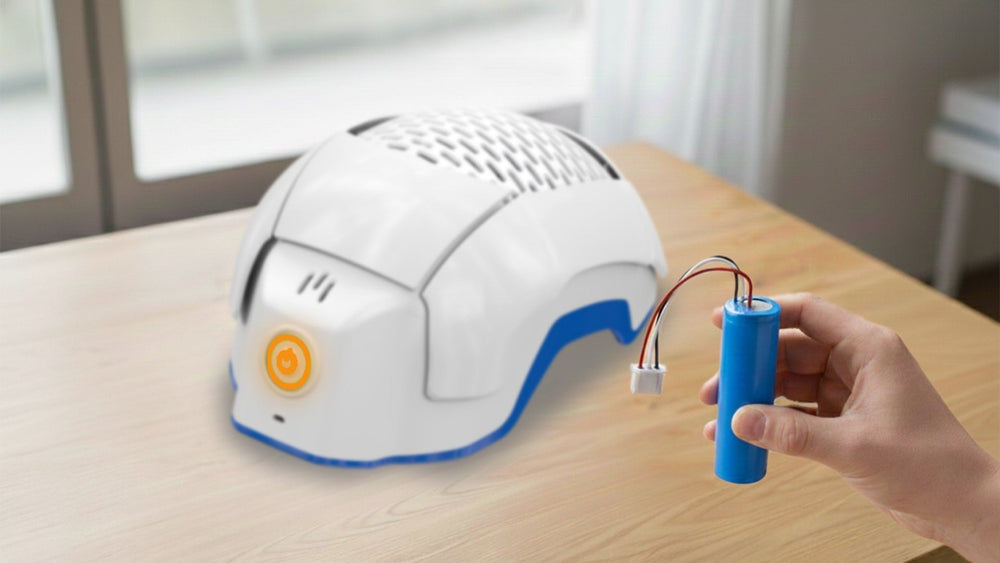
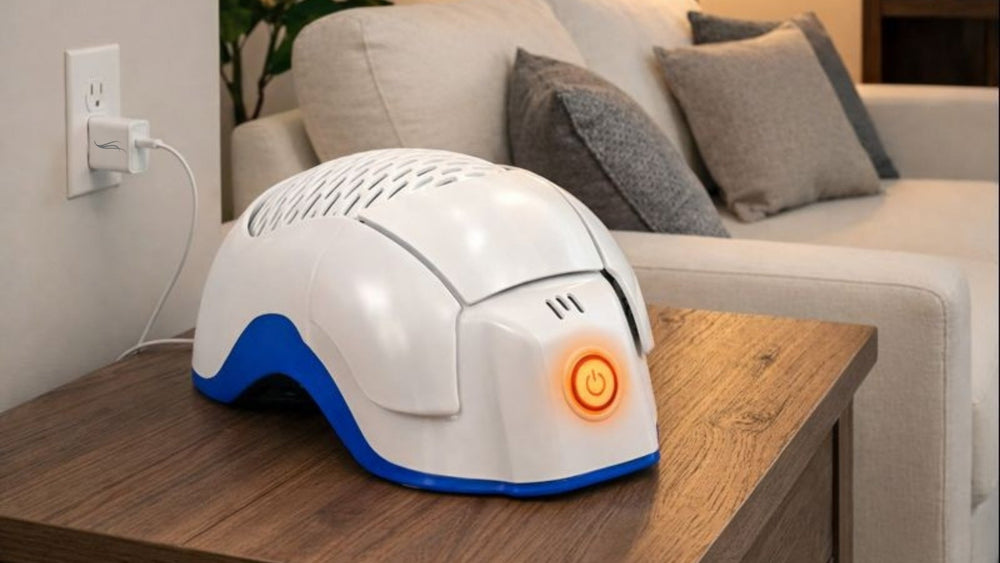
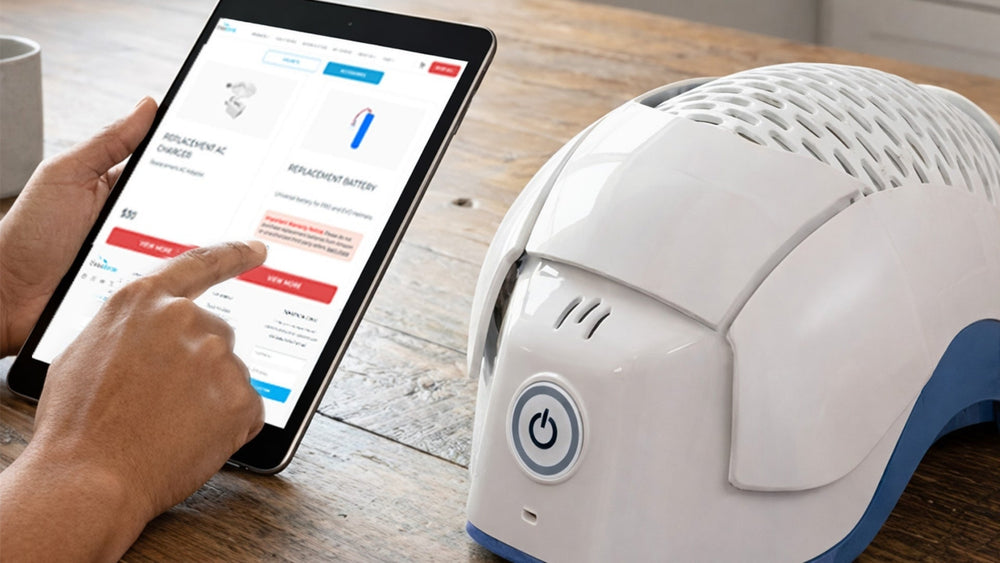
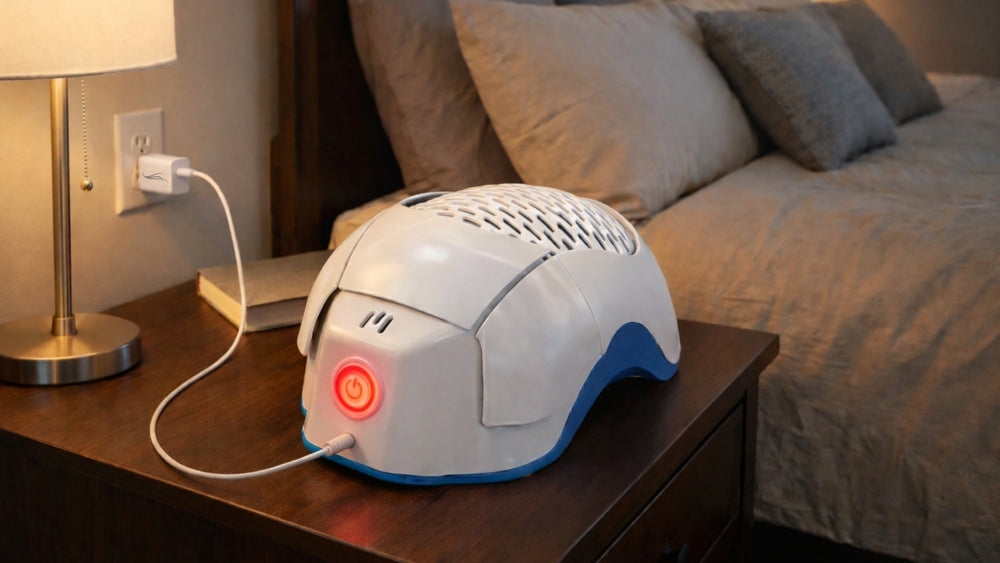
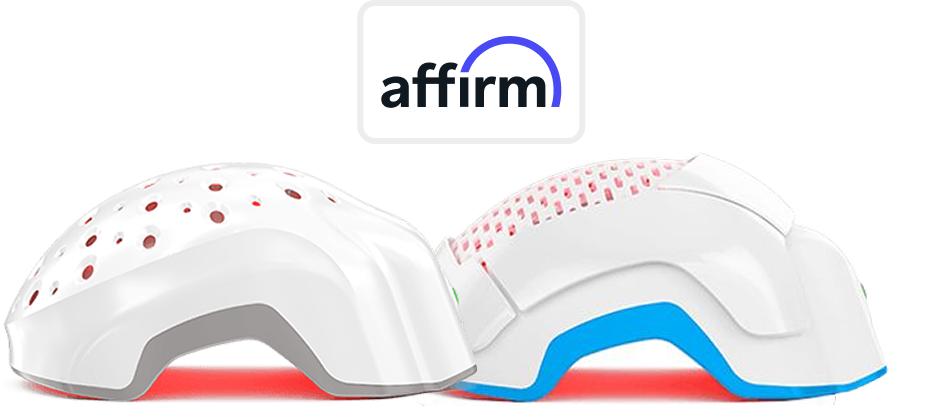
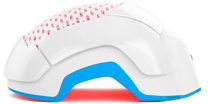
Theradome is an FDA-cleared wearable Laser Phototherapy device intended for specified patterns of androgenetic alopecia in men and women.
The FDA 510(k) record for Theradome LH80 PRO lists an over-the-counter therapeutic device intended to treat androgenetic alopecia and promote hair growth in males with Norwood-Hamilton classifications IIa to V and females with specified Ludwig-Savin classifications, for Fitzpatrick skin types I to IV. The FDA record also lists 80 coherent light diodes, a 678 nm wavelength, and 20-minute treatment sessions.
It is an LPT device designed for consistent light delivery to living follicle tissue in appropriate androgenetic alopecia. The nitric oxide connection sits inside the proposed photobiology of LPT, alongside mitochondrial activity, ATP production, and downstream follicle-cell signaling.
What Should You Do If Your Hair Is Thinning?
Start with the pattern.
Gradual temple recession, crown thinning, or a widening part may suggest androgenetic alopecia. Sudden shedding across the scalp may suggest telogen effluvium, especially after illness, childbirth, medication change, rapid weight loss, major stress, or dietary restriction. Smooth round patches may suggest alopecia areata. Pain, burning, scale, pustules, or shiny areas without visible follicle openings deserve earlier medical attention.
The American Academy of Dermatology advises identifying the cause of hair loss before choosing treatment because different conditions need different care.
That sounds basic until you watch one “hair growth” product try to sell itself to every scalp problem in existence.
Pattern hair loss, shedding, breakage, patchy autoimmune loss, and scarring alopecia are different situations. They should not all be pushed toward the same nitric oxide explanation.
A practical first step:
- Note when the change began.
- Look at the pattern.
- Take monthly photos in the same lighting, angle, distance, and hairstyle.
- Write down scalp symptoms.
- Review recent illness, medication changes, childbirth, weight loss, dietary restriction, or major stress.
- Seek a dermatologist’s input if the loss is persistent, progressive, patchy, painful, inflamed, or worrying.
For androgenetic alopecia, evidence-supported options may include topical minoxidil, selected oral medications under medical guidance, Laser Phototherapy, microneedling as an adjunct in some cases, platelet-rich plasma in selected patients, or hair transplantation when appropriate. Current reviews describe multiple treatment options, but the right choice depends on diagnosis, risk, goals, and medical suitability.
Daily mirror checks, by the way, are a dreadful measurement system.
Hair grows slowly. Bathroom lighting lies. Anxiety has excellent eyesight.
Use photos. Use time. Use a diagnosis.
Conclusion
Nitric oxide belongs in the hair-growth conversation, especially when discussing Laser Phototherapy, mitochondria, ATP, and follicle-cell activity.
Nitric oxide is involved in follicle biology and may be part of the proposed LPT response. But it is not a proven standalone treatment for androgenetic alopecia, and supplements that claim to raise nitric oxide have not shown reliable human scalp regrowth.
So start where good hair care starts: identify the pattern, understand the cause, and choose the treatment the evidence can actually support.