







We do not yet have human clinical evidence showing that Laser Phototherapy (LPT) directly increases exosome uptake into scalp or follicle cells. What we do have is a biologically plausible case that LPT can improve the cellular readiness and signaling environment that makes exosome-based messages more likely to “land well” once they are present.
What Are Exosomes, Really?
Exosomes are a type of extracellular vesicle, basically tiny membrane-bound parcels cells release to communicate with other cells. They can carry proteins, lipids, and nucleic acids (including microRNA), which means they can influence how recipient cells behave.
That’s the science-y version. The practical version is simpler: exosomes are not “stem cells.” They are not a new organ growing kit. They are signaling packages. Whether that signaling meaningfully changes hair outcomes depends on the source material, the preparation method, the dose, the delivery method, and… the biology of the scalp receiving the signal.

What Exosomes Are Being Asked to Do in Androgenetic Alopecia
In androgenetic alopecia (pattern hair loss), follicles gradually miniaturize and their growth cycle shifts. A lot of “regenerative” approaches try to influence follicle signaling, dermal papilla activity, inflammation-related signaling, and the broader follicle niche. Exosomes are being investigated in that lane.
Some clinical studies report improvements in hair density, diameter, or patient satisfaction after exosome-based interventions, but protocols vary widely and the field is still young. If you are hoping for a neat, universally agreed “exosome recipe,” it does not exist yet.
Delivery Challenges in the Scalp
Even if exosomes carry useful signals, they still have to reach relevant target cells and interact in a meaningful way. Delivery methods in aesthetic and hair settings often include injections (intradermal) and sometimes topical application, but “topical” can mean a lot of things in practice.
And a key point patients rarely get told plainly: “the product was applied” is not the same thing as “target cells internalized and used the cargo.” That gap is where most bold synergy claims quietly live.
What Laser Phototherapy Actually Does (And What It Doesn’t)
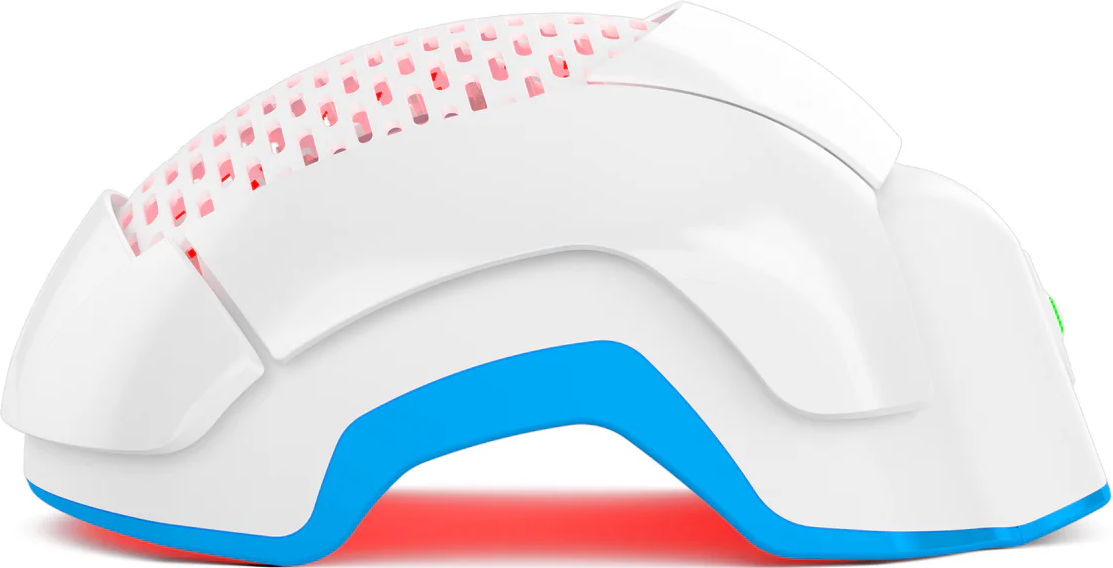
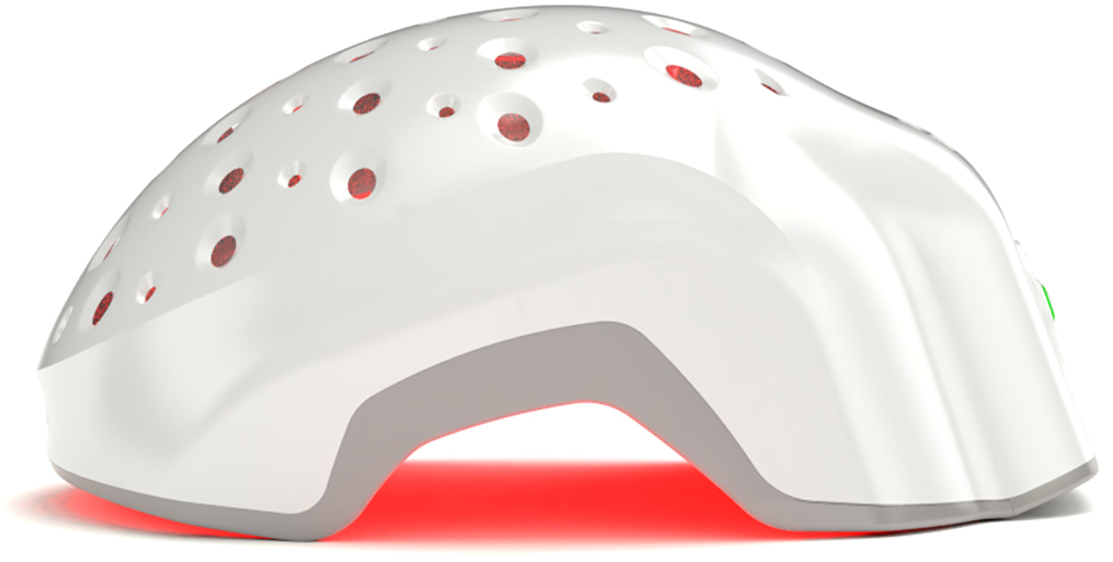
Laser Phototherapy (LPT) sits within the broader category often called photobiomodulation (PBM) or low-level light therapy. The term “LASER” is physics. It refers to a specific way light is produced (coherent, specific wavelength), and low-level therapeutic use aims to stimulate biological responses rather than heat or destroy tissue.
There is also a detail that matters: parameters. Wavelength, power, exposure time, and treatment schedule influence outcomes. One device protocol can help while another does little. PBM is not magic. It is dose-dependent biology.
Photobiostimulation at the Cellular Level

In PBM mechanistic literature, one commonly discussed pathway involves mitochondrial photoacceptors (often discussed around cytochrome c oxidase), leading to changes in cellular energy metabolism and downstream signaling. This can affect transcription factors, oxidative signaling balance, and cellular function.
Now, small reality check (because it helps). “Boosts ATP” is often used like a slogan. The better framing is: PBM can shift cellular bioenergetic and signaling states in ways that, under the right conditions, support tissue repair and modulate inflammation-related pathways. That’s more accurate, less shiny, and honestly more useful.
What “Exosome Uptake” Actually Means Biologically
When researchers talk about exosome uptake, they mean recipient cells internalize extracellular vesicles or interact with them in a way that delivers cargo into cellular pathways. Mechanisms include macropinocytosis, clathrin-mediated endocytosis, raft-mediated pathways, phagocytosis in some contexts, and sometimes membrane fusion.
So… your scalp being “exposed” to exosomes is not the same as follicle-related cells taking them in. This distinction sounds picky until you realize it’s the whole debate.
Conditions That Influence Uptake
Cellular uptake is influenced by the state of the recipient cell (metabolic activity, receptor expression), the vesicle surface proteins, local inflammatory conditions, and the surrounding tissue environment. The uptake literature also highlights a persistent challenge: even after internalization, cargo still needs functional delivery to relevant intracellular targets to matter biologically.
Why This Matters for Combination Claims
If someone claims “Laser Phototherapy enhances exosome uptake,” a careful reader should quietly ask:
Which uptake pathway? Which cell type? Which dose? Which proof method? In humans? In androgenetic alopecia scalp?
If those answers are fuzzy, the claim is probably aspirational biology, not demonstrated clinical synergy.
So… Does Laser Phototherapy Enhance Exosome Uptake?
Right now, we do not have strong human clinical studies in androgenetic alopecia that directly measure increased exosome uptake into follicle/scalp target cells due to Laser Phototherapy. No robust tracer-based uptake confirmation in AGA patients that I can point to cleanly.
That does not mean synergy is impossible. It means the specific claim “enhanced uptake” is ahead of the current clinical proof in hair loss.
What the Evidence Suggests Indirectly
Where PBM does start to intersect with “exosome logic” is in studies showing PBM can influence dermal papilla cell behavior and exosome secretion in skin/hair-related models. One example: PBM has been reported to promote hair regeneration in injured skin via enhancing dermal papilla cell migration and exosome secretion. That is not uptake, but it is a relevant hint that PBM and exosome biology can interact in follicle-adjacent systems.
We also have broad PBM mechanistic literature supporting that PBM can modulate inflammation-related signaling and cellular metabolic readiness, and broad extracellular vesicle literature showing uptake depends heavily on recipient cell state and uptake pathways. Put those together and you get a plausible narrative: PBM may “prime” cells to respond better once exosome signaling is present.
Plausible. Not proven.
Where Marketing Gets Ahead of Biology
Exosome therapy sits in a regulatory and standardization grey zone in many settings. The U.S. FDA has stated there are currently no FDA-approved exosome products, and it has issued consumer-oriented warnings about regenerative medicine products marketed without appropriate authorization.
This matters because when the underlying product category is heterogeneous, “synergy claims” can become slippery. If two clinics use two different exosome preparations and two different laser/light protocols, you can’t treat their outcomes like the same intervention. That is not cynicism. That’s basic comparability.
Hair Loss Biology Makes Synergy Plausible (But Not Guaranteed)
Cellular Dysfunction in Androgenetic Alopecia
Androgenetic alopecia is not only about hairs “falling out.” It involves follicle miniaturization, altered signaling pathways in the follicle environment, and progressive changes in follicle cycling. Treatments that improve follicle responsiveness or reduce inhibitory signaling may help some people, especially when used consistently.
Why Cellular Readiness Matters More Than Delivery Alone
Even if exosome-derived signals are present, recipient cells still need to interpret those signals and do something with them. That “doing something” is metabolically and signaling-intensive. Light-based stimulation can influence cellular signaling states, and vesicle uptake literature suggests uptake and cargo effects are conditional on recipient cell biology.
So, laser phototherapy may support the environment in which exosome signaling could be more productive.
Not: Laser Phototherapy forces exosomes into follicles.
Safety and Regulatory Reality
Safety Profile of Laser Phototherapy
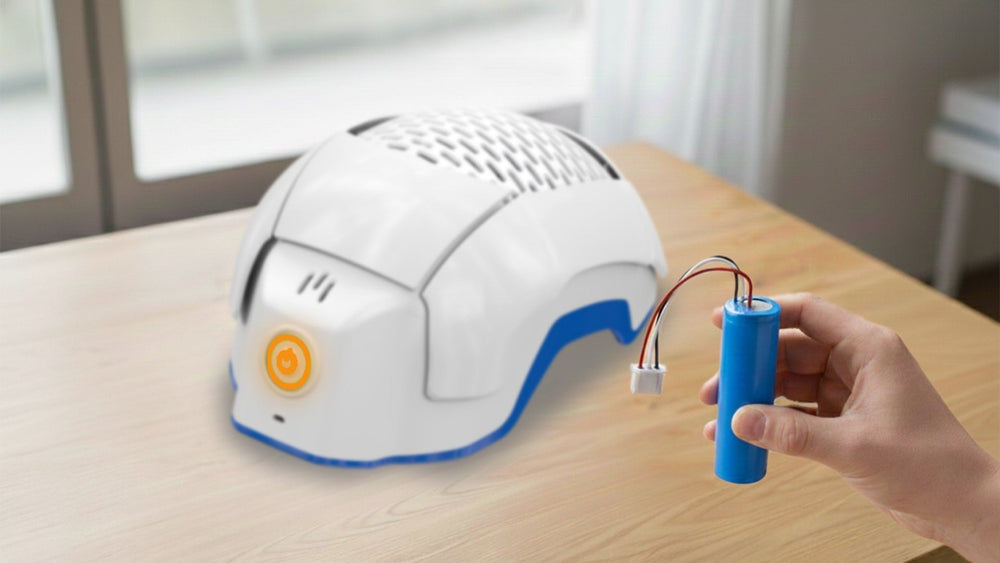
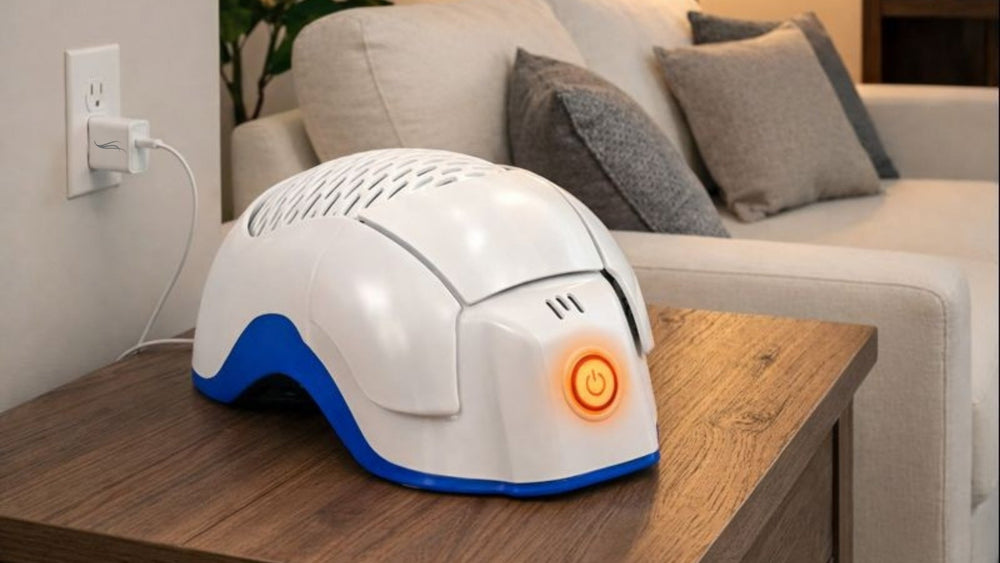
Low-level laser/light therapy for hair loss has been evaluated in clinical settings, including helmet-type devices, with generally mild, temporary adverse effects reported (things like scalp irritation or transient shedding in some studies). Device-specific outcomes vary, but PBM used appropriately is considered non-thermal and generally well tolerated.
Regulatory Status of Exosome Therapies
Exosome-based interventions used for medical conditions in humans are regulated under frameworks that treat them as biologic/drug products depending on intended use and claims. The FDA’s consumer materials clearly warn that there are currently no FDA-approved exosome products, and it urges caution regarding clinics marketing these products as established therapies.
If you are considering exosome therapy, transparency questions are not “being difficult.” They’re being sensible.
What This Means for Patients Considering Both
If you’re a patient weighing these options, the fairest expectation is this:
- Exosome therapy for androgenetic alopecia is emerging, with some encouraging early clinical reports, but not yet a mature, standardized treatment category.
- Laser Phototherapy has more established clinical evidence for androgenetic alopecia than exosomes do, though outcomes still vary by person and protocol.
- Combination use may make biological sense, but “enhanced uptake” should be treated as a hypothesis unless a provider can point to direct supporting data for the specific protocol they use.
Questions Worth Asking a Provider
Ask these plainly. No need to soften it.
- What is the source of the exosomes and how is product quality verified (sterility, characterization, consistency)?
- Is the protocol supported by peer-reviewed human data in androgenetic alopecia, or is it extrapolated from other tissue models?
- How do you measure progress (hair counts, hair diameter, standardized photography, timelines)?
- What is the laser/light protocol and why that dose and schedule?
If a clinic can’t answer those without getting twitchy… that’s information too.
Conclusion
We do not yet have solid human evidence that Laser Phototherapy directly increases exosome uptake in androgenetic alopecia. We do have credible biology suggesting LPT can support cellular signaling readiness, and credible vesicle science showing uptake and cargo effects depend on the recipient environment. That makes a supportive role plausible, not guaranteed.
If you’re considering both, stay grounded: ask for protocol specifics, ask what is measured, and treat bold multiplier claims with quiet skepticism. You deserve careful medicine, not confident marketing.