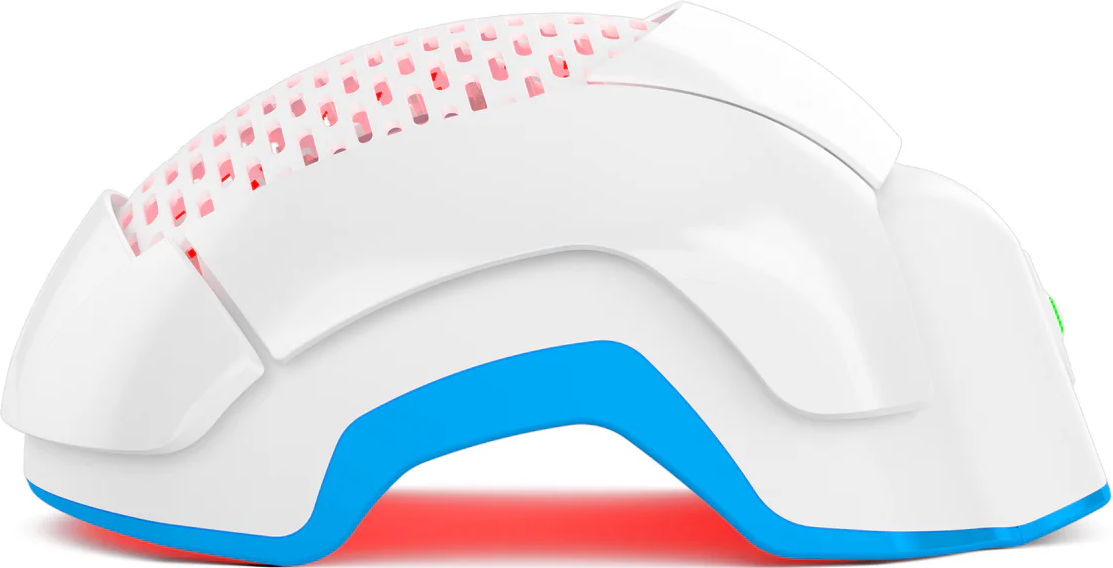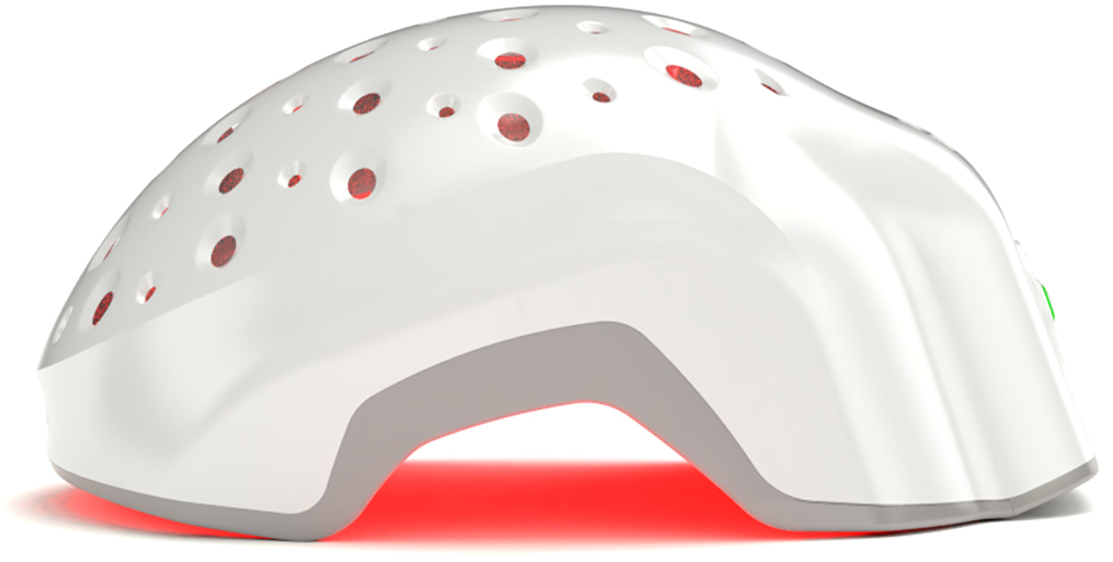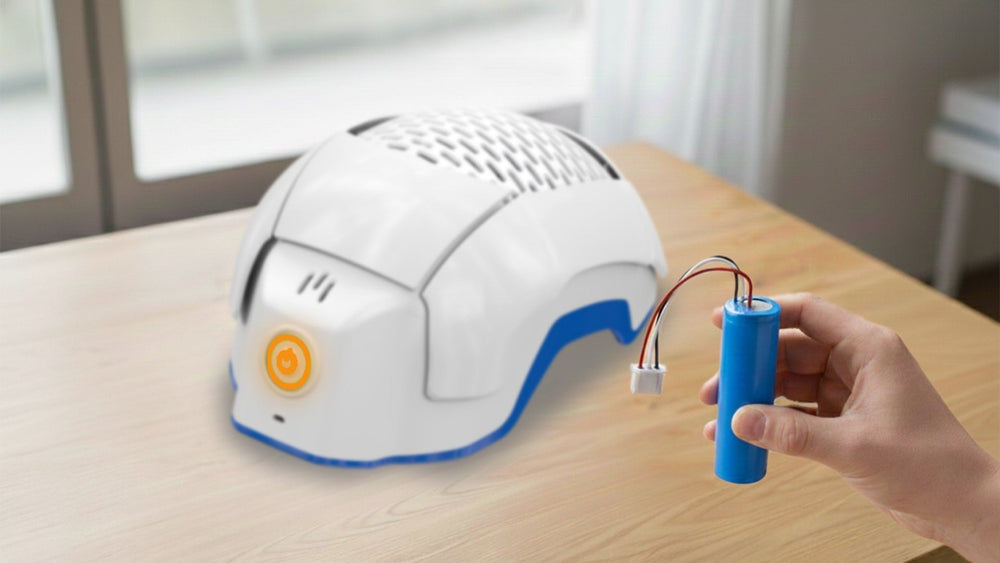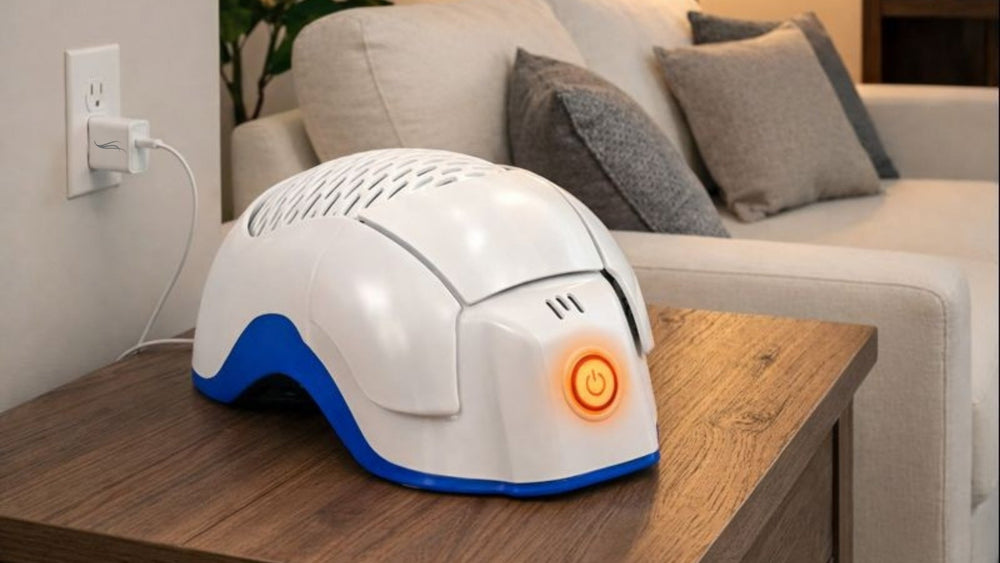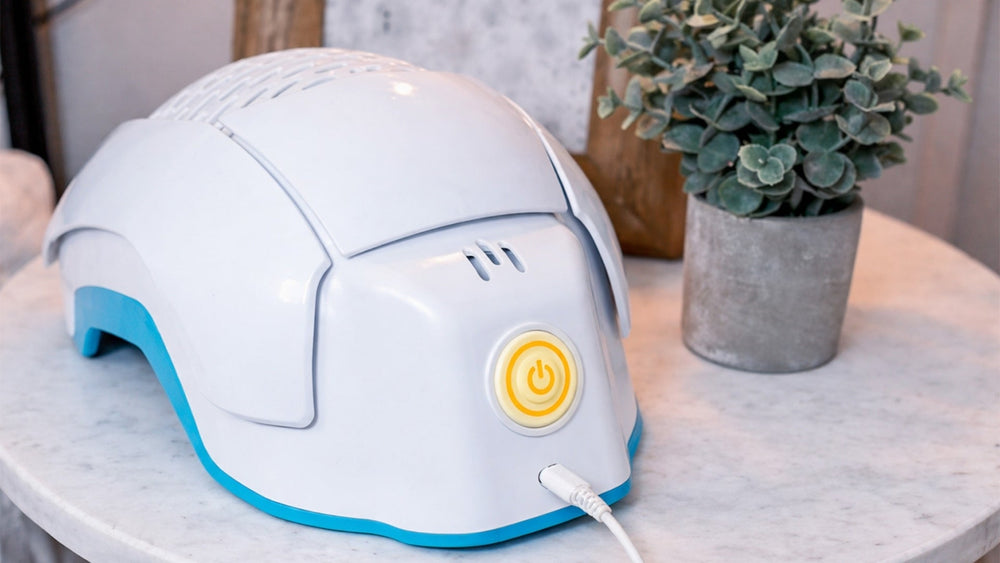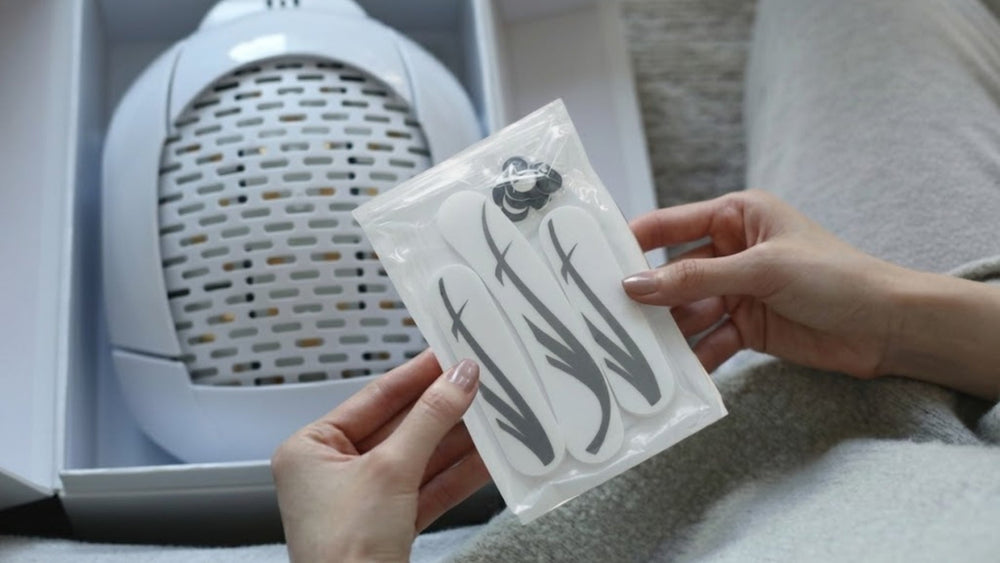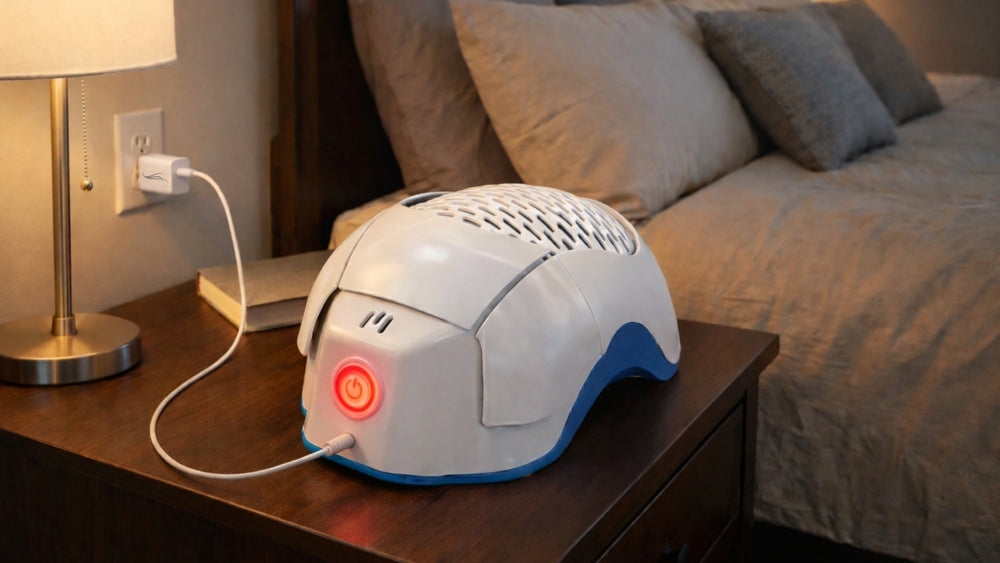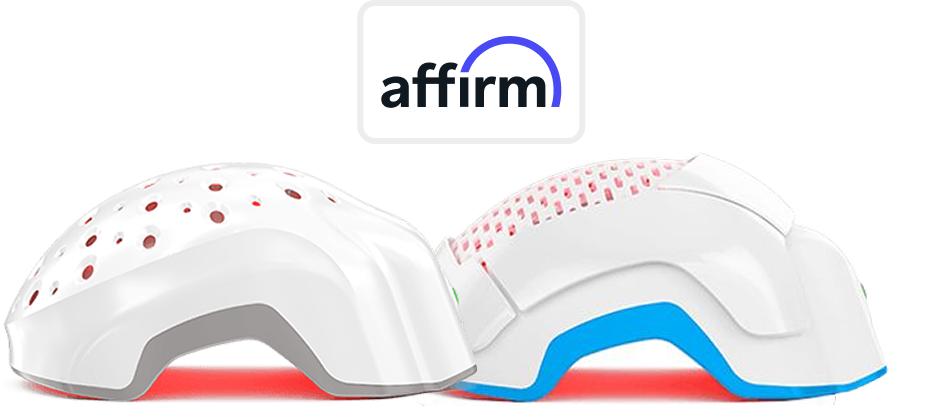






Coherent light matters in hair growth stimulation mainly because it lets medical devices deliver a controlled, repeatable dose of light to the scalp, which is central to photobiomodulation. In laser phototherapy (LPT), that consistency supports the biological “signal” the follicle cells respond to, without heat or tissue damage at the power levels used in FDA-cleared home devices. The nuance is real though… coherence helps, but it is not a magical switch on its own.

What does “coherent light” actually mean in medical contexts?
“Coherent” light means the light waves have a predictable relationship to each other, especially in phase, over some distance and time. That’s why lasers are often described as coherent sources, while LEDs are usually described as non-coherent (or at least much less coherent). In practical device terms, coherence often travels with a few other laser traits people care about in medicine: narrow spectral bandwidth, directionality (low divergence), and the ability to deliver light energy in a controlled pattern.
Once light enters skin, scattering starts immediately. So the “perfect” coherence you have in air can degrade fast inside tissue. That doesn’t mean lasers stop working. It means you should not treat coherence as the only variable that matters.
So, yes, coherence is a real physical property. But biology doesn’t sign a contract saying “coherence alone equals results.”
What coherence is not
Coherent light is not automatically “stronger.”
It is not automatically “deeper.”
And it is definitely not automatically “better” in every scenario.
If the wavelength, dose (energy delivered), coverage, and schedule are wrong, coherence will not rescue the outcome. Photobiomodulation has a dose-dependent response, and too little tends to do nothing. Too much can flatten the benefit.
How light interacts with hair follicles (and where coherence fits)
Photobiomodulation (PBM) is a medical term for using specific wavelengths of light at low power to influence cell behavior, commonly linked to mitochondrial signaling. The leading mechanistic hypothesis in PBM research is that photons are absorbed by cellular chromophores (often discussed with cytochrome c oxidase), nudging mitochondrial activity and downstream signaling that can affect inflammation, oxidative balance, and cellular energy handling.

Hair follicles are metabolically active mini-organs. When they’re miniaturizing in androgenetic alopecia, the goal is not “blast the scalp with light.” The goal is a consistent, tolerable stimulus that supports follicle function over time. PBM for alopecia is discussed in detail in Hamblin’s review, including androgenetic alopecia as one of the major clinical targets.
And yes… PBM is annoyingly parameter-sensitive. Irradiance, fluence, exposure time, and frequency matter. A lot.
Why delivery consistency matters more than glow
People often use “my scalp looked red” as a proxy for “it worked.” That’s not a reliable proxy. Light hitting the surface is not the same as a consistent dose reaching target depth across the scalp.
This is where coherent laser sources can have a practical edge: they are typically more collimated and easier to engineer into a repeatable delivery pattern. You can build a device that aims to distribute light energy more predictably across a treatment area, session after session.
Also, tissue scattering can reduce coherence rapidly, which is why many PBM researchers focus less on “coherence as magic” and more on dose, wavelength, and treatment design.
Coherent light vs non-coherent light in hair therapy
Even if coherence can degrade in tissue, coherent laser light still tends to arrive with design advantages that matter in real life:
-
Directionality and divergence: Laser beams are typically more collimated than broad LED emission, which can help engineering for consistent delivery patterns.
-
Repeatability: It’s often easier to standardize output in a way that stays stable session to session. (That matters when PBM depends on cumulative dosing.)
-
Dose control: PBM is dose-sensitive. Engineering that makes dose delivery predictable is not a small detail.
Device design is definitely part of the treatment.
Why consumer comparisons often miss the point
A lot of people compare devices by one spec, usually wavelength, sometimes “number of lights.” That’s incomplete.
Dose delivery and coverage often decide outcomes, not the prettiest spec sheet.
Safety, regulation, and the laser question
People hear “laser” and think surgery. Or burns. Or a sci-fi beam.
In home PBM hair devices, we’re talking about low power outputs. A clear institutional reference point is the laser safety classification guidance from Weill Cornell Medicine: Class 3R visible continuous lasers are limited to 5 mW, and are treated as low risk when handled carefully with restricted beam viewing.
This is also why safety discussions tend to focus on sensible eye protection behavior rather than scalp burns. The power levels and intended use differ massively from surgical lasers.
But low risk does not mean “do whatever.” It means the risk profile is managed under intended use.
Common safety misunderstandings
Most of the fear is inherited from high-power lasers used for cutting, ablation, or coagulation.
PBM for hair is a different category entirely, discussed in the PBM mechanism and alopecia reviews as low-level light exposures intended to avoid temperature rises and gross tissue change.
Who benefits most from coherent-light-based therapy
Best-fit candidates
The strongest fit, based on home-use trial populations, is androgenetic alopecia (pattern hair loss) in people who can commit to regular sessions over months.
Consistency is boring.
It also separates “nothing happened” from “okay, I’m seeing something.”
If you already know you stop routines after week two, plan around that. Choose designs you’ll actually use. Wearable, hands-free formats exist for a reason.
Realistic expectations
Laser phototherapy is typically discussed as a non-invasive option that may produce modest, measurable gains for some people with pattern hair loss, especially when used consistently and early enough in the miniaturization timeline. It’s often positioned as a standalone option for some, or an adjunct for others, depending on goals and tolerance for other treatments.
No over-promises.
No “you’ll get your teenage hairline back.”
That’s not how this works.
Practical use considerations that actually matter
Scalp access and coverage
Full coverage matters because androgenetic alopecia rarely behaves like a neat circle you can target with a tiny spot. It’s usually diffuse thinning in specific patterns.
So device geometry matters. Scalp coverage, fit, and the ability to deliver consistent exposure across the affected area are not cosmetic design choices. They’re part of the treatment logic.
And yes, existing hair can reduce direct scalp exposure depending on device design and hair density. That’s one reason wearables and multi-diode arrays exist.
Frequency and patience
Most controlled trials run over weeks to months, with repeated sessions. Hair growth cycles are slow. Even if cellular signaling changes early, visible changes take time.
So the most realistic planning model is: commit to a schedule long enough to match hair cycling, then assess with consistent photos and/or objective measures. That’s aligned with how the clinical literature measures outcomes.
Sporadic use usually produces sporadic outcomes.
Conclusion
Coherent light matters in hair growth stimulation mostly because it makes controlled delivery easier, and controlled delivery is central to photobiomodulation. But coherence isn’t a solo hero. The better way to think about it is: coherence supports repeatability, repeatability supports dosing, dosing supports biological response… in the right candidates, over enough time, with enough coverage. If you want a grounded option that doesn’t involve systemic medication, light therapy is a reasonable conversation to have, especially for pattern hair loss. Just stay realistic, stay consistent, and lean on evidence.