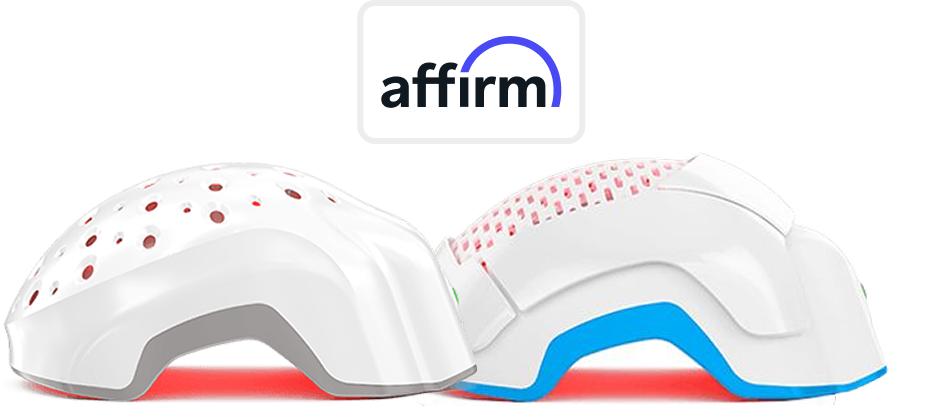






Both continuous wave and pulsed lasers are used in laser phototherapy for hair loss, but current evidence suggests outcomes depend far more on energy dose, scalp coverage, and consistent use than on whether the light is delivered continuously or in pulses. The waveform matters less than the way the device is engineered and used.
Why Laser Specs Confuse So Many Hair-Loss Shoppers
Hair-loss devices love technical language. Hertz. Diodes. Wavelengths. Pulses. Continuous beams.
It sounds impressive.
It also leaves most people guessing.
The problem isn’t curiosity. It’s that spec sheets often distract from the few things that actually influence biological response. Hair follicles don’t care whether a brochure looks clever. They respond to how much light reaches them, how often, and for how long.
So before comparing delivery modes, it helps to slow down and get clear on what laser phototherapy is doing in the first place.
How LPT Is Different From Heat-Based or Surgical Lasers
Laser phototherapy (often grouped under low-level laser therapy or photobiomodulation) uses low-power red or near-infrared light to stimulate tissue rather than destroy it.
These are not cutting lasers.
They do not burn skin.
They do not heat tissue.
In photobiomodulation, light energy interacts with cells in a way that can influence signaling and cellular activity, without causing thermal injury. This distinction matters, because much of the fear around lasers comes from confusing medical or industrial lasers with therapeutic ones.
What Conditions LPT Is Actually Studied For
Most well-designed studies focus on androgenetic alopecia in men and women. That’s the common, hormone- and genetics-driven pattern hair loss.
There is far less reliable evidence for other forms of alopecia, such as scarring alopecias or autoimmune conditions. That doesn’t mean light has no biological effect elsewhere. It does mean claims should stay within the bounds of what has been studied.
Continuous Wave vs Pulsed Lasers

What Is a Continuous Wave (CW) Laser?
A continuous wave laser emits a steady, uninterrupted beam of light for the duration of a treatment session. Energy delivery is constant from start to finish.
In practical terms, this means photons reach the scalp continuously during use, and total energy accumulates gradually over time.
No gaps.
No cycling on and off.
What Is a Pulsed Laser?
A pulsed laser turns on and off rapidly at a defined frequency, measured in Hertz. The light is delivered in bursts rather than as a constant stream.
During the “off” moments, no light is emitted. The total energy delivered depends on pulse duration, frequency, and session length.
Pulsing is not inherently weak or strong. It’s simply a different delivery pattern.
Why Energy Dose Matters More Than Waveform
In photobiomodulation research, “dose” usually refers to energy delivered over time to a specific area. Too little energy tends to do very little. Too much can reduce benefit. This pattern is known as a biphasic dose response.
What matters here is not whether light arrives continuously or in bursts, but whether the follicle receives enough usable energy during the session.
Why Under-Dosing Is a Common Problem
Many at-home devices operate at very low power and limited coverage. Even if they use a theoretically interesting waveform, the total energy reaching the scalp can be modest.
Systematic reviews note wide variation in study protocols, device designs, and treatment regimens, which helps explain inconsistent outcomes
Does Pulsing Offer Unique Biological Advantages?
Outside hair-loss research, photobiomodulation studies have explored pulsed versus continuous light delivery in wound healing and neurological models. Some experiments suggest that specific pulse frequencies can influence cellular responses differently than a steady beam.
That observation is often used to justify pulsing in consumer hair devices. But here’s the part that tends to get skipped.
In many compact, cap-style laser devices, pulsing is not chosen for biological reasons. It’s chosen because the lasers generate heat in poorly ventilated designs. Turning the lasers on and off helps prevent overheating of the components, not because follicles require interrupted light to respond.
This distinction matters. As laser diodes heat up, their optical output drops. Independent testing of several baseball-cap-style devices has shown that lasers advertised at 5 milliwatts can fall below 1 milliwatt within seconds of use, with output continuing to decline over a full session. By the end of a typical twenty- to thirty-minute treatment, usable optical output can approach zero.
So while pulsing may sound sophisticated, in real-world consumer devices it often reflects an engineering compromise. The biological theory becomes irrelevant if the intended energy never reaches the scalp.
That’s why extrapolating pulsed-light findings from other tissues or lab models requires caution. Hair follicles are complex mini-organs, and they only respond to light that is actually delivered. At present, there is no strong clinical evidence showing pulsed lasers consistently outperform properly engineered continuous wave lasers for androgenetic alopecia.
Practical Factors That Matter More Than CW vs Pulsed
Scalp Coverage and Fit
Light that never reaches the scalp cannot influence follicles. Dense hair, tight curls, or poor device fit can reduce exposure, regardless of waveform.
Full-coverage designs and simple habits like parting hair matter more than most people realize.
Treatment Consistency Over Months
Hair cycles move slowly. Most studies showing benefit involve weeks to months of regular use.
Skipping sessions or stopping early undermines outcomes far more reliably than choosing the “wrong” waveform.
Engineering and Thermal Management
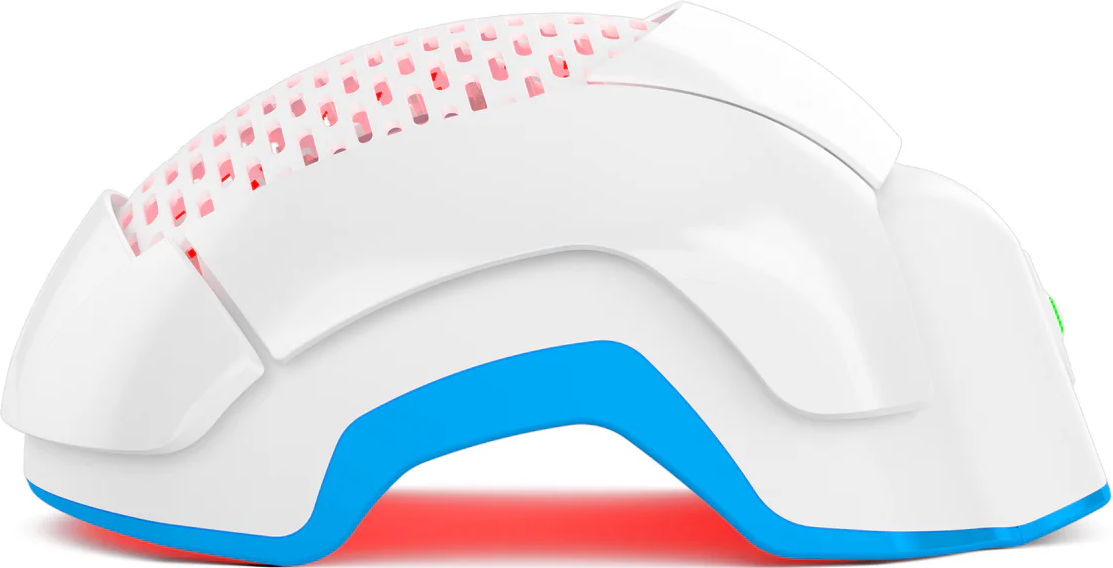
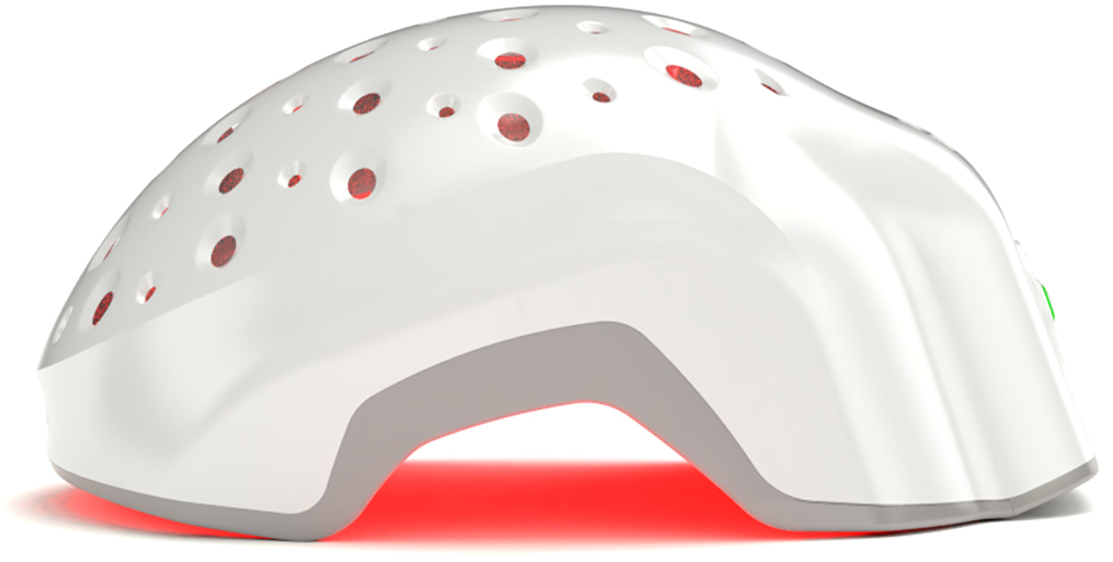
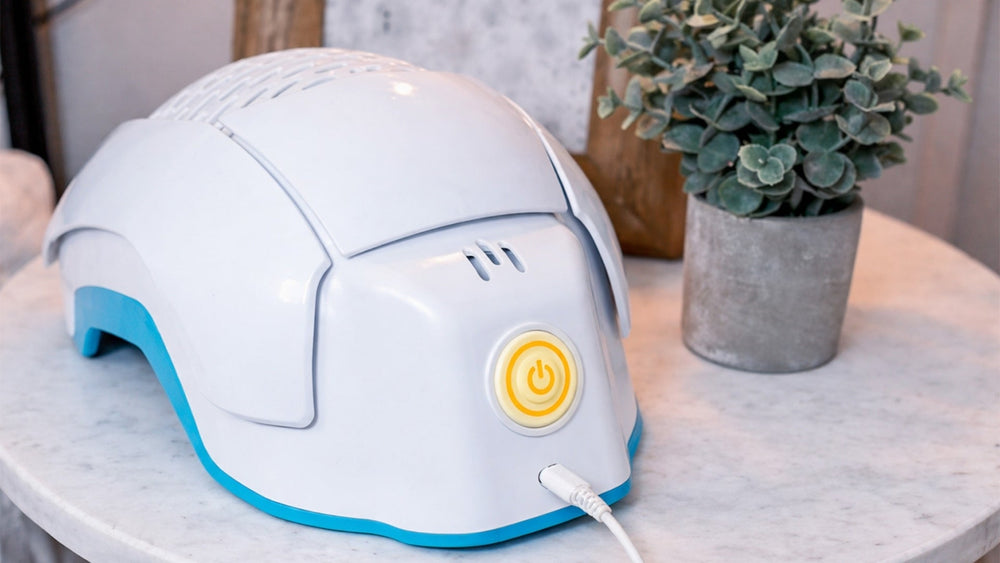
Some devices pulse light to manage heat in compact housings with limited airflow. When dozens or even hundreds of laser diodes are packed beneath layers of plastic, heat builds quickly. Pulsing allows the components to cool intermittently, but it also reduces the total energy delivered during a session.
More importantly, heat affects laser performance itself. As temperature rises, laser diodes resist output. Measurements taken during real-world use of cap-style devices have shown dramatic declines in optical power as sessions progress, even when pulsing is used. What begins as a nominal 5 milliwatt laser may deliver a fraction of that power within moments.
Continuous wave lasers, when paired with proper heat dissipation and medical-grade engineering, avoid this failure mode. Because output remains stable over time, the intended dose is actually delivered across the full session.
From a biological perspective, follicles respond to usable energy, not advertised specifications. Stable output matters more than clever circuitry.
Safety, Regulation, and Laser Class
Home-use hair-loss laser devices are typically FDA-cleared, not FDA-approved, under the 510(k) pathway for medical devices.
The FDA explains laser product classifications and safety standards here.
Many hair-loss devices use Class 3R lasers, which emit low-level light considered safe for consumer use when used as directed. Regulatory documentation for FDA-cleared devices, including helmet-style systems, reflects this classification.
Decades of consumer use of low-power red lasers have not produced evidence of serious injury when used appropriately.
So… Which One Works Better for Hair Loss?
Here’s the honest answer.
In theory, continuous wave and pulsed lasers can both be used in laser phototherapy. In practice, how consumer devices are built changes the equation.
When pulsing is used primarily to compensate for heat buildup and poor ventilation, total energy delivery drops. Optical output can decline sharply over the course of a session, regardless of what the spec sheet claims. In those cases, the follicle simply isn’t receiving the intended dose.
Continuous wave lasers, when designed with adequate thermal control, maintain stable output and deliver more consistent energy across treatment time. That reliability makes a practical difference.
So this is not about waveform ideology. It’s about whether the device can sustain therapeutic output long enough to matter. In real-world, wearable hair-loss devices, continuous wave delivery paired with proper engineering is more likely to achieve that goal.
Waveform still matters. But only after the basics are solved.
How to Choose a Laser Device without Getting Misled
Instead of fixating on delivery mode alone, ask:
- Is the device FDA-cleared for hair loss?
- Does it cover the scalp evenly?
- Is the treatment schedule realistic for long-term use?
- Are claims supported by peer-reviewed studies, not testimonials?
Those questions will get you farther than any spec-sheet argument.
Conclusion
There’s a quiet relief in letting go of false binaries.
Continuous wave versus pulsed lasers sounds like a high-stakes showdown. In reality, hair follicles care more about whether light reaches them consistently, safely, and often enough to matter.
When you look past the labels, what remains is engineering, evidence, and patience. Not glamour. Not shortcuts.
If you choose a device that respects those realities and stick with it long enough to give biology time to respond, you’re already doing the most important part right.