
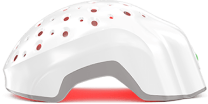





Laser Phototherapy (LPT) can support hair regrowth in androgenetic alopecia when used consistently. Clinics offer supervised treatments, but they tend to be expensive and require frequent visits. A high‑quality, FDA‑cleared at‑home LPT device provides similar therapeutic benefits with better convenience, which often improves long‑term consistency and therefore outcomes.
What Is Laser Phototherapy, Exactly?
Laser Phototherapy uses low‑power, non‑thermal visible red light that interacts with cells. These are sometimes called cold lasers because they do not create heat or tissue injury.
The wavelength range typically used in hair studies falls around 630 to 680 nanometers. These wavelengths can penetrate the scalp and interact with the mitochondria inside hair follicle cells. The scientific term you might see is photobiomodulation, meaning light energy influences cellular function.
Research indicates that LPT may encourage follicles to remain in or return to the growth phase, known as anagen. No burning. No cutting. Just controlled light exposure applied consistently over time.
How Hair Restoration Clinics Use Laser Therapy
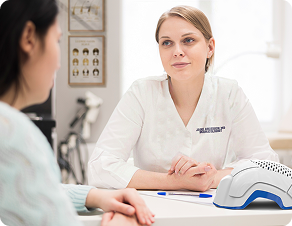
Clinics that specialize in hair restoration often provide LPT in the form of supervised in‑office sessions. These sessions may involve larger‑format devices that surround the scalp with light.
Benefits in a clinic setting:
- A clinician monitors progress over time.
- Treatment parameters are controlled.
- Some clinics combine LPT with other therapies, which can be helpful for certain individuals.
But here’s the part many people quietly run into. In‑clinic LPT usually requires frequent visits, often multiple times per week, for months. That can be physically and emotionally draining when life gets busy.
Cost is also a notable consideration. Several published cost comparisons show clinic‑based LPT courses reaching into the thousands over a six‑month period, depending on treatment frequency and location.
So clinics make sense for individuals who like hands‑on guidance and structured routines. But the majority of people begin strong and then fade because scheduling becomes a barrier.
What At‑Home LPT Devices Actually Do
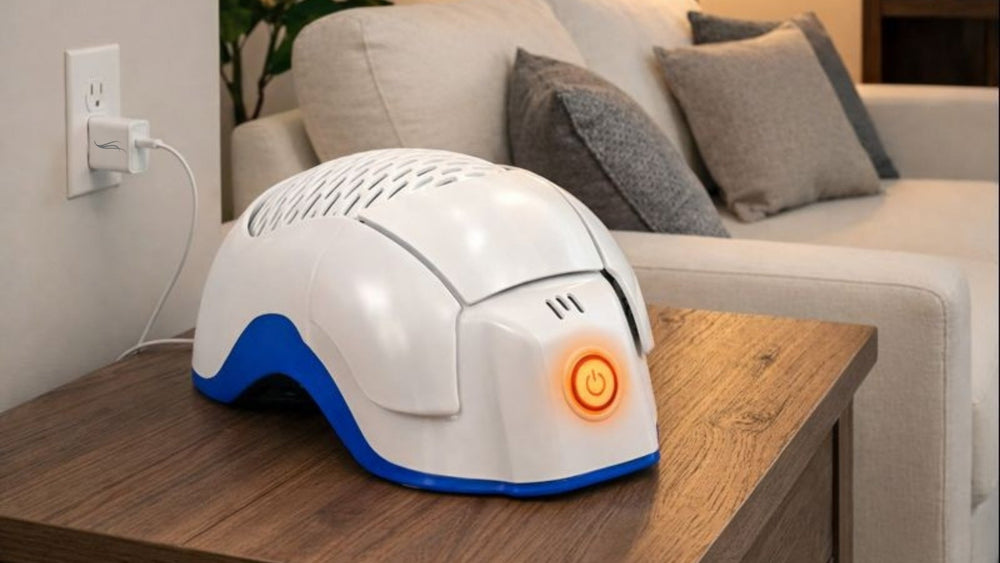
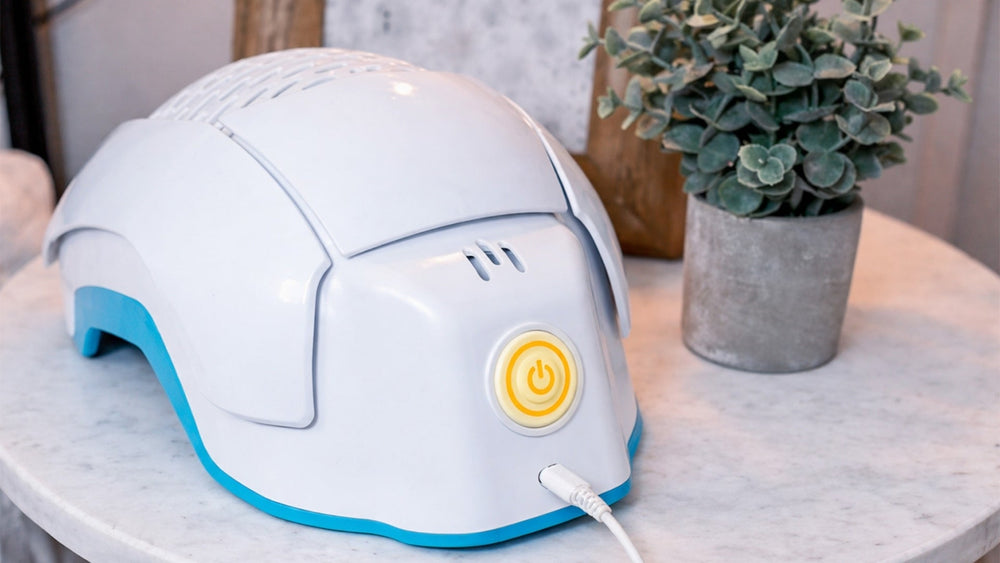
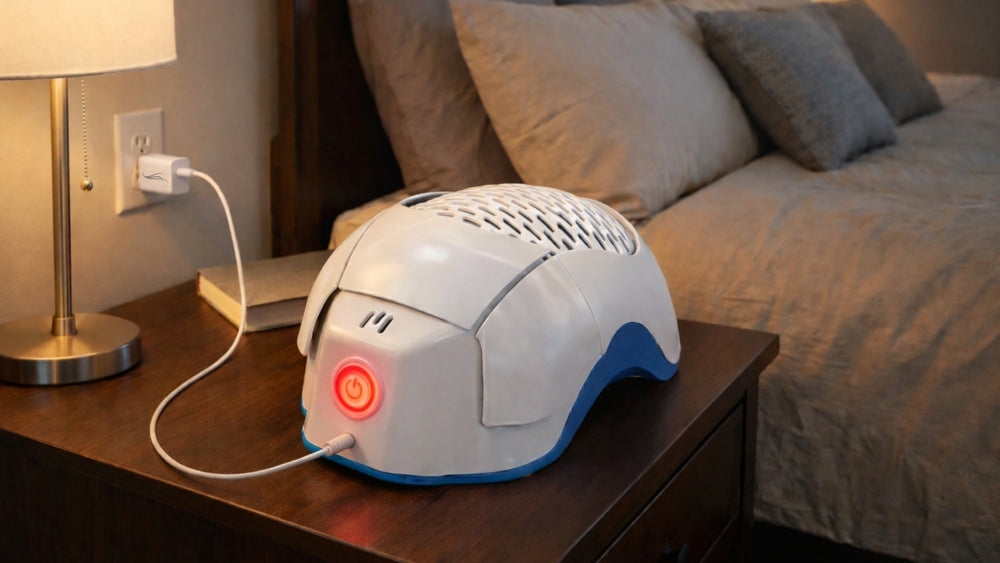
A medical‑grade at‑home LPT helmet uses the same therapeutic concept as clinic devices: consistent exposure of the scalp to non‑thermal red light in the effective wavelength range. The difference is simply where the treatment happens.
The FDA does not “approve” home devices the way it approves medications. Instead, devices that meet safety and intended‑use criteria go through FDA 510(k) clearance, which confirms that the device is safe for home use when used as directed.
High‑quality at‑home devices also use Class 3R cold laser diodes, which operate below 5 mW optical output. This is considered safe for consumer use when instructions are followed.
What matters most for real‑world results:
-
Full scalp coverage, rather than isolated beams
- Adequate light dose, not just brightness
- Comfort, because discomfort reduces consistency
- Ease of use, since treatment is done several times per week

If a device is uncomfortable, awkward, or slow, many people stop using it long before results have time to show. Consistency is the heart of LPT outcomes.
Specs That Matter (And Those That Don’t)
What to look for:
- Wavelengths in the clinically studied range, often 630–680 nm.
- Full‑head coverage so the entire thinning region is treated.
- Class 3R cold laser classification, which signals safe optical output.
What doesn’t meaningfully improve results:
- Flashing or pulsing light patterns marketed as “advanced.”
- Ultra‑short treatment times that seem too convenient to be real.
- Odd shaped devices that leave parts of the scalp untreated.
When in doubt, ask: Does this design make it easier for me to use it consistently?
If the answer is no, the device may not support long‑term progress.
Cost Comparison: Clinics vs Home Use
A typical clinic LPT plan may require 2 to 3 sessions per week for several months. Session fees vary, but the cumulative cost commonly reaches $1,500 to $4,000+ over 6 months, depending on geographic region and clinic structure.
A reputable, FDA‑cleared at‑home LPT device generally ranges $800 to $1,200 as a one‑time purchase. This means the cost per use decreases over time.
If someone values structure, accountability, and having a clinician nearby, clinic care may align well. But for most people who are juggling work, commuting, life, and trying to remember to buy eggs, the ease of treating at home removes the friction that often derails progress.
The Real Variable That Changes Everything: Consistency
LPT is a rhythm‑based therapy. Its mechanism depends on repeated exposure over time. Hair grows slowly, so improvements tend to show between 12 and 24 weeks of ongoing use.
If a person cannot commit to consistent sessions, the benefits are unlikely to fully develop.
This is why choosing between a clinic and a device is less about technology and more about daily reality.
Which one are you more likely to stick with during a busy week?
That’s usually the answer.
Who Should Choose Which Option?
Consider clinic care if:
- You strongly prefer hands‑on professional oversight.
- You already visit a dermatologist or trichologist regularly.
Consider an at‑home device if:
- You want convenience and private use.
- You know you are more likely to stick to treatment when it fits around your schedule.
Is There Real Science Behind At‑Home Devices? Yes.
A 2021 systematic review of RCTs on home‑use LPT devices found statistically significant improvements in hair density compared with placebo devices.
A multicenter randomized, double‑blind, sham‑controlled trial also demonstrated increased terminal hair density in both men and women after 26 weeks of consistent home‑use LPT.
Another large analysis of over 1,000 patients found that LPT supported improvement when used regularly over several months.
No serious adverse events were reported in these studies.
Why Theradome Is Often the Smartest At‑Home Choice
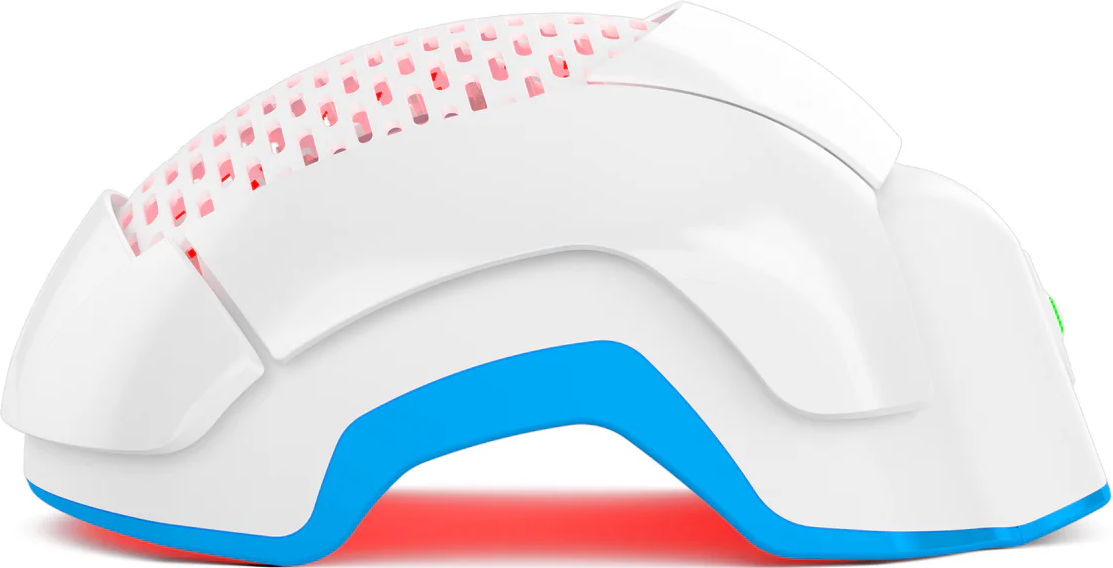
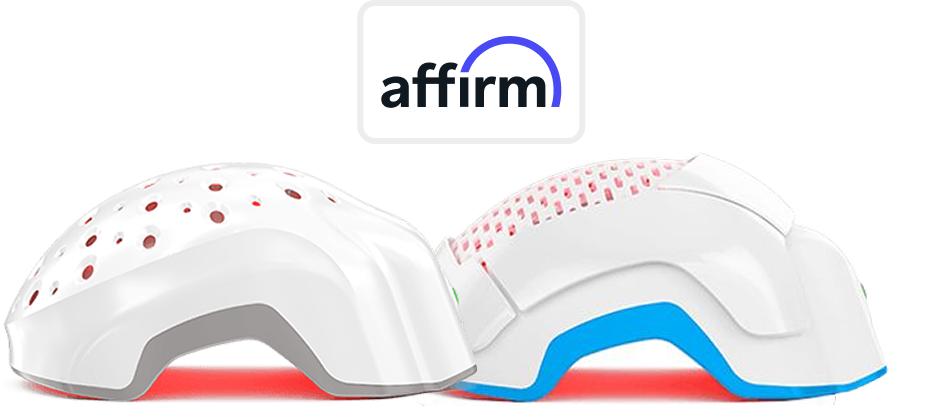
Not all at‑home LPT helmets are the same. Some rely on LEDs that scatter light, offer poor scalp coverage, or have awkward fits that make regular use… well, annoying. That’s where Theradome really stands apart.
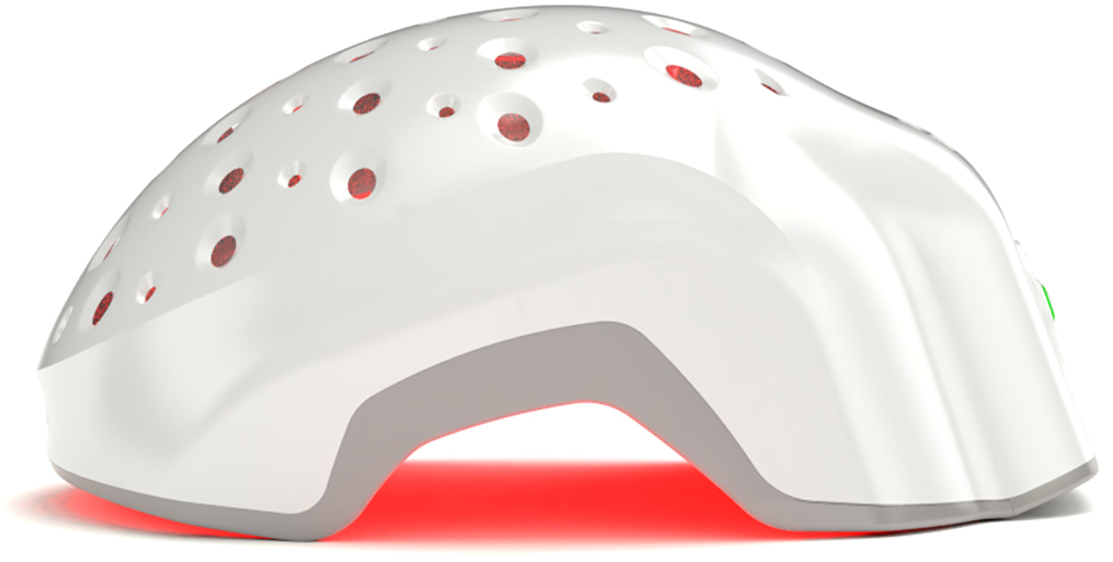
Unlike many consumer devices, Theradome uses class‑3R cold lasers, not LEDs — meaning the light is coherent, directional, and hits the scalp with the kind of precision you want if you’re trying to stimulate follicles that are already struggling.
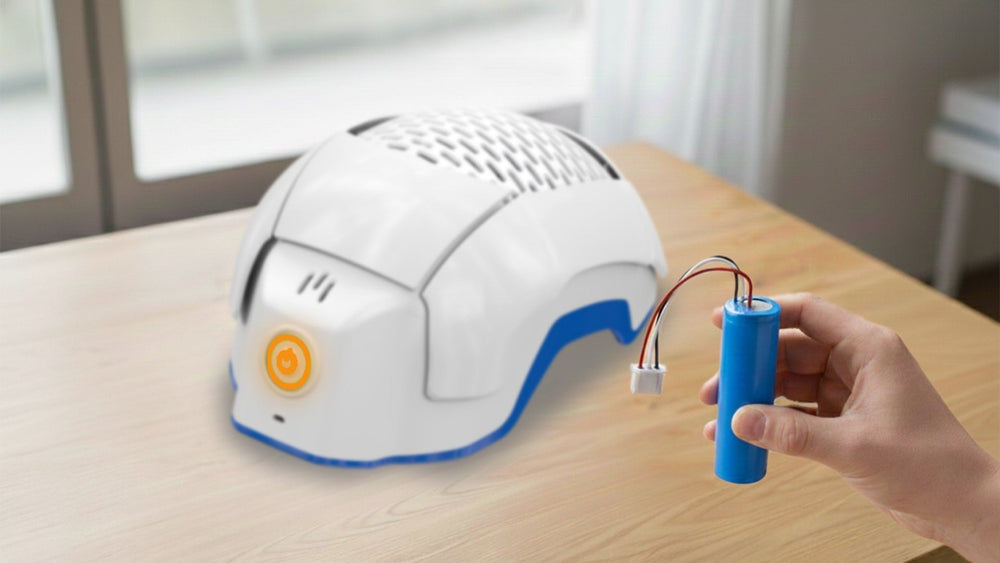
The dome shape is designed for full‑scalp coverage (especially the crown, temples, and midline — common thinning zones), and the cordless design removes one of the biggest hurdles to long‑term adherence: frustration.
Theradome is also FDA‑cleared for both men and women with androgenetic alopecia. In peer‑reviewed trials, it demonstrated statistically significant improvements in hair count and hair shaft diameter… especially with consistent 2–4x per week use over 6 months or more.
So, if your goal is to actually stick to an LPT routine without getting annoyed, delayed, or tangled in wires, Theradome’s design tends to make that possible.
Does Hair Type Change Anything?
LPT works at the follicle level, not the strand level, so curl pattern or ethnicity does not affect the underlying biological mechanism. Dense or coily hair may require simple adjustments like parting sections to ensure scalp exposure. Nothing complicated.
For detailed guidance on hair density and exposure, refer to the internal article on hair texture classification.
Conclusion
LPT is real science, supported in clinical research, and safe for home use when the device is FDA‑cleared and used as directed. The real question is not clinic or home. It is consistency or inconsistency. Daily life usually decides that part for us.
If at‑home treatment feels more doable, it typically is. And when something is doable, it is more likely to be done long enough to matter. That is where progress lives.