







Not in the way you'd think. Red light therapy won’t dye your hair or reverse grays. It’s not a magic beam that turns silver back to sable. But (and this part’s real), it can support the pigment-making cells in your follicles. Which means, in some cases, your hair might hang on to its color a little longer. It might even look darker as it grows back stronger and thicker.
But first, a quick (and critical) clarification.
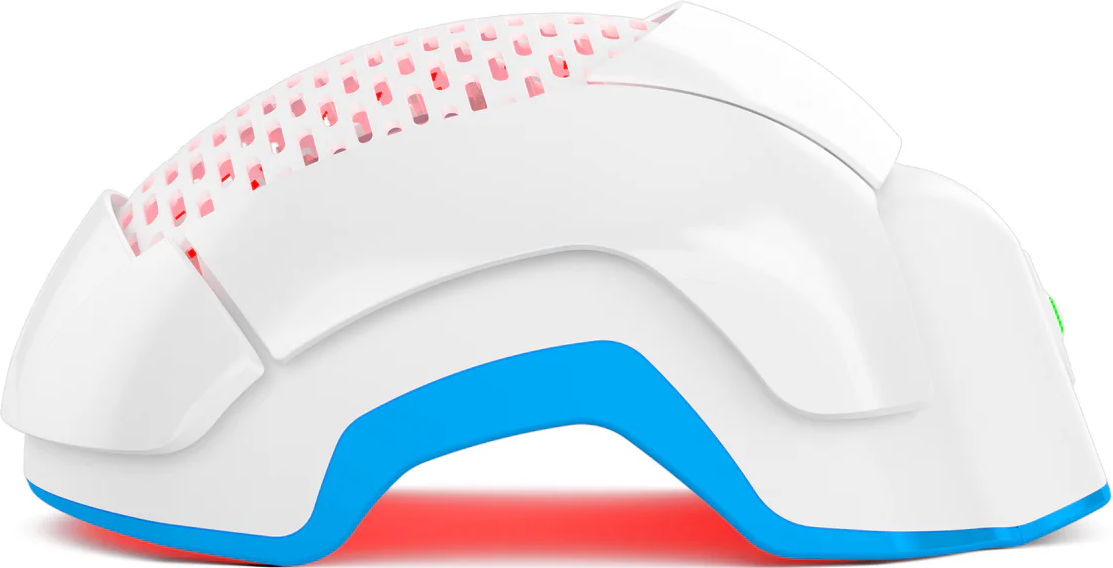
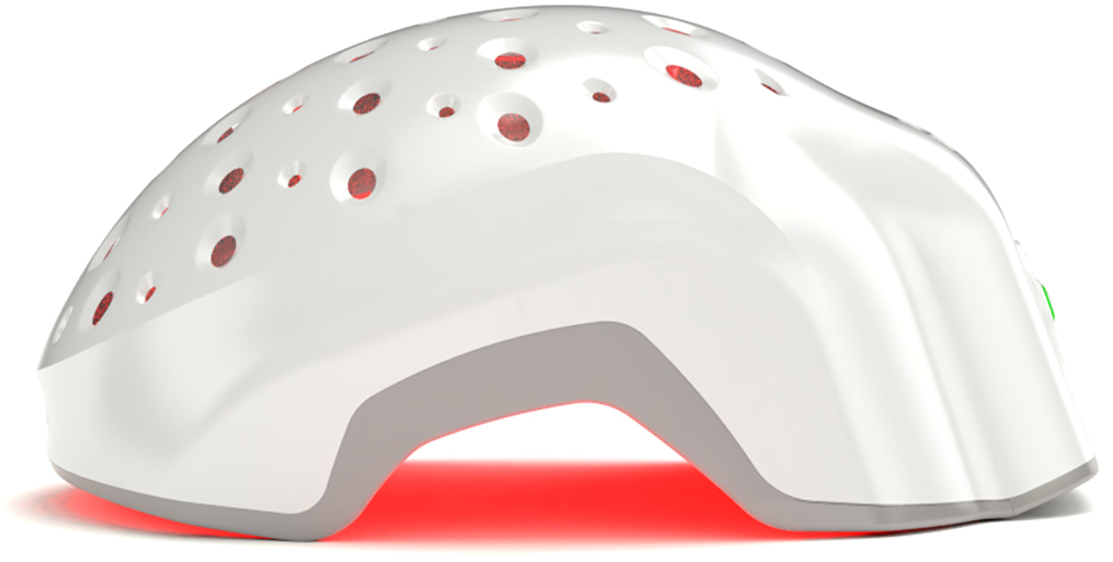
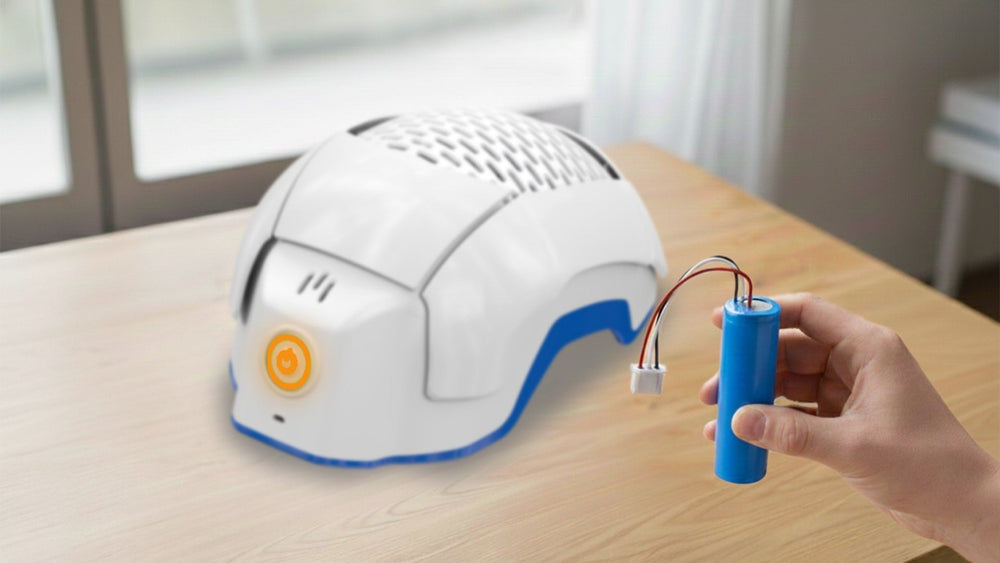
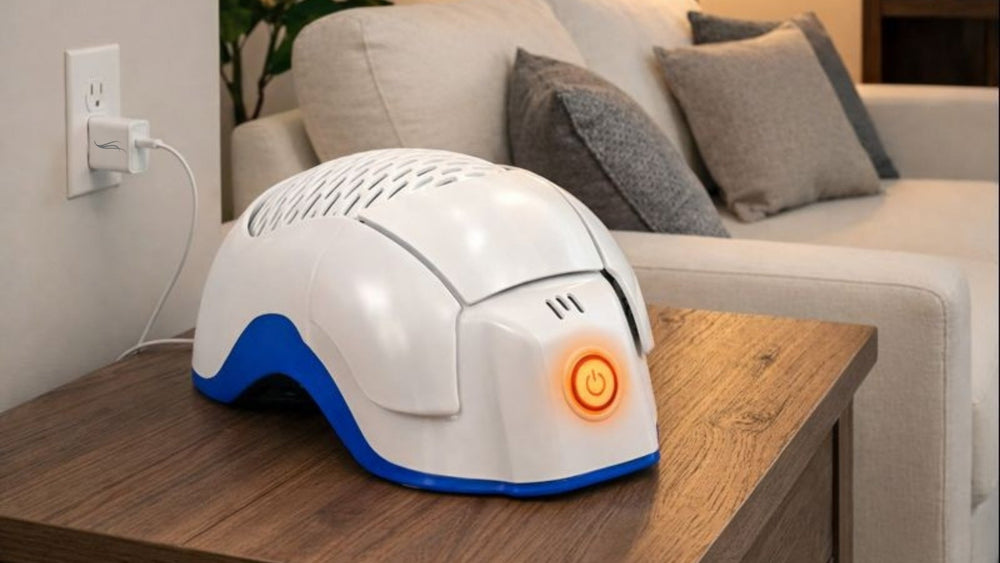
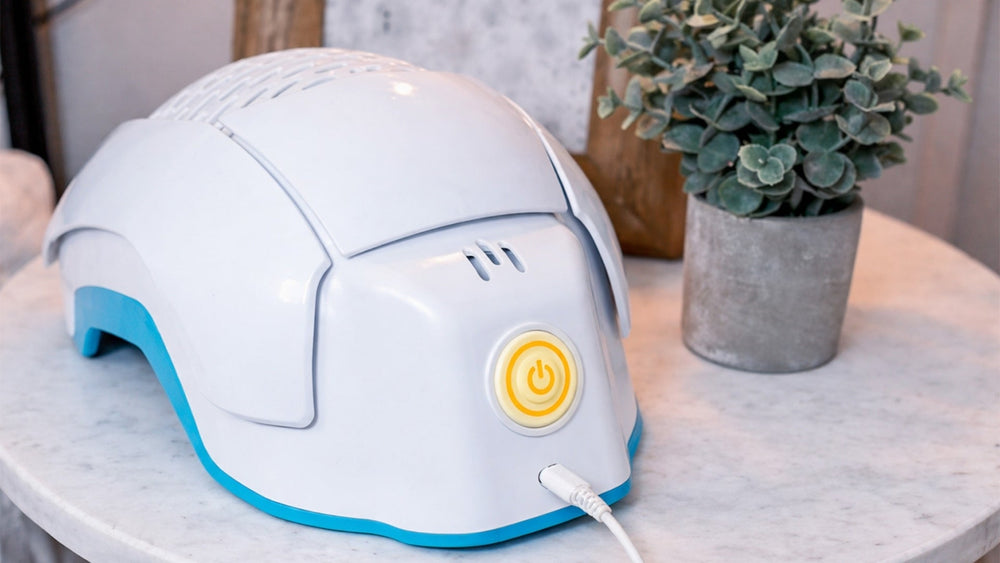
When we say “red light therapy” in this blog, we’re not talking about every red-glowing gadget on the market. We’re focusing specifically on laser phototherapy (LPT)—a medically precise form of red light therapy that uses concentrated, monochromatic laser light (680nm). That’s the kind that’s FDA-cleared for hair regrowth, and it's the only form with clinical data behind its effect on follicular pigment.
So yes, it’s red light… but not just any red light. There’s a difference.
Wait! Isn’t Red Light Therapy the Same as Laser Phototherapy?
Not quite.
Laser phototherapy (LPT) is a specific medical application of red light therapy. It uses concentrated laser diodes that emit coherent, monochromatic light… usually at 680 nanometers. This allows it to penetrate deeper, target follicles more precisely, and actually stimulate mitochondrial activity at the cellular level.
Generic red light therapy (RLT)?
That includes a broad category of LED devices: face masks, salon domes, home-use panels. While those may emit red wavelengths, they’re typically lower intensity, broader spectrum, and often don’t reach the follicle bulb effectively.
All LPT is red light therapy. Not all red light therapy is LPT.
And when we’re talking about melanocyte support, pigment retention, or hair regrowth, only LPT has been studied and cleared for those outcomes.
What Actually Gives Hair Its Color?
Hair gets its color from melanin, a pigment created by cells called melanocytes. These cells sit at the bottom of each hair follicle, in a little structure called the bulb. Two main types of melanin mix to produce your hair color: eumelanin (brown/black) and pheomelanin (red/yellow).
When melanocytes are active and healthy, they inject melanin into each new strand of hair as it forms. Once that strand leaves the scalp, its pigment is "locked in."
Why Hair Loses Pigment in the First Place
Melanocytes aren't immortal. Over time (or sometimes much earlier than expected), they start to decline. The most common reasons:
-
Aging: natural depletion of melanocyte stem cells
-
Oxidative stress: caused by reactive oxygen species (ROS)
-
Genetic factors: premature graying often runs in families
-
Hormonal changes: thyroid issues, pregnancy, etc.
Eventually, as these pigment cells shut down, the hair shaft grows out white or gray—not because color is "leaving," but because it was never added to begin with.

The Role of Oxidative Stress on Melanin Production
Oxidative stress is like rust for your cells. Tiny unstable molecules (ROS) bounce around and damage DNA, including the DNA of melanocytes. Over time, this can lead to cellular burnout or apoptosis (self-destruction). And once the pigment-producing team gives out? Gray hair.
What Red Light Therapy Actually Does
Laser phototherapy (a specific form of red light therapy) doesn’t act on the hair shaft. It works much deeper… on the follicle itself.
Here’s what happens:
- Red light (typically 680nm) stimulates mitochondrial activity
- This increases ATP production, aka cellular energy
- It improves the metabolic function of follicle cells, including melanocytes
The process is called photobiostimulation. It's non-invasive, non-thermal, and FDA-cleared for androgenetic alopecia.
Can Red Light Therapy Reverse Gray Hair?
(spoiler: no… but there’s a nuance worth caring about)
Not really. Once a follicle stops producing melanin (because its melanocytes have packed up and left town), there’s no “reactivate” button. That pigment-producing machinery is gone. LPT can’t summon it back from the void.
But... and stay with me here... if the follicle's melanocytes are still functional (just sluggish, stressed, or on the brink of burnout), LPT might buy them more time.
It’s not a rewind button. It’s more like a cellular breather.
Here’s what that looks like under the scalp:
-
Preservation not resurrection: Laser phototherapy supports the mitochondria inside melanocytes (yep, the pigment-makers), potentially delaying their decline. That means longer pigment production, not pigment re-creation.
-
Thicker hair = richer tone: Healthier follicles pump out terminal hairs instead of miniaturized wisps. Thicker shafts reflect light differently… and that shift alone can make hair appear darker, even if melanin levels stay the same.
-
Gray hairs still benefit: Even if pigment’s gone, those strands can become structurally stronger. That reduces breakage, yellowing, or that dull “wire” texture some grays get.
Now, let’s be clear.
If your melanocyte stem cells are depleted (and we’ve got peer-reviewed studies confirming that’s the mechanism behind true graying), LPT isn’t going to rebuild pigment from scratch. But if you're dealing with early graying, oxidative stress, or hair thinning that coincides with pigment decline?
Then yes, there’s a biologically plausible reason why red light therapy (specifically LPT) might help pigment last longer.
Common Myths vs. Clinical Reality
No, laser phototherapy won't bleach your hair. It won't fry it, tint it, or ruin your dye job. LPT uses "cold lasers" (Class 3R), meaning there’s no heat involved. Just low-energy light.
It’s completely safe on:
- Color-treated hair
- Highlighted hair
- Natural pigments of all shades
It may even improve shine and texture. Not because of pigment, but because of improved follicle health.
Why Some Hair Looks Darker After Red Light Therapy
Okay, so here's the thing: LPT doesn't dye your hair. It doesn’t sneak melanin into the shaft or secretly stimulate some color-producing gland you didn’t know you had. But (and this is a big but), hair can appear darker after consistent red light therapy. And it’s not just optical trickery.
Let’s break it down:
- Hair shaft caliber matters. Thinner hair strands (especially when miniaturized from androgenetic alopecia) scatter light in all directions. That can make hair look dull, patchy, or even slightly gray-ish. But when LPT boosts ATP and follicle health, strands start growing in thicker (a.k.a. terminal instead of vellus). These thicker shafts absorb and reflect light differently. Then hair appears deeper, glossier, more “pigmented,” even if the melanin load hasn’t changed.
- Reduced scalp show-through. Thicker hair = denser coverage. And when the light can’t easily bounce off your shiny, slightly stressed scalp? The overall tone looks deeper… especially in darker-haired individuals.
- Sebum and cuticle health improve. Red light therapy doesn’t just work on pigment cells. It also supports sebaceous gland activity and can enhance cuticle integrity. This means shinier strands, less frizz, and smoother surfaces which again deepens the color perception.
- Melanin preservation (maybe). While it’s not actively coloring the strand, LPT might be helping melanocytes function longer… meaning that the newly grown hair has more melanin than it would’ve without intervention. Not always, but in early-stage pigment decline? It’s a possibility.
So yes, it’s physics but also biology, optics, follicular rehab, and possibly a little mitochondrial magic. The strands may not be darker by the numbers. But in real-world lighting and real-life mirrors? They sure can look that way.
Conclusion
So, does red light therapy affect hair pigment? Not directly. But it can support the tiny, fragile cells that make pigment possible. And that alone makes it worth understanding.
It won’t turn silver to chestnut. But it might give your remaining color a longer lease on life.
And the hair it helps grow often looks richer, stronger. And yes, a little darker.
That’s just biology, doing what it can while it still can.