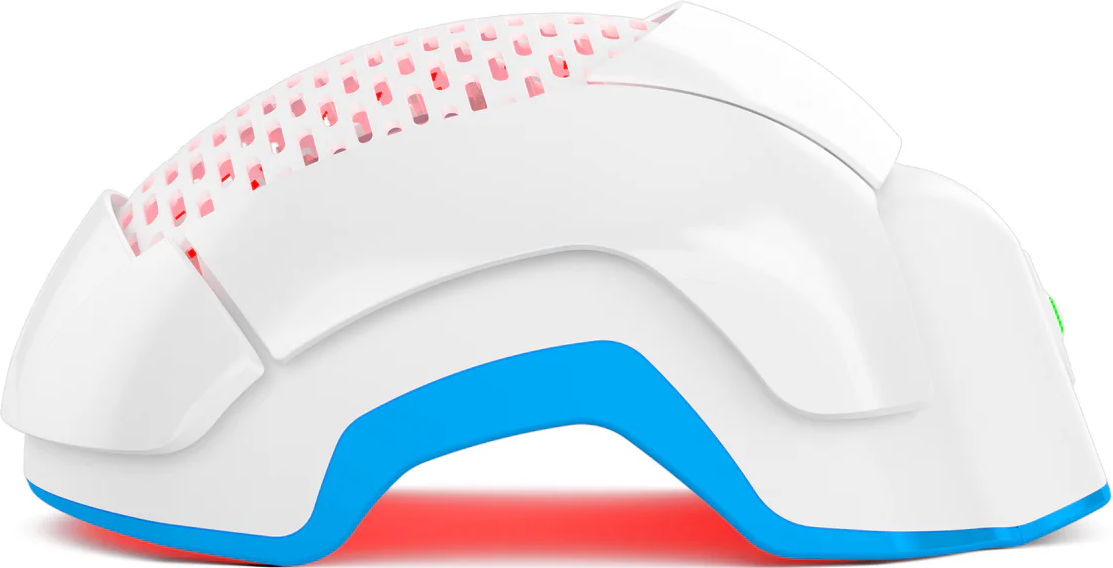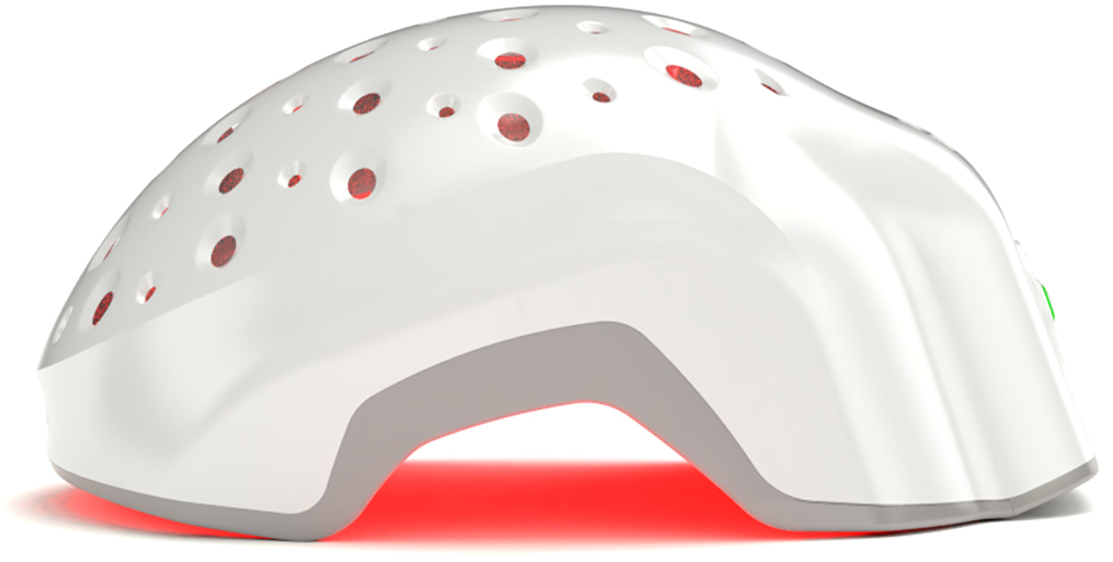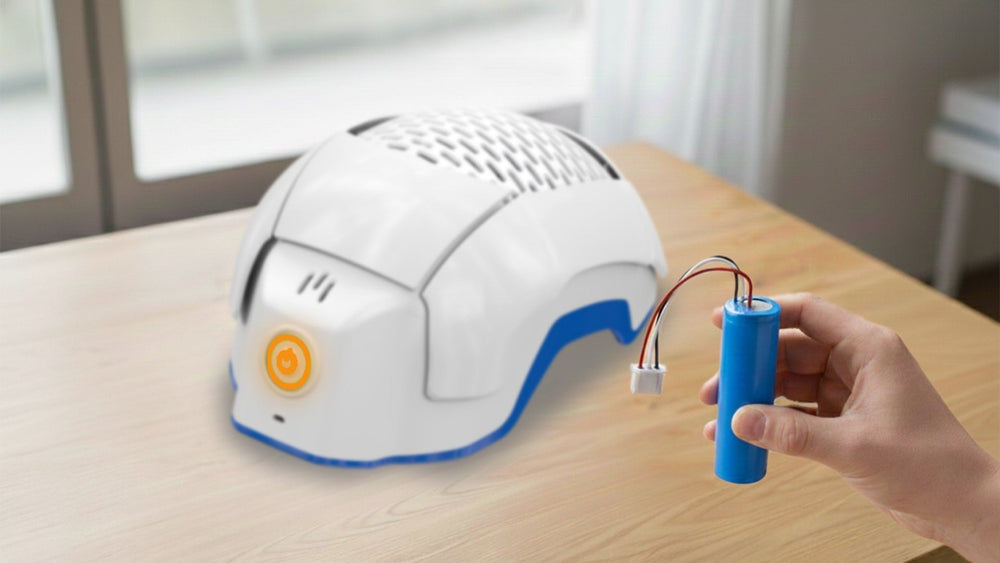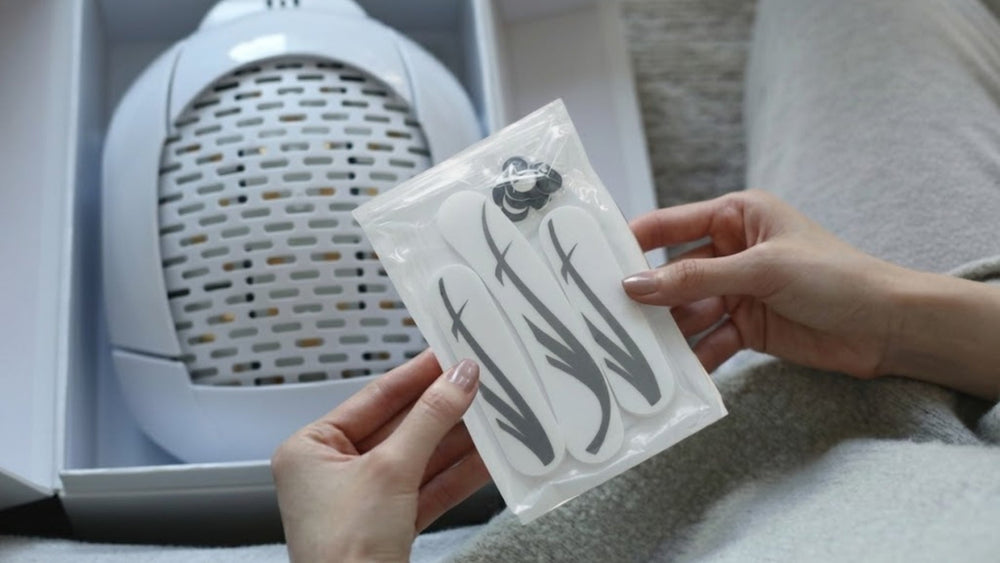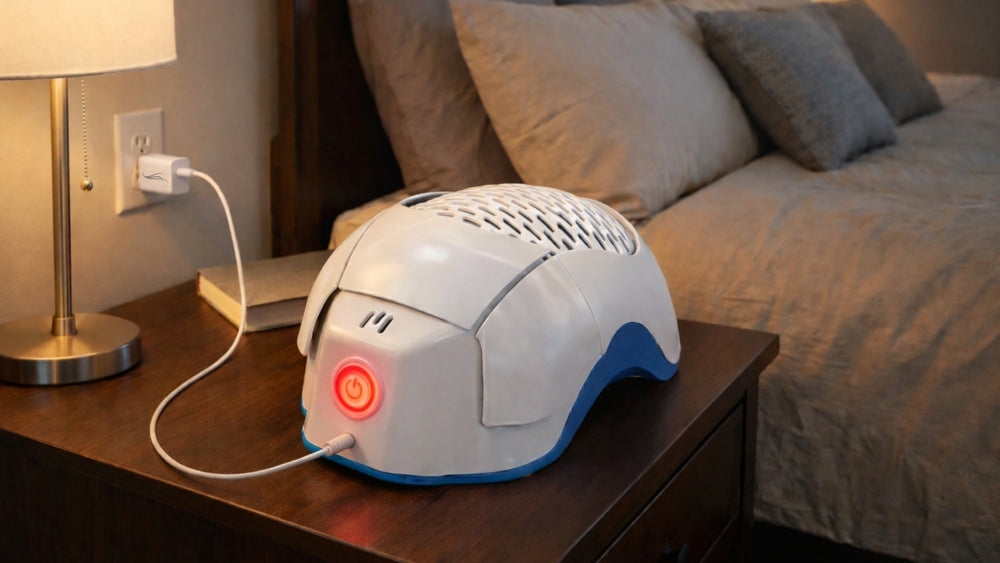








Female pattern baldness (also called female pattern hair loss) is the most common cause of gradual thinning in women, usually showing up as a widening part or reduced density on the top of the scalp. It’s driven largely by genetics and follicle sensitivity, and it’s treatable with evidence-backed options, selected prescription therapies, and Laser Phototherapy (LPT) devices that are FDA-cleared.
One more thing… you’re not “vain” for caring. Hair is personal. It’s also biologic.
What is Female Pattern Baldness?
“Female pattern baldness” is the everyday label people use for female pattern hair loss (FPHL), a form of androgenetic alopecia in women. It’s typically gradual, and it usually shows up as diffuse thinning over the central scalp rather than sudden bald patches. Many women keep their frontal hairline, which is why it can feel sneaky at first.
It’s common, and it tends to become more noticeable with age. A substantial portion of women show signs by midlife, and many do not keep a “full density” scalp into later decades.
How Female Pattern Baldness Develops Inside the Follicle
This condition is not simply “more shedding.” The hallmark is miniaturization: over time, the affected follicles produce hairs that are finer, shorter, and less pigmented, and the growth cycle shifts so the growth phase becomes shorter. The result is a gradual change in hair caliber and overall coverage.
You often feel it before you “see” it.
And this is why people can swear their hair is “falling out more,” even when the deeper issue is that the new hairs coming in are simply weaker.
What Causes Female Pattern Baldness?
Genetics and follicle sensitivity
Family history matters. Sometimes it’s obvious (mum, aunties). Sometimes it’s weirdly indirect. A dermatologist might even call it “polygenic,” meaning several genes contribute rather than one clean inheritance pattern. Clinical reviews consistently describe the hereditary component as central.
Hormonal influence (androgens, not “hormone imbalance”)
Androgens can influence patterned hair loss, but here’s the nuance: many women with FPHL do not have clear androgen excess on lab testing. The follicles can still be more sensitive to androgen signaling. Newer terminology reflects the variable role and often the absence of overt androgen excess in women.
So yes, hormones can matter.
But it’s often not as simple as “my hormones are off.”
Age, menopause, and timing
FPHL can begin at many life stages, and progression often becomes more noticeable with age. A 2025 NEJM clinical review describes the classic clinical pattern and common treatment strategies in women, including approaches used around midlife and beyond.
There’s no single “female pattern baldness age.”
Annoying, but true.
Early Signs and Progression Patterns in Women
Most women don’t wake up bald. It’s more like… your part gets a little wider, then a bit wider, then you start doing the “angle check” in every bathroom light.
Common early signs include:
- A widening central part
- Reduced ponytail circumference
- More scalp visibility at the crown, especially under harsh overhead lighting
- Overall “less coverage” without a distinct patch
Texture changes can come before obvious thinning.
Stages of Female Hair Loss
Clinicians often describe severity using the Ludwig scale, a widely cited framework for female pattern hair loss staging. It’s not perfect, and some women don’t fit neatly into it, but it’s useful for communication and planning.
- Ludwig I: mild diffuse thinning over the crown, often most visible along the part
- Ludwig II: more noticeable widening and reduction in density
- Ludwig III: advanced thinning across the top scalp with significant scalp show
If you’re thinking, “I don’t match those diagrams,” you’re not alone.
How Female Pattern Baldness is Diagnosed
Dermatologists typically diagnose FPHL through:
- Clinical pattern recognition (distribution and hair caliber variation)
- Trichoscopy (magnified scalp and hair evaluation)
- Sometimes a scalp biopsy when the diagnosis is uncertain or mixed with other conditions

Lab work is not required for everyone, but it can be helpful when symptoms suggest a second issue layered on top (thyroid disease, iron deficiency, hyperandrogenism signs). Lab testing is selective, not automatic.
That “selective, not automatic” part matters. It stops you wasting time.
Conditions Often Confused with Female Pattern Baldness
This is where a lot of people lose months.
Telogen effluvium
Often triggered by stressors, illness, childbirth, rapid weight changes, or medication shifts. It tends to be diffuse shedding rather than a patterned miniaturization issue, though both can coexist.
Alopecia areata
Usually shows discrete patches, sometimes with exclamation mark hairs, and behaves differently from patterned thinning.
Traction alopecia
Often related to chronic tension hairstyles. The distribution can mimic thinning, but the cause and management are different.
Thyroid-related shedding
Can look like diffuse loss and can stack on top of FPHL. This is one reason lab checks sometimes enter the conversation.
“It’s probably just stress” is sometimes true, but it’s also sometimes the fastest way to miss FPHL until it’s advanced.
Can Female Pattern Baldness be Treated?
Yes. But “treated” needs a realistic definition.

For many women, success looks like:
- Slowing progression
- Improving visible density
- Increasing hair shaft thickness
- Less scalp show in photos and mirrors
Some people get regrowth. Some stabilise. Many do best with combination therapy guided by a clinician.
Patience is not optional here.
I wish it was.
Evidence-Based Treatments for Female Pattern Baldness
Topical minoxidil
For women who want a non-drug option that still sits on clinical evidence, Laser Phototherapy (LPT) is one of the few home treatments with FDA-cleared devices and published trial data behind it. Topical minoxidil is also a core first-line therapy for female pattern hair loss, and the American Academy of Dermatology notes that 2% and 5% minoxidil products are FDA-approved for women with FPHL.
What catches people off guard:
- Some women notice temporary increased shedding early on, which dermatology patient guidance describes as a known early phase that typically settles as regrowth begins.
- It usually needs months of consistent use before you can judge the benefit. The British Association of Dermatologists emphasizes a minimum of about 6 months before assessing response and notes benefits persist only while you keep using it.
Oral anti-androgens (spironolactone and related options)
Spironolactone is commonly used off-label for female pattern hair loss, especially when there are signs of androgen influence or when topical therapy alone is not enough.
Monitoring matters because spironolactone can affect blood pressure and potassium balance, and it’s not appropriate for everyone.
5-alpha reductase inhibitors
Finasteride and dutasteride reduce conversion of testosterone to dihydrotestosterone (DHT). Their use in women is more complex than in men because of pregnancy-related risk and mixed evidence across studies. Reviews note potential benefit in selected women, often emphasizing postmenopausal use or strict pregnancy avoidance.
But there’s the teratogenic concern and the need for contraception in women of reproductive potential when these medications are used off-label.
This is one of those “doctor-led only” lanes.
Adjunctive scalp therapies
Anti-inflammatory and anti-yeast shampoos (like ketoconazole) are sometimes used as supportive care. They are not a standalone treatment for FPHL, but they can be relevant when scalp inflammation or dandruff-like scaling is present. Clinical discussions often position these as adjunctive rather than primary therapy.
Laser Phototherapy (LPT)
LASER is an acronym for Light Amplification by Stimulated Emission of Radiation. In physics, “radiation” does not automatically mean the scary kind. It refers to emission of energy as electromagnetic waves, which includes visible and near-visible light.
Now, what LPT is actually doing in hair treatment:
In the hair-loss context, we’re talking about cold lasers used for photobiostimulation, meaning the light is applied at levels intended to stimulate cellular activity without heating or burning tissue.
Clinical reviews and meta-analyses evaluating home-use, FDA-cleared light/laser devices for pattern hair loss report improvements in objective measures like hair density, though results vary by device, design, and protocol.
Safety, in plain language:
- Visible Class 3R lasers are commonly described as low-risk when used carefully, with limits often discussed around 5 mW for continuous visible beams in standard classification systems.
- For perspective, the FDA’s laser pointer guidance discusses output power ranges and hazard classes in consumer contexts, reinforcing that power and class matter when talking about safety.
Procedural Options
Platelet-rich plasma (PRP)
PRP has a growing body of research in pattern hair loss, including female participants. A 2024 review focused on female hair loss reported improvements from PRP in measures like hair density and thickness, while also noting variability related to protocols, dosing schedules, and patient factors.
There are also placebo-controlled trial data in women with androgenetic alopecia showing objective improvements in density and caliber with certain PRP protocols.
Still, PRP is not one standardized product. Different prep methods, injection intervals, and devices can produce different outcomes… which is why results feel inconsistent across clinics.
Hair transplantation
Hair transplantation can help selected women, but candidacy is more limited than many people assume, especially when thinning is diffuse (because the donor area can be affected too). Transplantation is part of the toolbox, often after medical stabilization and careful evaluation.
Not everyone needs it.
Not everyone is a good fit.
What Influences Treatment Response
A few variables show up repeatedly:
- Stage and duration of hair loss at the time treatment starts (earlier tends to respond better)
- Consistency (skipping weeks is a bigger deal than most people want to admit)
- Coexisting conditions like telogen effluvium, scalp inflammation, thyroid disease, iron deficiency
- Medication tolerability (some people stop because of side effects, not lack of efficacy)
Emotional Impact and Decision Fatigue
Female hair loss messes with your head in a specific way. It’s visible enough to bother you, but sometimes invisible enough that other people don’t understand why you’re upset.
Also, the internet does not help.
You’ll see a thousand confident claims, and half of them are basically vibes with a shopping cart attached. Clinical reviews acknowledge that many treatment options have limited evidence and do not always meet expectations, which is a polite way of saying “people get disappointed.”
So… if you’ve felt overwhelmed, you’re not dramatic. You’re responding normally to a noisy space.
When to Seek Professional Guidance
Consider a clinician-led evaluation if:
- The loss is rapid or sudden
- There are bald patches, scalp pain, scaling, or scarring concerns
- You have symptoms suggesting endocrine issues (cycle changes, new facial hair growth, severe acne, unexplained weight changes)
- You’ve tried treatment long enough and the pattern is unclear
A proper consult can include trichoscopy, targeted labs when appropriate, and a plan that actually matches your pattern and life.
Conclusion
Female pattern baldness is common, gradual, and usually driven by genetics and follicle sensitivity. Topical minoxidil is a decent starting point, often paired thoughtfully with other options like prescription anti-androgen strategies or Laser Phototherapy (LPT), depending on your health profile and goals. Give any plan enough time to declare itself, and don’t let loud online claims rush you into random choices. If your pattern is unclear or the loss is fast, get it assessed properly. You deserve calm answers and a plan that fits real life.