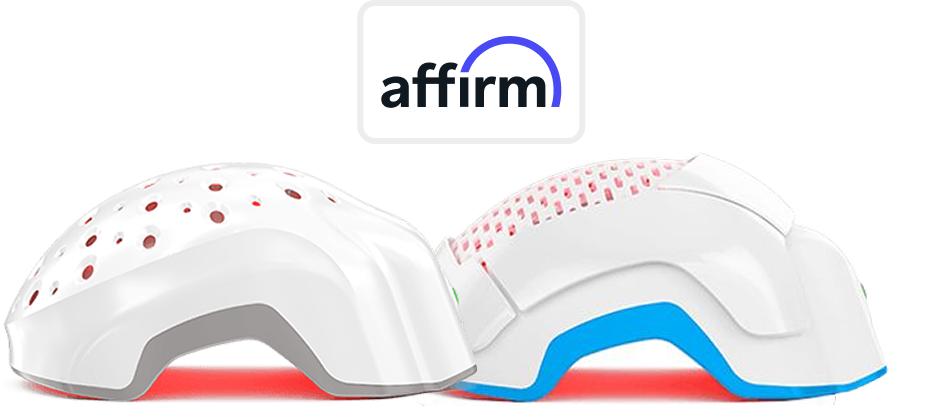








Yes, even in advanced androgenetic alopecia (AGA), recovery is possible. When a consistent regimen of Laser Phototherapy (LPT) is used with proper scalp-care habits and specialist oversight, patients can achieve visible density gains and stabilization within 4–6 months, with further improvement over time. See the case below, then the evidence.
What exactly is “advanced” androgenetic alopecia?
Androgenetic alopecia is a genetically influenced, androgen-sensitive hair loss that leads to progressive follicular miniaturization. It affects up to about half of men and women during life, with recognizable patterns in each. Clear staging systems exist for clinicians.
“Advanced” typically means later stages on the Norwood-Hamilton scale in men or Ludwig/Savin in women, where visible density loss is obvious and hair shafts are finer across a wider area. It’s still non-scarring. It’s still responsive in many cases.
Under the hood, androgenetic alopecia involves DHT-mediated signaling changes, energy deficits in follicle cells, and low-grade perifollicular inflammation. Fibrosis may appear in some cases, though reporting varies.
Why people at the “advanced” stage often lose hope
Because mirrors are ruthless. Also because progress is slow, and the internet promises too much. Daily watching blurs perception, so gradual change can be missed until photos put the truth side by side. Clinical teams lean on standardized imaging for that exact reason in trials and practice.
Another thing. Many have tried topicals for weeks, not months. Or stopped and restarted. That timing matters. The AAD sets expectation for minoxidil at 6–12 months, with continued daily use to keep gains.
The science of follicular revival
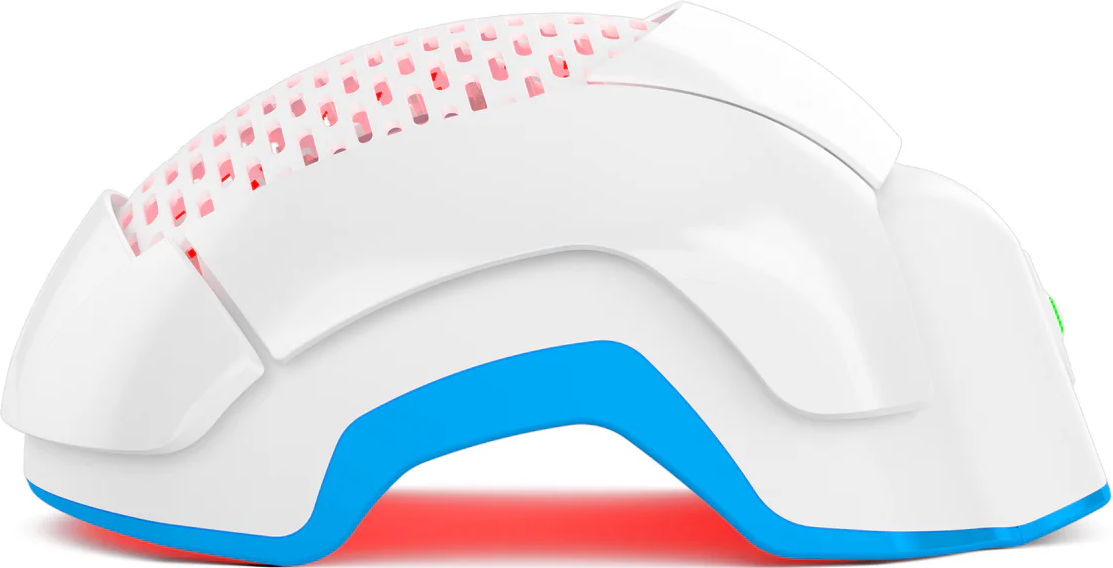
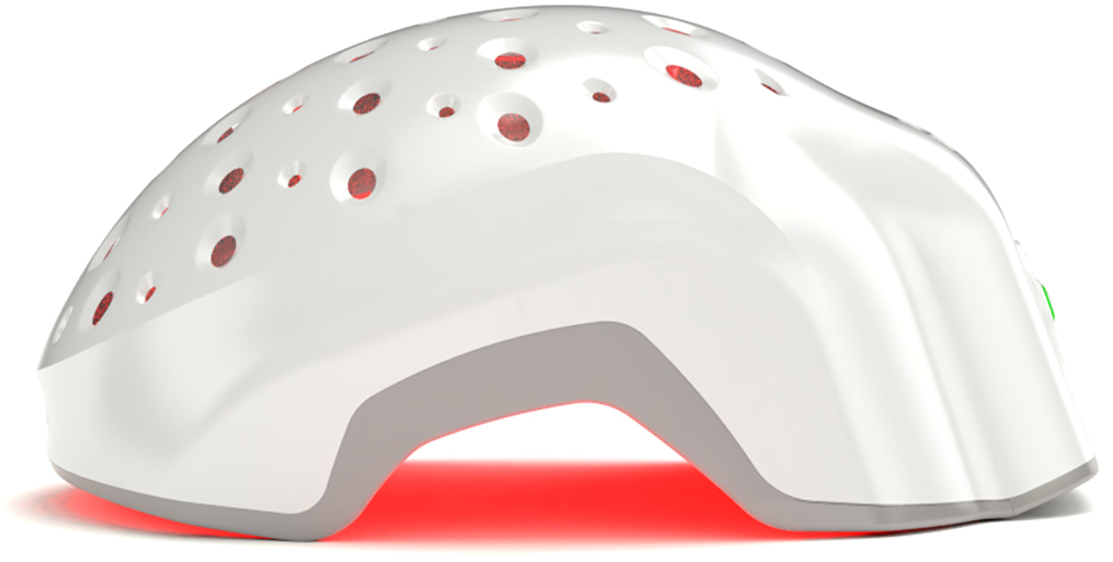
Laser Phototherapy (LPT) uses red light to nudge mitochondria in follicle cells. The best-studied hypothesis points to cytochrome c oxidase absorbing photons, transient nitric oxide changes, improved electron transport, and a rise in ATP production. Downstream, that modulates signaling and cell survival, supporting anagen.
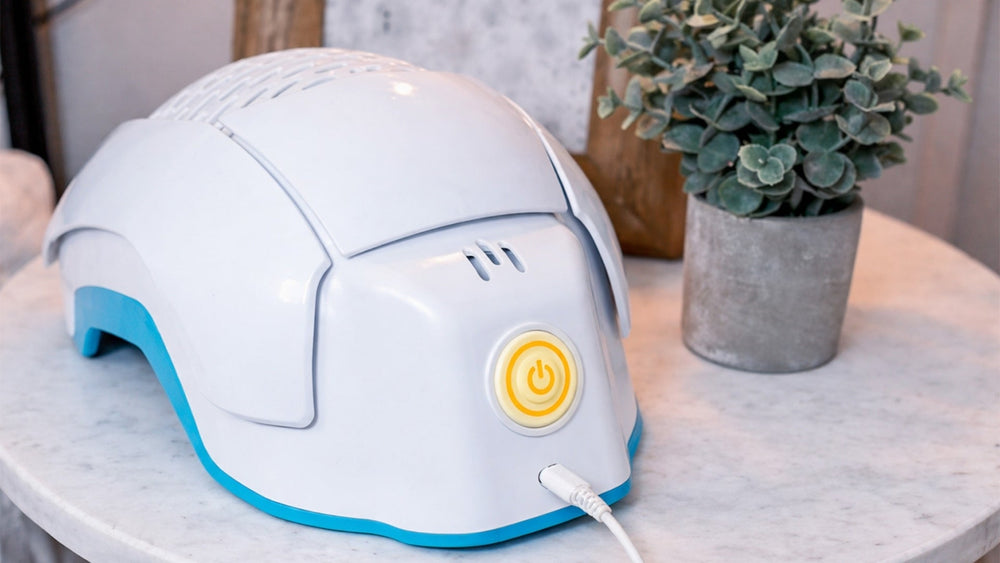
Clinical devices for AGA typically operate in visible red wavelengths similar to those used in randomized trials, which showed benefit over sham within 16–26 weeks. Methodical, not flashy.
Safety note. These consumer devices are non-ablative and non-thermal when used as directed. The FDA describes hazard classes and labelling requirements for lasers, with visible Class 3R limited to low outputs; medical helmets are engineered systems with enclosure and instructions for safe use.
Meet Melba — a patient with advanced AGA
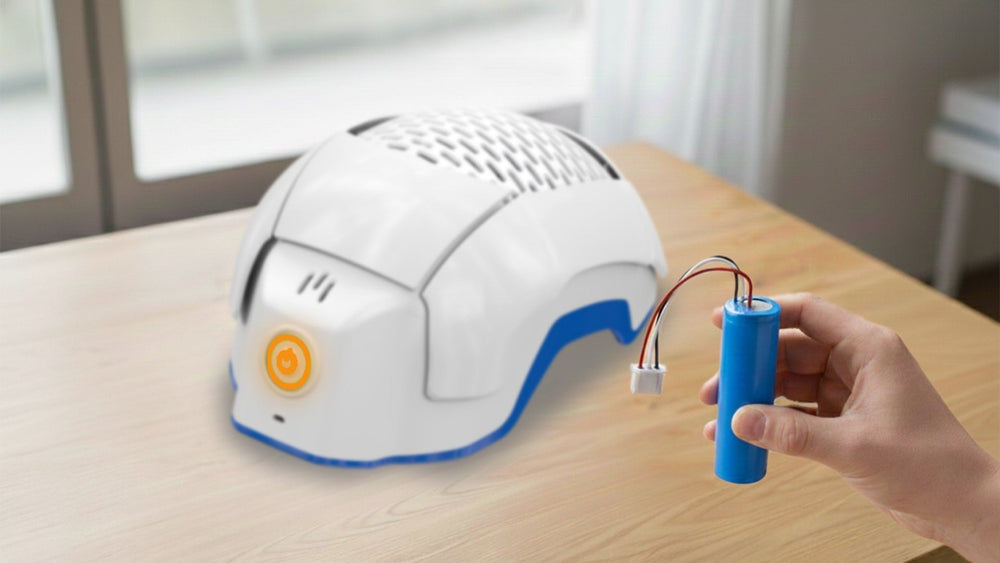
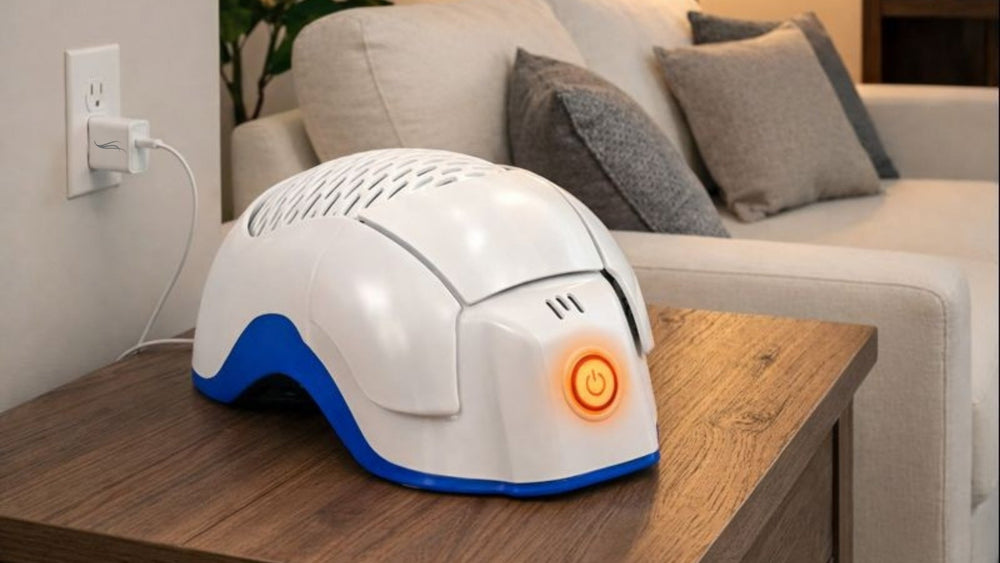
Melba, 68, came to us with advanced female pattern hair loss. The kind of diffuse thinning that slowly chips away at confidence as much as coverage. She admitted she was simply tired of caring about it, but not quite ready to surrender either. Together, we decided on a gentle, science-backed plan: consistent use of an FDA-cleared Laser Phototherapy (LPT) helmet at home, supported by a simple scalp-care routine that felt doable rather than daunting.
(And yes, she almost skipped the photo step. Don’t. Those pictures end up telling the real story.)
The intervention — Laser Phototherapy in real life
Device and schedule
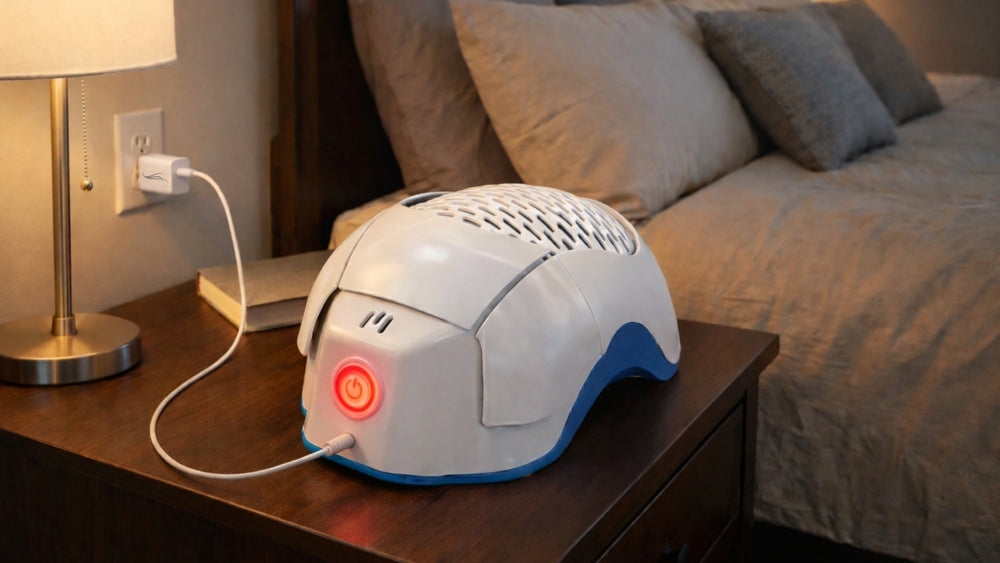
Sessions were short and regular. Home use. No gel, no sticky residue, no needles. The device category is cleared to promote hair growth in AGA for men and women; FDA letters for Theradome PRO LH80 confirm indications and over-the-counter status expansions.
Why LPT here?
Because the evidence base is real. Multiple randomized, sham-controlled trials show significant benefits in hair counts and diameter by week 16–24, with mild, transient side effects at most.
Safety
Consumer LPT helmets are engineered for repeated use without heat injury. The FDA outlines laser hazard classes and consumer protections; LPT devices as sold are designed and labeled accordingly.
The six-month checkpoint — did anything actually change?
First, she said “nothing’s happening.” Then we lined up the photographs. Same lighting. Same angle. The coverage looked darker and denser, with less scalp glare and better strand caliber in the affected zones. That pattern mirrors trial timelines where benefits are measured at 16–26 weeks.
Side effects? None reported beyond normal shedding fluctuations that often settle. Trials note pruritus or transient shed in a minority.
She decided to continue. Quietly encouraged. That matters too.
What this means if you’re already “advanced”
You can still gain. Maybe not a teenage hairline… but meaningful density and a slower loss rate are absolutely on the table. The more miniaturized follicles you rescue, the better your cosmetic outcome. RCTs set a reasonable clock: expect the first clear changes by month 4–6 when adherence is good.
Some follicles may be past saving. Biology is candid like that. Reviews describe micro-inflammation and variable fibrosis in AGA that can limit reversibility in long-standing zones.
Still… improvement beats stasis.
Where does LPT sit among other options?
Drug therapies you may already know
Minoxidil is a staple. Plan on 6–12 months to judge it fairly, and keep using it to maintain gains.
Clinicians may use finasteride in men and consider anti-androgen strategies in women when appropriate. That’s a dermatologist conversation.
PRP and surgery
Platelet-rich plasma (PRP) shows hair density benefits in meta-analyses, though protocols vary and publication bias is discussed. It is not a quick fix, but it’s a real option with a safety record.
Hair transplantation is a separate path for suitable candidates with adequate donor supply and stable patterns. Expectations and donor math matter.
Combination therapy with LPT
Some evidence suggests LPT + minoxidil outperforms monotherapy. Other syntheses report no significant advantage over minoxidil alone. Discuss with your clinician; if you tolerate minoxidil and can be consistent with both, combination can be reasonable.
Safety, side effects, and the “laser” worry
Cold LPT does not cut, burn, or cauterize. That’s not its job. Consumer systems fall under FDA oversight as laser products with defined hazard classes, labels, and safe operating conditions; manufacturers obtain 510(k) clearance for intended use in AGA. You can read Theradome’s clearances directly.
Trials report minimal adverse events. Some users note transient shedding early or mild scalp itch that resolves.
What trichologists recommend for sustained gains
Consistency is the whole game
Your follicles respond to cumulative signaling. Missed sessions add up, too. Keep a simple schedule and photograph every 8 weeks. RCTs built their timelines around this kind of cadence.
Scalp-care habits that help
Clean scalp, sensible styling, stress management, and medical review if shedding suddenly spikes or the pattern looks atypical. The AAD encourages professional evaluation when hair loss progresses or you’re unsure about the cause.
Maintenance after month six
Most patients transition to a steady maintenance frequency to preserve gains. If treatment stops entirely, density can slide back over time. This is true of both LPT and pharmacologic options. AAD on maintenance with minoxidil, plus LPT trial follow-ups showing sustained benefit with ongoing use.
The human side
Melba started leaving the house without a hat. Not every day. Enough days. She stopped scanning every reflective surface for proof of failure. And when she forgot to check… that was the proof.
(Those weekly photos you almost skipped? Keep them. They’ll keep you honest.)
Conclusion
Advanced AGA is stubborn, not final. With steady Laser Phototherapy and a practical care plan, many see visible improvements by months four to six, and better still with continued use. The science is not magical; it’s mitochondrial and methodical. Set fair expectations. Track your progress with photos. Work with a professional. Give your follicles light, time, and a little patience.