






If your hair has started shedding while you have Nexplanon, your brain has probably already built a courtroom. Nexplanon is at the front. Your shampoo is being questioned. That stressful month from three months ago is sitting quietly in the back, acting innocent.
Annoying.
Also very normal.
This guide walks through what the evidence says, what the shedding may look like, what else can cause the same problem, and what to ask a clinician before making any contraception decisions.
What is Nexplanon, exactly?
Nexplanon is a small, flexible contraceptive implant placed under the skin of the upper arm. It contains etonogestrel, a synthetic progestin. The current FDA label states that Nexplanon is indicated for pregnancy prevention for up to 5 years. FDA label
It is not an estrogen-containing method.
That matters because different hormonal contraceptives have different effects. Some people notice bleeding changes. Some notice acne. Some notice mood changes. Some notice nothing at all and carry on with their life, blissfully not reading health articles at 3 a.m. Lucky them.
Nexplanon mainly prevents pregnancy by suppressing ovulation. It also thickens cervical mucus and changes the uterine lining, according to official patient information. Nexplanon official site
Why hormones matter for hair
Hair follicles respond to internal signals. Hormones are one of those signals, but not the only one. Illness, thyroid changes, nutrition, stress, medications, scalp inflammation, and hair practices can all affect shedding or thinning.
Hair also grows in phases. The active growth phase is called anagen. The resting phase is called telogen. When too many hairs shift into telogen at once, you may notice sudden shedding. Often, the trigger happened months earlier.
Is hair loss a known side effect of Nexplanon?

The FDA label for Nexplanon lists the most common adverse reactions reported in clinical trials. These include menstrual bleeding changes, headache, vaginitis, weight increase, acne, breast pain, abdominal pain, and pharyngitis. Alopecia is not included in that main “most common” group.
But alopecia does appear elsewhere in the FDA label under skin and subcutaneous tissue disorders. That means hair loss has been reported in connection with Nexplanon use or postmarketing safety information.
This is where we need to be very careful. Reported does not always mean proven. Possible does not mean guaranteed. And “my hair started shedding while I had Nexplanon” does not automatically mean Nexplanon did the whole thing by itself.
What the UK SmPC says
The UK Summary of Product Characteristics for Nexplanon lists alopecia as an uncommon adverse reaction. In that document, uncommon means the reaction has been reported at a lower frequency than common side effects.
Hair loss is a recognized possible side effect of Nexplanon, but it does not happen to most users.
If your hair is shedding on Nexplanon, you are not being ridiculous for asking whether the implant is involved.
But hair loss is often a pile-up. A hormonal change may be one part. Low iron may be another. Stress may be lurking in the corner pretending it is “just life.” A family history of thinning may be quietly doing what family histories do.
So the job is to sort the pattern.
Why might hair shed after Nexplanon?
Hormonal change can trigger telogen effluvium
One possible pattern is telogen effluvium, which is a form of diffuse shedding after a trigger. DermNet describes it as excessive shedding of resting hairs after a shock to the system, while new hair continues to grow underneath.
That trigger can be illness, childbirth, surgery, fever, psychological stress, weight loss, nutritional deficiency, endocrine disease, medication, or hormonal change. Not glamorous causes. Real ones.
And the timing is the part people often miss. DermNet notes that increased hair fall is usually noticed 2 to 4 months after the triggering event. A clinical review in the Journal of Clinical and Diagnostic Research also describes telogen effluvium as abrupt diffuse shedding usually seen 2 to 3 months after a trigger.
So if shedding started a few months after Nexplanon insertion, replacement, or removal, telogen effluvium is plausible.
Nexplanon may unmask pattern hair loss in susceptible people
There is another possibility that feels unfair because it sort of is.
Nexplanon may not create the whole problem. It may simply arrive around the same time that female pattern hair loss becomes easier to notice. Or a shedding episode may reveal density that was already thinning slowly underneath.
Female pattern hair loss, also called androgenetic alopecia, often looks like a wider part, thinning over the top of the scalp, or gradual crown density loss. The American Academy of Family Physicians describes women’s androgenetic alopecia as diffuse thinning over the vertex with the frontal hairline often spared.
That is different from sudden all-over shedding.
The distinction matters because temporary shedding and pattern thinning do not always need the same plan. One may settle once the trigger is handled. The other may need longer-term support.
What about DHT and androgens?
Some progestins can have androgenic activity, and androgen-sensitive follicles may be more vulnerable in people already prone to pattern thinning. A peer-reviewed article on contraceptives with higher androgen index notes that alopecia can occur as an adverse reaction related to the progestin component in susceptible users.
But let’s not get too tidy with it.
It is tempting to say, “Nexplanon acts like DHT, DHT shrinks follicles, case closed.”
Nexplanon may contribute to hair changes in some hormonally sensitive people, but the exact mechanism can vary. Some cases may look like telogen effluvium. Some may involve underlying androgenetic alopecia. Some may have nothing to do with the implant at all.
What does Nexplanon hair loss usually look like?
Diffuse shedding
If the shedding is telogen effluvium, it often appears as hair coming from all over the scalp. More hair in the shower. More hair in the brush. More hair on your shirt, your pillow, your bathroom floor, somehow your laptop keyboard.
DermNet describes telogen effluvium as diffuse shedding after a trigger, and it usually does not cause one smooth bald patch.
The hair may feel thinner overall. Volume may drop. Your ponytail may feel smaller. But the scalp usually keeps making new hair unless another condition is also present.
Pattern thinning
Pattern thinning has a different rhythm.
You may notice the part widening. The crown may look thinner in overhead light. The top of the scalp may lose density while the back and sides seem less affected.
This is where photos can be useful. Not obsessive daily photos under the cruel bathroom bulb. Just consistent images every few weeks, same angle, same lighting, same amount of emotional courage.
Female pattern hair loss tends to move slowly, and earlier treatment can matter. AAFP notes that topical minoxidil is recommended for women with androgenetic alopecia, although results take time.
Red flags that need medical attention
Some symptoms deserve prompt medical review:
- Bald patches
- Pain, burning, sores, or pustules
- Heavy scaling or inflammation
- A shiny or scarred-looking scalp
- Eyebrow or body hair loss
- Sudden severe shedding after fever, surgery, childbirth, or major illness
- Fatigue, heavy bleeding, weight changes, irregular cycles, acne, or new facial hair
A little shedding is normal. A scalp that hurts or looks inflamed is not something to politely ignore.
When does hair loss from Nexplanon start?
The 2 to 4 month window
If telogen effluvium is involved, shedding often appears 2 to 4 months after the trigger.
That delay is why people often blame the wrong thing. The shampoo gets accused. The supplement gets accused. The last haircut gets accused. Meanwhile, the actual trigger may have been a fever, a stressful month, childbirth, rapid weight loss, or a hormonal change weeks earlier.
So if Nexplanon went in and the shedding started a few months later, it is reasonable to ask about the connection.
Hair loss right after insertion
Hair loss right after insertion is less classic for telogen effluvium because the usual shedding delay takes time. Still, some people may notice hair changes early, or they may start paying closer attention after a new medication.
Now, this is where the timeline matters.
Did anything else happen recently? Illness, surgery, postpartum changes, new medication, heavy bleeding, crash dieting, stress that you keep calling “not that bad” because apparently that is what adults do now?
Write it down.
Hair loss years after insertion
If hair loss begins years after Nexplanon insertion, the implant may be less likely to be the main trigger unless something changed. Replacement, removal, illness, weight change, thyroid disease, low iron, PCOS, new medication, or gradual pattern thinning may be more relevant.
This does not mean Nexplanon is impossible.
It means the net should be wider.
Hair loss after removal
Hair loss can also happen after stopping or removing a hormonal contraceptive because removal is another hormonal shift. But this part matters: pregnancy protection can return quickly.
The FDA label says etonogestrel levels fall below assay sensitivity within one week after implant removal, and pregnancies were observed as early as 7 to 14 days after removal.
So if you are thinking about removal and still need contraception, make a plan with your clinician first.
What else could be causing your hair loss?
Nexplanon may be involved. It may also be one piece of a much larger puzzle.
And sometimes, honestly, the implant gets blamed because it has a name. Stress does not come with packaging. Iron deficiency does not sit under your arm. Thyroid changes do not arrive with a card saying, “Hi, I’ll be causing scalp drama this quarter.”
Iron deficiency or low ferritin
Iron deficiency can contribute to shedding, especially when heavy bleeding, fatigue, restricted eating, or anemia is part of the story. DermNet lists iron deficiency and nutritional deficiency among telogen effluvium triggers.
This does not mean everyone should start iron. Too much iron can be harmful. It means significant shedding is a fair reason to ask whether ferritin or iron studies make sense.
Thyroid changes
Thyroid disease can affect hair growth and shedding. Endocrine disorders, including hypothyroidism and hyperthyroidism, are possible telogen effluvium triggers.
If shedding arrives with fatigue, unexplained weight change, feeling unusually cold or hot, constipation, anxiety, heart-rate changes, or menstrual changes, thyroid testing may be worth discussing.
PCOS or androgen excess
PCOS can involve androgen excess, acne, irregular cycles, facial hair growth, and scalp thinning. Hair loss alone does not diagnose PCOS, but the symptom cluster matters.
The 2023 International Evidence-Based Guideline for PCOS describes hyperandrogenism, ovulatory dysfunction, and polycystic ovarian morphology as central diagnostic considerations, with assessment based on clinical context rather than one symptom alone. International PCOS Guideline, 2023
If you have thinning plus acne, irregular cycles, oily skin, or new facial hair, bring that up. It may change the evaluation.
And no, you do not need to arrive at the appointment already knowing what is wrong. That is not the patient’s job.
Postpartum shedding
Postpartum shedding is a classic telogen effluvium trigger. DermNet lists childbirth among common triggers for telogen effluvium.
This can overlap awkwardly with Nexplanon timing because many people choose contraception after giving birth. So the implant may go in, hair may shed later, and the timing feels damning.
Sometimes it is the implant. Sometimes it is postpartum shedding. Sometimes both.
Illness, fever, surgery, COVID, or severe stress
Illness, fever, surgery, and psychological stress can all trigger telogen effluvium.
People downplay these constantly. “It was only a fever.” “The surgery was minor.” “Stress is normal.” Fine, emotionally brave person. Your follicles may disagree.
Hair is not essential for survival. When the body is under strain, it may quietly move hair production lower on the priority list.
Diet, rapid weight loss, and low protein
Crash dieting, sudden weight loss, low protein intake, and nutritional deficiency can contribute to shedding. DermNet lists weight loss, unusual diet, and nutritional deficiency among telogen effluvium triggers.
Look, this is not a food-shame section. It is a physiology section.
If your body thinks resources are scarce, hair can become optional in the budget meeting.
Styling damage, traction, and breakage
Not all visible “hair loss” is true shedding from the follicle. Some of it is breakage.
Tight braids, extensions, high-tension ponytails, relaxers, bleach, heat tools, and rough detangling can make the hair look thinner because the fiber snaps. That can happen at the same time as hormonal shedding, which is unfair but common.
A rough clue: shed hairs often have a small bulb at one end. Broken hairs are shorter, uneven, and blunt or frayed.
How can you tell if Nexplanon is the likely trigger?
Build a timeline
Write down the dates. Not in a perfect spreadsheet unless that calms you. A note on your phone is enough.
Track:
- Nexplanon insertion date
- Replacement date, if any
- Removal date, if any
- When shedding started
- Recent illness, fever, COVID, or surgery
- Childbirth or postpartum timing
- Major stress
- Weight loss or diet change
- New medication
- Heavy bleeding
- Family history of thinning
If shedding began 2 to 4 months after insertion, replacement, or removal, Nexplanon becomes more plausible as one contributor. If it began years later with no implant change, look harder at other causes.
Track the pattern
Look at what is happening, not just how scared it feels.
All-over shedding points one way. Widening part points another. Bald patches, pain, scaling, and broken hairs point somewhere else again.
You do not have to diagnose yourself. You are collecting clues.
That is enough.
Take photos without spiraling
Take photos every 2 to 4 weeks in the same lighting. Part line. Crown. Hairline. Temples.
Do not take 47 photos a day.
That way lies madness, and also a camera roll that feels personally hostile.
Photos can help a dermatologist or hair specialist see whether density is changing, whether the pattern is diffuse, and whether regrowth is starting. Daily checking usually makes fear louder without making the evidence better.
Ask about labs if shedding is significant
A clinician may consider blood work depending on your symptoms and history. Common checks may include a complete blood count, ferritin or iron studies, thyroid testing, and selected nutrient tests. If PCOS symptoms are present, androgen-related testing may also come up.
AAFP notes that thyroid disease, iron deficiency anemia, and malnutrition can mimic androgenetic alopecia, which is exactly why guessing from timing alone can be risky.
Hormone panels do not neatly prove Nexplanon caused the shedding. They may help with the broader picture. Different thing.
Should you remove Nexplanon if your hair starts falling out?
Not every shedding episode means Nexplanon needs to come out.
If the actual issue is low iron, thyroid disease, postpartum shedding, illness, stress, a new medication, traction, or female pattern hair loss, removing the implant may not solve the thing you need solved.
And if Nexplanon is working well for contraception, that matters too.
Hair matters. Pregnancy prevention matters. Both can matter at the same time without either one being treated like a silly little side issue.
But you can ask for removal
The CDC’s 2024 contraceptive practice recommendations say that if a patient wants an implant removed, the clinician should remove it, offer counseling on alternative contraceptive methods, and start another method if desired.
You should not be dismissed if hair loss is distressing and you want to discuss removal. The better version of care is: check the pattern, review other causes, talk through alternatives, and make a decision that respects both your hair concerns and your contraception needs.
Plan contraception before removal
If you want Nexplanon removed and you still need pregnancy prevention, plan the next method before removal or at the same visit.
Again, the FDA label notes that pregnancy has occurred as early as 7 to 14 days after removal.
What to ask your clinician
Bring questions like these:
- Does my shedding look like telogen effluvium, pattern hair loss, breakage, or something else?
- Does the timing make Nexplanon a reasonable suspect?
- Should we check ferritin, iron, thyroid, or other labs?
- Could PCOS or androgen sensitivity be involved?
- If I remove Nexplanon, what contraception should I use next?
- How long should I wait before judging recovery?
- Should I see a dermatologist?
Specific questions make the appointment better. They also stop the whole visit from collapsing into “I’m losing hair and I’m scared,” which is true, but not enough information for a plan.
What helps hair recover if Nexplanon is involved?
If it is telogen effluvium
If the diagnosis is telogen effluvium, the plan is often less glamorous than people expect.
Find the trigger. Correct it if possible. Treat any medical issue. Be gentle with the hair. Wait long enough for the cycle to recover.
DermNet describes telogen effluvium as often self-correcting, with management focused on gentle hair care, treating underlying scalp or hormonal problems, maintaining a nutritious diet with adequate protein, and correcting abnormalities such as thyroid, iron, B12, or folic acid when present.
This is not satisfying in the “I want a solution by Friday” sense.
But it is often the right answer.
During active shedding, avoid tight styles, harsh processing, and constant manipulation. Do not stop washing your hair just because the drain looks dramatic. Washing does not create the shed hairs. It just gathers the hairs that were already ready to leave.
If it is female pattern hair loss
Female pattern hair loss usually needs a longer plan because it is not just a temporary shedding event.
Topical minoxidil has the strongest mainstream evidence for female pattern hair loss. AAFP recommends topical minoxidil for women with androgenetic alopecia, and a Cochrane review found minoxidil more effective than placebo for female pattern hair loss, although irritation and unwanted hair growth outside the scalp can occur.
Minoxidil takes time. Usually months.
Also, minoxidil has effects on the hair cycle and follicle activity, and the full mechanism is more complicated.
What about spironolactone, anti-androgens, or non-hormonal options?
In some cases of androgen-related thinning, clinicians may consider anti-androgen treatment such as spironolactone. This is medical territory, not a casual add-to-cart moment.
Spironolactone is not right for everyone. It needs clinician supervision, medical screening, and pregnancy-prevention discussion. It is especially important that women who could become pregnant talk with a clinician before using anti-androgen therapies, because medication choice and contraception planning can affect safety.
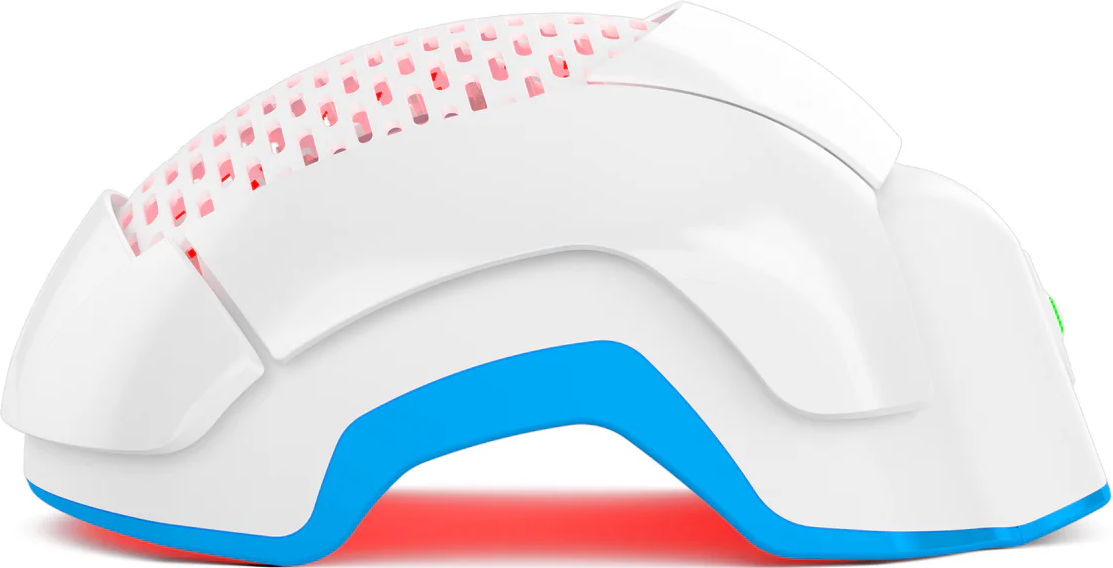
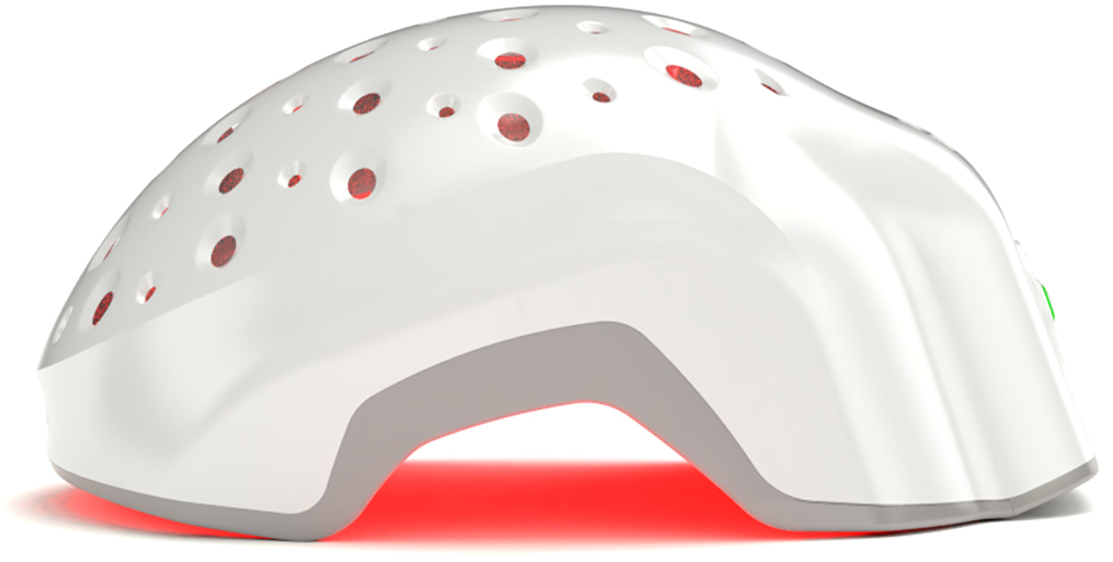
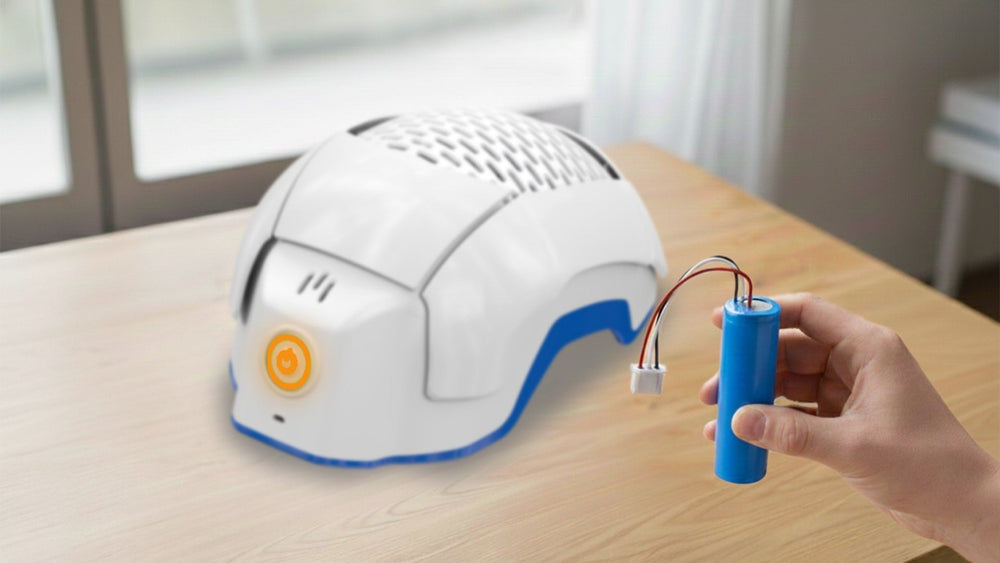
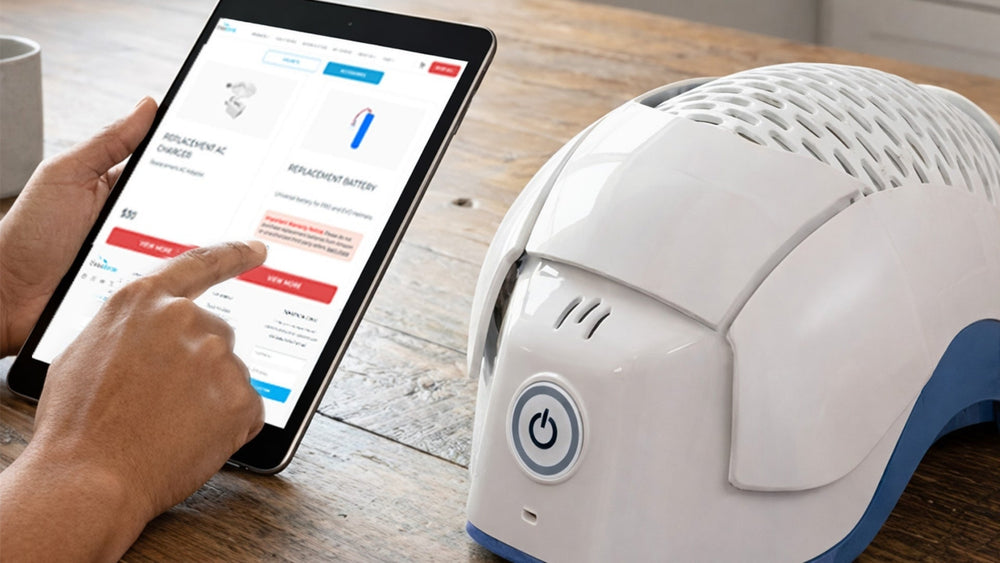
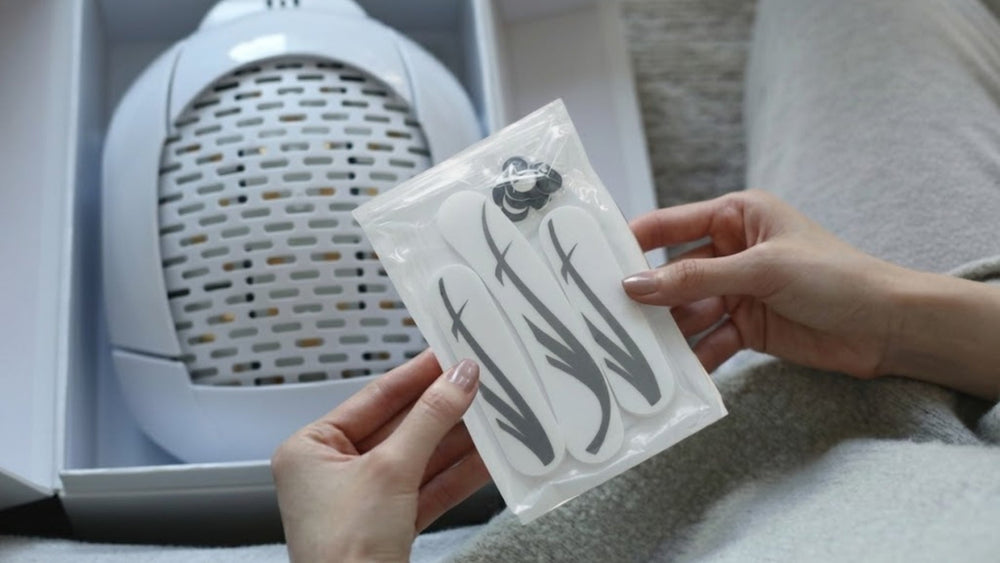
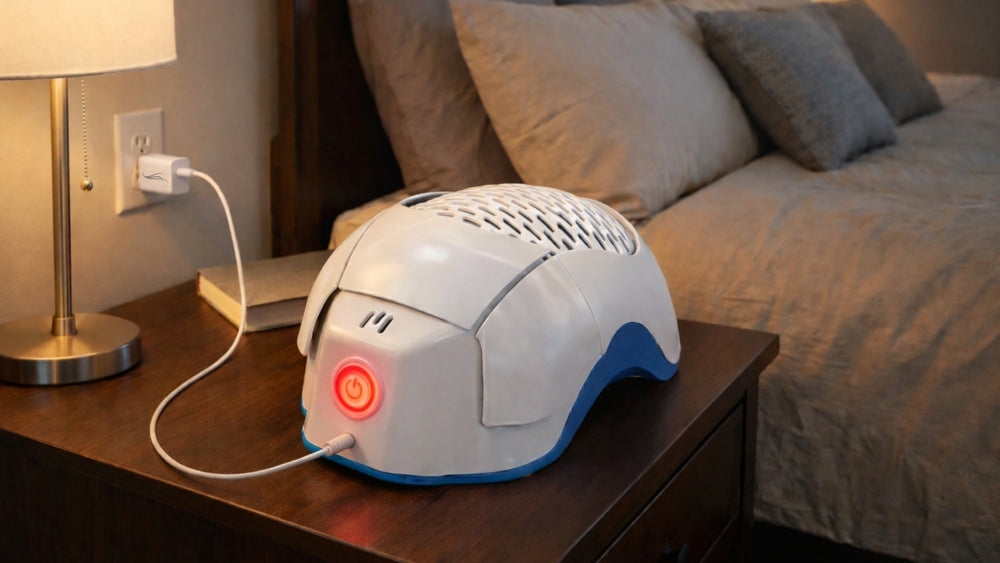
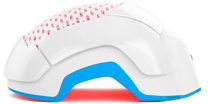
This is also where a non-hormonal hair-support option may belong. Not because it replaces medical care. It does not. But if the hair loss pattern is androgenetic alopecia or female pattern thinning, Laser Phototherapy is a non-drug option that does not work by changing systemic hormones.
That distinction may matter for someone already feeling caught between hair concerns and contraception decisions.
So yes, ask about anti-androgens if the pattern fits. Also ask whether non-hormonal supports, including LPT, make sense for your type of hair loss.
Where Theradome Laser Phototherapy fits
Theradome Laser Phototherapy fits best when the issue is androgenetic alopecia or female pattern hair loss.
The FDA 510(k) record for Theradome describes it as an over-the-counter therapeutic device intended to treat androgenetic alopecia and promote hair growth in males and females within specified Norwood-Hamilton and Ludwig-Savin classifications and Fitzpatrick skin types I to IV.
So if Nexplanon seems to have overlapped with pattern thinning, or if a shedding episode revealed underlying androgenetic alopecia, Laser Phototherapy is worth discussing as part of a broader plan.
What not to waste energy on
Do not default to biotin.
Biotin is wildly over-celebrated in hair marketing, and most people do not need high-dose biotin for hair loss unless there is a real deficiency or a specific medical reason. The FDA also warns that biotin can interfere with some lab tests, including tests used in serious medical care. FDA biotin safety communication
That matters here because someone with shedding may need thyroid or other blood work.
Also, please do not scrub your scalp raw, buy a cupboard of supplements, or punish your hair into behaving. Hair under stress usually does not need more aggression. It needs the right diagnosis and a little mercy.
Can you prevent hair loss while using Nexplanon?
There is no perfect test that tells you whether Nexplanon will affect your hair.
Family history of female pattern hair loss, prior hormone-related shedding, known androgenetic alopecia, PCOS symptoms, iron deficiency, thyroid disease, postpartum timing, and recent stress may all make hair changes more likely or harder to interpret. But prediction is still imperfect.
Do a baseline hair check
If you are worried before insertion, replacement, or removal, take simple baseline photos.
Part line. Crown. Temples. Hairline.
Same lighting. Same angle. Nothing cinematic.
This gives you something better than memory, because memory under hair-loss stress is not a reliable witness.
Support the basics without becoming supplement-obsessed
The basics still count:
- Eat enough protein
- Avoid crash dieting
- Treat scalp irritation
- Avoid tight styles during active shedding
- Reduce unnecessary heat and chemical stress
- Correct confirmed deficiencies with clinician guidance
Hair follicles are part of your body. If the body is underfed, inflamed, depleted, or recovering from illness, the hair can show it.
Talk early if shedding begins
Early review helps separate temporary shedding from pattern thinning, scalp disease, breakage, or a medical issue.
You do not need to sprint to panic. But you also do not need to wait nine months while pretending you are “just monitoring it.”
When should you see a doctor about hair loss on Nexplanon?
See a clinician if your shedding lasts more than 3 to 6 months, if you notice bald patches, or if your scalp hurts, burns, flakes heavily, bleeds, or develops sores.
Also ask for help if you see a widening part, crown thinning, heavy bleeding, fatigue, weight changes, irregular cycles, acne, facial hair growth, or symptoms that could point toward thyroid disease, anemia, PCOS, or another medical issue.
You can start with your OB-GYN if the question is Nexplanon timing, removal, or switching contraception. A dermatologist is often the best clinician for diagnosing the type of hair loss. A primary care clinician can help with labs and broader health issues. A trichologist can help assess hair and scalp patterns, while referring medical red flags when needed.
Do not sit alone with this at 1:12 a.m. and a search bar.
That place is a swamp.
When LPT makes sense
Laser Phototherapy may make sense when the diagnosis, or strong clinical suspicion, is androgenetic alopecia or female pattern hair loss.
Theradome is an FDA-cleared, non-drug, at-home Laser Phototherapy device intended for androgenetic alopecia and hair growth in appropriate pattern-hair-loss classifications, according to FDA 510(k) documentation. FDA 510(k) K171775
So a person with Nexplanon timing plus a widening part or crown thinning may be a possible fit once pattern hair loss is identified.
If you are unsure whether your hair loss looks like shedding or pattern thinning, start with a proper assessment. Bring the timeline. Bring photos. Bring your questions.
If the pattern points toward androgenetic alopecia, Theradome Laser Phototherapy may be helpful.