






Anesthesia itself is not strongly proven to directly cause routine hair loss. Hair shedding after anesthesia is more often linked to the larger surgical event: physical stress, illness, fever, blood loss, medication changes, nutrition disruption, weight loss, or recovery strain. The most common pattern is telogen effluvium, a usually temporary shedding condition that often appears 2 to 4 months after a trigger.
If your hair started falling out after surgery, you are not being dramatic. A shower drain full of hair can make even a sensible adult start negotiating with the mirror. But the culprit is usually not “the anesthesia killed my follicles.” It is more often the body reacting late to surgery, stress, medication shifts, or a medical recovery that took more out of you than you realized.
Patchy hair loss, scalp pain, crusting, scaling, or one bald spot where your head rested during a long procedure needs a different conversation. That may point toward pressure-induced alopecia, alopecia areata, infection, scarring hair loss, or another diagnosis that deserves a dermatologist’s eyes on it.
Why Do People Think Anesthesia Causes Hair Loss?
The timing makes anesthesia look guilty
Hair loss after surgery has a weird way of arriving late, like a bill you forgot existed. You have the procedure. You heal. You maybe even start feeling normal again. Then, a couple of months later, your brush looks like it has been collecting evidence against you.
That delay is one reason anesthesia gets blamed. It is memorable, mysterious, and frankly a bit eerie. You went under. You woke up. Now your hair is shedding. The brain loves a neat suspect.
But telogen effluvium does not run on next-day timing. Increased hair fall is usually noticed 2 to 4 months after the triggering event, because resting club hairs are pushed out as new hairs begin coming through.
The real trigger is often the whole surgery-recovery package
The more accurate question is not always, “Did anesthesia cause my hair loss?” It is often, “What did my body go through around that surgery?”
A surgical operation can come with physical stress, fever, inflammation, blood loss, new medications, appetite changes, weight loss, sleep disruption, and plain old fear. That is a lot. Surgery, illness, fever, hemorrhage, weight loss, psychological stress, nutritional deficiency, and medications are recognized triggers for telogen hair loss.
So yes, anesthesia may be part of the timeline. But timeline is not proof. UCLA’s medical school review says there is no evidence that anesthetic medications directly cause hair loss, and points instead to nutrient deficiencies and certain medications as possible contributors.
Does Anesthesia Directly Kill Hair Follicles?
The short answer is no. Routine anesthesia is not known to kill hair follicles.

Most post-surgery shedding, when it is diffuse and delayed, is better understood as telogen effluvium. StatPearls describes telogen effluvium as a form of non-scarring alopecia marked by diffuse hair shedding after metabolic stress, hormonal change, or medication. Non-scarring matters. It means the follicle is usually still there, not wiped out.
Telogen effluvium is diffuse hair loss without focal bald areas or inflammatory/scarring evidence, and new hair continues coming through while older resting hairs shed.
That does not make the shedding emotionally easy. Temporary can still feel awful when your hair is in your hands. But it does change the level of panic the article should create.
Why the “cell division pause” claim needs caution
Some articles say anesthesia “slows cell division,” and since hair follicles are fast-dividing, that pause causes shedding. It sounds tidy. Maybe too tidy.
The stronger evidence does not require that claim. What we can support well is that surgery and the surrounding recovery period can act as a physiological trigger for telogen effluvium. DermNet, StatPearls, and hair-shedding clinical guidance all point to systemic stressors, illness, surgery, medications, poor diet, and hormonal or metabolic changes as stronger explanations than anesthetic drugs alone.
There are case reports and reviews discussing hair loss after anesthesia and surgery, including a 2025 case report on telogen effluvium after surgery under general anesthesia. But case reports are not the same as large controlled studies. They can raise a signal. They do not settle the whole argument.
So, for accuracy, we should avoid saying anesthesia directly shuts down follicles unless a stronger source proves it. Anesthesia often shares the room with surgery-related shedding, but it is not usually the main proven driver.
What Actually Causes Hair Loss After Surgery?
Telogen effluvium is the big one.
Your hair grows in cycles. Most scalp hairs are normally in the anagen, or growing, phase. Some are resting in telogen. After a major stressor, more hairs than usual may shift into the resting phase too early. They do not fall out instantly. They sit there first. Then, weeks or months later, they shed. That lag is why post-surgery hair loss feels so suspicious.
Telogen effluvium temporary excessive shedding after “some shock to the system,” and includes surgery, illness, psychological stress, weight loss, medications, and nutritional deficiency among the triggers. It may affect up to half of scalp hair, which explains why the shedding can look so dramatic even when the follicles are not permanently damaged.
This is usually an all-over shed, not one clean bald patch. The ponytail may feel smaller. The part may look wider. Wash day may become a tiny horror film.
Medication changes after surgery
Post-op medication changes can muddy the water. Some drugs are linked to hair shedding, and surgery often means new prescriptions, stopped prescriptions, dose changes, antibiotics, anticoagulants, steroids, pain medications, or hormonal changes.
Drug-induced alopecia is usually reversible, non-scarring, diffuse hair loss that can occur within days to weeks after starting a new medication or changing the dose. StatPearls also notes that many medications have been linked to telogen effluvium, including beta-blockers and retinoids.
Important little thud of common sense: do not stop post-surgery medication because your hair is shedding. Ask the clinician who prescribed it. Some drugs are doing genuinely important work while your hair is being annoyingly dramatic.
Nutrition, blood loss, illness, fever, and recovery strain
Hair is not the body’s top priority after surgery. Your body may be healing tissue, fighting infection, coping with pain, correcting blood loss, managing appetite changes, and dealing with sleep that has gone feral.
Fever, weight loss, hemorrhage, surgery, illness, psychological stress, medications, and nutritional deficiency are among the causes of telogen effluvium. Poor diet, surgery, severe illness, stress, and mineral deficiency are also triggers.
This does not mean everyone needs a cupboard full of “hair vitamins.” Please, no. The useful question is whether the person has poor intake, rapid weight loss, low protein intake, low iron or ferritin, thyroid issues, or another correctable medical contributor. A dermatologist or physician can decide what testing makes sense. Diagnosis may involve scalp examination, hair testing, blood tests, and sometimes biopsy.
Pre-existing androgenetic alopecia that becomes more visible
Sometimes surgery does not create a brand-new hair problem. It reveals one.
If someone already had early androgenetic alopecia, also called male or female pattern hair loss, a temporary shed can make the part, crown, or temples look worse almost overnight. Not because the pattern loss started overnight. Because the extra shedding reduced density enough for the pattern to show.
Telogen effluvium may unmask genetic tendencies to male or female pattern hair loss. That explains why a temporary shed and a chronic pattern can overlap in the same head. This is also where Laser Phototherapy may become relevant, but only if androgenetic alopecia is part of the diagnosis. More on that later.
Pressure-induced alopecia after long procedures
There is another post-surgery hair-loss pattern that deserves respect: pressure-induced alopecia.
Unlike telogen effluvium, pressure alopecia is usually localized. It may show up as one patch, often where the scalp was compressed during a long operation or prolonged immobilization. Literature describes postoperative pressure alopecia after long procedures under general anesthesia and after extended ICU-style positioning. It can be scarring or non-scarring, temporary or permanent, depending on severity.
Look, we are not saying hair generally grows because of “circulation.” We are saying sustained pressure during long immobilized procedures can injure a local scalp area. Different claim. Different mechanism. Different level of urgency.
If you have one sore, crusted, or oddly placed bald patch after a long surgery, do not just assume it is normal shedding.
When Does Hair Loss After Anesthesia Usually Start?
Shedding 2 to 4 months later is common with telogen effluvium
Telogen effluvium often starts late enough to feel unrelated and close enough to feel suspicious. That is the psychological trap.
Increased hair fall is typically noticed 2 to 4 months after the triggering event. Its hair-shedding resource notes that hair loss is often seen around 3 months after an acute insult. The broader hair-loss overview gives a 2 to 6 month window after events that stop active hair growth.
So if the surgery was in January and the shedding began in March or April, that timing can fit telogen effluvium. It does not prove the cause by itself, but it belongs in the right neighborhood.
The body keeps receipts. Hair just files them late.
Immediate shedding may be something else
If hair seems to fall out immediately after surgery, telogen effluvium is less tidy as the only explanation. Immediate shedding may reflect hairs that had already shed but were not washed out during recovery, hair breakage, scalp irritation, medication changes, traction from hairstyles, or another condition that happened around the same time.
That sounds fussy. It is. Hair diagnosis is often fussy.
If the shedding is severe, patchy, painful, or paired with scalp symptoms, it is safer to get assessed than to keep guessing from the bathroom floor. AAD emphasizes that effective treatment starts with finding the cause, and dermatologists are trained to sort through the many causes of hair loss.
How long recovery can take
Acute telogen effluvium often improves once the trigger passes or the underlying issue is corrected. Telogen effluvium is self-correcting when the trigger is removed, and new hair continues to grow while older resting hairs shed.
Still, density does not bounce back on command. Hair grows slowly. Shedding may calm before fullness returns, so someone can feel “better” and still look thinner for a while. That mismatch is frustrating.
Deeply.
If shedding continues beyond six months, keeps restarting, or starts looking patterned, patchy, or inflamed, it is time to stop playing home detective and book the dermatologist.
What Does Hair Loss From Surgery Or Anesthesia Look Like?
The classic telogen effluvium pattern is diffuse shedding. That means the hair comes from all over the scalp rather than one clean spot.
People often notice more hair during washing, detangling, brushing, or even just touching their hair. Telogen effluvium can make hair come out in handfuls during shampooing, combing, or running hands through hair, often weeks to months after the stressful episode. DermNet describes telogen effluvium as diffuse non-scarring hair loss, not focal total alopecia.
Normal shedding is usually around 50 to 100 hairs daily, but telogen effluvium can push that far higher. A few strands on the pillow is not automatically a disaster. A sudden, repeated shift in shedding volume is the clue.
Patchy hair loss needs a different conversation
Patchy hair loss is not classic telogen effluvium.
If you have a round bald spot, a sore patch, crusting, scaling, redness, pus, or one area that seems to be thinning much more than the rest, the differential changes. It could be pressure alopecia after a long surgery. It could be alopecia areata. It could be a scalp infection, traction-related loss, inflammatory disease, or scarring alopecia.
That is not meant to scare you. It is meant to stop you from treating every post-op hair problem like the same drain-clogging gremlin.
Dermatologists can examine the scalp, test hair health, order blood tests, and sometimes perform a scalp biopsy to identify the cause of hair loss. That is the lane for patchy or symptomatic loss.
Widening part, crown thinning, or temples
A widening part, crown thinning, or receding temples may suggest androgenetic alopecia, especially if the pattern was creeping in before surgery but became more obvious afterward.
Telogen effluvium can make pattern loss look sudden because extra shedding reduces overall density. It may unmask genetic balding tendencies.
This is a common emotional whiplash moment. The person thinks, “My hair changed overnight.” In reality, two processes may be overlapping: temporary shedding and a longer-term pattern that finally became visible.
Breakage is not the same as shedding
Shed hairs and broken hairs are not the same thing.
Shed hairs usually come out from the root, often with a tiny club-like bulb at one end. Broken hairs snap along the shaft and may look shorter or uneven. Post-surgery hair can be more prone to rough handling because people are tired, washing awkwardly, sleeping oddly, or wearing tighter styles than usual.
Who Is More Likely To Have Hair Shedding After Surgery?
Major surgery or long procedures
Major surgery may carry a higher shedding risk simply because the body goes through more. Longer procedures can involve greater physiological strain, more medications, more recovery burden, and, in specific cases, increased risk of pressure-related alopecia.
Pressure alopecia literature describes postoperative cases after prolonged immobilization during general anesthesia, and reviews note that pressure-induced alopecias were initially described after prolonged surgeries or immobilization.
Not everyone who has a long surgery sheds. Not everyone who has a short procedure is safe from shedding. Bodies do not sign neat little agreements.
Fever, infection, blood loss, or intense recovery
Fever, infection, blood loss, and illness can increase the chance of telogen effluvium because they are systemic stressors. DermNet lists fever, hemorrhage, illness, and surgical operation as triggers for telogen hair loss.
This matters because two people can have the “same” procedure and completely different recovery stress. One person goes home, eats well, sleeps decently, and heals fast. Another deals with fever, low appetite, anemia, poor sleep, and a medication pile that looks like a tiny pharmacy.
Same surgery name. Different body burden.
Low intake, rapid weight loss, or nutritional deficiency
Poor intake after surgery can matter, especially if someone is eating less protein, losing weight quickly, or recovering from bariatric or gastrointestinal procedures.
Poor diet, weight loss, unusual diet, and nutritional deficiency among shedding triggers. A 2024 study on telogen effluvium associated with weight loss describes TE as diffuse hair loss after stressful events such as prolonged surgery or anesthesia and severe weight loss.
The useful move is not “take everything from the supplement aisle.” It is checking whether there is an actual deficiency, low intake, low ferritin, thyroid issue, or another correctable problem.
Thyroid issues, low ferritin, or medication changes
Thyroid disease, iron-related issues, and medication changes can all complicate post-surgery shedding. Hypothyroidism, hyperthyroidism, nutritional deficiency, and medications are among telogen effluvium triggers.
Mayo Clinic notes that hair-loss evaluation may include blood tests to look for medical conditions, a pull test to assess the shedding stage, and scalp biopsy when needed. Dermatologists may use scalp exam, hair testing, blood tests, or biopsy to find the cause.
So if the shedding feels excessive or lingers, the next step is not guessing harder. It is better information.
Existing pattern hair loss
If you already had early androgenetic alopecia, surgery-related telogen effluvium can make it look worse. Quickly.
A temporary shed reduces the “cover” that was hiding miniaturized areas. That can make the part look wider, the crown more open, or the temples suddenly less forgiving. DermNet notes this unmasking effect directly.
This is one of the main reasons a diagnosis matters. The treatment path for short-term telogen effluvium is not the same as the plan for androgenetic alopecia.
How Can You Tell If It Is Telogen Effluvium, Pressure Alopecia, Or Pattern Hair Loss?
|
Pattern |
What it often looks like |
Timing clue |
What to do |
|
Telogen effluvium |
All-over shedding, more hair in shower or brush, thinner ponytail |
Often 2 to 4 months after surgery or illness |
Track timing, check triggers, see a dermatologist if severe or persistent |
|
Pressure-induced alopecia |
One patch, often where the head rested during a long procedure |
Days to weeks, sometimes around a month |
Dermatologist evaluation, especially if sore, crusted, or localized |
|
Androgenetic alopecia |
Widening part, crown thinning, temples, gradual miniaturization |
Usually gradual, but may look worse after a shed |
Get diagnosis and consider long-term treatment options |
|
Alopecia areata |
Smooth round bald patches |
Variable |
Dermatologist evaluation |
|
Breakage |
Short snapped hairs, uneven lengths, more damage than root shedding |
Variable |
Review styling, heat, chemical processing, and rough handling |
This table is not a diagnosis. It is a map. A slightly scruffy one, but still useful.
Diffuse telogen effluvium is different from patchy and scarring forms of hair loss, and effective care starts with finding the cause. If the pattern is unclear, especially if there is pain, scaling, crusting, or one dramatic patch, professional assessment is not overkill.
When Should You See A Doctor For Hair Loss After Anesthesia?
See a dermatologist if your hair loss is patchy, painful, crusted, scaly, red, inflamed, rapidly worsening, or still shedding heavily after several months. Also seek care if you have fatigue, dizziness, heavy bleeding, fever, unexplained weight changes, eyebrow or eyelash loss, or any sign the scalp skin itself is not healthy.
This is not “panic.” It is pattern recognition.
Dermatologists can identify many causes of hair loss through scalp examination, questions, hair testing, blood tests, and, when needed, biopsy. Mayo Clinic similarly lists blood tests, pull tests, and scalp biopsy among diagnostic tools for hair loss.
What to bring to the appointment
Bring the surgery date, procedure type, any known surgery length, and a list of medications you took before and after surgery. Include antibiotics, steroids, anticoagulants, pain medication, birth control changes, hormone therapy changes, and any new supplements.
Also bring notes on fever, infection, blood loss, poor appetite, weight loss, low protein intake, or recovery complications. If you can, bring photos from before surgery and current photos in the same lighting.
Dermatologists are good. They are not clairvoyant.
The timeline helps.
What tests may be considered
A clinician may perform a scalp exam, hair pull test, trichoscopy, blood tests, or, in unclear cases, scalp biopsy. Blood tests may help detect medical conditions that cause hair loss, the pull test helps assess the shedding stage, and scalp biopsy can help evaluate hair roots or possible infection.
Blood tests may be used when disease, vitamin deficiency, hormone imbalance, or infection is suspected.
Possible bloodwork depends on your story, not a generic checklist. Thyroid markers, iron studies or ferritin, blood count, vitamin levels, and hormonal testing may be considered when symptoms or history point that way.
Can You Prevent Hair Loss Before Surgery?
You cannot fully prevent telogen effluvium if your body decides a surgery was a major stressor. That is the unsatisfying truth. Still, you can reduce avoidable triggers.
Before planned surgery, it may help to address known anemia, thyroid disease, poor intake, restrictive dieting, or nutritional issues with your clinician. DermNet recommends treating underlying hormonal or nutritional problems and correcting identified abnormalities such as iron, B12, folate, or thyroid issues in telogen effluvium.
Do not crash diet before or after surgery. Do not decide that the recovery period is the ideal time to live on crackers, coffee, and resentment.
Your follicles may object.
For long surgeries, ask about scalp positioning
If your procedure is expected to be long, it is reasonable to ask your surgical team whether head positioning and padding will be managed during the operation. This is especially relevant if you have had pressure-related skin or scalp problems before.
Pressure-induced alopecia is uncommon, but it has been described after prolonged surgery, head immobilization, and ICU stays. Published reviews and case reports link it to sustained scalp pressure and note that it can be scarring or non-scarring.
Ask calmly. You are not directing the surgery. You are giving useful history.
Keep hair care boring during recovery
Boring hair care is underrated.
During active shedding, be gentle. Wash your hair normally enough to keep the scalp clean, but avoid aggressive brushing, tight hairstyles, harsh chemical services, rough detangling, and heat styling that adds breakage to the shedding pile.
DermNet recommends gentle hair handling and avoiding over-vigorous combing, brushing, and scalp massage during telogen effluvium.
And no, washing does not “cause” the shed. It often reveals hairs that were already ready to leave.
What Helps Hair Grow Back After Post-Surgery Shedding?
First, find and correct the trigger
For telogen effluvium, the main strategy is to identify and correct the trigger where possible. That might mean recovering from illness, improving intake, correcting iron or thyroid abnormalities, reviewing medication changes, or simply giving the body time after a major surgical stress.
Telogen effluvium is self-correcting when the trigger is removed, and recommends treating underlying scalp, hormonal, or nutritional disorders where present. A 2020 literature review also emphasizes identifying and removing causative factors as central to telogen effluvium management.
This is not glamorous advice. It will not look cute on a shiny bottle. But it is the medical center of the room.
Nutrition matters, but supplement panic does not
Nutrition matters most when there is poor intake, rapid weight loss, deficiency, or higher recovery demand. Adequate protein, iron status, thyroid health, B12, folate, and overall diet may be relevant depending on the person. Nutritious food and correction of documented abnormalities in telogen effluvium is recommended.
Biotin, though? Not the automatic answer.
NIH’s Office of Dietary Supplements notes that biotin deficiency can include hair loss, but also says hair, skin, and nail claims are supported at best by a few case reports and small studies. A 2024 review found that evidence for biotin improving hair growth or quality is limited to specific deficiency or rare hair-shaft contexts, not healthy people casually taking it for shedding.
Also, biotin can interfere with certain lab tests. The FDA has warned about biotin interference causing falsely low troponin results in some assays. That matters after surgery because medical testing may already be part of your care.
So, no supplement roulette. Test when appropriate. Treat what is actually wrong.
Minoxidil may help some people, but it is not an automatic post-op fix
Minoxidil may be discussed when androgenetic alopecia is present, when shedding becomes chronic, or when a dermatologist thinks it fits the pattern. But it is not mandatory for every case of acute telogen effluvium.
A 2020 review of telogen effluvium discusses treatment approaches, including minoxidil in selected contexts, while still emphasizing cause identification and trigger correction.
The key phrase is selected contexts. Not everyone. Not automatically. Not because the drain scared you on a Tuesday.
If you start minoxidil, ask about expected shedding, timing, side effects, pregnancy considerations, and what happens if you stop.
Where Laser Phototherapy fits, and where it does not
If your hair loss is pure acute telogen effluvium after surgery, time, trigger correction, nutrition support where needed, and medical assessment may be the central path.
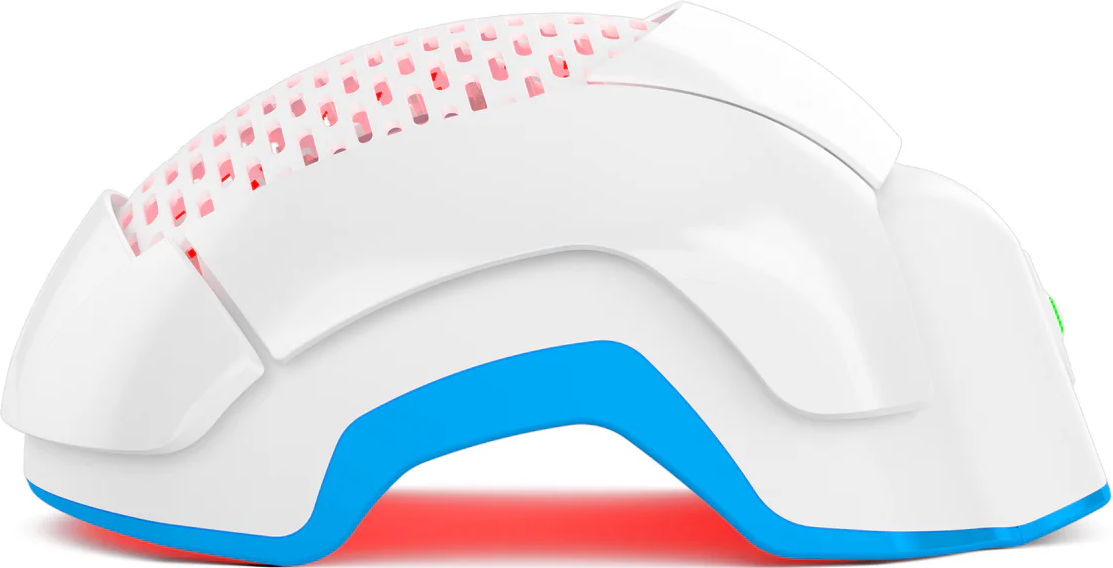
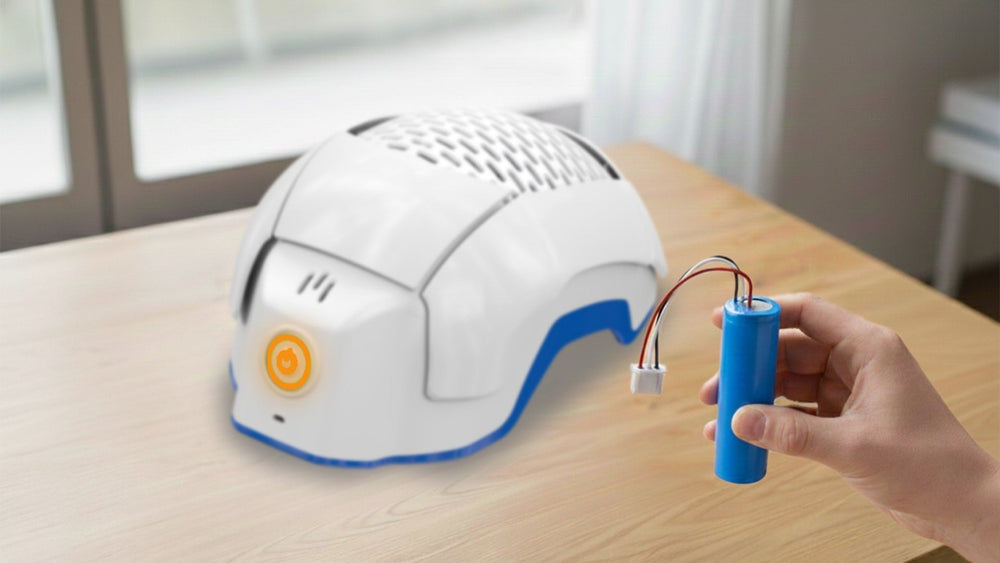
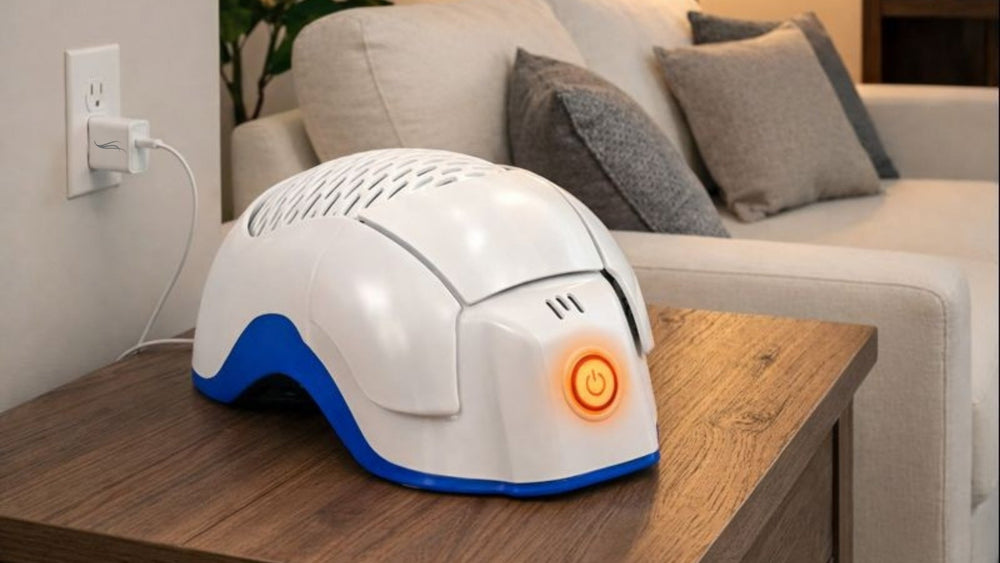
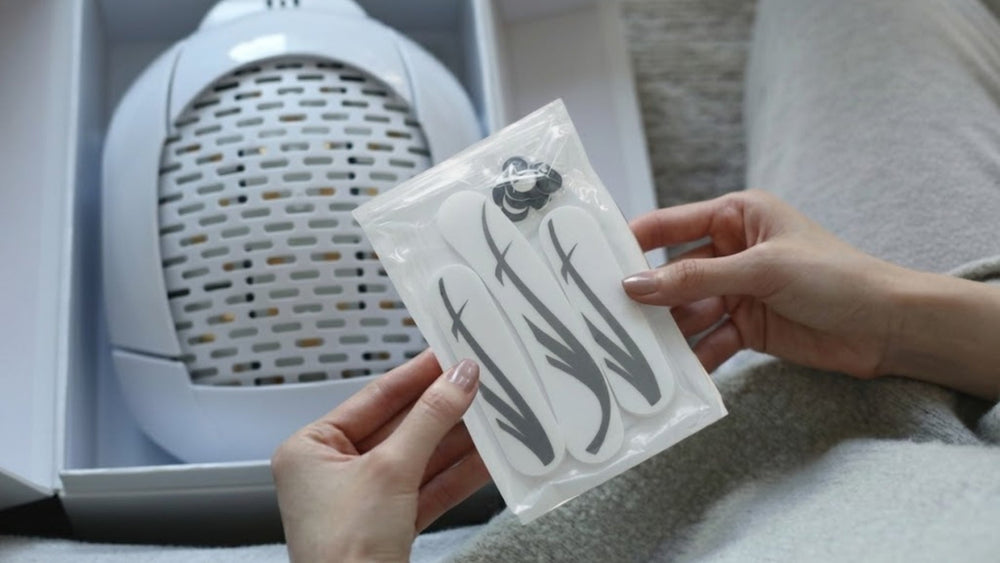
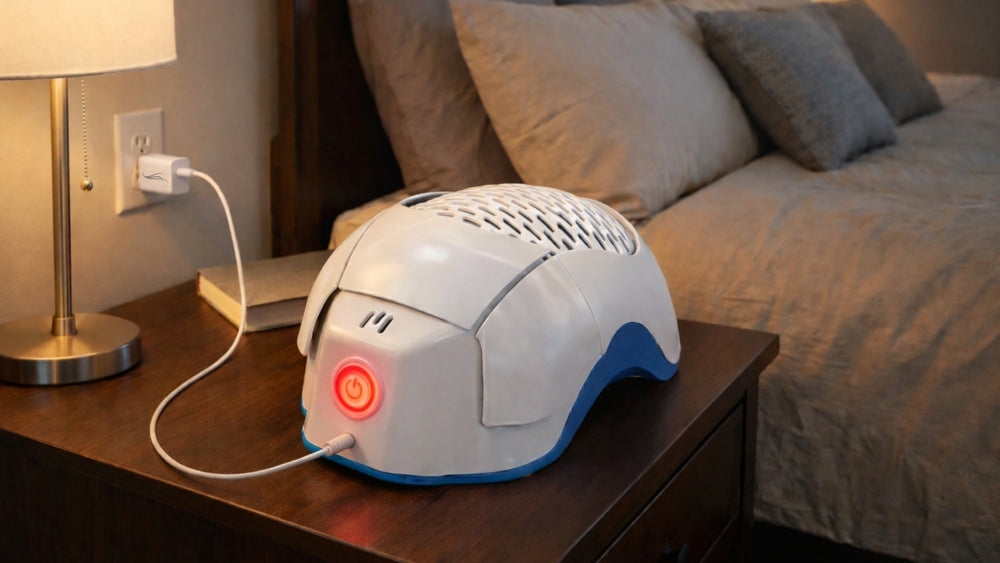
Where LPT becomes more relevant is androgenetic alopecia. If surgery-related shedding revealed a widening part, crown thinning, temple recession, or a pattern that was already creeping in, then a longer-term hair plan may be worth discussing. FDA clearance documents describe Theradome PRO LH40 and EVO LH40 as over-the-counter therapeutic devices intended for androgenetic alopecia and promotion of hair growth in specified male or female pattern classifications.
A 2021 systematic review and meta-analysis of randomized trials found that home-use low-level light or laser therapy devices were studied for pattern hair loss, with changes in hair density compared with sham devices. That evidence belongs to pattern hair loss. It should not be casually dragged over every post-op shed like a blanket.
What Should You Not Do If Your Hair Is Shedding After Anesthesia?
Anesthesia is an easy scapegoat because it is the part of surgery you do not remember. Convenient, almost theatrical.
But hair shedding after surgery is usually multi-factorial. Surgery, illness, medications, nutrition, fever, stress, blood loss, weight loss, and underlying hair conditions can all matter. DermNet’s trigger list for telogen effluvium is broad for a reason.
Blame feels satisfying. It may not help the diagnosis.
Don’t start random supplements because the drain scared you
Do not let one frightening wash day push you into a shopping cart full of hair supplements.
Biotin is the usual suspect here. NIH says biotin deficiency can include hair loss, but the evidence for hair, skin, and nail benefits from supplementation is limited, and the 2024 review on biotin for hair loss found support mainly in deficiency or rare conditions rather than healthy adults.
Plus, biotin can interfere with important lab tests. That is not a cute little footnote. It can affect clinical interpretation.
If deficiency is suspected, test. If a clinician recommends supplementation, fine. Otherwise, do not turn fear into a monthly subscription.
Don’t stop post-op medications without medical advice
Some medications can be linked to shedding, but stopping post-surgery medication without medical guidance can be risky. Drug-induced alopecia can happen after starting or changing medication doses, but that does not mean every medication should be blamed or stopped.
Ask the prescribing clinician. Bring the timing. Bring the medication list. Let someone qualified help you sort signal from noise.
Noise is expensive.
Don’t ignore bald patches or scalp symptoms
Diffuse shedding can fit telogen effluvium. A bald patch, sore scalp area, crusting, scaling, redness, pustules, or scarring-looking skin is different.
Pressure alopecia, alopecia areata, scalp infection, and scarring conditions can all require a proper diagnosis. Reviews describe pressure-induced alopecia as an infrequent group of scarring and non-scarring alopecias after sustained pressure, and AAD advises seeing a dermatologist to identify the cause before choosing treatment.
If the scalp looks angry, listen.
Does Hair Grow Back After Hair Loss From Anesthesia Or Surgery?
If the diagnosis is acute telogen effluvium, regrowth is common once the trigger resolves or the underlying issue is corrected. New hair continues to grow during telogen effluvium and that regrowth usually occurs after the trigger is removed.
But “regrowth” does not mean “back to full density by next Friday.” Hair grows slowly, and the visible return of fullness can lag behind the drop in shedding.
This is the part nobody likes. You can be improving and still look thinner for a while.
If it is pressure alopecia, prognosis depends on severity
Pressure-induced alopecia can be temporary or permanent. Published literature describes it as a rare complication after prolonged immobilization during general anesthesia, with both scarring and non-scarring forms reported.
If the patch is localized, sore, crusted, or appeared after a long surgery, do not wait around hoping a serum guesses correctly. Let a dermatologist assess it.
If it is androgenetic alopecia, it needs ongoing management
Androgenetic alopecia is not a temporary stress shed. It is a chronic pattern hair-loss condition. Telogen effluvium can make it more visible, but once pattern hair loss is part of the picture, the plan changes.
That plan may include medications such as minoxidil, clinician-guided options, or Laser Phototherapy depending on the person. Meta-analyses support low-level laser or light therapy for pattern hair loss, and FDA Theradome documents support androgenetic alopecia indications for specified male and female classifications.
This is why diagnosis is not a formality. It decides whether you are waiting out a shed or managing a longer-term pattern.
Quick Self-Check: What Pattern Are You Seeing?
If your shedding is mostly all-over, with more hair in the shower, brush, or hands, and it started 2 to 4 months after surgery, ask a dermatologist about telogen effluvium.
If you have one sore or patchy area, especially where your head may have rested during a long surgery, ask about pressure-induced alopecia.
If your part, crown, or temples were thinning before surgery but now look suddenly worse, ask whether telogen effluvium has revealed androgenetic alopecia.
If you have smooth round patches, ask about alopecia areata or another patchy alopecia.
If the hairs are short and snapped, not shed from the root, ask about breakage and hair-shaft damage.
Take photos in the same lighting once a week for a month. Write down your surgery date, shedding start date, medication changes, fever or infection, weight loss, and diet changes. Bring that to the appointment.
Conclusion
Anesthesia gets blamed because it is the strange, invisible part of surgery. Fair enough. You go under, you wake up, life moves on… then your hair starts shedding weeks or months later like it waited for the worst possible moment.
But in most cases, the better explanation is not that anesthesia killed your follicles. It is that the body went through a major stressor, the hair cycle lagged behind, and telogen effluvium showed up late. If the shedding is diffuse and delayed, that may be the reason. If it is patchy, painful, crusted, scaly, or keeps going longer than expected, get it checked.
And if that post-surgery shed reveals something that was already quietly happening, like crown thinning, a widening part, or temples becoming more visible, that is a different conversation. That is where androgenetic alopecia may need proper long-term support, and where FDA-cleared Laser Phototherapy, like Theradome, is worth being as part of a calmer, more evidence-led plan.