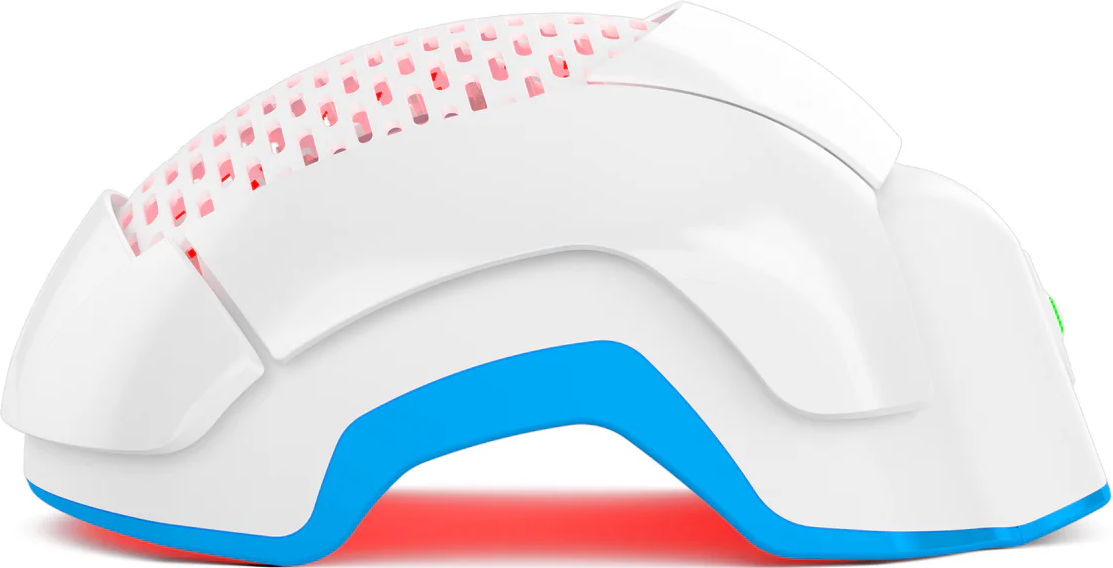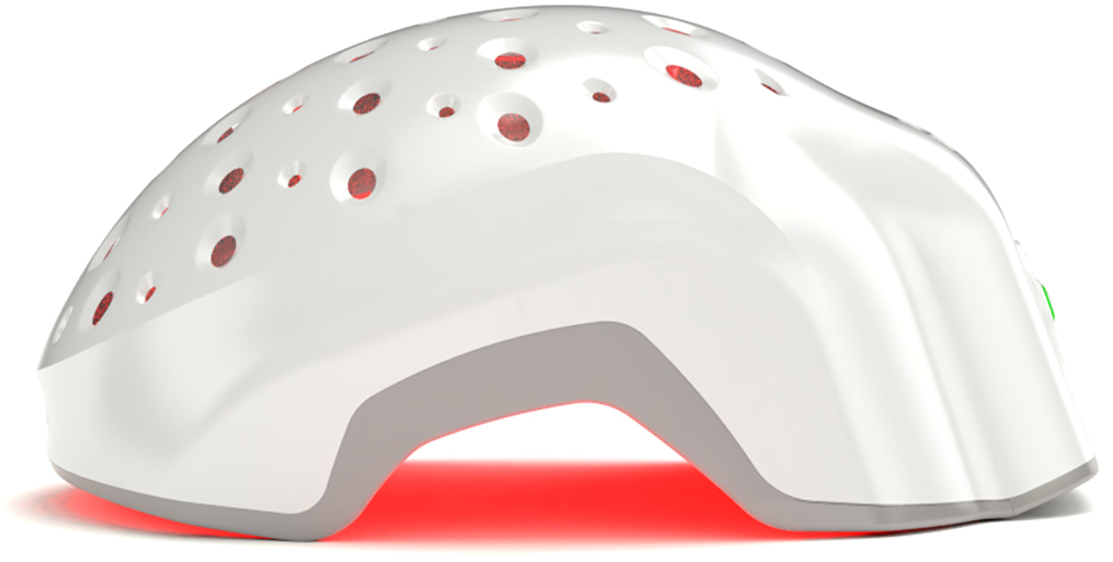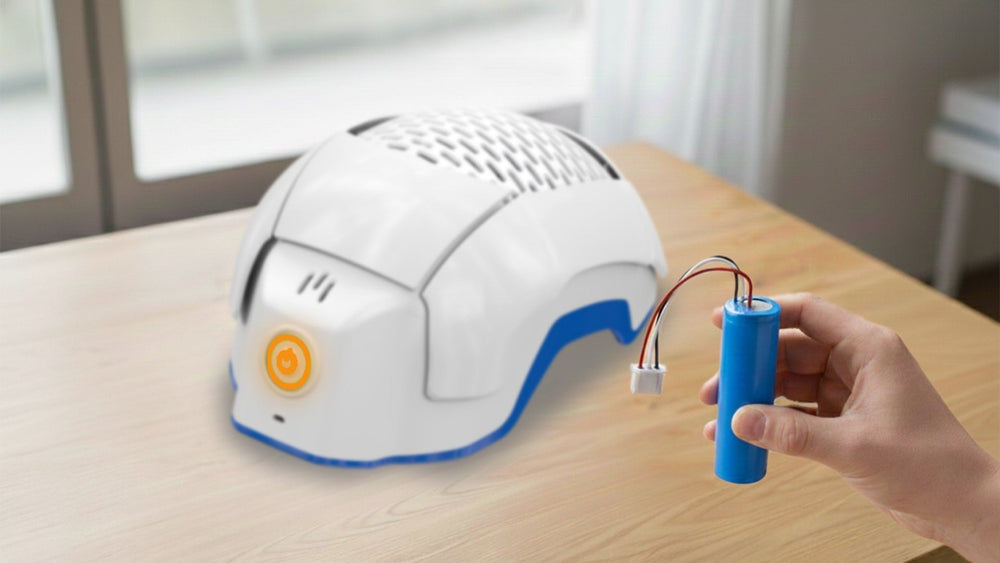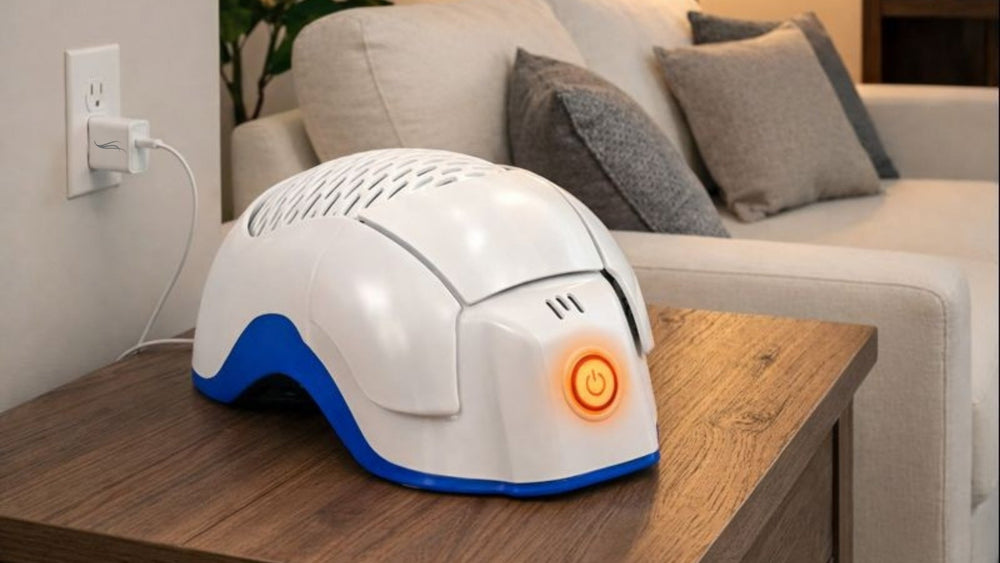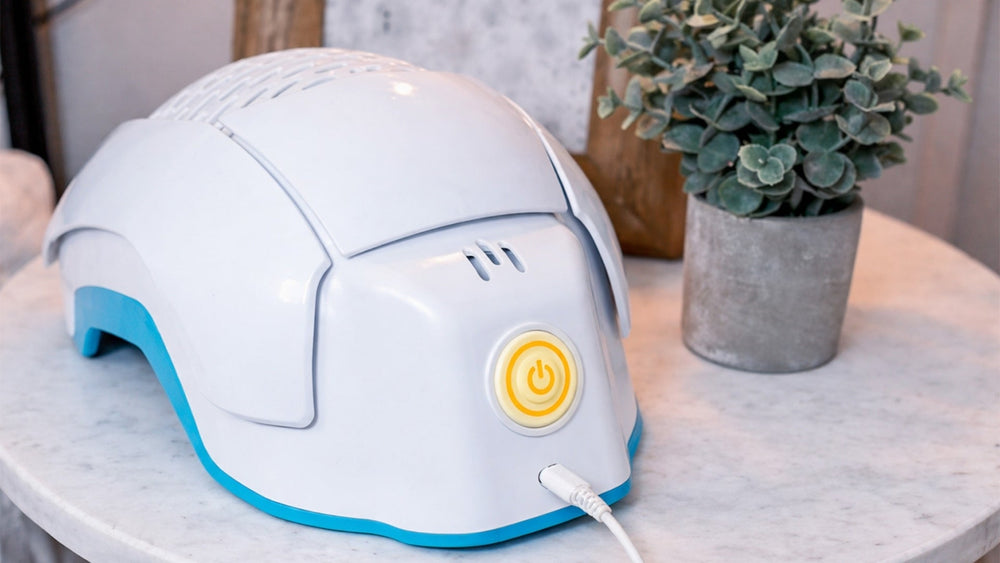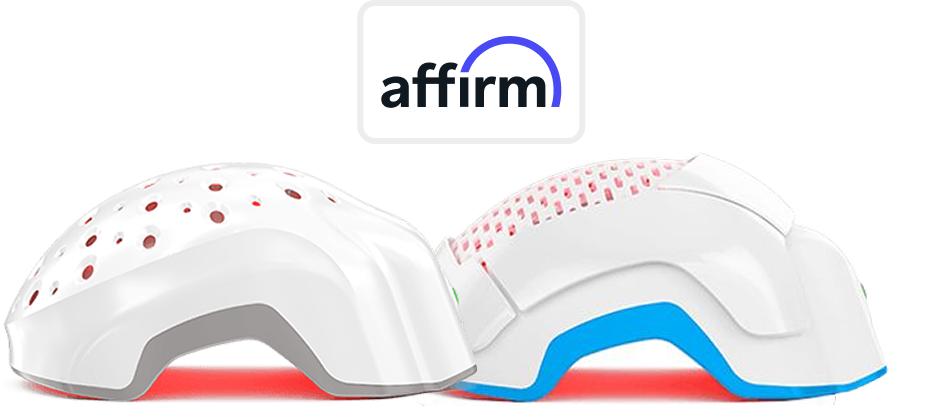






Theradome (a wearable laser phototherapy device) is most effective in earlier stages of androgenetic hair loss, when follicles are still viable and miniaturizing. In more advanced cases, its role is better described as stabilizing and supporting remaining hair (rather than full regrowth).
Too Late to Save Your Hair?
They say hindsight is 20/20. But with hair loss, timing matters more than regret. Many people wonder: once baldness becomes obvious, is it too late to act?
Not always… but the earlier you begin, the better your chances with Theradome.
This article compares early vs advanced stages of hair loss, details how Theradome works to regrow hair, and gives you practical guidance—so you can know when it’s worth trying (and what results to expect).
Understanding Early vs Advanced Hair Loss
In early androgenetic alopecia, hair follicles shrink (miniaturize) across cycles: hair shafts get thinner, the growth phase (anagen) shortens, and density gradually declines. These follicles, though weakened, remain viable and responsive to stimulation.
Clinicians often stage male pattern loss using the Norwood scale and female pattern loss using the Ludwig or Savin scale. Many LPT studies enroll men in Norwood II–V and women in Ludwig I–II, suggesting those are the zones where LPT evidence is strongest.
What Defines “Advanced” Hair Loss?
Once follicles undergo permanent damage (atrophy, scar tissue formation, follicular dropout), they no longer respond to regenerative stimuli. In this advanced stage, treatments shift from revival toward maintenance, thickening, or surgical rescue.
Follicular “death” is difficult to reverse. Thus, in advanced loss, your expectations should lean toward slowing decline and improving existing hair quality rather than full regrowth.
The Science of Laser Phototherapy (LPT)
Laser phototherapy (often called low-level laser therapy (LLLT) or photobiomodulation) uses non-thermal (cold) light in the red/near-infrared spectrum (typically ~600–950 nm) to stimulate cellular processes. This is not the kind of laser that cuts tissue; instead, it triggers biological repair and regeneration.
How It Works in Hair Follicles
- Photons are absorbed by mitochondrial chromophores (e.g., cytochrome c oxidase).
- This leads to increase in ATP, transient reactive oxygen species signaling, nitric oxide release, and growth-factor induction.
- Follicles are nudged into or kept in anagen, catagen onset is delayed, and local blood flow is enhanced.
- Net effect: thicker shafts, increased density, better follicle survival. Multiple reviews confirm this mechanism in scalp hair research.
What the Clinical Evidence Says
- A meta-analysis by Lueangarun et al. (2021) pooled multiple RCTs and found a statistically significant improvement in hair density vs sham devices.
- Kim et al. (2013) conducted a 24-week, randomized, double-blind, sham-controlled multicenter trial with positive results.
- A 24-week Thai RCT (Kim 2020, double-blind) showed improved density with LPT vs sham.
- Recent meta integrative reviews continue to list LPT as a safe, non-invasive adjunct in AGA therapy.
LPT is one of the few non-pharmaceutical, device-based modalities with moderate-to-strong clinical support in mild to moderate AGA.
Why Theradome Works Best in Early Hair Loss
Theradome’s laser helmet delivers light broadly across the scalp, reaching miniaturized follicles with energy that encourages them back into full cycle. When the follicle is still alive, that's when intervention yields noticeable improvement.
Greater Yield, Less Risk
Earlier-stage users have more target follicles, hence more potential responders. Waiting until many follicles are irreversibly lost shrinks the possible return.
Medical-Grade Power from Home
Theradome is FDA-cleared (via multiple 510(k) filings) as a non-prescription device for AGA treatments.
-
LH80 PRO clearance (K122950) explicitly for men and women.
- LH80 PRO (K113097) version under prescription. Use for female AGA (Ludwig I–II).
- Theradome’s classification is Class II, laser classification 3R, confirming non-thermal emission safety.
Because it is hands-free and helmet-based, compliance (i.e. usage consistency) is higher than manual combin/comb devices, which can influence real-world effectiveness.
Role of Theradome in Advanced Hair Loss
What It Can and Cannot Do
- Cannot revive follicles that are permanently destroyed or scarred.
- Can help stabilize further decline, thicken miniaturized hairs that remain, and support surgical interventions (grafts, PRP) in healing and yield.
- In advanced cases, the “ceiling” for improvement is intrinsically lower.
Working in Tandem with Other Treatments
-
Post-transplant: LPT is used in clinical practice to support graft survival, quicker healing, and enhanced density.
-
Combination therapy (LPT + minoxidil/finasteride): Many small trials suggest additive benefit, though results vary.
- Even in advanced stages, combining modalities can deliver modest improvements beyond any single option.
Practical Guide to Using Theradome Safely
Treatment Cadence & Duration
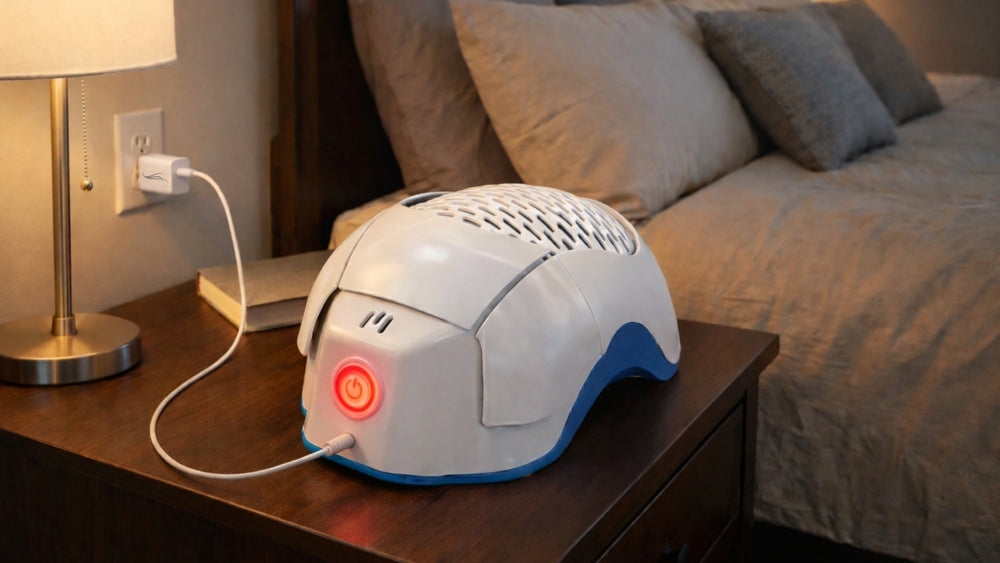
- Labelled usage: 20 minutes per session (auto-timer)
- Many trials use 3–7 sessions per week over 24 weeks for measurable change.
- Early signs (e.g. subtle thickening or shedding cycle shift) often begin ~12–16 weeks in.
Safety Profile & Contraindications
- The device is Class 3R, non-heating—safe with negligible thermal risk when used per instructions.
- Reported side effects: mild scalp warmth, itching, transient “shedding” in early weeks.
- Rarely, users report headaches or discomfort (e.g. as per an FDA MAUDE complaints entry).
- Avoid use over active cancerous scalp lesions or in conditions with photosensitivity unless cleared by a clinician.
What to Do If You Stop
- Like other AGA therapies, discontinuation often reverses gains over time.
- Maintenance regimen (reduced frequency) is advisable to preserve improvements.
When to See a Specialist
- Sudden, rapid diffuse hair loss (telogen effluvium)
- Signs of scarring alopecia (pain, redness, scabbing)
- Underlying systemic conditions (thyroid, autoimmune, nutritional deficiencies)
Conclusion
If you're in the early stages of hair thinning (before a majority of follicles disappear), Theradome can unlock your best response window. In advanced loss, it's still a worthy tool, primarily for safeguarding remaining hair.
Use consistently. Be realistic. Pair with medical or surgical options if needed. And consult a pro early (don’t wait). Because with hair, the difference between “maybe” and “yes” often lies in timing.
Take the next step: explore your eligibility for Theradome or book a trichologist evaluation today.