







A copper IUD is not strongly proven to directly cause hair loss. But copper IUD hair loss can make sense indirectly if the device leads to heavier or longer periods, lower iron stores, anemia risk, or a telogen effluvium shedding episode that happens to show up weeks or months later. Paragard labeling says the device can alter bleeding patterns and cause heavier, longer menstrual cycles with spotting between periods.
That does not mean every strand in the shower is now “because of the IUD.” Hair is annoyingly theatrical. It reacts late, it blames the wrong month, and sometimes it waits until you have finally stopped worrying to make itself everyone’s problem.
Does This Sound Like You?
You got a copper IUD, then your periods became heavier, longer, crampier, or just more dramatic than anyone requested. A few weeks or months later, your hair started showing up everywhere. Brush. Shower wall. Pillowcase. The back of your sweater like it pays rent there.
This article is for the person trying to figure out whether the copper IUD is actually involved, whether her doctor was too quick to dismiss it, or whether something else is quietly driving the shedding in the background. The honest answer sits between panic and denial. The copper IUD may not be directly attacking your follicles, but it can sit inside a chain of events that matters.
This is educational, not personal medical advice. If bleeding is heavy, symptoms feel severe, or hair loss is rapid, patchy, painful, or persistent, please involve a clinician rather than trying to solve it from your bathroom mirror at 11:48 p.m.
What Is A Copper IUD And Why Is Hair Loss Not A Simple Side Effect?

A copper IUD is a small intrauterine device placed inside the uterus to prevent pregnancy. Unlike hormonal IUDs, the copper IUD does not release progestin or estrogen. Its contraceptive effect comes from copper’s local action in the uterus, where it interferes with sperm function and fertilization. The World Health Organization describes IUDs as highly effective long-acting contraception and notes that some copper IUD users may have heavier or longer periods and stronger cramps, especially early on.
That “non-hormonal” detail matters. A lot. Because when people search “IUD hair loss,” they often get a messy pile of hormonal IUD stories, Paragard experiences, postpartum shedding threads, birth-control-withdrawal chatter, and someone in a comment section yelling about copper toxicity with suspicious confidence.
Different devices. Different pathways.
Paragard, the copper IUD used in the United States, is a hormone-free IUD. Mayo Clinic lists irregular bleeding, spotting, cramps, severe menstrual pain, and heavy bleeding as possible side effects, especially during the first few months.
Why does the non-hormonal part matter for hair loss?
If a copper IUD is connected to hair shedding, the most credible route is usually not “the device changed your hair hormones overnight.” It is more likely about bleeding changes, iron status, physical stress, timing overlap, or a separate hair-loss condition showing itself around the same period.
And this is where people often feel dismissed. Someone says, “It cannot be the IUD. It has no hormones.” That may be partly true, but also incomplete. A non-hormonal device can still change bleeding. Bleeding can affect iron stores. Iron status may matter in some shedding cases. Small hinge, big door.
So no, the copper IUD is not a classic direct hair-loss culprit. But “not direct” does not mean “not worth checking.”
So Why Do Some People Notice Hair Shedding After Getting A Copper IUD?
Pathway 1: Heavier periods may lower iron stores
Copper IUDs are well known for causing heavier, longer, or more painful periods in some users. The NHS says periods may become heavier, longer, or more painful after an IUD is fitted, though this may improve after a few months. The Faculty of Sexual and Reproductive Healthcare also notes that the copper IUD may be linked with heavier, more painful, or prolonged bleeding.
Now, heavier bleeding does not automatically mean hair loss. Bodies are not vending machines. You do not put in one side effect and receive one diagnosis.
But menstrual blood loss can affect iron stores in some people, especially if they already had heavy cycles, low ferritin, anemia, postpartum blood loss, a vegetarian or vegan diet, or limited iron intake. A systematic review on copper IUDs and hemoglobin found copper IUD users had decreases in mean hemoglobin after 12 months, while levonorgestrel IUD users tended to have increases. The review also cautioned that average decreases were not enough to cause anemia in previously non-anemic women, but borderline-anemic women may be at higher risk.
Ferritin is a marker of stored iron. Hemoglobin helps show whether anemia is present. If your periods changed after Paragard and your hair began shedding later, asking a clinician about CBC and ferritin testing is reasonable, especially if you also feel tired, dizzy, breathless, weak, or weirdly flattened. ACOG specifically recommends that evaluation for heavy menstrual bleeding in adolescents include assessment for anemia from blood loss, including serum ferritin.
Pathway 2: A body stressor can trigger telogen effluvium
Telogen effluvium is one of the more common explanations for sudden diffuse shedding. It happens when more hairs than usual shift into the resting and shedding phase after some physical or emotional stressor. It is a temporary hair loss due to excessive shedding of resting hairs after a shock to the system.
The maddening part is timing. The British Association of Dermatologists explains that after a follicle enters the shedding phase, it rests for two to four months before the old hair is pushed out. A 2015 medical review similarly notes that diffuse telogen shedding is often seen three to four months after a triggering event.
So if your copper IUD caused heavier bleeding, and that heavy bleeding contributed to low iron or body stress, the shedding may not show up right away. It may arrive late, as if it got lost, changed outfits, and decided to make an entrance in your shower drain.
Very helpful, hair. Thank you.
Pathway 3: The copper IUD may overlap with another hair-loss trigger
Many people get a copper IUD during a season already full of hair triggers: after childbirth, after stopping hormonal birth control, after illness, after weight changes, during stress, or while an underlying pattern-loss issue is slowly becoming visible.
The American Academy of Dermatology says childbirth, illness, operations, and major stress can trigger noticeable hair shedding a few months later. The NHS also lists illness, stress, weight loss, iron deficiency, and other factors among possible hair-loss causes.
So yes, the copper IUD may be part of the timing. But it may not be the whole story. Sometimes it is the obvious new thing, not the only relevant thing.
Is Copper-Zinc Imbalance A Proven Explanation?
Copper and zinc do interact in the body. Zinc also matters for normal cellular function, immune health, and hair biology. Nutrient deficiencies can be relevant in some hair-loss cases, and the American Academy of Dermatology notes that if blood tests show low biotin, iron, or zinc, a dermatologist may recommend supplementation.
But the stronger claim floating around online is different. It says the copper IUD raises systemic copper, depletes zinc, weakens keratin, and directly pushes hairs into shedding.
That is a bigger claim. And bigger claims need bigger evidence.
Right now, the better-supported pathway for copper IUD hair concerns is bleeding-related, not a sweeping copper-zinc imbalance theory. Paragard’s label and major contraception sources consistently highlight bleeding changes, cramps, spotting, and anemia risk far more clearly than systemic mineral disruption.
What we can responsibly say
If someone has symptoms or a diet pattern that suggests nutritional deficiency, zinc testing may be worth discussing with a clinician. Same with ferritin, CBC, thyroid testing, vitamin D, B12, or other labs, depending on the full clinical picture. A dermatology review on diet and hair loss says patients with hair loss should be assessed through medical history, dietary history, physical exam, and risk factors for nutrient deficiency.
But it would be too strong to say a copper IUD commonly causes hair loss by creating systemic zinc deficiency. That is not the sturdy claim here.
The sturdy claim is: copper IUDs can increase bleeding for some users, heavy bleeding can affect iron status in susceptible people, and iron-related body stress may contribute to shedding in certain cases.
Is This Telogen Effluvium Or Pattern Hair Loss?
What telogen effluvium usually looks like
Telogen effluvium usually looks like shedding from all over the scalp, not one neat bald patch. Hair may come out in the shower, in your hands, on your pillow, or in the brush. It can feel sudden, even though the trigger may have happened two to four months earlier.
A review in the Indian Journal of Dermatology, Venereology and Leprology notes that patients with telogen effluvium may report excess hair loss, clogged shower drains, or more hair in the comb, and clinicians should ask about triggers two to five months before shedding began.
Telogen effluvium is usually nonscarring. That means the follicle is generally still there. The hair cycle has been disrupted, not permanently erased. Still, it can feel brutal because regrowth is slow. Your scalp does not work on “I need this fixed before Friday” timing, which is deeply inconsiderate.
What female pattern hair loss usually looks like
Female pattern hair loss, also called female pattern androgenetic alopecia, is different. It tends to be gradual. It often shows up as a widening part, more visible scalp at the crown, or slow thinning over the central scalp. Under the skin, the key process is follicle miniaturization, where some hairs become thinner and shorter over time.
The British Association of Dermatologists notes that female pattern hair loss can be treated with minoxidil in some women, and that treatment may slow progression or partly restore hair. This is not the same as treating temporary shedding from iron loss or a recent stressor.
So the visual pattern matters. Diffuse shedding after a heavy-bleeding period points one way. A part line that has been slowly widening for years points another.
Can both happen at once?
Yes. This is where it gets a bit annoying, medically speaking.
Telogen effluvium can reveal pattern hair loss that was already happening quietly. Maybe your density was slowly changing, but you did not notice until a shedding episode removed enough hair to make the part look wider. Dermoscopy and trichoscopy can help distinguish telogen effluvium from female pattern hair loss by looking for features such as hair shaft diameter variation and miniaturization.
That is why diagnosis matters before buying treatments. If the main issue is heavy bleeding and low iron, you address that first. If androgenetic alopecia is also present, then the long-term hair plan changes.
What Tests Should You Ask About If You Have Hair Loss After A Copper IUD?
Ask whether your bleeding pattern is expected for a copper IUD or whether it needs evaluation. Ask whether the IUD could be out of position if you have new severe pain, worsening cramps, missing strings, unusual bleeding, or pregnancy symptoms. Part or all of Paragard can sometimes fall out of the uterus, and users may not feel it happen.
You can also ask whether CBC and ferritin testing makes sense, especially if periods became heavier and you now feel unusually tired, faint, weak, breathless, or foggy. ACOG’s heavy menstrual bleeding guidance supports anemia assessment, including ferritin, in adolescents with heavy bleeding, and the same clinical logic often comes up in adult care when bleeding symptoms suggest iron loss.
If cramps or bleeding are the main problem, ask about management options. CDC guidance for bleeding irregularities with copper IUD use includes short-term NSAIDs for five to seven days, when clinically appropriate.
Dermatology or trichology questions to ask
Ask whether your hair loss looks like telogen effluvium, female pattern hair loss, alopecia areata, breakage, or a scalp condition. This is not nitpicking. These are different problems with different solutions.
A dermatologist may review your medical history, examine the scalp, perform a hair-pull test, use dermoscopy or trichoscopy, and consider blood work when the story suggests thyroid disease, iron deficiency, nutritional issues, or hormonal concerns. Blood tests may be used when deficiency is suspected, and blood tests may be needed if a clinician suspects thyroid disease, iron deficiency, lupus, or sex-hormone imbalance.
Reasonable labs to ask about may include CBC, ferritin, TSH, vitamin D, B12, zinc, or androgen-related testing if symptoms point that way. Not a giant “order everything” menu. More like a sane map.
What symptoms need urgent care?
Seek prompt medical help if you are soaking through pads or tampons quickly, bleeding for more than seven days, passing large clots, fainting, feeling chest pain, having severe dizziness, or dealing with intense pelvic pain. CDC says periods lasting more than seven days, needing a new pad or tampon in less than two hours, or passing large clots are signs of heavy menstrual bleeding.
With an IUD, also take pregnancy symptoms, fever, foul discharge, severe pelvic pain, or missing strings seriously. Ectopic pregnancy is a possible concern if pregnancy occurs with Paragard and describes expulsion as a possible risk.
Do not tough-girl your way through alarming bleeding. That is not resilience. That is a bad group project with your uterus.
Should You Remove The Copper IUD If Your Hair Is Shedding?
Please do not remove your copper IUD yourself. IUD removal should be handled by a trained clinician. Mayo Clinic describes Paragard removal as a healthcare-office procedure in which a clinician uses forceps to grasp the device strings and remove it during a pelvic exam.
Even if you are convinced the timeline points to the IUD, self-removal is not the move.
When keeping the IUD may still make sense
Keeping the copper IUD may still make sense if your bleeding is manageable, your labs are reassuring, your IUD is positioned properly, and your clinician finds another likely explanation for shedding. It may also make sense if you strongly prefer non-hormonal contraception and your symptoms can be managed safely.
Copper IUDs are valuable contraception for many people. WHO describes IUDs as highly effective, and the copper IUD remains a major non-hormonal option for people who cannot or do not want hormonal birth control.
Reproductive autonomy matters. Hair matters too.
When switching contraception may be worth discussing
Switching may be worth discussing if bleeding is heavy, prolonged, painful, disruptive, or linked with worsening iron deficiency or anemia. It may also be worth revisiting if the IUD is displaced, partially expelled, or simply no longer fits your body’s tolerance. Paragard can alter bleeding patterns and lead to heavier and longer menstrual cycles with intermenstrual spotting.
This is not failure. It is medicine. Sometimes a method that looks perfect on paper becomes a daily nuisance in real life, and your body gets a vote.
What Helps If The Shedding Is Linked To Heavy Bleeding Or Low Iron?
If heavy bleeding is the suspected trigger, the first step is not a hair serum. It is checking what is happening with the bleeding, the IUD, and your iron status.
CDC’s 2024 contraception guidance includes short-term NSAIDs for copper-IUD users with spotting, light bleeding, or heavy/prolonged bleeding, when appropriate. Cochrane has reviewed treatments for bleeding irregularities and pain linked with IUD use, but evidence varies by treatment and outcome, so your clinician should guide the plan.
If the bleeding is severe, persistent, or making you symptomatic, your OB-GYN may discuss medication options, further testing, imaging, or whether another contraceptive method would be kinder to your body.
Kind to your body. Strange how often that gets treated like a luxury.
Correct iron deficiency only when it is actually there
Iron is not a vibes-based supplement. If your ferritin or blood count is low, your clinician can guide iron replacement, dosing, timing, and follow-up testing. If your iron is normal, taking extra iron may simply give you constipation and false hope. A deeply unappealing duo.
The iron-hair evidence is also not perfectly settled. A 2021 systematic review found no clear-cut evidence of an association between iron deficiency and nonscarring alopecia, although lower ferritin values often appeared in women with nonscarring hair loss. A 2006 JAAD review similarly concluded there was insufficient evidence to recommend universal iron screening or iron supplementation for all hair-loss patients without clear anemia.
So the honest recommendation is not “take iron.” It is “ask whether testing is appropriate.”
Be careful with “hair vitamins”
Hair vitamins are very good at standing on a shelf and looking official. That does not make them the right answer.
Dermatologists may recommend supplements if blood tests show low biotin, iron, or zinc, but that is very different from grabbing biotin because your hair is shedding and the bottle made eye contact with you.
And biotin should not be treated as the default. If there is a true deficiency, a clinician can address it. Otherwise, the better work is finding the trigger: heavy bleeding, low ferritin, thyroid issues, postpartum changes, stopping hormones, stress, illness, pattern hair loss, or another cause.
Where Does Theradome Fit In This Conversation?
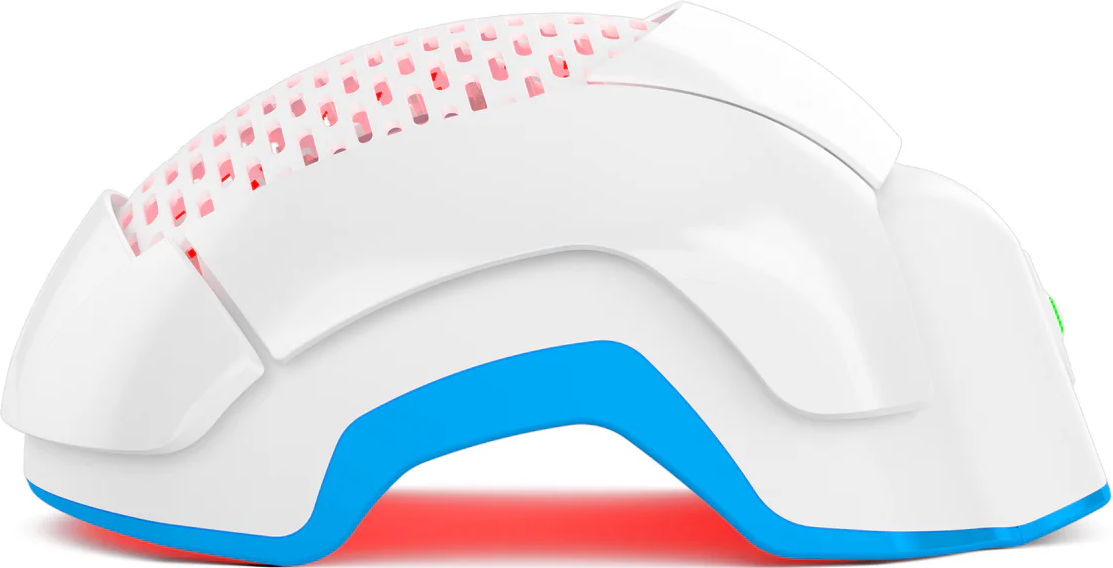
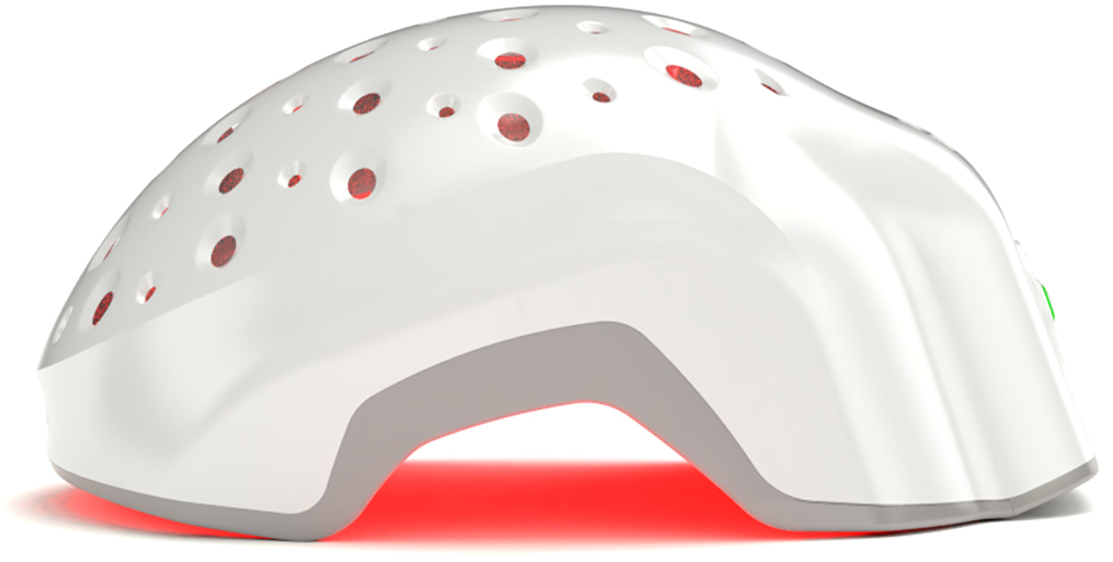
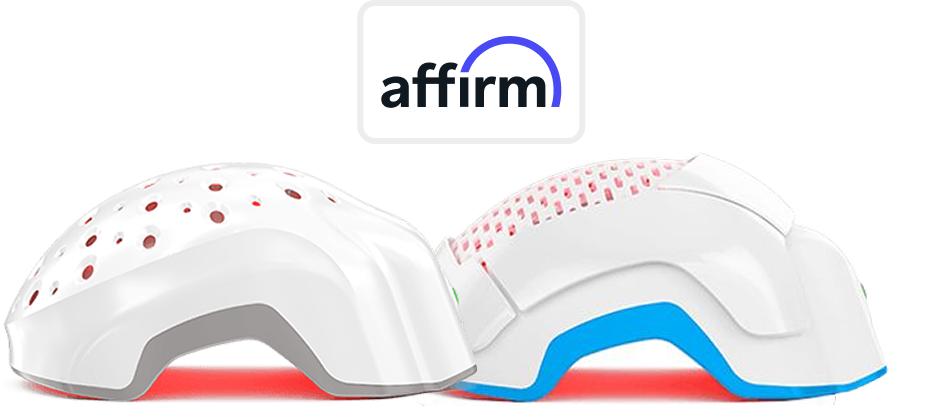
Laser Phototherapy, or LPT, is not a treatment for copper IUD bleeding, anemia, low ferritin, pelvic pain, expulsion, or an IUD that may be out of position. Those need OB-GYN care and appropriate testing. Full stop.
If someone is worried because her period suddenly became a monthly crime scene and now her hair is shedding, the first responsible answer is not “use a device.” It is “find out whether the bleeding has affected your health.”
LPT may make sense if pattern hair loss is also present
If your evaluation points to temporary shedding from heavy bleeding or low iron, start with the trigger. If your shedding also reveals a widening part or crown thinning, then LPT may belong in the longer hair plan.
Treat the suspected driver first, then match hair support to the diagnosis.
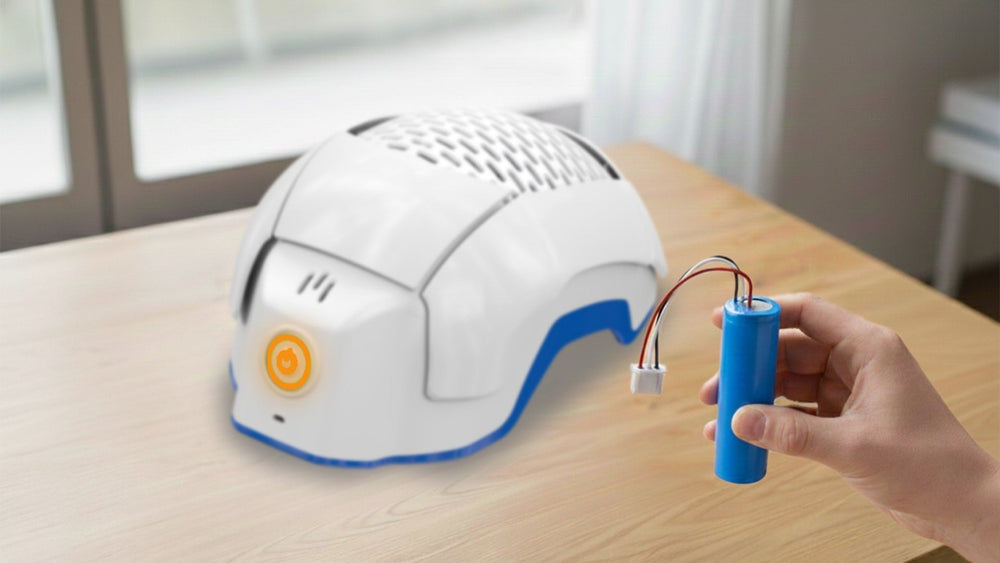
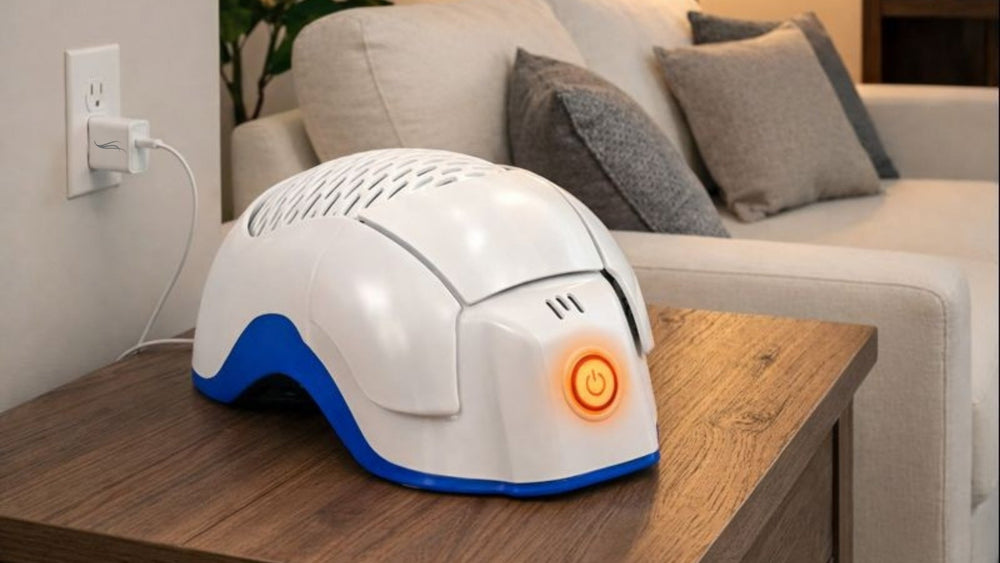
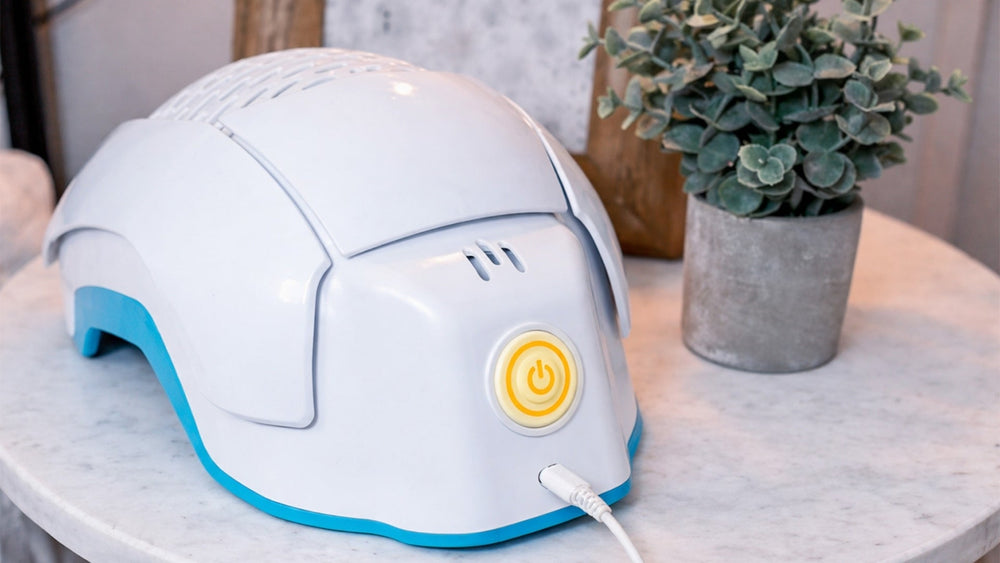
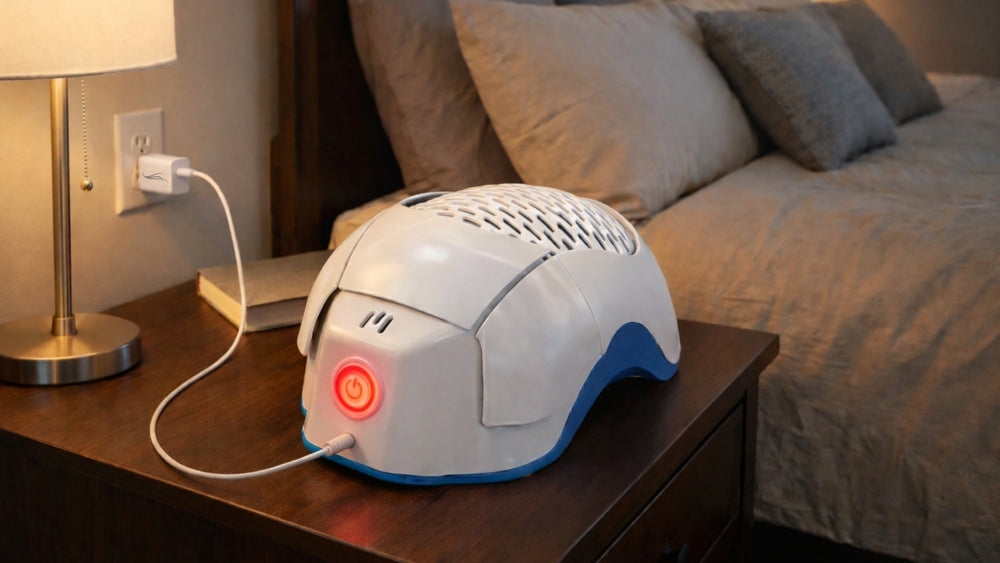
If heavy bleeding or low iron is involved, your priority is OB-GYN care, testing, and correcting the underlying issue. If androgenetic alopecia is also present, Theradome’s FDA-cleared Laser Phototherapy may be worth discussing as part of a broader pattern hair-loss plan.
What Can You Do Right Now If You Suspect Copper IUD Hair Loss?
Write down your IUD insertion date, when bleeding changed, when shedding began, and whether anything else happened two to five months before the hair loss started. Illness. Childbirth. Surgery. Major stress. Weight loss. Stopping hormonal contraception. New medications. A weird month where your body felt like a poorly managed group chat.
That timeline helps clinicians. Telogen effluvium often points backward, and Grover’s review on telogen effluvium notes clinicians should ask about triggers two to five months before shedding starts.
Add photos if you can do it without spiraling: part line, crown, temples, ponytail diameter. Once every few weeks is enough. Daily checking can turn into emotional cardio, and nobody asked for that.
Book the right appointment
Book an OB-GYN appointment if bleeding, cramps, pelvic pain, missing strings, anemia symptoms, or pregnancy concerns are part of the picture. Book a dermatologist or qualified hair clinician if shedding persists, the part is widening, the crown is thinning, patchy loss appears, or the scalp is painful, red, scaly, or scarred.
Hair-loss diagnosis may include medical history, medication review, nutritional status, hair practices, physical exam, and blood tests if a clinician suspects thyroid disease, iron deficiency, lupus, or sex-hormone imbalance.
One appointment may not answer everything. Frustrating, yes. But a clean diagnosis beats a crowded bathroom shelf full of regret purchases.
Stop doing the bathroom-sink panic audit every morning
Hair shedding has a way of making people feel watched by their own body. You run your fingers through your hair once, then again, then a third time “just to check,” and suddenly you are negotiating with loose strands like they can testify.
Try not to turn every wash day into a courtroom. Track enough to help your clinician. Then step back when you can. The goal is evidence, not obsession.
Avoid these three mistakes
Do not remove the IUD yourself. Mayo Clinic describes Paragard removal as a clinician-performed procedure, and that is where it should stay.
Do not megadose iron, zinc, or biotin without testing. AAD’s supplement guidance is deficiency-based, not “everyone with shedding needs pills.”
And do not assume the IUD explains everything. It might be involved. It might be adjacent. It might be the loudest new event sitting next to another trigger that deserves more attention.
Copper IUD Hair Loss Myths Worth Retiring
Myth 1: “The copper IUD ruins hormones”
The copper IUD is non-hormonal. Its main contraceptive action is local, not a systemic hormone release. WHO describes copper IUDs as highly effective contraception and notes heavier or longer periods and stronger cramps as possible side effects, especially in the first few months.
If shedding started after switching from the pill, implant, injection, or hormonal IUD to copper, the previous hormonal change may be part of the timeline. The copper IUD may simply be the new object everyone can point to.
Myth 2: “It is always copper toxicity”
Copper toxicity is not the main evidence-based explanation for typical copper IUD hair shedding. Paragard labeling does note contraindications related to Wilson disease and copper allergy, so people with relevant medical histories need clinician guidance. But that is not the same as saying ordinary copper IUD users commonly develop systemic copper poisoning that makes their hair fall out.
The better-supported concern is much less cinematic: heavier bleeding, possible iron depletion, telogen effluvium, and overlap with other triggers.
Myth 3: “Low ferritin explains every shedding case”
Low ferritin may matter. It should not become the new villain in every hair-loss mystery.
The research is mixed. Treister-Goltzman and colleagues found no clear-cut evidence of an association between iron deficiency and nonscarring alopecia in the existing literature, although women with hair loss often had lower ferritin values. Trost and colleagues also found insufficient evidence for universal iron screening or supplementation in all hair-loss patients.
So yes, ask about ferritin if the story fits. Just do not let one lab value swallow the whole diagnosis.
When Should You Call A Doctor?
Call an OB-GYN if…
Call an OB-GYN if your periods become very heavy, prolonged, or unusually painful after copper IUD insertion. Also call if you have severe pelvic pain, pain during sex, fever, foul discharge, pregnancy symptoms, missing strings, or bleeding that disrupts normal life.
CDC says periods lasting more than seven days, needing a new pad or tampon in less than two hours, or passing large clots count as heavy menstrual bleeding. Cleveland Clinic also describes menorrhagia as bleeding longer than seven days or needing pad changes every hour.
Call a dermatologist if…
Call a dermatologist if shedding lasts more than a few months, the part is widening, crown thinning is visible, patchy hair loss appears, or the scalp becomes painful, red, scaly, crusted, or scarred.
Female pattern hair loss is progressive and nonscarring, and it involves gradual follicle miniaturization. Telogen effluvium is more sudden and diffuse. Because those can overlap, a scalp exam and trichoscopy can be genuinely helpful.
Seek urgent care if…
Seek urgent care if you have fainting, chest pain, severe dizziness, severe pelvic pain, pregnancy symptoms with an IUD, fever plus pelvic pain, or bleeding that soaks through protection very rapidly.
With an IUD in place, pregnancy is uncommon, but if it happens, ectopic pregnancy must be considered. If pregnancy occurs with Paragard, there is a greater likelihood of ectopic pregnancy than in pregnancies without an IUD.
Do not wait for hair advice when the body is waving an emergency flag.
Conclusion
Copper IUD hair loss is not well proven as a direct side effect. The more believable link is indirect: heavier or longer periods may affect iron stores in some people, and low iron, anemia, or body stress can overlap with telogen effluvium.
The smartest next step is not panic-removing the IUD or buying every hair supplement with a shiny label. Build a timeline. Ask about bleeding, CBC, ferritin, thyroid testing, and hair-loss type. Get the right clinician involved.
If pattern hair loss is also present, Theradome’s FDA-cleared Laser Phototherapy should belong in the broader plan. But first, find the real driver. Your hair deserves accuracy.