






The hormone pathway most linked to female pattern hair loss is androgen activity, especially DHT, a stronger androgen made from testosterone. But the real answer is not always “too much testosterone.” Many women with female pattern hair loss have normal blood androgen levels, which means genetics, follicle sensitivity, age, and local scalp biology can all matter too.
Estrogen shifts, thyroid problems, PCOS, postpartum changes, menopause, medication changes, stress-related shedding, and nutrition issues can also affect female hair loss. So if you’re asking “which hormone causes hair loss in females?” the cleanest answer is: DHT-related androgen sensitivity is the big one for pattern thinning, but it is not the only suspect in the room.
Which hormone causes hair loss in females?
The hormone most often tied to female pattern hair loss is DHT, short for dihydrotestosterone. DHT is made when an enzyme called 5-alpha-reductase converts testosterone into a more potent androgen. That sounds very “male hormone,” but women naturally make androgens too. The issue is not their existence. The issue is how certain scalp follicles respond to them.
The short answer is DHT, but with one big catch
DHT can bind to androgen-sensitive follicles and contribute to miniaturization, where once-thicker terminal hairs gradually become finer, shorter, and less visible. In women, this often shows up as a widening part, reduced density over the crown, or that grim little ponytail-shrink moment nobody enjoys. The American Academy of Dermatology describes female pattern hair loss as the most common cause of hair loss in women and notes that it can progress from a widening part to more overall thinning if untreated.
But.
Many women with female pattern hair loss do not have sky-high testosterone or obviously abnormal androgen blood tests. Reviews on female pattern hair loss describe androgen involvement as important but not universal, with normal serum androgen levels seen in many affected women.
So DHT-related follicle sensitivity is often the main hormone pathway, not always high DHT floating around in the blood.
Why normal hormone tests can still come with real hair loss
Blood tests are useful. They are not a crystal ball.
A woman can have normal circulating androgens and still have scalp follicles that respond strongly to local androgen activity. That is why dermatologists often look at the pattern, progression, scalp exam, family history, and sometimes trichoscopy rather than relying on hormone labs alone.
This matters emotionally, too. A lot of women hear “your labs are normal” and walk away feeling as if they imagined the whole thing. They did not. A widening part is not a personality flaw. It is a clinical clue.
How does DHT cause female pattern hair loss?
DHT is not the only hormone that can affect hair, but it is the one most closely tied to androgenetic alopecia, the inherited pattern-loss condition that affects men and women. In women, the presentation is often subtler than classic male balding.
What is DHT?
DHT is a potent androgen made from testosterone. The conversion is handled by 5-alpha-reductase, an enzyme found in various tissues, including skin and hair follicles. Women produce testosterone and other androgens naturally, though usually at lower levels than men.
Androgens are not inherently bad. They play normal roles in the body. The trouble begins when androgen levels are elevated, androgen metabolism is altered, or hair follicles are genetically more vulnerable to androgen signaling. PCOS is one example where higher androgen activity may be part of the picture.
What does follicle miniaturization mean?
Miniaturization means the follicle gradually produces thinner, shorter, weaker hairs over repeated growth cycles. The hair shaft diameter decreases, the growth phase may shorten, and the visible density on the scalp starts to drop. Not all at once. More like a slow leak.
That is why female pattern hair loss often sneaks in sideways. First, the center part seems wider. Then the crown looks sparse in photos. Then the ponytail feels less substantial. Then one day the bathroom mirror becomes a sworn enemy.
Annoying? Absolutely.
Clinically, the pattern matters because gradual thinning over the top of the scalp points more toward female pattern hair loss than sudden diffuse shedding from a trigger such as illness, childbirth, surgery, or severe stress.
Why women lose hair differently than men
Women with female pattern hair loss often keep the frontal hairline while thinning happens across the part line and crown. Some women do get temple recession or a more male-pattern shape, especially when androgen excess is stronger, but the classic female pattern is usually more diffuse across the top.
That difference is one reason female hair loss can be missed early. The scalp is not always bare. The change is density, texture, coverage, diameter.
What other hormones can cause hair loss in women?

DHT gets the headline because it is central to female pattern hair loss. But hair is not run by one hormone sitting at a control desk with a clipboard. The follicle responds to age, genetics, thyroid signaling, inflammation, reproductive hormone changes, nutrition, illness, medication shifts, and stress physiology.
Estrogen: why hair can change after birth or around menopause
Estrogen helps influence the hair cycle, which is one reason many women notice fuller hair during pregnancy. After childbirth, hormonal changes can shift more hairs into the shedding phase, often causing postpartum telogen effluvium a few months later. Reviews describe postpartum telogen effluvium as typically developing around 2 to 4 months after childbirth and usually resolving, though sometimes it can reveal another hair-loss condition that was already waiting under the surface.
During perimenopause and menopause, falling estrogen and progesterone may also change hair density, texture, and shedding patterns. But we should be careful here. Low estrogen is not the whole explanation. Age, genetics, androgen sensitivity, thyroid status, and general health can all pile into the same messy little basket.
Look, menopause does not doom your hair. It may, however, make an existing pattern easier to see.
Progesterone and progestins: the birth control piece
Progesterone itself is not usually the first hormone we blame for female hair loss. The more useful conversation is about synthetic progestins in some hormonal contraceptives. Some progestins have more androgen-like activity than others, and starting, stopping, or switching birth control can trigger shedding in susceptible women.
This is not a nudge to panic-stop contraception. Please do not do that because a paragraph made your eyebrow twitch. If hair loss began after a birth control change, it is worth discussing with a clinician who can review the timing, formulation, symptoms, and whether there are signs of androgen excess.
Thyroid hormones: when shedding is diffuse, not patterned
Thyroid hormones help regulate metabolism and influence hair follicle activity. Both hypothyroidism and hyperthyroidism can be linked with diffuse shedding, which means hair comes out across the scalp rather than only thinning at the part line or crown.
A thyroid workup may be especially relevant if shedding comes with fatigue, weight change, cold or heat intolerance, palpitations, menstrual changes, or eyebrow thinning. Still, thyroid disease should not be used as a lazy explanation for every woman’s hair loss. If the pattern looks like female pattern hair loss, the diagnosis has to respect that too.
Cortisol and stress: why shedding shows up late
Stress-related hair shedding is usually discussed through telogen effluvium, not simply “cortisol made my hair fall out.” Telogen effluvium happens when a major physical or emotional trigger pushes more hairs into the resting phase. The frustrating part is… shedding often appears two to three months after the event, so the connection is easy to miss.
Common triggers include childbirth, fever, illness, surgery, major emotional stress, crash dieting, medication changes, and other body shocks. Acute telogen effluvium is usually self-limited, but persistent shedding deserves evaluation because it can overlap with female pattern hair loss.
And no, “just relax” is not a treatment plan. It is a sentence that deserves to be gently removed from the room.
Insulin and PCOS: the androgen connection
PCOS can connect insulin resistance, androgen excess, irregular ovulation, acne, excess facial or body hair, and scalp hair thinning. The World Health Organization lists signs or symptoms of high androgens in PCOS as including excess facial or body hair, head hair loss, acne or oily skin, or elevated testosterone.
The 2023 International Evidence-Based PCOS Guideline also includes female pattern hair loss among clinical signs of hyperandrogenism that clinicians may monitor during treatment. Importantly, it notes that severe or worsening hyperandrogenism requires further investigation to rule out more serious causes.
But not every woman with scalp thinning has PCOS. If thinning appears with irregular periods, acne, new facial hair, infertility concerns, central weight changes, or signs of insulin resistance, PCOS becomes more relevant. If hair loss is the only symptom, the evaluation may go in a different direction.
What does hormonal hair loss look like in women?
Hormonal hair loss does not have one single look. That is part of the nuisance. DHT-related pattern thinning, postpartum shedding, thyroid-related shedding, PCOS-linked changes, and stress-related telogen effluvium can all look different. Sometimes they overlap, because apparently hair follicles did not attend a tidy filing-system seminar.
Common signs of androgen-related female pattern hair loss
Female pattern hair loss often shows up as gradual thinning over the top of the scalp, widening of the center part, more visible scalp, and reduced hair volume. The AAD specifically flags a widening part and thinner ponytail as common clues.
It is usually progressive, not dramatic overnight. Many women first notice it in photos, under bright bathroom lights, or when styling the same haircut suddenly takes more effort. There may be less shed hair than expected, because the issue is often miniaturization and density loss rather than giant clumps falling out daily.
Signs that suggest PCOS or androgen excess
Hair thinning is more suspicious for androgen excess when it appears with irregular or absent periods, adult acne, oily skin, new facial or body hair, infertility concerns, or rapid worsening. WHO includes head hair loss, acne or oily skin, excess facial/body hair, and elevated testosterone among high-androgen signs used in PCOS diagnosis, after other causes are excluded.
The Endocrine Society recommends testing for elevated androgen levels in women with abnormal hirsutism scores and further androgen testing when symptoms suggest a hyperandrogenic endocrine disorder, such as menstrual disturbance, infertility, central obesity, acanthosis nigricans, sudden progression, or other endocrine signs.
So, scalp thinning plus a changing cycle deserves more attention than scalp thinning alone.
Signs that point more toward shedding than pattern loss
If hair seems to fall out heavily all over the scalp, especially after a known trigger two to three months earlier, telogen effluvium may be more likely than classic DHT-driven pattern thinning. Triggers can include childbirth, fever, surgery, illness, severe stress, major dietary restriction, or medication changes.
Telogen effluvium can feel dramatic. Shower drain drama. Hairbrush drama. Pillow drama. But it is often more reversible than pattern loss once the trigger resolves, although prolonged shedding should still be checked.
When hair loss is not mainly hormonal
Hormones are important, yes. Not omnipotent.
Tight hairstyles, extensions, braids, weaves, buns, and repeated tension can cause traction alopecia. Scalp inflammation, alopecia areata, scarring alopecia, certain medications, low iron stores, low protein intake, and chronic illness can also contribute to shedding or thinning.
That is why guessing gets expensive. It also gets emotionally exhausting. You buy five things, change three habits, blame yourself twice, and still do not know what problem you are treating.
How do doctors test for hormonal hair loss in women?
A good evaluation starts with the pattern, timing, symptoms, and scalp exam. Not every woman needs a giant hormone panel. Also, not every woman with thinning should be told to “wait and see” for a year while her part line quietly expands like it has plans.
What a dermatologist looks for first
A dermatologist will usually ask when the shedding or thinning started, whether it was sudden or gradual, whether there was a trigger two to three months earlier, whether the part line is widening, whether the scalp has symptoms, and whether family members have pattern hair loss. Dermatologists can help diagnose female pattern hair loss and recommend treatment, and AAD emphasizes looking for widening part lines, thinner ponytails, and increased scalp visibility.
A scalp exam may include a hair pull test, part-line assessment, review of scalp inflammation, and sometimes trichoscopy or dermoscopy. Trichoscopy can help identify miniaturization and hair shaft diameter variation, which can support a female pattern hair loss diagnosis.
Photos help too. Same lighting. Same part. Same distance.
Blood tests that may be considered
Bloodwork should be guided by symptoms. Depending on the case, clinicians may consider thyroid tests, CBC, ferritin or iron studies, vitamin D, total and free testosterone, DHEA-S, prolactin, or other reproductive hormone tests. Androgen testing becomes more relevant when hair loss appears with hirsutism, acne, menstrual irregularity, infertility, rapid progression, or other signs of endocrine disruption.
The Endocrine Society suggests testing for elevated androgen levels in women with abnormal hirsutism scores, and measuring total and free testosterone by reliable specialty assays when total testosterone is normal but clinical evidence suggests a hyperandrogenic disorder.
Do you need every hormone tested just because hair is shedding? Usually, no. Targeted testing is smarter.
Why normal labs do not always end the conversation
Normal labs can be reassuring. They can also be incomplete.
Female pattern hair loss may happen without obvious excessive androgen production, because local follicle sensitivity and genetics still matter. Reviews on FPHL note that altered androgen metabolism may be present in some women, but excessive androgen production is not present in all cases.
So if a doctor says your hormones are normal, the next question is not “Am I crazy?” It is: Does my scalp pattern still fit female pattern hair loss, telogen effluvium, traction, inflammation, or something else?
Better question. Better chance of a useful answer.
When to see a dermatologist or endocrinologist
See a dermatologist if thinning is persistent, progressive, patchy, painful, itchy, scaly, or associated with visible scalp changes. A dermatologist is often the best first stop for distinguishing female pattern hair loss from telogen effluvium, alopecia areata, traction alopecia, and scalp disease.
An endocrinologist, gynecologist, or primary care clinician becomes especially important if hair loss appears with irregular periods, new facial or body hair, severe acne, infertility concerns, galactorrhea, thyroid symptoms, rapid virilization signs, or sudden worsening. The Endocrine Society flags symptoms such as menstrual disturbance, infertility, central obesity, acanthosis nigricans, clitoromegaly, and sudden-onset or rapid-progression hirsutism as reasons to rule out elevated androgen levels or endocrine disease.
Laser Phototherapy: a non-hormonal option for pattern hair loss
Laser Phototherapy, or LPT, is not a hormone treatment. It does not correct PCOS, thyroid disease, postpartum hormone shifts, or elevated androgens. Its role is different: it is a noninvasive, device-based option studied for pattern hair loss, including androgenetic alopecia.
A 2021 systematic review and meta-analysis of randomized controlled trials found that FDA-approved home-use low-level light/laser therapy devices may improve hair density in pattern hair loss, while also noting that more long-term data and device comparisons are needed.
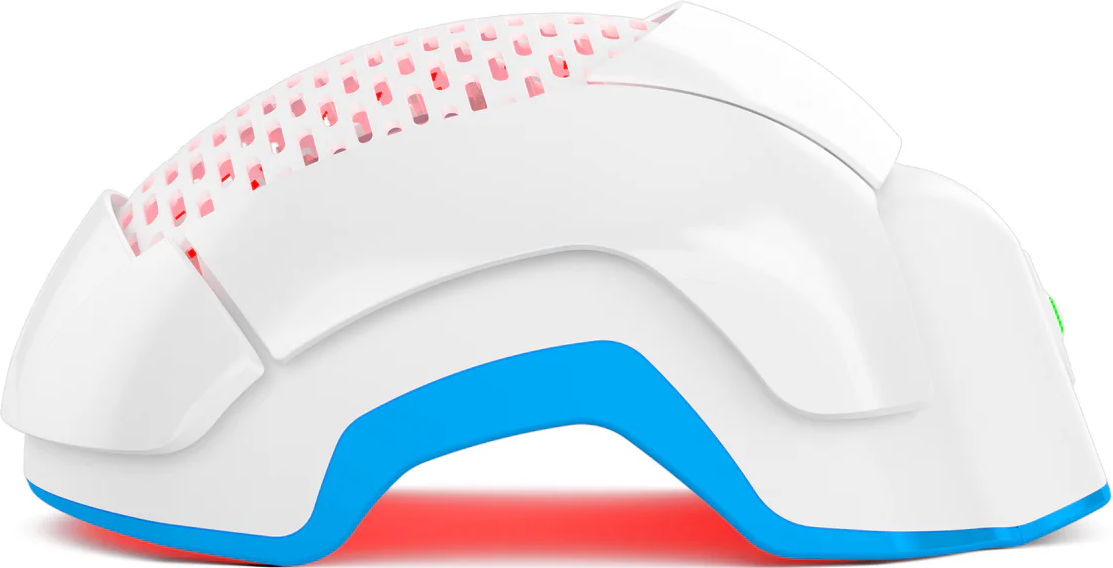
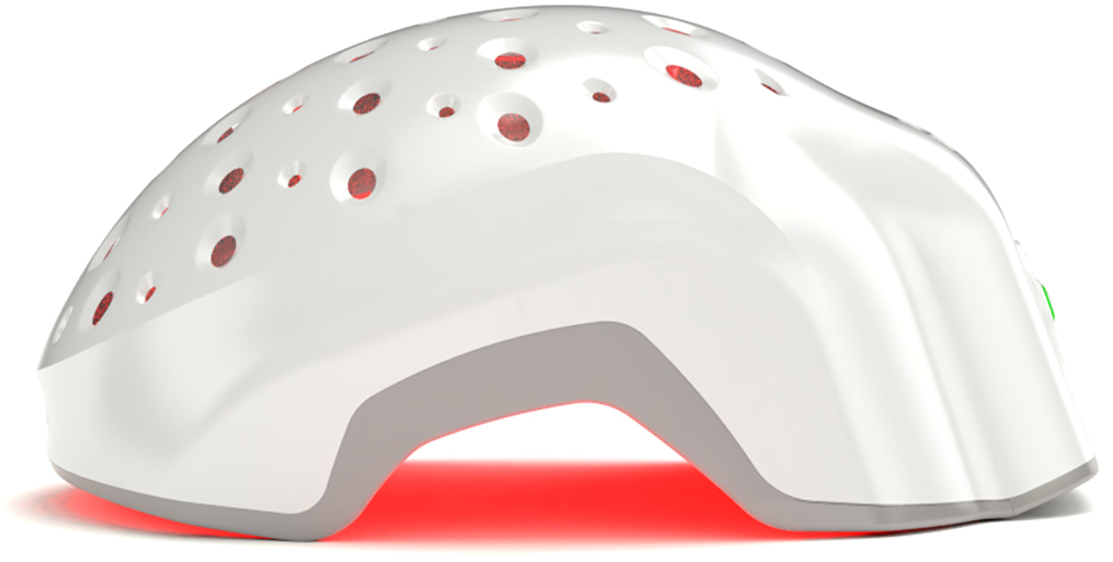
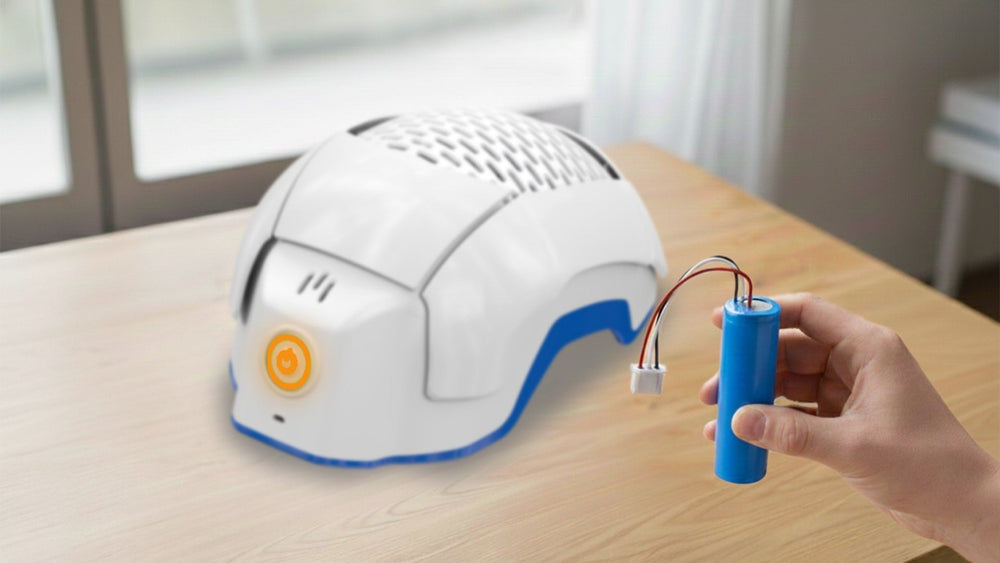
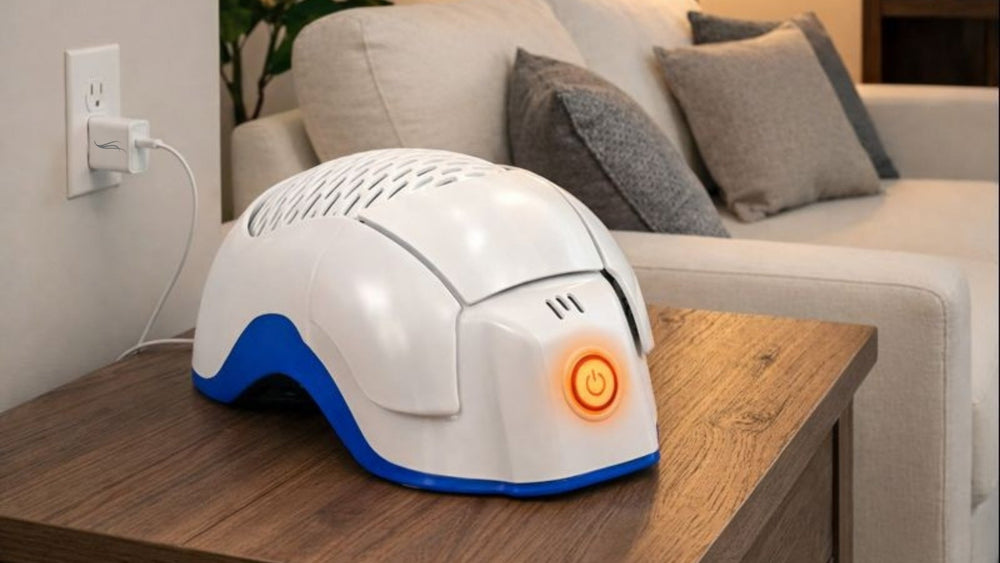
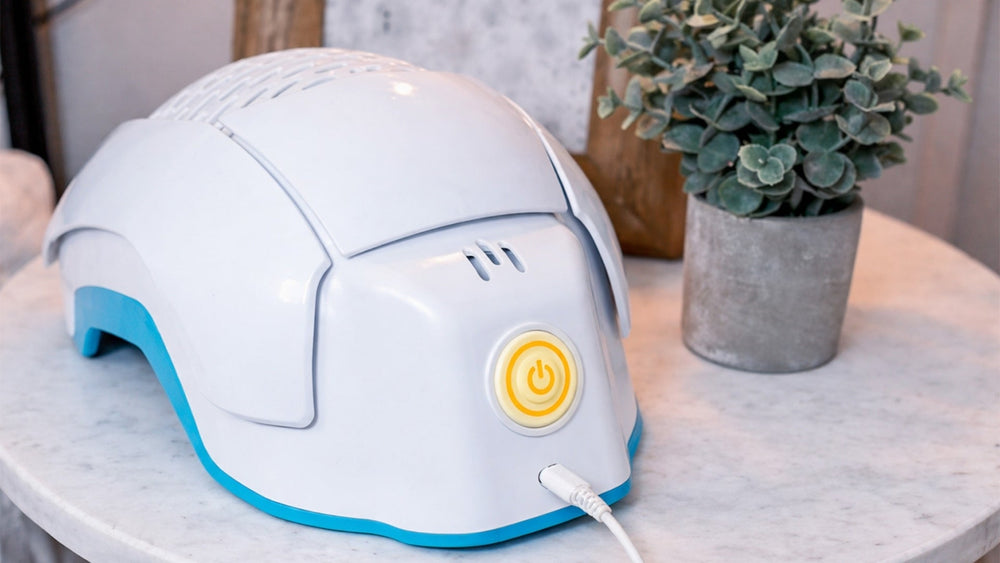
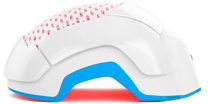
Theradome PRO LH80 has FDA clearance language as an over-the-counter therapeutic device intended to treat androgenetic alopecia and promote hair growth in males and females who meet specified classification criteria. Earlier FDA records also list Theradome’s laser helmet as indicated to promote hair growth in females with androgenic alopecia within specified Ludwig/Savin and Fitzpatrick skin-type ranges.
Can you balance hormones naturally for hair growth?
You can support general endocrine and hair health, yes. But “balance your hormones naturally” can become a wobbly advice very quickly. Sometimes it means sleep, food, stress care, and PCOS support. Sometimes it means someone is about to sell you a capsule with a leaf on the label.
Let’s keep our shoes on the ground.
What lifestyle can realistically help
Helpful basics include adequate protein, avoiding crash diets, managing major stressors where possible, treating scalp inflammation, reducing tight hairstyles if traction is a risk, and reviewing medications with a clinician. Telogen effluvium can follow major body stress, illness, dietary restriction, childbirth, and medication changes, so supportive habits may reduce avoidable triggers and help recovery.
For PCOS, lifestyle and metabolic care can be part of a broader management plan, particularly where insulin resistance is involved. But PCOS treatment should be individualized because symptoms, fertility goals, metabolic risk, and androgen signs differ from person to person.
Lifestyle helps. It does not replace diagnosis.
What not to do when hair starts falling out
Do not start six supplements at once. You will not know what helped, what irritated your stomach, or what made your lab results weird.
Do not stop prescribed medication without medical guidance. Do not ignore patchy loss, scalp pain, burning, scaling, pustules, or scarring. Do not assume postpartum shedding, PCOS hair loss, thyroid shedding, traction alopecia, and female pattern hair loss are all the same beast wearing different hats.
And do not wait years if the part is widening. Early evaluation gives you more options.
When should you get medical help for female hair loss?
If hair loss is persistent, progressive, sudden, patchy, painful, or paired with other body changes, it deserves medical attention. Not panic. Attention.
There’s a difference.
Book a dermatology visit if…
See a dermatologist if your part is widening, the top of your scalp looks more visible, your ponytail is shrinking, shedding lasts more than a few months, or you notice itching, burning, scaling, pustules, pain, bald patches, or scarring. Female pattern hair loss can progress without treatment, and dermatologists can help confirm the diagnosis and treatment path.
A dermatologist can also help separate pattern hair loss from telogen effluvium, alopecia areata, traction alopecia, and inflammatory scalp disease. That distinction changes the treatment.
Ask about hormone testing if…
Ask about hormone or endocrine evaluation if hair loss comes with irregular or absent periods, adult acne, oily skin, new facial or body hair, infertility concerns, symptoms of thyroid dysfunction, sudden worsening, or rapid-onset virilization signs. WHO lists head hair loss, acne or oily skin, excess facial/body hair, and elevated testosterone as high-androgen signs used in PCOS diagnosis after other causes are excluded.
The Endocrine Society also recommends androgen testing when hirsutism or other clinical signs suggest a hyperandrogenic endocrine disorder.
This is not about testing everything. It is about testing the right things.
Track this before your appointment
Bring dates. Hair is slow, and timing helps.
Track when shedding started, what happened two to three months before it began, period changes, medication or birth control shifts, pregnancy or postpartum timing, illness, stress, diet changes, family history, scalp symptoms, and photos in the same lighting. Telogen effluvium often appears months after the trigger, which is why that timeline can make the whole thing less foggy.
Where Theradome fits if hormones are part of the problem
Theradome does not diagnose or correct PCOS, thyroid disease, menopause-related hormone shifts, postpartum shedding, elevated testosterone, or cortisol-related telogen effluvium. That work belongs with clinicians and diagnosis-specific care.
Where Theradome may fit is different: androgenetic alopecia and pattern hair loss. If the diagnosis is female pattern hair loss, Laser Phototherapy is a non-hormonal, noninvasive option within a broader plan.
Why LPT may make sense for female pattern hair loss candidates
Laser Phototherapy uses low-level laser light. In hair-loss research, low-level laser/light therapy has been studied as a treatment option for pattern hair loss, and systematic review evidence suggests FDA-cleared home-use devices may improve hair density in some patients.
Theradome’s FDA clearance records describe the LH80 PRO as intended to treat androgenetic alopecia and promote hair growth in specified male and female hair-loss classifications and Fitzpatrick skin types.
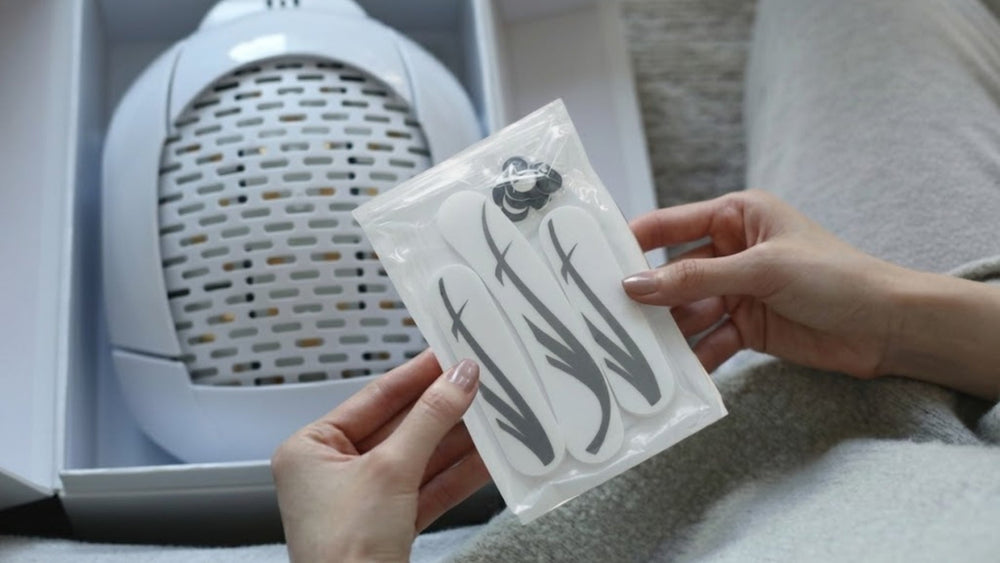
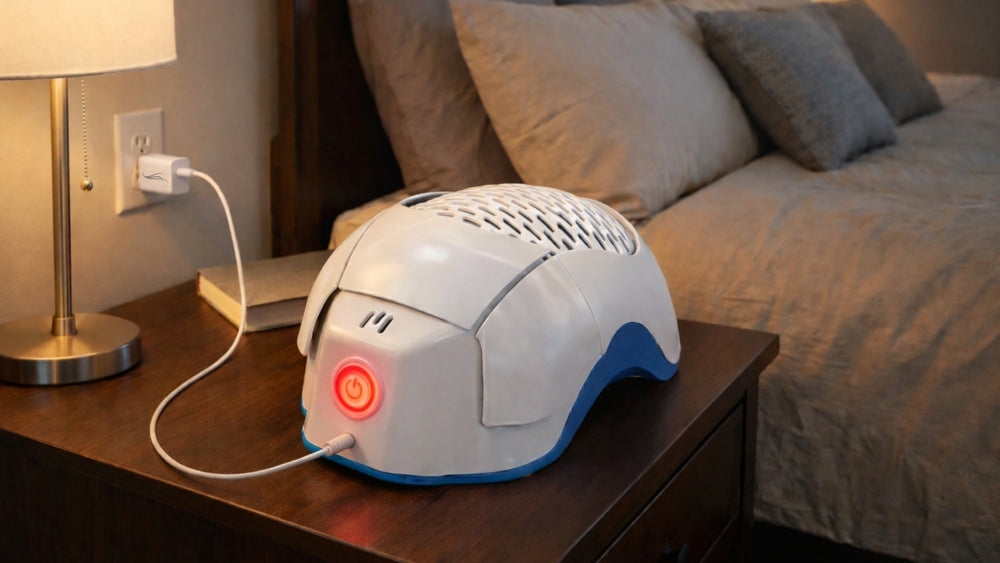
It is not magic. But it is a wearable LPT device for appropriate androgenetic alopecia candidates who want a non-hormonal option they can use consistently at home.
Suggested next step
Not sure whether your thinning looks hormonal, pattern-based, stress-related, or something else? Start with a hair-loss assessment and use the result as a smarter talking point with your dermatologist.
Bring photos. Bring timing. Bring the awkward little details too.
They matter.
Quick hormone-to-hair-loss guide
|
Hormone or pathway |
What it may do |
Common clues |
Best next step |
|
DHT and androgens |
May contribute to follicle miniaturization in genetically sensitive follicles |
Widening part, crown thinning, finer hairs, shrinking ponytail |
Dermatology exam for female pattern hair loss |
|
Estrogen shifts |
May trigger shedding or reveal pattern thinning after childbirth or around menopause |
Postpartum shedding, perimenopause changes, midlife density loss |
Track timing and discuss with clinician |
|
Thyroid hormones |
Too much or too little thyroid activity may contribute to diffuse shedding |
Fatigue, weight change, cold or heat intolerance, diffuse hair fall |
Ask about thyroid testing if symptoms fit |
|
Cortisol and stress physiology |
Major stressors may trigger telogen effluvium months later |
Sudden diffuse shedding after illness, stress, surgery, fever, childbirth |
Identify trigger, evaluate if persistent |
|
Insulin and PCOS pathway |
Insulin resistance may connect with higher androgen activity in PCOS |
Irregular periods, acne, facial hair, scalp thinning |
PCOS or endocrine evaluation if symptoms fit |
Conclusion
The hormone most linked with female pattern hair loss is DHT-related androgen activity, but the better answer is a little less tidy: hormones, genetics, follicle sensitivity, thyroid health, PCOS, childbirth, menopause, stressors, medications, and scalp habits can all influence what your hair is doing.
So do not guess for months.
Look at the pattern. Track the timing. Bring the symptoms. Then match treatment to the cause. For some women, that may mean minoxidil, clinician-guided hormone care, thyroid or PCOS management, or non-hormonal Laser Phototherapy for appropriate androgenetic alopecia candidates.
Hair changes feel personal because they are personal. But they are also clinical. That means there are sensible next steps, not just panic and a sink full of hair.