







Yes, Zoloft can be associated with hair loss, but it appears uncommon. Zoloft is the brand name for sertraline, an SSRI antidepressant, and official sertraline labeling lists alopecia among reported skin and subcutaneous tissue reactions. Most reported cases sound more like diffuse shedding than permanent follicle damage, but the cause is not always easy to prove.
Do not stop Zoloft suddenly because of hair shedding. That part matters. MedlinePlus warns that stopping sertraline without medical guidance can cause withdrawal symptoms, including nausea, sweating, mood changes, irritability, anxiety, dizziness, headache, tiredness, seizures, tingling, ringing in the ears, and sleep problems.
The right move is not panic. It is timeline, prescriber, dermatologist if needed.
What Is Zoloft, And Why Are People Asking About Hair Loss?
Zoloft is the brand name for sertraline, a selective serotonin reuptake inhibitor, usually shortened to SSRI. Sertraline is used for major depressive disorder, obsessive-compulsive disorder, panic disorder, post-traumatic stress disorder, social anxiety disorder, and premenstrual dysphoric disorder. That is not small stuff. We are talking about medication people may rely on to get through ordinary days without their nervous system banging pots together in the background.
So, when someone types zoloft hair loss at 12:18 a.m., they are not usually asking a casual trivia question. They are often asking something more loaded: “Is the thing helping my mind now messing with my hair?” And honestly, that is a fair question. Annoying, scary, extremely bathroom-mirror-ish… but fair.
Why hair loss feels extra loaded when you are taking an antidepressant
Hair shedding can hit a strange nerve. It is visible. It piles up in the shower. It sits on your sweater like a tiny accusation. And when it happens while you are taking an antidepressant, the fear can get oddly sharp because the brain jumps straight to a terrible trade-off: mental health or hair.
The better question is: what changed, when did it change, and what else was happening in your body at the same time? Sertraline can be one possible trigger, yes. But stress, illness, weight loss, hormone shifts, thyroid disease, nutritional issues, scalp inflammation, and genetic hair loss can all crowd the same crime scene.
Is Hair Loss A Known Side Effect Of Zoloft?

Yes. Official sertraline labeling lists alopecia, the medical term for hair loss, under skin and subcutaneous tissue disorders. That means hair loss has been reported with sertraline. It does not mean every person who sheds while taking Zoloft is shedding because of Zoloft.
Drug labels include information from clinical studies, adverse event reporting, and postmarketing surveillance. Postmarketing reports are useful because they catch problems that may not be obvious in trials, but they have a built-in limitation: they often cannot prove exactly how often a reaction happens or whether the medicine caused every reported event.
So Zoloft can be associated with hair loss, but the available evidence does not prove that it is common.
What published SSRI hair-loss research shows
Published medical literature includes sertraline-related hair loss case reports. One 1996 report described two cases after sertraline use. A 2008 case report described diffuse scalp hair loss during sertraline treatment in a woman with major depressive disorder. A 2015 case report described diffuse hair loss in a 21-year-old man that improved after sertraline was stopped.
A 2022 systematic review of SSRI-associated alopecia looked at 38 publications, covering 71 patients and 81 hair-loss episodes. The review found that the scalp was involved in 98.6 percent of cases, median onset was about 8.6 weeks, and recovery after stopping the suspected SSRI was reported in 63 percent of episodes. The same body of evidence is still mostly case-based, which means useful signal, not perfect certainty.
Why “rare” does not feel rare when it is your shower drain
A rare side effect still feels massive when it is happening on your bathroom floor. Nobody stands there counting hairs and thinks, “Ah yes, an interesting pharmacovigilance footnote.” No. You stare at the drain and your stomach drops a bit.
Alopecia appears to be a rare adverse drug reaction with SSRIs, according to a pharmacovigilance study, and the risk may vary across SSRIs. That does not make the concern silly. It means the article needs to help readers separate possibility from certainty.
What Kind Of Hair Loss Can Zoloft Cause?
When sertraline-related hair loss is reported, it is often described as diffuse scalp shedding. In plain English, that means hair seems to come from all over the scalp rather than one neat patch. It may show up as more strands in the shower, brush, pillowcase, hands, or sink.
Drug-induced alopecia is usually reversible, nonscarring, and diffuse, often appearing after starting a new medication or changing the dose. Older review literature also describes drug-induced alopecia as diffuse and nonscarring, with reversibility after withdrawal of the causative drug in many cases.
That “nonscarring” word matters because it suggests the follicle is not being destroyed. The hair cycle may be disrupted, but the follicle is usually still there.
Is this telogen effluvium?
Often, the most sensible clinical bucket is telogen effluvium, a type of diffuse shedding that happens when more hairs than usual shift into the resting phase of the hair cycle. The American Academy of Dermatology says normal shedding is about 50 to 100 hairs a day, and excessive shedding is called telogen effluvium.
Telogen effluvium can become noticeable after a shock to the system, and typical triggers include illness, childbirth, major stress, weight loss, surgery, and some medications. In that situation, the hair fall often lags behind the trigger, which is why the timing can feel so bizarre. Your scalp files paperwork late, apparently.
What Zoloft hair loss usually is not
Zoloft-related shedding is not usually the same thing as classic male pattern baldness or female pattern hair loss. Pattern hair loss tends to look more gradual and patterned, such as crown thinning, a widening part, or a receding hairline. The AAD separates ordinary shedding from signs of hair loss such as a bald spot, receding hairline, or overall thinning.
Patchy bald spots, scalp pain, redness, scaling, crusting, broken hairs, or eyebrow and eyelash loss should not be casually filed under “probably Zoloft.” Those signs may point toward alopecia areata, fungal infection, inflammatory scalp disease, traction, breakage, or another diagnosis that needs a proper look.
How Soon Can Hair Loss Start After Taking Zoloft?
Sertraline-related hair shedding does not follow one perfect calendar. The 2022 SSRI-associated alopecia review found time to onset ranging from 3 days to 5 years, with a median onset of 8.6 weeks. That wide range is exactly why a careful timeline matters.
If shedding starts shortly after beginning Zoloft or shortly after a dose increase, the medication becomes a more plausible suspect. If shedding begins years later with no dose change, Zoloft can still sit on the list, but it should not be the only name circled in red. Other triggers deserve attention too.
Why shedding often appears months after the trigger
Telogen effluvium is maddening because the trigger can happen long before the hair fall becomes obvious. Increased hair fall in telogen effluvium is often noticed 2 to 4 months after the triggering event. AAD also lists several triggers that can precede shedding, including significant weight loss, childbirth, stress, surgery, and illness.
So yes, Zoloft may be part of the timing. But so might the month before Zoloft, when anxiety was wrecking sleep, appetite disappeared, you had a fever, you lost weight, or life decided to become a little feral. Hair responds to body stress. Sometimes late.
Dose changes matter too
Starting Zoloft is not the only point to track. Dose increases, missed doses, restarting after a break, switching from another antidepressant, new hormonal medications, and new supplements can all matter. Drug-induced alopecia can appear after starting a medicine or changing a dose.
Write dates down. Not because you need to become a hair detective with a corkboard and red string. Because your prescriber and dermatologist can use a clean timeline.
How Common Is Hair Loss From Zoloft?
Hair loss is not listed among the most common adult side effects of sertraline in patient-facing label language, while alopecia appears among reported skin-related adverse reactions. That supports careful wording: possible, reported, apparently uncommon.
The 2006 pharmacovigilance study on SSRI-associated alopecia concluded that alopecia appears to be a rare adverse drug reaction to SSRIs, and risk may differ among individual SSRIs. It also suggested the reporting risk might be higher in women than men, although reporting systems carry bias because they depend on what gets reported.
Why real-life reports feel louder than clinical data
Online hair-loss reports can feel overwhelming because people often post when something frightening happens. Nobody runs to the internet to announce, “My hair behaved normally again today.” People post when the shower drain looks like a tiny woodland creature. Understandable.
But patient stories are not the same as incidence data. They are useful for language, empathy, and pattern awareness. They are not proof that Zoloft caused every case. Official labeling, peer-reviewed case reports, reviews, and dermatology guidance need to carry the medical weight.
Why Might Zoloft Affect Hair Shedding?
The most plausible explanation is that sertraline may, in rare cases, disrupt the hair cycle. Drug-induced alopecia can involve telogen effluvium, where more hairs than usual move into the resting phase and later shed. Drug-induced alopecia is diffuse, nonscarring shedding, and telogen effluvium as a pattern where a body shock can push more hairs into the resting stage.
The exact mechanism for SSRI-associated alopecia is not fully settled. The 2022 review notes that SSRI-related hair loss is documented mostly through case reports and that the underlying mechanism remains uncertain.
The mental health condition itself may be part of the timeline
Zoloft may be started during a period of intense anxiety, depression, grief, insomnia, appetite changes, panic, or chronic stress. Those same conditions, or the body changes around them, can also contribute to telogen effluvium.
So we should not automatically blame the medication. We also should not automatically excuse it. Both lazy moves, different outfits.
A better approach is to ask: did shedding begin after the medication, after the dose changed, after a major stressor, after illness, after weight loss, or after several of these stacked together?
Appetite, nutrition, and weight changes may muddy the picture
Sertraline can be associated with appetite changes and gastrointestinal side effects in some people, and significant weight loss can trigger excessive hair shedding. That does not mean Zoloft “starves your hair.” It means appetite, weight, diet, and medication timing should be discussed together instead of treated as separate planets.
If someone has low iron stores, thyroid disease, low vitamin D, restrictive eating, postpartum changes, or another medical issue, hair shedding can become louder. Blood tests may be useful when a clinician thinks an underlying condition could be contributing.
What Else Could Be Causing Hair Loss While Taking Zoloft?
Stress-related telogen effluvium
Stress can trigger shedding. AAD lists major stress as one common reason people develop excessive hair shedding. That matters because many people start Zoloft during one of the hardest seasons of their lives. The medication enters the room, and the hair fall may show up later, but the original stressor may have already pulled the pin.
This does not mean “it is all in your head.” Please no. It means the body can translate emotional strain into physical signals, and hair is one of the places that sometimes sends the receipt.
Illness, fever, surgery, COVID, childbirth, or weight loss
AAD lists several common triggers for excessive shedding, including losing 20 pounds or more, giving birth, high stress, surgery, and illness.
If you had a fever, major infection, surgery, childbirth, medication change, rapid weight loss, or a brutal stretch of poor sleep two or three months before the shedding began, that detail belongs in the timeline. It may matter more than you think.
And yes, the timeline can feel unfairly delayed.
Iron, thyroid, vitamin D, B12, and other medical checks
Diffuse shedding sometimes leads clinicians to consider lab work, especially when the history suggests a medical trigger. Mayo Clinic notes that blood tests may help reveal medical conditions that can cause hair loss. AAD also emphasizes that effective treatment starts with finding the cause.
Common discussions may include ferritin or iron status, thyroid function, vitamin D, B12, complete blood count, and other tests based on symptoms. The point is not to self-order a drawer full of supplements. The point is to avoid blaming Zoloft while missing something treatable.
Androgenetic alopecia may be showing up at the same time
Androgenetic alopecia, also called male or female pattern hair loss, can overlap with telogen effluvium. A shedding episode can make underlying patterned thinning more obvious because density drops faster than usual. Then the person blames Zoloft, the stress, the shampoo, the pillowcase, the moon… and sometimes the real picture is mixed.
Pattern hair loss often looks like a widening part, crown thinning, receding temples, or gradual density loss. It does not always announce itself politely. Dermatology evaluation can help separate diffuse shedding from miniaturization and pattern thinning.
Scalp inflammation, breakage, and styling damage
Not every strand on the floor fell from the root. Some hair breaks. Bleach, heat, tight styles, harsh brushing, scalp inflammation, fungal infection, psoriasis, seborrheic dermatitis, and traction can all confuse the picture.
If the scalp burns, hurts, flakes heavily, crusts, oozes, or feels inflamed, that is not a simple “maybe Zoloft” moment. A dermatologist can examine the scalp and, when needed, use tests such as blood work, pull test, scalp biopsy, or microscopy.
Other medications and supplements
Other medications can cause shedding too. DermNet describes drug-induced alopecia as diffuse shedding that may occur after starting a new medication or changing the dose. That means the timeline should include all recent prescriptions, over-the-counter medications, hormones, supplements, acne treatments, anticoagulants, mood stabilizers, and anything new enough to be suspicious.
Biotin deserves one careful mention here, mostly because it can interfere with lab tests. NIH notes that biotin deficiency is rare and that biotin may interfere with laboratory testing. A 2024 review concluded that marketing biotin for hair loss in healthy people is not supported by strong evidence.
What Should You Do If You Think Zoloft Is Causing Hair Loss?
Do not suddenly stop sertraline because of shedding. Do not stop taking sertraline without talking to a doctor, and sudden stopping may cause withdrawal symptoms. NICE also recommends that decisions about stopping antidepressants, including tapering speed and duration, be made with a healthcare professional.
The Royal College of Psychiatrists also advises that antidepressants should usually be tapered, because tapering can reduce withdrawal symptoms or make them less severe. This matters even more if Zoloft is helping your depression, anxiety, panic, OCD, PTSD, or PMDD.
Hair matters. Mental health matters too.
Build a medication and shedding timeline
Write down the Zoloft start date, current dose, dose changes, missed doses, other medications, new supplements, illness, fever, major stress, surgery, childbirth, weight change, appetite shifts, menstrual changes, scalp symptoms, and the date shedding began.
This sounds boring. It is not. It is the difference between “my hair is falling out and I am scared” and “my shedding started nine weeks after increasing sertraline, three months after a fever, and two months after losing weight.” A clinician can work with that.
A timeline will not prove everything. But it makes the conversation less foggy.
Talk to the prescribing clinician
Bring the timeline to the clinician who prescribed Zoloft. Ask whether sertraline could be contributing, whether monitoring makes sense, whether labs should be considered, whether the dose plan needs review, and whether switching medication is reasonable in your specific case.
Do not treat switching antidepressants like swapping shampoo. It is not. A prescriber has to weigh mental health stability, side effects, withdrawal risk, relapse risk, dose history, and alternative medication options.
Consider a dermatologist if shedding is significant or unclear
A dermatologist can help determine whether the hair change looks like telogen effluvium, androgenetic alopecia, alopecia areata, scalp inflammation, infection, breakage, or something else.
A practical hair pull test can help assess active shedding. One clinical review describes the pull test as a bedside method where a group of roughly 50 to 60 hairs is gently grasped to see how many release. That is not a home panic ritual, by the way. It is a clinician tool.
Will Hair Grow Back After Zoloft Hair Loss?
If the shedding is true drug-induced telogen effluvium, regrowth is often possible because this type of shedding is usually nonscarring. Drug-induced alopecia is usually reversible, nonscarring, and diffuse. An older review of drug-induced alopecia also describes it as diffuse, nonscarring, and often reversible after the causative drug is withdrawn.
That does not mean you should stop Zoloft. It means if your clinician determines sertraline is the likely trigger and changes the treatment plan safely, recovery is biologically plausible. Shedding may still take time to slow. Hair grows on hair time, which is not emotionally convenient.
Regrowth depends on what is actually causing the shedding
If the cause is stress, illness, weight loss, low iron, thyroid disease, scalp inflammation, postpartum shedding, androgenetic alopecia, or more than one of these together, the recovery plan changes.
This is why “Will it grow back?” has a slightly annoying answer: often, yes, if the trigger is temporary and the follicles are not scarred. But the real answer depends on the diagnosis.
What recovery may look like
Recovery often begins with less shedding, not instant thickness. Then you may notice short new hairs, usually before the overall density feels satisfying. That can take months. Acute telogen effluvium can resolve within three to six months when ongoing triggers or causative medications are identified and addressed.
Take monthly photos in the same lighting. Do not inspect your part line twelve times a day under overhead bathroom lighting, because that lighting was invented by someone who clearly had no mercy.
What Treatments Help Zoloft-Related Hair Shedding?
The first “treatment” is not a serum. It is cause-finding. If Zoloft is not the real trigger, changing it may not help. If Zoloft is the likely trigger, medication decisions still need to happen with the prescribing clinician. Effective treatment begins with identifying the cause of hair loss.
This is especially important because hair shedding and mental health treatment overlap in messy real life. A person may be recovering emotionally while the body is still shedding from stress that happened months ago. Or the medication may be contributing. Or both.
Of course it can be both. Bodies love being inconvenient.
Medication adjustment or switching may be discussed, not self-managed
If the timeline strongly suggests sertraline-related shedding, your prescriber may discuss monitoring, dose adjustment, slower titration, tapering, or switching medications. That decision should account for symptom control, withdrawal risk, relapse risk, severity of shedding, and how distressed you are.
NICE advises that stopping antidepressants should be discussed and agreed with a healthcare professional, and that tapering in stages helps reduce withdrawal effects.
Minoxidil may be useful in selected cases
Minoxidil may be useful if androgenetic alopecia is present, or if a clinician decides it fits a longer shedding picture. It should not be treated as an automatic fix for every person who notices extra hair after starting Zoloft.
For androgenetic alopecia, a 2017 meta-analysis strongly suggested that minoxidil, finasteride, and low-level laser light therapy are effective for promoting hair growth in men with androgenetic alopecia. That evidence is relevant to pattern hair loss. It should not be lazily pasted onto every case of temporary medication-associated shedding.
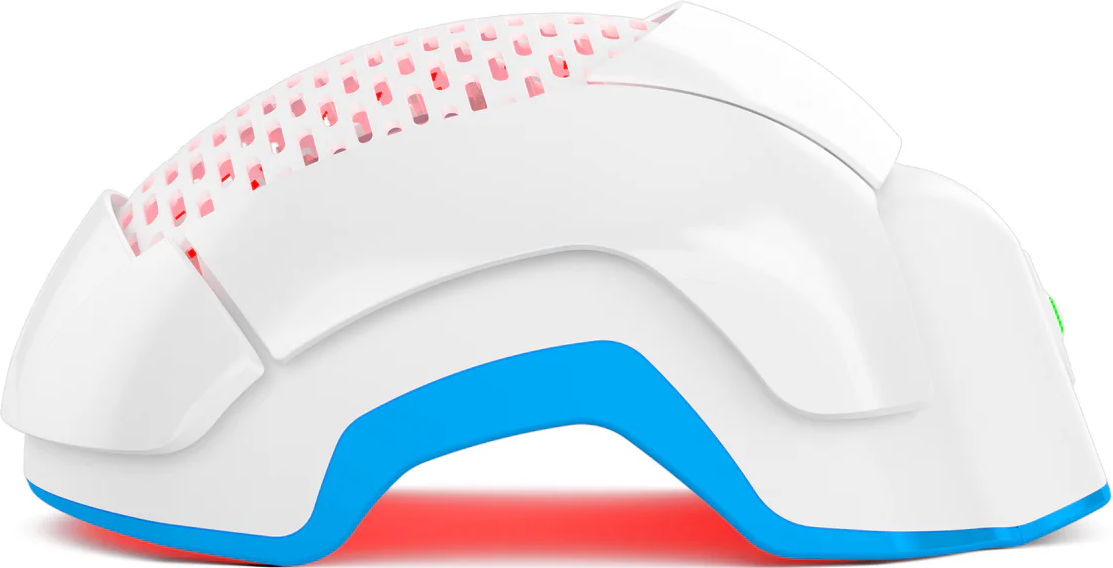
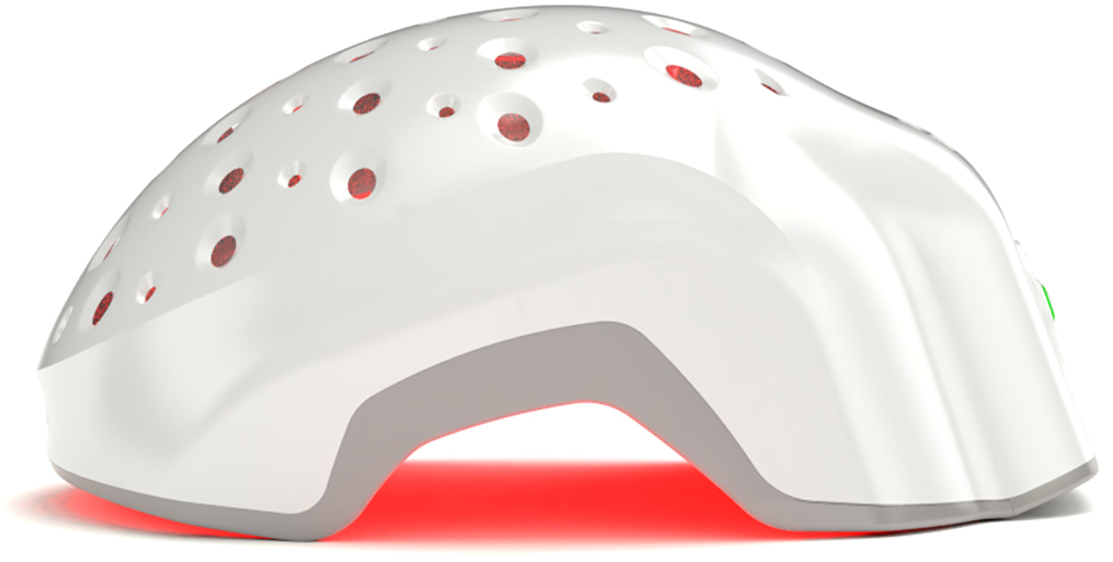
Laser Phototherapy may be the best-fit support when Zoloft-related shedding has your hair feeling unstable
When hair starts shedding during Zoloft treatment, the first step is still medical clarity. You want to know whether the shedding is temporary telogen effluvium, a medication-related reaction, stress-related shedding, androgenetic alopecia becoming more visible, or a messy little overlap of two things at once. Very common. Very annoying.
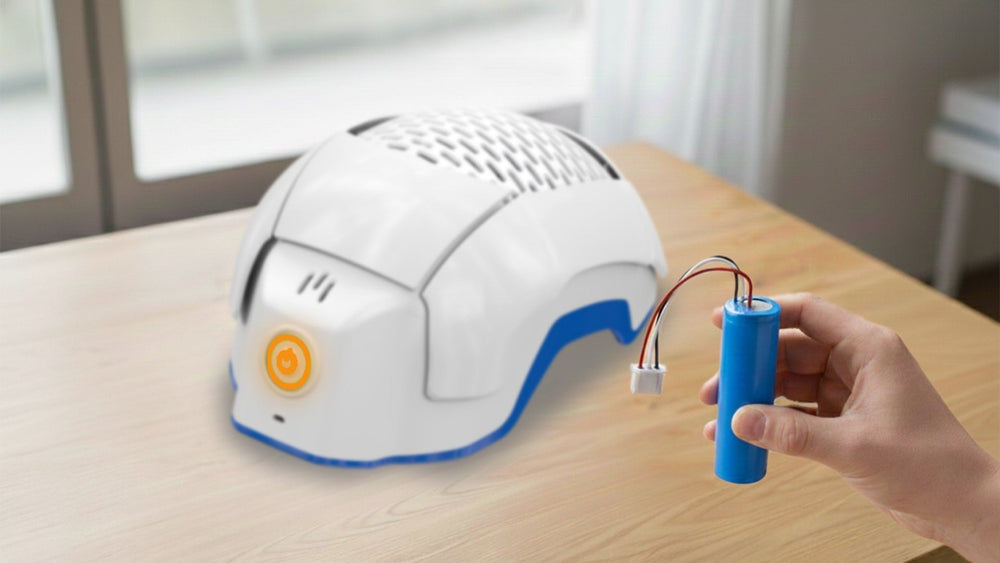
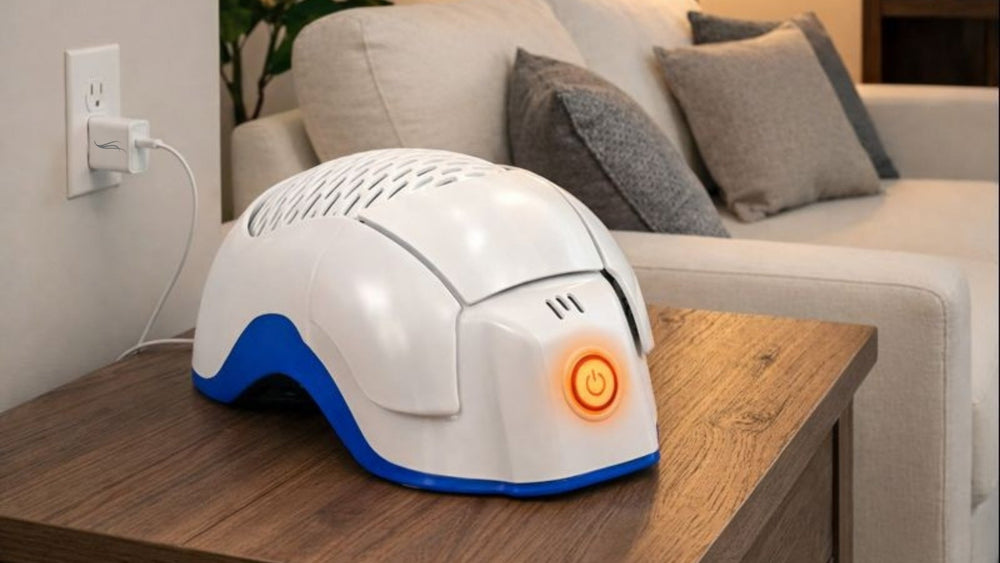
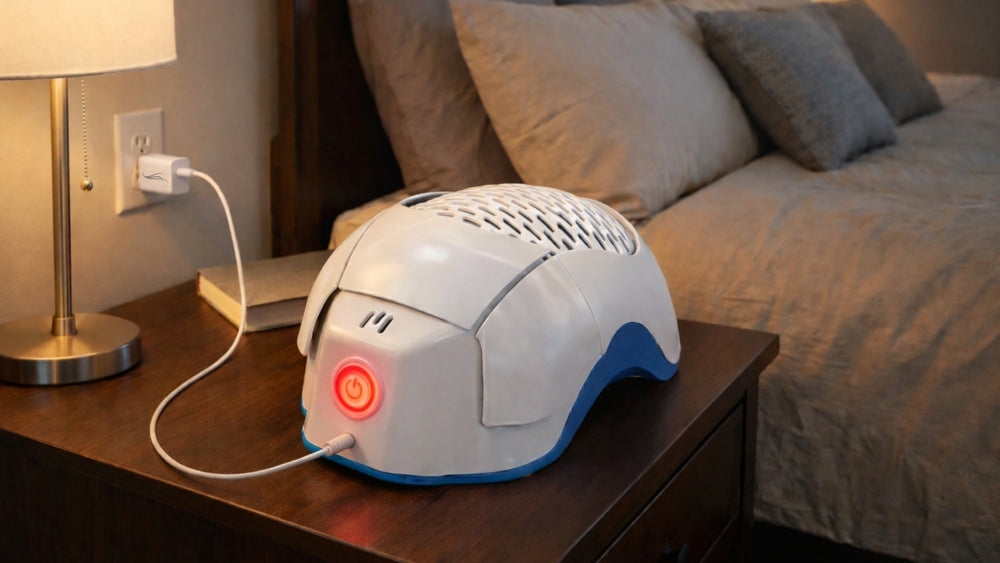
But once that evaluation is happening, Laser Phototherapy, or LPT, is one of the strongest-fit support options to discuss because it is drug-free, non-systemic, and scalp-targeted. Someone taking Zoloft may already be trying to protect their mental health, avoid abrupt medication changes, and not add another oral supplement or hormone-active product into the mix like they are building a tiny pharmacy on the bathroom counter.
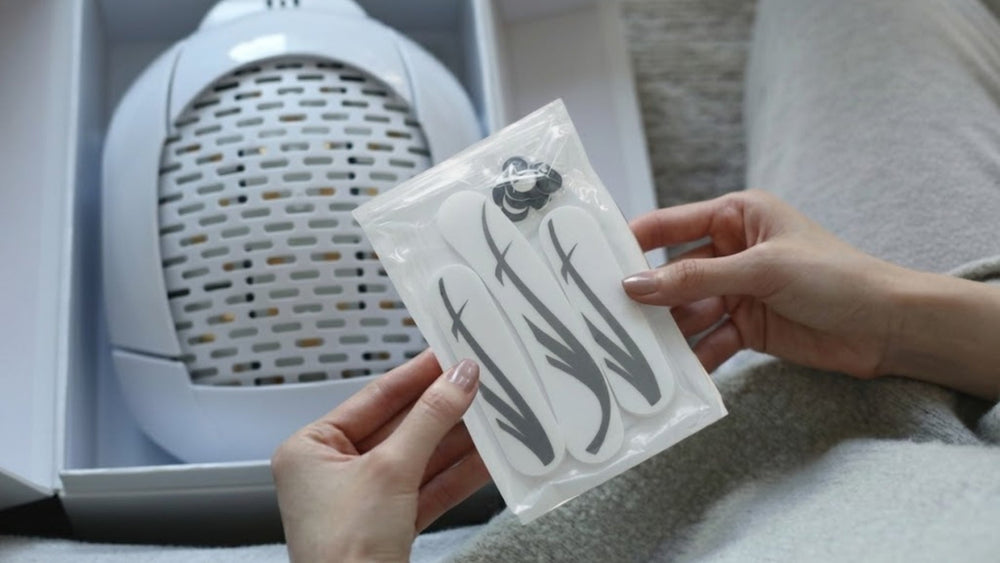
Theradome’s FDA 510(k) clearance for the PRO LH80 identifies it as an over-the-counter therapeutic device intended to treat androgenetic alopecia and promote hair growth in specified male and female pattern hair loss groups. A 2017 meta-analysis also found low-level laser/light therapy to be one of the treatment categories with evidence for androgenetic alopecia. So if Zoloft-related shedding is happening alongside pattern thinning, or if the shedding has made an underlying pattern more obvious, LPT becomes especially relevant. As a serious, non-drug hair-growth support option.
The medical priority remains the same: identify the trigger, protect mental health treatment, and get a dermatologist involved if shedding is significant, persistent, patchy, or emotionally heavy.
Gentle hair care while shedding is active
Gentle hair care will not correct an internal trigger, but it can reduce breakage and make the shedding phase less punishing. Avoid tight styles, harsh bleaching, aggressive detangling, rough towel-drying, constant heat, and the late-night urge to buy six random hair products because the brush looked dramatic.
Your scalp does not need punishment. It needs clarity.
If breakage, scalp irritation, or styling damage is part of the picture, a dermatologist or hair specialist can help separate shed hairs from broken hairs. Microscopy is one method used to examine hairs when diagnosis requires closer inspection.
When Should You See A Doctor About Hair Loss On Zoloft?
See a dermatologist if shedding is sudden and severe, patchy, persistent, or paired with scalp pain, burning, redness, scaling, crusting, pus, tenderness, broken hairs, eyebrow loss, eyelash loss, or visible patterned thinning. Those signs can point beyond simple temporary shedding.
A dermatologist can examine the scalp, review the timeline, look for pattern loss or inflammation, and consider testing when needed..
Contact the prescriber if symptoms began after starting or changing Zoloft
Contact the prescribing clinician if shedding began after starting Zoloft, increasing the dose, restarting after a break, or switching medications. Also call if the shedding is making you want to skip doses or quit abruptly. That is exactly when medical guidance matters most.
MedlinePlus says people should not stop sertraline without talking with their doctor because sudden stopping can cause withdrawal symptoms.
Seek urgent mental health support when needed
Get urgent mental health help if you have suicidal thoughts, thoughts of self-harm, severe agitation, worsening depression, unsafe impulses, or frightening mood changes. Sertraline medication information warns that antidepressants can increase suicidal thinking in children, teenagers, and young adults, especially early in treatment or during dose changes.
Hair loss can be emotionally brutal. That does not make you vain. But if the fear around shedding is pushing you toward unsafe choices, that is not a hair-care problem anymore. That is a support-now problem.
How To Talk To Your Doctor About Zoloft Hair Loss
Bring a clean timeline
Bring a clear timeline to the appointment. Include when you started Zoloft, the dose, any dose changes, when shedding began, whether hair is coming out diffusely or in patches, recent illness, stress, weight loss, childbirth, hormonal shifts, new medications, supplements, and scalp symptoms.
Also bring photos if you have them. Same lighting. Same angle. Monthly is enough. Daily scalp surveillance will only turn your bathroom into a courtroom.
Ask practical, non-panicky questions
Useful questions include:
- Could this be telogen effluvium?
- Could sertraline be contributing?
- Do my symptoms suggest pattern hair loss, scalp inflammation, or another diagnosis?
- Should we check thyroid function, ferritin or iron status, vitamin D, B12, or other labs?
- Should I see a dermatologist?
- Is monitoring reasonable?
- If we change Zoloft, how do we avoid withdrawal symptoms?
- Is my mental health stable enough to consider any medication change?
Blood tests and pull tests may help evaluate hair loss, and antidepressant stopping decisions should be made with a healthcare professional.
What not to say to yourself
Do not tell yourself you are vain. Do not tell yourself you must choose between your brain and your hair. Do not decide at midnight that quitting Zoloft tomorrow is the brave move. Do not assume biotin will fix it. Do not assume it is definitely the medication.
Where Does Theradome Fit Into This Conversation?
Theradome does not replace psychiatric care, antidepressant guidance, tapering advice, or dermatology diagnosis. If someone suspects Zoloft is involved in their shedding, the medication question belongs with the prescriber. If the hair pattern is unclear, the scalp question belongs with a dermatologist.
Laser Phototherapy is most relevant when androgenetic alopecia is part of the picture
Theradome belongs in this conversation turns to androgenetic alopecia or mixed hair loss. FDA clearance documents for Theradome LH80 PRO describe intended use for androgenetic alopecia and hair growth in specified female and male pattern hair loss groups.
If a dermatologist finds pattern hair loss alongside temporary shedding, Laser Phototherapy may be a reasonable non-systemic option to discuss as part of a broader plan. If it is temporary drug-triggered shedding alone, the first job is finding and managing the trigger.
If evaluation suggests temporary telogen effluvium, focus on the cause, the medication plan, and recovery time. If evaluation shows androgenetic alopecia too, then Theradome’s FDA-cleared LPT technology may be relevant for pattern hair loss support.
Quick Self-Check: Is It More Like Shedding, Pattern Loss, Or Something Else?
This is not a diagnosis tool. It is a “what should I bring up?” tool.
It may be shedding if…
It may be shedding if hair is coming from across the scalp, your brush or drain looks busier than usual, there is no clear bald patch, and a trigger happened weeks or months ago. Telogen effluvium is typically diffuse, and AAD describes excessive shedding as losing significantly more than the usual 50 to 100 hairs per day.
It may be pattern hair loss if…
It may be pattern hair loss if the part is widening, the crown is thinning, the temples are receding, family history is strong, or the change has been slowly building. A receding hairline, bald spot, or overall thinning is a sign of hair loss rather than ordinary shedding.
It may need faster dermatology care if…
Get checked faster if hair loss is patchy, painful, inflamed, scaly, crusted, sudden, severe, or paired with broken hairs, eyebrow loss, or eyelash loss. Scalp biopsy and microscopy are among tools that may be used when infection or other causes need investigation.
Conclusion
Zoloft hair loss is possible, but it is not the only explanation for sudden shedding. Sertraline labeling lists alopecia, and case reports describe diffuse hair loss during treatment, yet stress, illness, weight changes, thyroid issues, low iron, scalp problems, and androgenetic alopecia can all blur the picture.
Do not stop Zoloft suddenly. Build a timeline, call your prescriber, and see a dermatologist if shedding is significant, patchy, persistent, or emotionally heavy. You do not have to choose between caring for your mind and taking your hair seriously.
Both deserve attention.